


 PLATFORM UPDATE:


Injectable ε-poly-lysine/hyaluronic acid hydrogel for targeted prevention of cardiovascular implantable electronic device pocket infections
 *ab
and
Huihui
Bao
*ab
*ab
and
Huihui
Bao
*ab
Abstract
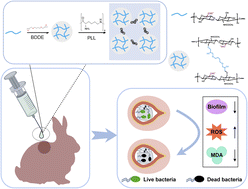
Cardiovascular implantable electronic device (CIED) pocket infections represent a grave threat to the survival quality and life safety of patients with cardiovascular diseases, while also imposing a substantial economic burden on healthcare systems. However, the efficacy of current approaches employed for preventing CIED pocket infections remains suboptimal. In this study, an injectable antibacterial hydrogel was successfully constructed by physically crosslinking carboxyl groups on the surface of hyaluronic acid microspheres (HAG) with amino groups on poly-L-lysine (PLL). The developed HAG/PLL hydrogel exhibited not only non-toxicity toward L929 cells but also excellent cytocompatibility, accompanied by a low hemolysis rate when tested with red blood cells. Furthermore, in vivo experiments demonstrated that the HAG/PLL hydrogel showed no toxicity to vital organs (including the heart, liver, and kidney) as well as local tissues at the implantation site. Moreover, the HAG/PLL hydrogel effectively eliminated Staphylococcus aureus and Escherichia coli bacteria by promoting ROS production, thereby inducing bacterial cell membrane disruption. In conclusion, HAG/PLL hydrogels were simply and conveniently prepared and showed considerable potential in the prevention of CIED infections owing to their excellent biocompatibility and antimicrobial properties.
 Please wait while we load your content...


