


 PLATFORM UPDATE:

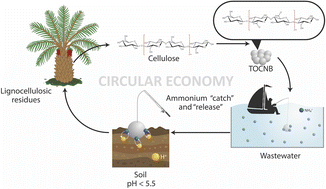
Ammonium “catch and release” from wastewater using TEMPO-oxidized cellulose nanofiber beads
 a
Luz Amelia
Calderón-Vergara,
a
Cristian
Blanco-Tirado
a
and
Marianny Y.
Combariza
*a
a
Luz Amelia
Calderón-Vergara,
a
Cristian
Blanco-Tirado
a
and
Marianny Y.
Combariza
*a
Abstract
Domestic wastewater is increasingly recognized as a valuable resource for nutrient recovery. This study presents the development of biodegradable nanocellulose-based beads synthesized from palm oil empty fruit bunches (EFB) for the recovery and reuse of ammonium. TEMPO-oxidized cellulose nanofibers (TOCN) were produced via a one-step oxidation process and shaped into beads through sodium-ion-mediated ionotropic gelation. The resulting TOCN beads (TOCNB) exhibited a high ammonium adsorption capacity of 30.30 mg g−1, governed by a combination of physisorption and electrostatic interactions. Adsorption kinetics followed a pseudo-first-order model, while equilibrium data were best described by the Langmuir isotherm, indicating monolayer adsorption. The adsorption performance was significantly influenced by pH, ionic strength, and contact time, with optimal uptake observed at pH 8. Competitive ion experiments revealed that K+ and SO42− notably reduced ammonium adsorption, while Ca2+ had a lesser effect due to steric hindrance. Germination assays with Phaseolus vulgaris demonstrated that TOCNB–NH4+ enhanced seedling growth to a comparable extent as commercial urea, confirming its potential as a controlled-release biofertilizer. These findings highlight TOCNB as a sustainable material for nutrient recovery and agricultural reuse, aligning with circular economy principles.
 Please wait while we load your content...


