


 PLATFORM UPDATE:


3D-printed GelMA/BC@PLLAms-Cur@TCP-PCL-PEG bilayer scaffold for osteochondral repair
 *c
and
*c
and
Abstract
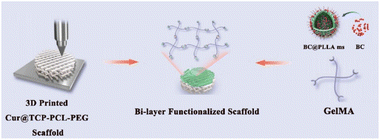
A functional bilayer scaffold tailored for osteochondral repair was fabricated via low-temperature 3D printing technology in this study. The lower layer of the scaffold was Cur@TCP-PCL-PEG, which was designed to provide robust mechanical support, realize sustained curcumin release, and thereby exert anti-inflammatory and osteogenic bioactivities. The upper layer was GelMA/BC@PLLAms, in which collagen-loaded microspheres were incorporated to effectively facilitate chondrogenic differentiation of stem cells. Comprehensive characterization revealed that the prepared bilayer scaffold possessed excellent printability, a distinct and well-integrated layered structure, and compressive strength matching the physiological requirements of osteochondral tissue. In vitro drug release assays confirmed the sustained release profile of curcumin from the scaffold, which conferred remarkable in vitro anti-inflammatory effects. Cytocompatibility evaluations demonstrated that the bilayer scaffold had superior biocompatibility, significantly promoting cell proliferation without inducing any cytotoxicity. Furthermore, in vitro differentiation experiments verified that the scaffold could efficiently induce osteogenic differentiation of pre-osteoblasts and enhance chondrogenic differentiation of chondrocytes and bone marrow mesenchymal stem cells, synergistically integrating the functional advantages of both the upper and lower layers. Collectively, this integrated 3D-printed bilayer scaffold exhibits prominent anti-inflammatory activity, favorable biocompatibility, and dual-lineage differentiation potential for osteogenesis and chondrogenesis, thus providing a novel and promising therapeutic strategy for the regenerative repair of osteochondral defects.
 Please wait while we load your content...


