


 PLATFORM UPDATE:


Preparation of a low-temperature, thermally insulating, and flexible sensing hydrogel using hemp-derived high-charge nanocellulose
 *a
*a
Abstract
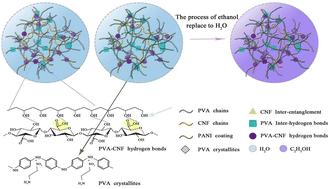
Conventional hydrogel sensors often suffer from poor mechanical strength, susceptibility to freezing at low temperatures, and inadequate electrical conductivity, which severely limit their practical applications in flexible electronics and low-temperature environments. To address these challenges, we developed a conductive organic hydrogel based on a flexible–rigid dual-network structure. This network combines hemp-derived high-charge cellulose nanofibers (CNFs) with polyvinyl alcohol (PVA) and further incorporates polyaniline (PANI) to enhance electrical conductivity. The hydrogel was fabricated through a freeze–thaw and ethanol-replacement process, which imparts remarkable low-temperature tolerance. The resulting PVA/CNF/PANI hydrogel exhibits outstanding mechanical properties, including a high tensile strength of 0.38 MPa and an ultra-high elongation at break of 2296%, while maintaining stable performance at temperatures as low as −15 °C. When employed as a flexible strain sensor, the hydrogel demonstrates excellent sensitivity, cycling stability, and reliable signal response, enabling effective monitoring of human motion. This work provides a promising strategy for designing durable, low-temperature-resistant sensing materials for next-generation wearable electronics.
 Please wait while we load your content...


