


 PLATFORM UPDATE:


Enhancing photocatalytic CO2 reduction and biological activity using a silver nanoparticle-decorated ZnTiO3/permutit composite

Abstract
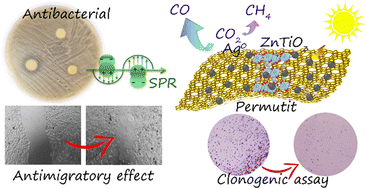
The development of efficient visible-light photocatalysts for CO2 reduction and biological waste treatment is crucial yet challenging. This study presents silver-decorated oxygen vacancy-possessed zinc titanate (ZnTiO3) nanoparticles loaded onto permutit (PT) zeolite using a simple two-step hydrothermal-precipitation method, forming a ternary construction. The Ag/ZnTiO3/PT photocatalyst demonstrated exceptional photoreduction performance, converting CO2 to CH4 and CO at rates of 0.73 and 13.01 µmol g−1 h−1, respectively. The incorporation of metallic silver nanoparticles and oxygen vacancies significantly enhanced photocatalytic activity under visible light. Notably, the photocatalyst exhibited remarkable stability over 25 h of continuous CO2 reduction reaction. Additionally, it effectively inactivated pathogenic bacteria, such as Pseudomonas aeruginosa and Staphylococcus aureus, with a minimum inhibitory concentration of 0.5 mg mL−1, and showed potential as a disinfection agent for cancer cell waste treatment, inhibiting migration, colony formation, and proliferation of MDA-MB-231 cells within 48 h. This study provides valuable insights supporting the practical application of Ag/ZnTiO3/PT in mitigating global warming and addressing environmental challenges caused by biological pollutants.
 Please wait while we load your content...


