


 PLATFORM UPDATE:


Phosphonium and ammonium fluorescein for selective detection of HSO4− and CN− ions in aqueous media
Abstract
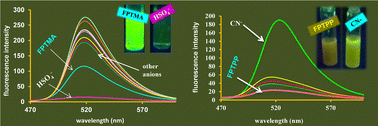
Fluorescein-based anionic chemosensors, fluorescein-L-3-phenyl-2-aminopropyl-trimethylammonium tosylate (FPTMATs) and fluorescein-L-3-phenyl-2-aminopropyl-triphenylphosphonium tosylate (FPTPPTs), were synthesized via a mechanochemical route from naturally occurring fluorescein dyes. These sensors exhibit selective optical responses toward specific anions in aqueous methanol (95 : 5 v/v). FPTMATs selectively detects the corrosive bisulfate ion (HSO4−) with a strong fluorescence quenching, while FPTPPTs responds to the toxic cyanide ion (CN−) with a colorimetric shift from fluorescent blue to fluorescent green under fluorescent light and marked fluorescence enhancement. The limits of detection (LODs) for HSO4− using FPTMATs were determined to be 0.3823 µM (UV-vis) and 3.13 nM (fluorescence), whereas for CN− with FPTPPTs the LODs were 2.26 µM (UV-vis) and 51.17 nM (fluorescence), respectively. Mechanistic studies suggest that FPTMATs interacts with HSO4− (1 : 2 binding) via strong hydrogen bonding and protonation, while FPTPPTs binds with CN− (1 : 1 binding) through a nucleophilic addition and protonation followed by an intramolecular charge transfer mechanism. These results demonstrate the potential of structurally tuned fluorescein derivatives as efficient, selective, and sensitive probes for anion detection in aqueous media.
 Please wait while we load your content...


