


 PLATFORM UPDATE:


Converting native chitin into regenerative films: fabrication, properties, and applications
 *abc
*abc
Abstract
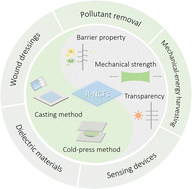
Native chitin, as one of the most abundant natural polymers, is a promising candidate for the production of functional materials due to its renewability, excellent biological properties, and biodegradability. Despite current challenges in solubilizing native chitin, a number of literature studies demonstrate the potential for its utilization in constructing regenerated films through the “dissolution–regeneration” route. This review aims to present the recent achievements in the development of regenerated native chitin films (R-NCFs) and guide researchers to continuously develop “green” regenerated chitin materials and expand their applications. We discuss two production routes (including the casting and cold-press methods) that have been utilized to construct R-NCFs from native chitin solutions with a concentration range of 0.4–9.0 wt%. R-NCFs with tunable properties produced by these methods are evaluated against three target properties: transparency, mechanical strength, and barrier properties. Five practical application examples based on current research have been compiled, such as wound dressings, pollutant removal, mechanical-energy harvesting, sensing devices, and dielectric materials. We also discuss the potential for large-scale application of R-NCFs from the perspectives of resource supply, solvent recovery, and industrial-scale production. We hope that this review can provide a solution for the utilization of renewable biomass resources, especially in the green conversion of natural polymers, thereby laying the foundation for the production of sustainable materials with good properties.
- This article is part of the themed collection: 2026 Green Chemistry Reviews
 Please wait while we load your content...


