


 PLATFORM UPDATE:


Lignin-derived laser-induced graphene: toward a green and scalable route for energy and environmental applications
 †*a
Mehdi
Mennani,
†*a
Meriem
Kasbaji,
a
Anass
Ait Benhamou,
b
Mounir
El Achaby,
a
Zineb
Kassab
a
and
Fouad
Ghamouss
*a
†*a
Mehdi
Mennani,
†*a
Meriem
Kasbaji,
a
Anass
Ait Benhamou,
b
Mounir
El Achaby,
a
Zineb
Kassab
a
and
Fouad
Ghamouss
*a
Abstract
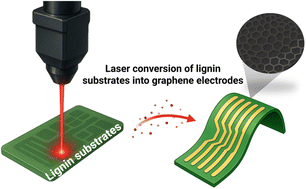
The advancement of sustainable carbon materials necessitates the implementation of scalable and environmentally benign processing methodologies that circumvent energy-intensive graphitization and the utilization of fossil-derived precursors. The generation of laser-induced graphene (LIG) from lignin presents a compelling green alternative, facilitating the direct, solvent-free, and catalyst-free transformation of renewable biomass into porous, conductive graphene structures under ambient conditions. This review rigorously evaluates the progress made in laser conversion of lignin and lignin-sourced precursors, elucidating how laser parameters, the chemical composition of lignin, and photothermal transformation pathways influence graphitization efficiency, heteroatom retention, and the resultant material properties. We discuss recent progress in the integration of lignin-derived LIG into (bio)sensing applications, electrochemical energy storage systems, and environmental interfaces, accentuating the sustainability, cost-effectiveness, and performance advantages that surpass those of synthetic alternatives. Benchmarking analyses reveal how lignin-based LIG facilitates high-value applications while simultaneously minimizing chemical inputs, waste generation, and overall carbon footprint. Particular emphasis is placed on the relationships between structure and property, device performance metrics, and the influence of biomass heterogeneity on reproducibility. By merging insights from biomass valorization, laser materials processing, and electrochemical engineering, this review delineates pathways for enhancing lignin as a scalable platform for the manufacturing of green graphene-like structures.
- This article is part of the themed collection: 2026 Green Chemistry Reviews
 Please wait while we load your content...


