


 PLATFORM UPDATE:


A green strategy for treating nitrate-contaminated wastewater using a zeolite P-based composite derived from rice husk ash

Abstract
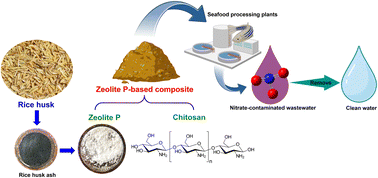
Pollution of aquatic environments by nitrate ions has become increasingly severe in recent years. Specifically, nitrate contamination in aquaculture and seafood processing wastewater is an urgent environmental challenge, as excessive nitrate discharge can trigger eutrophication, degrade water quality, and threaten both aquatic ecosystems and human health. Developing low-cost and sustainable adsorbents is therefore essential for effective nitrate management, especially in regions like the Mekong Delta where rice husk ash is abundant. Rice husk ash, an agricultural by-product, is a promising raw material for synthesizing zeolite and zeolite-based composites which have gained attention for their enhanced adsorption ability. To solve nitrate pollution and utilize rice husk ash, a chitosan/zeolite NaP1 composite was developed using zeolite NaP1 synthesized from rice husk ash. The composite was prepared with a chitosan : zeolite NaP1 weight ratio of 1 : 2 (w/w), glutaraldehyde 4%, and a mixing time of 1 h. The composite showed an optimal adsorption efficiency and adsorption capacity of 58.47% and 70.83 mg g−1, respectively at pH 5, an adsorbent dose of 1 g L−1, and a nitrate concentration of 100 mg L−1 in 30 min. Experimental data fitted both Langmuir and Freundlich adsorption isotherm models well, with a high maximum capacityof 107.761 mg g−1 from the Langmuir model whereas pseudo-first-order and pseudo-second-order kinetics also described the process well. The composite exhibited good reusability, confirming its potential for sustainable application towards wastewater treatment.
 Please wait while we load your content...


