


 PLATFORM UPDATE:


Optimising the materials for triboelectric nanogenerator to harvest the wrist pulse signal: a numerical study using the finite element method

Abstract
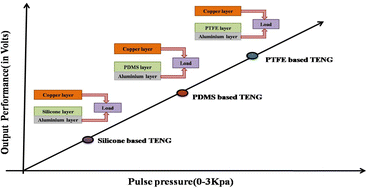
This study outlines the optimised materials used to improve the output performance of a triboelectric nanogenerator based on the contact separation mode. The selection of materials plays a crucial role in enhancing the output voltage of the triboelectric nanogenerator. This study involves the design of three distinct triboelectric nanogenerator models using polytetrafluoroethylene (PTFE), polydimethylsiloxane (PDMS), and silicone. Numerical analysis is conducted using the finite element method in COMSOL Multiphysics software to determine the output performance of these models under externally applied pulse pressure. The output voltage profiles of each model are compared, and it is observed that the PTFE-based model consistently produces an output voltage of 26 V when subjected to a pulse pressure of 3 kPa. These devices are well-suited for use in healthcare monitors, human motion detection, and gesture monitoring because of their inherent self-powering capability.
 Please wait while we load your content...


