


 PLATFORM UPDATE:


Fluorescence sensing of glucose at nanomolar levels using an imprinted copolymer embedded with carbon quantum dots

Abstract
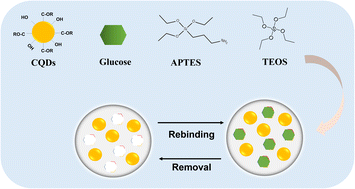
Monitoring glucose levels in intracellular fluid is important in healthcare, as it directly correlates with cell metabolism-related diseases. However, conventional methods typically require high-end equipment and can only be performed in laboratory settings. In this study, an imprinted copolymer composed of 3-aminopropyltriethoxysilane and tetraethyl orthosilicate, embedded with carbon quantum dots (CQDs), was developed for fluorescence-based glucose sensing. A facile preparation method yielded CQDs with sizes ranging from 0.7 to 5 nm and fluorescence emission at a wavelength of 435 nm. These CQDs were incorporated into a polymeric matrix in the presence of glucose, followed by a molecular imprinting process. The resulting polymeric particles exhibited a diameter of approximately 604 ± 15 nm and contained binding cavities that matched the spatial arrangement of hydroxyl groups on glucose. The fluorescence intensity of the CQDs was highly dependent on glucose adsorption. Leveraging these properties, the imprinted polymer exhibited successful glucose recognition in the intracellular fluid-mimicking solution, achieving a limit of detection of 29.4 nM. A good linear correlation (R2 = 0.9884) was observed between the logarithmic glucose concentration (25 nM to 25 mM) and changes in fluorescence intensity. This fluorescent sensor demonstrates significant potential for real-world applications in monitoring intracellular glucose levels.
 Please wait while we load your content...


