


 PLATFORM UPDATE:


Role of noble and rare earth metals in bioactive materials for medical applications in tissue engineering

Abstract
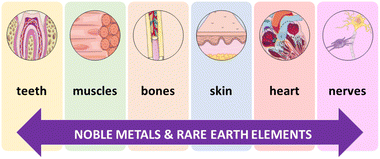
Tissue engineering (TE) is an interdisciplinary field that is developing rapidly. It combines medicine, chemistry, and biology to create functional biological materials that can restore or replace damaged tissues and organs. However, the potential of bioactive metals to improve the mechanical properties of tissue engineering scaffolds is largely unexplored. Our review of recent literature, focusing primarily on research conducted between 2020 and 2025, reveals common applications of these two metal groups, including bone and soft tissue regeneration, wound healing, and anticancer therapy. It also reveals differences in their use, highlighting the abundance of rare earth elements (REE) applications in the medical field for imaging and diagnostics, medical lasers, and radiation shielding and protection. The role of REEs in drug delivery systems distinguishes them from noble metals in medical applications. Here, we demonstrate that noble metals and REEs can significantly enhance the strength and fracture resistance of tissue engineering scaffolds. In the form of nanoparticles, these metals enhance biocompatibility, ensuring seamless integration with biological tissues and reducing the risk of adverse reactions. Key findings from the literature review highlight future directions for noble metal and REE applications in TE and medicine, including the multifunctionality of new biomaterials (particularly REE biomaterials), smart nanomaterials that respond to various changes in organisms, hydroxyapatite (HAP) doped with REEs, and surface modifications (particularly Pt-, Au- and Ag-doped materials) to create multifunctional implants that can better integrate with biological tissues and reduce infection risks.
- This article is part of the themed collection: 2025 Reviews in RSC Advances
 Please wait while we load your content...


