


 PLATFORM UPDATE:

Scavenging of reactive oxygen and nitrogen species using nanoparticles and their applications in disease management

Abstract
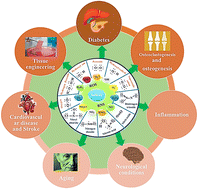
Nanomaterials constitute a new trend of disease management that is associated with advanced nanotechnology and bioengineered materials, presenting new solutions for various diseases that were previously problematic to handle with traditional chemical drugs or natural materials. Due to their high surface area, charge, variable size, and other properties, nanomaterials have been broadly used to manage several diseases. Specifically, nanomaterials have appeared with a significant ability to act as RONS scavengers for treatment and disease management. This is a result of their versatility in various applications, controlled release, enhanced reactivity, and unique biochemical properties. Recently, specific nanomaterials for treatment and disease management have been effectively developed into clinical tests. This review article focuses on the different types of nanomaterials that are effective for RONS scavenging and are used for different biomedical applications associated with excessive RONS generation. Nanoparticle-based systems have gained significant attention in recent years for their potential applications in scavenging reactive oxygen and nitrogen species (RONS) as part of disease management strategies. These nanoparticles can be designed to enhance the delivery, stability, and efficacy of antioxidants or other scavenging agents. The current review article provides a complete overview of the anti-inflammatory nature and use of nanoparticle systems by examining the molecular and pathological mechanisms of oxidative stress and the function of this stress in both cell and tissue damage. However, it is important to consider the biocompatibility, stability, and potential toxicity of these nanoparticle systems for therapeutic applications. Additionally, targeted delivery and controlled release mechanisms can enhance their efficacy in scavenging RONS at specific disease sites. RONS play a dual role in biological systems—they are essential for various physiological processes, such as cell signalling and host defence, but their overproduction can lead to oxidative and nitrosative stress, contributing to the development and progression of several diseases. Managing RONS is a key aspect of disease prevention and treatment. This article focuses on the use of nanomaterials for the treatment of various cancers, and in other areas such as tissue engineering, wound healing, osteoclast genesis, inflammation, and neurodegenerative disorders, such as Parkinson's and Alzheimer's disease, through RONS scavenging.
 Please wait while we load your content...


