


 PLATFORM UPDATE:


Fabrication of fluorescent supramolecular organic frameworks through host–guest interactions and their application in ratiometric detection of I−

Abstract
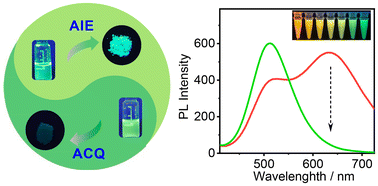
The construction of fluorescent supramolecular organic frameworks (SOFs) through host–guest interactions not only enables the construction of functional aggregates with diverse structures, but also effectively regulates the luminescence properties of the molecules. Herein, we synthesized a chalcone based fluorescent amphiphilic molecule (molecule 1). Molecule 1 could aggregate into nanospheres, with the emission color changing from yellow to green. After co-assembly with γ-cyclodextrin (γ-CD) through host–guest interactions, three-dimensional cube-like SOF structures were obtained. The emission color could be regulated from green to blue by adjusting the concentration of the complex. More importantly, the supramolecular complex suppressed the aggregation-caused quenching (ACQ) nature of molecule 1, and therefore, the bright luminescence can be sustained both in the solid state and in solution. Based on the stable emission properties of 1/γ-CD, we developed a ratiometric fluorescence platform for detection of I− using the 1/γ-CD complex as a reference signal combined with orange luminescent gold nanoclusters (AuNCs). The redox reaction between I− and AuNCs induces fluorescence quenching of AuNCs and no change to the fluorescence intensity of the 1/γ-CD complex, resulting in a low detection limit of 0.042 μM.
 Please wait while we load your content...


