


 PLATFORM UPDATE:

A chromone-based multi-selective sensor: applications in paper strips and real sample†
Abstract
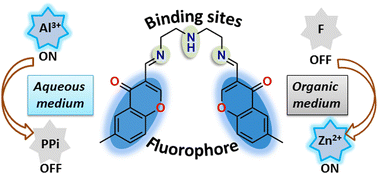
A chromone-based symmetrical dipodal Schiff base probe L was designed and synthesized for multi-analyte detection in both aqueous and organic media. L displayed a prominent 'turn-on' fluorescence response with Al3+ (LOD = 6.9 μM) via the chelation-enhanced fluorescence (CHEF) process in a fully aqueous medium based on the inhibition of the photoinduced electron transfer (PET) process. Moreover, the in situ generated [L-Al3+] system was able to detect pyrophosphate (PPi) under identical experimental conditions. The proposed sensing pathway is believed to be the complexation with aluminium, followed by the subsequent decomplexation of the system by PPi. Furthermore, as the probe was decorated with –NH functionalities, it attained fluorescence indications upon binding with a basic anion. The detection ability of the probe for fluoride ions (LOD = 6.8 × 10⁻⁸ M) in the organic medium was studied using the ‘turn-off’ emission change based on the formation of a N–H⋯F hydrogen bond and subsequent deprotonation, as well as a visual change in color from yellow to reddish-yellow under UV light. The in situ prepared [L-F−] adducts could potentially sense Zn2+ ions with a ‘turn-on’ response via the metal-induced release of the free probe. All of the spectroscopic analyses were recorded to support the recognition mechanism of the aforementioned analytes by the reported probe molecule L. The probe also found applications in testing real water samples.
 Please wait while we load your content...


