


 PLATFORM UPDATE:

Lipase catalyzed synthesis of fluorescent glycolipids: gelation studies and graphene incorporated self-assembled sheet formation for semiconductor applications†

Abstract
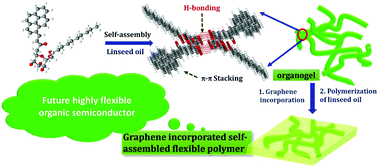
A series of fluorescent glycolipids were synthesized via direct condensation of vinylesters with functionalized sugar alcohol using Novozyme 435, an immobilized lipase B from Candida antarctica. These glycolipids were found to self-assemble into a gel in vegetable oils and highly hydrophobic solvents. A graphene incorporated hybrid gel was also successfully obtained in linseed oil. The morphology of the gel was investigated by optical microscopy and high resolution transmission electron microscopy. Auto-oxidation of linseed oil present as a solvent in both self-assembled and graphene incorporated supramolecular gels resulted in the formation of flexible polymer films, which could be potentially used for the construction of future green semiconducting devices.
 Please wait while we load your content...


