


 PLATFORM UPDATE:


An acridinium-based sensor as a fluorescent photoinduced electron transfer probe for proton detection modulated by anionic micelles†
Abstract
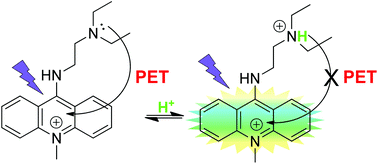
A water-soluble fluorescent pH sensor of 9-amino-10-methylacridinium chromophore with the 2-(diethylamine)ethyl chain as a receptor shows an “off–on” response going from basic to acidic solution. Photoinduced electron transfer has been directly demonstrated to be the quenching mechanism by the observation of the long-lived acridinyl radical. The interaction of the protonated sensor with anionic micelles causes a significant increase in the detection sensitivity of pH.
 Please wait while we load your content...


