Environmental impacts of three high-performance thermoplastics (HPTPs) and associated glass-fiber reinforced grades from different processing technologies
Received
22nd July 2025
, Accepted 15th December 2025
First published on 16th December 2025
Abstract
To guide the design of effective mitigation strategies for high performance thermoplastics (HPTPs) we assessed the environmental impacts of three varieties: polyetherimide (PEI), polyphenylene sulphide (PPS), and polybutylene terephthalate (PBT) and related glass-fiber reinforced grades. Using data collected from different sources and the life cycle assessment (LCA) method, we showed that direct CO2 emissions from HPTP production were low and that the environmental performance of HPTPs was primarily driven by feedstock sourcing and the processing method. Feedstocks were responsible for 35–93% of non-renewable energy (NRE) usage followed by the processing energy (4–49%) and glass fiber (0–12%). HPTP manufacturing processes using thermoforming consumed the most NRE, and those using compounding or extrusion consumed the least. Total NRE consumption ranged from 248–370 MJ kg−1 for PEI, 103–183 MJ kg−1 for PPS, and 101–115 MJ kg−1 for PBT. Glass-fiber reinforced grades reduced NRE use by 13–36% relative to unfilled HPTPs. GHG emissions showed a similar trend and ranged from 12–17 kg CO2eq kg−1 for PEI, 7–9 kg CO2eq kg−1 for PPS, and 4–5 kg CO2eq kg−1 for PBT. Eutrophication (EP) and acidification (AP) were low and followed the PEI > PPS > PBT trend. Low direct CO2 emissions from HPTP manufacturing limit the potential for point source carbon capture and storage as a mitigation strategy. However, developing recyclable, green feedstocks and adopting eco-friendly processes are key for improving the sustainability of HPTPs. Our findings serve as an important reference for HPTP stakeholders and policy makers.
Sustainability spotlight
High performance thermoplastic (HPTP) producers are looking at effective ways to mitigate the environmental impacts of HPTP products to remain competitive in the long term given the increasing demand for HPTPs. However, effective mitigation measures cannot be designed without deep investigation into the HPTP supply chain. Using LCA, we show that feedstock sourcing and processing energy are the main drivers of environmental impacts of HPTPs. Direct CO2 emissions from production of HPTPs are very low, meaning that mitigation strategies based on carbon capture and storage would have minor effects on environmental impacts of HPTPs. It identifies recycling and using sustainable feedstock as effective mitigation strategies in HPTP industries. Our work contributes to the UN's Sustainable Development Goals of climate action and sustainable production and consumption.
|
Introduction
High performance thermoplastics (HPTPs) are polymers that exhibit exceptional thermomechanical properties and can withstand high temperatures (≥150 °C) without decomposition or loss of thermomechanical properties and chemical stability.1 HPTPs offer several advantages over thermosets, including rapid processing and enhanced formability through techniques like additive manufacturing and injection moulding.2 Compared with metals, they possess higher stiffness-to-weight and strength-to-weight ratios, greater fatigue and corrosion resistance, and higher design freedom.3 Because of these attributes, HPTPs are highly desired in the aeronautic, electronic, automotive, 3D printing, and building industries where they displace other materials like metals.4 HPTPs can be grouped into amorphous materials such as polyetherimide (PEI) and semi-crystalline polymers like polyphenylene sulfide (PPS) and polybutylene terephthalate (PBT).5 HPTPs are often filled with glass fiber or other materials like carbon fiber and minerals to enhance their mechanical properties and provide new properties. Although HPTPs and associated glass fiber grades are inexpensive, each is a highly engineered material with precise physical and mechanical properties. They can be molded into any desired shape through rotation, injection, extrusion, compression, blowing or thermoforming and their material properties are adjusted during and/or after synthesis to achieve the desired strength, permeability, porosity, opacity and color.
The global production of HPTPs reached 0.8 million tons in 2022,6 and this annual production volume will continue to grow due to both the strong demand in end-user markets such as electronic, aeronautic and automotive and the growing emphasis on sustainability. However, with fossil fuels as the primary feedstocks, HPTPs are inextricably tied to carbon emissions and therefore climate change. While HPTPs offer a plethora of benefits and are fundamental in the production of several high-tech products, their sustainability can be a limiting factor for their further deployments.7 In fact, the vast majority of HPTPs produced today, including PEI, PPS, and PBT, are primarily derived from fossil fuels such as crude oil and natural gas. These resources are processed into monomers, which are chemically bound to form HPTP resins. The manufacturing of HPTPs is energy-intensive, releases greenhouse gases (GHGs) and acidifying compounds (SO2), and generates waste all of which have significant consequences for the environment and human health.8–10 Moreover, the polymerization of HPTPs often requires high temperatures and the use of aromatic hydrocarbons which in turn also depends on the crude oil refining process.11 Plastic (incl. HPTP) pollution has become one of the most pressing environmental issues of this century. Each year, millions of tons of plastic waste end up in landfills, oceans and natural habitats, causing significant damage to ecosystems and wildlife. Despite the increased attention given to plastic pollution in the last decade, evidence suggests that the problem is worsening.12 Recent public consultations on increasing plastic pollution identified the importance of tackling the environmental impacts of plastics at the design and manufacturing phase as well as the importance of providing information related to potential environmental impacts of plastics as the two key messages among others.13 Production of HPTPs is technically more challenging and their carbon footprints can also be significantly higher than those of commodity plastics.14 The increasing market share of HPTPs calls for a broader understanding of their implications at the environmental level. Consequently, gaining insight into the manufacturing processes and associated environmental impacts (incl. non-renewable energy (NRE) consumption, carbon footprints, acidification, and eutrophication) of various HPTPs can help HPTP industries make informed choices and contribute to a cleaner and healthier world.15 Unfortunately, very little information exists in the literature regarding the environmental impacts of HPTPs.16,17
Existing studies on environmental impacts of plastics are those related to commodity plastics such as low- and high-density polyethylene, polyvinyl chloride, polylactic acid, polystyrene, polycarbonate, polyethylene terephthalate, polyurethane polyphthalamide, and polypropylene.18 Most of these studies focused on the end-of-life options of these commodity plastics and they show that landfilling and mechanical recycling are the end-of-life options with the lowest carbon footprint.19–21 A few of these studies explored the environmental impacts of commodity plastic production and concluded that feedstock procurement and processing are the main contributors to the environmental impacts of commodity plastics.22–25 Among commodity plastics, bioplastics are reported to have a low carbon footprint26,27 and are typically lessenergy and water intensive to produce than conventional plastics.28–30 For example, Shen et al.31 showed that biobased polyethylene terephthalate consumed 20% less NRE than conventional polyethylene terephthalate. The carbon footprint of bioplastics was also reported to be much lower when produced from renewable power sources than when using fossil-fuel based grid mix power.32 Studies on the environmental impacts of HPTP production are very scarce,33 although it is well known that their production is responsible for substantial environmental16 and health impacts.34 One of the few available studies on HPTPs found that the production of polyoxazolidinone, a novel HPTP, has low GHG emissions relative to polyetherimide (PEI).14 Another study found that polyamide 6.6 when reinforced with glass fiber showed better environmental performance than the traditional aluminum covers in the marine industry.35 Delogu et al.35 concluded that substituting polyamide composites with polypropylene composites reduced the potential environmental impact in all categories and each of the stages of the air intake manifold, while Korol et al.30 argued that it is impossible to unequivocally assess which of these two composite materials has the lowest impact on the environment. Overall, this latest research highlights some of the potential environmental impacts of HPTPs, but the analysis is limited, in many cases, to a few impact categories, thus ignoring the major trade-offs that may exist when most impact categories are considered. As a result, effective mitigation strategies cannot be established without a comprehensive understanding of the full impact of HPTP production. This study (i) assesses the potential environmental impacts of three HPTPs (PEI, PPS, and PBT) and their related glass-fiber reinforced grades (PEI30GF, PEI45GF, PPS40GF, PPS65GF, PBT40GF and PBT45GF) and (ii) analyses the emission characteristics and provides emission reduction strategies in line with the development characteristics of HPTP industries in Europe.
Materials and methods
HPTPs studied and production pathways
Three HPTPs namely polyetherimide (PEI), polyphenylene sulfide (PPS), polybutylene terephthalate (PBT) and their associated glass-fiber filled grades (PEI30GF, PEI45GF, PPS40GF, PPS65GF, PBT40GF and PBT45GF) were considered in this study. The main difference between these HPTPs is that PEI, an amorphous HPTP, goes from soft to hard states more gradually, while both PPS and PBT, which are semi-crystalline HPTPs, become hard at a certain temperatures. Further details on the production and processing pathways of the studied HPTPs and associated glass-fiber filled grades are given below.
Polyetherimide (PEI)
PEI is an amorphous HPTP known to exhibit high temperature resistance, outstanding mechanical properties and excellent dielectric properties. It is produced by the polycondensation reaction between aromatic dianhydrides and aromatic diamines. Its synthesis begins with the production of an intermediate poly (amic acid) from the reaction of a dianhydride and a diamine. This intermediate undergoes a chemical imidization process to form the final product PEI (eqn (1)). PEI can be reinforced with glass fiber (PEI30GF and PEI45GF) to improve its tensile strength, rigidity, and dimensional stability.| | 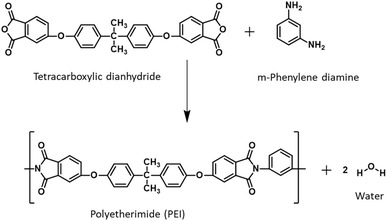 | (1) |
Polyphenylene sulfide (PPS)
PPS is a semi-crystalline HPTP made from a linear structured or branched polymer. It is produced by the reaction of sodium sulfide and dichlorobenzene in a polar solvent such as N-methylpyrrolidone at a temperature of ∼250 °C (eqn (2)). PPS can be processed using both injection moulding and compression moulding. It has excellent mechanical and electrical properties and is very resistant to high temperature and chemical corrosion, making it an ideal material for harsh environments. PPS resin is often combined with glass fiber (PPS40GF and PPS65GF) to improve its mechanical strength, thermal conductivity, dimensional stability (i.e., it retains its shape even under stress) and low-density hydrophobicity.36| |  | (2) |
Polybutylene terephthalate (PBT)
PBT is a semi-crystalline, high-performance thermoplastic produced by polycondensation of terephthalic acid and 1–4 butanediol in the presence of a catalyst like titanium butoxide or organo-zinc compounds (eqn (3)). The polymer consists of long chains formed through ester bonds. These bonds provide the material with durability and thermal resistance which makes it ideal for tough environments. The resulting polymer can then be further processed into different grades of PBT for specific applications. PBT (like both PEI and PPS) can be injection molded, extruded, and blow-molded making it suitable for creating complex shapes and components. PBT resin can be reinforced with different glass fiber contents (PBT30GF and PBT45GF) to improve its mechanical and thermal properties.| |  | (3) |
Life cycle assessment (LCA) of HPTPs
LCA is a commonly used method to evaluate the environmental performance of products and systems.37 A process-based LCA was used in this study to evaluate the cradle-to-gate environmental impact of three HPTPs and associated glass-fiber grades (HPTP composites). The LCA was carried out following the ISO standard38 and according to the ISO standard which for a typical LCA has four steps: goal and scope, inventory analysis, impact assessment, and interpretation. Their application in the context of this study is described in detail below.
Goal and scope definition
As mentioned in the introduction, the goal of this LCA was to assess the environmental impacts resulting from the production of the three selected HPTPs and associated glass fiber grades and to identify the hotspots in the production of these HPTPs. The function of a HPTP is to serve as a high-performance polymer material with specific thermomechanical properties in the manufacturing of high-tech devices for the aerospace, automotive or electronic industries. The functional unit is the production of a certain amount of HPTP materials or HPTP composites; thus, the reference flow was 1 kg of HPTP and 1 kg of glass-filled HPTP.
System boundaries and the functional unit
A cradle-to-gate system boundary was adopted and we considered all processes from raw material extraction through production of HPTPs, transport and storage at the warehouse. A simplified overview of the system boundary is shown in Fig. 1. No significant cut-off was assumed, so all relevant inputs for the production of HPTPs were considered. We included the consumption of raw materials, energy, water and chemicals used in the formulation of HPTPs and HPTP composites. We also accounted for any solid or liquid waste from the production system. Additives including plasticizers, stabilizers, colorants and flame retardants are often added to HPTPs to improve their color, strength, resistance to heat or UV radiation and flexibility. But the addition of additives was excluded from this study due to lack of data and because it was not possible to know the desired properties of the final products. The use-phase of HPTP and HPTP composites and their end-of-life were excluded from the analysis because (i) it is not feasible to attribute the impacts of the use phase to a single application of HPTPs and (ii) the end-of-life impacts can vary widely depending on the method of disposal (landfill, recycling, and incineration). Capital equipment such as buildings, machinery, and pipelines and construction of chemical factories were also excluded from the analysis as they represent a minor fraction of the overall environmental impacts. The energy use for space conditioning, lighting, and other overhead activities is not expected to make a significant contribution to total energy used for the manufacturing of HPTPs or HPTP composites, and so it was excluded from the analysis. The geographical boundary is France for the production of HPTPs and Europe for the production of raw materials, and the temporal scope is 2025 onward with relevant developments foreseen in the near future (2–5 years). The majority of the data used in the modelling is from Europe. In cases where it was necessary to use data from other continents, these data were adapted to the extent possible to represent the French and European practices. The electricity used in the manufacturing of HPTPs and HPTP composites was based on the power grid mix in France in 2025, while the supply of process steam and heat use was assumed to come from a highly efficient natural gas boiler.
 |
| | Fig. 1 System boundary of the evaluated HPTP products (PEI = polyetherimide; PEIGF = polyetherimide filled with glass fiber; PPS = polyphenylene sulfide; PPSGF = polyphenylene sulfide filled with glass fiber; PBT = polybutylene terephthalate; PBT = polybutylene terephthalate filled with glass fiber). | |
Life cycle inventory (LCI)
To build the life cycle model, we established a life cycle inventory which consisted of foreground and background data. The datasets used in this study included data compiled from industrial surveys and additional data (i.e., secondary data) gathered from LCA databases such as Ecoinvent, government and organisation databases, and the literature. Due to the non-disclosure agreement, survey data from industrial companies are not publicly available, but aggregated data are provided in Tables 1–3. The collected secondary data were adapted to French situation/practices. Where no industrial or lab data exist, a stoichiometric calculation, using synthesis reactions found in scientific articles, was necessary to establish the mass balance. To reflect the methods used to process HPTPs and a wide range of HPTP products, eight processing techniques were studied. These techniques included compounding, fiber extrusion, film extrusion, profile extrusion, injection molding, compression molding, rotational molding and thermoforming. The specific energy consumption (electricity, heat, and steam) of each of the processing technologies used in this study is given in Table 4. Processing techniques such as reaction injection, transfer molding, and blow molding were not evaluated because of the lack of data.
Table 1 Inventory data for polyetherimide (PEI) and its reinforced glass-fibre grades
|
|
PEIa |
PEI30%GF |
PEI45%GF |
|
Input–output data for the PEI were obtained from Bachmann et al.14 PEI30GF = PEI with 30% wt. glass fibre; PEI45GF = PEI with 45% wt. glass fibre.
|
|
Inputs
|
| Bisphenol A (kg) |
412 |
288 |
227 |
| Phthalic anhydride (kg) |
550 |
385 |
303 |
| Metaphenylene diamide (kg) |
192 |
135 |
106 |
| Nitric acid (kg) |
2500 |
1750 |
1375 |
| Nitrogen (kg) |
0.1 |
0.1 |
0.1 |
| Sodium hydroxide (kg) |
300 |
210 |
165 |
| Natural gas (kg) |
651 |
456 |
358 |
| Glass fiber (kg) |
— |
300 |
450 |
| Electricity (kWh) |
3564 |
3030 |
2760 |
| Heat (MJ) |
7840 |
6660 |
6080 |
| Steam (kg) |
25![[thin space (1/6-em)]](https://www.rsc.org/images/entities/char_2009.gif) 057 057 |
21300 |
19400 |
| Water (m3) |
732 |
512 |
403 |
|
|
Outputs
|
| PEI (kg) |
1000 |
— |
— |
| PEI30%GF (kg) |
— |
1000 |
— |
| PEI45%GF (kg) |
— |
— |
1000 |
| Nitric acid (kg) |
2200 |
1540 |
1210 |
Table 2 Inventory data for polyphenylene sulfide (PPS) and its reinforced glass-fibre gradesa
|
|
PPS |
PPS40%GF |
PPS65%GF |
|
PPS40GF = PBT with 40% wt. glass fibre; PPS65GF = PBT with 65% wt. glass-fibre.
|
|
Inputs
|
|
p-Dichlorobenzene (kg) |
1363 |
818 |
477 |
| Sodium sulfide (kg) |
723 |
434 |
253 |
| Glass fiber (kg) |
— |
400 |
650 |
| Electricity (kWh) |
2828 |
2260 |
1910 |
| Heat (MJ) |
7071 |
5660 |
4770 |
| Steam (kg) |
283 |
226 |
191 |
| Water (m3) |
750 |
750 |
750 |
|
|
Outputs
|
| PPS (kg) |
1000 |
— |
— |
| PPS40%GF (kg) |
— |
1000 |
— |
| PPS65%GF (kg) |
— |
— |
1000 |
| Sodium chloride (kg) |
1086 |
651 |
380 |
Table 3 Inventory data for polybutylene terephthalate (PBT) and its reinforced glass-fibre gradesa
|
|
PBT |
PBT30GF |
PBT45 GF |
|
PBT30GF = PBT with 30% wt. glass fibre; PBT45GF = PBT with 45% wt. glass-fibre.
|
|
Inputs
|
| Terephthalic acid (kg) |
880 |
630 |
514 |
| Butane 1,4 diol (kg) |
409 |
296 |
242 |
| Titanium butoxide (kg) |
40 |
28 |
22 |
| Glass fiber (kg) |
— |
300 |
450 |
| Electricity (kWh) |
189 |
132 |
123 |
| Heat (MJ) |
1581 |
1107 |
870 |
| Steam (kg) |
912 |
638 |
502 |
|
|
Outputs
|
| PBT (kg) |
1000 |
— |
— |
| PBT30%GF (kg) |
— |
1000 |
— |
| PBT45%GF (kg) |
— |
— |
1000 |
| Methanol (kg) |
290 |
208 |
169 |
Table 4 Specific energy consumption of high-performance plastics (HPTPs) from different processing technologies
| Processing technologies |
Polyetherimide (PEI) |
Polyphenylene sulfide (PPS) |
Polybutylene terephthalate (PBT) |
| Electricity (kWh kg−1) |
Heat (MJ kg−1) |
Steam (kg kg−1) |
Electricity (kWh kg−1) |
Heat (MJ kg−1) |
Steam (kg kg−1) |
Electricity (kWh kg−1) |
Heat (MJ kg−1) |
Steam (kg kg−1) |
| Compounding |
0.80 |
1.75 |
20.16 |
0.63 |
1.52 |
0.08 |
0.54 |
1.34 |
0.06 |
| Fibre extrusion |
1.07 |
2.36 |
20.83 |
0.85 |
2.12 |
0.11 |
0.72 |
1.81 |
0.09 |
| Film extrusion |
1.70 |
3.73 |
21.28 |
1.35 |
3.64 |
0.16 |
1.14 |
2.86 |
0.14 |
| Profile extrusion |
1.89 |
4.17 |
22.40 |
1.51 |
3.76 |
0.18 |
1.28 |
3.20 |
0.15 |
| Injection molding |
3.93 |
8.64 |
24.86 |
3.12 |
7.73 |
0.37 |
2.65 |
6.63 |
0.32 |
| Compression molding |
3.99 |
8.78 |
28.90 |
3.17 |
7.92 |
0.38 |
2.69 |
6.73 |
0.32 |
| Rotational molding |
7.34 |
16.16 |
30.11 |
5.83 |
14.57 |
0.70 |
4.95 |
12.38 |
0.59 |
| Thermoforming |
7.79 |
17.13 |
31.92 |
6.18 |
15.45 |
0.74 |
5.25 |
13.13 |
0.63 |
| Average |
3.56 |
7.84 |
25.06 |
2.83
|
7.07
|
0.34 |
2.41 |
6.01 |
0.29 |
HPTP manufacturing
The manufacturing of HPTPs and HPTP composites starts with the extraction of fossil fuels, primarily crude oil and natural gas (Fig. 1). Once extracted, crude oil and natural gas undergo various refining processes where they are transformed into monomers, the building blocks of HPTPs.39 The produced monomers are subsequently polymerized, forming long chains of molecules, which are then processed into various HPTP products and HPTP composites through different processing techniques (e.g., molding, extrusion, thermoforming, and compounding), depending on the final application of HPTPs. Prior to processing, glass fiber in different proportions may be added to the polymer matrix to obtain glass-fiber reinforced HPTPs or HPTP composites. The proportion of the added glass fiber will depend on the final application and the desired properties of the HPTP composites. We assumed 30% and 45% glass fiber addition to PEI to produce reinforced PEI grades (PEI30GF and PEI40GF). For the reinforced PPS grades (i.e., PPS40GF and PPS65GF) addition of 40% and 65% wt. glass fiber was considered while for the PBT composites (i.e., PBT30GF and PBT45GF), the assumed glass fiber content was 30% and 45% wt. The inventory data for materials, chemicals and energy consumed for the manufacturing of HPTPs and their associated glass-fiber grades were based on supplier information (Tables 1–3). As mentioned above, use of additives like flame retardants was not considered in this analysis. After manufacturing, the HPTPs and HPTP composites are transported to a warehouse where they are temporarily stored prior to their distribution to the global market. We assumed that the produced HPTPs (PEI, PPS and PBT) and their reinforced grades (PEI30GF, PEI45GF, PPS40GF, PPS65GF, PBT30GF and PBT45GF) are transported using trucks over a distance of 130 km to the warehouse. A sensitivity analysis is conducted to check the influence of transport distance on the results of LCA.
Multifunctional processes
The production of PEI PPS and PBT results in co-products. Economic allocation was used to split the environmental burdens between the main products (i.e., PEI, PPS, and PBT) and their respective coproducts. The prices of PEI (1,95 € kg−1), PPS (1,65 € kg−1), and PBT (2.40 € kg−1) and that of their respective co-products notably nitric acid (0.32 € kg−1), sodium chloride (0.22 € kg−1), and methanol (0.65 € kg−1) were used to carry out the allocation (Table 5). The same procedure was used to perform the allocation of the glass-filled HPTPs (i.e., PEI, 30 GF, PEI45GF, PPS40GF and PPS65 GF, and PBT30GF and PBT45GF). Allocation in the background processes relied on the allocation method used in the Ecoinvent database.40 To evaluate the influence of the chosen allocation approach on the results of this study, mass allocation was also tested in the sensitivity analysis.
Table 5 Quantity, market values, and allocation shares of HPTPs
| Product and co-products |
Quantity (kg) |
Price (€ kg−1) |
Total costs (€) |
Share (%) |
| Polyetherimide (PEI) |
1000 |
1.95 |
1950 |
74 |
| Nitric acid |
2200 |
0.32 |
704 |
26 |
| Total |
— |
— |
2654 |
100 |
| Polyphenylene sulfide (PPS) |
1000 |
1.65 |
1650 |
87 |
| Sodium chloride |
1086 |
0.22 |
239 |
13 |
| Total |
— |
— |
1889 |
100 |
| Polybutylene terephthalate (PBT) |
1000 |
2.40 |
2400 |
93 |
| Methanol |
290 |
0.65 |
189 |
7 |
| Total |
— |
— |
2589 |
100 |
Life cycle impact assessment (LCIA)
Environmental impacts were quantified using the IMPACT World+ midpoint method.41 This method was chosen for its wide coverage of impact categories. Four impact categories namely non-renewable energy (NRE) consumption, climate change, freshwater eutrophication and terrestrial acidification were selected based on their relevance to the LCI of HPTPs and HPTP composites. For the climate change impact, contributing elementary flows are characterized using factors reported by the Intergovernmental Panel on Climate Change (IPCC) in 2014 with a 100-year time horizon.42
Sensitivity/uncertainty analyses
To test the robustness of the results, a number of sensitivity analyses on key inputs, assumptions, and modelling choices were carried out. To this end, we doubled the transport distance and varied the energy (electricity, heat and steam) used and water consumed during the production of HPTPs by ± 20% and assessed the influence of these changes on the results of the study. With regard to sensitivity of the chosen allocation method (i.e., the economic allocation), we considered the mass-based allocation as an alternative allocation method and evaluated the influence of such a choice on the results. Finally, the sensitivity of the selected characterisation model was assessed by selecting the CML-IA method43 as an alternative characterisation model to the IMPACT World+ method.41
Modelling of LCA
The LCA of HPTP resins was modelled using Simapro 9.5.0.2 software44 using mainly the European LCI database. The main advantage of the Simapro tool is that it contains several available databases such as Ecoinvent40 and it has the ability to produce and evaluate results. The results from the Simapro software highlight the estimated environmental performance in terms of GHG emission, resource and energy consumption, eutrophication/acidification, and various other environmental impacts (not included in our study).
Results
Non-renewable energy (NRE) consumption
We report here the estimates of environmental impacts of production of the three HPTPs and associated reinforced glass-fiber grades, under different processing technologies. The non-renewable energy (NRE) consumption ranged from 247.6–370.3 MJ kg−1 for the unfilled PEI, while it varied from 209.5–322.2 MJ kg−1 for PEI30GF and from 187.9–295.1 MJ kg−1 for PEI45GF, depending on the processing technology (Fig. 2a). The lowest value of NRE consumption was related to the compounding process while the highest corresponded to the thermoforming process. Indeed, thermoforming involves more ancillary equipment and thus consumed more electrical energy than the compounding or the film extrusion processes (Table 4). The low embodied energy of glass fiber together with the reduction of feedstock/chemicals needed for the polymer matrix led to the overall low NRE consumption of glass-fiber grades (PEI30GF and PEI45GF) relative to the unfilled PEI (Fig. 2a). The contribution analysis revealed that the feedstocks (methaphenylene diamine and bisphenol A) used in the manufacturing of PEI and its associated grades (PEI30GF and PEI45GF) were the main contributors (43–55%) to the total NRE consumption, followed by processing energy (43–49%) and glass fiber (0–6%) and to a lesser extent the solvents or chemicals (NaOH and nitric acid) used during manufacturing (1–1.5%) and transport (0.11–0.16%) (Fig. 2b). Most of these impacts originated from fossil crude oil and natural gas used in the production of feedstocks/chemicals necessary for the manufacturing of PEI and associated glass-filled grades. The majority of NRE consumption is in the form of fossil fuels used to produce the intermediate chemicals and monomers used in PEI production.
 |
| | Fig. 2 Non-renewable energy (NRE) consumption and GHG emissions of PEI and associated glass-fiber grades (a and b) from different processing techniques (n = 8) and processes contributing to NRE and GHG emissions (c and d) of PEI and its reinforced glass fiber grades (PEI30GF and PEI45GF). Labels of values less than 4% are hidden in the graphic. | |
For PPS, the NRE consumption varied between 103.3 and 183.1 MJ kg−1, while it ranged from 80.9–148.6 MJ kg−1 for PPS40GF and from 65.5–124.8 MJ kg−1 for PPS65GF (Fig. 3a). The patterns of NRE consumption for PPS were similar to those of PEI, with the total NRE consumption decreasing when glass fiber was added to the polymer matrix. A breakdown of the total NRE energy consumption showed that feedstocks (i.e., P-dichlorobenzene and sodium sulfide) were the major contributors to NRE consumption (40–70%), followed by energy used during processing (30–34%), glass fiber (0–25%) and transport (0.3–0.6%) as shown in Fig. 3b. The trends observed here (PPS > PPS40GF > PPS65GF) were similar to that observed in the PEI case (Fig. 3a).
 |
| | Fig. 3 Non-renewable energy (NRE) consumption and GHG emissions of PPS and associated glass-fiber grades (a and b) from different processing techniques (n = 8) and processes contributing to NRE and GHG emissions (c and d) of PPS and its reinforced glass fiber grades (PPS40GF and PPS65GF). Labels of values less than 4% are hidden in the graphic. | |
The NRE consumption ranged from 101.6–115.1 MJ kg−1 for PBT, while that of its glass-filled grades ranged from 84.6–94.2 MJ kg−1 for PBT30GF and from 76.5–84.6 MJ kg−1 for PBT45GF (Fig. 4a). Here also, the total NRE consumption decreased as the glass fiber content of glass-filled PBT increased. Feedstock/materials (terephthalic acid, butane 1,4 diol and titanium butoxide) used in the manufacturing of BPT were the main contributors to the total NRE consumption (59–73%), followed by chemicals (16–17%), glass fiber (0–17%) and processing energy (5–6%). The contribution of transport remained very low as in the case of PEI and PPS (Fig. 4b). Overall, these results showed that the production of HPTPs has the potential to deplete fossil fuel resources (Fig. 2–4).
 |
| | Fig. 4 Non-renewable energy (NRE) consumption and GHG emissions of PBT and associated glass-fiber grades (a and b) from different processing techniques (n = 8) and processes contributing to NRE and GHG emissions (c and d) of PBT and its reinforced glass fiber grades (PBT40GF and PBT45GF). Labels of values less than 4% are hidden in the graphic. | |
Climate change
The GHG emissions ranged from 12.4–16.5 kg CO2eq kg−1 for PEI while for the glass reinforced grades the GHG emissions varied from 10.7–14.5 kg CO2eq kg−1 for PEI30GF and from 9.9–13.2 kg CO2eq kg−1 for PEI45GF (Fig. 2c), depending on the processing technology. The high estimate of GHG emissions was related to thermoforming, while the low estimate was associated with the compounding process. We also noted that GHG emissions decreased when PEI was reinforced with 30% or 45% glass fiber (PEI30GF and PEI45GF) (Fig. 2c). Here as well, feedstocks were the main contributors (42–54%) to the total GHG emissions of PEI and associated glass-fiber production, followed by the processing energy (43–47%), glass-fiber (0–8%), chemicals including NaOH (1.5–2%), direct emissions (0.08–0.1%), transport (0.14–0.21%), and water (<0.1%) which contributed minorly to GHG emissions of PEI and associated reinforced grades (Fig. 2d).
For PPS, the total GHG emissions ranged from 6.9–8.6 kg CO2eq kg−1 while they varied from 5.3–6.8 kg CO2eq kg−1 for PPS40GF and from 4.2–5.6 kg CO2eq kg−1 for PPS65GF (Fig. 3c). Reinforcing PPS with glass fiber resulted in decreasing GHG emissions. The GHG emissions of PPS were also much lower than those of PEI because PPS was less-energy intensive to manufacture than PEI. Similar to PEI, the breakdown of the total GHG emissions showed that feedstock (37–60%) largely dominated the total GHG emissions of PPS, followed by glass fiber (0–32%), direct emissions (17–27%), the processing energy (12–14%), and transport (0.3–0.5%) (Fig. 3d).
The GHG emissions ranged from 4.5–5.1 kg CO2 kg−1 for PBT, 4.0–4.4 kg CO2 kg−1 for PBT30GF and 3.7–4.1 kg CO2 kg−1 for PBT45GF, depending on the processing technologies (Fig. 4c). The lower GHG emission values were associated with both compounding and film extrusion while the highest GHG emissions were linked to thermoforming processes. But unlike with PPS, direct GHG emissions from manufacturing were very low (<0.5%) for PBT and its associated glass-filled grades. The GHG emissions also showed a decreasing trend with increasing glass-fiber content of PPS. The major contributors to GHG emissions were again feedstocks (41–56%), followed by chemicals (26–37%), glass fiber (0–27%), processing energy (4–6%) and transport (0.5–0.7%) (Fig. 4d). Overall, these findings highlighted the impact of feedstocks, chemicals, and processing technologies on the carbon footprint of HPTPs (Fig. 2–4). We noted that HPTPs of the amorphous groups (PEI) were more energy and carbon intensive than those of the crystalline ones (i.e., PPS and PBT).
Freshwater eutrophication (EP)
Freshwater eutrophication (EP) occurs when nutrients such as phosphates are introduced to surface water causing the rapid growth of aquatic plants. The EP varied from 3.1 × 10⁻⁴–3.5 × 10⁻⁴ kg PO43− kg−1 for PEI, 2.4 × 10⁻⁴–2.9 × 10⁻⁴ kg PO43− kg−1 for PEI30GF and 2.1 × 10⁻⁴–2.5 × 10⁻⁴ kg PO43−kg−1 for PEI45GF (Fig. 5a), depending on the processing technologies. Again, the highest estimate value is related to thermoforming while the lowest estimate is linked to compounding. The EP impact decreased with the increase in glass-fiber content of PEI. Most of these emissions were direct emissions (53–56%) originating from the manufacturing of PEI and associated glass fiber, followed by feedstock emissions (31–36%), processing energy (9–11%), glass-fiber (0–1.2%), and transport (<1%) (Fig. 5b). Biochemical oxygen demand (BOD), chemical oxygen demand (COD) and dissolved organic carbon (DOC) were the main pollutants contributing to freshwater EP of PEI.
 |
| | Fig. 5 Eutrophication (EP) and acidification potential (AP) of PEI and associated glass-fiber (a and b) from different processing techniques (n = 8) and processes contributing to EP and AP (c and d) of PEI and its reinforced glass fiber grades (PEI30GF and PEI45GF). Labels of values less than 4% are hidden in the graphic. | |
Estimates of EP ranged from 3.41 × 10⁻⁴–3.43 × 10⁻⁴ kg PO43− kg−1 for PPS, while they varied from 3.16 × 10⁻⁴–3.18 × 10⁻⁴ kg PO43− kg−1 for PPS40GF and from 3.32 × 10⁻⁴–3.34 × 10⁻⁴ kg PO43 kg−1 for PPS65GF, depending on the processing technology (Fig. 6a). The patterns were similar to those observed in other impact categories (i.e., PPS > PPS40GF > PPS65 GF). Contribution analysis showed that feedstocks/materials (P-dichlorobenzene and sodium sulfide) dominated (97–99%) the EP impacts for PPS and associated glass fiber (PPS40GF and PPS65GF), followed by glass fiber (0–0.8%), processing energy (0.3–0.5%), direct emissions (0.2–0.3%) and transport (<0.1) (Fig. 6b). Waterborne emissions (COD, BOD, DOC and phosphate) were the main pollutants contributing to EP. Freshwater EP was an order of magnitude higher for PPS relative to PEI.
 |
| | Fig. 6 Eutrophication (EP) and acidification potential (AP) of PPS and associated glass-fiber (a and b) from different processing techniques (n = 8) and processes contributing to EP and EP (c and d) of PPS and its reinforced glass fiber grades (PPS40GF and PPS65GF). Labels of values less than 4% are hidden in the graphic. | |
The freshwater EP ranged from 3.17 × 10⁻⁴–3.22 × 10⁻⁴ kg PO43− kg−1 for PBT, while it varied from 2.3 × 10⁻⁴–2.4 × 10⁻⁴ kg PO43− kg−1 for PBT30GF and from 1.98 × 10⁻⁴–2.01 × 10⁻⁴ kg PO43− kg−1 for PBT45GF, depending on processing technologies (Fig. 7a). As in previous cases, the high estimate of EP was related to thermoforming, while the low estimate was linked to compounding. The EP decreased with increasing glass fiber content. However, the differences in estimates of EP between these HPTPs were very small. The top contributors to freshwater EP for PBT and its associated glass-filled grades were feedstocks (88–92%), followed by chemicals (3–4%), direct emissions (2–3%), glass fiber (0−4%), and processing energy (0.7–0.8%) (Fig. 7b). Here the main pollutants contributing to this impact were BOC, COD, phosphate and phosphorus. The EP of amorphous HPTP (PEI) was comparable to that of the semi-crystalline HPTPs (PPS and PBT).
 |
| | Fig. 7 Eutrophication (EP) and acidification potential (AP) of PBT and associated glass-fiber (a and b) from different processing techniques (n = 8) and processes contributing to EP and EP (c and d) of PBT and its reinforced glass fiber grades (PBT40GF and PBT45GF). Labels of values less than 4% are hidden in the graphic. | |
Terrestrial acidification (AP)
Terrestrial acidification (AP) impact is the result of atmospheric deposition of emitted pollutants and their subsequent deposition on soil and water, leading to a decrease in plant performance, biodiversity losses and damage to infrastructure. Terrestrial AP ranged from 8.6 × 10⁻⁵–1.1 × 10⁻⁴ kg SO2 kg−1 for PEI while it varied from 7.6 × 10⁻⁵–9.7 × 10⁻⁵ kg SO2 kg−1 for PEI30GF and 7.1 × 10⁻⁵–9.1 × 10⁻⁵ kg SO2 kg−1 for PEI65GF, depending on the processing technologies (Fig. 5c). The lowest estimate of AP impacts was associated with compounding and the highest estimate was related to thermoforming. The patterns of AP also followed those observed in other impacts with increasing glass-fiber content leading to lower EP impacts. The largest part of AP impacts came from feedstocks/materials (47–63%), followed by processing energy (33–36%) and glass fiber (0%–15%), chemicals (2–3%) and transport to a lesser extent (Fig. 5d).
For PPS, estimates of terrestrial AP ranged from 4.7 × 10⁻⁵–5.7 × 10⁻⁵ kg SO2 kg−1, whereas they varied from 4.1 × 10⁻⁵–4.9 × 10⁻⁵ kg SO2 kg−1 for PPS40GF and 3.7 × 10⁻⁵–4.5 × 10⁻⁵ kg SO2 kg−1 for PPS65GF, depending on the processing technologies (Fig. 6c). As in the previous cases, the increase in glass fiber content led to lower AP for glass-filled PPS relative to unfilled PPS. The top process contributors to AP impacts were feedstock/materials (43–89%), glass fiber (0–47%) and processing energy (9–10%) (Fig. 6d). Pollutants contributing to AP impacts were ammonia (NH3), nitrogen oxides (NOx), sulphur dioxide (SO2) and sulphate.
Finally, for PBT, estimates of AP varied from 3.7 × 10⁻⁵–4.0 × 10⁻⁵ kg SO2 kg−1, while they ranged from 3.6 × 10⁻⁵–3.8 × 10⁻⁵ kg SO2 kg−1 for PBT30GF and 3.5 × 10⁻⁵–3.7 × 10⁻⁵ kg SO2 kg−1 for PBT45GF, depending on the processing technologies (Fig. 7c). A breakdown of AP impacts showed that feedstock (32–49%) was the highest contributing process followed by the catalyst (29–47%), glass fiber (0–37%), processing energy (2–4%) and transport (0.6–0.7%) (Fig. 7d). The primary pollutants contributing to these impacts included NOx and SO2. The AP impacts of both PBT and PEI are an order of magnitude lower than those of PPS. Overall, our analysis suggests that depletion of non-renewable resources and climate change are the most concerning environmental impact categories in the life cycle of HPTPs, mainly due to the petroleum derived feedstocks (i.e., monomers) used for their formulation and the processing energy. No trade-offs in environmental categories were observed in this study and the ranking of HPTPs was maintained in all cases.
Sensitivity analysis
The results of the sensitivity analysis are presented in Fig. 8. Because of the very small change in EP and AP impact categories only the data for NRE consumption and climate change are displayed. As shown in Fig. 8, the scenarios with the highest influence were related to model assumptions (i.e., the allocation method and impact assessment method), which caused a variation of 3% to 58% in both the NRE consumption and climate change impact categories, depending on the type of HPTP. Processing energy (6–16%) was the input that had the strongest effect in both impact categories (i.e., NRE consumption and climate change). Transportation (<0.4% change in energy use and GHG emissions) and water use (<0.1% change in both impact categories) seemed to have the least significant influence on the results (Fig. 8a and b). In all scenarios the trends and ranking of environmental impacts on the two groups of HPTPs (i.e., PEI > PPS > PBT) remained unchanged. Within the amorphous group, PEI > PEI30GF > PEI45GF while in the crystalline group, PPS > PPS40GF > PPS65GF and PBT > PBT40GF > PBT45GF (Fig. 8a and b).
 |
| | Fig. 8 Sensitivity analysis of energy use (a) and GHG emissions (b) for the different studied HPTPs. | |
Discussion
The growing use of HPTPs is significantly impacting the environment, resulting in contamination of surrounding environments. Addressing HPTP pollution is not just about cleaning up the waste; it involves understanding its origins, the scale of its production, consumption habits and its end-of-life management practice globally. We contributed to this effort by studying the environmental impacts of the three HPTPs (PEI, PPS and PBT) and their respective reinforced glass-fiber grades (PEI30GF, PEI45GF; PPS40GF, PPS65GF; PBT30GF and PBT45GF). We showed that feedstocks and processing energy were the main sources of environmental impacts in all cases (Fig. 2–4). Our study also corroborated recent conclusions that feedstocks and processing energy are the main hotspots of plastic/polymer manufacturing.16,45 The low contribution (<1%) of transport to NRE consumption and GHG emissions of HPTPs in our study is in line with the assumed short distance covered (130 km round-trip). Some authors reported up to 8% contribution of transport to GHG emissions of plastics,46 but a recent study suggested that their contribution to total GHG emissions of plastics would remain negligible (<3%)34,47 in line with the findings of this study. Very few LCAs on HPTPs exist in the literature; however, studies on commodity plastics concluded that the production of virgin commodity plastics requires 54–200 MJ kg−1.48 Our data showed that HPTPs required 76–370 MJ kg−1, which is 1.4–1.8 times higher than the reported ranges for commodity plastics. With regard to GHG emissions, our average GHG emission estimate is 14.1 kg CO2eq kg−1 for PEI which agreed well with the climate change value of PEI (11 kg CO2eq kg−1) reported by Bachmann et al.14 The CONVENA group reported an estimate of 5.1 kg CO2eq kg−1 for virgin glass-fiber reinforced PPS,49 which compared well with the average value of GHG emissions (7.6 kg CO2eq kg−1) for PPS found in this study. For PBT, the available literature reports a cradle-to-gate GHG emission of 6.2 kg CO2eq kg−1 (ref. 48) in agreement with the average 4.7 kg CO2eq kg−1 for PBT in this study. A recent literature review on environmental impacts of seven commodity plastics (incl. HDPE, LDPE, PC, PET, PP, PS and PVC) reported that GHG emissions of these plastics range from 1.4–4.8 kg CO2eq kg−1, depending on the plastic types.48 These values are only 2–4 times lower than those of PPS found in this study, but they are even lower (4–9 times lower) than those of PEI, suggesting that GHG emissions of HPTPs are much higher than those of commodity plastics. The high GHG emissions of HPTPs relative to most commodity plastics can be explained by their superior qualities, which often make them difficult to process, thus necessitating specialized and high energy consuming machinery. Additives such as plasticizers are used in the manufacturing of HPTP products,2,50 but they were not included in this study due to lack of data. Some of these additives are energy intensive and potentially harmful to humans and/or the environment.51–54 Consequently, the reported estimates of total NRE consumption and GHG emissions in this study can be viewed as conservative. Effective ways to reduce the environmental impacts of manufacturing HPTPs would be (a) to improve energy efficiency in HPTP production, (b) to switch to less CO2-intensive fuels and materials, (c) to use carbon capture and storage (CCS) or carbon capture and utilisation (CCU) technologies, and (d) to recycle HPTPs or use recycled materials in HPTP production. Improving energy efficiency in production processes can significantly reduce energy use and CO2 emissions of HPTPs.55 This can be achieved by replacing outdated installations with energy-efficient ones, upgrading current processes, installing heat recovery technologies and power recovery expanders, optimising heat integration, or by implementing cogeneration units in current HPTP production processes.11,56,57 But the potential of energy efficiency in HPTP industries is limited because it requires a significant financial commitment. Switching to renewable and/or low carbon feedstock and energy carriers (e.g., biomethane, hydrogen, and liquid biofuel) is another carbon mitigation strategy in HPTP industries. This strategy can reduce up to 85% of direct CO2 emissions in HPTP production.58,59 Biobased xylene could replace phthalic anhydride in PEI production.13,14,60,61 Likewise, lignin-based vanillin can serve as a platform chemical for the production of biobased substitutes to bisphenol A in PEI production.62,63 However, each of these alternatives comes with a high energy penalty62 and most of these platform chemical technologies are not yet mature enough to fully switch to CO2 neutral feedstocks or energy sources.
Carbon capture and storage (CCS) or utilisation (CCU) is another strategy being widely explored in HPTP industries for the management of direct CO2 emissions from HPTP manufacturing processes. Depending on capture technology, CCS can remove 80–90% direct CO2 emissions from HPTP manufacturing processes.59,63 The captured CO2 can also be used as renewable feedstock in the production of monomers/components necessary for the manufacturing of HPTPs.64,65 However, our data showed that depending on the type of HPTP, direct CO2 emissions represented 0–27% of the total GHG emissions of HPTPs (Fig. 2, 4 and 6), but most of these greenhouse gases were non-CO2 pollutants. Consequently, CCS or CCU may have very limited potential in HPTP industries because of the low CO2 volumes and concentrations in HPTP production and the fact that both CSS and CCU are energy-intensive and require huge investments and expansion of infrastructure.66
Incineration with energy recovery is a widely implemented waste management strategy in HPTP industries. Capitalising on the high calorific value of HPTPs to generate useful energy in the form of heat and electricity, incineration significantly reduces the volume of HPTP waste and contributes to energy production, making it a valuable component of integrated waste management systems. Its prevalence is largely attributed to these dual benefits (i.e., energy recovery and waste minimization). However, incineration is a carbon intensive process; it releases ∼2.4 kg CO2eq kg−1plastics67 in addition to toxic gases (e.g., dioxine), particulate matter and volatile organic carbon.68 Consequently, incineration may undermine the general efforts of GHG emissions reductions in HPTP industries.
Recycling is an efficient approach to reducing energy, GHG emissions and other environmental impacts of HPTP production.69,70 It has been reported that recycling reduces 0.2–3 kg CO2 kg−1 relative to virgin plastics.71 However, not all HPTP recycling pathways have better process emissions than the respective virgin HPTP value chain. Consequently, the energy and carbon reduction potential through recycling should be done on a case-by-case basis. Also, the leaching of harmful pollutants (incl. hazardous chemicals) during recycling poses a significant threat52 and may limit the mitigation potential of this strategy. Another challenge that hinders the mitigation potential of this strategy is that certain HPTPs especially those compounded with glass or carbon fiber are complex to recycle and there is a lack of market and fiscal based incentives rewarding the significant environmental and social benefits of recycling.
Conclusion
We conducted a detailed investigation of the environmental impacts of HPTPs using LCA. We found that the feedstocks and the processing energy requirements were the major contributors to the environmental impacts of HPTP production. The NRE consumption and GHG emissions of amorphous HPTPs were twice as high as those of their semi-crystalline counterparts. EP and AP were low for all the investigated HPTPs. While an immediate reduction in HPTP production is difficult due to its increasing demand, strategic initiatives such as sustainable feedstock sourcing, recycling and efficiency improvement can improve its carbon footprint and significantly mitigate its negative impacts on the environment. Our results provide a benchmark for comparing and improving the NRE consumption, GHG emissions, EP and AP of HPTPs. The analysis provides valuable insights into the environmental impacts of HPTPs, examining the effects of processing technology and the addition of glass fiber. Our findings serve as an important reference for HPTP stakeholders and policy makers. We caution, however, that the results of this study should not be viewed as a globally representative, as the case study scope was limited to France. Future work should expand our modelling framework to include other HPTPs (e.g., PEEK, PTFE, PPSU, and PSU) and their glass/carbon fiber reinforced grades and the use and recycling of HPTPs in order to evaluate the environmental benefits of different mitigation strategies for HPTPs that may include these actions. We also plan to extend the modelling from a national to a regional scale by including regional details as improved geographic granularity could help better inform the setting of regional or national goals and actions.
Author contributions
Aicha Touré and Sylvestre Njakou Djomo carried out the LCA and wrote the first draft of the manuscript, which was edited and approved by all authors. Sylvestre Njakou Djomo, Jannick Duchet Rumeau, and Jeremy Sautel designed the study and data collection. Aicha Touré Bérenger Thollet and Emile Pantaleao collected the data. All authors contributed to the data analysis.
Conflicts of interest
The authors declare that they have no known competing financial interests or personal relationships that could have appeared to influence the work reported in this paper.
Data availability
All data that support the findings of this study are included within the article.
Acknowledgements
The authors are grateful to RADIALL for providing funding for this research. Sylvestre Njakou Djomo was supported by the CPJ grant of the ANR.
References
- M. He, K. Gu, Y. Wang, Z. Li, Z. Shen, S. Liu and J. Wei, Resour., Conserv. Recycl., 2021, 173, 105713 CrossRef CAS.
- Y. Abderrafai, A. Diouf-Lewis, F. Sosa-Rey, R. D. Farahani, N. Piccirelli, M. Lévesque and D. Therriault, Compos. Sci. Technol., 2023, 231, 109839 CrossRef CAS.
- S. Yang, Y. Li, M. Nie, X. Liu, Q. Wang, N. Chen and C. Zhang, Adv. Mater., 2024, 2404115, DOI:10.1002/adma.202404115.
- C. Yang, X. Tian, T. Liu, Y. Cao and D. Li, Rapid Prototyp. J., 2017, 209, DOI:10.1108/RPJ-08-2015-0098.
-
D. Parker, J. Bussink, H. T. van de Grampel, G. W. Wheatley, E.-U. Dorf, E. Ostlinning and K. Reinking, in Ullmann's Encyclopedia of Industrial Chemistry, Wiley-VCH Verlag GmbH & Co. KGaA, Weinheim, Germany, 2000 Search PubMed.
-
Plastic Europe, https://plasticseurope.org/knowledge-hub/plastics-the-fast-facts-2023/, 2023 Search PubMed.
- B. A. Abel and G. W. Coates, Chem. Rev., 2025, 125, 1255–1256 CrossRef CAS PubMed.
- Y. Zhu, C. Romain and C. Williams, Nature, 2016, 540, 354–362, DOI:10.1038/nature21001.
- D. K. Schneiderman and M. A. Hillmyer, Macromolecules, 2017, 50(10), 3733–3749, DOI:10.1021/acs.macromol.7b00293.
- C. Vilela, A. F. Sousa, A. C. Fonseca, A. C. Serra, J. F. J. Coelho, C. S. R. Freire and A. J. D. Silvestre, Polym. Chem., 2014, 5, 3119–3141 RSC.
- D. Khripko, B. A. Schlüter, B. Rommel, M. Rosano and J. Hesselbach, Int. J. Energy Environ. Eng., 2016, 7, 225–233 Search PubMed.
- A. Barrick, A. J. Boardwine and T. C. Hoang, Sci. Total Environ., 2014, 175384, DOI:10.1016/j.scitotenv.2024.175384.
- M. Boeve and I. M. de Waal, Environ. Law Rev., 2024, 53, 461–472 Search PubMed.
- M. Bachmann, A. Marxen, R. Schomäcker and A. Bardow, Green Chem., 2022, 9143, 10.1039/d2gc02400d.
- C. Askham, V. H. Pauna, A. M. Boulay, P. Fantke, O. Jolliet, J. Lavoie, A. M. Booth, C. Coutris, F. Verones, M. Weber, M. G. Vijver, A. Lusher and C. Hajjar, Sci. Total Environ., 2023, 859, 160038 Search PubMed.
- J. Zheng and S. Suh, Nat. Clim. Chang., 2019, 9, 374–378, DOI:10.1038/s41558-019-0459-z.
- I. Daniel Posen, P. Jaramillo, A. E. Landis and W. Michael Griffin, Environ. Res. Lett., 2017, 034024, DOI:10.1088/1748-9326/aa60a7.
- T. Uekert, A. Singh, J. S. DesVeaux, T. Ghosh, A. Bhatt, G. Yadav, S. Afzal, J. Walzberg, K. M. Knauer, S. R. Nicholson, G. T. Beckham and A. C. Carpenter, ACS Sustain. Chem. Eng., 2023, 11(3), 965–978, DOI:10.1021/acssuschemeng.2c05497.
- H. Jeswani, C. Krüger, M. Russ, M. Horlacher, F. Antony, S. Hann and A. Azapagic, Sci. Total Environ., 2021, 769, 144483 Search PubMed.
- P. García-Gutiérrez, A. M. Amadei, D. Klenert, S. Nessi, D. Tonini, D. Tosches, F. Ardente and H. G. M. Saveyn, Resour., Conserv. Recycl., 2025, 215, 108099 CrossRef.
- N. Singh and T. R. Walker, npj Mater. Sustain., 2024, 2, 17 Search PubMed.
- C. Moretti, M. Junginger and L. Shen, Resour., Conserv. Recycl., 2020, 157, 104750 Search PubMed.
- J. An, F. Wu, D. Wang and J. You, Resour., Conserv. Recycl., 2022, 180, 106161 Search PubMed.
- L. Ye, C. Qi, J. Hong and X. Ma, J. Cleaner Prod., 2017, 142, 2965–2972 CrossRef CAS.
- K. G. Harding, J. S. Dennis, H. von Blottnitz and S. T. L. Harrison, J. Biotechnol., 2007, 130, 57–66 Search PubMed.
- P. T. Benavides, U. Lee and O. Zarè-Mehrjerdi, J. Cleaner Prod., 2020, 124010, DOI:10.1016/j.jclepro.2020.124010.
- M. L. M. Broeren, L. Kuling, E. Worrell and L. Shen, Resour., Conserv. Recycl., 2017, 127, 246–255, DOI:10.1016/j.resconrec.2017.09.001.
- G. Bishop, D. Styles and P. N. L. Lens, Resour., Conserv. Recycl., 2021, 168, 105451, DOI:10.1016/j.resconrec.2021.105451.
- L. K. Nguyen, S. Na, Y. G. Hsuan and S. Spatari, Resour., Conserv. Recycl., 2020, 154, 104602, DOI:10.1016/j.resconrec.2019.104602.
- J. Korol, D. Burchart-Korol and M. Pichlak, J. Cleaner Prod., 2016, 113, 144–152, DOI:10.1016/j.jclepro.2015.11.101.
- L. Shen, E. Nieuwlaar, E. Worrell and M. K. Patel, Int. J. Life Cycle Assess., 2011, 16, 522–536, DOI:10.1007/s11367-011-0296-4.
- J. G. Rosenboom, R. Langer and G. Traverso, Nat. Rev. Mater., 2022, 7, 117–137, DOI:10.1038/s41578-021-00407-8.
- R. Meys, A. Kätelhön, M. Bachmann, B. Winter, C. Zibunas, S. Suh and A. Bardow, Science, 2021, 374(6563), 71–76, DOI:10.1126/science.abg9853.
- A. Dormer, D. P. Finn, P. Ward and J. Cullen, J. Cleaner Prod., 2013, 51, 133–141, DOI:10.1016/j.jclepro.2013.01.014.
- M. Delogu, F. Del Pero, F. Romoli and M. Pierini, Int. J. Life Cycle Assess., 2015, 20, 1429–1443, DOI:10.1007/s11367-015-0946-z.
- H. H. Wang, S. Huo, V. Chevali, W. Hall, A. Offringa, P. Song and H. Wang, Adv. Mater., 2025, 37, 2418709, DOI:10.1002/adma.202418709.
-
ISO 14040, Environmental Management – Life Cycle Assessment. Principles and Framework, Geneva, 2006 Search PubMed.
-
ISO 14044, Environmental Management – Life Cycle Assessment – Requirements and Guidelines, Geneva, 2006 Search PubMed.
- R. Geyer, J. R. Jambeck and K. L. Law, Sci. Adv., 2017, 3, e1700782, DOI:10.1126/SCIADV.1700782.
- G. Wernet, C. Bauer, B. Steubing, J. Reinhard, E. Moreno-Ruiz and B. Weidema, Int. J. Life Cycle Assess., 2016, 21, 1218–1230, DOI:10.1007/s11367-016-1087-8.
- C. Bulle, M. Margni, L. Patouillard, A. M. Boulay, G. Bourgault, V. De Bruille, V. Cao, M. Hauschild, A. Henderson, S. Humbert, S. Kashef-Haghighi, A. Kounina, A. Laurent, A. Levasseur, G. Liard, R. K. Rosenbaum, P. O. Roy, S. Shaked, P. Fantke and O. Jolliet, Int. J. Life Cycle Assess., 2019, 24, 1653–1674, DOI:10.1007/s11367-019-01583-0.
-
IPCC, Climate Change 2014: Synthesis Report. Contribution of Working Groups I, II and III to the Fifth Assessment Report of the Intergovernmental Panel on Climate Change, Generva, Switzerland, 2014 Search PubMed.
-
CML-IE, CML-IA Characterisation factors, Institute of environmental sciences (CML), https://www.universiteitleiden.nl/en/research/research-output/science/cml-ia-characterisation Search PubMed.
-
P. Sustainability, SimaPro LCA Software - PRé Sustainability’, SimaPro, Accessed: Aug. 05, 2024, Online, available, https://Network.Simapro.Com/Pré Search PubMed.
- L. Cabernard, S. Pfister, C. Oberschelp and S. Hellweg, Nat. Sustain., 2022, 5, 139–148, DOI:10.1038/s41893-021-00807-2.
-
F. Associates, Cradle-to-gate life cycle analysis of acrylonitrile butadiene styrene (ABS) resin, Baton Rouge, LA, 2024, p. 70806 Search PubMed.
- X. Zhu, J. Konik and H. Kaufman, Front. Environ. Sci., 2025, 13 DOI:10.3389/fenvs.2025.1563488.
- S. R. Nicholson, N. A. Rorrer, A. C. Carpenter and G. T. Beckham, Joule, 2021, 673, DOI:10.1016/j.joule.2020.12.027.
-
CONVENA, Carbon Footprint of Polymers, Hamburg Germany, 2022 Search PubMed.
- D. P. Simunec, J. Jacob, A. E. Z. Kandjani, A. Trinchi and A. Sola, Eur. Polym. J., 2023, 201, 112553 Search PubMed.
- N. R. Maddela, D. Kakarla, K. Venkateswarlu and M. Megharaj, J. Environ. Manage., 2023, 348, 119364 Search PubMed.
- J. N. Hahladakis, C. A. Velis, R. Weber, E. Iacovidou and P. Purnell, J. Hazard. Mater., 2018, 344, 179–199, DOI:10.1016/j.jhazmat.2017.10.014.
- L. Zhang, Y. He, L. Jiang, Y. Shi, L. Hao, L. Huang, M. Lyu and S. Wang, Environ. Res., 2024, 263, 120007 CrossRef CAS.
- S. Jung, L. B. Kara, Z. Nie, T. W. Simpson and K. S. Whitefoot, Environ. Sci. Technol., 2023, 57, 6373–6386 Search PubMed.
- C. Abeykoon, A. McMillan and B. K. Nguyen, Renew. Sustain. Energy Rev., 2021, 147, 111219 CrossRef CAS.
- H. Mianehrow and A. Abbasian, J. Cleaner Prod., 2017, 148, 804–810 CrossRef.
- J. Madan, M. Mani, J. H. Lee and K. W. Lyons, J. Cleaner Prod., 2015, 105, 157–170 CrossRef.
- G. Q. Chen and M. K. Patel, Chem Rev., 2012, 112(4), 2082–2099, DOI:10.1021/cr200162d.
- E. Hanson, C. Nwakile and V. O. Hammed, Results Surf. Interf., 2025, 18, 100381 Search PubMed.
- L. Zhang, Y. He, L. Jiang, Y. Shi, L. Hao, L. Huang, M. Lyu and S. Wang, Environ. Res., 2024, 263, 120007 CrossRef CAS.
- S. Dutta and N. S. Bhat, Biomass Convers. Biorefin., 2023, 13, 541–554 Search PubMed.
- F. Bauer, T. D. Nielsen, L. J. Nilsson, E. Palm, K. Ericsson, A. Fråne and J. Cullen, One Earth, 2022, 5(4), 361–376, DOI:10.1016/j.oneear.2022.03.007.
- J. Wang, Q. Pu, P. Ning and S. Lu, Greenhouse Gases:Sci. Techno, 2021, 11, 377–393 CrossRef CAS.
- L. Pires, M. Vaz, A. Carolina, C. De Oliveira, L. Falcon, M. Stella, S. Pimenta, I. G. Bessa, J. Wouters, H. S. Andrade and C. Pinto, Processes, 2021, 9, 759, DOI:10.3390/pr9050759.
- N. Yadav, F. Seidi, D. Crespy and V. D’Elia, ChemSusChem, 2019, 12(4), 724–754, DOI:10.1002/cssc.201802770.
- F. Bauer, T. D. Nielsen, L. J. Nilsson, E. Palm, K. Ericsson, A. Fråne and J. Cullen, One Earth, 2022, 5(4), 361–376, DOI:10.1016/j.oneear.2022.03.007.
- W. Leal Filho, J. Barbir, E. Carpio-Vallejo, A. Dobri and V. Voronova, Sci. Total Environ., 2025, 999, 180337 CrossRef CAS PubMed.
- K. Rogers and I. Jaspers, Toxicol. Sci., 2025, 206, 230–232 CrossRef CAS PubMed.
- J. Hopewell, R. Dvorak and E. Kosior, Philos. Trans. R. Soc. London, Ser. B, 2009, 364(1526), 2115–2126, DOI:10.1098/rstb.2008.0311.
- D. Lazarevic, E. Aoustin, N. Buclet and N. Brandt, Resour., Conserv. Recycl., 2010, 55(2), 246–259, DOI:10.1016/j.resconrec.2010.09.014.
-
D. Tonini, P. Garcia-Gutierrez and S. Nessi, Environmental effects of plastic waste recycling, EUR 30668 EN, Publications Office of the European Union, Luxembourg, 2021, ISBN 978-92-76-41130-7, JRC122455, DOI:10.2760/6309.
|
| This journal is © The Royal Society of Chemistry 2026 |
Click here to see how this site uses Cookies. View our privacy policy here. 

 Open Access Article
 This Open Access Article is licensed under a Creative Commons Attribution-Non Commercial 3.0 Unported Licence
 *a
*a


