Cancer cell dynamics navigating the complex microenvironment: active nematics and dynamic heterogeneity

Trevor Reid a, Colton Ramsey a, Yang Jiao bc, Yanping Liu *de and Bo Sun *a
aDepartment of Physics, Oregon State University, Corvallis, OR 97331, USA. E-mail: sunb@oregonstate.edu
bMaterials Science and Engineering, Arizona State University, Tempe, AZ 85287, USA
cDepartment of Physics, Arizona State University, Tempe, AZ 85287, USA
dChongqing Key Laboratory of Big Data for Bio Intelligence, Chongqing University of Posts and Telecommunications, Chongqing, China. E-mail: liuyp@cqupt.edu.cn
eDepartment of Biomedical Engineering, Chongqing University of Posts and Telecommunications, Chongqing, China

Received 7th December 2025 , Accepted 14th January 2026

First published on 16th January 2026


Abstract

Growing evidence indicates that the motility of multicellular systems exhibits active nematic characteristics. However, the impact of cell-to-cell variability, particularly the relationship between a cell's dynamic phenotype and its contribution to nematic order, remains poorly understood. Here, we examine the motility of monolayers of micropatterned breast cancer cells and observe the emergence of robust nematic order that evolves spatiotemporally, despite the absence of coherent tissue flow. We identify a distinct subpopulation of cells, termed “patrollers”, which display strongly polarized migration and appear to reinforce local nematic alignment. To elucidate the underlying mechanisms, we develop a mean-field theoretical model that captures the essential contributions of this subpopulation and yields predictions consistent with our experimental observations. Our results indicate that nematic order within multicellular systems may be driven not by uniform behavior across the entire population, but rather by the dominant influence of a specialized subset of cells that orchestrate collective alignment.

1 Introduction

There is growing evidence that many living systems, notably the motility and morphology of mammalian cells, can be described as active nematics, where the interplay between nematic alignment and internally generated active stresses gives rise to complex, nonequilibrium spatiotemporal patterns.1,2 Systems such as densely packed epithelial cells,3,4 fibroblasts,5,6 and neural progenitor cells7 exhibit local orientational alignment and generate active stresses through cytoskeletal activity and intercellular forces. These active nematic behaviors, typically associated with coherent multicellular flow, have been implicated in fundamental biological processes, including cell extrusion, proliferation, and coordinated cell rearrangement during wound healing and embryonic development.3,4,8,9

While in multicellular systems, cell polarity, self-propulsion, and contractile forces play roles analogous to the activity in synthetic active nematics, the heterogeneity exhibited by a cell population, which is a hallmark of living systems, remains poorly understood. For instance, many types of motile cells demonstrate migrational phenotypes with varying degrees of orientational order.10 It is unclear to what extent each phenotype contributes to the active nematic process.

Here, we study the motility of highly invasive cancer cells on patterned substrates where narrow cell-adhesive tracks resemble confined migration paths through the complex extracellular matrix (ECM) in vivo.11 In particular, we observe robust emergence and spatio-temporal evolution of nematic order in the absence of coherent multicellular flow, which is distinct from the preponderance of previous studies. We further quantify the dynamic heterogeneity of cells and identify the cell phenotype with distinct motility characteristics, including “explorers”, “patrollers” and “wanderers”. We employ a mean-field model connecting dynamic phenotypes to the growing nematic order parameter, which suggests that patroller cells, a subgroup that demonstrates expanding oscillatory motion, are effective in driving local nematic order. Our result decouples “alignment” from “coherence” in active nematic systems and demonstrates that alignment can persist across the complex microenvironment, even when momentum-conserving coherence cannot. This could shape tissue mechanics, wound closure patterns, and invasion routes even without bulk flow.

2 Results

2.1 Experimental system to study multicellular motility in the micropatterned labyrinth

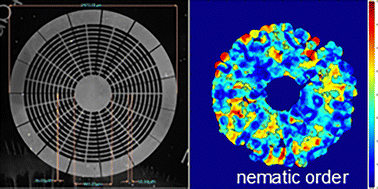
We seed MDA-MB-231 breast cancer cells on the protein micropatterned substrate labyrinth and track cell motility through their fluorescently labeled nuclei (Fig. 1A and B). The substrate labyrinth consists of concentric rings whose radii grow by approximately 53 µm consecutively and 15 radiating lines that divide the full circle into 16 equal angles. The width of cell-adhesive tracks is approximately 24 µm (see the SI, Section S1, for more details). These patterns are designed to mimic the porous ECM that forms maze-like paths for invasion around a primary solid tumor. Although cells within the central disk region of the patterns are excluded from quantitative analysis, they remain motile and help maintain the overall viability of the samples during extended imaging sessions.
image file: d5sm01210d-f1.tif
Fig. 1 An experimental system using the micropatterned substrate labyrinth to model cancer cell migration in disordered extracellular space. (A) A micropatterned labyrinth with fluorescently labeled fibrinogen (cell adhesive) surrounded by PEG (polyethylene glycol, cell repellent). (B) Single cell trajectories of a typical experimental recording. (C) and (D) Distribution of cell speed and nematic order at low (∼1000 mm−2), intermediate (∼1500 mm−2), and high (∼2000 mm−2) cell densities. Here, cell velocity is estimated by cell displacement over 1 hour (2 frames). The nematic order is calculated for each trajectory as |〈e2iθ〉| by average over time. More than 14[thin space (1/6-em)]000 trajectories are sampled. n.s.: not significant by ANOVA.

To characterize cell motility, we image the sample every 30 minutes for 24–36 hours and employ the TrackMate package12 to generate single cell trajectories. Fragmented trajectories that are less than 30 frames long are dropped. We also notice that cell density remains stationary even though the imaging session is comparable to the doubling time of MDA-MB-231 cells (SI Section S2). This is likely due to contact inhibition of growth under physical constraints from the substrate.

Instantaneous cell velocity is estimated by cell motility steps over 1 hour (2 frames) time intervals. We find that at high confluence, the cell speed is approximately 4 µm hour−1 and is independent of seeding density (Fig. 1C). This suggests that the cell monolayer does not enter into a jamming state, presumably due to the weak cell–cell adhesion.13–15 We also observe that cells migrate along the tracks and readily pass one another without substantial deflection, acceleration, or deceleration, suggesting that short-range instantaneous interactions are unlikely to be the primary determinants of cell dynamics. Consistent with this observation, cells remain confined to the micropatterned labyrinth even in a crowded environment and despite frequent encounters with other cells.

2.2 Emergence of nematic order without coherent multicellular flow

In the presence of substrate geometric confinement and crowding from other cells, the motility of MDA-MB-231 cells exhibits nematic characteristics. To show this, we compute the average nematic order of each trajectory as |〈e2iθ〉|. Here, θ is the polar angle of instantaneous cell velocity and the average is taken over all motility steps of the trajectory. While a wide distribution of |〈e2iθ〉| is observed for varying cell densities (Fig. 1D), the average nematic order is approximately 0.3, typical for a bulk uniaxial liquid crystal.16

Previous reports have shown that geometric constraints can induce collective cell migration, which generates a spatial flow field in the cell monolayer.17,18 To examine this phenomenon in our system, we compute the spatial coherence map of cell velocity. In particular, for a point r in the field of view, the coherence map is defined as |〈e〉|. Here, the average is taken over all motility steps that fall in a sampling window of 75 µm radius from r, and θ is the polar angle of a step. If the coherent flow field emerges from collective cell migration, |〈e〉| approaches its maximum value of one. On the other hand, in the case of random cell migration, coherence approaches its minimal value of zero.

Fig. 2A shows the spatial coherence map of a typical experiment where it is evident that no collective cell migration is observed. To examine if there is transient multicellular flow, we have also computed the time-resolved coherence within each sampling window (Fig. 2B). We find that throughout the observation time, the mean coherence decreases with N (the number of cells falling in a sampling window) and scales as 1/N. This is consistent with the absence of coherent migration. In addition to the direction of cell migration, we also find that the spatial correlation of cell speed fluctuations rapidly drops to zero (Fig. 2B, inset). Putting together, these results rule out the existence of coherent multicellular migration, neither transient nor persistent. This is consistent with the mesenchymal nature of metastatic cancer cells.


image file: d5sm01210d-f2.tif
Fig. 2 The spatial-temporal analysis of coherence and nematic order of cell motility for a typical experiment. (A) The spatial map of coherence |〈e〉|, where θ is the direction of a motility step. There are 50–200 motility steps in a sampling window around each point on the spatial map. (B) Time-resolved coherence as a function of the cell counts in the sampling window. Colors of curves represent time. Dashed line: coherence calculated from simulated random unit vectors. Inset: Time-resolved spatial correlation of cell speed fluctuation Cv. (C) The spatial map of nematic order constructed from the same data in (A). Contours show high nematic regions (HNRs), where |〈e2iθ〉| > 0.4. (D) The temporal evolution of the area of high nematic regions AHNR normalized by the area of the cell-accessible surface Amaze. Each curve represents one experimental recording.

Despite the absence of coherent multicellular flow, migration of the cells does exhibit strong spatial nematic order, as shown in Fig. 2C. Here, the spatial map of |〈e2iθ〉| is computed via the same sampling method as described in the coherence map. In particular, we identify large patches of high nematic regions (HNRs) where |〈e2iθ〉| > 0.4. The HNRs are indicated by the contours in Fig. 2C, which includes migration data in an entire recording. In most experiments, the HNR takes up 20–40% of the area occupied by cells, regardless of the cell density.

We have further analyzed the temporal evolution of high nematic regions by sampling cell trajectories using a 5-hour wide sliding time window. Within each window, we generate a time-resolved nematic map and quantified the area of high nematic regions (AHNR), normalized by the total area accessible to cells (Amaze). As illustrated in Fig. 2D, all repeating experiments consistently show a gradual increase of the ratio AHNR/Amaze over time, indicating a non-equilibrium growth of local nematic order.

2.3 Phenotype heterogeneity in cellular dynamics

To better understand the dynamics of cells on the micropatterned labyrinth, we take a closer look at the cell trajectories in the HNR. As shown in Fig. 3A, these trajectories are highly polarized and we notice two distinct dynamic phenotypes: explorers and patrollers. Explorer cells move with high persistence, such that the net displacement Δr scales linearly with time, Δr ∼ Δt. Patroller cells, on the other hand, exhibit stochastic oscillations, and their net displacement is confined and scales with time as Δr ∼ Δt1/2. Fig. 3A highlights a few examples of explorer and patroller cells, which are further demonstrated in Fig. 3B. Specifically for each highlighted trajectory in Fig. 3A, we apply singular value decomposition to identify the principal axis of cell velocity and calculate its displacement along the principal axis (Δrp). The top panel of Fig. 3B shows the displacement along the principal axis of two representative explorers and the bottom panel of Fig. 3B shows Δrp of three patrollers. Due to the highly polarized dynamics, Δrp accounts for more than 80% of the fluctuations of cell position.
image file: d5sm01210d-f3.tif
Fig. 3 Cells in the high nematic regions (HNRs) exhibit distinct migration modes. (A) A collection of 200 cell trajectories in the HNR. Five trajectories, two explorer-type and three patroller-type, are highlighted in color. (B) The displacement along the principal direction (Δrp) for the highlighted trajectories in (A). Here, the principal direction for each trajectory is calculated with singular value decomposition. (C) The mean-square-displacement (MSD) of explorer cells shows a superdiffusive power-law dependence with time lag. (D) The MSD of patroller cells shows a subdiffusive power-law dependence with time lag. In (C) and (D), cell trajectories are screened from the HNR of 25 experiments.

We screen the trajectories in the HNR of multiple repeating experiments for explorers and patrollers based on how their net displacements scale with time Δr ∼ Δtα. About 5% of trajectories demonstrate explorer dynamics (α ≈ 1) and 15% of trajectories can be classified as patrollers (α ≈ 0.5). The remaining trajectories either do not show polarized trajectories or do not exhibit consistent scaling behaviors over time. Therefore, we will analyze them using a different strategy (see below). The mean-square-displacement of explorers and patrollers also shows distinct scaling with respect to time (Fig. 3C and D), where explorers are superdiffusive and patrollers are subdiffusive.

We hypothesize that active nematic cells – particularly patroller cells – continuously exert a directional influence on their neighboring cells, thereby reinforcing alignment along a principal axis and progressively increasing the local nematic order (Fig. 4A). In contrast, explorer cells, despite exhibiting polarized dynamics, interact too briefly with their surroundings due to their ballistic movement. As a result, they impart only transient forces to neighboring cells and are less effective in promoting sustained nematic alignment.


image file: d5sm01210d-f4.tif
Fig. 4 The migration characteristics of cancer cells on micropatterned substrate labyrinth modeled as a time-dependent active nematic process. (A) A schematic illustration of how active nematic cells perturb the microenvironment. Patroller cells are most effective in aligning neighboring cells along their trajectory to enhance local nematic order. (B) Illustration of Landau's phenomenological free energy for γ < γc (blue), γ = γc (black) and γ > γc (red). (C) Comparison of the time-dependent nematic order parameter S(t) obtained from experiments and theory. Here, each data point in the experimental result is obtained by averaging the nematic order in the HNR at a given time (the same trajectories as in Fig. 2(A)–(C)). The theoretical curve is obtained from eqn (2) with kinetic parameters k1 = 0.1 and k2 = 0.02. (D) The temporal evolution of the average persistent time 〈τp〉. For a fixed time point, the average is taken over all trajectories (>20) in a single experiment. For each trajectory, the (time-dependent) persistent time τp is obtained by fitting trajectories to a persistent random walk model.29

2.4 Mean-field theory to explore putative mechanisms

We employ a phenomenological mean-field model to test microscopic mechanisms for the emergence of active nematic order that is directly linked to phenotype heterogeneity, including unpolarized “wanderers” (normal diffusive dynamics), “patrollers” (anisotropic sub-diffusive dynamics), and “explorers” (polar-biased super-diffusive dynamics). In particular, we consider that patroller cells, exhibiting polarized oscillatory and subdiffusive dynamics, are modeled via active nematics19,20 with an anisotropy parameter γ(t), which increases with time t. For instance, γ may be interpreted as the effective aspect ratio21,22 associated with anisotropic steric interaction regions. We emphasize that the validity of the generic continuum Landau field theory23 for the nematic order growth used here depends on symmetry breaking rather than on any specific microscopic force law. In this framework, a multitude of biological mechanisms may contribute to the alignment of cells to active nematic cells, such as contact inhibition of locomotion,24,25 confinement of the cell nucleus,26 and contact guidance.27,28 These different symmetry-breaking mechanisms can be captured by the same leading-order terms in the free energy functional.

Based on Landau's theory,23 we construct the following γ-dependent free-energy function of the nematic order parameter S, i.e.,

 
image file: d5sm01210d-t1.tif(1)
where r(γ), w and u are model parameters and ρ is the number density. It is well established that the isotropic–nematic phase transition can be induced by increasing either density ρ or aspect ratio γ.19 In our systems, the cell density ρ can be regarded as not changing, while the aspect ratio increases with time, i.e., Δγ ∼ Δt0.4, following the same scaling of the MSD of patrollers.

Based on Landau's theory, as γ increases, the free energy f develops two minima, respectively, at S1 = 0 and image file: d5sm01210d-t2.tif. For γ < γc, S = 0 gives the global minimum, and the system remains an isotropic phase. For γ > γc, the global minimum is achieved at S2, and the system exhibits nematic order, which grows as γ further increases beyond γc (Fig. 4B).

Our experimental results (Fig. 2C and D) indicate that the system is in the nematic phase at the time of observation. Following a first-order approximation, i.e., r = −a(γγc) = −aΔγ(a > 0) and assuming that w and u do not depend on γ,23 we are able to obtain a phenomenological scaling of the growing nematic order parameter, i.e.,

 
image file: d5sm01210d-t3.tif(2)
where k1 and k2 are kinetic parameters. To compare the theoretical prediction with the experiment, we perform time-resolved analysis of nematic order in the HNRs. We show that dynamics are increasingly polarized over time, such that the nematic parameter grows nearly 2 fold over 36 hours (Fig. 4C), while maintaining low coherence values (Fig. 2D). The temporal evolution of local nematic order in the HNRs is in good agreement with the theoretical prediction of S(t) (eqn (2)).

We note that the phenotype-aware parameterization of Landau's theory allows this data-driven identification of the order-bearing subpopulation (i.e., patrollers). Our analysis clearly indicates that nematic growth is tied to patrollers, not explorers. As time t increases, S(t) data scale with the growth of anisotropy parameters in patroller trajectories (sub-diffusive, α ∼ 0.8), not with explorers (super-diffusive, α ∼ 1.7) or unpolarized cells (no symmetry-breaking, S = 0), see Fig. 4C. Thus, active nematics emerges from patrollers, while polar coherence (when present) is typically explorer-driven. This further indicates that in complex environments, disorder suppresses explorer-mediated polar order but allows patroller-mediated nematic order, explaining our observations.

Our proposed mechanism suggests that a patroller cell persistently exerts polarizing forces on its microenvironment. Thus, a previously unpolarized cell may migrate with increasing persistence under the influence of nearby patroller cells. To test if cells exhibit such non-stationary dynamic signatures, we have further refined our analysis of experimental data to allow time-resolved statistics. Particularly, we employ our previously developed strategy by modeling cell motility as time-dependent persistent random walks,

 
image file: d5sm01210d-t4.tif(3)
where [v with combining right harpoon above (vector)](t) is the velocity of a cell, τp is the persistent time, k is the speed and [w with combining macron] is a Wiener process. We then obtain time-resolved persistent time τ with wavelet analysis:29,30

Under the influence of active nematic driving from patroller cells, we expect the persistent time τp to gradually increase. Experimental results strongly support the prediction. As shown in Fig. 4D, the population averaged persistent time 〈τp〉 grows over time for nearly all repeating experiments, despite a broad distribution of cell density and kinetic characteristics.

3 Conclusions and discussion

In this study, we investigate the motility of breast cancer cells on protein-micropatterned labyrinths designed to mimic the geometric confinement within the three-dimensional extracellular matrix (ECM). Remarkably, we observe that the cells exhibit nematic migratory order even in the absence of large-scale, coherent tissue flow typically seen in epithelial monolayers. Consistent with prior studies,27,31,32 the MDA-MB-231 cell population displays a diverse range of dynamic behaviors on the labyrinthine substrate, underscoring the importance of accounting for cellular heterogeneity in understanding active nematic phenomena.

We identify a distinct subpopulation, which we referred to as patrollers, as key drivers of active nematic behavior within a monolayer of cells navigating micropatterned labyrinths. Patroller cells are likely a group of cells sensitive to the self-deposited ECM, as reported previously.33 Under the sustained influence of these patroller cells, regions of high nematic order progressively expand, with local nematic alignment increasing over time. These observations align quantitatively with a simplified mean-field model that treats patroller cells as nematic agents whose elongation is governed by subdiffusive dynamics. Our proposed mechanism also suggests that the majority non-polarized cell population gradually transitions toward more persistent motility. Experimental results provide direct evidence supporting this prediction.

Multicellular systems universally exhibit heterogeneous dynamics.34,35 Our findings indicate that distinct cell phenotypes contribute differentially to nematic ordering and display varying capacities to drive the system out of equilibrium. Future investigations may elucidate the molecular underpinnings of active nematic cells and their interactions with the broader cell population.1,36

4 Materials and methods

RFP-labeled MDA-MB-231 human breast carcinoma cells are purchased from GenTarget and are maintained according to the vendor's instructions. Micropatterned substrates are prepared with cell-repellent (PLL-g-PEG) coating followed by UV irradiation using a quartz photomask. Cells are imaged with an Ibidi on-stage incubator mounted on a Leica DMi8 microscope with infinity ports. See the SI for additional details.

Author contributions

YJ and BS designed the research. TR and CR conducted the experiment. All authors analyzed data and wrote the paper.

Conflicts of interest

There are no conflicts to declare.

Data availability

Data for this article, including original recording of cell migration on patterned substrates, are available at Figshare at https://doi.org/10.6084/m9.figshare.c.7849784.

Supplementary information (SI) is available. See DOI: https://doi.org/10.1039/d5sm01210d.

Acknowledgements

We thank Maximilian Libmann for experimental support. This work is supported by the Oregon State University College of Science SciRIS Stage 2 Award.

References

  1. A. Doostmohammadi, J. Ignés-Mullol, J. M. Yeomans and F. Sagués, Nat. Commun., 2018, 9, 3246 CrossRef PubMed.
  2. J. Rozman and J. M. Yeomans, Phys. Rev. Lett., 2024, 133, 248401 CrossRef CAS PubMed.
  3. D. Khoromskaia and G. Salbreux, eLife, 2023, 12, e75878 CrossRef CAS.
  4. T. B. Saw, A. Doostmohammadi, V. Nier, L. Kocgozlu, S. Thampi, Y. Toyama, P. Marcq, C. T. Lim, J. M. Yeomans and B. Ladoux, Nature, 2017, 544, 212–216 CrossRef CAS PubMed.
  5. T. Turiv, J. Krieger, G. Babakhanova, H. Yu, S. V. Shiyanovskii, Q.-H. Wei, M.-H. Kim and O. D. Lavrentovich, Sci. Adv., 2020, 6, eaaz6485 Search PubMed.
  6. X. Li, R. Balagam, T.-F. He, P. P. Lee, O. A. Igoshin and H. Levine, Proc. Natl. Acad. Sci. U. S. A., 2017, 114, 8974–8979 Search PubMed.
  7. K. Kawaguchi, R. Kageyama and M. Sano, Nature, 2017, 545, 327–331 CrossRef CAS PubMed.
  8. Y. Maroudas-Sacks, L. Garion, L. Shani-Zerbib, A. Livshits, E. Braun and K. Keren, Nat. Phys., 2021, 17, 251–259 Search PubMed.
  9. V. Ajeti, A. P. Tabatabai, A. J. Fleszar, M. F. Staddon, D. S. Seara, C. Suarez, M. S. Yousafzai, D. Bi, D. R. Kovar, S. Banerjee and M. P. Murrell, Nat. Phys., 2019, 15, 696–705 Search PubMed.
  10. L. Q. Wan, K. Ronaldson, M. Park, G. Taylor, Y. Zhang, J. M. Gimble and G. Vunjak-Novakovic, Proc. Natl. Acad. Sci. U. S. A., 2011, 108, 12295–12300 Search PubMed.
  11. J. L. Watson, S. Aich, B. Oller-Salvia, A. A. Drabek, S. C. Blacklow, J. Chin and E. Derivery, J. Cell Biol., 2021, 220, e202009063 Search PubMed.
  12. J.-Y. Tinevez, N. Perry, J. Schindelin, G. M. Hoopes, G. D. Reynolds, E. Laplantine, S. Y. Bednarek, S. L. Shorte and K. W. Eliceiri, Methods, 2017, 115, 80–90 CrossRef CAS PubMed.
  13. D. Sarrió, J. Palacios, M. Hergueta-Redondo, G. Gómez-López, A. Cano and G. Moreno-Bueno, BMC Cancer, 2009, 9, 74 CrossRef PubMed.
  14. S. Garcia, E. Hannezo, J. Elgeti, J.-F. Joanny, P. Silberzan and N. S. Gov, Proc. Natl. Acad. Sci. U. S. A., 2015, 112, 15314–15319 CrossRef CAS PubMed.
  15. H. Eslami Amirabadi, M. Tuerlings, A. Hollestelle, S. SahebAli, R. Luttge, C. C. van Donkelaar, J. W. M. Martens and J. M. J. den Toonder, Biomed. Microdevices, 2019, 21, 101 CrossRef CAS PubMed.
  16. R. A. Wickham, Phys. Rev. E:Stat. Phys., Plasmas, Fluids, Relat. Interdiscip. Top., 1997, 56, 6843–6852 CrossRef CAS.
  17. J. Kim, Y. Zheng, A. A. Alobaidi, H. Nan, J. Tian, Y. Jiao and B. Sun, Biophys. J., 2020, 118, 1177–1182 Search PubMed.
  18. S. R. K. Vedula, M. C. Leong, T. L. Lai, P. Hersen, A. J. Kabla, C. T. Lim and B. Ladoux, Proc. Natl. Acad. Sci. U. S. A., 2012, 109, 12974–12979 Search PubMed.
  19. P. Gottheil, S. Bhattacharyya, K. Lettl, P. Friedrich, K. Roth, S. Rivera-Moreno, M. Merkel, B. Aktas, I. Sauer, A. Daneshgaret al., arXiv, 2024, preprint, arXiv:2412.01285 DOI:10.48550/arXiv.2412.01285.
  20. Y. Yao, Z. Zhao, H. Li, Y. Zhao, H. Zhang and M. Sano, Adv. Sci., 2025, 2412750 Search PubMed.
  21. G. Bautista-Carbajal and G. Odriozola, J. Chem. Phys., 2014, 140, 20 CrossRef PubMed.
  22. R. S. Hoy, J. Phys. Chem. B, 2024, 129, 763–770 CrossRef PubMed.
  23. P. M. Chaikin, T. C. Lubensky and T. A. Witten, Principles of condensed matter physics, Cambridge University Press Cambridge, 1995, vol. 10 Search PubMed.
  24. C. Carmona-Fontaine, H. K. Matthews, S. Kuriyama, M. Moreno, G. A. Dunn, M. Parsons, C. D. Stern and R. Mayor, Nature, 2008, 456, 957–961 CrossRef CAS PubMed.
  25. D. B. Brückner, N. Arlt, A. Fink, P. Ronceray, J. O. Rädler and C. P. Broedersz, Proc. Natl. Acad. Sci. U. S. A., 2021, 118, e2016602118 CrossRef PubMed.
  26. A. Desmaison, L. Guillaume, S. Triclin, P. Weiss, B. Ducommun and V. Lobjois, Sci. Rep., 2018, 8, 8785 CrossRef PubMed.
  27. C. D. Paul, D. J. Shea, M. R. Mahoney, A. Chai, V. Laney, W. Hung and K. Konstantopoulos, FASEB J., 2016, 30, 2161–2170 Search PubMed.
  28. A. Sales, A. W. Holle and R. Kemkemer, Soft Matter, 2017, 13, 5158–5167 RSC.
  29. Y. Liu, Y. Jiao, D. He, Q. Fan, Y. Zheng, G. Li, G. Wang, J. Yao, G. Chen and S. Lou, et al. , Phys. Biol., 2021, 18, 046007 CrossRef CAS.
  30. Y. Liu, Y. Jiao, Q. Fan, Y. Zheng, G. Li, J. Yao, G. Wang, S. Lou, G. Chen and J. Shuai, et al. , Biophys. J., 2021, 120, 2552–2565 CrossRef CAS PubMed.
  31. N. Peela, F. S. Sam, W. Christenson, D. Truong, A. W. Watson, G. Mouneimne, R. Ros and M. Nikkhah, Biomaterials, 2016, 81, 72–83 CrossRef CAS PubMed.
  32. A. Naylor, M. Libmann, I. Raab, W.-J. Rappel and B. Sun, PRX Life, 2024, 2, 043022 CrossRef PubMed.
  33. J. d’Alessandro, A. Barbier-Chebbah, V. Cellerin, O. Benichou, R. M. Mège, R. Voituriez and B. Ladoux, Nat. Commun., 2021, 12, 4118 CrossRef PubMed.
  34. X. Wang, S. Chen, H. Nan, R. Liu, Y. Ding, K. Song, J. Shuai, Q. Fan, Y. Zheng and F. Ye, et al. , Research, 2021, 2021, 9893131 CAS.
  35. X. Wang, H. Li, Y. Zheng, D. Guan, A. Wang, Q. Fan, Y. Jiao and F. Ye, Adv. Funct. Mater., 2023, 33, 2305414 CrossRef CAS.
  36. L. Balasubramaniam, R.-M. Mège and B. Ladoux, Curr. Opin. Genet. Dev., 2022, 73, 101897 CrossRef CAS PubMed.

This journal is © The Royal Society of Chemistry 2026
Click here to see how this site uses Cookies. View our privacy policy here.