Advancing electrospun nanofiber scaffolds for next-generation tissue engineering: from trend analysis to multifunctionalization and hybrid fabrication

Zhuowen Hao ab, Minchao Dong a, Ying Wang c, Zepu Wang a, Zheyuan Zhang a, Jiayao Chen a, Renxin Chen a, Zouwei Li a, Junwu Wang a, Guang Shi a, Xin Wang *a, Xin Zhao *bd and Jingfeng Li *a
aDepartment of Orthopedics, Zhongnan Hospital of Wuhan University, Wuhan, 430071, China. E-mail: wangxinznyy@whu.edu.cn; jingfengli@whu.edu.cn
bDepartment of Applied Biology and Chemical Technology, The Hong Kong Polytechnic University, Hong Kong, SAR, China. E-mail: xin.zhao@polyu.edu.hk
cDepartment of Obstetrics and Gynecology, Renmin Hospital of Wuhan University, Wuhan, 430060, China
dThe Hong Kong Polytechnic University Shenzhen Research Institute, Shenzhen, 518057, China

Received 4th August 2025 , Accepted 23rd October 2025

First published on 24th October 2025


Abstract

Tissue engineering is an emerging and integrated field for the repair of defective tissues, which benefits from the interdisciplinary development of biomaterial and engineering techniques. Electrospinning is a promising technique used in tissue engineering to fabricate fiber-based biomaterials that could mimic the extracellular matrix even at the nanometer level, but there has been no review to identify the trends and systematically summarize the application strategies of electrospinning in tissue engineering. This review initially used bibliometric analysis to investigate the trends of electrospinning in tissue engineering from the beginning of this century by evaluating distinctive aspects including publication years, countries, institutions, and keywords. Then, this review presents the multi-hierarchical strategies used in electrospinning to fabricate functional scaffolds for tissue engineering, including biochemical modification, biophysical modification and cell incorporation. Moreover, the hybrid combinations of electrospinning with other biofabrication techniques to fabricate composite scaffolds are summarized including textile, 3D printing, hydrogel, lyophilization and gas foaming, thus finely simulating the bionic 3D microenvironment or the complex/interfacial tissue structures. Finally, this review discusses the research prospects and ongoing challenges, aiming to promote further development and clinical transformation.


Wider impact

This review highlights major advances in electrospinning for tissue engineering, including bibliometric trends, multi-hierarchical functionalization (biochemical modification, biophysical modification, and cell incorporation), and hybrid fabrication strategies with textile, 3D printing, hydrogels, lyophilization, and gas foaming. Key developments involve improved bioactivity via growth factors, drugs, and nanoparticles; enhanced physical properties such as pore size, fiber alignment, mechanical strength, and hydrophilicity; and direct incorporation of living cells into electrospun fiber scaffolds. This area is of broad significance because electrospinning mimics the extracellular matrix at the nanoscale, enabling highly biomimetic, customizable scaffolds for regenerative medicine. Applications span bone, vascular, wound healing, nerve, and multi-tissue interfaces, making it vital to orthopedics, cardiology, dermatology, and beyond. Its interdisciplinary nature integrates materials science, bioengineering, and medicine, with global research interest. Future directions will focus on multifunctional, 3D biomimetic scaffolds with precise structural and biochemical cues, improved scalability, and clinical translation. Insights from this review—such as combining electrospinning with complementary fabrication methods and tailoring scaffold properties—will guide materials scientists in designing next-generation smart biomaterials, accelerating their adoption in personalized and regenerative therapies.

1. Introduction

Tissue engineering is a promising strategy to fabricate synthetic artificial tissues to promote the healing of defects and restore, maintain, or improve the tissue function, which is generally composed of four pillars including biomaterial scaffolds, repair cells, bioactive molecules and biophysical stimuli.1,2 Biomaterial scaffolds play crucial roles in tissue engineering because they provide a microenvironment to support cell function including survival, adhesion, proliferation and differentiation.3–5 The natural extracellular matrix (ECM) is a complex microenvironment based on a three-dimensional (3D) nanofiber network, which has tissue specificity, mainly including the fiber skeleton that provides structural support, micro-/nano-clues for cell components, and the liquid environment for substance exchange and biochemical signal transmission.6,7 How to construct scaffolds that mimic the ECM is key to promoting tissue repair through tissue engineering.

Electrospinning is an economical and promising technique for the fabrication of fiber-based scaffolds by utilizing electrostatic forces.8,9 Under a high-voltage electric field, the charged polymer solution or melt injected from a needle spinneret forms a core-jet and then is accelerated and stretched to a collector with opposite polarity, thus generating fiber-based scaffolds on the collector.10 The initial electrospinning can be traced back to the pioneering discovery by Charles V. Boys in 1887.11 Using a setup involving an insulated disc connected to an electrical power source, he first demonstrated that viscoelastic fluids (such as beeswax and collodion) could be stretched into fibers under an applied electric field.11 This discovery initially revealed the physical phenomenon of electric-field-controlled fluid jet formation, paving the way for the fabrication of electrospun fibers with diameters down to the nanoscale. A key breakthrough occurred in 1934, and Anton Formhals filed the first patent on electrospinning, detailing a setup for producing fibers using high-voltage electrostatic forces and describing how polymer solutions form fibers between electrodes.12 This is widely recognized as the beginning of electrospinning. Progress in electrospinning remained limited until 1969, when Taylor published a seminal study on jet formation.13 In that work, the mechanism of Taylor cone formation was elucidated: when the electrostatic forces generated by an applied electric field balance the surface tension of a liquid droplet, a conical meniscus forms, from the apex of which a fine jet is ejected.13 This theory provided a physical foundation for understanding the electrospinning process and identified key influencing parameters such as electric field strength and solution properties. The application of electrospinning in the biomedical field began in the late 1970s. In 1977, a patent was first filed for the use of electrospun fibers as wound dressings.14 In 1978, electrospun polyurethane fibers were applied in vascular prostheses, demonstrating their potential as biomaterials.15 In 1985, the long-term in vivo performance of electrospun arterial prostheses was studied, confirming their feasibility and durability.16 These early applications indicated that electrospun scaffolds could mimic the ECM for tissue engineering. However, due to technical limitations at the time, they did not attract widespread attention.

From the early 1990s to the beginning of the 21st century, the increased accessibility of electron microscopes contributed significantly to the resurgence of electrospinning.17 Concurrently, the range of electrospun materials expanded from synthetic polymers to natural materials and composites, aiming to enhance biocompatibility and functionality.18,19 Furthermore, various novel electrospinning techniques were developed, such as coaxial electrospinning,20 side-by-side electrospinning,21 and continuous yarn electrospinning,22 enabling precise control over the structure of the resulting fibers. These achievements have led to the gradual application of electrospinning in tissue engineering to construct fiber-based scaffolds after 2000. They are highly advantageous in simulating the architecture of the natural ECM for tissue engineering, because it is capable of producing micro-/nanofibers with high spatial orientation, a high aspect ratio and a large surface area and can control the fiber diameter size, morphological structure and spatial arrangement through the regulation of electrospinning parameters.23 To improve the therapeutic efficiency of electrospun scaffolds to promote tissue repair, electrospun scaffolds can be chemically functionalized or physically modified through different strategies, and cells can even be added directly into the scaffolds for tissue repair. However, there are still several limitations of electrospinning in tissue engineering, including small pore sizes that hinder the infiltration of repair cells and the difficulty to fabricate complex 3D biomimetic scaffolds.24,25 To overcome these limitations, electrospinning can be combined with other popular scaffold fabrication technologies (such as textile,26 3D printing,27 lyophilization,28 and gas foaming29), and the combined strategies can not only fabricate 3D scaffolds but also achieve complex simulations of structures such as various tissues with layered structures/gradient structures and soft–hard tissue interfaces.

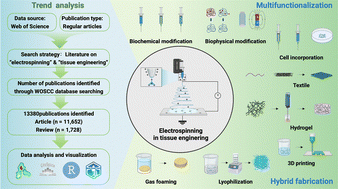
Bibliometric analysis has been widely used to identify the research trends in specific research fields. However, there has been no study focusing on electrospinning in tissue engineering. Therefore, this review first uses bibliometric analysis to identify the trends of electrospinning in tissue engineering from the beginning of this century by analysing multiple aspects including publication years, countries, institutions, and keywords. Then, this review focuses on the multi-hierarchical strategies of electrospinning in tissue engineering, including biochemical modification, biophysical modification and cell incorporation. Moreover, the combined strategies of electrospinning and other fabrication techniques to overcome the drawbacks of electrospun membranes are summarized (Fig. 1). Finally, potential prospects and ongoing challenges are discussed. This review aims to show the trend of electrospinning in tissue engineering and promote the further clinical application of biomaterials by electrospinning.


image file: d5mh01483b-f1.tif
Fig. 1 Overview of trends and strategies of electrospinning in tissue engineering: trend analysis; multi-hierarchical strategies including biochemical modification, biophysical modification and cell incorporation; and hybrid combined strategies with textile, 3D printing, hydrogel, lyophilization and gas foaming.

2. Trends of electrospinning in tissue engineering by bibliometric analysis

2.1. Search strategy and data analysis

In this study, a bibliometric approach was used to explore the trends of electrospinning in tissue engineering, and Web of Science database was used for literature retrieval. After rigorous discussions, the search formula we finally settled on was TS = ((electrospinning or electrostatic spinning or electrospun fiber or electrospun nanofiber or electrospun scaffold) AND (tissue engineering or histological engineering or tissue repair or tissue regeneration or tissue healing or wound healing or regeneration or healing or repair or regenerative medicine)) (from 2000-01-01 to 2025-10-01). By screening and excluding irrelevant literature, conferences and retracted publications, we obtained 13[thin space (1/6-em)]380 papers with the keywords of “electrospinning” and “tissue engineering”. Then, we used VOSviewer software 1.6.20 to visualize and analyze the collaboration network between countries and authors. The Bibliometrix R package 4.2.1 was used to analyze the strong countries and institutions, and CiteSpace 6.3.1 was used to obtain the results of citation bursts and keyword bursts.

2.2. Annual publication

Fig. 2A shows the trend in scientific publications between 2000 and 2025. Analysis of the Excel data reveals that from 2000 to the present, articles in this area are broadly on the rise. Excluding 2025, the number of publications and the years basically align with the linear curve of y = 1.6004x2 + 17.378x − 79.557 R2 = 0.9886 (R2, a key goodness-of-fit metric in regression analysis, quantifies the proportion of the variance in the dependent variable Y that is predictable from the independent variable X, and R2 values range from 0 to 1, with values closer to 1 indicating a superior model fit). This demonstrates that the topic of electrospinning in tissue engineering has gained increasing popularity internationally in recent years.
image file: d5mh01483b-f2.tif
Fig. 2 Analysis of the number of publications per year and the countries and institutions publishing. (A) The annual publication and citation growth of the literature on the electrospinning in tissue engineering. (B) The geographic distribution of the number of authors affiliated with the country of publication. (C) Countries applying electrospinning in tissue engineering. (D) The visualization of countries’ cooperation on the electrospinning in tissue engineering. (E) Most relevant institutions.

2.3. Country and institutional analyses

These publications come from 100 countries and 5803 organizations, and the top ten countries in terms of the number of publications are all from Asia, North America and Europe, among which Asian countries are the most numerous. As shown in Fig. 2B, the number of publications in China is higher than those of other countries, and the top five countries in terms of the number of publications are China, the United States, Iran, South Korea and India, respectively. Fig. 2C shows the most participative and productive countries according to the number of publications, average article citations and the h-index. The United States has the highest h-index in this field (h-index is a metric for assessing academic performance, representing that h papers of a research subject have been cited a minimum of h times, and it is one of the most accurate indices available for assessing research subjects). China has published the most papers, but the h-index is lower than that of the United States. Although the publication number of Singapore is not large, the average number of citations and h-index are very high, representing that the average quality of articles in Singapore is relatively high. Fig. 2D illustrates a collaborative network based on the number and relationship of publications in each country. China and the United States are at the center of almost all the research, and there is close cooperation between them. From Fig. 2E, we can know the top 10 institutions in terms of the number of publications. The Egyptian Knowledge Bank (EKB) has 510 publications, followed by Shanghai Jiao Tong University (publications = 505), the National University of Singapore (publications = 433), Donghua University (publications = 404) and the Tehran University of Medical Sciences (publications = 394), with the largest number of institutions from China.

2.4. Author and source analyses

A total of 37[thin space (1/6-em)]081 authors participated in research of electrospinning for tissue repair, and an author's collaborative network was built (Fig. 3A). Mo Xiumei, Ramakrishna Seeram, Cui Wenguo and Soleimani Masoud published the most related publications. In addition, a close collaboration between multiple authors was observed. It can be observed that Mo Xiumei, Ramakrishna Seeram and Cui Wenguo have collaborated with many authors and are three collaborating centers. They have also collaborated with each other, which can be seen that they have generated good academic cooperation and communication. Fig. 3B shows the authors whose h-index is in the top ten. Ramakrishna Seeram has the highest h-index of 129, which places him at the top of the list. He is closely followed by Mo Xiumei and Cui Wenguo. From Fig. 3C, it can be observed that Ramakrishna Seeram has been able to maintain a certain amount of scientific output in this field every year over the past 20 years and has a high citation for the article in 2005. According to the data presented, Ramakrishna Seeram emerges as the foremost contributor to the research of electrospinning for tissue engineering.
image file: d5mh01483b-f3.tif
Fig. 3 Author and journal analyses. (A) Co-citation network analysis of authors. (B) The top ten authors with the highest h-index scores. (C) Analysis of the author's annual publication volume and total citation frequency. (D) The most relevant journal. (E) Co-citation network analysis of the journal.

Publications related to electrospinning for tissue repair were published in 1131 journals. Fig. 3D shows the top ten journals in terms of publications. International Journal of Biological Macromolecules published the most papers, whose number of publications reached 402, followed by Journal of Biomedical Materials Research Part A, Acta Biomaterialia, Biomaterialia and ACS Applied Materials & Interfaces. Although Biomaterialia ranks only fourth in terms of the number of publications, it has an average of 101.9 citations, making it the most influential journal in electrospinning for tissue repair research.

Cluster analysis of the main journals published in this field (Fig. 3E) shows that these journals are mainly divided into three categories. The green cluster centered on “biomaterial material”, the red cluster centered on “international journal of biological”. The blue cluster has only “materials chemistry”.

2.5. Hotspots and frontiers

Fig. 4A illustrates the keyword word cloud, which visually represents keyword metadata to enable quick identification of the most important words in the research area.30 On the graph cloud, we can find “scaffolds”, “fabrication”, “nanofibers”, “mechanical properties”, “differentiation”, “regeneration”, “collagen”, “nanoparticles”, “stem cells”, “drug delivery”, and other keywords, indicating that these are the main research directions in this field. In addition, research hotspots in a particular field can be quickly captured through a co-occurrence analysis of keywords. We performed cluster analysis using VOSviewer and obtained four clusters in total (Fig. 4B), and different colors represent different research directions. The red cluster represents that electrospinning is mainly involved in bone tissue engineering through adhesion, proliferation, osteogenic differentiation, mesenchymal stem cells (MSCs), mineralization, hydroxyapatite (HAp), and so on. The blue cluster represents the fabrication and characterization of scaffolds by electrospinning, which mainly includes biocompatibility, morphology, mechanical properties, and composites. The green cluster represents research on the use of electrospun fibers for wound healing as antimicrobial dressing or membranes.
image file: d5mh01483b-f4.tif
Fig. 4 Author and journal analyses. (A) Word cloud of top keywords (font size: word occurrences). (B) Network visualization map showing cluster analysis of keywords. (C) Top 30 keywords with the strongest citation bursts. (D) Top 25 references with the strongest citation bursts. (E) A list of the trend topic.

Fig. 4C shows the “top 30 keywords with the strongest citation bursts”. References exhibiting citation bursts are characterized by a sharp increase in their citation frequency within a defined timeframe, indicating a period of notably heightened interest within a scholarly community.31 The keywords for the outbreak after 2021 are “wound dressing”, “hydrogel”, “curcumin”, “3D printing”, “antibacterial activity”, “wound healing”. “antibacterial”, and “antioxidant”. The “top 25 references with the strongest citation bursts” in Fig. 4D show that most of the articles are related to electrospinning for tissue regeneration, bone regeneration, vascular regeneration and antimicrobial dressing research. The trend topic analysis of the keywords from 2000 to 2025 is shown in Fig. 4E. Before 2020, the keywords mainly include cartilage tissue, bone marrow stromal cells and tissue regeneration (especially bone tissue regeneration). Since 2020, the main keywords are wound dressing, wound healing, antibacterial activity and 3D scaffolds.

Taken together, the results of the above analysis show that the current cutting-edge research area in the field of electrospinning in tissue engineering focuses on the fabrication of electrospun scaffolds for antimicrobial effects, wound healing, bone regeneration and vascular regeneration.

3. Multi-hierarchical strategies of electrospinning in tissue engineering

Electrospinning could be used for tissue engineering to fabricate fiber-based scaffolds, and they should be endowed with tissue-specific functions to fulfill the repairing characteristics of different tissues. So multi-hierarchical strategies have been developed to modify the fiber-based scaffolds by electrospinning, including biochemical modification, biophysical modification and cell incorporation (Fig. 5).
image file: d5mh01483b-f5.tif
Fig. 5 Multi-hierarchical strategies of electrospinning in tissue engineering. (A) Biochemical modification of electrospinning in tissue engineering, including the electrospinning process, covalent conjugation, surface adsorption and surface encapsulation. (B) Biophysical modification to control the pore size, fiber orientation, mechanical properties and hydrophilicity of electrospinning in tissue engineering. (C) Cell incorporation of electrospinning in tissue engineering, including co-axial electrospinning and selection of a water-soluble polymer and a liquid collector.

Biochemical functionalization involves the loading of biochemical factors into electrospun scaffolds, thereby utilizing the scaffolds as drug delivery platforms.32 A common strategy is the direct physical loading of biochemical factors into the electrospinning solution for fabrication. Depending on the electrospinning technique used, such as blend, co-axial, emulsion, and side-by-side electrospinning, biochemical factors can be distributed in different regions of the electrospun fibers. Beyond direct physical loading, biochemical factors can be covalently conjugated to the electrospun materials. On the one hand, biochemical factors can be pre-conjugated to the polymer side chains before electrospinning, and they will then be used to construct functional scaffolds. On the other hand, biochemical factors may be covalently grafted onto the prepared electrospun scaffolds after the electrospinning process. In addition, biochemical factors can be physically adsorbed onto pre-prepared electrospun scaffolds, by methods such as direct adsorption and adsorption enhanced by a binding system. Moreover, biochemical factors can be pre-loaded onto other delivery carriers, such as particles or coatings, which are subsequently conjugated to the surface of the electrospun scaffold.

The physical properties of electrospun scaffolds also significantly influence cellular behavior and the efficacy of tissue regeneration.33 When used in tissue engineering, 2D electrospun membranes are primarily limited by their small pore size; hence, sacrificial strategies and ultrasound treatment are mainly employed to enlarge the pores. In addition, aligned fibers are necessary to accurately mimic the extracellular matrix of certain tissue, so multiple strategies have been developed to achieve fiber alignment, including the use of a rotating collector, external electrodes or magnetic fields, and precise deposition electrospinning techniques such as melt electrospinning writing (MEW) and near-field electrospinning (NFES). Moreover, the mechanical properties and hydrophilicity of electrospun scaffolds require particular attention in certain tissue repair applications. Mechanical performance can be effectively enhanced by selecting high-strength synthetic polymers or through scaffold cross-linking. Meanwhile, surface hydrophilicity can be improved either by direct electrospinning with hydrophilic polymers or by applying hydrophilic coatings or plasma treatment to the surface of the fabricated scaffolds.

Stem cells or tissue-specific reparative cells are key contributors to tissue regeneration.34 Under the influence of specific biochemical factors or biophysical stimuli, they proliferate and differentiate into specialized cells to regenerate damaged tissues.35,36 Directly integrating cells into electrospun scaffolds is another dimension of functionalization. First, cell suspensions can serve as the core solution in coaxial electrospinning for direct cell encapsulation, as this technique allows the core solution to be non-spinnable. Additionally, cell suspensions can be blended directly with spinnable water-soluble polymers for electrospinning, thereby avoiding the use of toxic organic solvents and enhancing biocompatibility. To prevent cell dehydration and death during the electrospinning process, a liquid collector can be utilized to provide an aqueous environment essential for cell survival.

Therefore, electrospun scaffolds can be primarily functionalized through the multi-hierarchical strategies including biochemical modification, biophysical modification and cell incorporation. Electrospun scaffolds can be engineered not only through individual dimensions but also via their strategic combination, collectively enhancing the biomimetic properties and therapeutic potential of electrospun scaffolds in tissue engineering.

3.1. Biochemical modification

The nanofibrous architecture of electrospun scaffolds presents a structural analogy to the native ECM, thereby fostering a microenvironment conducive to key cellular processes such as adhesion, proliferation, and differentiation. However, electrospun scaffolds alone usually lack bioactivity and are unable to provide specific biological signals to modulate cell behavior for tissue regeneration. Bioactive substances such as growth factors, bioactive peptides, therapeutic drugs, small-molecule drugs, metal ions, and nanoparticles play key roles in tissue engineering.37,38 After biochemical modification, electrospun scaffolds can achieve the integration of multiple functions, such as simultaneous antimicrobial pro-cell proliferation and promotion of angiogenesis. Therefore, this section focuses on distinctive strategies to biochemically functionalize the electrospun scaffolds, and these strategies could be grouped into two main types including direct functionalization and post-processing functionalization.
3.1.1. Blend electrospinning. Bioactive agents can be directly incorporated into polymer solutions to fabricate fiber-based scaffolds through blend electrospinning, allowing the preparation of fibers with functions such as regeneration induction39 and antimicrobial properties.40 For example, researchers added a parathyroid hormone (PTH) derivative named PTHrP-1 to poly (lactic-glycolic acid-L-lysine) (PLGA-PLL) solution and mixed it with PLGA solution for electrospinning, thus fabricating a functional electrospun scaffold for the repair of osteoporotic bone defects.41 In addition, multiple bioactive substances can be added to the same electrospinning solution at the same time to fabricate multi-functional scaffolds.42 For example, Al-Sudani et al.43 blended merwinite nanoparticles and sildenafil in a keratin/Soluplus mixed solution to fabricate a multifunctional scaffold by electrospinning (Fig. 6A). Multiple ions (Ca2+, Mg2+ and Si4+) could be released from the scaffolds to promote osteogenesis due to the presence of merwinite nanoparticles, while sildenafil released from the scaffolds was demonstrated to induce angiogenesis for bone regeneration.43 Furthermore, integrating different drugs in different electrospinning solutions is another strategy to incorporate multiple bioactive agents in electrospun scaffolds, which could avoid the mutual influence between these agents. For example, two metal–organic frameworks, ZIF-11 and HKUST-1, were added to different polymer solutions, and then a bipolar electrospun scaffold for tendon-bone tissue regeneration was constructed through electrospinning (Fig. 6B).44 The bipolar scaffolds could release Zn2+ from ZIF-11 to promote tenogenesis and Cu2+ from HKUST-1 to induce osteogenesis and angiogenesis, thus promoting integrated regeneration of the tendon-to-bone interface.44
image file: d5mh01483b-f6.tif
Fig. 6 Direct biochemical modification by electrospinning. (A) Functionalization by blend electrospinning with merwinite nanoparticles and sildenafil for bone regeneration. Reproduced with permission.43 Copyright 2024, Elsevier. (B) Synchronous regeneration of the bone–tendon interface by functional bilayer electrospun scaffolds fabricated by blending two metal–organic frameworks, ZIF-11 and HKUST-1, to different polymer solutions. Reproduced with permission.44 Copyright 2022, Wiley-VCH. (C) Functionalization by emulsion electrospinning with citral to prevent infection and wound healing. Reproduced with permission.45 Copyright 2022, Elsevier. (D) Functionalization by co-axial electrospinning to fabricate a vascular graft, with VEGF and heparin loaded into the shell portion of core–shell electrospun fibers for anticoagulation and endothelialization. Reproduced with permission.48 Copyright 2024, Elsevier. (E) Functionalization by triaxial electrospinning to fabricate trilayer core–shell fibers with discrete drug distribution. Reproduced with permission.51 Copyright 2020, Elsevier. (F) Triaxial electrospinning to fabricate bilayer core–shell fibers with unspinnable solvents as the outer solution. Reproduced with permission.53 Copyright 2022, BMC. (G) Functionalization by side-by-side electrospinning to fabricate Janus fibers with octenidine and curcumin loaded in different parts. Reproduced with permission.56 Copyright 2024, American Chemical Society. (H) Functionalization by tri-fluid side-by-side electrospinning to fabricate tri-section Janus nanofibers with beeswax, quercetin and ketoprofen loaded in different parts. Reproduced with permission.58 Copyright 2024, Elsevier.
3.1.2. Emulsion electrospinning. Compared with blend electrospinning, emulsion electrospinning offers the advantage of fabricating core–shell nanofibers, thus encapsulating bioactive agents into the core portion while forming a polymer barrier at the shell portion. In addition, emulsion electrospinning exhibits stronger co-load compatibility for hydrophobic/hydrophilic drugs, while blended electrospinning is prone to uneven distribution due to the limitations of the compatibility between the drug and polymer. For example, Li et al.45 utilized carboxymethyl chitosan/PVA mixed solution as the external water phase, citral as the oil phase core, and β-cyclodextrin–citral inclusion complex particles as emulsion stabilizers due to their physical barrier functions by adsorption to the oil/water interface, thus preparing an emulsion and then fabricating functional scaffolds for wound healing by emulsion electrospinning (Fig. 6C). The electrospun scaffolds exhibited high citral loading to prevent infection, and they also showed good hemocompatibility and induced the proliferation of mouse fibroblasts.45 In another study, Mouro et al.46 used a needle-free emulsion electrospinning technique to incorporate the crude extract of Chelidonium majus L. into electrospun scaffolds, and the antimicrobial test results demonstrate the broad applicability of this wound dressing in the prevention and treatment of bacterial wound infections.
3.1.3. Co-axial electrospinning. Co-axial electrospinning could produce core–shell nanofibers with high precision because it independently controls the composition and proportion of the core and shell solution by double needles, thereby more stably encapsulating bioactive agents and reducing the potential damage of organic solvents to them when compared with blend electrospinning and emulsion electrospinning. Thus, fabrication of electrospun scaffolds using coaxial electrospinning has received the most attention to deliver bioactive agents for tissue engineering.47 Depending on the requirements of tissue repair, bioactive agents can be added to either the inner core or to the outer shell. For example, in order to fabricate a vascular graft, heparin and vascular endothelial growth factor (VEGF) were loaded in PCL and gelatin to form the shell portion of core–shell nanofibers to achieve early anticoagulation and continuous promotion of endothelialization after implantation, while the inner PCL served as the core portion to provide mechanical strength for long-term application (Fig. 6D).48 Bioactive agents can also be added to the inner core for long-term release due to the blocking of the outer shell. As an example, Wang et al.49 used coaxial electrospinning to introduce epidermal growth factor and basic fibroblast growth factor into the core portion of electrospun fibers for wound healing, and their sustained release could be achieved by the core–shell structure. Moreover, different bioactive agents could separately be loaded into the core layer and shell layer, achieving multi-level release such as rapid shell release coupled with sustained core layer release. For instance, Cui et al.50 designed and fabricated an electrospun scaffold via coaxial electrospinning to incorporate dexamethasone to the core layer while deferoxamine to the shell layer. The study demonstrated that the electrospun scaffold could achieve the sequential release of deferoxamine in a rapid model to induce angiogenesis and dexamethasone in a sustained model to promote osteogenesis through the Wnt/β-catenin pathway, thus dramatically accelerating vascularized bone regeneration.50

In addition to double-fluid co-axial electrospinning, researchers have developed triaxial electrospinning that comprises three concentrically nested needles for the fabrication of electrospun scaffolds to deliver bioactive agents. As an example, the intermediate layer could help control the precise distribution of the drugs in the inner and outer layer and act as a barrier to further delay the release of inner agents (Fig. 6E).51 However, high viscosity spinnable polymer solutions can easily lead to needle clogging, and diffusion of each layer may destroy structural stratification, resulting in the inability to prepare functional scaffolds on a large scale. Therefore, an unspinnable solution can be used as the other fluid in triaxial electrospinning.52 Unspinnable solvent is generally used as the outer solution to avoid direct exposure of the spinnable intermediate solution to air, thus preventing the rapid solvent volatilization in the intermediate solution and effectively restraining needle clogging (Fig. 6F).53

3.1.4. Side-by-side electrospinning. Unlike emulsion electrospinning and coaxial electrospinning to generate scaffolds with core–shell fibers, side-by-side electrospinning is a strategy to fabricate scaffolds with Janus fibers with distinct characteristics on dual sides. Bioactive agents can be loaded onto either one side or both sides, and bilateral drug delivery is more commonly used because different drugs can be synergistically released to promote tissue regeneration.54 For example, side-by-side electrospinning has been adopted to fabricate an electrospun scaffold with Janus fibers, thus encapsulating lavender oil with antibacterial activities and wound healing properties into the cellulose acetate side and silver nanoparticles to the PCL side.55 Moreover, pH-responsive Eudragit E100 and PMMA/PEG were used to load octenidine and curcumin, respectively, to fabricate scaffolds with Janus fibers by side-by-side electrospinning (Fig. 6G).56 In a neutral environment (pH 7.4), only octenidine was released by surface diffusion with bare release of curcumin because the outer Eudragit E100 remained intact.56 In contrast, Eudragit E100 dissolved in an acidic environment (pH 6.0) to form a porous/collapse structure, inducing the release of octenidine. The PMMA/PEG side was then exposed due to the dissolution of Eudragit E100, and the PEG absorbed water and expanded, forming a hydrophilic channel to promote the release of curcumin.56 Therefore, the two drugs were released on demand in order to coordinate the treatment of infection and promote wound healing.56

Tri-fluid side-by-side electrospinning has also been developed to fabricate scaffolds with tri-chamber eccentric Janus fibers, and multiple bioactive agents could be loaded in different parts for tissue engineering.57 For example, a functional electrospun scaffold for anti-adhesion tendon repair was obtained by a tri-fluid side-by-side electrospinning process, and three different functional components (beeswax, quercetin and ketoprofen) were separately added to the three portions of the Janus fibers (Fig. 6H).58 Beeswax was loaded at the crescent section of the Janus fibers, and its content could be adjusted to enhance the hydrophobicity of the Janus fiber, which could optimize the sustained release of quercetin and ketoprofen from the inner section of fiber to exert effects including anti-adhesion, anti-inflammation and pain relief.58 Therefore, three-chamber Janus fibers provide space for loading more functional components for tissue engineering and are expected to achieve multi-stage precise release of drugs in response to different pathological stages.

3.1.5. Covalent conjugation. In addition to direct encapsulation of bioactive agents into spinning solution for the fabrication of functional scaffolds, they can be covalently conjugated into the raw polymers before electrospinning. For example, the researchers coupled lignin to the lateral end of the PCL by ring-opening polymerization and prepared the corresponding scaffold by electrospinning for the treatment of osteoarthritis (Fig. 7A).59 When compared with direct encapsulation that is limited to burst release, covalent immobilization generally ensures prolonged release on account of the covalent bonds, but the bioactivity and structure may be relatively impacted. Covalent conjugation of bioactive agents onto the surface of electrospun scaffolds is another widely used strategy for the biochemical modification, which may be more advantageous than the above method because bioactive agents can avoid the electrospinning process and the contact with organic electrospinning solvents. Various bioactive agents have been covalently bonded to electrospun scaffolds for tissue engineering, such as small molecular drugs,60 bioactive peptides,61 and growth factors.62 For example, Yao et al.63 covalently coupled an alkyne-functionalized N-thiocarboxyanhydride (alkynyl-NTA), a H2S donor, to the surface of an azide-treated electrospun PCL scaffold by a click reaction, and they demonstrated that the functionalized scaffold could release H2S in a liquid environment to promote angiogenesis (Fig. 7B). In another study, Lu et al.64 utilized genipin as a chemical crosslinker to conjugate CuS nanoparticles to the surface of a cationic chitosan electrospun scaffold, and the scaffold was also physically adsorbed with anionic fucoidan. These results showed that the covalently conjugated nanoparticles exhibited excellent antibacterial activity through photothermal conversion and photocatalytic mechanisms and released copper ions to promote bone regeneration with the synergetic effects with fucoidan.
image file: d5mh01483b-f7.tif
Fig. 7 Functionalization by covalent conjugation, surface adsorption and surface encapsulation. (A) Covalent conjugation of lignin to the PCL for electrospinning. Reproduced with permission.59 Copyright 2020, Elsevier. (B) Electrospun scaffolds covalently coupled with an alkyne-functionalized N-thiocarboxyanhydride (alkynyl-NTA) after electrospinning for angiogenesis. Reproduced with permission.63 Copyright 2022, American Chemical Society. (C) Direct surface adsorption of the positively charged temporin-Ra peptide onto negatively charged electrospun scaffolds. Reproduced with permission.65 Copyright 2023, American Chemical Society. (D) Surface adsorption of exosomes or aptamer engineering exosomes onto the surface of electrospun scaffolds by the bridging of polyethyleneimine. Reproduced with permission.70 Copyright 2022, Elsevier. (E) Chitosan nanoparticles containing bFGF to adsorb onto the surface of electrospun scaffolds. Reproduced with permission.71 Copyright 2024, Elsevier. (F) Silk fibroin coating encapsulating therapeutic protein to modify the surface of electrospun scaffolds. Reproduced with permission.74 Copyright 2024, American Chemical Society. (G) Layer-by-layer self-assembly coating to modify the surface of electrospun scaffolds. Reproduced with permission.79 Copyright 2021, Elsevier. (H) Self-assembling peptide hydrogel coating to modify the surface of electrospun scaffolds. Reproduced with permission.81 Copyright 2022 KeAi.
3.1.6. Surface adsorption. Surface adsorption is a facile yet effective method for post-processing functionalization of electrospun scaffolds based on non-covalent interactions including hydrogen bonding, electrostatic interactions, hydrophobic interactions, and van der Waals force. Bioactive agents can be directly adsorbed onto the surface of the electrospun scaffolds, but a strong non-covalent interaction between them is required to guarantee stable adsorption. For example, Koohzad et al.65 fabricated an electrospun scaffold that was composed of HA–chitosan–PVA complex nanofibers with negative surface charge under physiological conditions, which then adsorbed onto the temporin-Ra peptide that was an antimicrobial peptide with positive charge at low or physiological pH for wound healing (Fig. 7C). When there are relatively weak non-covalent interactions between the bioactive substances and the electrospun scaffolds, some binding substances can be added to spinning solutions to fabricate scaffolds before electrospinning.66 For example, graphene oxide has been loaded into PLGA solution to construct an electrospun scaffold, and brain-derived neurotrophic factor (BDNF) and insulin-like growth factor 1 (IGF-1) were adsorbed onto the scaffold surface for spinal cord repair.67

Binding substances could also be modified on the surface of the electrospun scaffolds to immobilize bioactive agents. Heparin and its sulfated mimics (such as sulfated alginate) are generally coated onto the electrospun scaffold surface to produce a strong binding affinity for some growth factors, which could improve the ability for sustained release and prevent the early degradation.68,69 However, the coatings by heparin and its mimetics are generally suitable for adsorbing positively charged bioactive substances. Moreover, some charged substances can be self-assembled on the surface of oppositely charged electrospun fibers, thereby further adsorbing bioactive substances. For instance, positively charged polyethyleneimine solution was used to immerse the electrospun PCL scaffold to form a coating by self-assembly, and then aptamer engineering exosomes with negative charges were adsorbed onto the coating to target injured axons and promote neurovascular bone regeneration (Fig. 7D).70

3.1.7. Surface encapsulation. In addition to being covalently coupled or physically adsorbed onto the surface of electrospun scaffolds, bioactive agents can also be pre-encapsulated in assisted particles and then adsorb or conjugate to achieve biochemical modification. For example, Shen et al.71 fabricated chitosan nanoparticles containing bFGF by electrostatic spraying and collected them in a liquid collector, which then uniformly adsorbed the suspended nanoparticles to the electrospun scaffolds by a filtration device (Fig. 7E), which allowed the sustained release of bFGF and promote wound healing by collagen deposition and angiogenesis.

Surface coatings can also be used to encapsulate bioactive substances to biochemically modify electrospun scaffolds. Polydopamine (PDA) coatings, in contrast, have the properties of multi-modal adsorption that is derived from catechol groups, amino groups and imine groups in the molecular structure, showing broader application prospects.72 Yang et al.73 immersed an electrospun scaffold to dopamine hydrochloride solutions containing RGD peptides, thus wrapping the bioactive motifs to the PDA coating. The results showed that the functionalized scaffold could also improve cell adhesion, proliferation and differentiation.73 In addition, some polymer solutions can be used to soak electrospun scaffolds to build a polymer coating, and bioactive agents can be added to the polymer solution in advance before soaking. For example, Fink et al.74 added a therapeutic protein to silk fibroin solution and then immersed an electrospun scaffold in the mixed solution. Under the trigger of phosphate anions, a functional nanothin coating was fabricated on the scaffold surface due to the co-assembly of therapeutic protein and silk fibroin (Fig. 7F).74 In another study, a lactose-modified chitosan solution containing silver nanoparticles has been coated on the surface of electrospun PCL scaffolds, and the functionalized scaffolds showed both biological and antibacterial properties for guided tissue regeneration.75

The layer-by-layer (LBL) self-assembly technique allows for the preparation of multilayer coatings on the surface of electrospun scaffolds by sequential deposition of polycations and polyanions. On the one hand, biochemical functionals can be directly conferred by the assembly of functional polycations and polyanions. For example, chitosan and its quaternized derivatives have been widely used as polycations to fabricate LBL self-assembly coatings because they have certain antibacterial effects.76,77 In another study, positively charged lysozyme and negatively charged gold nanoparticles were also alternately coated on the surface of an electrospun scaffold to exert antibacterial activity.78 In addition to charged antibacterial substances, multifunctional D-glucosamine sulfate has been used with collagen type I to fabricate a multilayer coating on the surface of electrospun scaffolds, and the results showed that the coating could promote the glucuronosyltransferase I expression while reducing the expressions of interleukin-1β and matrix metalloproteinase 13, which showed great potential for cartilage tissue engineering (Fig. 7G).79 On the other hand, LBL self-assembly coatings can also be used to load bioactive agents to modify the surface of electrospinning. For example, Cheng et al.80 fabricated a LBL self-assembly coating containing connective tissue growth factor (CTGF) on the surface of an electrospun scaffold with BMP-2 in the core portion of coaxial fibers, and the results showed that CTGF could be released rapidly to promote angiogenesis, while BMP-2 could be released continuously to promote osteogenesis.

In addition to being physically loaded inside the coating, some bioactive agents can be pre-coupled to the backbone of a basic self-assembling peptide and then aggregate on the surface of the electrospun scaffolds based on the self-assembly to form a self-assembling coating. For example, functional motifs RGIDKRHWNSQ (RGI) that mimic BDNF and KLTWQELYQLKYKGI (KLT) that simulate VEGF were coupled to the side end of a self-assembling peptide (RADA16), and then they co-assembled with the RADA16 on the surface of the electrospun fibers to form a multifunctional self-assembling peptide hydrogel coating for neural tissue engineering (Fig. 7H).81 In another study, a functional self-assembling peptide, NapFFGRGD, was assembled on the surface of electrospun PCL fibers to form a burr-like coating, which showed promising potential to improve cell adhesion for tissue engineering.82 Moreover, bioactive agents could also be incorporated into the self-assembling peptide coating for tissue repair.83

3.2. Biophysical modification

The physical properties of electrospun scaffolds (such as porosity, fiber orientation, mechanical properties, and hydrophilicity) play an important role in tissue regeneration. This section describes how researchers appropriately modify these biophysical properties so that electrospun scaffolds can simulate the structure and function of the natural ECM, thereby optimizing cell adhesion, proliferation, differentiation and tissue-specific arrangement.
3.2.1. Pore size. While a dense fibrous structure of electrospun scaffolds is advantageous in applications as barrier membranes where cell infiltration is not required, the small pore size is seen as a major obstacle to inhibit the infiltration of repair cells in tissue engineering such as bone, cartilage, muscle, and the heart. Thus, distinctive strategies have been developed to expand the pore size of electrospun scaffolds, which mainly include the utilization of sacrificial agents and ultrasonic treatment.

The sacrificial template approach typically entails fabricating a biphasic construct comprising both sacrificial and structural components, followed by the selective dissolution of the former post-electrospinning. Poly(ethylene oxide) (PEO) is a highly suitable candidate for the sacrificial role due to its favorable spinnability and high aqueous solubility, so its utilization as a sacrificial agent is well-documented across diverse tissue engineering applications.84,85 For example, Ashinsky et al.86 fabricated a multiphasic, disc-like angle-ply structure (DAPS) to replicate the microstructural and functional properties of the annulus fibrosus (Fig. 8A). Their analysis revealed that the PCL/PEO composite DAPS promoted a more uniform matrix distribution than its PCL counterpart. This was correlated with superior outcomes, including more intense histological staining, organized collagen deposition, enhanced micromechanical properties, and improved cellular and matrix infiltration in vivo.86 Moreover, sodium chloride (NaCl) is another common component as a sacrificial component to expand the pore size of electrospun scaffolds. In a study, Park et al.87 released NaCl crystals from a top rotating cylinder to the drum collector, thus integrating these crystals into the electrospun scaffolds by silk fibroin and PEO (Fig. 8B). After immersing the scaffold in deionized water to remove NaCl and PEO, a porous scaffold was obtained, which was shown to promote cell infiltration and proliferation due to the high pore interconnectivity, porosity, and water uptake abilities.87


image file: d5mh01483b-f8.tif
Fig. 8 Modification of the pore size and fiber orientation. (A) The illustration of a multiphase tissue engineering disc-shaped corner structure (DAPS) with sacrificial water-soluble polymer polyethylene oxide (PEO) added. (a) Annulus fibrosus (AF) of the intervertebral disc, (b) tissue engineered whole disc fabrication and in vitro and in vivo study design, and (c) control and experimental AF groups (PCL and PEO-modified). Reproduced with permission.86 Copyright 2020, Elsevier. (B) Schematic process of SLE for the electrospun silk fibroin nanofiber scaffold. Reproduced with permission.87 Copyright 2016, Elsevier. (C) Mechanical properties of chitosan nanofibrous mat and, neutralized and sonicated chitosan nanofibrous mat in dry and wet states. (a) Neutralized dry state, (b) sonicated dry state, (c) as-spun nanofibers, (d) neutralized wet state, and (e) sonicated wet state. Reproduced with permission.88 Copyright 2013, Elsevier. (D) Diagrammatic representation of the aligned scaffolds’ manufacturing process. Reproduced with permission.92 Copyright 2021, IOP Publishing. (E) Fiber orientation controlled by a modified paralleled electrode collector. (a) Scheme of the electrospinning apparatus and (b) variation curves of the alignment of electrospun fibers. Reproduced with permission.96 Copyright 2016, Elsevier. (F) Fiber orientation controlled by a magnetically assisted electrospinning. (a) Scheme of the electrospinning apparatus and (b) front view of the collector with a single magnet and regions designated magnetic (M), transition (T), or nonmagnetic (NM).97 Copyright 2023, Wiley-VCH. (G) Fiber orientation controlled by melt electrospinning writing for application in anterior cruciate ligament tissue engineering. Reproduced with permission.101 Copyright 2020, Elsevier. (H) Fiber orientation controlled by near-field electrospinning to fabricate a layer-structured scaffold. Reproduced with permission.102 Copyright 2020, Elsevier.

In addition to the intervention of sacrificial materials, ultrasonic treatment is an effective method to significantly increase the pore size of electrospun scaffolds. Specifically, the high energy, frequency, and pressure of sonication can modify the pore structure of the material and increase the porosity. For example, Gu et al.88 used electrospinning to obtain nanofiber hemostatic chitosan scaffolds (Fig. 8C). Following a one-minute sonication process, the chitosan scaffolds exhibited a substantial rise in porosity (from 79.9% to 97.2%) and a drastic decrease in the water absorption time (from 110 s to 9 s). The hemostatic efficacy of the resulting nanofiber scaffolds was significantly enhanced, with coagulation efficiencies 1.35 times and 3.41 times higher than those of the commercial control Surgicel® and a chitosan sponge, respectively.88

3.2.2. Fiber orientation. Tissue anisotropy is a critical yet commonly overlooked consideration in the scaffold design paradigm. The degree of this directional heterogeneity varies considerably across human biology, extending from almost isotropic tissues like the liver to highly anisotropic structures such as ligaments and tendons.89 This principle of anisotropy is also manifested at the microarchitectural level through the aligned organization of ECM fibers.90 To control the fiber alignment of electrospun scaffolds, researchers have developed distinctive methods to obtain scaffolds with aligned fibers, including those using a rotating collector, an electrode, a paralleled electrode collector, an external magnetic field and precise deposition.

Using a rotating collector is a common method to control the fiber orientation of electrospun scaffolds. It uses the physical drafting of the rotating object to the jet to control the arrangement of the fibers, but only at the right speed can the fibers be obtained with the best orientation.91 As an example, Reid et al.92 created novel aligned electrospun scaffolds with different fiber angles and bundle spacing and performed mechanical characterization (Fig. 8D). A series of different fiber anisotropies could be achieved by controlling the angle between the fibers in each layer of the scaffold.92 Specifically in different tissue engineering strategies, in order to promote the regeneration of nerve tissue, Jia et al.93 used a high-speed rotating-drum collector with a rotation speed of 4000 rpm. Using the high-speed rotating drum, the fibers are stretched and arranged during the collection process to form a directionally arranged nanofiber nerve catheter. To ensure that the electrospun fiber support can maintain good orientation after implantation into the body, the formed orientation fiber membrane is removed from the collector and wound on a steel wire with a diameter of 1.5 mm, ensuring that the fiber direction is parallel to the long axis of the catheter (i.e., longitudinally arranged). Then, 8-0 microsurgical sutures are used to fix the fiber layer to form a hollow catheter structure.93 Meanwhile, in skeletal muscle tissue regeneration, Wang et al.94 continuously pulled the fiber web from the liquid surface using a rotating receiver to form continuous and highly oriented nanofiber yarns. To make nanofiber yarns have good orientation when implanted for in vivo applications in the future, the researchers prepared a series of core–shell columns and sheet-shaped scaffolds by straightening a single nanofiber yarn or paralleling multiple nanofiber yarns in an orthogonal arrangement. C2C12 myoblasts were seeded on aligned nanofiber yarns, and the culture results showed that these directed nanofiber yarns had good biocompatibility and ability to induce cell alignment and elongation.94

A paralleled electrode collector can also be used to obtain aligned electrospun scaffolds, and the method is called the parallel electrode method (PEM), which achieves uniaxial alignment by depositing nanofibers across a gap between two conductive substrates through electrostatic stretching.95 However, the PEM results in a progressive decline in the alignment degree with the prolonged spinning time, restricting its scalability. To overcome it, a modified PEM (MPEM) was developed by positioning a positively charged ring between the electrospinning needle and the parallel electrodes to generate a synergistic repulsive force that suppresses whipping instability by accelerating jet descent and reducing the oscillation radius while enhancing electrostatic alignment, and the MPEM was found to apparently improve the degree of nanofiber alignment with the increase of the spinning time when compared with the PEM (Fig. 8E).96 Therefore, the MPEM is a promising strategy to construct aligned electrospun scaffolds for tissue engineering.

Magnetically assisted electrospinning is another strategy to fabricate aligned electrospun scaffolds, which uses thin adhesive magnets adhered to the collector to generate a surface field strength (Fig. 8F).97 The magnetic field induces highly aligned fiber deposition directly over the magnets, primarily through mechanisms involving the radial Lorentz force stabilizing the electrospinning jet and the diamagnetic susceptibility of polymers like PCL, PEO, and PEG.97 For example, Huang et al.98 used glass rods to connect two conductive magnetic cores. The orientation arrangement of local magnetic field-reinforced fiber generated by the magnetic cores prepared nerve catheters for peripheral nerve repair. To keep the nerve catheter highly oriented after being implanted into the rat, glass rods with a surface pre-coated molten sugar layer were used as collectors, the electrospun nanofibers were directly deposited on the glass rods, and finally, the directional fiber nerve catheter was easily separated by the dissolved sugar layer. This method can prepare neural tubes with adjustable diameters up to 50 mm, and the fibers are arranged along the longitudinal height of the inner and outer walls of the catheter.

In addition, the researchers also tried to apply magnetic poles and electrodes in a coordinated manner to more accurately control the orientation of the fiber stent. Orr et al.99 used a rectangular rubber-coated pool (10 cm × 15 cm) to hold distilled water as a collector and placed grounded parallel copper electrodes (6 cm wide) on both sides of the pool; additional ceramic magnets (2.5 cm × 7 cm × 14.5 cm) were installed on the periphery, guiding the fiber to be arranged in a predetermined direction through the synergistic action of the magnetic and electric fields. The fiber further controlled the deposition direction through a focus cage (3 cm diameter). Aligned electrospinning polymer scaffolds exhibited greater anisotropy compared to non-aligned scaffolds, with significantly increased expression of tendon on directed fiber scaffolds.99

Precise deposition electrospinning strategies can directly and simply implement fiber control, including MEW and NFES. MEW combines melt electrospinning and additive manufacturing, and it could control fiber deposition and orientation, thus fabricating scaffolds with a high degree of architectural organization.100 For example, Gwiazda et al.101 Gwiazda et al. successfully prepared PCL scaffolds (orientation, curl and random) with three different topology structures using MEW technology. When preparing the oriented PCL stent, in order to maintain the high orientation of the stent after implantation into the body, the researchers used 4 layers of straight fiber superposition, added vertical fiber reinforcement every 5 mm, and added diagonal fiber to 2–3 layers to further strengthen the structure of the oriented fiber stent (Fig. 8G). Both the SEM images and the quantization data clearly show that the fibers exhibit a highly consistent orientation. NFES is another strategy to precisely deposit single fiber by minimizing the applied voltage and the distance between the needle and the collector, which could also be used to fabricate scaffolds with specific apertures (Fig. 8H).102 As an example, Li et al.103 used near-field electrospinning technology to achieve precise deposition of single fiber. By controlling the motion path of the collector using computer programs, fiber brackets with different geometric shapes (square, triangle, and diamond) and sizes (adjustable spacing of 1–2 mm). This direct writing method allows the jet to be deposited in a stable linear path, avoiding bending instability in traditional electrospinning and achieving a stable orientation of fiber stent grafts. Therefore, MEW and NFES have great potential in manufacturing complex, multi-level scaffold microstructures with controlled fiber orientation to meet fine tissue engineering needs.

3.2.3. Mechanical properties. In the repair of tissues such as tendons, ligaments and bones, scaffolds need to have sufficient mechanical strength and stability to maintain the structural integrity of the tissue. The mechanical properties of scaffolds not only affect the physical stability of scaffolds but also influence cell adhesion, proliferation, migration and differentiation.104 Distinctive strategies have been developed to modify the mechanical properties of electrospun scaffolds, including rational material selection and crosslinking treatment.

By rationally selecting materials and performing blending and modification, the mechanical properties of the scaffold can be significantly enhanced. For example, high-strength synthetic polymers (such as PCL and PVA) are blended with natural polymers to achieve a synergistic enhancement effect.105,106 For example, PCL and the decellularized ECM were used to fabricate an electrospun membrane named PEC by coaxial electrospinning, and the scaffold was used as a bionic periosteum to heal critical sized bone defects (Fig. 9A).107 The results showed that this novel PEC not only exhibited enhanced tensile strength when compared with uniaxial electrospun membranes fabricated using the decellularized ECM only (Fig. 9B) but also has excellent biological properties in terms of cell growth, biomineralisation and osteogenesis when compared with the electrospun PCL membrane.107 Moreover, conjugate electrospinning was used to construct a monolayer vascular scaffold by using a poly(L-lactide-caprolactone) (PLCL) solution and a silk fibroin/heparin mixed solution (Fig. 9C).108 By adjusting the feeding speed of the silk fibroin/heparin mixed solution, three nanofiber membranes containing different silk fibroin and heparin contents were prepared, and the membrane containing the most silk fibroin exhibited suitable radial mechanical performance, showing potential to withstand high blood pressure.108


image file: d5mh01483b-f9.tif
Fig. 9 Modification of mechanical properties and hydrophilicity. (A) Development and fabrication of a co-axially electrospun biomimetic periosteum with a decellularized periosteal ECM shell/PCL core structure to promote the repair of critical-sized bone defects. Reproduced with permission.107 Copyright 2022, Elsevier. (B) Mechanical properties of electrospun membranes under dry and wet conditions. Plots showing (a) Stress–strain curves obtained from the tensile strength measurement, (b) Young's modulus, (c) ultimate tensile strength (UTS) and (d) elongation at break. Reproduced with permission.107 Copyright 2022, Elsevier. (C) Schematic diagram of a monolayer vascular stent loaded with heparin composed of poly(l-lactide-caprolactone) (PLCL) and silk fibroin by conjugated electrospinning technology to design a monolayer vascular scaffold. Reproduced with permission. Copyright 2021,108 Elsevier. (D) Crimped nanofibrous scaffolds by electrospinning and double crosslinking by a multi-bonding network densification strategy, which were used for massive rotator cuff tear repairing. Reproduced with permission.111 Copyright 2022, Elsevier. (E) Bilayer porous scaffolds based on electrospun PCL membranes and gelatin sponges were fabricated through surface modification. Reproduced with permission.114 Copyright 2011, Elsevier. (F) (a) The electrospinning process of WPU emulsion and the mechanism for the formation of WPU fibers via emulsion electrospinning. (b) 1H NMR spectra of synthetic WPU. (c) ATR-FTIR spectra of the WPU casting film, WO6, and C3 and C5 fibrous membranes. (d) The magnified image of NHCOO. Reproduced with permission.115 Copyright 2020, Oxford Academic. (G) Osteoinductive and persistent antibacterial PLLA/hydroxyapatite/polydopamine/polypyrrole/Ag composite fiber synthesized through the self-polymerization of dopamine on the surface of PLLA/hydroxyapatite and electrochemical deposition of polypyrrole-controlled Ag-NPs. Reproduced with permission.117 Copyright 2020, Elsevier. (H) Schematic diagram of the preparation of antibacterial polydopamine/PLLA nanofibers with good hydrophilicity. Reproduced with permission.118 Copyright 2022, Elsevier.

Chemical crosslinking is also an effective strategy to enhance the mechanical properties of electrospun scaffolds, which could strengthen the connection between scaffold matrixes through covalent bonds.109 By cross-linking special natural polymers such as silk fibroin, they can imitate the multi-level structure of natural tissues and improve the mechanical properties after direct implantation into the body.110 For example, Wang et al.111 prepared electrospun nanofibrous scaffolds with a dual cross-linking of poly(ester-carbamate) urea and gelatin via electrospinning and multiple bond network densification strategies (Fig. 9D). Nanofiber scaffolds with crimped nanofibers and welded joints mimic the complex natural microstructure of tendon to bone insertions. The mechanical properties of the crosslinked scaffolds were significantly improved compared to those of non-crosslinked scaffolds.111 Although chemical crosslinking serves as a strategy to enhance mechanical properties, the crosslinking method must be carefully selected to avoid compromising the scaffold biocompatibility.

3.2.4. Hydrophilicity. The hydrophilicity of electrospun nanofibers plays an important role in cell growth and tissue regeneration.112 In some cases, modifications to the hydrophilicity of the electrospun scaffolds are not required because hydrophobic scaffolds tend to have more advantages in mechanical properties (such as load-bearing tissues such as osteocartilage), controlled drug release and special microenvironment simulations (such as the low-hydration ECM of natural cartilage). However, in most tissue regeneration, enhancing hydrophilic electrospinning scaffolds is still necessary because hydrophilic scaffolds can improve cell infiltration, enhance nutrient exchange, and promote angiogenesis and cell differentiation. Increasing the hydrophilicity of electrospun fibers can be achieved by a variety of methods, which mainly include the addition of hydrophilic polymers, surface coating modification of the material and plasma treatment.

Covalent coupling of some hydrophilic polymers can improve the hydrophilicity of electrospun scaffolds and enhance their interaction with cells.113 Zhou et al.114 grafted hydrophilic gelatin onto the surface of hydrolyzed PCL electrospun scaffolds (Fig. 9E). The application of soft hydrolysis and a gelatin coating yielded bilayer porous scaffolds possessing a highly hydrophilic surface combined with robust mechanical properties.114 In addition, Zhang et al.115 used PCL as the soft chain segment, isophorone diisocyanate (IPDI) as the hard chain segment, and 2,2-dimethylpropionate (DMPA) and L-lysine as the chain extender to synthesize a new biodegradable WPU (Fig. 9F). The WPU is made into a fiber membrane loaded with FGF-2 by the emulsified electrospinning method, which has the function of promoting angiogenesis.115

Modifying electrospun scaffolds with a hydrophilic coating is also a common strategy to improve the hydrophilicity. PDA coating polymerized from dopamine has been used to improve the hydrophilicity of electrospun scaffolds, which could also help to adsorb functional factors for tissue regeneration.116 For example, Liu et al.117 functionalized PLA/HAp nanowire composite fibers by depositing a PDA coating, which was subsequently used to immobilize silver nanoparticles for their stable and slow release (Fig. 9G). This surface modification conferred excellent hydrophilicity to the composite scaffolds, enhanced surface apatite nucleation and growth, and demonstrated good cytocompatibility with osteoblasts, indicating a capacity to induce osteogenic differentiation.117 In addition, Xiong et al.118 fabricated PDA/PLLA nanofibers via a combination of electrospinning and subsequent in situ polymerization, and this post-electrospinning polymerization step enabled the formation of a uniform PDA coating on the PLLA nanofiber surface (Fig. 9H). The resulting PDA/PLLA composite nanofibers exhibited superior mechanical strength, enhanced hydrophilicity, good oxidation resistance, and an improved near-infrared photothermal effects.118 Moreover, surface coatings by the layer-by-layer (LBL) self-assembly technique is a common strategy to improve the surface hydrophilicity of electrospun scaffolds when utilizing hydrophilic polycations or polyanions.119

Plasma treatment can be used to enhance the hydrophilicity of electrospun scaffolds.120 Heydari et al.121 prepared a double-layer electrospinning scaffold using polybasic acid/PCL as raw materials and then modified the surfaces of the two groups with oxygen plasma. The plasma treatment process does not affect the surface morphology of the electrospun fibers, but improves hydrophilicity, the swelling rate and hemocompatibility.121 In another study, treatments with dielectric barrier discharge sustained in argon have been used to improve the hydrophilicity of PCL electrospun scaffolds without affecting their surface morphology, and the mechanisms may be correlated with the incorporation of C[double bond, length as m-dash]O functional surface groups onto the scaffold surface.122 These treatments were also found to have a positive effect on cell growth on PCL electrospun scaffolds.122 Therefore, plasma treatment holds potential for enhancing the surface hydrophilicity of electrospun scaffolds. Through customized plasma treatment, it is expected to drive the efficient translation of electrospun scaffolds into applications in tissue engineering.

3.3. Cell incorporation

When applied for tissue engineering, traditional electrospun scaffolds generally suffer from insufficient cell infiltration/migration and uneven cell distribution, so cell electrospinning has been developed to directly encapsulate living cells into fiber-based electrospun scaffolds, which offers a promising strategy to directly and homogeneously load repair cells inside the scaffolds.123 Various strategies have been adopted to protect cell viability and functions during electrospinning, and it is necessary to optimize electrospinning parameters and electrospinning materials (Table 1).
Table 1 Cell electrospinning for distinctive tissue engineering
Methods Materials Model cells Voltage Electric field Flow rate Targeted tissue engineering Ref.
Coaxial electrospinning 12% poly(L-lactic acid) (PLLA) solution for the shell and 10% polyethylene glycol (PEG)/polyethylene oxide (PEO) aqueous solution for the core PC12 cells 20[thin space (1/6-em)]kV 0.1333 kV mm−1 1.5 and 1.2[thin space (1/6-em)] mL h−1 (outer/inner flow rate) Nerve 125
Coaxial electrospinning 15% poly(lactic-co-glycolic acid) (PLGA)/5% PEO for the shell and 6% polyvinyl alcohol (PVA) for the core PC12 cells 10 kV 0.2 kV mm−1 50 mL h−1 and 10 mL h−1 (outer/inner) Nerve 126
Coaxial electrospinning Modified Matrigel for the core Primary cardiac myocytes 8 kV 0.4 kV mm−1 10−15–10−5 m3 s−1 (inner) Heart 140
Coaxial electrospinning 4%, 6%, or 8% calcium chloride for the shell and 2.5% or 5% alginate for the core Dermal fibroblasts 1, 2, or 3 kV 3 mL h−1/6 mL h−1 (outer/inner) Tendon and ligament 127
Uniaxially electrospinning 8.8% PVA Adipose derived stem cells 6.5 kV 0.08 kV mm−1 9.6 mL h−1 128
Uniaxially electrospinning 8% PVA Bone marrow derived stem cells 10 kV Skin 129
Uniaxially electrospinning 12% PVA MC3T3 cells 2 kV 0.02857 kV mm−1 1 mL h−1 Bone 141
Uniaxially electrospinning 7.5% hydrazide functionalized poly(oligoethylene glycol methacrylate) (POEGMA)/2.5% PEO + aldehyde-functionalized POEGMA/2.5% PEO 3T3 fibroblasts and C2C12 myoblast cells 10 kV 1[thin space (1/6-em)]kV mm−1 0.6 mL h−1 130
Uniaxially electrospinning 7.5% hydrazide functionalized (POEGMA)/2.5% PEO + aldehyde-functionalized POEGMA/2.5% PEO 3T3 fibroblasts and PSi2 12S6 epithelial cells 10 kV 1[thin space (1/6-em)]kV mm−1 0.9 mL h−1 Multilayered tissues 131
Uniaxially electrospinning 7.5% hydrazide functionalized (POEGMA)/2.5% PEO + aldehyde-functionalized POEGMA/2.5% PEO C2C12 myoblast cells 10 kV kV mm−1 0.9 ± 0.18 mL h−1 Aligned and multilayered tissues 132
Uniaxially electrospinning 0.5% gelatin/pullulan Adipose derived stem cells 8 kV 0.1067 kV mm−1 1.8 mL h−1 133
Uniaxially electrospinning 2% alginate/2% poly(ethylene oxide)/0.7% lecithin MG63 cells 11.2 kV 0.16 kV mm−1 0.5 mL h−1 134
Uniaxially electrospinning 2% alginate/3% PEO solution C2C12 myoblast cells 10.5 kV 0.075 kV mm−1 0.25 mL h−1 Muscle 136
Uniaxially electrospinning 2% alginate/3% PEO solution Mesenchymal stem cell-derived smooth muscle cells (SMCs) 10.5 kV 0.075 kV mm−1 0.25 mL h−1 Esophagus 137
Uniaxially electrospinning 2% alginate/3% PEO solution Human umbilical vein endothelial cells 10.5 kV 0.075 kV mm−1 0.25 mL h−1 Muscle 135
Uniaxially wet electrospinning 1% fibrinogen/0.2% PEO C2C12 myoblast cells 4.5 kV 0.05625 kV mm−1 7.5 mL h−1 Muscle 138
Uniaxially wet electrospinning 10% polyvinylpyrrolidone Human umbilical cord mesenchymal stem cells 0.08[thin space (1/6-em)] kV mm−1 Bone 139


Utilizing a coaxial device is one of the strategies for cell electrospinning, and cells are suspended in core solution with a spannable polymer solution as a shell solution. The strategy was first reported in 2006, and the suspension of the 1321N1 cell was used as the core solution while poly(dimethylsiloxane) with high viscosity and low electrical conductivity was used as the shell solution.124 The results showed that there was no cell damage during electrospinning.124 Then, the strategy has been developed to deliver repair cells to fabricate scaffolds for tissue engineering.125 For example, PLGA and PEO were used as shell solution, while PVA was used as core solution to suspend PC12 cells for cell electrospinning.126 After subsequent removal of PVA and PEO, fibers with a porous shell were formed, and PC12 cells were successfully loaded and cultured in the hollow of electrospun fibers for tissue engineering (Fig. 10A).126 Moreover, coaxial electrospinning to encapsulate cells and emulsion electrospinning to deliver growth factors were simultaneously conducted to prepare scaffolds with two components to simulate cell-matrix organization, which showed promising potential for the tissue repair such as tendon and ligament regeneration.127


image file: d5mh01483b-f10.tif
Fig. 10 Distinctive strategies for cell electrospinning. (A) Cell electrospinning using a coaxial device with cells loaded in the core portion. Reproduced with permission.126 Copyright 2020, Royal Society of Chemistry. (B) In situ cell electrospinning by incorporating cells in polyvinyl alcohol (PVA) solution. Reproduced with permission.129 Copyright 2022, Wiley-VCH. (C) Multi-layer scaffolds fabricated by cell electrospinning with poly(oligo ethylene glycol methacrylate) based water-soluble polymer precursors containing cells. Reproduced with permission.131 Copyright 2023, Wiley-VCH. (D) Aligned scaffolds fabricated using a cylindrical rotating collector during cell electrospinning. Reproduced with permission.132 Copyright 2023, American Chemical Society. (E) Improved expression of SM22α and vimentin for the cell electrospun scaffolds by alginate. Reproduced with permission.137 Copyright 2023, Elsevier. (F) Collection of electrospun fibers containing cells in a liquid collection bath. Reproduced with permission.138 Copyright 2019, Elsevier. (G) Collection of electrospun fibers containing cells in a rotating Petri dish containing culture medium. Reproduced with permission.139 Copyright 2024, Oxford.

Cells could be directly blended to polymer solutions for electrospinning, but materials should be highly biocompatible without the utilization of toxic solvents. PVA is non-toxic and water soluble, and the PVA solution can be mixed with repair cell suspension after dissolving at high temperature, sterilizing using an autoclave and cooling to construct cell-laden scaffolds for tissue engineering.128 PVA solution containing BMSCs has been electrospun using a handheld electrospinning device for the healing of full-thickness skin wounds (Fig. 10B).129 In addition, researchers also developed poly(oligo ethylene glycol methacrylate) (POEGMA) based water-soluble polymer precursors to form hydrazone bond crosslinking during electrospinning including hydrazide-functionalized POEGMA (POH) and aldehyde-functionalized POEGMA (POA), and PEO was added to enhance the spinning ability of the solutions.130 POH/PEO solution containing repair cells and POA/PEO solution were used to fabricate cell-laden scaffolds, and the spatial isolation of different cell types (such as fibroblasts and epithelial cells) could be achieved through sequential electrospinning, forming a bionic multi-layer structure (Fig. 10C).131 The aligned structures could be further achieved using a cylindrical rotating collector during cell electrospinning (Fig. 10D).132

In addition to synthetic polymers, natural polymers such as alginate, gelatin, and collagen could also be used to encapsulate repair cells for tissue engineering.133–135 Among these natural polymers, alginate has been widely used as a vehicle for cell electrospinning, and functional additives such as PEO and/or lecithin can be added to adjust the rheology and surface tension of the solution, thereby increasing uniform fiber yield.136 2% alginate/3% PEO solution has been used to encapsulate mesenchymal stem cell-derived smooth muscle cells (SMCs) that were obtained by the treatment of transforming growth factor-β, and scaffolds with aligned fibers were then fabricated by cell electrospinning for esophageal wound healing.137 After the transplantation into the rat esophageal defects, the expression of SM22α and vimentin was significantly upregulated (Fig. 10E), and the neovascular density was increased by 40%, effectively promoting the healing of the whole-thickness defect.137

To reduce the risk of cell dehydration, electrospun fibers loaded with cells can be collected directly in a liquid environment, namely, wet electrospinning. In one study, Guo et al. encapsulated aggregates of C2C12 cells in a mixed solution of fibrin/PEO for electrospinning, and fibers were directly collected in a thrombin-containing liquid collection bath for in situ crosslinking to form a 3D scaffold (Fig. 10F).138 The utilization of cell aggregates could apparently improve cell survival rates when compared with single-cell suspensions, and cells could undergo myotube differentiation after induction, which laid a technical foundation for muscle tissue engineering.138 In another study, a rotating Petri dish containing culture medium was used to collect stem cell-laden fibers and core–shell fibers that were encapsulated with L-ascorbic acid-2-phosphate magnesium, β-glycerophosphate sodium and dexamethasone (Fig. 10G).139 The survival rate of stem cells was 88 ± 4.3%, and loaded bioactive agents could promote their osteogenic differentiation, thus inducing apparent bone regeneration in vivo.139

Therefore, cell electrospinning enables the direct encapsulation of living cells within fibers, facilitating uniform distribution of repair cells and the construction of a 3D microenvironment. However, several drawbacks remain limit its widespread application. First, during the electrospinning process, cells may suffer from dehydration, leading to reduced cell viability. Simultaneously, high electric field strength can also cause a significant decline in cell survival rates. In addition, the successful implementation of cell electrospinning is relatively complex, as it requires precise control over multiple parameters such as voltage, flow rate, and working distance. Moreover, when the electrospinning jet containing cells is stretched and solidifies into fibers under the electric field, it can induce cellular deformation and distortion, potentially compromising their biological functions. Consequently, further improvements in the applicability and efficiency of cell electrospinning are necessary, either through technical refinements or development of new electrospun materials.

4. Hybrid strategies of electrospinning combined with other scaffold fabrication technologies for tissue engineering

While electrospinning shows great potential in fabricating fiber-based scaffolds alone for tissue engineering, there are still some challenges including insufficient mechanical properties to perform supporting functions in some specific tissue repair (such as bone and vessels) and difficulty in simulating the biomimetic3D tissue microenvironment and the elaborate tissue structure (especially for some complex interfacial structures such as bone–tendon interfaces and osteochondral interfaces). If electrospinning is combined with other scaffold fabrication technologies (such as textile, 3D printing, hydrogel, lyophilization and gas foaming), the above drawbacks could be finely solved to promote the application of electrospinning in tissue engineering (Fig. 11).
image file: d5mh01483b-f11.tif
Fig. 11 Overview of strategies of electrospinning combined with other scaffold fabrication technologies for tissue engineering, including textile, 3D printing, hydrogel, lyophilization and gas foaming.

4.1. Electrospinning combined with textile

There are various textile methods including knitting, weaving, braiding and 3D textile forming strategies, and they could be used to fabricate textile-based scaffolds or grafts that could well simulate the hierarchical and anisotropic structures and strain-stiffening properties of native tissues.142,143 Therefore, textile shows great potential to be combined with electrospinning to overcome the drawbacks of electrospun scaffolds such as low mechanical properties, thin scaffold thickness and unsatisfactory cell infiltration. In particular, textile processes can precisely control the inter-yarn spacing and arrangement, thereby introducing controllable macropores on the scale of tens to hundreds of micrometers into the scaffold. These macropores provide pathways for cell migration and infiltration, while facilitating the transport of nutrients and the removal of metabolic waste. There are mainly three strategies for the combination of electrospinning and textile, including electrospun nanofiber yarns to fabricate textile-based scaffolds, strips from electrospun scaffolds to fabricate textile-based scaffolds, and alternating electrospun scaffolds and textile-based scaffolds.
4.1.1. Electrospun nanofiber yarns to fabricate textile-based scaffolds. With significant advancements in electrospinning, nanofiber yarns can be produced by rational modification to conventional electrospun devices (Fig. 12A).143 These electrospun nanofiber yarns have emerged as critical structural elements to fabricate textile-based scaffolds via various textile manufacturing approaches, including braiding, weaving, knitting and 3D textile-forming strategies (Fig. 12B).143
image file: d5mh01483b-f12.tif
Fig. 12 Distinctive strategies of electrospinning combined with textile to fabricate scaffolds. (A) Representative electrospinning methods to obtain nanofiber yarns. (a) Nanofiber yarns generated by a hollow metal hemisphere and a metal rod with a sharp end, (b) conjugated electrospinning to collect nanofiber yarns by a neutral metal disc and a neutral hollow metal rod, (c) wet electrospinning to obtain untwisted nanofiber yarns, and (d) dynamic liquid electrospinning to obtain twisted nanofiber yarns. Reproduced with permission.143 Copyright 2022, Elsevier. (B) Representative textile manufacturing approaches including braiding, weaving, knitting and 3D textile-forming strategies. Reproduced with permission.143 Copyright 2022, Elsevier. (C) Woven Scaffolds by electrospun nanofiber yarns for bone tissue engineering. (a) Photograph and SEM images of the woven scaffolds, (b) tensile strength, and (c) Young's modulus. Reproduced with permission.144 Copyright 2016, Elsevier. (D) Illustration of preparation of a nano-micro fibrous woven textile-based scaffold by electrospun nanofiber yarns as weft yarns and ordinary PLLA microfiber yarns as warp yarns with its application for tendon regeneration. Reproduced with permission.147 Copyright 2023, IOP. (E) Illustration of fabrication of a textile-based scaffold by yards with various hydroxyapatite contents on the surface of the PLA microfiber bundle, and its application for bone–tendon interface regeneration. Reproduced with permission.149 Copyright 2021, Elsevier. (F) Fabrication and morphology of woven scaffolds by strips from electrospun scaffolds from electrospun mats. Reproduced with permission.150 Copyright 2024, KeAi. (G) Hierarchical structures of skin and fabricated biomimetic scaffolds by alternating electrospun scaffolds and textile-based scaffolds. Reproduced with permission.152 Copyright 2021, Elsevier.

Electrospun nanofiber yarns could be used alone to build scaffolds for tissue engineering. For example, Shao et al.144 used electrospinning to obtain nanoscale electrospun yarns and then wove them to construct multilayer nanofiber fabrics resembling the lamellar architecture of natural bone (Fig. 12C(a)), and the scaffolds supported cell adhesion and mineralization and promoted bone regeneration in rabbit femur defects. In addition, the quantitative results from mechanical tests demonstrated that the woven scaffolds exhibited significantly enhanced mechanical properties over nonwoven mats, with a tensile strength of 180.36 MPa—approximately 3.6-fold higher than that of nonwoven mats (50.35 MPa) (Fig. 12C(b)).144 Additionally, the Young's modulus of woven scaffolds reached 417.65 MPa, surpassing that of nonwoven structures by about 1.7-fold, further confirming the enhanced mechanical properties of the textile-based architecture (Fig. 12C(c)).144 In another study, the woven scaffolds were further mineralized by simulated body fluid for bone regeneration.145 Considering their enhanced mechanical properties, the textile-based scaffolds fabricated from electrospun nanofiber yarns could be used for tendon tissue engineering, and the nanotopography and microstructure have been shown to promote the tenogenic differentiation of stem cells and block the phenotypic drift of tendon-derived cells.146 However, conventional textile methods (such as weaving, braiding and knitting) generally fabricate 2D scaffolds, so the advanced 3D textile-forming strategy shows great potential in constructing 3D complex scaffolds for tissue regeneration.

Electrospun nanofiber yarns can be utilized in conjunction with ordinary yarns to fabricate textile-based scaffolds. For instance, Cai et al.147 fabricated nano-micro fibrous woven scaffolds by using silk fibroin/poly L-lactic acid (PLLA) electrospun nanofiber yarns as weft yarns and ordinary PLLA microfiber yarns as warp yarns, and they found that the scaffolds with aligned fibrous topography could promote cell adhesion, alignment, proliferation, and phenotypic maintenance of tenocytes and induce M2 macrophage polarization, which showed promising potential for tendon regeneration (Fig. 12D). In another study, researchers used electrospun nanofiber yarns as weft and the surgical suturing threads as warp to fabricate a textile-based scaffold and then embedded it into a GelMA hydrogel to simulate the native cardiac tissue structure.148 The inner textile-based scaffold could promote the alignment and elongation of cardiomyocytes, while the outer hydrogel could provide a 3D environment which not only ensures mechanical protection but also supports endothelialization through the interplay of endothelial cells.148

Electrospun nanofiber yarns can also be deposited on the surface of ordinary yarns to fabricate hybrid yarns with a core–shell structure for the construction of textile-based scaffolds. For example, Xie et al.149 deposited electrospun nanofiber yarns containing various HAp contents on the surface of the PLA microfiber bundle to obtain four types of hybrid yarns for scaffold fabrication (Fig. 12E). They then used them to fabricate a HAp gradient scaffold with spatial mineral distribution by the textile techniques to maximally simulate the tendon-to-bone interface, which was composed of four regions including the tendon, nonmineralized and mineralized fibrocartilage, and bone, and the results showed that stem cells underwent osteogenic differentiation on the mineralized segment while tenogenic differentiation on the nonmineralized segment.149 However, the repair effects of this gradient scaffold in animals are not reported in this study, which needed further studies to evaluate the in vivo regeneration.

4.1.2. Strips from electrospun scaffolds to fabricate textile-based scaffolds. Electrospun scaffolds can be cut into strips, and then they can be used as structural building blocks for the fabrication of textile-based scaffolds by distinctive textile manufacturing methods. As an example, Yuan et al.150 cryo-sectioned electrospun mats into strips, wove them into a bidirectional “bamboo basket” architecture, and then used gas-foaming expansion to transform the 2D woven structure into a 3D porous scaffold with orthogonally aligned nanofibers (Fig. 12F). In terms of mechanical properties, the biaxial tensile strength of the orthogonally woven scaffold reached 1.528–1.531 MPa, while the non-woven scaffold exhibited a strength of only 0.503 MPa in the transverse direction (a decrease of 67.1%).150 Regarding Young's modulus, the textile structure provided balanced biaxial stiffness (2.952 ± 0.305 MPa), which was significantly superior to the anisotropic performance of the non-woven scaffold (3.546 ± 0.398 MPa in the parallel direction and 0.282 ± 0.185 MPa in the transverse direction, with a difference of up to 12.6-fold).150 Thus, the woven scaffold could well meet the biaxial mechanical requirements for complex soft tissue repair.150 Moreover, the orthogonally woven 3D nanofiber scaffold not only simulated the biaxially aligned muscle fibers of abdominal tissue, making it suitable for hernia repair, but also promoted wound healing by recruiting fibroblasts, endothelial cells, and macrophages from four directions simultaneously to induce re-epithelialization, angiogenesis and granulation tissue formation.150 Therefore, strips from electrospun scaffolds also show great potential in fabricating textile-based scaffolds, and rational integration of multiple scaffold fabrication technologies provides a paradigm-shifting strategy for next-generation tissue engineering scaffolds.
4.1.3. Alternating electrospun scaffolds and textile-based scaffolds. Electrospun scaffolds could be combined with textile-based scaffolds to fabricate composite layered scaffolds that contain alternative electrospun and textile layers for tissue repair, and the textile could apparently reinforce the mechanical properties of the scaffolds. For example, Zhang et al.151 deposited a hydrophobic electrospun mat on top of a hydrophilic textile-based scaffold from microfibers obtained by microfluidic spinning. On account of the hydrophilic and hydrophobic fibers on opposite surfaces, the composite scaffold could achieve unidirectional fluid transport, which promotes the removal of wound exudate while maintaining an optimal moisture balance for wound healing.151 To further simulate the natural graded structure of skin tissue, Jiang et al.152 developed a textile fabric using PCL yarns and inserted the textile fabric into two electrospun mats, thus fabricating a sandwich-like scaffold using the combination of electrospinning and textile. The composite scaffold simulated the natural three-layer structure of skin and showed strain-stiffening behavior, which could also allow cell proliferation and infiltration for skin tissue repair (Fig. 12G).152 In addition, the strategy especially provides a finely tuned and controllable method for constructing vascular grafts that well match the mechanical properties of the human vasculature.153 Thus, the combination of electrospun and textile-based scaffolds offers a versatile platform for fabricating composite scaffolds with enhanced mechanical properties, biomimetic structures, and tailored functionalities, which shows promising potential in addressing critical challenges in various tissue regeneration and repair processes.

In addition to the electrospun layer and textile layer, scaffolds fabricated by other methods could also be introduced into the composite scaffolds. For example, Mi et al.154 developed a triple-layered vascular graft consisting of an inner braided silk layer, a middle polyacrylamide hydrogel layer and an outer electrospun thermoplastic polyurethane layer. The advantage of this scaffold was that its braided structure of silk fibers mimicked the properties of loosely distributed collagen fibers, while the highly elastic hydrogel and electrospun layer simulated the elasticity of elastin in blood vessels.154 The hydrogel layer was also found to prevent blood leaking and dramatically enhance burst pressure.154 Therefore, the addition of the layer by other methods can further enrich the functionality of the composite scaffolds, thereby constructing scaffolds with multilayered complex structures for tissue engineering.

4.2. Electrospinning combined with 3D printing

3D printing is a gentle method to fabricate 3D scaffolds with high structural controllability, so it could be combined with electrospinning to produce 3D composite scaffolds for tissue engineering.155,156 There are mainly three strategies for the combination of electrospinning and 3D printing, including short fibers to be incorporated into 3D printing inks, short fibers to modify the surface of 3D printed scaffolds, and alternating electrospinning and 3D printing.
4.2.1 Short fibers to be incorporated into 3D printing inks. Electrospun fibers could be cut and homogenized to obtain short fibers, and they are then added to inks for subsequent 3D printing to fabricate scaffolds. The incorporation of short fibers could improve printing fidelity and enhance the mechanical properties of printed scaffolds, and short fibers could also provide superior guidance for cell adhesion and organization.157,158 For example, one study fabricated short microtubes that simulate capillary structures by coaxial electrospinning, the dissolution of core materials and subsequent cutting by ultrasonic vibration and then incorporated them in a carboxymethyl cellulose/sodium alginate hydrogel for 3D printing.159 The introduction of microtubes could result in a printed/designed grid area ratio closer to 100%, and the microtubes could provide microtopographical cues to promote the adhesion and proliferation of HUVECs in 3D scaffolds, highlighting their application potential in vascularized tissue engineering.159 Moreover, the short fibers can also be used as drug-carrying platforms to fulfill biological effects for tissue regeneration, so reasonable control of drug incorporation is expected to achieve the sequential release of multiple drugs, thereby constructing versatile scaffolds for tissue engineering. Rybak et al.160 incorporated dexamethasone and gold nanorods into polymer solutions for electrospinning to obtain electrospun fibers and then structured them into short fibers, which were added to printing inks to fabricated 3D printed scaffolds (Fig. 13A). The results showed that the scaffolds could kill bacteria and responsively release dexamethasone to reduce inflammation after the contained gold nanorods were subjected to near-infrared light.160
image file: d5mh01483b-f13.tif
Fig. 13 Distinctive strategies of electrospinning combined with 3D printing to fabricate scaffolds. (A) Short electrospun fibers in 3D bioinks for the fabrication of scaffolds. Reproduced with permission.160 Copyright 2024, Wiley-VCH. (B) Aligned short fibers in 3D printed scaffolds by microextrusion. Reproduced with permission.161 Copyright 2024, IOP. (C) Short fibers to modify the surface of 3D printed scaffolds. Reproduced with permission.162 Copyright 2019, Wiley-VCH. (D) Composite scaffolds fabricated by alternating electrospinning and 3D printing. (a) Illustration of scaffold fabrication by integrating patterned electrospun films into a dermal fibroblast-contained 3D printed hydrogel scaffold with gradient porosities, (b) side view and aerial view of the composite scaffold, (c) tensile stress experiments and tensile stress–strain curves, (d) illustration of electrospun scaffolds to guide the behavior of fibroblasts, and (e) illustration of constructing a composite artificial skin substitute by seeding keratinocytes on the top of the composite scaffold to form an artificial dermal layer. Reproduced with permission.163 Copyright 2024, American Chemical Society. (E) Artificial blood vessels by alternating electrospinning and 3D printing. (a) The fabrication process, (b) the natural structure of artery and 3D visualization of three-layered scaffolds. Reproduced with permission.168 Copyright 2025, Wiley-VCH. (F) Bone-periosteum mimetic scaffolds by alternating electrospinning and 3D printing. Reproduced with permission.170 Copyright 2024, Wiley-VCH.

To further control the alignment of short fibers in fabricated scaffolds, microextrusion printing has been used, and the short fibers could be aligned during the printing process, which not only enhanced their structural integrity but also provided a directional growth pattern for the repair cells (Fig. 13B).161 This control over fiber orientation can be crucial for replicating the anisotropic properties of native tissues because it will influence cell orientation and diffusion direction, thereby offering promising applications in tissue engineering.

4.2.2 Short fibers to modify the surface of 3D printed scaffolds. Short fibers obtained from electrospinning and subsequent cutting/homogenization could also be absorbed to modify the surface of 3D printed scaffolds, thus providing the 3D printed scaffolds with biomimetic surface nanotopography for tissue engineering. For example, Li et al.162 reported a facile yet effective method of coating 3D printed scaffolds with short electrospun bioactive glass or PLGA-collagen-gelatin fibers via gelatin-mediated adhesion, and the modification did not impact their mechanical properties and macroporous architecture while acquiring a nanofibrous surface similar to the native ECM (Fig. 13C). The decorated 3D printed scaffolds apparently improved the adhesion and proliferation of pre-osteoblasts and BMSCs, with cell numbers doubling within 12 hours compared to unmodified scaffolds.162 Therefore, the modification of short fibers on the surface of 3D printed scaffolds not only provides topographical cues to modulate cell behavior but also enables spatially controlled delivery of therapeutic agents, integrating both biophysical and biochemical stimuli for tissue regeneration.
4.2.3. Alternating electrospinning and 3D printing. Alternating electrospinning and 3D printing generally includes sequential 3D printing on electrospun scaffolds or electrospinning on 3D printing scaffolds, post-assembly of prepared 3D printing scaffolds and electrospun scaffolds, and multi-layered electrospinning and 3D printing. All these methods can construct defect-specific complex scaffolds for tissue engineering.

Alternating electrospinning and 3D printing could be used to simulate the ECM tissue environment. For example, researchers fabricated a composite scaffold by integrating patterned electrospun films into a dermal fibroblast-contained 3D printed hydrogel scaffold with gradient porosities, thus achieving a biomimetic architecture that mimics the hierarchical organization of the native skin ECM (Fig. 13D(a) and (b)).163 The results showed that the electrospun films not only improved the mechanical properties such as tensile stress (Fig. 13D(c)) but also stimulated the biological cues of natural collagen nanofibers to promote cell migration and proliferation (Fig. 13D(d)).163 They further fabricated an artificial dermal layer on top of the composite scaffold by the surface seeding of keratinocytes and air–liquid interface incubation, thus constructing a composite artificial skin substitute for the repair of large-area skin defects (Fig. 13D(e)).163 In another study, electrospun microfibrous scaffolds integrated in 3D printed scaffolds were found to induce M2 macrophage polarization, which then promote angiogenesis and osteogenesis for bone regeneration.164 Therefore, 3D printed scaffolds generally provide macroscopic structure support for tissue regeneration, while electrospun scaffolds induce microscopic cues to influence cell behavior and functions.

Alternating electrospinning and 3D printing could also be used to simulate the naturally hierarchical structure of some tissues such as skin165 and blood vessels.166 For example, considering that the epidermis and the dermis in skin play critical roles in wound healing, Gao et al.167 combined 3D printing with electrospinning to construct flexible bilayer scaffolds with micro/nanostructures. The densely stacked electrospun scaffolds acted as the upper epidermal layer to serve as a physical anti-bacterial barrier, while the lower 3D printed scaffolds had a rough and porous surface, which was favorable for protein adsorption and provided enough space for cells to grow inward.167 In addition, since the blood vessels consist of three layers (the intima, media, and adventitia), Zarei et al.168 employed 3D printing to create a structural support to simulate tunica media and then used electrospinning to form a tunica externa-like layer with nanofibers that mimic the ECM of blood vessels, and then they added a gelatin coating to the lumen through a perfusion technique to mimic the tunica intima (Fig. 13E). This approach not only mimics the layered architecture of natural vessels but also improves mechanical properties.168

In addition to individual gradient tissue repair, alternating electrospinning and 3D printing can also be used to create gradient interfacial tissue repair that involves different tissues, especially for the repair of the musculoskeletal system.169 For example, Li et al.170 fabricated bone-periosteum mimetic scaffolds by the combination of electrospinning and 3D printing, and four methods were used including instant electrospinning on 3D printed scaffolds, electrospinning on dried 3D printed scaffolds, 3D printing on electrospun scaffolds and physically overlaying electrospun scaffolds onto 3D printed scaffolds. The results showed that the integrated bionic scaffolds fabricated by the strategy of instant electrospinning on 3D printed scaffolds showed excellent structural stability and apparently improved bone regeneration (Fig. 13F).170 In another study, Alkaissy et al.171 developed soft and hard biphasic scaffolds by the combination of electrospinning and 3D printing to embed the electrospun filaments into 3D printed structures, thus simulating the bone–tendon structure, and mechanical testing demonstrated that this structural design could achieve clinically relevant strength similar to that of supraspinatus tendon attachment points.

4.3. Electrospinning combined with hydrogels

Hydrogels obtained by physical crosslinking or chemical crosslinking could provide an aqueous 3D microenvironment for tissue engineering.172,173 Electrospinning could be combined with hydrogels to overcome the shortcoming of 2D structures. In addition, the combination of electrospinning and hydrogels could maximally simulate the natural structure of the ECM as electrospun fibers simulate the nanofiber backbone of the ECM while hydrogels provide the aqueous microenvironment of the ECM, thus promoting cell growth and ECM reconstruction to achieve tissue regeneration. Three strategies correspond to the combination of electrospinning and hydrogels to fabricate composite scaffolds, including short fibers in hydrogels, electrospun scaffolds in hydrogels and alternating electrospun scaffolds and hydrogels.
4.3.1. Short fibers in hydrogels. Electrospun fibers could be cut and homogenized to obtain short fibers, which are then easily dispersed into liquid hydrogels to fabricate composite scaffolds. The incorporation of short fibers could not only improve the mechanical properties of hydrogels but also promote cell adhesion and proliferation.174,175 In addition, short fibers could be used as delivery platforms to allow the sustained release of therapeutic agents. In one study, short fibers containing superparamagnetic iron oxide nanoparticles, which were fabricated by wet electrospinning and chopping, were incorporated into hydrogels.176 The results showed that the loaded superparamagnetic iron oxide nanoparticles could promote cell proliferation and neural-like differentiation.176 When two therapeutic agents are incorporated into hydrogels and short fibers, respectively, they could be sequentially released to promote tissue repair according to different therapeutic purposes.177 For example, Li et al.178 first incorporated PTHrP-2 that promotes angiogenesis and fibrogenesis in core–shell short electrospun fibers by coaxial electrospinning and subsequent cutting and homogenization, and the short fibers were then loaded into hydrogels containing an anti-inflammatory drug celecoxib. The composite scaffolds showed enhanced mechanical properties and allowed the sequential release of PTHrP-2 and celecoxib to promote the healing of diabetic wound.178 Moreover, short fibers could also be used as providers of biophysical stimuli for tissue repair. For instance, piezoelectric poly-L-lactic acid was subjected to electrospinning and cryo-section to obtain short fibers, and then the short fibers were evenly incorporated into a collagen hydrogel for cartilage healing by intra-articular injection (Fig. 14A).179 The results showed that the composite hydrogel could generate electrical cues under the action of ultrasound, which could promote cell migration and the secretion of transforming growth factor-β1 for chondrogenesis.179
image file: d5mh01483b-f14.tif
Fig. 14 Distinctive strategies of electrospinning combined with hydrogels to fabricate scaffolds. (A) Short electrospun fibers with piezoelectric properties in hydrogels for the treatment of osteoarthritis under the ultrasound. Reproduced with permission.179 Copyright 2023, Springer Nature. (B) Short electrospun fibers in hydrogels with their alignment controlled by a multi-directional external magnetic field. Reproduced with permission.180 Copyright 2022, Elsevier. (C) Hydrogels to infiltrate into the matrix of the electrospun scaffolds. Reproduced with permission.182 Copyright 2021, Elsevier. (D) LEGO-like assembly of electrospun scaffolds in hydrogels. Reproduced with permission.183 Copyright 2024, Springer Nature. (E) Bilayer nerve guidance conduits fabricated by alternating electrospun scaffolds and hydrogels. Reproduced with permission.189 Copyright 2024, Wiley-VCH. (F) Layer-by-layer assembly of electrospun scaffolds and hydrogels. Reproduced with permission.192 Copyright 2023, Royal Society of Chemistry.

In order to control the orientation of short fibers in hydrogels, magnetic nanoparticles could be incorporated into short fibers, which were then controlled by an external magnetic field to mimic the precise simulation of nature tissues such as skeletal muscle.180 By adopting multi-directional magnetic patterning, distinctive complex anatomical structures could be replicated including long, orbicular and bipennate muscle shaped architectures (Fig. 14B).180 The results showed that the hydrogel containing aligned short fibers not only guided myoblast elongation and differentiation into aligned myotubes in vitro but also promoted the myofiber regeneration and functional recovery in volumetric muscle loss models. Therefore, rational control of short fiber alignment in hydrogels offers a versatile method for the regeneration of distinctive tissues with hierarchical structures, and further studies should focus on integrating therapeutic agents and magnetic fields to improve cell responses and therapeutic efficacies.

4.3.2. Electrospun scaffolds in hydrogels. Electrospun scaffolds could be directly embedded into the hydrogel matrix by the infiltration of hydrogel precursors into the network of electrospun scaffolds and subsequent crosslinking. For example, Augustine et al.181 impregnated GelMA hydrogel precursors into electrospun scaffolds containing CaO2 nanoparticles, and then the GelMA molecules were cross-linked upon exposure to photoinitiators and UV light to form composite scaffolds. The results showed that the composite scaffolds could release the oxygen due to the incorporation of CaO2 nanoparticles and promoted pre-osteoblast cell activity and proliferation under hypoxic conditions, showing promising potential for bone tissue engineering.181 To enhance the interplay between electrospun scaffolds and hydrogels, crosslinking between two components could be established. For example, Arica et al.182 used GelMA to fabricate electrospun scaffolds and then added poly(2-hydroxymethyl methacrylate) (p(HEMA)) containing N,N′-methylenebisacrylamide as a photo-initiator to the electrospun scaffolds, and the composite scaffolds were formed by UV light (Fig. 14C). The results showed that the electrospun scaffolds were homogeneously embedded into the hydrogel matrix and that the composite scaffolds were compatible with tear fluid proteins and promising for corneal tissue engineering.182

The strategy of electrospinning scaffolds in hydrogels, however, is still limited to fabricating complex 3D scaffolds. As a potential method, electrospun mats could be first combined with other scaffolds fabricated by other methods in a layer-by-layer manner, and then hydrogels are used as an adhesive to bond these multiple layers, thereby better simulating the extracellular mechanism environment for tissue engineering. For example, Wang et al.183 first fabricated a hybrid scaffold by combining 3D-printed macroporous frameworks with highly aligned electrospun scaffolds, integrating both the macroscopic morphology and microscopic topological cues, and these modular units were assembled in a “Lego-like” layer-by-layer manner using a photo-crosslinkable Fibrinogen-GelMA hydrogel as a bioadhesive (Fig. 14D). This hydrogel also served as a bioactive carrier for endothelial cells, promoting the formation of 3D vascular networks.183 This approach not only facilitated the maturation of biomimetic muscle tissues with complex architectures (including pennate and orbicular morphologies) but also demonstrated how the limitations of individual techniques—such as the difficulty in creating vascularized voluminous structures using any single method—can be overcome through their strategic integration, offering a versatile platform for engineering other complex tissue interfaces.183 In addition, 2D electrospun mats could be regenerated to 3D electrospun scaffolds by other scaffold fabrication technologies such as lyophilization and gas foaming, and then they can be embedded into hydrogels to develop complex scaffolds for tissue regeneration.184 Therefore, the combination strategy or regenerated strategy shows great potential in integrating electrospun scaffolds into hydrogels to fabricate 3D hybrid scaffolds for tissue regeneration. Future studies could focus on optimizing structural integrity and bioactivity to improve multiple functions of these scaffolds for tissue engineering.

4.3.3. Alternating electrospun scaffolds and hydrogels. Electrospun scaffolds could be alternatively combined with hydrogels to construct layered composite scaffolds, and there are mainly two methods including hydrogels coated on the surface of electrospun scaffolds and multilayer lamination of electrospun scaffolds and hydrogels.

Hydrogel precursors could be coated over the surface of electrospun scaffolds and then subjected to in situ gelation to fabricate bilayer composite scaffolds. For example, Geng et al.185 coated hydrogel precursors containing heparin onto electrospun PCL scaffolds modified with heparin and subsequently induced gelation to form composite scaffolds for vascular tissue engineering. The results showed that the composite scaffolds could improve the mechanical properties and reduce the aneurysm incidence rate.185 To effectively promote tissue regeneration, therapeutic agents could be loaded into hydrogels by sustained release.186 In one study, antibacterial agents including Matricaria chamomilla L extract and silver sulfadiazine drug were loaded into the hydrogel layer, which was then covered with electrospun scaffolds for wound healing.187 In another study, melatonin, a natural antioxidant, was incorporated into the hydrogel layer of the composite scaffolds for tendon tissue engineering.188 In addition, electrospun scaffolds could be further functionalized to induce tissue repair. For instance, bilayer nerve guidance conduits were developed with electrospun scaffolds containing piezoelectric nanoparticles as the inner layer and thermoresponsive hydrogels containing nerve growth factor as the outer layer (Fig. 14E).189 Under the action of ultrasound, the composites could generate wireless electric stimulation and controlled release of nerve growth factor to promote the functional recovery and nerve axonal regeneration in long sciatic nerve defects.189 Moreover, to enhance the interaction between the electrospun layer and the hydrogel layer, a low-pressure filtration-assisted method was used to fabricate bilayer composite scaffolds for wound healing, which was found to tightly bind the two layers with high interfacial adhesion.190

Multilayer composite scaffolds could be prepared by alternative lamination of electrospun scaffolds and hydrogels. For example, Aleemardani et al.191 fabricated composite scaffolds containing three layers for the dual delivery of oxygen and quercetin (a nonenzymatic antioxidant) to promote tissue regeneration. The middle layer is an electrospun scaffold that was composed of silk fibroin and calcium peroxide for oxygen delivery, while silk fibroin hydrogels were set as the first and third layer of the composite scaffold, which could control the release of oxygen and quercetin.191 In another study, researchers first fabricated ordered electrospun scaffolds and then used them to modify a hydrogel that was made of identical materials with electrospun scaffolds in a layer-by-layer manner (Fig. 14F).192 The incorporated electrospun scaffolds in the hydrogel matrix could enhance the mechanical properties and friction properties of composite scaffolds by simulating the natural structure of collagen fibrils in the cartilage, which shows promising potential to be used as cartilage substitutes.192 Although multilayer composite scaffolds by alternating electrospun scaffolds and hydrogels have been developed for tissue engineering, interlayer cracks are easy to occur, so further studies should be conducted to enhance the interfacial binding forces of the composite scaffolds for distinctive tissue engineering.

4.4. Electrospinning combined with lyophilization

Lyophilization is a common technology to construct 3D scaffolds for tissue engineering by the sublimation of ice crystals and subsequent formation of 3D network structures of other solutes under low temperature and pressure conditions.193,194 Electrospinning could be combined with lyophilization to fabricate 3D scaffolds, and three methods have been developed including lyophilization of electrospun fibers, lyophilization to electrospun fiber-containing polymer matrices, and alternating electrospun scaffolds and lyophilized scaffolds.
4.4.1. Lyophilization of short electrospun fibers. Electrospun fibers could be cut and homogenized to obtain short fibers, and then they could be used to fabricate 3D scaffolds by chemical crosslinking and lyophilization.195 For example, Chen et al.196 used electrospinning to prepare gelatin/PLA fibers, and then they cut and dispersed them in tert-butanol to obtain homogenized short fibers. Lyophilization was then used to fabricate 3D scaffolds after suspension modeling, and glutaraldehyde crosslinking was further adopted to stabilize the scaffolds (Fig. 15A).196 In another study, researchers constructed an electrospun membrane on the outer surface of short fiber-based lyophilized scaffolds to fabricate porous nerve guidance conduits for nerve regeneration (Fig. 15B).197 Moreover, other components could be mixed with short fibers to fabricate composite scaffolds by lyophilization and crosslinking. For example, researchers used short electrospun fibers and carbon fibers to fabricate 3D scaffolds by lyophilization, and the scaffold was cross-linked by glutaraldehyde.198 The results showed that carbon fibers could improve the conductivity and Young's modulus of the composite scaffolds and promote cardiac tissue regeneration and function recovery.198
image file: d5mh01483b-f15.tif
Fig. 15 Distinctive strategies of electrospinning combined with lyophilization or gas foaming to fabricate scaffolds. (A) Short electrospun fibers to fabricate 3D scaffolds by lyophilization. Reproduced with permission.196 Copyright 2016, Elsevier. (B) Nerve guidance conduits fabricated by electrospun membranes on the outer surface of lyophilized short electrospun fibers. Reproduced with permission.197 Copyright 2021, American Chemical Society. (C) Short electrospun fibers in the gelatin matrix to fabricate 3D scaffolds by lyophilization. Reproduced with permission.201 Copyright 2024, Oxford. (D) Lyophilization of electrospun scaffolds immersed in the gelatin/heparin matrix. (a) Fabrication process, (b)–(d) SEM images of the composite scaffolds. Reproduced with permission.203 Copyright 2024, Elsevier. (E) Lyophilization to electrospun scaffolds collected in a novel falling film collector. Reproduced with permission.204 Copyright 2024, Elsevier. (F) Bilayer scaffolds by alternating electrospun scaffolds and lyophilized scaffolds. Reproduced with permission.206 Copyright 2024, American Chemical Society. (G) Enlarged 3D scaffolds by gas foaming. Reproduced with permission.211 Copyright 2022, American Chemical Society. (H) Radially aligned scaffolds prepared by the thermal melting of the long side of rectangular electrospun mats and subsequent treatment of gas foaming. Reproduced with permission.216 Copyright 2024, Elsevier. (I) Gradient 3D scaffolds fabricated by the combination of electrospinning and gas foaming. (a) Pore-size gradients by regulating the concentrations of a surfactant in different layers of electrospun mats, and (b) fiber organization gradients by increasing the rotating speeds of mandrel to obtain electrospun mats. Reproduced with permission.217 Copyright 2020, Wiley-VCH.

Short electrospun fibers could also be dispersed into polymer solutions or hydrogels, and then they were subjected to lyophilization.199 For example, one study incorporated short electrospun fibers into chitosan matrices and fabricated 3D scaffolds by lyophilization.200 The results showed that the incorporation of short fibers could improve the mechanical properties of the composite scaffolds and promote cell adhesion and cell stretch.200 In addition, Wang et al. incorporated short bioactive glass nanofibers that were fabricated by sol-gel electrospinning and calcination to genipin-crosslinked gelatin and then used the ice crystal templating method and lyophilization to fabricate 3D porous scaffolds for the postoperative therapy of osteosarcoma (Fig. 15C).201 The introduced bioactive glass nanofibers showed good bioactivity, osteoconductivity and osteoinductivity for bone regeneration, while dark blue pigments obtained via the reaction of genipin and gelatin served as photothermal agents to inhibit tumor and infection.201 To enhance the cell infiltration to scaffolds, researchers treated electrospun short fiber-containing chitosan solution using unidirectional freeze-drying to control the ice growth speed and orientation of the ice crystals to fabricate unidirectional porous scaffolds to simulate the ECM of natural tissue.202

4.4.2. Lyophilization of electrospun scaffolds. Electrospun scaffolds could be immersed in the polymer matrix, and then lyophilization could be used to allow the polymer matrix deposit in the core of electrospun scaffolds. For example, researchers immersed electrospun scaffolds that could release NO and thymosin β4 in gelatin containing heparin and used lyophilization to fabricate small-caliber artificial blood vessels (Fig. 15D(a)).203 The cross-sectional and surface images obtained using a scanning electron microscope revealed that heparin/gelatin complexes achieved homogeneous interstitial integration between electrospun fibers and did not impair the thickness of the tube wall (Fig. 15D(b) and (d)).203 The gelatin/heparin could delay the release of thymosin β4 to promote M2 macrophage polarization and inhibit thrombosis due to heparin, and the release of NO from the electrospun fibers could promote the migration of endothelial cells and inhibit vascular restenosis by blocking the proliferation of smooth muscle cells.203 This method is suitable for constructing tubular scaffolds such as vascular grafts and nerve conduits, but not for constructing 3D porous materials.

Electrospun scaffolds could also be directly subjected to lyophilization when they are collected in 3D patterns. For example, researchers developed a novel falling film collector to obtain aqueous suspension containing electrospun fibers and then used suspension molding, glutaraldehyde crosslinking, and lyophilization to fabricate 3D nanofibrous scaffolds that possessed nanofibrous minor and freeze-dried major pore types (Fig. 15E).204 The results showed that the porosity was apparently improved by 53% to 73% when compared with 2D electrospun scaffolds and that the mechanical properties and osteoinductivity were also enhanced after wet chemical mineralization.204 Therefore, the combination of lyophilization and the falling film collector in electrospinning is a versatile strategy in 3D scaffold fabrication for tissue engineering, and further studies could focus on modulating lyophilization parameters to control the pore architecture of scaffolds, which may provide deeper insights into its application.

4.4.3. Alternating electrospun scaffolds and lyophilized scaffolds. Lyophilization can be applied alone to construct porous scaffolds with electrospun fibers, and then composite scaffolds are obtained by the lamination of electrospun scaffolds and lyophilized scaffolds. The composite scaffolds could be used to mimic the gradient tissue structure.205 For example, researchers combined an electrospun mat using bacterial cellulose-PVA as the top layer and a freeze-dried gelatin-PVA scaffold as the bottom layer, and tetraethyl orthosilicate was used as a cross-linker for intra-layer crosslinking and inter-layer crosslinking (Fig. 15F).206 An antibacterial agent, Ag-sulfadiazine, could be loaded into the freeze-drying layer and released in a sustained manner, resulting in broad spectrum antibacterial activity with good biocompatibility.206 Antibacterial agents could also be loaded into the top electrospun layer of the composite scaffolds for wound healing.207 In addition to mimicking the ECM structure of a single tissue, composite scaffolds are also expected to simulate the interfacial tissue structure with different morphological structures, promoting interfacial tissue regeneration.

The layer of electrospun scaffolds could also be used to block the infiltration of fibrous tissue to targeted regenerative zones.208 As an example, researchers constructed a three-layer scaffold consisting of a lyophilized scaffold, a platelet-rich fibrin and an electrospun scaffold.208 The top electrospun layer could shield soft tissue infiltration into bone defect cavities, and the middle layer provides bioactive factors to promote tissue regeneration in the bottom lyophilized layer.208 The results showed that the hybrid scaffold could dramatically promote bone regeneration and repair of alveolar bone defects. Therefore, the lamination of electrospun scaffolds and lyophilized scaffolds show great potential for the fabrication of hierarchical scaffolds to meet different defects, and further studies should pay attention to the development of strategies to enhance interfacial adhesion, improving the structural integrity of the composite scaffolds.

4.5. Electrospinning combined with gas foaming

Gas foaming is a facile strategy to fabricate 3D porous scaffolds by a chemical method of in situ formation of gas bubbles such as hydrogen or by a physical method of the addition of an inert gas such as supercritical carbon dioxide microcellular foaming.209,210 Electrospinning can be combined with gas foaming to transfer 2D electrospun mats to 3D porous scaffolds, and the chemical method involving the decomposition of sodium borohydride (NaBH4) is widely used (Fig. 15G).211 The electrospun scaffolds are first sheared to form a certain shape and then immersed in NaBH4 solution to allow generated hydrogen bubbles to converge into the internal pore space of the 2D electrospun scaffolds, which were then subjected to lyophilization to stabilize the porous structure and integrity.211 It has been shown that gas foaming could apparently improve the porosity and pore size of electrospun scaffolds and produce porous 3D scaffolds with preserved nanotopographic cues to promote cell infiltration and growth.212 Specifically, after treatment with a NaBH4 solution, the porosity of the 3D scaffold significantly increased to 87.1 ± 1.5% from 77.8 ± 2.1% in the 2D scaffold, and the pore size also markedly enlarged from 15.98 ± 5.64 μm2 in the 2D structure to 38.75 ± 9.78 μm2.212 The improved porosity and pore size facilitate cellular migration and growth into the internal pores of the 3D scaffold, while cells exhibit spindle-shaped elongation on the surface of 2D electrospun scaffolds.212 In order to enhance the mechanical properties of 3D scaffolds fabricated by electrospinning and gas foaming, ECM polymers such as HA and chondroitin sulfate have been covalently linked to electrospun scaffolds before the process of gas forming and freeze drying.213,214 Furthermore, bioactive agents could be incorporated to effectively promote tissue regeneration before or after gas foaming.112 For example, one study decorated strontium nanoparticles to 2D rectangular electrospun species and then used gas foaming to fabricate 3D porous scaffolds for bone tissue engineering.29 The results showed that the sustained release of Sr2+ from the gas foamed scaffolds could promote angiogenesis by ERK signaling and induce osteogenesis by the Wnt/β-catenin pathway.29

In order to control the morphology and topography of gas foamed electrospun scaffolds to provide biophysical cues for tissue regeneration, distinctive methods have been developed. For example, Li et al.215 used directional electrospinning and subsequent gas foaming to fabricate 3D porous scaffolds with uniaxially aligned nano-architecture for spinal cord regeneration on the ground that aligned structures could modulate the adhesion, elongation and infiltration of neurons and glial cells and also promote directional regeneration of axons. In addition, radially aligned scaffolds could be prepared by the thermal melting of the long side of rectangular electrospun mats and subsequent treatment of gas foaming (Fig. 15H).216 Moreover, pore-size gradients could be generated in gas foamed electrospun scaffolds by regulating the concentrations of a surfactant in different layers of electrospun mats, and different pore sizes have been shown to suit for different tissue regeneration (Fig. 15I(a)).217 The gradients in fiber organization could also be prepared by increasing the rotating speeds of mandrel to obtain electrospun mats with random, partially aligned, and aligned fibers (Fig. 15I(b)).217 The 3D porous scaffolds with a gradient pore size and fiber orientation show great potential for interfacial tissue regeneration.

5. Conclusions and outlook

Electrospinning is an important technique in tissue engineering due to its advantages in fabricating ECM simulating scaffolds. According to bibliometric statistics, research on electrospinning has increased annually in recent years alongside advancements in tissue engineering studies. Due to its excellent loading characteristics, electrospinning is frequently used in antibacterial, anti-inflammatory, and antioxidant applications. It is also combined with 3D printing technology to form scaffolds. Electrospun scaffolds can be systematically engineered to fulfil specific therapeutic functions for tissue engineering by both biochemical and biophysical modification. Therapeutic agents spanning small molecules, proteins and nucleic acids may be stably incorporated within or bound to electrospun fibers to achieve localized and sustained release, while fibre composition and processing parameters can be tuned to tailor mechanical behaviour, wettability and degradation kinetics. To address the well-documented limitation of limited cellular infiltration in conventional two-dimensional electrospun mats, reparative cells may be introduced directly during fabrication (cell-electrospinning) or scaffolds may be processed to enlarge the pore size and interconnectivity, thereby promoting cell ingress and vascularization. Furthermore, the integration of electrospinning with complementary scaffold fabrication techniques—including textile assembly, extrusion-based 3D printing, hydrogel encapsulation, lyophilization and gas-foaming—enables the fabrication of hierarchically organized, biomimetic three-dimensional constructs that overcome many limitations of each standalone method. Such hybrid approaches permit precise control of macroscopic geometry and pore architecture via printing, while retaining the nanoscale extracellular-matrix-like topography and high surface area conferred by electrospun fibers; additionally, textile reinforcement or printed struts can substantially enhance the mechanical competence of otherwise compliant nanofibrous matrices.

Electrospun scaffolds demonstrate tremendous potential for clinical translation because their micro- and nanofiber structures closely mimic the ECM. This provides an ideal biological microenvironment for tissue repair. For example, in skin repair, functional dressings such as 5-fluorouracil-loaded core–shell nanofibers promote epidermal regeneration and angiogenesis. Meanwhile, electrospun scaffolds integrated with silver nanoparticles (Ag-Hes NPs) can effectively control infection and excessive inflammation, thereby shortening the healing cycle. In bone tissue engineering, electrospun scaffolds loaded with deferoxamine (DFO) and dexamethasone (DEX) create a dual-drug (DFO/DEX) controlled-release system that promotes vascularization and new bone formation, thus accelerating bone defect repair. The piezoelectric electrospun biomimetic periosteum reconstructs the electrophysiological microenvironment to enhance bone healing. Biomimetic gradient structures (e.g., MOF-based scaffolds) effectively guide directed cell growth and interfacial regeneration for cartilage and tendon repair. Cardiac patches that incorporate conductive materials (e.g., CNTs) and are loaded with stem cells can improve electrophysiological function and tissue remodeling after myocardial infarction. In neural regeneration, piezoelectric stimulation catheters (e.g., PCL/ZnO) and multi-channel drug delivery catheters (e.g., TUBA release systems) promote axonal extension and functional recovery by modulating the microenvironment. Although electrospun scaffolds have significant advantages in personalized therapy, antimicrobial and anti-inflammatory applications, and controlled drug release, challenges in their clinical translation remain, including large-scale production, sterilization safety, optimization of mechanical properties, and issues with solvent residue.

When electrospinning is used as a basic technique for tissue engineering, there are several critical factors that need to be comprehensively evaluated: (1) the structure, architecture and composition of the targeted tissue and the native ECM; (2) appropriate modification by the delivery of bioactive agents or modification of physical parameters of electrospun scaffolds; and (3) repair cell introduction by either direct loading or recruitment. Although electrospinning shows great potential for tissue engineering to fabricate fiber-based scaffolds, there are still some limitations that need to be solved. Translation of electrospun biomaterials requires coordinated advances across several fronts. First, the adoption of benign, non-volatile solvent systems is essential to eliminate residual-solvent biosafety and regulatory impediments. Second, empirical cargo-loading workflows should be replaced by high-throughput, data-driven (machine-learning) design to achieve predictive and reproducible loading and release. Third, embedding stimuli-responsive chemistries and exploiting multi-material, hierarchical fabrication enables spatiotemporal control of therapeutics while more faithfully recapitulating extracellular-matrix complexity. Fourth, scalable, cell-friendly electrospinning formulations and refined deposition strategies are required to improve cell viability, phenotype stability and spatial precision in cell-laden constructs. Collectively, advances in green chemistry, machine-learning-guided design, smart functionality and multi-parameter scaffold engineering will be pivotal to accelerate the clinical translation of electrospun platforms.

The combination of electrospinning with other scaffold fabrication technologies can overcome their own drawbacks to some extent to construct composite scaffolds for tissue engineering. Nevertheless, the combined application of individual strategies remains suboptimal; for instance, textile enhances mechanical strength but is limited to poor porosity, whereas gas foaming improves porosity and pore size at the expense of structural integrity. Subsequent research should thus focus on the combination of multiple technologies to meet multifaceted tissue regeneration needs. In addition, some new challenges follow the combination strategies, including difficult manufacturing or industrialization, increased cost for equipment and materials, extended preparation time and some operations even relying on handwork (e.g., hand-woven technology). If these challenges can be overcome, the combined strategies will show promising possibilities for the treatment of clinically relevant complex defects.

Although electrospun and hybrid scaffolds have shown considerable preclinical potential, their translation to clinically viable, market-ready products remains in an early stage and will require coordinated advances across multiple fronts. Robust evaluation in clinically relevant large-animal models is needed to bridge species- and scale-dependent gaps in efficacy and immunobiology. Rigorous assessment of biosafety and degradation behaviour—including the inflammatory potential of all scaffold components and the synchronization of degradation kinetics with host tissue regeneration—is essential to avoid premature mechanical failure or fibrotic encapsulation. Concurrently, validated, GMP-compatible scale-up and sterilization workflows must be established to ensure batch-to-batch consistency and regulatory compliance. With the achievements and development to overcome the above challenges, it is expected that scaffolds by electrospinning or combined strategies will make more advanced developments for tissue engineering.

Author contributions

Zhuowen Hao: writing – original draft, writing – review and editing, data curation, resources, and software. Minchao Dong: writing – original draft, data curation, and methodology. Ying Wang: writing – original draft, formal analysis, and methodology. Zepu Wang: writing – review and editing, resources, and software. Zheyuan Zhang: data curation. Jiayao Chen: software. Renxin Chen: methodology. Zouwei Li: conceptualization. Junwu Wang: data curation. Guang Shi: formal analysis. Xin Wang: writing – review and editing, methodology, and supervision. Xin Zhao: writing – review and editing, conceptualization, and supervision. Jingfeng Li: writing – review and editing, resources, funding acquisition, and supervision.

Conflicts of interest

The authors declare that they have no known competing financial interest or personal relationships that could have appeared to influence the work reported in this paper.

Data availability

The data that support the findings of this study are available from the corresponding author upon reasonable request.

Acknowledgements

This work was supported by the National Natural Science Foundation of China (82372405), the Translational Medicine and Interdisciplinary Research Joint Fund of Zhongnan Hospital, Wuhan University (ZNJC202508), and the Key Research and Development Program of Wuhan City (2024020702030105). Figures (Fig. 1, 5 and 11) were created using BioRender.com.

Notes and references

  1. Y. Song, N. Wang, H. Shi, D. Zhang, Q. Wang, S. Guo, S. Yang and J. Ma, Biomaterials combined with ADSCs for bone tissue engineering: current advances and applications, Regen. Biomater., 2023, 10, rbad083,  DOI:10.1093/rb/rbad083 .
  2. Z. Hao, Z. Xu, X. Wang, Y. Wang, H. Li, T. Chen, Y. Hu, R. Chen, K. Huang and C. Chen, et al., Biophysical Stimuli as the Fourth Pillar of Bone Tissue Engineering, Front Cell Dev. Biol., 2021, 9, 790050,  DOI:10.3389/fcell.2021.790050 .
  3. S. Liu, J. M. Yu, Y. C. Gan, X. Z. Qiu, Z. C. Gao, H. Wang, S. X. Chen, Y. Xiong, G. H. Liu and S. E. Lin, et al., Biomimetic natural biomaterials for tissue engineering and regenerative medicine: new biosynthesis methods, recent advances, and emerging applications, Mil Med. Res., 2023, 10(1), 16,  DOI:10.1186/s40779-023-00448-w .
  4. Y. Wang, Z. Hao, Y. Zhang, Y. Hu, T. Chen, F. Yan, M. Wu, C. Zhang, R. Chen and B. Li, et al., Recombinant PTH modification: A new strategy for a multifunctional CaP material to enhance bone regeneration, Composites, Part B, 2022, 247, 110289,  DOI:10.1016/j.compositesb.2022.110289 .
  5. M. H. Fan, J. K. Pi, C. Y. Zou, Y. L. Jiang, Q. J. Li, X. Z. Zhang, F. Xing, R. Nie, C. Han and H. Q. Xie, Hydrogel-exosome system in tissue engineering: A promising therapeutic strategy, Bioact. Mater., 2024, 38, 1–30,  DOI:10.1016/j.bioactmat.2024.04.007 .
  6. Z. W. Hao, H. K. Li, Y. Wang, Y. K. Hu, T. H. Chen, S. W. Zhang, X. D. Guo, L. Cai and J. F. Li, Supramolecular Peptide Nanofiber Hydrogels for Bone Tissue Engineering: From Multihierarchical Fabrications to Comprehensive Applications, Adv. Sci., 2022, 9(11), 2103820,  DOI:10.1002/advs.202103820 .
  7. Y. Zhao, X. Dong, Y. Li, J. Cui, Q. Shi, H. W. Huang, Q. Huang and H. Wang, Integrated Cross-Scale Manipulation and Modulable Encapsulation of Cell-Laden Hydrogel for Constructing Tissue-Mimicking Microstructures, Research, 2024, 7, 0414,  DOI:10.34133/research.0414 .
  8. L. Li, R. Hao, J. Qin, J. Song, X. Chen, F. Rao, J. Zhai, Y. Zhao, L. Zhang and J. Xue, Electrospun Fibers Control Drug Delivery for Tissue Regeneration and Cancer Therapy, Adv. Fiber Mater., 2022, 4(6), 1375–1413,  DOI:10.1007/s42765-022-00198-9 .
  9. Z. Hao, Z. Wang, Y. Wang, M. Dong, Z. Zhang, J. Chen, G. Shi, J. Wang, R. Chen and Z. Li, et al., Electrospinning for Mimicking Bioelectric Microenvironment in Tissue Regeneration, Research, 2025 DOI:10.34133/research.0959 .
  10. N. Halim, N. Nallusamy, R. Lakshminarayanan, S. Ramakrishna and S. Vigneswari, Electrospinning in Drug Delivery: Progress and Future Outlook, Macromol. Rapid Commun., 2025, e2400903,  DOI:10.1002/marc.202400903 .
  11. C. V. Boys, On the Production, Properties, and some suggested Uses of the Finest Threads, Proc. Phys. Soc. London, 1887, 9(1), 8,  DOI:10.1088/1478-7814/9/1/303 .
  12. F. Anton, Process and apparatus for preparing artificial threads, US1975504A, 1934 .
  13. G. I. Taylor and M. D. Van Dyke, Electrically driven jets, Proc. R. Soc. London, Ser. A, 1969, 313(1515), 453–475,  DOI:10.1098/rspa.1969.0205 .
  14. G. E. Martin; I. D. Cockshott and F. J. T. Fildes Fibrillar lining for prosthetic device. United States 1977.
  15. D. Annis, A. Bornat, R. O. Edwards, A. Higham, B. Loveday and J. Wilson, An elastomeric vascular prosthesis, Trans. Am. Soc. Artif. Intern. Org., 1978, 24, 209–214 CAS .
  16. A. C. Fisher, L. De Cossart, T. V. How and D. Annis, Long term in-vivo performance of an electrostatically-spun small bore arterial prosthesis: the contribution of mechanical compliance and anti-platelet therapy, Life Supp. Syst., 1985, 3(Suppl 1), 462–465 Search PubMed .
  17. J. Xue, T. Wu, Y. Dai and Y. Xia, Electrospinning and Electrospun Nanofibers: Methods, Materials, and Applications, Chem. Rev., 2019, 119(8), 5298–5415,  DOI:10.1021/acs.chemrev.8b00593 .
  18. M. Y. Li, M. J. Mondrinos, M. R. Gandhi, F. K. Ko, A. S. Weiss and P. I. Lelkes, Electrospun protein fibers as matrices for tissue engineering, Biomaterials, 2005, 26(30), 5999–6008,  DOI:10.1016/j.biomaterials.2005.03.030 .
  19. H. W. Kim, J. H. Song and H. E. Kim, Nanoriber generation of gelatin-hydroxyapatite biomimetics for guided tissue regeneration, Adv. Funct. Mater., 2005, 15(12), 1988–1994,  DOI:10.1002/adfm.200500116 .
  20. Z. C. Sun, E. Zussman, A. L. Yarin, J. H. Wendorff and A. Greiner, Compound core-shell polymer nanofibers by co-electrospinning, Adv. Mater., 2003, 15(22), 1929,  DOI:10.1002/adma.200305136 .
  21. P. Gupta and G. L. Wilkes, Some investigations on the fiber formation by utilizing a side-by-side bicomponent electrospinning approach, Polymer, 2003, 44(20), 6353–6359,  DOI:10.1016/s0032-3861(03)00616-5 .
  22. E. Smit, U. Buttner and R. D. Sanderson, Continuous yarns from electrospun fibers, Polymer, 2005, 46(8), 2419–2423,  DOI:10.1016/j.polymer.2005.02.002 .
  23. M. Zhang, S. Xu, R. Wang, Y. Che, C. Han, W. Feng, C. Wang and W. Zhao, Electrospun nanofiber/hydrogel composite materials and their tissue engineering applications, J. Mater. Sci. Technol., 2023, 162, 157–178,  DOI:10.1016/j.jmst.2023.04.015 .
  24. M. Liu, Y. Sun, L. Liu, Z. Zhang, M. Aimaijiang, L. Zhang, S. Quni, M. Li, X. Liu and D. Li, et al., Novel PVAMA/GelMA aerogels prepared by liquid-phase collection of photoinitiated polymerisation: injectable and flowable low-density 3D scaffolds for bone regeneration, Nanoscale, 2023, 15(34), 14189–14204,  10.1039/d3nr02398b .
  25. T. Dai, J. Ma, S. Ni, C. Liu, Y. Wang, S. Wu, J. Liu, Y. Weng, D. Zhou and A. Jimenez-Franco, et al., Attapulgite-doped electrospun PCL scaffolds for enhanced bone regeneration in rat cranium defects, Biomater. Adv., 2022, 133, 112656,  DOI:10.1016/j.msec.2022.112656 .
  26. X. Xie, J. Cai, D. Li, Y. Chen, C. Wang, G. Hou, T. Steinberg, B. Rolauffs, M. El-Newehy and H. El-Hamshary, et al., Multiphasic bone-ligament-bone integrated scaffold enhances ligamentization and graft-bone integration after anterior cruciate ligament reconstruction, Bioact. Mater., 2024, 31, 178–191,  DOI:10.1016/j.bioactmat.2023.08.004 .
  27. W. He, C. Li, S. Zhao, Z. Li, J. Wu, J. Li, H. Zhou, Y. Yang, Y. Xu and H. Xia, Integrating coaxial electrospinning and 3D printing technologies for the development of biphasic porous scaffolds enabling spatiotemporal control in tumor ablation and osteochondral regeneration, Bioact. Mater., 2024, 34, 338–353,  DOI:10.1016/j.bioactmat.2023.12.020 .
  28. X. Tang, Y. Wang, N. Liu, X. Deng, Z. Zhou, C. Yu, Y. Wang, K. Fang and T. Wu, Methacrylated Carboxymethyl Chitosan Scaffold Containing Icariin-Loaded Short Fibers for Antibacterial, Hemostasis, and Bone Regeneration, ACS Biomater. Sci. Eng., 2024, 10(8), 5181–5193,  DOI:10.1021/acsbiomaterials.4c00707 .
  29. Y. Chen, Y. Li, X. Wang, X. Mo, Y. Chen, Z. Deng, X. Ye and J. Yu, One-Step Gas Foaming Strategy for Constructing Strontium Nanoparticle Decorated 3D Scaffolds: a New Platform for Repairing Critical Bone Defects, ACS Appl. Mater. Interfaces, 2024, 16(45), 61664–61678,  DOI:10.1021/acsami.4c13119 .
  30. J. Wang, Y. Zhang, Y. Huang, Z. Hao, G. Shi, L. Guo, C. Chang and J. Li, Application trends and strategies of hydrogel delivery systems in intervertebral disc degeneration: A bibliometric review, Mater. Today Bio, 2024, 28, 101251,  DOI:10.1016/j.mtbio.2024.101251 .
  31. C. Chen, CiteSpace II: Detecting and visualizing emerging trends and transient patterns in scientific literature, J. Assoc. Inf. Sci. Technol., 2006, 57, 359–377 CrossRef .
  32. S. Anand, A. Fusco, C. Günday, N. Günday-Türeli, G. Donnarumma, S. Danti, L. Moroni and C. Mota, Tunable ciprofloxacin delivery through personalized electrospun patches for tympanic membrane perforations, Bioact. Mater., 2024, 38, 109–123,  DOI:10.1016/j.bioactmat.2024.04.001 .
  33. Y. Gao, V. L. Gadd, M. Heim, R. Grant, T. S. R. Bate, H. Esser, S. F. Gonzalez, T. Y. Man, S. J. Forbes and A. Callanan, Combining human liver ECM with topographically featured electrospun scaffolds for engineering hepatic microenvironment, Sci. Rep., 2024, 14(1), 23192,  DOI:10.1038/s41598-024-73827-5 .
  34. L. Du, H. Zhang, Z. Zhao, X. Ma, J. Huang, J. Huang and C. Wu, Injectable scaffolds with a hierarchically porous structure and augmented paracrine activity for minimally invasive precision medicine, Mater. Horiz., 2025, 12(18), 7370–7388,  10.1039/d5mh00930h .
  35. Z. Hao, Q. Feng, Y. Wang, Y. Wang, H. Li, Y. Hu, T. Chen, J. Wang, R. Chen and X. Lv, et al., A parathyroid hormone related supramolecular peptide for multi-functionalized osteoregeneration, Bioact. Mater., 2024, 34, 181–203,  DOI:10.1016/j.bioactmat.2023.12.014 .
  36. X. Guo, Y. Gao, J. Yu, S. Qiu, X. Wang, S. Wang, C. Zhang, B. Yi and Y. Gao, Dynamic Mechanical Stimulation of Thermoresponsive Nanofibers for Activation of Fibroblasts in Skin Repair, Adv. Healthcare Mater., 2025, 14(25), e2500277,  DOI:10.1002/adhm.202500277 .
  37. Z. W. Hao, Z. Y. Zhang, Z. P. Wang, Y. Wang, J. Y. Chen, T. H. Chen, G. Shi, H. K. Li, J. W. Wang and M. C. Dong, et al., Bioactive peptides and proteins for tissue repair: microenvironment modulation, rational delivery, and clinical potential, Mil. Med. Res., 2024, 11(1), 75,  DOI:10.1186/s40779-024-00576-x .
  38. J. Chen, Z. Hao, H. Li, J. Wang, T. Chen, Y. Wang, G. Shi, J. Wang, Z. Wang and Z. Zhang, et al., Osteoporotic osseointegration: therapeutic hallmarks and engineering strategies, Theranostics, 2024, 14(10), 3859–3899,  DOI:10.7150/thno.96516 .
  39. Y. Yang, T. Xu, Q. Zhang, Y. Piao, H. P. Bei and X. Zhao, Biomimetic, Stiff, and Adhesive Periosteum with Osteogenic-Angiogenic Coupling Effect for Bone Regeneration, Small, 2021, 17(14), e2006598,  DOI:10.1002/smll.202006598 .
  40. G. Larijani, K. Parivar, N. Hayati Roodbari, P. Yaghmaei and N. Amini, Fortified electrospun collagen utilizing biocompatible Poly Glycerol Sebacate prepolymer (PGSp) and zink oxide nanoparticles (ZnO NPs) for diabetics wound healing: Physical, biological and animal studies, Regen. Ther., 2024, 26, 102–113,  DOI:10.1016/j.reth.2024.05.009 .
  41. R. Chen, J. Wang, L. Chen, Z. Li, Q. Feng, F. Chen, Z. Hao, T. Chen, G. Shi and Q. Zhang, et al., Electrospunned nanofiber membranes of PTH-related peptide loaded biopolymers for osteoporotic bone defect repair, Mater. Des., 2024, 244, 113179,  DOI:10.1016/j.matdes.2024.113179 .
  42. S. He, L. Jiang, J. Liu, J. Zhang and W. Shao, Electrospun PVA/gelatin based nanofiber membranes with synergistic antibacterial performance, Colloids Surf., A, 2022, 637, 128196,  DOI:10.1016/j.colsurfa.2021.128196 .
  43. B. Talib Al-Sudani, M. H. Al-Musawi, M. M. Kamil, S. H. Turki, S. Nasiri-Harchegani, A. Najafinezhad, P. Noory, S. Talebi, H. Valizadeh and F. Sharifianjazi, et al., Vasculo-osteogenic keratin-based nanofibers containing merwinite nanoparticles and sildenafil for bone tissue regeneration, Int. J. Pharm., 2024, 667(Pt A), 124875,  DOI:10.1016/j.ijpharm.2024.124875 .
  44. R. Yang, Y. Zheng, Y. Zhang, G. Li, Y. Xu, Y. Zhang, Y. Xu, C. Zhuang, P. Yu and L. Deng, et al., Bipolar Metal Flexible Electrospun Fibrous Membrane Based on Metal-Organic Framework for Gradient Healing of Tendon-to-Bone Interface Regeneration, Adv. Healthcare Mater., 2022, 11(12), e2200072,  DOI:10.1002/adhm.202200072 .
  45. C. Li, X. Luo, L. Li, Y. Cai, X. Kang and P. Li, Carboxymethyl chitosan-based electrospun nanofibers with high citral-loading for potential anti-infection wound dressings, Int. J. Biol. Macromol., 2022, 209(Pt A), 344–355,  DOI:10.1016/j.ijbiomac.2022.04.025 .
  46. C. Mouro, A. P. Gomes, M. Ahonen, R. Fangueiro, I. C. Gouveia and L. Chelidoniummajus, Incorporated Emulsion Electrospun PCL/PVA_PEC Nanofibrous Meshes for Antibacterial Wound Dressing Applications, Nanomaterials, 2021, 11(7), 1785,  DOI:10.3390/nano11071785 .
  47. M. Koohkhezri, R. Lotfi, N. Zandi, Z. Emami, E. Tamjid and A. Simchi, Drug-Eluting and Antibacterial Core-Shell Polycaprolactone/Pectin Nanofibers Containing Ti(3)C(2)T(x) MXene and Medical Herbs for Wound Dressings, ACS Appl. Bio Mater., 2024, 7(11), 7244–7255,  DOI:10.1021/acsabm.4c00880 .
  48. M. A. A. Fahad, H. Y. Lee, S. Park, M. Choi, P. C. Shanto, M. Park, S. H. Bae and B. T. Lee, Small-diameter vascular graft composing of core-shell structured micro-nanofibers loaded with heparin and VEGF for endothelialization and prevention of neointimal hyperplasia, Biomaterials, 2024, 306, 122507,  DOI:10.1016/j.biomaterials.2024.122507 .
  49. C. Wang, Q. Zhang, G. Hou, C. Wang and H. Yan, Sustained release of EGF/bFGF growth factors achieved by mussel-inspired core–shell nanofibers with hemostatic and anti-inflammatory effects for promoting wound healing, Eur. Polym. J, 2023, 190, 112003,  DOI:10.1016/j.eurpolymj.2023.112003 .
  50. J. Cui, X. Yu, B. Yu, X. Yang, Z. Fu, J. Wan, M. Zhu, X. Wang and K. Lin, Coaxially Fabricated Dual-Drug Loading Electrospinning Fibrous Mat with Programmed Releasing Behavior to Boost Vascularized Bone Regeneration, Adv. Healthcare Mater., 2022, 11(16), e2200571,  DOI:10.1002/adhm.202200571 .
  51. Y. Yang, S. Chang, Y. Bai, Y. Du and D. G. Yu, Electrospun triaxial nanofibers with middle blank cellulose acetate layers for accurate dual-stage drug release, Carbohydr. Polym., 2020, 243, 116477,  DOI:10.1016/j.carbpol.2020.116477 .
  52. H. Xu, X. Xu, S. Li, W. L. Song, D. G. Yu and S. W. Annie Bligh, The Effect of Drug Heterogeneous Distributions within Core-Sheath Nanostructures on Its Sustained Release Profiles, Biomolecules, 2021, 11(9), 1330,  DOI:10.3390/biom11091330 .
  53. Y. Liu, X. Chen, Y. Gao, D. G. Yu and P. Liu, Elaborate design of shell component for manipulating the sustained release behavior from core-shell nanofibres, J. Nanobiotechnol., 2022, 20(1), 244,  DOI:10.1186/s12951-022-01463-0 .
  54. T. Huang, Y. Zeng, C. Li, Z. Zhou, Y. Liu, J. Xu, L. Wang, D. G. Yu and K. Wang, Preparation and Investigation of Cellulose Acetate/Gelatin Janus Nanofiber Wound Dressings Loaded with Zinc Oxide or Curcumin for Enhanced Antimicrobial Activity, Membranes, 2024, 14(5), 95,  DOI:10.3390/membranes14050095 .
  55. M. Wang, D. G. Yu, G. R. Williams and S. W. A. Bligh, Co-Loading of Inorganic Nanoparticles and Natural Oil in the Electrospun Janus Nanofibers for a Synergetic Antibacterial Effect, Pharmaceutics, 2022, 14(6), 1208,  DOI:10.3390/pharmaceutics14061208 .
  56. A. Amarjargal, O. Cegielska, D. Kolbuk, B. Kalaska and P. Sajkiewicz, On-Demand Sequential Release of Dual Drug from pH-Responsive Electrospun Janus Nanofiber Membranes toward Wound Healing and Infection Control, ACS Appl. Mater. Interfaces, 2024, 16(1), 153–165,  DOI:10.1021/acsami.3c13676 .
  57. M. Wang, C. Huang, Y. Chen, Y. Ji, D. G. Yu and S. W. A. Bligh, Medicated tri-layer fibers based on cellulose acetate and polyvinylpyrrolidone for enhanced antibacterial and wound healing properties, Carbohydr. Polym., 2025, 348(Pt A), 122856,  DOI:10.1016/j.carbpol.2024.122856 .
  58. L. Xu, Q. Li, H. Wang, H. Liu, D.-G. Yu, S.-W. A. Bligh and X. Lu, Electrospun multi-functional medicated tri-section Janus nanofibers for an improved anti-adhesion tendon repair, Chem. Eng. J., 2024, 492, 152359,  DOI:10.1016/j.cej.2024.152359 .
  59. R. Liang, J. Zhao, B. Li, P. Cai, X. J. Loh, C. Xu, P. Chen, D. Kai and L. Zheng, Implantable and degradable antioxidant poly(ε-caprolactone)-lignin nanofiber membrane for effective osteoarthritis treatment, Biomaterials, 2020, 230, 119601,  DOI:10.1016/j.biomaterials.2019.119601 .
  60. C. D. Workman, S. Hopkins, J. Pant, M. Goudie and H. Handa, Covalently Bound S-Nitroso-N-Acetylpenicillamine to Electrospun Polyacrylonitrile Nanofibers for Multifunctional Tissue Engineering Applications, ACS Biomater. Sci. Eng., 2021, 7(11), 5279–5287,  DOI:10.1021/acsbiomaterials.1c00907 .
  61. K. Kim, J. Yang, C. Li, C.-Y. Yang, P. Hu, Y. Liu, Y.-Y. Huang, X. Sun, M. Chi and C. Huang, et al., Anisotropic structure of nanofiber hydrogel accelerates diabetic wound healing via triadic synergy of immune-angiogenic-neurogenic microenvironments, Bioact. Mater., 2025, 47, 64–82,  DOI:10.1016/j.bioactmat.2025.01.004 .
  62. E. D. Moyers-Montoya, R. G. Escobedo-González, C. L. Vargas-Requena, P. E. Garcia-Casillas and C. A. Martínez-Pérez, Epithelial Growth Factor-Anchored on Polycaprolactone/6-deoxy-6-amino-β-cyclodextrin Nanofibers: In Vitro and In Vivo Evaluation, Polymers, 2021, 13(8), 1303,  DOI:10.3390/polym13081303 .
  63. T. Yao, T. van Nunen, R. Rivero, C. Powell, R. Carrazzone, L. Kessels, P. A. Wieringa, S. Hafeez, T. Wolfs and L. Moroni, et al., Electrospun Scaffolds Functionalized with a Hydrogen Sulfide Donor Stimulate Angiogenesis, ACS Appl. Mater. Interfaces, 2022, 14(25), 28628–28638,  DOI:10.1021/acsami.2c06686 .
  64. H. T. Lu, G. Y. Huang, W. J. Chang, T. W. Lu, T. W. Huang, M. H. Ho and F. L. Mi, Modification of chitosan nanofibers with CuS and fucoidan for antibacterial and bone tissue engineering applications, Carbohydr. Polym., 2022, 281, 119035,  DOI:10.1016/j.carbpol.2021.119035 .
  65. F. Koohzad and A. Asoodeh, Cross-Linked Electrospun pH-Sensitive Nanofibers Adsorbed with Temporin-Ra for Promoting Wound Healing, ACS Appl. Mater. Interfaces, 2023, 15(12), 15172–15184,  DOI:10.1021/acsami.2c23268 .
  66. S. Mohammadi, S. Ramakrishna, S. Laurent, M. A. Shokrgozar, D. Semnani, D. Sadeghi, S. Bonakdar and M. Akbari, Fabrication of Nanofibrous PVA/Alginate-Sulfate Substrates for Growth Factor Delivery, J. Biomed. Mater. Res., Part A, 2019, 107(2), 403–413,  DOI:10.1002/jbm.a.36552 .
  67. S. Pan, Z. Qi, Q. Li, Y. Ma, C. Fu, S. Zheng, W. Kong, Q. Liu and X. Yang, Graphene oxide-PLGA hybrid nanofibres for the local delivery of IGF-1 and BDNF in spinal cord repair, Artif Cells Nanomed. Biotechnol., 2019, 47(1), 651–664,  DOI:10.1080/21691401.2019.1575843 .
  68. H. Amiri Heydari, M. Kazemi Ashtiani, F. Mostafaei, M. Alipour Choshali, A. Shiravandi, S. Rajabi and H. Daemi, Functional Efficacy of Tissue-Engineered Small-Diameter Nanofibrous Polyurethane Vascular Grafts Surface-Modified by Methacrylated Sulfated Alginate in the Rat Abdominal Aorta, ACS Appl. Mater. Interfaces, 2024, 16(49), 67255–67274,  DOI:10.1021/acsami.4c13925 .
  69. X. Wu, Z. Hao, Z. Wang, J. Dong, M. Zhu, R. Chen, Z. Li, J. Wang, G. Shi and T. Zhu, et al., Electrospun Fiber Membranes Modified with Heparin and Parathyroid Hormone Derivative To Promote Diabetic Wound Healing, Macromol. Biosci., 2025, 2400608,  DOI:10.1002/mabi.202400608 .
  70. Y. Su, Q. Gao, R. Deng, L. Zeng, J. Guo, B. Ye, J. Yu and X. Guo, Aptamer engineering exosomes loaded on biomimetic periosteum to promote angiogenesis and bone regeneration by targeting injured nerves via JNK3 MAPK pathway, Mater. Today Bio, 2022, 16, 100434,  DOI:10.1016/j.mtbio.2022.100434 .
  71. W. Shen, Y. Mao, X. Ge, J. Xu, J. Hu, F. Ao, S. Wu and P. Yan, PLA tissue-engineered scaffolds loaded with sustained-release active substance chitosan nanoparticles: Modeling BSA-bFGF as the active substance, Int. J. Biol. Macromol., 2024, 274(Pt 1), 133120,  DOI:10.1016/j.ijbiomac.2024.133120 .
  72. Y. Yu, X. Wang, Y. Zhu, Y. He, H. Xue and J. Ding, Is polydopamine beneficial for cells on the modified surface?, Regen. Biomater., 2022, 9, rbac078,  DOI:10.1093/rb/rbac078 .
  73. D. H. Yang and N. Y. Lee, Electrospun fibers modified with polydopamine for enhancing human mesenchymal stem cell culture, Biomed. Mater., 2024, 19(4), 045012,  DOI:10.1088/1748-605X/ad49f7 .
  74. T. D. Fink, J. L. Funnell, R. J. Gilbert and R. H. Zha, One-Pot Assembly of Drug-Eluting Silk Coatings with Applications for Nerve Regeneration, ACS Biomater. Sci. Eng., 2024, 10(1), 482–496,  DOI:10.1021/acsbiomaterials.3c01042 .
  75. D. Porrelli, M. Mardirossian, L. Musciacchio, M. Pacor, F. Berton, M. Crosera and G. Turco, Antibacterial Electrospun Polycaprolactone Membranes Coated with Polysaccharides and Silver Nanoparticles for Guided Bone and Tissue Regeneration, ACS Appl. Mater. Interfaces, 2021, 13(15), 17255–17267,  DOI:10.1021/acsami.1c01016 .
  76. X. Ma, G. Wu, F. Dai, D. Li, H. Li, L. Zhang and H. Deng, Chitosan/polydopamine layer by layer self-assembled silk fibroin nanofibers for biomedical applications, Carbohydr. Polym., 2021, 251, 117058,  DOI:10.1016/j.carbpol.2020.117058 .
  77. A. Zhou, Y. Zhang, X. Zhang, Y. Deng, D. Huang, C. Huang and Q. Qu, Quaternized chitin/tannic acid bilayers layer-by-layer deposited poly(lactic acid)/polyurethane nanofibrous mats decorated with photoresponsive complex and silver nanoparticles for antibacterial activity, Int. J. Biol. Macromol., 2022, 201, 448–457,  DOI:10.1016/j.ijbiomac.2022.01.065 .
  78. B. Zhou, Y. Li, H. Deng, Y. Hu and B. Li, Antibacterial multilayer films fabricated by layer-by-layer immobilizing lysozyme and gold nanoparticles on nanofibers, Colloids Surf., B, 2014, 116, 432–438,  DOI:10.1016/j.colsurfb.2014.01.016 .
  79. G. Wu, X. Ma, Y. Wang, L. Fan, Y. Wang and H. Deng, Glucosamine/collagen assembled biomimetic nanofibrous mats via LBL deposition for cartilage engineering, Appl. Surf. Sci., 2021, 540, 148335,  DOI:10.1016/j.apsusc.2020.148335 .
  80. G. Cheng, C. Yin, H. Tu, S. Jiang, Q. Wang, X. Zhou, X. Xing, C. Xie, X. Shi and Y. Du, et al., Controlled Co-delivery of Growth Factors through Layer-by-Layer Assembly of Core–Shell Nanofibers for Improving Bone Regeneration, ACS Nano, 2019, 13(6), 6372–6382,  DOI:10.1021/acsnano.8b06032 .
  81. S. Yang, J. Zhu, C. Lu, Y. Chai, Z. Cao, J. Lu, Z. Zhang, H. Zhao, Y. Y. Huang and S. Yao, et al., Aligned fibrin/functionalized self-assembling peptide interpenetrating nanofiber hydrogel presenting multi-cues promotes peripheral nerve functional recovery, Bioact. Mater., 2022, 8, 529–544,  DOI:10.1016/j.bioactmat.2021.05.056 .
  82. X. Sun, H. Ren, Y. C. Cui, Q. Liu, J. Li and J. Gao, Surface-induced self-assembly of peptides turns superhydrophobic surface of electrospun fibrous into superhydrophilic one, Colloids Surf., B, 2025, 245, 114350,  DOI:10.1016/j.colsurfb.2024.114350 .
  83. K. Zhang, W. H. Chooi, S. Liu, J. S. Chin, A. Murray, D. Nizetic, D. Cheng and S. Y. Chew, Localized delivery of CRISPR/dCas9 via layer-by-layer self-assembling peptide coating on nanofibers for neural tissue engineering, Biomaterials, 2020, 256, 120225,  DOI:10.1016/j.biomaterials.2020.120225 .
  84. S. Kratzer, A. Arkudas, M. Himmler, D. W. Schubert, D. Schneidereit, J. Bauer, O. Friedrich, R. E. Horch and A. Cai, Vascularization of Poly-ε-Caprolactone-Collagen I-Nanofibers with or without Sacrificial Fibers in the Neurotized Arteriovenous Loop Model, Cells, 2022, 11(23), 3774,  DOI:10.3390/cells11233774 .
  85. E. C. Beck, D. K. Jarrell, A. C. Lyons, E. J. Vanderslice, M. C. VeDepo and J. G. Jacot, Assessment of electrospun cardiac patches made with sacrificial particles and polyurethane-polycaprolactone blends, J. Biomed. Mater. Res., Part A, 2021, 109(11), 2154–2163,  DOI:10.1002/jbm.a.37201 .
  86. B. G. Ashinsky, S. E. Gullbrand, E. D. Bonnevie, C. Wang, D. H. Kim, L. Han, R. L. Mauck and H. E. Smith, Sacrificial Fibers Improve Matrix Distribution and Micromechanical Properties in a Tissue-Engineered Intervertebral Disc, Acta Biomater, 2020, 111, 232–241,  DOI:10.1016/j.actbio.2020.05.019 .
  87. Y. R. Park, H. W. Ju, J. M. Lee, D. K. Kim, O. J. Lee, B. M. Moon, H. J. Park, J. Y. Jeong, Y. K. Yeon and C. H. Park, Three-dimensional electrospun silk-fibroin nanofiber for skin tissue engineering, Int. J. Biol. Macromol., 2016, 93(Pt B), 1567–1574,  DOI:10.1016/j.ijbiomac.2016.07.047 .
  88. B. K. Gu, S. J. Park, M. S. Kim, C. M. Kang, J. I. Kim and C. H. Kim, Fabrication of sonicated chitosan nanofiber mat with enlarged porosity for use as hemostatic materials, Carbohydr. Polym., 2013, 97(1), 65–73,  DOI:10.1016/j.carbpol.2013.04.060 .
  89. J. Chen, S. S. Patnaik, R. K. Prabhu, L. B. Priddy, J. L. Bouvard, E. Marin, M. F. Horstemeyer, J. Liao and L. N. Williams, Mechanical Response of Porcine Liver Tissue under High Strain Rate Compression, Bioengineering, 2019, 6(2), 49,  DOI:10.3390/bioengineering6020049 .
  90. C. Papadacci, V. Finel, J. Provost, O. Villemain, P. Bruneval, J. L. Gennisson, M. Tanter, M. Fink and M. Pernot, Imaging the dynamics of cardiac fiber orientation in vivo using 3D Ultrasound Backscatter Tensor Imaging, Sci. Rep., 2017, 7(1), 830,  DOI:10.1038/s41598-017-00946-7 .
  91. X. Wang, H. Zhao, L.-S. Turng and Q. Li, Crystalline Morphology of Electrospun Poly(ε-caprolactone) (PCL) Nanofibers, Ind. Eng. Chem. Res., 2013, 52(13), 4939–4949,  DOI:10.1021/ie302185e .
  92. J. A. Reid, K. D. Dwyer, P. R. Schmitt, A. H. Soepriatna, K. L. Coulombe and A. Callanan, Architected fibrous scaffolds for engineering anisotropic tissues, Biofabrication, 2021, 13(4), 045007,  DOI:10.1088/1758-5090/ac0fc9 .
  93. Y. C. Jia, W. C. Yang, K. H. Zhang, S. Qiu, J. Xu, C. Y. Wang and Y. M. Chai, Nanofiber arrangement regulates peripheral nerve regeneration through differential modulation of macrophage phenotypes, Acta Biomater., 2019, 83, 291–301,  DOI:10.1016/j.actbio.2018.10.040 .
  94. L. Wang, Y. B. Wu, B. L. Guo and P. X. Ma, Nanofiber Yarn/Hydrogel Core-Shell Scaffolds Mimicking Native Skeletal Muscle Tissue for Guiding 3D Myoblast Alignment, Elongation, and Differentiation, ACS Nano, 2015, 9(9), 9167–9179,  DOI:10.1021/acsnano.5b03644 .
  95. S. Shao, T. Ma and G. F. Fernando, Electro-spinning of highly-aligned polyacrylonitrile nano-fibres with continuous spooling, Sci. Rep., 2021, 11(1), 21713,  DOI:10.1038/s41598-021-99890-w .
  96. J. H. Zhao, H. Y. Liu and L. Xu, Preparation and formation mechanism of highly aligned electrospun nanofibers using a modified parallel electrode method, Mater. Des., 2016, 90, 1–6,  DOI:10.1016/j.matdes.2015.10.116 .
  97. R. K. Tindell, L. P. Busselle and J. L. Holloway, Magnetic fields enable precise spatial control over electrospun fiber alignment for fabricating complex gradient materials, J. Biomed. Mater. Res., Part A, 2023, 111(6), 778–789,  DOI:10.1002/jbm.a.37492 .
  98. C. Huang, Y. M. Ouyang, H. T. Niu, N. F. He, Q. F. Ke, X. Y. Jin, D. W. Li, J. Fang, W. J. Liu and C. Y. Fan, et al., Nerve Guidance Conduits from Aligned Nanofibers: Improvement of Nerve Regeneration through Longitudinal Nanogrooves on a Fiber Surface, Acs Appl. Mater. Interfaces, 2015, 7(13), 7189–7196,  DOI:10.1021/am509227t .
  99. S. B. Orr, A. Chainani, K. J. Hippensteel, A. Kishan, C. Gilchrist, N. W. Garrigues, D. S. Ruch, F. Guilak and D. Little, Aligned multilayered electrospun scaffolds for rotator cuff tendon tissue engineering, Acta Biomater., 2015, 24, 117–126,  DOI:10.1016/j.actbio.2015.06.010 .
  100. J. Xiong, H. Wang, X. Lan, Y. Wang, Z. Wang, J. Bai, W. Ou, N. Cai, W. Wang and Y. Tang, Fabrication of bioinspired grid-crimp micropatterns by melt electrospinning writing for bone-ligament interface study, Biofabrication, 2022, 14(2), 025008,  DOI:10.1088/1758-5090/ac4ac8 .
  101. M. Gwiazda, S. Kumar, W. Świeszkowski, S. Ivanovski and C. Vaquette, The effect of melt electrospun writing fiber orientation onto cellular organization and mechanical properties for application in Anterior Cruciate Ligament tissue engineering, J. Mech. Behav. Biomed. Mater., 2020, 104, 103631,  DOI:10.1016/j.jmbbm.2020.103631 .
  102. F. L. He, D. W. Li, J. He, Y. Y. Liu, F. Ahmad, Y. L. Liu, X. Deng, Y. J. Ye and D. C. Yin, A novel layer-structured scaffold with large pore sizes suitable for 3D cell culture prepared by near-field electrospinning, Mater. Sci. Eng., C, 2018, 86, 18–27,  DOI:10.1016/j.msec.2017.12.016 .
  103. Y. C. Li, C. Z. Liao and S. C. Tjong, Electrospun Polyvinylidene Fluoride-Based Fibrous Scaffolds with Piezoelectric Characteristics for Bone and Neural Tissue Engineering, Nanomaterials, 2019, 9(7), 952,  DOI:10.3390/nano9070952 .
  104. S. E. Szczesny, T. P. Driscoll, H. Y. Tseng, P. C. Liu, S. J. Heo, R. L. Mauck and P. G. Chao, Crimped Nanofibrous Biomaterials Mimic Microstructure and Mechanics of Native Tissue and Alter Strain Transfer to Cells, ACS Biomater. Sci. Eng., 2017, 3(11), 2869–2876,  DOI:10.1021/acsbiomaterials.6b00646 .
  105. C. Loyo, A. Cordoba, H. Palza, D. Canales, F. Melo, J. F. Vivanco, R. V. Baier, C. Millán, T. Corrales and P. A. Zapata, Effect of Gelatin Coating and GO Incorporation on the Properties and Degradability of Electrospun PCL Scaffolds for Bone Tissue Regeneration, Polymers, 2023, 16(1), 129,  DOI:10.3390/polym16010129 .
  106. S. Nikfarjam, Y. Aldubaisi, V. Swami, V. Swami, G. Xu, M. B. Vaughan, R. F. Wolf and M. Khandaker, Polycaprolactone Electrospun Nanofiber Membrane with Skin Graft Containing Collagen and Bandage Containing MgO Nanoparticles for Wound Healing Applications, Polymers, 2023, 15(9), 2014,  DOI:10.3390/polym15092014 .
  107. S. Li, R. Deng, X. Zou, Q. Rong, J. Shou, Z. Rao, W. Wu, G. Wu, D. Quan and M. Zhou, et al., Development and fabrication of co-axially electrospun biomimetic periosteum with a decellularized periosteal ECM shell/PCL core structure to promote the repair of critical-sized bone defects, Composites, Part B, 2022, 234, 109620,  DOI:10.1016/j.compositesb.2022.109620 .
  108. D. Jin, S. Wu, H. Kuang, P. Zhang and M. Yin, Preliminary application of a cell-free mono-layered vascular scaffold in a rabbit model, Mater. Des., 2021, 198, 109301,  DOI:10.1016/j.matdes.2020.109301 .
  109. Y. Liu, S. Wang and R. Zhang, Composite poly(lactic acid)/chitosan nanofibrous scaffolds for cardiac tissue engineering, Int. J. Biol. Macromol., 2017, 103, 1130–1137,  DOI:10.1016/j.ijbiomac.2017.05.101 .
  110. X. Yang, X. Wang, F. Yu, L. Ma, X. Pan, G. Luo, S. Lin, X. Mo, C. He and H. Wang, Hyaluronic acid/EDC/NHS-crosslinked green electrospun silk fibroin nanofibrous scaffolds for tissue engineering, RSC Adv., 2016, 6(102), 99720–99728,  10.1039/c6ra13713j .
  111. L. Wang, T. Zhu, Y. Kang, J. Zhang, J. Du, H. Gao, S. Chen, J. Jiang and J. Zhao, Crimped nanofiber scaffold mimicking tendon-to-bone interface for fatty-infiltrated massive rotator cuff repair, Bioact. Mater., 2022, 16, 149–161,  DOI:10.1016/j.bioactmat.2022.01.031 .
  112. P. Li, L. Ruan, G. Jiang, Y. Sun, R. Wang, X. Gao, K. E. Yunusov, U. E. Aharodnikau and S. O. Solomevich, Design of 3D polycaprolactone/ε-polylysine-modified chitosan fibrous scaffolds with incorporation of bioactive factors for accelerating wound healing, Acta Biomater., 2022, 152, 197–209,  DOI:10.1016/j.actbio.2022.08.075 .
  113. J. M. Beltrame, C. Guindani, M. G. Novy, K. B. Felipe, C. Sayer, R. C. Pedrosa and P. H. Hermes de Araújo, Covalently Bonded N-Acetylcysteine-polyester Loaded in PCL Scaffolds for Enhanced Interactions with Fibroblasts, ACS Appl. Bio Mater., 2021, 4(2), 1552–1562,  DOI:10.1021/acsabm.0c01404 .
  114. Z. Zhou, Y. Zhou, Y. Chen, H. Nie, Y. Wang, F. Li and Y. Zheng, Bilayer porous scaffold based on poly-(ε-caprolactone) nanofibrous membrane and gelatin sponge for favoring cell proliferation, Appl. Surf. Sci., 2011, 258(5), 1670–1676,  DOI:10.1016/j.apsusc.2011.09.120 .
  115. C. Zhang, J. Wang, Y. Xie, L. Wang, L. Yang, J. Yu, A. Miyamoto and F. Sun, Development of FGF-2-loaded electrospun waterborne polyurethane fibrous membranes for bone regeneration, Regen. Biomater., 2021, 8(1), rbaa046,  DOI:10.1093/rb/rbaa046 .
  116. T. Ma, C. X. Wang, X. Y. Ge and Y. Zhang, Applications of Polydopamine in Implant Surface Modification, Macromol. Biosci., 2023, 23(10), e2300067,  DOI:10.1002/mabi.202300067 .
  117. F. Liu, X. Wang, T. Chen, N. Zhang, Q. Wei, J. Tian, Y. Wang, C. Ma and Y. Lu, Hydroxyapatite/silver electrospun fibers for anti-infection and osteoinduction, J. Adv. Res., 2020, 21, 91–102,  DOI:10.1016/j.jare.2019.10.002 .
  118. F. Xiong, S. Wei, H. Sheng, X. Han, W. Jiang, Z. Zhang, B. Li, H. Xuan, Y. Xue and H. Yuan, In situ polydopamine functionalized poly-L-lactic acid nanofibers with near-infrared-triggered antibacterial and reactive oxygen species scavenging capability, Int. J. Biol. Macromol., 2022, 201, 338–350,  DOI:10.1016/j.ijbiomac.2022.01.024 .
  119. J. Chen, G. Cheng, R. Liu, Y. Zheng, M. Huang, Y. Yi, X. Shi, Y. Du and H. Deng, Enhanced physical and biological properties of silk fibroin nanofibers by layer-by-layer deposition of chitosan and rectorite, J. Colloid Interface Sci., 2018, 523, 208–216,  DOI:10.1016/j.jcis.2018.03.093 .
  120. K. Park, Y. M. Ju, J. S. Son, K. D. Ahn and D. K. Han, Surface modification of biodegradable electrospun nanofiber scaffolds and their interaction with fibroblasts, J. Biomater. Sci. Polym. Ed., 2007, 18(4), 369–382,  DOI:10.1163/156856207780424997 .
  121. P. Heydari, S. Parham, A. Z. Kharazi, S. H. Javanmard and S. Asgary, In Vitro Comparison Study of Plasma Treated Bilayer PGS/PCL and PGS/PLA Scaffolds for Vascular Tissue Engineering, Fibers Polym., 2022, 23(9), 2384–2393,  DOI:10.1007/s12221-022-0228-x .
  122. M. Asadian, S. Grande, I. Onyshchenko, R. Morent, H. Declercq and N. De Geyter, A comparative study on pre- and post-production plasma treatments of PCL films and nanofibers for improved cell-material interactions, Appl. Surf. Sci., 2019, 481, 1554–1565,  DOI:10.1016/j.apsusc.2019.03.224 .
  123. N. Maurmann, F. S. França, J. Girón and P. Pranke, Cell Electrospinning: a Review of Materials and Methodologies for Biofabrication, Adv. Biol., 2023, 7(10), e2300058,  DOI:10.1002/adbi.202300058 .
  124. A. Townsend-Nicholson and S. N. Jayasinghe, Cell electrospinning: a unique biotechnique for encapsulating living organisms for generating active biological microthreads/scaffolds, Biomacromolecules, 2006, 7(12), 3364–3369,  DOI:10.1021/bm060649h .
  125. Y.-H. Shih, J.-C. Yang, S.-H. Li, W.-C. V. Yang and C.-C. Chen, Bio-electrospinning of poly (l-lactic acid) hollow fibrous membrane, Text. Res. J., 2012, 82(6), 602–612 CrossRef CAS .
  126. V. D. Ranjan, P. Zeng, B. Li and Y. Zhang, In vitro cell culture in hollow microfibers with porous structures, Biomater. Sci., 2020, 8(8), 2175–2188,  10.1039/c9bm01986c .
  127. H. Sun, Q. Zhao, L.-W. Zheng, W. W. Lu and M. Wang, Cell-Incorporated Bioactive Tissue Engineering Scaffolds made by Concurrent Cell Electrospinning and Emulsion Electrospinning, Nano Life, 2021, 11(04), 2141005 CrossRef CAS .
  128. H. Chen, Y. Liu and Q. Hu, A novel bioactive membrane by cell electrospinning, Exp. Cell Res., 2015, 338(2), 261–266,  DOI:10.1016/j.yexcr.2015.08.007 .
  129. S. Xu, T. Lu, L. Yang, S. Luo, Z. Wang and C. Ye, In situ cell electrospun using a portable handheld electrospinning apparatus for the repair of wound healing in rats, Int. Wound J., 2022, 19(7), 1693–1704,  DOI:10.1111/iwj.13769 .
  130. F. Xu, M. Dodd, H. Sheardown and T. Hoare, Single-Step Reactive Electrospinning of Cell-Loaded Nanofibrous Scaffolds as Ready-to-Use Tissue Patches, Biomacromolecules, 2018, 19(11), 4182–4192,  DOI:10.1021/acs.biomac.8b00770 .
  131. F. Xu, C. Dawson and T. Hoare, Multicellular Layered Nanofibrous Poly(Oligo Ethylene Glycol Methacrylate) (POEGMA)-Based Hydrogel Scaffolds via Reactive Cell Electrospinning, Adv. Biol., 2023, 7(10), e2300052,  DOI:10.1002/adbi.202300052 .
  132. C. Dawson, F. Xu and T. Hoare, Reactive Cell Electrospinning of Anisotropically Aligned and Bilayer Hydrogel Nanofiber Networks, ACS Biomater. Sci. Eng., 2023, 9(11), 6490–6503,  DOI:10.1021/acsbiomaterials.3c01013 .
  133. N. Nosoudi, A. J. Oommen, S. Stultz, M. Jordan, S. Aldabel, C. Hohne, J. Mosser, B. Archacki, A. Turner and P. Turner, Electrospinning Live Cells Using Gelatin and Pullulan, Bioengineering, 2020, 7(1), 21,  DOI:10.3390/bioengineering7010021 .
  134. M. Yeo and G. Kim, Fabrication of cell-laden electrospun hybrid scaffolds of alginate-based bioink and PCL microstructures for tissue regeneration, Chem. Eng. J., 2015, 275, 27–35,  DOI:10.1016/j.cej.2015.04.038 .
  135. M. Yeo and G. Kim, Micro/nano-hierarchical scaffold fabricated using a cell electrospinning/3D printing process for co-culturing myoblasts and HUVECs to induce myoblast alignment and differentiation, Acta Biomater., 2020, 107, 102–114,  DOI:10.1016/j.actbio.2020.02.042 .
  136. M. Yeo and G. H. Kim, Anisotropically Aligned Cell-Laden Nanofibrous Bundle Fabricated via Cell Electrospinning to Regenerate Skeletal Muscle Tissue, Small, 2018, 14(48), e1803491,  DOI:10.1002/smll.201803491 .
  137. M. Yeo, J. W. Yoon, G. T. Park, S. C. Shin, Y. C. Song, Y. I. Cheon, B. J. Lee, G. H. Kim and J. H. Kim, Esophageal wound healing by aligned smooth muscle cell-laden nanofibrous patch, Mater Today Bio, 2023, 19, 100564 CrossRef CAS PubMed .
  138. Y. Guo, J. Gilbert-Honick, S. M. Somers, H.-Q. Mao and W. L. Grayson, Modified cell-electrospinning for 3D myogenesis of C2C12s in aligned fibrin microfiber bundles, Biochem. Biophys. Res. Commun., 2019, 516(2), 558–564,  DOI:10.1016/j.bbrc.2019.06.082 .
  139. T. Lu, L. Yang, Z. Li, Y. Liu, S. Xu and C. Ye, Immediate implantation of ultrafine fiber slow-release system based on cell electrospinning to induce osteogenesis of mesenchymal stem cells, Regen. Biomater., 2024, 11, rbad113,  DOI:10.1093/rb/rbad113 .
  140. E. Ehler and S. N. Jayasinghe, Cell electrospinning cardiac patches for tissue engineering the heart, Analyst, 2014, 139(18), 4449–4452 RSC .
  141. P. Das, A. Hore, A. Ghosh and P. Datta, Bone tissue engineering construct fabricated using a cell electrospinning technique with polyglutamic acid biopolymer, J. Polym. Res., 2021, 28(7), 255 CrossRef CAS .
  142. T. M. Daget, B. B. Kassie and D. F. Tassew, A shift from synthetic to bio-based polymer for functionalization of textile materials: A review, Int. J. Biol. Macromol., 2025, 306(Pt 3), 141637,  DOI:10.1016/j.ijbiomac.2025.141637 .
  143. S. Wu, T. Dong, Y. Li, M. Sun, Y. Qi, J. Liu, M. A. Kuss, S. Chen and B. Duan, State-of-the-art review of advanced electrospun nanofiber yarn-based textiles for biomedical applications, Appl. Mater. Today, 2022, 27, 101473,  DOI:10.1016/j.apmt.2022.101473 .
  144. W. Shao, J. He, Q. Han, F. Sang, Q. Wang, L. Chen, S. Cui and B. Ding, A biomimetic multilayer nanofiber fabric fabricated by electrospinning and textile technology from polylactic acid and Tussah silk fibroin as a scaffold for bone tissue engineering, Mater. Sci. Eng., C, 2016, 67, 599–610,  DOI:10.1016/j.msec.2016.05.081 .
  145. Y. Gao, W. Shao, W. Qian, J. He, Y. Zhou, K. Qi, L. Wang, S. Cui and R. Wang, Biomineralized poly (l-lactic-co-glycolic acid)-tussah silk fibroin nanofiber fabric with hierarchical architecture as a scaffold for bone tissue engineering, Mater. Sci. Eng., C, 2018, 84, 195–207,  DOI:10.1016/j.msec.2017.11.047 .
  146. M. Laranjeira, R. M. A. Domingues, R. Costa-Almeida, R. L. Reis and M. E. Gomes, 3D Mimicry of Native-Tissue-Fiber Architecture Guides Tendon-Derived Cells and Adipose Stem Cells into Artificial Tendon Constructs, Small, 2017, 13(31), 1700689,  DOI:10.1002/smll.201700689 .
  147. J. Cai, J. Liu, J. Xu, Y. Li, T. Zheng, T. Zhang, K. Han, S. Chen, J. Jiang and S. Wu, et al., Constructing high-strength nano-micro fibrous woven scaffolds with native-like anisotropic structure and immunoregulatory function for tendon repair and regeneration, Biofabrication, 2023, 15(2), 025002,  DOI:10.1088/1758-5090/acb106 .
  148. Y. Wu, L. Wang, B. Guo and P. X. Ma, Interwoven Aligned Conductive Nanofiber Yarn/Hydrogel Composite Scaffolds for Engineered 3D Cardiac Anisotropy, ACS Nano, 2017, 11(6), 5646–5659,  DOI:10.1021/acsnano.7b01062 .
  149. X. Xie, J. Cai, Y. Yao, Y. Chen, A. U. R. Khan, J. Wu and X. A. Mo, woven scaffold with continuous mineral gradients for tendon-to-bone tissue engineering, Composites, Part B, 2021, 212, 108679,  DOI:10.1016/j.compositesb.2021.108679 .
  150. J. Yuan, B. Sun, W. Ma, C. Cai, Z. Huang, P. Zhou, L. Yi, L. Liu and S. Chen, Orthogonally woven 3D nanofiber scaffolds promote rapid soft tissue regeneration by enhancing bidirectional cell migration, Bioact. Mater., 2024, 39, 582–594,  DOI:10.1016/j.bioactmat.2024.04.025 .
  151. H. Zhang, L. Sun, J. Guo and Y. Zhao, Hierarchical Spinning of Janus Textiles with Anisotropic Wettability for Wound Healing, Research, 2023, 6, 0129,  DOI:10.34133/research.0129 .
  152. C. Jiang, K. Wang, Y. Liu, C. Zhang and B. Wang, Textile-based sandwich scaffold using wet electrospun yarns for skin tissue engineering, J. Mech. Behav. Biomed. Mater., 2021, 119, 104499,  DOI:10.1016/j.jmbbm.2021.104499 .
  153. Y. Xie, Y. Guan, S. H. Kim and M. W. King, The mechanical performance of weft-knitted/electrospun bilayer small diameter vascular prostheses, J. Mech. Behav. Biomed. Mater., 2016, 61, 410–418,  DOI:10.1016/j.jmbbm.2016.04.011 .
  154. H. Y. Mi, Y. Jiang, X. Jing, E. Enriquez, H. Li, Q. Li and L. S. Turng, Fabrication of triple-layered vascular grafts composed of silk fibers, polyacrylamide hydrogel, and polyurethane nanofibers with biomimetic mechanical properties, Mater. Sci. Eng., C, 2019, 98, 241–249,  DOI:10.1016/j.msec.2018.12.126 .
  155. M. Zhou, T. Yuan and L. Shang, 3D Printing of Naturally Derived Adhesive Hemostatic Sponge, Research, 2024, 7, 0446,  DOI:10.34133/research.0446 .
  156. J. Wang, Y. Xia, Z. Hao, G. Shi, Q. Zhang, C. Wang, M. Zhu, Y. Huang, L. Guo and T. Luan, et al., A Triple-Integrated 3D-Printed Composite Scaffold of High-Activity Peptide-Metal Ion-Bone Cement Facilitates Osteo-Vascular Regenerative Repair of Diabetic Bone Defects, Adv. Funct. Mater., 2025, 35(24), 2422950,  DOI:10.1002/adfm.202422950 .
  157. S. Y. Zhang, M. Zhang, X. Y. Li, S. Huang, D. Han, L. Chang, L. Ling, Y. Huo, M. Alzogool and N. Yang, Development of a novel bioartificial cornea using 3D bioprinting based on electrospun micro-nanofibrous decellularized extracellular matrix, Biofabrication, 2024, 16(2), 025039,  DOI:10.1088/1758-5090/ad35ea .
  158. W. Chen, Y. Xu, Y. Li, L. Jia, X. Mo, G. Jiang and G. Zhou, 3D printing electrospinning fiber-reinforced decellularized extracellular matrix for cartilage regeneration, Chem. Eng. J., 2020, 382,  DOI:10.1016/j.cej.2019.122986 .
  159. Y. Chen, L. Wang, Y. Wang and Y. Zhou, Microtube embedded hydrogel bioprinting for vascularization of tissue-engineered scaffolds, Biotechnol. Bioeng., 2023, 120(12), 3592–3601,  DOI:10.1002/bit.28542 .
  160. D. Rybak, J. Du, P. Nakielski, C. Rinoldi, A. Kosik-Kozioł, A. Zakrzewska, H. Wu, J. Li, X. Li and Y. Yu, et al., NIR-Light Activable 3D Printed Platform Nanoarchitectured with Electrospun Plasmonic Filaments for On Demand Treatment of Infected Wounds, Adv. Healthcare Mater., 2024, e2404274,  DOI:10.1002/adhm.202404274 .
  161. A. Neuhäusler, K. Rogg, S. Schröder, D. Spiehl, H. Zora, E. Arefaine, J. Schettler, H. Hartmann and A. Blaeser, Electrospun microfibers to enhance nutrient supply in bioinks and 3D-bioprinted tissue precursors, Biofabrication, 2024, 17(1), 015038,  DOI:10.1088/1758-5090/ad9d7a .
  162. R. Li, A. McCarthy, Y. S. Zhang and J. Xie, Decorating 3D Printed Scaffolds with Electrospun Nanofiber Segments for Tissue Engineering, Adv. Biosyst., 2019, 3(12), e1900137,  DOI:10.1002/adbi.201900137 .
  163. S. Bian, X. Hu, H. Zhu, W. Du, C. Wang, L. Wang, L. Hao, Y. Xiang, F. Meng and C. Hu, et al., 3D Bioprinting of Artificial Skin Substitute with Improved Mechanical Property and Regulated Cell Behavior through Integrating Patterned Nanofibrous Films, ACS Nano, 2024, 18(28), 18503–18521,  DOI:10.1021/acsnano.4c04088 .
  164. X. Liu, M. Chen, J. Luo, H. Zhao, X. Zhou, Q. Gu, H. Yang, X. Zhu, W. Cui and Q. Shi, Immunopolarization-regulated 3D printed-electrospun fibrous scaffolds for bone regeneration, Biomaterials, 2021, 276, 121037,  DOI:10.1016/j.biomaterials.2021.121037 .
  165. Y. Song, Q. Hu, S. Liu, Y. Wang, H. Zhang, J. Chen and G. Yao, Electrospinning/3D printing drug-loaded antibacterial polycaprolactone nanofiber/sodium alginate-gelatin hydrogel bilayer scaffold for skin wound repair, Int. J. Biol. Macromol., 2024, 275(part 1), 129705,  DOI:10.1016/j.ijbiomac.2024.129705 .
  166. F. Fazal, F. P. W. Melchels, A. McCormack, A. F. Silva, E. L. Handley, N. A. Mazlan, A. Callanan, V. Koutsos and N. Radacsi, Fabrication of a Compliant Vascular Graft Using Extrusion Printing and Electrospinning Technique, Adv. Mater. Technol., 2024, 9(23), 2400224,  DOI:10.1002/admt.202400224 .
  167. D. Gao, Z. Wang, Z. Wu, M. Guo, Y. Wang, Z. Gao, P. Zhang and Y. Ito, 3D-printing of solvent exchange deposition modeling (SEDM) for a bilayered flexible skin substitute of poly (lactide-co-glycolide) with bioorthogonally engineered EGF, Mater. Sci. Eng., C, 2020, 112, 110942,  DOI:10.1016/j.msec.2020.110942 .
  168. M. Zarei, M. J. Żwir, B. Michalkiewicz, J. Gorący and M. El Fray, Template-Assisted Electrospinning and 3D Printing of Multilayered Hierarchical Vascular Grafts, J. Biomed. Mater. Res., Part B, 2025, 113(1), e35525,  DOI:10.1002/jbm.b.35525 .
  169. G. Criscenti, A. Longoni, A. Di Luca, C. De Maria, C. A. van Blitterswijk, G. Vozzi and L. Moroni, Triphasic scaffolds for the regeneration of the bone-ligament interface, Biofabrication, 2016, 8(1), 015009,  DOI:10.1088/1758-5090/8/1/015009 .
  170. Z. Li, S. Li, C. Gao, J. Liu, H. Qu, J. Yang, W. W. Lu, C. Ruan and X. Niu, Continuous Manufacturing of Bioinspired Bone-Periosteum Integrated Scaffold to Promote Bone Regeneration, Adv. Funct. Mater., 2024, 34(41), 2403235,  DOI:10.1002/adfm.202403235 .
  171. R. Alkaissy, M. Richard, H. Morris, S. Snelling, H. Pinchbeck, A. Carr and P. A. Mouthuy, Manufacture of Soft-Hard Implants from Electrospun Filaments Embedded in 3D Printed Structures, Macromol. Biosci., 2022, 22(12), 2200156,  DOI:10.1002/mabi.202200156 .
  172. S. Amirthalingam, A. K. Rajendran, Y. G. Moon and N. S. Hwang, Stimuli-responsive dynamic hydrogels: design, properties and tissue engineering applications, Mater. Horiz., 2023, 10(9), 3325–3350,  10.1039/d3mh00399j .
  173. H. Li, Z. Hao, S. Zhang, B. Li, Y. Wang, X. Wu, Y. Hu, R. Chen, T. Chen and J. Li, “Smart” Stimuli-Responsive Injectable Gels for Bone Tissue Engineering Application, Macromol. Biosci., 2023, e2200481,  DOI:10.1002/mabi.202200481 .
  174. Y. Shen, Y. Xu, B. Yi, X. Wang, H. Tang, C. Chen and Y. Zhang, Engineering a Highly Biomimetic Chitosan-Based Cartilage Scaffold by Using Short Fibers and a Cartilage-Decellularized Matrix, Biomacromolecules, 2021, 22(5), 2284–2297,  DOI:10.1021/acs.biomac.1c00366 .
  175. B. Niemczyk-Soczynska, D. Kolbuk, G. Mikulowski, I. A. Ciechomska and P. Sajkiewicz, Methylcellulose/agarose hydrogel loaded with short electrospun PLLA/laminin fibers as an injectable scaffold for tissue engineering/3D cell culture model for tumour therapies, RSC Adv., 2023, 13(18), 11889–11902,  10.1039/d3ra00851g .
  176. S. Karimi, Z. Bagher, N. Najmoddin, S. Simorgh and M. Pezeshki-Modaress, Alginate-magnetic short nanofibers 3D composite hydrogel enhances the encapsulated human olfactory mucosa stem cells bioactivity for potential nerve regeneration application, Int. J. Biol. Macromol., 2021, 167, 796–806,  DOI:10.1016/j.ijbiomac.2020.11.199 .
  177. K. F. Bruggeman, Y. Wang, F. L. Maclean, C. L. Parish, R. J. Williams and D. R. Nisbet, Temporally controlled growth factor delivery from a self-assembling peptide hydrogel and electrospun nanofibre composite scaffold, Nanoscale, 2017, 9(36), 13661–13669,  10.1039/c7nr05004f .
  178. Z. Li, R. Chen, Z. Hao, Y. E, Q. Guo, J. Li and S. Zhu, Hydrogel inspired by “adobe” with antibacterial and antioxidant properties for diabetic wound healing, Mater. Today Bio, 2025, 31, 101477,  DOI:10.1016/j.mtbio.2025.101477 .
  179. T. Vinikoor, G. K. Dzidotor, T. T. Le, Y. Liu, H. M. Kan, S. Barui, M. T. Chorsi, E. J. Curry, E. Reinhardt and H. Wang, et al., Injectable and biodegradable piezoelectric hydrogel for osteoarthritis treatment, Nat. Commun., 2023, 14(1), 6257,  DOI:10.1038/s41467-023-41594-y .
  180. L. Wang, T. Li, Z. Wang, J. Hou, S. Liu, Q. Yang, L. Yu, W. Guo, Y. Wang and B. Guo, et al., Injectable remote magnetic nanofiber/hydrogel multiscale scaffold for functional anisotropic skeletal muscle regeneration, Biomaterials, 2022, 285, 121537,  DOI:10.1016/j.biomaterials.2022.121537 .
  181. R. Augustine, V. K. Nikolopoulos and G. Camci-Unal, Hydrogel-Impregnated Self-Oxygenating Electrospun Scaffolds for Bone Tissue Engineering, Bioengineering, 2023, 10(7), 854,  DOI:10.3390/bioengineering10070854 .
  182. T. A. Arica, M. Guzelgulgen, A. A. Yildiz and M. M. Demir, Electrospun GelMA fibers and p(HEMA) matrix composite for corneal tissue engineering, Mater. Sci. Eng., C, 2021, 120, 111720,  DOI:10.1016/j.msec.2020.111720 .
  183. Z. Wang, S. Liu, M. Han, J. Xu, M. Qin, Q. Yang, G. Zeng, M. Long, T. Li and J. Yin, et al., 3D Printing-Electrospinning Hybrid Nanofibrous Scaffold as LEGO-Like Bricks for Modular Assembling Skeletal Muscle-on-a-Chip Functional Platform, Adv. Fiber Mater., 2024, 6(5), 1521–1540,  DOI:10.1007/s42765-024-00433-5 .
  184. B. Maharjan, J. Park, V. K. Kaliannagounder, G. P. Awasthi, M. K. Joshi, C. H. Park and C. S. Kim, Regenerated cellulose nanofiber reinforced chitosan hydrogel scaffolds for bone tissue engineering, Carbohydr. Polym., 2021, 251, 117023,  DOI:10.1016/j.carbpol.2020.117023 .
  185. X. Geng, Z. Q. Xu, C. Z. Tu, J. Peng, X. Jin, L. Ye, A. Y. Zhang, Y. Q. Gu and Z. G. Feng, Hydrogel Complex Electrospun Scaffolds and Their Multiple Functions in In Situ Vascular Tissue Engineering, Acs Appl. Bio Mater., 2021, 4(3), 2373–2384,  DOI:10.1021/acsabm.0c01225 .
  186. S. Irantash, A. Gholipour-Kanani, N. Najmoddin and M. Varsei, A hybrid structure based on silk fibroin/PVA nanofibers and alginate/gum tragacanth hydrogel embedded with cardamom extract, Sci. Rep., 2024, 14(1), 14010,  DOI:10.1038/s41598-024-63061-4 .
  187. T. Moshfeghi, N. Najmoddin, E. Arkan and L. Hosseinzadeh, A multifunctional polyacrylonitrile fibers/alginate-based hydrogel loaded with chamomile extract and silver sulfadiazine for full-thickness wound healing, Int. J. Biol. Macromol., 2024, 279(Pt 4), 135425,  DOI:10.1016/j.ijbiomac.2024.135425 .
  188. Z. Yao, Y. Qian, Y. Jin, S. Wang, J. Li, W. E. Yuan and C. Fan, Biomimetic multilayer polycaprolactone/sodium alginate hydrogel scaffolds loaded with melatonin facilitate tendon regeneration, Carbohydr. Polym., 2022, 277, 118865,  DOI:10.1016/j.carbpol.2021.118865 .
  189. D. Xu, S. Fu, H. Zhang, W. Lu, J. Xie, J. Li, H. Wang, Y. Zhao and R. Chai, Ultrasound-Responsive Aligned Piezoelectric Nanofibers Derived Hydrogel Conduits for Peripheral Nerve Regeneration, Adv. Mater., 2024, 36(28), e2307896,  DOI:10.1002/adma.202307896 .
  190. M. Zhang, S. Xu, C. Du, R. Wang, C. Han, Y. Che, W. Feng, C. Wang, S. Gao and W. Zhao, Novel PLCL nanofibrous/keratin hydrogel bilayer wound dressing for skin wound repair, Colloids Surf., B, 2023, 222, 113119,  DOI:10.1016/j.colsurfb.2022.113119 .
  191. M. Aleemardani, A. Solouk, S. Akbari and M. Moeini, A hydrogel-fiber-hydrogel composite scaffold based on silk fibroin with the dual-delivery of oxygen and quercetin, Biotechnol. Bioeng., 2023, 120(1), 297–311,  DOI:10.1002/bit.28259 .
  192. Q. Chen, X. Yan, K. Chen, C. Feng, D. Wang, X. Li, X. Zhao, Z. Chai, Q. Wang and D. Zhang, et al., Electrospun fibrous membrane reinforced hydrogels with preferable mechanical and tribological performance as cartilage substitutes, J. Mater. Chem. B, 2023, 11(8), 1713–1724,  10.1039/d2tb02511f .
  193. B. Vigani, D. Ianev, M. Adami, C. Valentino, M. Ruggeri, C. Boselli, A. Icaro Cornaglia, G. Sandri and S. Rossi, Porous Functionally Graded Scaffold prepared by a single-step freeze-drying process. A bioinspired approach for wound care, Int. J. Pharm., 2024, 656, 124119,  DOI:10.1016/j.ijpharm.2024.124119 .
  194. Z. Hao, T. Chen, Y. Wang, Q. Feng, J. Chen, H. Li, J. Wang, Z. Wang, Z. Zhang and R. Chen, et al., Self-Assembling Peptide Nanofibers Anchored Parathyroid Hormone Derivative for Bone Tissue Engineering, Adv. Fiber Mater., 2024, 6(2), 583–606,  DOI:10.1007/s42765-023-00370-9 .
  195. N. Lv, M. Hou, L. Deng, X. Hua, X. Zhou, H. Liu, X. Zhu, Y. Xu, Z. Qian and Q. Li, et al., A sponge-like nanofiber melatonin-loaded scaffold accelerates vascularized bone regeneration via improving mitochondrial energy metabolism, Mater. Today Bio, 2024, 26, 101078,  DOI:10.1016/j.mtbio.2024.101078 .
  196. W. Chen, J. Ma, L. Zhu, Y. Morsi, H. Ei-Hamshary, S. S. Al-Deyab and X. Mo, Superelastic, superabsorbent and 3D nanofiber-assembled scaffold for tissue engineering, Colloids Surf., B, 2016, 142, 165–172,  DOI:10.1016/j.colsurfb.2016.02.050 .
  197. J. Shen, J. Wang, X. Liu, Y. Sun, A. Yin, Y. Chai, K. Zhang, C. Wang and X. Zheng, In Situ Prevascularization Strategy with Three-Dimensional Porous Conduits for Neural Tissue Engineering, ACS Appl. Mater. Interfaces, 2021, 13(43), 50785–50801,  DOI:10.1021/acsami.1c16138 .
  198. J. Meng, B. Xiao, F. Wu, L. Sun, B. Li, W. Guo, X. Hu, X. Xu, T. Wen and J. Liu, et al., Co-axial fibrous scaffolds integrating with carbon fiber promote cardiac tissue regeneration post myocardial infarction, Mater Today Bio, 2022, 16, 100415,  DOI:10.1016/j.mtbio.2022.100415 .
  199. Y. Zhang, C. Yin, Y. Cheng, X. Huang, K. Liu, G. Cheng and Z. Li, Electrospinning Nanofiber-Reinforced Aerogels for the Treatment of Bone Defects, Adv. Wound Care, 2020, 9(8), 441–452,  DOI:10.1089/wound.2018.0879 .
  200. L. Wang, H. Lv, L. Liu, Q. Zhang, P. Nakielski, Y. Si, J. Cao, X. Li, F. Pierini and J. Yu, et al., Electrospun nanofiber-reinforced three-dimensional chitosan matrices: Architectural, mechanical and biological properties, J. Colloid Interface Sci., 2020, 565, 416–425,  DOI:10.1016/j.jcis.2020.01.016 .
  201. L. Wang, L. Yuan, Y. Dong, W. Huang, J. Zhu, X. Du, C. Zhang, P. Liu, J. Mo and B. Li, et al., Multifunctional 3D matrixes based on flexible bioglass nanofibers for potential application in postoperative therapy of osteosarcoma, Regen. Biomater., 2024, 11, rbae088,  DOI:10.1093/rb/rbae088 .
  202. P. Y. Feng and X. Jing, Novel shish-kebab structured nanofibrous decorating chitosan unidirectional scaffolds to mimic extracellular matrix for tissue engineering, J. Mech. Behav. Biomed. Mater., 2024, 158, 106677,  DOI:10.1016/j.jmbbm.2024.106677 .
  203. Z. Xiang, H. Chen, B. Xu, H. Wang, T. Zhang, X. Guan, Z. Ma, K. Liang and Q. Shi, Gelatin/heparin coated bio-inspired polyurethane composite fibers to construct small-caliber artificial blood vessel grafts, Int. J. Biol. Macromol., 2024, 269(Pt 1), 131849,  DOI:10.1016/j.ijbiomac.2024.131849 .
  204. M. Sadeghi-Ghadikolaei, E. Vasheghani-Farahani, F. Bagheri, A. Khorrami Moghaddam, A. Mellati and A. Karimizade, Fabrication of 3D chitosan/polyvinyl alcohol/brushite nanofibrous scaffold for bone tissue engineering by electrospinning using a novel falling film collector, Int. J. Biol. Macromol., 2024, 272(Pt 1), 132874,  DOI:10.1016/j.ijbiomac.2024.132874 .
  205. Y. Xia, S. Yan, H. Wei, H. Zhang, K. Hou, G. Chen, R. Cao and M. Zhu, Multifunctional Porous Bilayer Artificial Skin for Enhanced Wound Healing, ACS Appl. Mater. Interfaces, 2024, 16(27), 34578–34590,  DOI:10.1021/acsami.4c05074 .
  206. R. Khan, M. U. Aslam Khan, G. M. Stojanović, A. Javed, S. Haider and S. I. Abd Razak, Fabrication of Bilayer Nanofibrous-Hydrogel Scaffold from Bacterial Cellulose, PVA, and Gelatin as Advanced Dressing for Wound Healing and Soft Tissue Engineering, ACS Omega, 2024, 9(6), 6527–6536,  DOI:10.1021/acsomega.3c06613 .
  207. S. D. Aker, S. Tamburaci and F. Tihminlioglu, Development of Cissus quadrangularis-Loaded POSS-Reinforced Chitosan-Based Bilayer Sponges for Wound Healing Applications: Drug Release and In Vitro Bioactivity, ACS Omega, 2023, 8(22), 19674–19691,  DOI:10.1021/acsomega.3c00999 .
  208. L. Zhang, Y. Dong, Y. Liu, X. Liu, Z. Wang, J. Wan, X. Yu and S. Wang, Multifunctional hydrogel/platelet-rich fibrin/nanofibers scaffolds with cell barrier and osteogenesis for guided tissue regeneration/guided bone regeneration applications, Int. J. Biol. Macromol., 2023, 253(Pt 4), 126960,  DOI:10.1016/j.ijbiomac.2023.126960 .
  209. C. Ren, Z. Li, J. Jiang, X. Wang, C. Zhu and Q. Li, Surface Porosity and Core Interconnectivity in Small Diameter PCL/PLA Vascular Scaffolds Prepared by Ultrasonic Irradiation Enhanced Foaming, ACS Appl. Polym. Mater., 2024, 6(17), 10644–10654,  DOI:10.1021/acsapm.4c01791 .
  210. S. M. Andrabi, N. S. Sharma, S. M. Shatil Shahriar and J. Xie, Nanofiber Aerogels: Recent Progress and Biomedical Applications, ACS Appl. Mater. Interfaces, 2025, 17(32), 45323–45353,  DOI:10.1021/acsami.5c09471 .
  211. S. Lee, J. Lee, J. Baek, C. H. Park and C. S. Kim, Design of Volumetric Nanolayers via Rapid Proteolysis of Silk Fibroin for Tissue Engineering, Biomacromolecules, 2022, 23(12), 4995–5006,  DOI:10.1021/acs.biomac.2c00802 .
  212. Y. Chen, Z. Jia, M. Shafiq, X. Xie, X. Xiao, R. Castro, J. Rodrigues, J. Wu, G. Zhou and X. Mo, Gas foaming of electrospun poly(L-lactide-co-caprolactone)/silk fibroin nanofiber scaffolds to promote cellular infiltration and tissue regeneration, Colloids Surf., B, 2021, 201, 111637,  DOI:10.1016/j.colsurfb.2021.111637 .
  213. Y. Chen, W. Xu, M. Shafiq, J. Tang, J. Hao, X. Xie, Z. Yuan, X. Xiao, Y. Liu and X. Mo, Three-dimensional porous gas-foamed electrospun nanofiber scaffold for cartilage regeneration, J. Colloid Interface Sci., 2021, 603, 94–109,  DOI:10.1016/j.jcis.2021.06.067 .
  214. Y. Chen, W. Xu, M. Shafiq, D. Song, X. Xie, Z. Yuan, M. El-Newehy, H. El-Hamshary, Y. Morsi and Y. Liu, et al., Chondroitin sulfate cross-linked three-dimensional tailored electrospun scaffolds for cartilage regeneration, Biomater. Adv., 2022, 134, 112643,  DOI:10.1016/j.msec.2022.112643 .
  215. Z. Li, Y. Qi, L. Sun, Z. Li, S. Chen, Y. Zhang, Y. Ma, J. Han, Z. Wang and Y. Zhang, et al., Three-dimensional nanofibrous sponges with aligned architecture and controlled hierarchy regulate neural stem cell fate for spinal cord regeneration, Theranostics, 2023, 13(14), 4762–4780,  DOI:10.7150/thno.87288 .
  216. N. S. Sharma, A. Karan, H. Q. Tran, J. V. John, S. M. Andrabi, S. M. Shatil Shahriar and J. Xie, Decellularized extracellular matrix-decorated 3D nanofiber scaffolds enhance cellular responses and tissue regeneration, Acta Biomater., 2024, 184, 81–97,  DOI:10.1016/j.actbio.2024.06.020 .
  217. S. Chen, A. McCarthy, J. V. John, Y. Su and J. Xie, Converting 2D Nanofiber Membranes to 3D Hierarchical Assemblies with Structural and Compositional Gradients Regulates Cell Behavior, Adv. Mater., 2020, 32(43), e2003754,  DOI:10.1002/adma.202003754 .

Footnote

Zhuowen Hao, Minchao Dong, Ying Wang, and Zepu Wang have contributed equally to this work.

This journal is © The Royal Society of Chemistry 2026
Click here to see how this site uses Cookies. View our privacy policy here.