Hyaluronic acid/chitosan/pectin based edible composite antioxidant coatings for the preservation of fresh apricots
Received
4th June 2025
, Accepted 15th October 2025
First published on 16th October 2025
Abstract
Apricots have a considerably short shelf-life with high sensitivity to degradation. In this study, hyaluronic acid is blended with pectin and chitosan to produce active edible coatings for the preservation of fresh postharvest apricots and extend their shelf-life. The objective of this study is to study the interplay between hyaluronic acid and pectin in edible coatings. The blended coatings are designed to take advantage of the antioxidant properties of both hyaluronic acid and pectin. The fruit preservation effectiveness of developed coatings is investigated over a 21 days storage period. The developed edible coatings exhibit significant fruit preservation characteristics in terms of weight loss, pH, titratable acidity and total solids content, and maintaining the antioxidant properties of coated fruits as measured through total phenolic content, change in ascorbic acid content and 2,2-diphenyl-1-picrylhydrazyl (DPPH) assay compared to uncoated control fruits. We observed that a fine balance between the amount of hyaluronic acid and pectin is required to achieve optimal fruit preservation during the 21 days of storage with the best performance recorded for coatings containing marginally higher concentration of hyaluronic acid than pectin.
Sustainability spotlight
The significance of the present study lies in developing natural active biodegradable food packaging coatings. This study addresses the ever-growing problem of fresh food spoilage reducing their shelf-life and associated economic and environmental burden by developing active edible coatings based on polysaccharides hyaluronic acid and pectin and a natural polymer chitosan. The present study reports the intricate interplay between the different polysaccharides used in developed edible coatings. Based on the prepared active edible coatings, it was observed that to obtain the best apricot fruit preservation performance a fine balance in the amount of hyaluronic acid and pectin is required. However, a relatively higher amount of hyaluronic acid compared to pectin is required for the best fruit preservation performance during the 21 days storage period. Furthermore, any deviation in edible coatings from this fine balance led to a significantly lower fruit preservation. This study highlights the need to consider interplay between different constituents in edible coatings and is therefore expected to make a valuable contribution to the field of edible food packaging.
|
1. Introduction
Food packaging has become a necessity to prolong the shelf life and for long-distance transportation of perishable products such as fruits and vegetables.1–4 Given the increasing urbanization of the global population, perishable food items have to be transported for long-distances from farms to markets. Globalization has further aided the shipping of fresh produce from source to market, pushing the demand for effective packaging materials.1 A commercial food packaging material is expected to preserve coated fruits by limiting their ripening during transport, should be easy to apply and remove, and must be cheap and environmentally friendly. While the commercial interest in plastic packaging material is persistent, it has a major limitation of inedibility and adverse environmental impact.2 This has inspired interest in packaging material made from natural sources leading to the development of a class of active coatings.5 Such active coatings are edible and enhance the properties of coated food by preventing moisture loss and avoiding oxidation mediated degradation while inducing additional benefits such as antioxidant properties.3,4,6 The active coatings are also expected to be a biodegradable, semi-permeable barrier to gases and water vapor and also decrease the growth of microbes, delay dehydration and enzymatic browning during processing, and retain the natural sensory characteristics of coated products while extending their shelf-life.7–9 A range of natural proteins and polysaccharides-based active edible coatings have been developed made predominantly from chitosan, gelatin, alginate, starch and cellulose.7–11 There are additional advantages to using natural proteins and polysaccharides in active edible coatings such as optical transparency, barrier properties (oxygen and carbon dioxide permeability), sensory score (flavorless, tasteless, odorless) and antimicrobial properties due to their natural antioxidant characteristics.9,12
Pectin is a naturally occurring heteropolysaccharide present in the cell walls of apple, pear, and citrus peel.13 Due to its natural origin, it has been approved by the Food and Drug Administration (FDA). This has led to its (pectin) widespread use in the food manufacturing industry as a stabilizer, thickening, and gelling agent in products such as beverages, jams, yogurt, fruity milk drinks, and ice cream. The FDA approval also inspired its (pectin) exploration as an active edible coating material.14 The neat pectin forms brittle coatings which in combination with its high hydrophilicity makes it unusable in edible coatings. Neat pectin-based coatings are highly moisture sensitive, making coated fruits vulnerable to moisture loss leading to their (fruit) degradation.15 Despite these disadvantages, pectin has several advantages such as good oxygen barrier and surface adhesion properties. To circumvent limitations with neat pectin, it is either chemically modified to introduce hydrophobicity or blended with other polysaccharides and natural extracts to prepare composite edible coatings.13,15–17
Hyaluronic acid is a natural polymer of disaccharides found in a range of products such as green leafy vegetables, root vegetables including potatoes and carrots, citrus fruits and soy products. It is also naturally found in skin, connective, epithelial and neural tissues. Hyaluronic acid is widely used in pharmaceutical and biomedical research in drug development and cosmetic industries. In our previous work, we reported the first example of the use of hyaluronic acid in active edible coatings.18 In that study, we demonstrated that hyaluronic acid-based coatings exhibit a significant preservation of postharvest strawberries thus enhancing their (coated strawberries) shelf-life. Hyaluronic acid improved intrinsic coated fruit properties such as weight loss, pH, titratable acidity (TA) and total solids content (TSS) but also significantly enhanced antioxidant properties of developed edible coatings.18
Apricots are globally the third most economical stone fruit.19 Apricots are rich in phytochemicals such as carotenoids, flavonoids, phenolics, and antioxidants which determine their taste, color, and nutrition. Some of the examples of phenolics in apricots include chlorogenic, gallic, ferulic, caffeic, 4-aminobenzoic, procatechin, salicylic, and p-coumaric acid while the flavonoids include quercetin, glycoside rutin, resveratrol, and vanillin.19 The change in phytochemical concentrations indicates the ripening and degradation of the fruit. Apricots are also highly perishable with limited storage life, attributed to the high respiratory and metabolic rate of fruits. The high metabolic rate induces rapid ripening of the fruit to the overripen stage resulting in textural softening, loss of flavor and decay.7 Edible coatings have been proposed as the most effective strategy to extend the shelf-life of fresh apricots. For example, Morsy and Rayan explored alginate/chitosan/gellan gum coatings to preserve postharvest apricots and compared their performance against uncoated control fruits.7 They observed that coated fruits retained their biochemical characteristics (e.g. pH, titratable acidity (TA), total soluble solids (TSS) and vitamin C), physical properties such as textural color and firmness compared to uncoated control fruits. The alginate/chitosan/gellan gum coatings also significantly inhibited oxidative enzymes including peroxidase and polyphenol oxidase, known to be the major degradation pathway in apricots, thus extending the shelf-life of coated fruits.7 Other examples of edible coatings specific to apricots have been based on blended chitosan, methyl cellulose and alginate showing the effectiveness of edible coatings in extending the shelf-life of coated fruits.20–25 It has been reported that pectin modification, which is attributed to the loss of chelate-soluble pectin from fruit cell walls, during storage is also a reason behind the softening of fruit.17 The use of both pectin and hyaluronic acid in edible coatings is still in its infancy in general but has not been explored for apricot preservation.
In this study, we investigated the effects of pectin and hyaluronic acid in edible coatings. The active edible coatings were prepared by blending different ratios of pectin and hyaluronic acid while keeping the concentration of chitosan the same. Chitosan was included due to its well-established intrinsic antioxidant and antimicrobial activity.11,18,26 The ratio of pectin and hyaluronic acid were varied to investigate (i) the substitution effect of one polysaccharide over other, (ii) which polysaccharide is more important for the preservation of fresh postharvest apricots. The obtained coatings were assessed for physicochemical properties and fruit preservation effectiveness on fresh apricots. We observed that the best fruit preservation effectiveness in edible coatings with marginally higher concentration of hyaluronic acid than pectin. It can be hypothesized that potential interactions between the polysaccharides present in coatings with the surface of coated fruits could have influenced the observed positive preservation outcome.
2. Materials and methods
2.1 Materials
Hyaluronic acid (HA), pectin (P; galacturonic acid ≥74), 2,6-dichloroindophenol and gallic acid (GAE) were purchased from Sigma. Chitosan (CS; 91.3% degree of deacetylation), 1,1-diphenyl-2-picrylhydrazyl (DPPH), ascorbic acid, Folin–Ciocalteu reagent, sodium hydroxide, sodium carbonate, oxalic acid, methanol and phenolphthalein were purchased from Merck (Merck, Germany). All commercial chemicals used in this work were analytical grade. The packaging properties of the developed edible coatings were investigated on locally purchased apricots from Basrah city markets (Basrah, Iraq).
2.2 Coating formation
The pectin:chitosan:hyaluronic acid (P:CS:HA) coatings were prepared by mixing varying amounts of pectin and hyaluronic acid while maintaining the concentration of chitosan consistent. We first prepared individual solutions of pectin (2 wt% in distilled water), chitosan (0.5 g in 1% acetic acid) and hyaluronic acid (0.2 wt% in distilled water). The different volumes of three components (P, C, HA) were added to prepare different coatings, i.e. 7P:1CS:2HA, 6P:1CS:3HA, 5P:1CS:4HA, 4P:1CS:5HA, 3P:1CS:6HA and 2P:1CS:7HA. The mixed solutions of each composition were divided into two halves with one aliquot poured into a 15 mL Petri dishes to prepare standalone coatings and the other half used to coat fresh fruits.
2.3 Fourier transform infrared spectrometer (FTIR)
The FTIR analysis was conducted on standalone coatings by using a Bruker ATR-FTIR (Germany) operating in the wavelength range of 400 to 4000 cm−1 at a resolution of 4 cm−1. Data is presented as the average 32 scans on each coating sample.
2.4 Thermogravimetric analysis (TGA)
The thermal properties of coatings were investigated on standalone coatings by using a TA Instruments TGA Q5000. Each coating sample (2–5 mg) was loaded a platinum sample holder and subjected to a temperature ramp from room temperature (20–30 °C) to 800 °C at a heating rate of 10 °C min−1 and a flow rate of 25 mL min−1 under an air atmosphere.
2.5 Fruits
Fresh apricots were purchased from a local market in Basra, Iraq. The ripe, intact fruits of roughly similar size with an approximately weight of ∼35 g each were selected. They were carefully washed with distilled water to remove dirt and impurities, then dried with paper towels and arranged in metal trays prior to coating them. The fruits were divided into seven groups each comprising 40 fruits.
2.6 Coating of fruits
The apricots were completely immersed for 3 min in each coating solution. After that, the fruits were placed on a metal clip and the excess coating solution was allowed to drip off. Next, the fruits were left to dry for 1 h at room temperature (∼25 °C). Uncoated fruits were taken as control. All untreated (control) and treated fruits were preserved in cork boxes, and stored in refrigeration at ∼5 °C. The fruit quality assessment of each treatment was evaluated regularly after 0, 3, 6, 9, 12,15, 18 and 21 days.
2.7 Total soluble solids (TSS), pH, titratable acidity (TA)
Apricot juice of fruits from each group was used to determine TSS, pH and TA. Fruit juice was obtained by mashing 25 g of fruit pulp in 100 mL of distilled water and the washed mixture was filtered using the Whatman paper. A digital refractometer (A87117, Bellingham, UK) was used to determine the TSS with the data presented as °Brix. In the case of TA, fruit juice was titrated against 0.1 N NaOH using phenolphthalein as an indicator until a permanent pink color appeared. The data is presented as a percentage of citric acid equivalent based on fresh fruit weight. To determine the pH, juice samples were subjected to a digital pH meter (pH-EMCO-256071, Japan) at an ambient temperature.
2.8 Weight loss
The change in the weight of coated and uncoated fruits was studied to determine the loss in weight over the 21 days storage period. The fruits were weighed at different time points and the difference between the weight at day 0 and the specific day was recorded. Data is presented as a percentage (n = 5).
2.9 Determination of total phenolic content (TPC)
The Folin–Ciocalteu method was used to determine the TPC of coated and uncoated fruits using gallic acid as a standard. At every specified time point, freshly obtained fruit juice (0.5 mL) was mixed with Folin–Ciocalteu reagent (0.5 mL) and allowed to react in the dark for 10 min. Next, to this mixture, 1 mL of sodium carbonate solution (30%) was added and allowed to further react for 1 h in the dark. After which the obtained coloured solution was subjected to UV/Vis analysis with the absorbance measured at 760 nm. Gallic acid was used as a standard to determine the TPC content in untreated and treated fruits. Data is presented as mg of gallic acid equivalent to apricot fruit (mg GAE per mL) (n = 3).
2.10 Determination of ascorbic acid
At specific time point ascorbic acid content was determined by first mashing 2 g of fruit pulp with 50 mL of oxalic acid (2% (v/v) in water), following which 10 mL of the solution was titrated against 2,6-dichloroindophenol (0.25 g L−1 in distilled water) to obtain a pink endpoint (color should persist for ≥15 s). Data is presented as mg of ascorbic acid per 100 mL sample (n = 3).
2.11 Antioxidant activity
The antioxidant activity was determined using the standard 2,2-diphenyl-1-picryhydrazyl (DPPH) assay using the previously reported method.18,27 Briefly, a fresh fruit extract was prepared by smashing 25 g of fruit pulp in 100 mL of distilled water. Next, 1 mL of DPPH solution (0.01% in methanol) was mixed with 1 mL of fresh fruit extract and allowed to react for 30 min in dark at room temperature. After which the absorbance of the obtained colored solution was recorded at 517 nm.
2.12 Statistics
The results for coating performance on treated fruits are expressed as mean ± standard deviation and analyzed using one-way analysis of variance (ANOVA). Significance was evaluated using a Bonferroni posthoc analysis and set at 95% confidence (p < 0.05).
3. Results & discussion
3.1 Physicochemical characterisation of composite coatings
3.1.1 FTIR.
The FTIR was used to determine the chemical composition of different constituents in standalone edible coatings (Fig. 1). A broad band centered around 3300 cm−1 can be ascribed to the –O–H stretching vibrations, a sharp band ∼2920 cm−1 is assigned to –C–H stretching vibrations of the –CH2 groups, a sharp band ∼1740 cm−1 assigned to –C![[double bond, length as m-dash]](https://www.rsc.org/images/entities/char_e001.gif) O functional groups contributed from the carboxyl functional groups present on pectin and hyaluronic acid.28,29 We observed bands at ∼1645, 1538 and 1258 cm−1 which are typically associated with the three characteristic amide bands –CO stretching vibrations (amide I), –N–H bending vibrations and –C–N stretching vibrations (amide II) and –C–N and –C–O stretching vibrations, –N–H and –O–C–N bending vibrations (amide III), respectively.18,30–33 The presence of amide groups (from the N-acetyl-D-glucosamine units) in hyaluronic acid could be attributed to the observed bands.28 The possibility of potential chemical interactions between the nucleophilic primary amine groups in chitosan with the carboxylic acid functional groups in pectin and hyaluronic acid forming some amide bonds is also of consideration. In all coatings, characteristic bands for polysaccharides are observed including at 1120, 1055, and 1014 cm−1 ascribed to –C–O–C– stretching vibrations, bands at ∼1415, 950, 830 and 625 cm−1 can be assigned to –C–H deformation, –CH3 rocking, –C–C rocking, –C–C stretching, respectively.32–35 The bands specific to the –CH3 functional group found in pectin and hyaluronic acid are observed at 980, 1325 and 2850 cm−1 attributed to –CH3 rocking, symmetrical bending and stretching, respectively.28,29 Based on the FTIR analysis, it can be deduced that all three major constituents (pectin, chitosan and hyaluronic acid) are present in prepared coatings particularly due to the presence of nitrogen containing functional groups associated with chitosan, amide groups of hyaluronic acid and methyl groups contributed by pectin and hyaluronic acid.
O functional groups contributed from the carboxyl functional groups present on pectin and hyaluronic acid.28,29 We observed bands at ∼1645, 1538 and 1258 cm−1 which are typically associated with the three characteristic amide bands –CO stretching vibrations (amide I), –N–H bending vibrations and –C–N stretching vibrations (amide II) and –C–N and –C–O stretching vibrations, –N–H and –O–C–N bending vibrations (amide III), respectively.18,30–33 The presence of amide groups (from the N-acetyl-D-glucosamine units) in hyaluronic acid could be attributed to the observed bands.28 The possibility of potential chemical interactions between the nucleophilic primary amine groups in chitosan with the carboxylic acid functional groups in pectin and hyaluronic acid forming some amide bonds is also of consideration. In all coatings, characteristic bands for polysaccharides are observed including at 1120, 1055, and 1014 cm−1 ascribed to –C–O–C– stretching vibrations, bands at ∼1415, 950, 830 and 625 cm−1 can be assigned to –C–H deformation, –CH3 rocking, –C–C rocking, –C–C stretching, respectively.32–35 The bands specific to the –CH3 functional group found in pectin and hyaluronic acid are observed at 980, 1325 and 2850 cm−1 attributed to –CH3 rocking, symmetrical bending and stretching, respectively.28,29 Based on the FTIR analysis, it can be deduced that all three major constituents (pectin, chitosan and hyaluronic acid) are present in prepared coatings particularly due to the presence of nitrogen containing functional groups associated with chitosan, amide groups of hyaluronic acid and methyl groups contributed by pectin and hyaluronic acid.
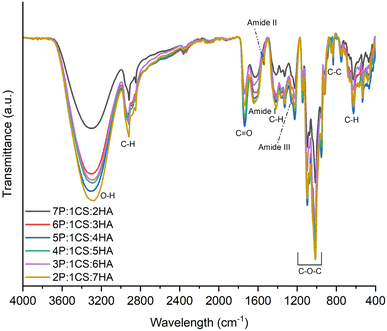 |
| | Fig. 1 Characterisation of edible coatings using FTIR. P stands for pectin, CS for chitosan, and HA for hyaluronic acid. All ratios are weight ratios between the different components used to prepare coatings. | |
3.1.2 TGA.
The thermal stability of edible coatings was investigated using TGA to study the impact of varying the amount of pectin and hyaluronic acid in developed coatings. As shown in Fig. 2, the first decomposition is observed around 90–100 °C in all coatings accounting for ∼15% weight loss. This first decomposition can be attributed to the loss of absorbed and molecular water.11,32 The second main decomposition can be seen between 100 °C and 300 °C of ∼55%, which can be attributed to the side functional groups in the three polysaccharides. A careful analysis of the data shows that increasing amounts of hyaluronic acid in coatings degraded relatively more than higher pectin containing coatings perhaps due to the higher thermal stability of –COOCH3 groups (in pectin) compared to –NHCOCH3 groups (in hyaluronic acid). The final degradation mediated weight loss of ∼10% is observed from 300 °C to ∼700 °C attributing to the complete decomposition of the carbon containing backbones. Overall, all coatings exhibit stable behavior at room temperature with noticeable differences amongst them. We observe some effects of changing the amount of hyaluronic acid relative to pectin in coatings where the degradation rate in the medium temperature range shows a relatively higher degradation rate with increasing hyaluronic acid loading in coatings than higher pectin content. The obtained albeit minor effect of hyaluronic acid inclusion in edible coatings contradicts the previous report on chitosan/gelatin/hyaluronic acid edible coatings.18
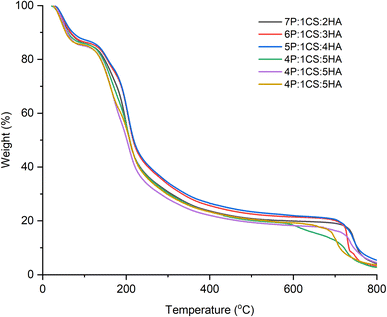 |
| | Fig. 2 TGA analysis of edible coatings. P stands for pectin, CS for chitosan, and HA for hyaluronic acid. All ratios are weight ratios between the different components used to prepare coatings. | |
3.2 Effect of composite edible coatings on postharvest quality of apricots
3.2.1 Weight loss.
Apricots exhibit a loss in weight during the decaying process with time caused by the loss of moisture through their permeable skin. Fig. 3 shows the weight loss of uncoated and coated fruits over the 21 days of storage period. Uncoated control fruits exhibit significantly higher weight loss increasing gradually with time and reaching the maximum value of ∼8% compared to coated fruits over the 21 days of storage (p < 0.05). In the case of coated fruits, the maximum weight loss of ∼3% was observed for 7P:1CS:2HA, 3P:1CS:6HA and 2P:1CS:7HA at 21 days of storage. When compared, a clear trend was observed in the weight loss of coated fruits during the 21 days of storage where the best coating performance was observed for 5P:1CS:4HA (1.5%) and 4P:1CS:5HA (1.5%). The obtained negligible weight loss in 5P:1CS:4HA and 4P:1CS:5HA coatings indicate that for optimal performance the amount of pectin and hyaluronic acid amount should be roughly similar, any increase in either of the two polysaccharides (pectin and hyaluronic acid) reduces their (coating) performance. The reason behind the weight loss observed on day 9 for both 5P:1CS:4HA and 4P:1CS:5HA coatings is not clear at the present stage.
 |
| | Fig. 3 Effect of edible coatings on weight loss of apricots over different storage times. P stands for pectin, CS for chitosan, and HA for hyaluronic acid. All ratios are weight ratios between the different components used to prepare coatings. Data are presented as mean ± SD (n = 3) (error bars are significantly smaller than the data points). Values with different letters on the top of bars are significantly different (p < 0.05) and determined by using a Bonferroni posthoc test in a one-way ANOVA analysis—a, b, c, d, e, f, g are relative to coated fruits at day 0, 3, 6, 9, 12, 15, 18 and 21 days of storage, respectively. | |
3.2.2 pH.
The change in pH in fruits is an indicator of ripening and subsequent oxidation mediated decay over time. As fruits start to ripen typically their pH tends to increase as their acidity reduces with time. Fig. 4 shows the change in pH of uncoated and coated fruits during the 21 days storage period. An increase in pH was observed in all fruits under all conditions. The uncoated fruits exhibit maximum increase in pH from 3.4 (day 0) to 4.7 (day 21) (p < 0.05). A similar increase in pH (3.4 to 4.6) was also observed in 7P:1CS:2HA, 3P:1CS:6HA and 2P:1CS:7HA coated fruits. The observed significant increase in pH (p < 0.05) could be due to decay of fruits during the 21 days storage. When compared, reduction in the pectin amount and corresponding increase in the amount of hyaluronic acid in developed edible coatings significantly curtailed the increase in pH of coated fruits during the 21 days of storage where the best performance was observed for 4P:1CS:5HA (pH increased from 3.4 to 4.1). Any further reduction in the amount of pectin in edible coatings (3P:1CS:6HA and 2P:1CS:7HA) caused an increase in the pH (3.4 to 4.6 in both cases) in coated fruits over the study period (p < 0.05). The results highlight that a balance in the amount of pectin and hyaluronic acid is required in edible coatings to obtain optimal preservation performance. Taken together, developed coatings exhibit preservation properties albeit an optimal balance between pectin and hyaluronic acid amount in coatings has to be maintained. The obtained results are in agreement with previous reports showing that coating perishable fruits preserve them by extending their shelf-life.7,13
 |
| | Fig. 4 Effect of edible coatings on pH of apricots over different storage times. P stands for pectin, CS for chitosan, and HA for hyaluronic acid. All ratios are weight ratios between the different components used to prepare coatings. Data are presented as mean ± SD (n = 3) (error bars are significantly smaller than the data points). Values with different letters on the top of bars are significantly different (p < 0.05) and determined by using a Bonferroni posthoc test in a one-way ANOVA analysis—a, b, c, d, e, f, g are relative to coated fruits at day 0, 3, 6, 9, 12, 15, 18 and 21 days of storage, respectively. | |
3.2.3 Titratable acidity (TA).
The amount of organic acid in fruits attributed to the intrinsic fruit acidity is measured in TA analysis. Typically, TA is directly correlated to the pH where if pH increases then TA values should increase during storage. The effective edible coating should limit the change in TA values during storage. Fig. 5 shows the change in TA values in uncoated and coated fruits during the 21 days storage period. We observed a reduction in TA under all conditions (uncoated and coated fruits) during storage. The maximum reduction in TA was observed in uncoated control fruits from 1.2 on day 0 to 0.2 on day 21 (p < 0.05). In the case of coated fruits, the best performance as assessed by limiting the reduction in TA values leading to only marginal reduction during storage was observed in 4P:1CS:5HA coated fruits (from 1.2 on day 0 to 0.7 on day 21). The next best performance in terms of limiting the reduction in TA during storage was observed for 5P:1CS:4HA coatings (from 1.2 on day 0 to 0.6 on day 21). The remaining coatings exhibit a similar change in TA during storage from 1.2 on day 0 to 0.5 on day 21 (p < 0.05). The obtained results show the same trend in coating performance as pH indicating that for optimal preservation pectin and hyaluronic amounts in edible coatings should be similar with a marginal higher hyaluronic acid amount compared to pectin. Taking pH and TA data together, it can be deduced that while pectin is necessary for optimal preservation, the concentration of hyaluronic acid is relatively more important and plays a crucial role. The obtained results are in agreement with our previous report showing the significant fruit preservation potential of hyaluronic acid and its concentration in edible coating dependent performance.18
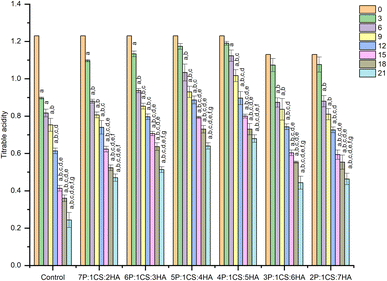 |
| | Fig. 5 Effect of edible coatings on titratable acidity of uncoated and coated apricots over different storage times. P stands for pectin, CS for chitosan, and HA for hyaluronic acid. All ratios are weight ratios between the different components used to prepare coatings. Data are presented as mean ± SD (n = 3) (error bars are significantly smaller than the data points). Values with different letters on the top of bars are significantly different (p < 0.05) and determined by using a Bonferroni posthoc test in a one-way ANOVA analysis—a, b, c, d, e, f, g are relative to coated fruits at day 0, 3, 6, 9, 12, 15, 18 and 21 days of storage, respectively. | |
3.2.4 Total soluble solids (TSS).
The TSS comprises naturally present organic acids and polysaccharides in fruits responsible for the flavour and indicative of ripeness. During storage, the polysaccharides undergo hydrolysis to form simple sugars and other soluble compounds increasing in the TSS. Fig. 6 shows the change in TSS in uncoated and coated fruits during the 21 days storage period. In the control uncoated fruits, the TSS first increased significantly until day 12 reaching the maximum value of 15 ± 0.02 °Brix and then rapidly decreased to 7.5 ± 0.06 °Brix by day 21 of storage (p < 0.05). In the case of coated fruits, a similar increase in the TSS was observed before reduction although the change was more gradual with time and peaked at different storage times. For example, two separate groups were observed in coated fruits with TSS values peaking at – (i) day 15 [7P:1CS:2HA, 6P:1CS:3HA, 3P:1CS:6HA and 2P:1CS:7HA] and (ii) day 18 [5P:1CS:4HA, 4P:1CS:5HA] before starting to reduce. Comparatively, coated fruits exhibited significantly higher TSS values (∼10 to 13 °Brix) on day 21 than uncoated fruits (∼7.5 °Brix) (p < 0.05). The increase in TSS values can be due to the combination of natural ripening of fruits and the hydrolysis of polysaccharides. The significant difference in the increase in TSS values in coated fruits compared to uncoated fruits indicates the preservation effect of coatings on the hydrolysis of intrinsic polysaccharides in coated fruits. Given that developed coatings are made of different polysaccharides (pectin, chitosan and hyaluronic acid), they can contribute to the TSS measurements skewing the results to higher values and therefore reducing the increase observed in this study during the 21 days storage period. Although the differences observed in the extent of the first increase and then decrease in TSS values in different coatings could also indicate the potentially negligible contribution of coating polysaccharides in the experiment – since the total amount of polysaccharides is same in all coatings and if there was any contribution from coating polysaccharides then the TSS values would be expected to be very similar at all time points which is not the case. In the case of 5P:1CS:4HA, 4P:1CS:5HA coated fruits, only a marginal reduction in TSS values was observed (13.1 ± 0.03 °Brix for both coatings) from the highest value on day 18 (13.7 ± 0.02 and 13.9 ± 0.04 °Brix, respectively). The increase in TSS values in the interim storage could be due to the fruit getting mature while the subsequent reduction could be associated with fruit decay as reported previously.18 Overall, the TSS analysis highlights (i) the application of edible coating maintained the freshness of fruits during the 21 days storage by reducing the innate polysaccharide hydrolysis and maturation and (ii) a balance of pectin and hyaluronic amount is required to obtain the best preservation effect. The observed increase and then reduction in the TSS values during storage is in line with previous reports using hyaluronic acid-based coatings on strawberries and short hot water treated cucumbers.18,36
 |
| | Fig. 6 Effect of edible coatings on total soluble solids of uncoated and coated apricots over different storage times. P stands for pectin, CS for chitosan, and HA for hyaluronic acid. All ratios are weight ratios between the different components used to prepare coatings. Data are presented as mean ± SD (n = 3) (error bars are significantly smaller than the data points). Values with different letters on the top of bars are significantly different (p < 0.05) and determined by using a Bonferroni posthoc test in a one-way ANOVA analysis—a, b, c, d, e, f, g are relative to coated fruits at day 0, 3, 6, 9, 12, 15, 18 and 21 days of storage, respectively. | |
3.2.5 Total phenolic content (TPC).
The TPC indicates antioxidant activity due to the redox and free radical scavenging phenolic compounds found in fruit constituents. The natural antioxidants such as flavonoids and ascorbic acid (vitamin C) and the intrinsic antimicrobial effect of apricot oil have been previously reported.37 The natural flavonoids and other antioxidants including polyols regulate function through the glutathione pathway.38 Typically, TPC reduces as a fruit decays during storage, therefore for an effective preservation, an edible coating should inhibit the reduction in TPC amount with time. Fig. 7 shows the change in the TPC in uncoated and coated fruits during the 21 days storage period. The TPC values were reduced in all conditions during the 21 days storage period. However, the extent of reduction in TPC was different for different coatings with uncoated fruits undergoing a significant reduction in TPC (from 86.5 mg GAE per mL on day 0 to 21.4 mg GAE per mL on day 21) during the 21 days storage period (p < 0.05) compared to coated counterparts. In the case of coated fruits, coatings with either the highest amount of pectin or hyaluronic acid (7P:1CS:2HA, 3P:1CS:6HA, 2P:1CS:7HA) exhibited lower performance with greater extent of reduction in TPC compared to coatings with balanced amounts of pectin and hyaluronic acid (6P:1CS:3HA, 5P:1CS:4HA, 4P:1CS:5HA). The least amount of reduction in TPC values was observed for 4P:1CS:5HA (86.5 mg GAE per mL on day 0 to 42.5 mg GAE per mL on day 21) coated fruits followed by 5P:1CS:4HA (86.5 mg GAE per mL on day 0 to 42.3 mg GAE per mL on day 21). Based on the results, it can be concluded that best preservation performance coatings require similar amounts of both pectin and hyaluronic acid, any deviation from this balance negatively impacts the TPC in coated fruits.
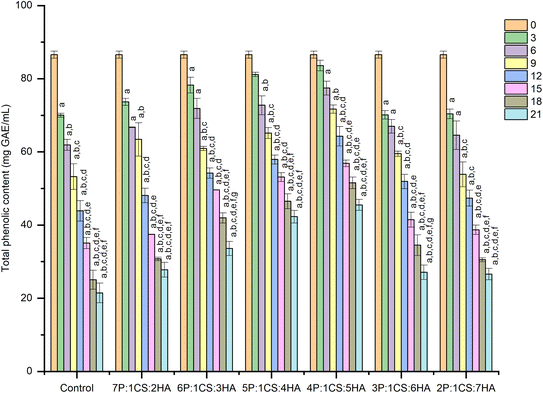 |
| | Fig. 7 Effect of edible coatings on total phenolic content of uncoated and coated apricots over different storage times. P stands for pectin, CS for chitosan, and HA for hyaluronic acid. All ratios are weight ratios between the different components used to prepare coatings. Data are presented as mean ± SD (n = 3) (error bars are significantly smaller than the data points). Values with different letters on the top of bars are significantly different (p < 0.05) and determined by using a Bonferroni posthoc test in a one-way ANOVA analysis—a, b, c, d, e, f, g are relative to coated fruits at day 0, 3, 6, 9, 12, 15, 18 and 21 days of storage, respectively. | |
3.2.6 Amount of ascorbic acid.
The ascorbic acid (vitamin C) is a naturally occurring antioxidant39 found in most stone fruits including apricots. Typically, storage tends to reduce the ascorbic acid content in fruits. Therefore, for effective preservation, a coating should inhibit the reduction in the ascorbic acid content in coated fruits. Fig. 8 shows the change in the amount of ascorbic acid in uncoated and coated fruits during the 21 days storage period. We observed a significant reduction in the ascorbic acid content in uncoated control fruits from 15.1 mg/100 g to 6.2 mg/100 g during the 21 days storage (p < 0.05). In the case of coated fruits, three distinct groups were observed in terms of the reduction in the ascorbic acid amount i.e. coatings with the highest and lowest amount of pectin (7P:1CS:2HA and 2P:1CS:7HA) exhibited a highest reduction in ascorbic acid amount (from ∼15 mg/100 g to ∼8 or 9 mg/100 g) (p < 0.05), followed by coatings with intermediate amounts of pectin (6P:1CS:3HA and 3P:1CS:6HA) (p < 0.05) and finally coatings with similar amounts of pectin and hyaluronic acid (5P:1CS:4HA and 4P:1CS:5HA – (from ∼15 mg/100 g to ∼12 mg/100 g)). The marginal reduction in the ascorbic acid content in the case of 5P:1CS:4HA and 4P:1CS:5HA coated fruits is indicative of their significantly superior preservation performance compared to other coatings and uncoated fruits. The obtained trend and superior performance of coatings with similar amounts of pectin and hyaluronic acid (5P:1CS:4HA and 4P:1CS:5HA) are akin to the pH, TSS and TPC analysis.
 |
| | Fig. 8 Effect of edible coatings on ascorbic acid content of uncoated and coated apricots during different storage times. P stands for pectin, CS for chitosan, and HA for hyaluronic acid. All ratios are weight ratios between the different components used to prepare coatings. Data are presented as mean ± SD (n = 3) (error bars are significantly smaller than the data points). Values with different letters on the top of bars are significantly different (p < 0.05) and determined by using a Bonferroni posthoc test in a one-way ANOVA analysis—a, b, c, d, e, f, g are relative to coated fruits at day 0, 3, 6, 9, 12, 15, 18 and 21 days of storage, respectively. | |
3.2.7 Antioxidant capacity DPPH radical scavenging activity assay.
To further corroborate the other markers of antioxidant activity (TPC and ascorbic acid analysis) of edible coatings, the standard DPPH (2,2′-diphenyl-1-picrylhydrazyl radical) assay was conducted. Typically, DPPH assay is used to determine the overall free radical scavenging activity of a material.27,40 In a typical DPPH assay, antioxidant species neutralize produced DPPH radicals causing a change in solution color from violet to yellow where the intensity of the color change is used to quantitate the antioxidant efficiency of the test sample. Fig. 9 shows the change in the DPPS activity of different edible coatings during the 21 days storage period. A highly effective edible coating is expected to exhibit high DPPH activity and the lowest possible reduction in DPPH activity in coated fruits during storage. The DPPH activity under all conditions was reduced during storage albeit at different rates and amounts. For example, in uncoated control fruits, a significant reduction in DPPH activity was observed at every time point during the 21 days storage reducing from ∼83% on day 0 to ∼16% on day 21 (p < 0.05). Next, coatings with the highest (7P:1CS:2HA) and lower amounts of pectin (3P:1CS:6HA and 2P:1CS:7HA) exhibited a significant reduction in DPPH activity reducing by a third to ∼26% on day 21 from ∼83% on day 0 (p < 0.05). The best performance was observed for 4P:1CS:5HA (∼49% on day 21) followed by 5P:1CS:4HA (∼41% on day 21) and 6P:1CS:3HA (∼36% on day 21). Taken together, the obtained DPPH activity results follow the same trend as TPC and ascorbic acid analysis, indicating that for best fruit preservation performance a balance between pectin and hyaluronic acid needs to be achieved with marginally higher amounts of hyaluronic acid than pectin i.e. 4P:1CS:5HA is the best performing coating followed by the 5P:1CS:4HA coating.
 |
| | Fig. 9 Effect of edible coatings on the total antioxidant (DPPH) activity of uncoated and coated apricots during different storage times. P stands for pectin, CS for chitosan, and HA for hyaluronic acid. All ratios are weight ratios between the different components used to prepare coatings. Data are presented as mean ± SD (n = 3) (error bars are significantly smaller than the data points). Values with different letters on the top of bars are significantly different (p < 0.05) and determined by using a Bonferroni posthoc test in a one-way ANOVA analysis—a, b, c, d, e, f, g are relative to coated fruits at day 0, 3, 6, 9, 12, 15, 18 and 21 days of storage, respectively. | |
Based on coating performance results on postharvest apricots, it is hypothesized that pectin and hyaluronic acid are not replaceable by each other as increasing pectin or hyaluronic acid while reducing the other polysaccharide (hyaluronic acid and pectin) in developed coatings significantly reduce their effectiveness in preserving the coated fruits.
3.2.8 Images of coated fruits.
The change in the texture of coated fruits is shown in Fig. 10. The uncoated fruits degraded during the 21 days storage period with the signs of decay including mouldy growth becoming evident from day 9. Comparatively, coated fruits showed no sign of mould during the entire 21 days storage period independent of the coating formulation. The sign of some over ripening was observed in all samples. The best fruit preservation was observed for 4P:1CS:5HA coated fruits. The results obtained corroborate the data observed for other markers of preservation including weight loss, pH, TSS, TPC and antioxidant content.
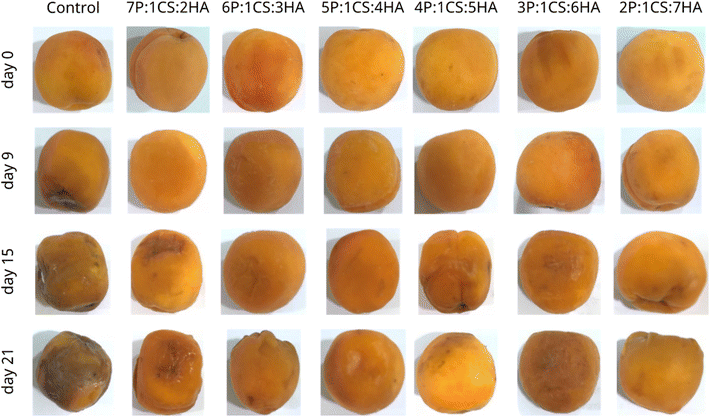 |
| | Fig. 10 The representative optical images of uncoated control and coated apricots at different time points (0, 9, 15 and 21 days after coating). White mold and brown discoloration indicate fruit damage. P stands for pectin, CS for chitosan, and HA for hyaluronic acid. All ratios are weight ratios between the different components used to prepare coatings. | |
4. Conclusion
Food packaging has become pivotal for commercial sales of fresh produce, to extend the shelf-life of fruits and vegetables to account for transportation time from farms to markets. Edible coatings have become a necessity in preserving fresh fruits to preserve them from decay and potential bruising and damage from handling and transport. In this study, active edible coatings were developed from natural polymer polysaccharides for the preservation of apricots during a 21 days storage period. Getting inspiration from our previous work showing the protective effect of hyaluronic acid in edible coatings, we explored the interplay between it (hyaluronic acid) and pectin in this study. The aim of this work was to investigate if hyaluronic acid can be substituted with pectin without impacting the fruit preservation characteristics in edible coatings. The presence of the three polysaccharides was determined using FTIR. No significant impact of changing hyaluronic acid and pectin in coatings was observed on their thermal stability. Compared to uncoated fruits, a significant enhancement in the shelf-life was observed in coated fruits as studied from weight loss, changes in pH, titratable acidity and total soluble solids, and overall antioxidant characteristics including total phenolic content, ascorbic acid amount and DPPH activity. The best fruit preservation performance was observed for the 4P:1CS:5HA followed by 5P:1CS:4HA coatings indicating that a fine balance in the amount of hyaluronic acid and pectin is required to achieve optimal response. However, a relatively higher amount of hyaluronic acid compared to pectin is required for the best fruit preservation performance. Furthermore, any deviation in edible coatings from this fine balance led to significantly lower fruit preservation.
Conflicts of interest
Authors declare no conflict of interest.
Data availability
Data will be made available upon reasonable request from the authors.
Acknowledgements
V.A. acknowledges the National Health and Medical Research Council (NHMRC), Australia, for an Early Career Fellowship (GNT1139060) and UNSW Safety Net Fellowship. The authors are grateful to the College of Agriculture, Basrah University for their infrastructural support.
References
- J.-W. Han, L. Ruiz-Garcia, J.-P. Qian and X.-T. Yang, Compr. Rev. Food Sci. Food Saf., 2018, 17, 860–877 CrossRef PubMed.
- A. Trajkovska Petkoska, D. Daniloski, N. M. D'Cunha, N. Naumovski and A. T. Broach, Food Res. Int., 2021, 140, 109981 CrossRef CAS PubMed.
- S. F. Abdulla, R. Shams and K. K. Dash, Environ. Sci. Pollut. Res., 2024 DOI:10.1007/s11356-024-32806-z.
- P. R. Yaashikaa, R. Kamalesh, P. Senthil Kumar, A. Saravanan, K. Vijayasri and G. Rangasamy, Food Res. Int., 2023, 173, 113366 CrossRef CAS.
- S. Yildirim, B. Röcker, M. K. Pettersen, J. Nilsen-Nygaard, Z. Ayhan, R. Rutkaite, T. Radusin, P. Suminska, B. Marcos and V. Coma, Compr. Rev. Food Sci. Food Saf., 2018, 17, 165–199 CrossRef PubMed.
- F. J. Blancas-Benitez, B. Montaño-Leyva, L. Aguirre-Güitrón, C. L. Moreno-Hernández, Á. Fonseca-Cantabrana, L. D. C. Romero-Islas and R. R. González-Estrada, Food Control, 2022, 139, 109063 CrossRef CAS.
- N. E. Morsy and A. M. Rayan, J. Food Meas. Char., 2019, 13, 3173–3182 CrossRef.
- J. Peerzada Gh, B. J. Sinclair, G. K. Perinbarajan, R. Dutta, R. Shekhawat, N. Saikia, R. Chidambaram and A.-T. Mossa, Eur. Food Res. Technol., 2023, 249, 1935–1952 CrossRef CAS.
- L. Kumar, D. Ramakanth, K. Akhila and K. K. Gaikwad, Environ. Chem. Lett., 2022, 20, 875–900 CrossRef CAS.
- S. A. Al-Hilifi, R. M. Al-Ali, O. T. Al-Ibresam, N. Kumar, S. Paidari, A. Trajkovska Petkoska and V. Agarwal, Gels, 2022, 8, 645 Search PubMed.
- S. A. Al-Hilifi, O. T. Al-Ibresam, R. R. Al-Hatim, R. M. Al-Ali, N. Maslekar, Y. Yao and V. Agarwal, J. Comput. Sci., 2023, 7, 94 Search PubMed.
- H. Yong and J. Liu, Compr. Rev. Food Sci. Food Saf., 2021, 20, 2106–2145 CrossRef CAS PubMed.
- H. Rohasmizah and M. Azizah, Appl. Food Res., 2022, 2, 100221 CrossRef CAS.
- A. Roman-Benn, C. A. Contador, M.-W. Li, H.-M. Lam, K. Ah-Hen, P. E. Ulloa and M. C. Ravanal, Food Chem. Adv., 2023, 2, 100192 CrossRef.
- S. Roy, R. Priyadarshi, Ł. Łopusiewicz, D. Biswas, V. Chandel and J.-W. Rhim, Int. J. Biol. Macromol., 2023, 239, 124248 CrossRef CAS PubMed.
- J. R. Nastasi, V. Kontogiorgos, V. D. Daygon and M. A. Fitzgerald, Trends Food Sci. Technol., 2022, 120, 193–211 CrossRef CAS.
- Y. Chen, F. Chen, S. Lai, H. Yang, H. Liu, K. Liu, G. Bu and Y. Deng, Eur. Food Res. Technol., 2013, 237, 987–993 Search PubMed.
- S. A. Al-Hilifi, R. M. Al-Ali, L. N. M. Dinh, Y. Yao and V. Agarwal, Int. J. Biol. Macromol., 2024, 259, 128932 CrossRef CAS.
- O. Alajil, V. R. Sagar, C. Kaur, S. G. Rudra, R. R. Sharma, R. Kaushik, M. K. Verma, M. Tomar, M. Kumar and M. Mekhemar, Foods, 2021, 10, 1344 CrossRef CAS.
- L. Zhang, F. Chen, S. Lai, H. Wang and H. Yang, LWT, 2018, 96, 604–611 CrossRef CAS.
- A. Ayoubi, M. Balvardi and F. Mahmoudi-kordi, J. Food Meas. Char., 2022, 16, 4025–4035 CrossRef.
- E. H. A. Algarni, I. A. Elnaggar, A. E.-w. N. Abd El-wahed, I. M. Taha, H. A. AL-Jumayi, S. M. Elhamamsy, S. F. Mahmoud and A. Fahmy, Polymers, 2022, 14, 2227 CrossRef CAS.
- E. Ayranci and S. Tunc, Food Chem., 2004, 87, 339–342 CrossRef CAS.
- A. Gull, N. Bhat, S. M. Wani, F. A. Masoodi, T. Amin and S. A. Ganai, Food Chem., 2021, 349, 129149 CrossRef CAS PubMed.
- L. Monjazeb Marvdashti, S. Abdulmajid Ayatollahi, B. Salehi, J. Sharifi-Rad, A. Abdolshahi, R. Sharifi-Rad and F. Maggi, J. Food Saf., 2020, 40, e12805 CrossRef CAS.
- M. S. Nair, M. Tomar, S. Punia, W. Kukula-Koch and M. Kumar, Int. J. Biol. Macromol., 2020, 164, 304–320 CrossRef CAS PubMed.
- A. Nagarajan, N. Rizwana, M. Abraham, M. Bhat, A. Vetekar, G. Thakur, U. Chakraborty, V. Agarwal and M. Nune, J. Mater. Sci.: Mater. Med., 2023, 34, 49 CrossRef CAS PubMed.
- A.-M. Vasi, M. I. Popa, M. Butnaru, G. Dodi and L. Verestiuc, Mater. Sci. Eng., C, 2014, 38, 177–185 CrossRef CAS PubMed.
- A. Baum, M. Dominiak, S. Vidal-Melgosa, W. G. T. Willats, K. M. Søndergaard, P. W. Hansen, A. S. Meyer and J. D. Mikkelsen, Food Bioproc. Tech., 2017, 10, 143–154 CrossRef CAS.
- V. Agarwal, A. G. Panicker, S. Indrakumar and K. Chatterjee, Int. J. Biol. Macromol., 2019, 133, 382–390 CrossRef CAS.
- D. S. McLean, V. Agarwal, K. R. Stack, J. Horne and D. E. Richardson, Bioresources, 2011, 6, 4168–4180 CAS.
- T. Ghosh and V. Katiyar, Int. J. Biol. Macromol., 2022, 211, 116–127 CrossRef CAS PubMed.
- F. Li, Y. Yan, C. Gu, J. Sun, Y. Han, Z. Huangfu, F. Song and J. Chen, Foods, 2022, 11, 3548 CrossRef CAS PubMed.
- L. N. Ramana, L. N. M. Dinh and V. Agarwal, Nanoscale Adv., 2021, 3, 3513–3521 RSC.
- O. T. Al-Ibresam, R. M. Al-Ali, A. A. Al-Temimi, L. N. M. Dinh, Y. Yao, S. A. Al-Hilifi and V. Agarwal, Adv. Sustainable Syst., 2025, 9, 2400928 CrossRef CAS.
- I. N. Nasef, Postharvest Biol. Technol., 2018, 138, 1–10 CrossRef CAS.
- D. Valero, H. M. Díaz-Mula, P. J. Zapata, F. Guillén, D. Martínez-Romero, S. Castillo and M. Serrano, Postharvest Biol. Technol., 2013, 77, 1–6 CrossRef CAS.
- A. A. Al-Temimi, A.-E.-B. Al-Mossawi, S. A. Al-Hilifi, S. A. Korma, T. Esatbeyoglu, J. M. Rocha and V. Agarwal, Metabolites, 2023, 13, 465 CrossRef CAS.
- N. Rizwana, V. Agarwal and M. Nune, Antioxidants, 2022, 11, 72 CrossRef CAS.
- N. Rizwana, N. Maslekar, K. Chatterjee, Y. Yao, V. Agarwal and M. Nune, ACS Appl. Nano Mater., 2024, 7, 18177–18188 CrossRef CAS PubMed.
|
| This journal is © The Royal Society of Chemistry 2026 |
Click here to see how this site uses Cookies. View our privacy policy here. 

 Open Access Article
 This Open Access Article is licensed under a Creative Commons Attribution-Non Commercial 3.0 Unported Licence
 a,
Sawsan A.
Al-Hilifi
a,
Sawsan A.
Al-Hilifi


