

 Open Access Article
 This Open Access Article is licensed under a
 Creative Commons Attribution 3.0 Unported Licence
Water service provision in rapidly urbanising villages: a comparison of rural and urban governance in Mumbai and Chennai regions in India
Renjitha Maniyil
Haridasan
*,
Alison
Parker
 and
May
Sule
and
May
Sule
Cranfield University, College Road, Cranfield, Bedfordshire, MK43 0AL, UK. E-mail: renjitha.haridasan@cranfield.ac.uk; May.Sule@cranfield.ac.uk; a.parker@cranfield.ac.uk
First published on 6th January 2026
Abstract
As cities grow, adjoining villages also start urbanising, adversely affecting primary services, including drinking water services. Switching to urban governance is posed as a solution for addressing this problem. We compared various dimensions of water services available to households across towns in different stages of transition in two metropolitan regions in India to generate evidence on whether the transition of fast-urbanising villages to municipal governance results in improved water services. The data on dimensions of water services were collected through household surveys. The Kruskal–Wallis test was adopted to determine if the differences found in quantitative dimensions of water services available to households across fast-urbanising villages and towns under urban administration were statistically significant, while a chi-square test was employed for qualitative dimensions. Our results showed no better services in towns under urban administration for all dimensions studied. If some were better in towns under urban administration, others were better in urbanising villages under rural administration. We conclude that urban governance alone does not guarantee better services, and there are factors beyond governance contributing to improved services. The findings urge policymakers and programme implementers to look beyond the ‘transition-to-urban governance’ solution and work on institutional strengthening and context-specific approaches.
Water impactMere transition of fast-urbanising peri-urban areas to urban governance does not, in itself, resolve drinking water challenges in these transition zones. Strengthening the capacities of local governments is essential, irrespective of whether such areas fall under urban or rural administrative arrangements. Policymakers and programme implementers must therefore ensure meaningful involvement of these local governments in urban development planning and adopt inclusive, stakeholder-driven approaches when considering shifts in governance structures. |
1. Introduction
One key finding of the World Cities Report 2020 is that the global urban population will continue to rise, reaching 60.4% by 2030.1 Notably, around 96% of this increase is expected to occur in less developed regions of East Asia, South Asia, and Africa. Furthermore, three countries, India, China, and Nigeria, are projected to account for 35% of the total global urban population growth between 2018 and 2050.1,2 India, the most populous nation, is projected to add 416 million urban residents, substantially higher than China's 255 million and Nigeria's 189 million.2 The report also highlights that the rate of spatial expansion of urban areas, including peri-urbanisation, is significantly faster than the rate of urban population growth. In India, census towns (CTs), villages exhibiting urban characteristics† identified as urban by the Census of India,3 saw a remarkable 186% increase between 2001 and the last census held in 2011, adding 2500 new CTs.4,5 These CTs contributed to nearly 30% of the increase in urban population, which only follows the combined effect of natural increase in urban population and change in administrative status of settlements.6 This pattern contrasts sharply with China, where rural-to-urban migration has been the dominant driver of urban expansion,7 and also Nigeria, where almost 50% of the growth is triggered by the natural increase in urban areas, driven by declining mortality and high fertility.8 These differences make India an especially compelling context for examining the dynamics of fast-urbanising settlements.Studies indicate that 34% of the newly added CTs lie within a 25 kilometre radius of large town boundaries9 and thus can be considered peri-urban. Although currently under rural governance, these CTs may eventually transition into statutory towns (STs),10 which fall under urban governance3 or merge with adjoining STs over time. This potential transition highlights the relevance of the peri-urban CTs in transition studies, and these CTs, along with the adjoining ST, form an ideal setting for examining rural-to-urban governance transition and subsequent change in services.
Previous research in the Global South indicates a decline in water service quality in peri-urban areas compared to adjacent metropolitan regions.11–15 These service deficiencies often compel both low- and high-income households (HHs) to rely on unsafe or costly alternatives, with poorer HHs being especially vulnerable due to limited resources.11,12 Peri-urbanisation is commonly understood as a result of low-income HHs seeking affordable living spaces near urban centres.1 The fragmented jurisdictional arrangements and limited institutional capacities of local governments in peri-urban zones further constrain their ability to provide adequate infrastructure and services.11,16–19 Bringing peri-urban areas under urban governance is frequently proposed as a viable solution to bridge service gaps in the water and sanitation sectors.16,19–23 According to the Constitution of India, local governments in CTs and STs are responsible for managing essential services, including drinking water.24 However, several studies note that local bodies in CTs often lack the capacity and resources needed to meet the demands of rapidly urbanising areas.20,22,25–29 While some peri-urban CTs may eventually merge under adjoining STs or become STs and thus transition to urban governance, there is no conclusive evidence that this leads to improved amenities, including better water services. Some studies report that overall service delivery is poorer under rural governance frameworks,20,26,30–32 whereas others find no significant difference in service provision between CTs and STs.10 Additionally, rural residents often resist the shift to urban governance due to the absence of or minimal user fees, limited tax categories, and lower tax rates in rurally administered areas.12,33 This resistance is further reinforced by the skewed allocation of central government grants, which tend to favour rural areas.33 To date, there are no dedicated studies examining the specific impact of the transition from CTs to STs on the drinking water sector.
In the absence of conclusive evidence on better services in areas under urban governance, we hypothesise that there is no significant difference in water services available to HHs in towns under urban governance and those in fast-urbanising villages. By testing this hypothesis, the study seeks to generate evidence on whether the transition of fast-urbanising villages to urban governance leads to improved water service delivery. Additionally, the study examines the services available across different settlement types to identify those with inadequate provisions that require urgent attention.
2. Methods
To test the hypothesis, the study employed a structured household survey to collect data on multiple dimensions of water service provision in fast-urbanising villages, towns under urban governance, and various settlement types across two metropolitan regions in India. The data were then subjected to statistical analysis to assess whether significant differences in service levels existed between towns under rural administration and those governed by urban local bodies.2.1 Dimensions for assessing water services
After reviewing several water service assessment frameworks, the dimensions in the service delivery assessment ladder framework developed by the IRC Water and Sanitation (IRC) in 200934,35 were chosen with a modification. The framework uses four dimensions of water services: quality, quantity, accessibility, and reliability. To better capture the continuity of supply, an additional dimension, regularity, was incorporated to reflect anticipated interruptions in service. These dimensions are broadly applicable across diverse contexts and facilitate consistent comparison. Except for water quality, data for all dimensions could be reliably collected with the resources available to this study. Owing to the practical and logistical challenges of testing household-level water quality36,37 was not feasible. However perceived water quality of HHs can be estimated through the extent to which HHs rely on bottled water and undertake in-house treatment of supplied water.‡ As these practices also indicate how well the system performs relative to its intended service level, they were included as indicators of the reliability dimension. Table 1 outlines each dimension, its relevance, and the indicators selected for assessment.| S. No | Dimension | Definition and significance | Indicator/s |
|---|---|---|---|
| 1 | Accessibility of source | Refers to the location of the principal water source. If the source lies outside the household premises, it is likely that less water will be collected, and may adversely affect the quality of water due to unsafe handling practices35 | Whether the principal water source lies within the household premises (yes/no) |
| 2 | Regularity of supply | It measures the continuity of water supply. It captures the anticipated interruptions35 in supply, for which HHs usually have a backup plan, like setting up storage tanks or accessing a supplementary source | (i) Number of hours water is available in a day |
| (ii) number of days water is available in a week | |||
| 3 | Quantity of water available | The quantity of water to the household. It has a bearing on household hygiene and public health.38 Identifying a suitable indicator to assess the quantity was a challenge as HHs with piped connections and household or community storage facilities were not aware of the quantity of water they used, unlike those fetching water from public standpipes who had a clear idea of the quantity of water they collect and use in a day | (i) If sufficient quantity of water is available to HHs to meet their daily needs (yes/no) |
| (ii) if households get the required quantity of water whenever needed (yes/no) | |||
| (The first indicator highlights a ‘bare minimum scenario’ which captures if adequate quantity of water is available for meeting the routine needs of the HHs. The second indicator of quantity, if required quantity of water is available to HHs whenever needed, captures the temporal factor along with adequacy, which reflects the ‘most desirable scenario’) | |||
| 4 | Reliability of supply | Reliability of water services is defined as the proportion of the time during which the system functions at its intended level of performance.34 It captures the ‘unanticipated interruptions’ in supply that often force HHs to rely on less safe or expensive sources. Studies reveal that even a few days of disruption in the water supply can damage the benefits accrued from an improved system and pose a threat to public health39 | (i) Number of breakdowns in water supply in a month |
| (ii) Proportion of HHs relying on storage facilities | |||
| (iii) Proportion of HHs relying on alternate sources | |||
| (iv) Proportion of HHs relying on bottled water | |||
| (v) Proportion of HHs relying on water treatment |
2.2 Study setting
The research setting was metropolitan areas in India, which are areas with a population of one million or more, surrounding large cities in India, comprising cities, towns, and villages, that can spread across several districts, the extent of which is determined by respective state governments.40 This study was conducted in two metropolitan regions: the Mumbai metropolitan region (MMR), which surrounds Mumbai, the second-largest city in India, and the Chennai metropolitan area (CMA), which surrounds Chennai, the fourth-largest city in the country. These regions are part of the states of Maharashtra and Tamil Nadu, respectively.Three types of towns in close proximity were selected in each region to examine the impact of transitioning from rural to urban administration on water services. The first is a CT identified as such in 2001, representing an advanced stage of rural-to-urban transition; this is referred to as an ‘old CT’ in the study. The second is a CT that was classified as a CT only in 2011 in the last census, indicating a more recent transition; this is referred to as a ‘young CT’. The third is a ST, a town under urban governance, near the selected CTs.
For this study, the Bhiwandi–Nizampur Municipal Corporation, hereafter referred to as Bhiwandi city, was selected as the ST. The 60 villages surrounding Bhiwandi city, collectively notified as the BSNA, include nine CTs: five old CTs and four young CTs. Using a random number generator, one CT from each category was selected. Karivali was chosen as the old CT, and Purne as the young CT (Fig. 1).
 | ||
| Fig. 1 Study area in Mumbai metropolitan region. | ||
In CTs, water supply was managed by the Gram Panchayat, the local village government, whereas in the ST, it was overseen by the municipal corporation. All three towns had a public piped water supply, with the bulk water sourced from a private limited company44 and the Mumbai Municipal Corporation. In addition, privately owned protected wells and boreholes were also used in the area.
The Chengalpattu sub-district of the erstwhile Kancheepuram district (now part of Chengalpattu district), which is home to several IT parks and is intersected by prominent transport corridors, formed the study area in Chennai. The towns chosen in the Chennai region include Vandalur, an old CT; Muttukadu, a young CT; and Tambaram Municipal Corporation, a ST adjoining them (Fig. 2), and were randomly selected using a random number generator technique.
 | ||
| Fig. 2 Study area in Chennai region. | ||
Like the Mumbai region, in Chennai, too, local governments in the towns were responsible for public water supply. The public water supply system in STs relied on the bulk water supply from statutory boards set up by the state government or had its own groundwater-based systems, which ended in either household connections or public fountains dispersed throughout the town. In CTs, the public water system consisted of several groundwater-based decentralised systems with a borehole, an elevated storage tank, and a distribution network. Self-supply based on boreholes and protected wells were also common in the HHs in these three towns.
2.3 Selection criteria for settlements
Peri-urban studies, both globally and regionally,12 have raised concerns about equity in resource allocation and sharing among different resident groups. Qualitative studies conducted by the researcher in these towns prior to the quantitative analysis identified three types of settlements: (i) settlements dominated by long-term residents, (ii) low-income settlements, and (iii) apartments.Residents who have lived in the town for several generations, often referred to as ‘early settlers’, are classified in this study as ‘long-term residents’. Settlements where long-term residents form the majority are termed ‘long-term resident settlements’. Low-income settlements refer to areas inhabited by low-income HHs, typically characterised by overcrowding and poorly constructed housing. These settlements are often occupied by migrants who have relocated from rural areas in search of better livelihood opportunities. They may also include caste-based settlements occupied by individuals from marginalised castes, where caste refers to social groups within India's classification system that are assigned by birth. The third category, apartments, represents a distinct feature of urban and peri-urban areas and includes multi-storeyed residential buildings or ‘gated communities’, as they are commonly known. These communities are generally occupied by middle- or high-income residents, most of whom are migrants from nearby districts or other states.
2.4 Sampling strategies and selection of HHs
The population residing in the towns selected from the MMR and the CMA constituted the target population for this study. The unit of analysis was the household. A cluster sampling method was employed, drawing samples from long-term resident settlements, apartments, and low-income settlements within each town. This approach provided insights into the performance of water services within each settlement type while offering a comprehensive understanding of water service delivery at the town level.| Chennai region | ||||
|---|---|---|---|---|
| Type of settlement | Apartments | Long-term resident settlements | Low-income settlements | Total |
| Type of town | HHs surveyed | HHs surveyed | HHs surveyed | HHs surveyed |
| Young CT | 20 | 20 | 20 | 60 |
| Old CT | 40 | 40 | 40 | 120 |
| ST | 60 | 60 | 63 | 183 |
| Total | 120 | 120 | 123 | 363 |
| Mumbai region | ||||
|---|---|---|---|---|
| Young CT | 19 | 22 | 21 | 62 |
| Old CT | — | 70 | 66 | 136 |
| ST | 60 | 63 | 65 | 188 |
| Total | 79 | 155 | 152 | 386 |
The survey began at the first house on the right side of the street, which was willing to participate. From there, it proceeded systematically, selecting every fifth house while alternating between the right and left sides of the street until the required sample size was achieved – 10 HHs per street in old CTs and STs, and 5 HHs per street in young CTs.
The criteria used to categorise settlements were not uniform. Low-income settlements and apartments were identified based on physical housing characteristics and the income levels of residents, both of which had clearly distinguishable features. In contrast, long-term resident settlements lacked such visible identifiers and were defined solely through the information provided by key informants. To ensure that the sample accurately represented the intended population, settlement types were coded for enumerators prior to data collection. Appendix A-4 in supplementary material elaborates the codes used to identify the three types of settlements studied and also defines town types.
2.5 Household survey questionnaire for collecting data
Data were collected using a structured questionnaire (Appendix A-5 in supplementary material). The draft version of the questionnaire was reviewed in consultation with supervisors, key stakeholders, and the research support team from the partner organisations. The researcher conducted several rounds of pretesting with dummy real-life respondents, during which minor linguistic modifications were made to ensure clarity and contextual relevance. The finalised household survey questionnaire was then digitised using Qualtrics software (Qualtrics, Provo, UT).2.6 Data collection process
Household surveys were carried out by a commercial agency that deployed trained enumerators. The researcher conducted training sessions for the enumerators, explaining the research context, objectives, and the translated version of the survey tool. Data collection was carried out in two phases during the summer of 2024: from 21st to 28th March in Chennai, and from 17th to 22nd April in Mumbai. To ensure data quality, the researcher conducted spot checks in the field and continuously monitored entries using the Qualtrics platform, which enabled real-time tracking. Any discrepancies, such as missing or non-feasible data, were promptly flagged and communicated to the enumerators for immediate corrective action. In addition, daily feedback was exchanged between the enumerators and the researcher, facilitating timely rectifications such as discarding erroneous entries and surveying additional HHs to compensate for data loss.2.7 Data cleaning and data harmonising
The data collected through the e-survey platform was exported into MS Excel spreadsheets for further processing. It was then examined for inconsistencies, incompleteness, and outliers. If inconsistencies were found in individual variables or if contradictory entries appeared across variables within a household, the data from that household was excluded from the analysis. During sense-checking, some apparent outliers were verified as valid and were therefore retained for analysis.2.8 Data analysis–statistical tests
Descriptive statistics, including frequencies, measures of central tendency, and dispersion, were used to summarise the data. Hypothesis testing was employed for four key dimensions to assess whether town type or settlement type had a significant effect on these dimensions.The independent Kruskal–Wallis test, the non-parametric equivalent of ANOVA, was used to compare medians48,49 since the distribution of the quantitative variables across towns did not meet the assumptions of parametric tests. When the test indicated statistically significant differences, a post hoc Dun–Bonferroni test50 was conducted to identify the specific town or settlement types that differed from one another.
For categorical variables such as accessibility and quantity, a chi-square test was employed to examine associations between town types or settlement types, as it evaluates the relationship between two nominal variables.51§ The strength of the association was further assessed using Cramér's V value.51
The hypotheses tested are summarised in Table 3.
| Indicator | Null hypothesis | |
|---|---|---|
| Across towns | Across settlements | |
| Whether the principal water source lies within the household premises | There is no association between the type of town and the availability of water source within the premises in HHs in these towns | There is no association between the type of settlements and the availability of water source within the premises in HHs in these settlements |
| If sufficient quantity of water is available to HHs to meet their daily needs | There is no association between the town type and the availability of sufficient quantity of water to meet the daily needs in HHs in these towns | There is no association between the settlement type and the availability of sufficient quantity of water to meet the daily needs in HHs in these settlements |
| If households get the required quantity of water whenever needed | There is no association between the town type and the availability of required quantity of water whenever needed in HHs in these towns | There is no association between the settlement type and the availability of required quantity of water whenever needed in HHs in these settlements |
| Number of breakdowns in water supply in a month | There is no difference between the statutory town, old census town and young census town with respect to the number of breakdowns in water supply in a month in HHs in these towns | There is no difference between the low-income settlements, apartments and long-term resident settlements with respect to number of breakdowns in water supply in a month in HHs in settlements |
| Number of days water is available in a week | There is no difference between the statutory town, old census town and young census town with respect to the number of days water is available in a week to HHs in these towns | There is no difference between the low-income settlements, apartments and long-term resident settlements with respect to number of days water is available in a week to HHs in these settlements |
| Number of hours water is available in a day | There is no difference between the statutory town, old census town and young census town with respect to the number of hours water is available in a day to HHs in these towns | There is no difference between the low-income settlements, apartments and long-term resident settlements with respect to number of hours water is available in a day to HHs in these settlements |
The research used IBM Corp. (2022) IBM SPSS Statistics for Mac (Version 29.0), a quantitative data analysis software. The study was approved by the Research Ethics Board of Cranfield University, vide Approval No. CURES/21020/2023. All participants provided informed consent prior to participation.
3. Findings
3.1 Accessibility of water sources
The different water supply systems accessed by HHs in towns within the Chennai and Mumbai regions are summarised in Fig. 3. A public piped water supply with house connections and public standpipes constitute the primary sources across towns and settlements in the Mumbai region. As shown in Fig. 3, the statutory town (ST) in the Mumbai region reported better public water supply coverage compared to the other two towns. In Mumbai and Chennai STs, 89% and 81% of HHs, respectively, relied on a single source, which is piped water supply within premises in Mumbai and borehole with motorised pumps within premises in Chennai. In contrast, this proportion was markedly lower in the old CTs – 59% in Mumbai and 61% in Chennai. In the remaining 41% of HHs in Mumbai's old CT, 14.5% accessed boreholes with motorised pumps within their premises, 9.9% used boreholes with motorised pumps located outside, 13.7% depended on public standpipes, and 2.3% obtained piped water from neighbouring HHs. A comparable pattern was evident in Chennai's old CT, where 39% of HHs depended on six distinct primary sources. Similarly, as illustrated in Fig. 3, young CTs in both regions also displayed considerable diversity, underscoring the diverse water sources in CTs compared to STs. | ||
| Fig. 3 Diversity of water sources accessed by HHs in Mumbai and Chennai metropolitan regions across towns. | ||
In contrast to Mumbai, the predominant water source in Chennai was boreholes with motorised pumps, primarily developed through private initiatives. This trend can be attributed to the high groundwater table in the areas studied within the Chennai region, which makes borewell drilling relatively inexpensive. The second most common source in Chennai was piped water supply provided by local governments.
Across settlement types, a key finding in both regions is the greater variety of water sources accessed by HHs in low-income and long-term resident settlements, as opposed to apartments, which are primarily occupied by middle- and high-income HHs (Fig. 4).
 | ||
| Fig. 4 Diversity of water sources accessed by HHs in Mumbai and Chennai metropolitan regions across settlements. | ||
 | ||
| Fig. 5 Water services across towns in Mumbai and Chennai regions. | ||
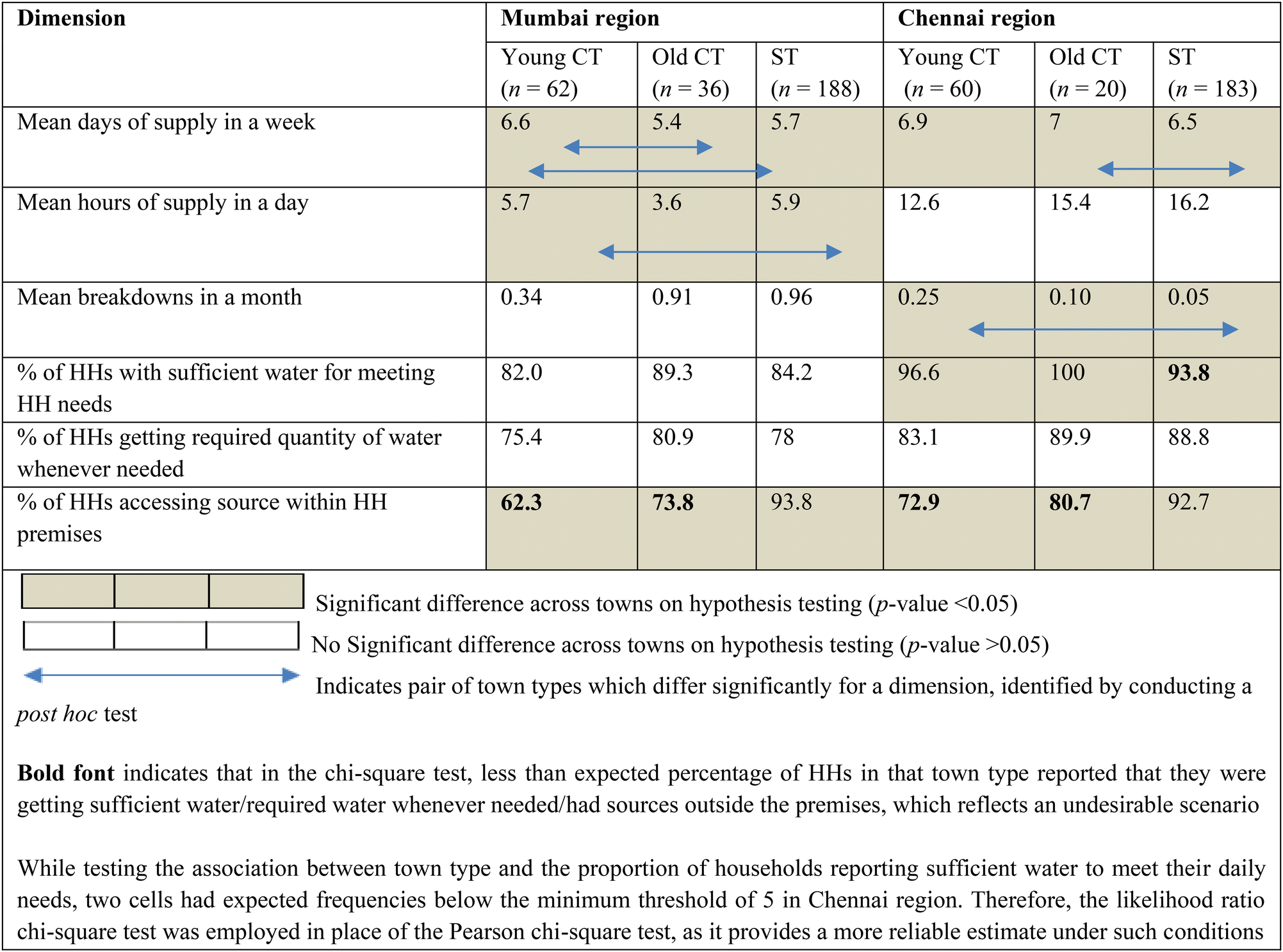
The chi-square test conducted to examine the association between accessibility and town types yielded a p-value of <0.5 in both regions, indicating a statistically significant relationship (Table 4). As a result, the null hypothesis was rejected. Cramér's V values were 0.32 for Mumbai and 0.22 for Chennai, suggesting a weak association. Cross-tabulation tables for all three nominal variables, including observed and expected frequencies (i.e., the number of HHs expected in each category under the assumption of no association), are provided in Appendix A-6 and A-7 in supplementary material. For the dimension of ‘accessibility’, the analysis shows that in both Mumbai and Chennai, more HHs in CTs than expected accessed sources located outside their premises. In contrast, in STs, fewer HHs than expected accessed water sources outside the premises, indicating a better scenario in STs (Appendix A-6 and A-7).
|
 | ||
| Fig. 6 Water services across settlements in Mumbai and Chennai regions. | ||
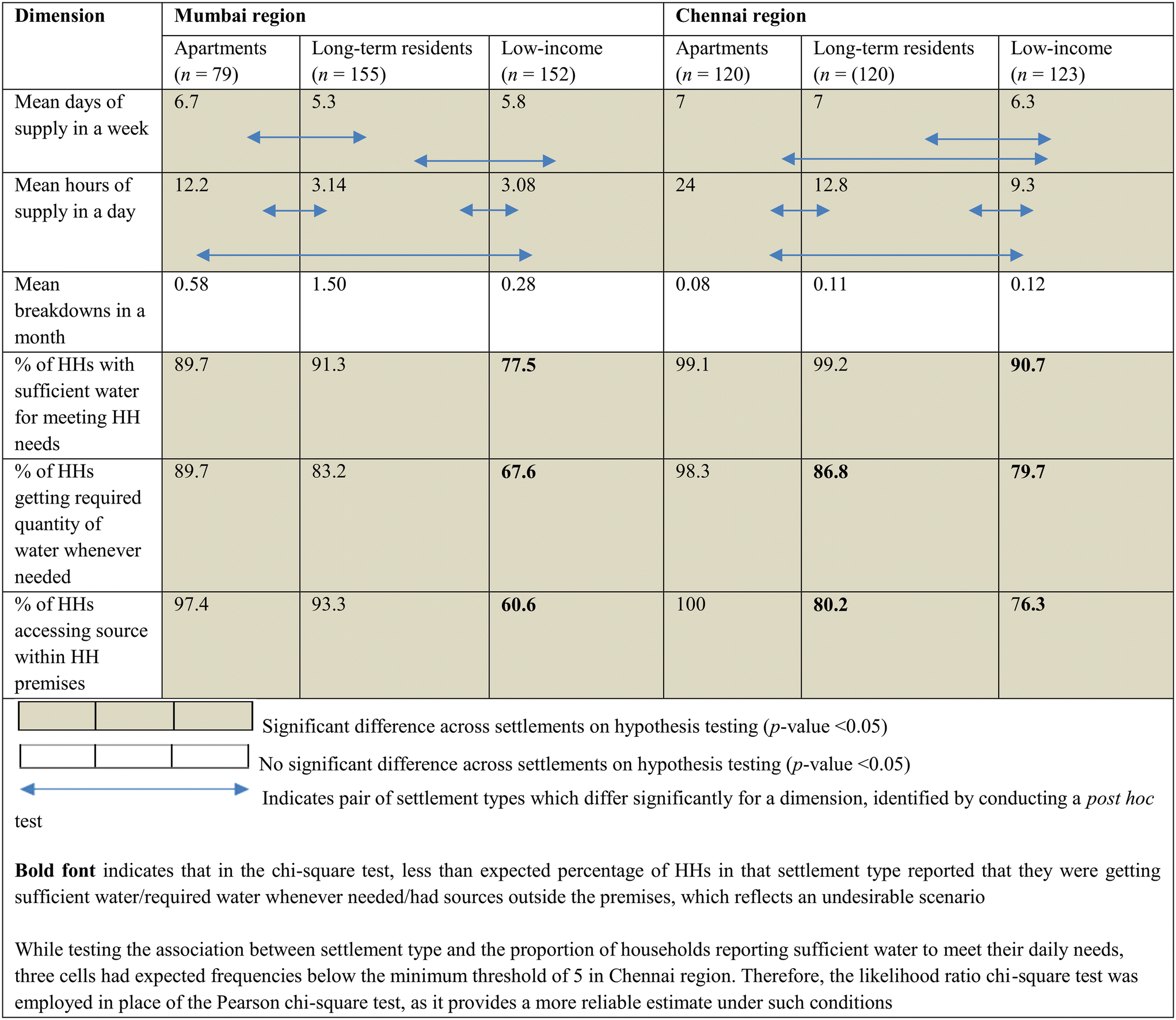
A chi-square test with a p-value <0.05 confirmed that differences in accessibility across settlement types in both Mumbai and Chennai were statistically significant (Table 5). The Cramér's V value of 0.29 in Chennai indicated a moderately strong association, while a value of 0.43 in Mumbai reflected a stronger association. Low-income settlements reported the poorest accessibility in both regions (Appendix A-8 and A-9 in supplementary material). As seen in the cross-tabulation table (Appendix A-8), in Chennai, more HHs in long-term resident settlements than expected reported accessing sources outside the premises, indicating an undesirable scenario. In contrast, apartments in both regions consistently exhibited better access.
|
3.2 Quantity of water available to HHs
In this study, quantity was assessed using two complementary indicators: (i) the percentage of HHs reporting that they receive sufficient water to meet their daily needs and (ii) the percentage of HHs stating that they obtain the required quantity of water whenever needed. Together, these indicators capture both the overall adequacy of water availability and HHs' ability to access water at the moment of demand, thereby providing a more comprehensive understanding of quantity-related service performance. In addition to these two measures, HHs' dependence on supplementary water sources, reliance on storage facilities, and the use of booster pumps to extract water from public distribution networks also provide insights into the sufficiency. These three indicators are discussed in detail under section 3.4, which examines the reliability of water services.Notably, more HHs than expected in the ST reported insufficient water, reflecting an undesirable scenario. In the young CT, the number of HHs reporting insufficient water was approximately equal to the expected count (Appendix A-6).
The best-case scenario was assessed by examining whether HHs received the required quantity of water whenever needed. In the Mumbai region, 80.9% of HHs in the old CT (106 out of 131) responded ‘yes,’ compared to 78.0% in the ST (138 out of 177) and 75.4% in the young CT (46 out of 61). In Chennai, 83.1%, 89.9%, and 88.8% of HHs in the young CT, old CT, and ST, respectively, reported receiving the required water whenever needed. However, chi-square test yielded a p-value >0.05 for Chennai and Mumbai, indicating no statistically significant association between town type and this variable in either region. Accordingly, the null hypothesis of no association was retained.
In Chennai's apartments, there was little difference between the best-case and bare minimum scenarios, with 98.2% of HHs reporting that they received the required quantity of water whenever needed. However, among long-term resident and low-income settlements, the figures were 86.8% and 79.7%, respectively, indicating a notable gap between the two scenarios. In Mumbai as well, all apartment HHs who reported receiving sufficient water also stated that they received water whenever required. In contrast, only 83.2% of HHs in long-term resident settlements and 67.6% in low-income settlements in Mumbai affirmed receiving the required quantity of water whenever needed, again highlighting a significant gap between the bare minimum and best-case scenarios.
Chi-square tests yielded a p-value <0.05 which confirmed a statistically significant association between settlement type and both variables: availability of sufficient quantity of water and availability of required quantity of water whenever needed (Table 5). In Chennai, the analysis of the variable, availability of sufficient quantity of water, resulted in three expected cell counts below 5, violating the assumptions of the Pearson chi-square test. Consequently, the maximum likelihood ratio chi-square test was used. In Chennai, the Cramér's V values for these two variables were 0.21 and 0.24, respectively, indicating moderately strong associations. In Mumbai, the association between settlement type and availability of sufficient water was weak (Cramér's V = 0.19), while the association with the variable ‘availability of required quantity whenever needed’ was moderately strong (Cramér's V = 0.22).
3.3 Regularity of supply
Regularity of supply was assessed using two indicators: the number of days in a week that water is available and the number of hours of supply per day. HHs frequently rely on storage facilities to manage intermittent or unpredictable supply, and the prevalence of such facilities provides an additional, indirect indication of service regularity and reliability. The role of storage, along with other reliability-related indicators, is examined in detail in section 3.4. The present section focuses specifically on the two regularity indicators – number of supply days per week and number of supply hours per day.A Kruskal–Wallis test conducted at a 5% significance level revealed a statistically significant difference between town types with respect to the number of days water was available per week, with a p-value <0.05 in both regions (Table 4). Consequently, the null hypothesis was rejected. Post hoc analysis using the Dunn–Bonferroni test indicated statistically significant differences between the old CT and the young CT as well as between the ST and the young CT, in Mumbai, where the young CT had the highest number of supply days per week (Table 4). In Chennai, the difference between the ST and the old CT was found to be statistically significant, with the old CT reporting daily water availability.
With regard to the number of hours water was available per day, statistically significant differences across town types were observed only in the Mumbai region (p-value <0.05). Pairwise comparisons using the Dunn–Bonferroni post hoc test revealed a significant difference between the ST and young CT, with HHs in the ST receiving more hours of water supply per day than those in the young CT (Fig. 5).
The results of the Kruskal–Wallis test, conducted at a 5% significance level, revealed statistically significant differences across settlement types with respect to the number of days water was available per week, with a p-value <0.05 (Table 5) in both the regions. Accordingly, the null hypothesis was rejected. Post hoc analysis using the Dunn test with Bonferroni correction indicated statistically significant differences in mean supply hours across all three settlement types.
With regard to the number of supply days per week, significant differences were found between low-income and long-term resident settlements in both regions. However, differences between apartments and low-income settlements were statistically significant only in Chennai, while differences between apartments and long-term resident settlements were significant only in Mumbai (Table 5).
3.4 Reliability of supply
Reliability of water services, defined as the proportion of time during which the system functions at its intended level of performance, can be assessed using several indicators. These include the frequency of supply breakdowns; the extent to which HHs depend on storage facilities or supplementary water sources; and the proportion of HHs purchasing bottled water or adopting in-house treatment measures. In addition, although applicable only to HHs relying on the public water supply, the extent to which HHs use boosting pumps to extract water from the distribution network also provides an indication of whether the system is delivering water at the expected pressure. However, for the purpose of analysing whether significant differences exist between town types and settlement types, the indicator ‘number of supply breakdowns’ was selected, as it is the only reliability measure that is consistently observed across all contexts and thus enables methodologically robust comparison.| Region | Settlement type | Young CT | Old CT | ST |
|---|---|---|---|---|
| Chennai | Apartments | 47.4 | 28.2 | 35.6 |
| Long-term resident | 55 | 25 | 44.3 | |
| Low-income | 0 | 15 | 82.8 | |
| Mumbai | Apartments | 47.4 | — | 64.4 |
| Long-term resident | 14.3 | 29.2 | 22.2 | |
| Low-income | 14.3 | 45.5 | 25.5 |
 | ||
| Fig. 7 Household storage structures in Mumbai. | ||
As illustrated in Fig. 8, HHs in CTs in Chennai reported higher rates of bottled water consumption, with long-term residents relying more heavily on bottled water than residents of other settlement types. In contrast, the proportion of HHs purchasing bottled water in the Mumbai region was generally lower than in Chennai, except in apartments located within the young CT (Fig. 8). In Mumbai, HHs in STs and apartments showed a greater preference for in-home water treatment over bottled water. In Mumbai, the purchase of bottled water was predominantly seasonal, occurring mostly during the monsoon period. In contrast, Chennai HHs reported purchasing bottled water throughout the year. Commonly adopted treatment practices included boiling, filtering (using cloth or filtration devices), and chlorination.
 | ||
| Fig. 8 Trends in treatment of water and purchase of bottled water across settlements in various town types in Mumbai and Chennai. | ||
| Region | Settlement type | % of HHs relying on supplementary sources | % of HHs with storage facility | % of HHs purchasing bottled water | % of HHs treating water | ||||||||
|---|---|---|---|---|---|---|---|---|---|---|---|---|---|
| Y CT | O CT | ST | Y CT | O CT | ST | Y CT | O CT | ST | Y CT | O CT | ST | ||
| Y CT – young CT, O CT – old CT, A – apartments, L-T – long term resident settlements, L-I – low-income settlements. | |||||||||||||
| Chennai | A | 47.4 | 28.2 | 35.6 | 100* | 100* | 100* | 57.9 | 43.6 | 28.8 | 57.9 | 64.1 | 74.6 |
| L-T | 55 | 25 | 44.3 | 90 | 90 | 85.3 | 80 | 80 | 32.8 | 10 | 17.5 | 47.6 | |
| L-I | 0 | 15 | 82.8 | 95 | 77.5 | 89.7 | 75 | 72.5 | 22.4 | 10 | 27.5 | 18.9 | |
| Mumbai | A | 47.4 | — | 64.4 | 100* | — | 100* | 78.9 | — | 33.9 | 84.2 | — | 81.4 |
| L-T | 14.3 | 29.2 | 22.2 | 100 | 92.3 | 100 | 28.6 | 4.6 | 31.8 | 85.7 | 36.4 | 76.2 | |
| L-I | 14.3 | 45.5 | 25.5 | 95.2 | 100 | 100 | 28.6 | 21.2 | 36.4 | 95.2 | 67.7 | 87.3 | |
Low-income settlements demonstrate the most variability, reflecting vulnerabilities and uneven service access during rapid urbanisation. In contrast, apartment settlements with predominantly middle- and high-income residents tend to demonstrate stronger coping capacity through better access to alternative sources, more reliable storage facilities, and more systematic treatment strategies.
4. Discussion
A comparison of water services available to HHs in towns under rural administration, those that have only recently begun urbanising (young CTs) and those that have been urbanising over a longer period (old CTs) with towns that have transitioned to urban governance (STs) revealed no consistent pattern in service outcomes. Statistically significant differences across town types were observed in only two variables in both regions: the number of days of water supply per week and the availability of a source within household premises. Differences in mean breakdowns and the availability of sufficient water were statistically significant only in the Chennai region, while mean daily supply hours were significantly different only in the Mumbai region. In cases where the differences were statistically significant, STs performed better with respect to accessibility, average supply hours per day, and frequency of breakdowns. In the Mumbai region, young CTs reported more days of water supply per week than other town types. In Chennai, old CTs, where HHs reported daily water supply, outperformed both young CTs and STs. Regarding the availability of sufficient water, old CT again performed better than both ST and young CT. Of the six service variables analysed, three showed better outcomes in towns under urban governance, while the remaining three performed better in rurally administered towns. These findings suggest the absence of a uniform pattern across town types or regions and that a shift to urban governance alone does not guarantee better water services in fast-urbanising villages.These findings diverge from existing literature on rapidly transitioning peri-urban areas which reports better services in urban areas.13–15,20,23,32,52 Among the two indicators of quantity, the differences across towns in the measure ‘whether HHs receive the required quantity of water whenever needed’ were not statistically significant in either region. Table 4 shows that, across all towns, including those under urban governance, the number of HHs reporting that they receive adequate water when needed was lower than those reporting that they receive sufficient overall quantity. Previous studies demonstrate that continuous water availability throughout the day and on all days leads to higher water use and associated health gains.38 These results indicate that water programmes and policies must move beyond ensuring sufficiency and instead prioritise achieving continuous supply in both rapidly urbanising villages and urban-governed areas.
In contrast, significant differences were observed across towns in the second quantity indicator, availability of sufficient water in the Chennai region. A higher-than-expected proportion of HHs in the ST reported ‘No’. It is notable that the ST in Chennai was constituted only in November 2021 through the merger of several small, contiguous STs acknowledging their rapid urbanisation and the need for infrastructure upgrades, including drinking water services. The creation of a larger municipal corporation was intended to support improved administration, resource mobilisation, and integrated planning.53 Qualitative work undertaken by the researcher, including interviews and focus group discussions with officials and elected representatives, also highlighted that major drinking water projects are currently under preparation.
Many studies that report superior water service delivery in STs typically attribute these outcomes to more advanced infrastructure networks, which are generally absent in CTs or rurally administered areas.15,22,28,54 However, in the present study, all towns examined, regardless of their administrative classification, possessed extensive piped water supply networks. Moreover, notable similarities were observed in the design, age, and condition of water supply infrastructure across the three types of towns within a metropolitan region. For instance, in the Mumbai region, in all three towns studied, public piped water supply was the major source and stakeholders interviewed by the researcher raised the problems associated with the aged infrastructure. In the Chennai region, the public water supply infrastructure in all three towns comprised several small-scale systems dispersed throughout the town. Further, in all three towns in Chennai, private boreholes with motorised pumps or hand pumps within premises were the predominant water sources (Fig. 3). These observed infrastructural similarities across town types within each metropolitan region also explain the absence of significant variation in service levels, despite having different governance arrangements.
Additionally, most studies that find poorer services in peri-urban areas attribute these shortcomings to the limited capacity of the local village governments.17–19,26,28,32,55,56 It is important to recognise that in a hierarchical administrative system, while the mandate to provide basic services to local governments is granted centrally, the actual devolution of powers and allocation of resources lies with the regional governments.16,57 A World Bank study in India comparing basic services between towns under rural and urban governance while concluding that there is no clear evidence of superior services in STs, assign the poor service delivery therein to the understaffing in municipal bodies.29 A similar study examining the criteria for officially classifying a settlement as urban in India also highlights the ambiguity regarding the effectiveness of urban governance in terms of service delivery.58 It argues that service efficiency often depends on the level of support available to municipal towns. For instance, in a research study focusing on the patterns in the emergence of CTs, services in CTs were found to be comparable to or slightly better than those in small towns under municipal administration,59 and the study attributes this to the better federal funding mechanisms available to rural governments. As discussed earlier, evidence exists on the resistance from citizens in rurally administered areas against shifting to urban governance owing to increased central funding in rural areas in comparison to municipal areas.12,33 Moreover, research highlights significant funding shortfalls in municipal bodies, stemming from inadequate financial transfers by state governments, limited tax revenue generation capacity, and challenges in securing investment.60 These constraints adversely impact the quality of service delivery across income groups. A recent study in Belu Regency, an urban area in Indonesia, underscores that constraints in financial, human, social, and cultural resources significantly hinder effective drinking water management.61 Similarly, a comparative analysis of meso-institutions involved in urban water provision across seven Asian cities found that these entities often face resource shortages, particularly a lack of skilled personnel, which impairs their capacity to fulfil their mandates.62 Thus, it is evident that lack of capacity and resource scarcity are not endemic to rurally administered towns.
A census data-based inquiry in India on the administrative status and access to basic services, including water and sanitation, also found that STs do not necessarily fare better than CTs63 and argued that service outcomes are shaped by the extent of decentralisation and the degree to which powers are devolved to urban local bodies (ULBs) by the states. It further says that the institutional arrangements adopted by state governments significantly influence the ability of municipal governments to participate in decision-making processes at the state level. Urban development in India remains a highly centralised process, predominantly controlled by state governments, with ULBs, except the ones in metropolitan cities, having limited or no role.60,63,64 As Bhagat says, “state governments continue to take decisions on such matters as rates of user charges, property tax, octroi,¶ role of parastatals in water supply and sanitation services, etc., with little reference to ULBs that are affected by these decisions”.30 A study on decentralized governance and water service delivery in Adama City, Ethiopia, reveals a mismatch in authority: while urban local governments are responsible for delivering water services, the regional state governments retain control over structural design, funding, and staffing.57 This centralisation also affects how ULBs engage with state-level decision-making institutions, leaving them with little agency to improve service delivery.63 As Ghosh and Das65 caution in their conclusion on whether the statutory status makes a difference in CTs, governance transitions must be context-sensitive, taking into account not only governance structures but also other broader determinants, including the perspectives of residents.
As the Global South continues to urbanise at an unprecedented rate, rural–urban transition zones will increasingly emerge, necessitating a long-term institutional response beyond the shift in governance. Allen acknowledges the inadequacy of the ‘centrifugal view’ inherent in urban planning to solve the problems of peri-urban areas and argues that for addressing both the immediate needs and long-term sustainability challenges in transition zones there is a need to establish dedicated fora tailored to these regions,66 a recommendation echoed by an IRC thematic paper on small-town water services.67 This paper highlights the demographic, geographic, governance, and economic complexities of small towns, emphasising the need for diverse service delivery models in such zones. It also advocates for the creation of a specialised unit within the national government to focus on peri-urban water issues. Similarly, a study on institutional realignment for water service provision in small towns in Africa also proposes two such institutional options: establishing a dedicated department within the national WASH agency or creating a peri-urban unit within the urban utility to manage these transitioning small towns.68 A viable solution lies in establishing dedicated units within state-level water departments, equipped with adequate technical expertise and contextual understanding, to support local governments in planning, implementing, maintaining, and monitoring water projects in rapidly urbanising small towns.
The settlement type was found to have an effect on all dimensions studied except the reliability of water supply in both regions. Further, consistent with existing literature, services were found to be poor in low-income settlements.12,69 The long-term resident settlements were only marginally better than low-income settlements. These long-term resident settlements, mostly occupying the central core of cities and towns, are plagued by aged infrastructure and space constraints, offering little room for additional infrastructure. The new water projects, which are generally located in city peripheries, tend to benefit peripheral areas more than the core. Apartments occupied by middle- and high-income residents had better coping mechanisms, and these settlements unsurprisingly reported better services, resonating what Allen points out on the high-income-driven coping mechanisms differentiating water-poor low-income and water-poor high-income HHs in peri-urban localities.69
4.1 Positionality
The lead researcher previously worked in the national government's Department of Drinking Water in India, responsible for rural water supply, prior to undertaking this research. As the current study is based on quantitative data analysis, this prior professional background has limited potential to influence the empirical results. Nonetheless, it is acknowledged that the researcher's professional experience and prior knowledge may have shaped the interpretation of findings.5. Limitations of the study
A key limitation affecting external validity is that household surveys in both regions were conducted during the summer season. Water service dimensions such as regularity, quantity, and reliability are strongly influenced by seasonal variations, particularly in a monsoon-dependent country like India. As a result, generalisations to other seasons or to peri-urban contexts with different climatic patterns should be made with caution.6. Conclusion
The comparative analysis of water services across different types of towns under rural administration, namely, newly urbanising areas (young CTs) and those with a longer history of urbanisation (old CTs), and towns that have transitioned to statutory urban governance (STs), revealed no consistent pattern. Among the six water service parameters studied, only two showed statistically significant differences between town types in both the Mumbai and the Chennai metropolitan regions. STs outperformed CTs only in terms of accessibility, average hours of water supply per day, and frequency of service breakdowns. These findings question the widely held assumption that transitioning to urban governance inherently leads to improved water services in rapidly urbanising villages. Instead, they echo insights from previous research, which attributes continued service deficiencies in areas under urban governance due to partial decentralisation and the incomplete devolution of financial and administrative powers by state governments, factors that constrain local governance capacity. Evidently, a mere administrative shift to urban status does not ensure water service improvements.Regarding the influence of settlement types on water service outcomes, the results align with existing literature: low-income settlements consistently reported poorer service levels. Long-term resident settlements fared only marginally better than low-income settlements. In contrast, apartments, typically inhabited by middle- and high-income HHs, exhibited stronger coping mechanisms and consequently reported better service conditions.
In light of these findings, it is imperative that policy responses to water-related challenges in fast-urbanising villages should go beyond simply bringing such areas under urban governance. Alongside infrastructure upgradation, programme implementers must prioritise capacity-building efforts for both rural and urban local bodies within large metropolitan regions and ensure timely and adequate transfer of financial and human resources. Moreover, inclusive institutional mechanisms must be established to meaningfully engage both STs and CTs in participatory urban development planning concerning their area. Further, governments must also plan for setting up specialised peri-urban units within the national and state water departments, which can serve as agencies responsible for supporting the planning and implementation of water projects in peri-urban areas. The unique constraints faced by long-term resident settlements necessitate innovative engineering and technical interventions tailored to their specific conditions. Meanwhile, in low-income settlements, where service delivery remains particularly poor, equity-focused drinking water programmes are to be designed. Civil society organisations have a critical role to play in informal low-income contexts, especially given the reluctance of public agencies to intervene until such areas are officially ‘formalised’.
Ultimately, these findings challenge the dominant narrative in peri-urban research that equates the transition from rural to urban governance with improved service delivery. Rather than treating urban governance as a universal solution, policymakers and practitioners must prioritise the institutional strengthening of local governments, ensure their active participation in urban development planning, and adopt inclusive, stakeholder-driven approaches when considering shifts in governance.
Author contributions
RMH: conceptualization, data curation, formal analysis, investigation, methodology, project administration, validation, visualisation, writing – original draft. AP: conceptualization (supporting), formal analysis (supporting), funding acquisition, methodology (supporting), project administration (supporting), resources, supervision, validation (supporting), visualisation (support), writing review and editing. MS: conceptualization (supporting), formal analysis (supporting), funding acquisition, methodology (supporting), project administration (supporting), resources, supervision, validation (supporting), visualisation (supporting), writing review and editing.Conflicts of interest
There are no conflicts to declare.Data availability
The data used in this study are available in the Cranfield University repository and the sharing of the same will be guided by CC-BY, Creative Commons license https://doi.org/10.57996/cran.ceres-2783.Supplementary information (SI): all annexures. See DOI: https://doi.org/10.1039/d5ew00935a.
Acknowledgements
This work was supported by the Engineering and Physical Sciences Research Council, UKRI [grant number EP/S022066/1]. We are grateful to Sanitation First India and the Citizen Association for Child Rights (CACR) for helping us conduct the fieldwork in the Chennai and Mumbai regions, respectively. Special thanks are extended to Ms. Farida Sayyed Nabi (CACR, Mumbai) and Ms. Vanitha Deivamani (Sanitation First India, Chennai) for their invaluable support in data collection. We would like to particularly thank Dr. Sophia J. D., Sanitation First India, for providing valuable inputs on designing the survey methodology and for reviewing the survey schedule. The authors wish to thank Dr. Ana Casas Garcia for reviewing the sampling plan and statistical methods. Thanks are due to Dr. James Bartram, Jamie Myers, Virginia Roaf, Megan Mcconochie, Claire Grisaffi, Elizabeth Cullen, V. R. Raman, and Spurthi Kolipaka for their helpful comments on the manuscript during its development. We are grateful to Arya Devi for her assistance with GIS in creating the maps. The authors also acknowledge the contribution of DevInsights Pvt Ltd, the agency that conducted the household surveys for data collection. Lastly, we also acknowledge the use of Generative AI Chat GPT4o (OpenAI. (2025). ChatGPT (June 11 version) [Large language model]. https://chat.openai.com) for proofreading this document.Notes and references
- United Nations Human Settlements Programme (UN-Habitat), World Cities Report 2020: The Value of Sustainable Urbanization [Internet], Nairobi, Kenya, 2020, Available from: https://unhabitat.org/world-cities-report-2020-the-value-of-sustainable-urbanization Search PubMed.
- United Nations, World Urbanization Prospects 2018 Highlights [Internet], [cited 2023 May 15], Available from: https://population.un.org/wup/publications/Files/WUP2018-Highlights.pdf Search PubMed.
- Census of India, Rural-Urban Classification for Census 2021, Circular No-02 - Ref. No. 9/26/2018-CD, Office of Registrar General of India, New Delhi, India, Government of India, 2018 Search PubMed.
- A. Mitra and R. Kumar, New Patterns in Indian Urbanization, Environ. Urban. ASIA, 2015, 6(1), 18–27 Search PubMed
.
- Government of India, Census Tables [Internet], 2011, [cited 2022 Aug 26], Available from: https://censusindia.gov.in/census.website/data/census-tables Search PubMed.
- K. C. Pradhan, Unacknowledged Urbanisation: The New Census Towns of India [Internet], 2013, Available from: http://mpra.ub.uni-muenchen.de/41035/ Search PubMed.
- K. Farrell and H. Westlund, China's rapid urban ascent: an examination into the components of urban growth, Asian Geogr., 2018, 35(1), 85–106 CrossRef
- W. Avis, Urban Expansion in Nigeria, K4D Helpdesk Report 692, Brighton, 2019 Search PubMed.
- S. Nath Roy and K. C. Pradhan, Predicting the Future of Census Towns, Econ. Polit. Wkly., 2018, 53(49), 70–79 Search PubMed
- S. N. Roy and K. C. Pradhan, Census towns in India-current patterns and future discourses [Internet], New Delhi, 2018, May, Available from: https://www.researchgate.net/publication/325284041 Search PubMed.
-
A. Allen, Neither Rural nor Urban: Service Delivery Options That Work for the Peri-urban Poor, in Peri-urban Water and Sanitation Services, Springer Netherlands, Dordrecht, 2010, pp. 27–61 Search PubMed
- A. Allen, J. Davila and P. Hofman, Governance of water and sanitation services for the peri-urban poor: a framework for understanding and action in Metropolitan regions, University College London, Development Planning Unit, 2006 Search PubMed.
-
S. Maryati and A. N. S. Humaira, Water supply provision characteristics in peri-urban area, in IOP Conference Series: Earth and Environmental Science, Institute of Physics Publishing, 2018 Search PubMed
- S. J. Marks, G. Clair-Caliot, L. Taing, J. T. Bamwenda, C. Kanyesigye and N. E. Rwendeire,
et al., Water supply and sanitation services in small towns in rural–urban transition zones: The case of Bushenyi-Ishaka Municipality, Uganda, NPJ Clean Water, 2020, 3(1), 21 CrossRef
- L. M. S. N. Sanchez, J. S. Kemerink-Seyoum, D. W. Batega and R. Paul, Caught in the middle? Access to water in the rural to urban transformation of Bushenyi-Ishaka municipality, Uganda, Water Policy, 2020, 22(4), 670–685 CrossRef
- D. Guin, Contemporary perspectives of small towns in India: A review, Habitat Int., 2019, 86, 19–27 CrossRef
- A. Duarte Vera, J. Vanhulst and E. A. Letelier Araya, Peri-urban territories and rural water community governance in Chile, Int. J. Soc. Econ., 2022, 49(1), 59–72 CrossRef
- F. H. Mardiansjah, D. Rukmana and M. Fadjar Hari, Urban Population Growth and the Growth of Towns and Cities in Indonesia: the Challenge of Non-statutory Town Development, in The 55th ISOCARP World Planning Congress Jakarta-Bogor, Indonesia [Internet], ISOCARP, 2019, Available from: https://www.researchgate.net/publication/351160462 Search PubMed.
- J. Woltjer, A global review on peri-urban development and planning, J. Reg. City Plan., 2014, 25(1), 1–16 Search PubMed
- A. Rumi, India's Peri-Urban Regions: The Need for Policy and the Challenges of Governance [Internet], Observer Research Foundation, 2019, Available from: https://www.orfonline.org/series/urbanisation-and-its-discontents/ Search PubMed.
- A. Shaw, Peri-Urban Interface of Indian Cities: Growth, Governance and Local Initiatives, Econ. Polit. Wkly., 2005, 40(2), 129–136 Search PubMed
- J. Chandiramani, S. Tripathi, G. Patil, S. B. Misra and A. Shende, How to transform census towns into economic growth engines: an Indian (Pune) perspective, Asia-Pac. J. Reg. Sci., 2025, 9(1), 129–157 CrossRef
- D. Kundu, Slowdown in Urban Growth, Econ. Polit. Wkly., 2013, 6(27), 5–9 Search PubMed
- Government of India, Constitution of India [Internet], 2024, [cited 2024 Nov 12], Available from: https://cdnbbsr.s3waas.gov.in/s380537a945c7aaa788ccfcdf1b99b5d8f/uploads/2024/07/20240716890312078.pdf Search PubMed.
- M. Jain and A. Korzhenevych, Urbanisation as the rise of census towns in India: An outcome of traditional master planning?, Cities, 2020, 99, 102627 CrossRef
- M. Jain, Contemporary urbanization as unregulated growth in India: The story of census towns, Cities, 2018, 73, 117–127 CrossRef
- G. Samanta, The Politics of Classification and the Complexity of Governance in Census Towns, Econ. Polit. Wkly., 2014, 49(22), 55–62 Search PubMed
- S. Tripathi and A. Mitra, Shedding light on unnoticed gems in India: A small town's growth perspective, Land use policy, 2022, 120, 106239 Search PubMed
- P. Mukhopadhyay, M. H. Zérah, G. Samanta and A. Maria, Understanding India's Urban Frontier What Is behind the Emergence of Census Towns in India? [Internet], Washington, DC, 2016, Report No.: No. 2923, Available from: https://openknowledge.worldbank.org/entities/publication/890381b6-c9c8-5b53-a1de-151c121aaa0a Search PubMed.
- P. Tiwari, Dynamics of Peri Urban areas of Indian Cities, Int. J. Sci. Eng. Res., 2019, 10(4), 131–141 Search PubMed
- P. K. Ghosh and S. Khatun, Statutory vs census towns: modelling the differences of urban development using statistical approach in India: a micro level case analysis, Model Earth Syst. Env., 2022, 8(1), 435–448 CrossRef
- G. Samanta, Urban Territories Rural Governance, Econ. Polit. Wkly., 2013, 27(6), 36–38 Search PubMed
- R. B. Bhagat, Rural-Urban Classification and Municipal Governance in India, Singap. J. Trop. Geogr., 2005, 26(1), 61–73, DOI:10.1111/j.0129-7619.2005.00204.x
- P. Moriarty, C. Batchelor, C. Fonseca, A. Klutse, A. Naafs and K. Nyarko, Ladders for assessing and costing water service delivery [Internet], 2011, Nov. Report No.: 2, Available from: https://www.washcost.info Search PubMed.
- G. L. Kayser, P. Moriarty, C. Fonseca and J. Bartram, Domestic water service delivery indicators and frameworks for monitoring, evaluation, policy and planning: A review, Int. J. Environ. Res. Public Health, 2013, 10, 4812–4835 CrossRef PubMed
- A. K. Biswas and C. Tortajada, Water quality management: a globally neglected issue, Int. J. Water Resour. Dev., 2019, 35, 913–916 CrossRef
- UNICEF and WHO, Integrating water quality testing into household surveys [Internet], New York, 2020, Available from: https://washdata.org/sites/default/files/2020-10/JMP-2020-water-quality-testing-household-surveys.pdf Search PubMed.
-
G. Howard, J. Bartram, A. Williams, A. Overbo, D. Fuente and J. A. Geere, Domestic water quantity, service level and health, Geneva, 2nd edn, 2020 Search PubMed
- P. R. Hunter, D. Zmirou-Navier and P. Hartemann, Estimating the impact on health of poor reliability of drinking water interventions in developing countries, Sci. Total Environ., 2009, 407(8), 2621–2624 CrossRef CAS PubMed
- Government of India, The Constitution (Seventy-fourth Amendment) Act, 1992 [Internet], 1992, [cited 2023 Dec 10] Search PubMed.
- Mumbai Metropolitan Region Planning Board, Official Website of MMRDA [Internet], [cited 2023 Dec 5], Available from: https://mmrda.maharashtra.gov.in/about-us/about-mmr Search PubMed.
- Government of Maharashtra, Notification-Mumbai Metropolitan Region Development Authority Act, 1974 [Internet], Maharashtra Government Gazette, No. MRD.3318/CR-108/UD-7, India, Sep 9, 2019 Search PubMed.
- Government of Maharashtra, Notification-Mumbai Metropolitan Region Development Authority Act, 1974, Maharashtra Government Gazette, TPS.1206/330/CR-230/06/UD-12, India, Mar 17, 2007 Search PubMed.
- STEM, Stem Water Distribution And Infrastructure Company Private Limited [Internet], [cited 2024 Nov 5], Available from: Stem Water Distribution And Infrastructure Company Private Limited Search PubMed.
- S. P. Sekar and S. Kanchanamala, An Analysis of Growth Dynamics in Chennai Metropolitan Area, Institute of
Town Planners, India J., 2011, 8(4), 31–57 Search PubMed
- V. Narain, P. Anand and P. Banerjee, Periurbanization in India: A review of the literature and evidence, 2013, Available from: https://saciwaters.org/uploads/documents/1694775858_status_paper_on_periurbanisation_in_india(3).pdf Search PubMed.
- A. Casteel and N. L. Bridier, Describing populations and samples in doctoral student research, Int. J. Dr. Stud., 2021, 16, 339–362 Search PubMed
- Laerd Statistics [Internet], 2024, [cited 2025 Aug 28], Available from: https://statistics.laerd.com/spss-tutorials Search PubMed.
- S. Guo, S. Zhong and A. Zhang, Privacy-preserving Kruskal-Wallis test, Comput. Methods Programs Biomed., 2013, 112(1), 135–145 CrossRef PubMed
- A. Dinno, Nonparametric pairwise multiple comparisons in independent groups using Dunn's test, Stata J., 2015, 15(1), 292–300 Search PubMed
- M. L. McHugh, The Chi-square test of independence, Biochem. Med., 2013, 23(2), 143–149 CrossRef CAS PubMed
- E. Ingwani, M. Thynell, L. R. Gurure, N. G. A. Ekelund, T. Gumbo and P. Schubert,
et al., The Impacts of Peri-Urban Expansion on Municipal and Ecosystem Services: Experiences from Makhado Biaba Town, South Africa, Urban Forum, 2024, 35(2), 297–327 CrossRef
- Government of Tamil Nadu, A Bill to Provide for the Establishment of a Municipal Corporation for the City of Tambaram [Internet], Tamil Nadu Government Gazette Extraordinary, L.A. Bill No. 5 of 2022, India, Jan 6, 2022, Available from: https://prsindia.org/files/bills_acts/bills_states/tamil-nadu/2022/Bill%20No.%205%20of%202022%20Tamil%20Nadu.pdf Search PubMed.
- P. Mukhopadhyay, M. H. Zerah, E. Denis and E. D. Subaltern, India's Contemporary Urban Conundrum [Internet], India International Centre Quarterly, Urbanization Revisited. India International Centre Quarterly, 2017, vol. 43, Available from: https://shs.hal.science/halshs-01755990v1 Search PubMed.
- A. Follmann, L. Kennedy, K. Pfeffer and F. Wu, Peri-urban transformation in the Global South: a comparative socio-spatial analytics approach, Reg. Stud., 2023, 57(3), 447–461 CrossRef
- U. Grant, Spatial inequality and urban poverty traps [Internet], 2010, Available from: https://media.odi.org/documents/5502.pdf Search PubMed.
- K. W. Debela, Decentralized Urban Governance and Water Supply Service Delivery in Ethiopia: The Case of Adama City, Am. J. Manage. Sci. Eng., 2021, 6(3), 63 Search PubMed
- K. C. Pradhan and B. Joshi, Officiating Urbanisation What makes a settlement officially urban in India? [Internet], 2018, Available from: https://www.researchgate.net/publication/337674244 Search PubMed.
- S. N. Roy, K. C. Pradhan and N. R. Shamindra, Census Towns In India: Current Patterns and Future Discourses, 2018, available at https://cprindia.org/census-towns-in-india-current-patterns-and-future/ Search PubMed.
- K. Sharma, Transition towns, Econ. Polit. Wkly., 2013, 27(6), 25–28 Search PubMed
- M. L. B. Mau, S. Sriyana, H. Purnaweni and D. Lituhayu, The importance of institutional capacity in drinking water supply system governance: A policy evaluation from border area, Edelweiss Appl. Sci. Technol., 2024, 8(4), 1448–1461 Search PubMed
- O. Jensen and C. Ménard, Understanding the roles of meso-institutions: a comparative approach to urban water provision in seven Asian cities, J. Institutional Econ., 2024, 20, e36 CrossRef
-
P. Mukhopadhyay, in Subaltern Urbanisation in India: An Introduction to the Dynamics of Ordinary Towns, ed. E. Denis and M. H. Zerah, Springer, Delhi, 2017 Search PubMed
- Government of India, Reforms in Urban Planning Capacity in India [Internet], New Delhi, 2021, Sep [cited 2025 Aug 28], Available from: https://www.niti.gov.in/sites/default/files/2021-09/UrbanPlanningCapacity-in-India-16092021.pdf Search PubMed.
- S. Ghosh and D. N. Das, Does Statutory Status Make Any Difference to the Governance of Census Towns?, Urban India, 2021, 41(1), 36–48 Search PubMed
- A. Allen, Environmental planning and management of the peri-urban interface: perspectives on an emerging field [Internet], 2003, Available from: https://www.researchgate.net/publication/32893598_Allen_A_Environmental_planning_and_management_of_the_periurban_interface_Perspectives_on_an_emerging_field_Environment_and_Urbanization_15-_httpdxdoiorg101177095624780301500103 Search PubMed.
- M. Adank, Small town water services Trends, challenges and models [Internet], 2013, Available from: https://www.ircwash.org/sites/default/files/small_towns_top27.pdf?__cf_chl_tk=_TSJES9_hyyRYHpbe3BAmbEPJyduEtq.kdfvGsJujSY-1771777694-1.0.1.1-67yERm1y9tdctX03A43O_Wd_tsqX9.MiKE0POtJsFS4 Search PubMed.
- J. Nedjoh, A case for governance and institutional re-alignment for small towns piped water services in Africa, in Ensuring availability and sustainable management of water and sanitation for all. Kumasi, Ghana: 39th WDEC International Conference, 2016 Search PubMed.
- A. Allen, J. D. Dávila and P. Hofmann, The peri-urban water poor: Citizens or consumers?, Environ. Urban., 2006, 18, 333–351 CrossRef
Footnotes |
| † Census towns are large villages in India with a population size of 5000 or more, a density of at least 400 persons per square kilometre, where more than 75% of the male population is engaged in non-agricultural pursuits. |
| ‡ The literature on integrating water quality testing with household surveys emphasises the intensive training required for field surveyors to collect samples accurately, the need for sufficient practice in testing procedures, and the importance of access to functional laboratories, including collaboration with trained technicians.36,37 In this study, household surveys capturing multiple dimensions of water services were implemented by an external agency engaged by the research team. Due to constraints of time and resources, it was not feasible to provide surveyors with the necessary technical training for water quality sampling. In addition, ensuring access to functional laboratories within or near all six study towns to enable timely testing posed further challenges. Consequently, the planned water quality parameter was replaced with the dimension of regularity. Nonetheless, the survey captured household perceptions of water quality as well as indirect indicators, including bottled water purchases, in-house water treatment practices, and reliance on alternative water sources along with the reasons for such reliance, the analysis of which is presented in this paper. |
| § In situations where the chi-square test assumption was violated due to expected cell counts falling below five, which could compromise the reliability of the results, the likelihood ratio chi-square test, being less sensitive to small, expected counts, was employed instead. The likelihood ratio chi-square test is generally considered more reliable than Pearson's chi-square test when expected frequencies are small, as it relies on maximum likelihood estimation rather than direct frequency counts.51 |
| ¶ Octroi is a tax to be paid to the local bodies when goods enter the area under jurisdiction of local bodies. |
| This journal is © The Royal Society of Chemistry 2026 |