

Occurrence, ecological impact, and exposure risk of emerging contaminant REEs in a coastal river
Shunrong
Ma
abc and
Guilin
Han
 *abc
*abc
aState Key Laboratory of Geomicrobiology and Environmental Changes, China University of Geosciences (Beijing), Beijing 100083, China
bInstitute of Earth Sciences, China University of Geosciences (Beijing), Beijing 100083, China. E-mail: hanguilin@cugb.edu.cn; Tel: +86-10-82323536
cFrontiers Science Center for Deep-time Digital Earth, China University of Geosciences (Beijing), Beijing, 100083, China
First published on 23rd December 2025
Abstract
The growing demand for rare earth elements (REEs) in high-tech applications has elevated their concentrations in aquatic environments. However, comprehensive investigations into their ecological and human health risks remain limited. Forty-two river water samples from the Jiulong River basin, a representative coastal watershed, were analyzed to elucidate the occurrence, distribution, and risks of REEs. The inverse distance weighting (IDW) analysis revealed distinct spatial heterogeneity, typical fractionation between heavy and light REEs (HREEs and LREEs), and pronounced Ce and Eu anomalies. Redundancy analysis (RDA) indicated that REE concentrations were influenced by both natural geochemical processes and human activities. The key novelty of this work lies in the combined ecological risk assessment of ΣREE, highlighting the significance of mixture toxicity over individual-element evaluation. Additionally, the age-differentiated health risk assessment demonstrated that children are more susceptible to LREEs and Y exposure, although all hazard quotient (HQ) values remained below 1. Several tributaries (West river and upper North river) exhibited ΣREE risk quotient (RQ) values exceeding 1, indicating localized ecological concerns. These findings provide new insights into REE geochemical behavior and cumulative risk mechanisms in coastal rivers, establishing an integrated framework linking spatial geochemical characteristics with multi-scale risk assessments of REE contamination in coastal aquatic systems.
Environmental significanceRare earth elements (REEs) are increasingly released into aquatic environments due to the expansion of high-tech industries and anthropogenic activities. Despite their recognized status as critical minerals, the environmental fate and potential risks of REEs in surface waters remain poorly understood. This study investigates the occurrence, spatial behavior, and fractionation patterns of REEs in the Jiulong River, a typical coastal river under intense anthropogenic pressure. By linking geochemical data with risk assessment models, our work identifies potential ecological and human health risks associated with dissolved REEs. The findings underscore the importance of incorporating REEs into routine monitoring frameworks for water quality management. This study offers insights into the environmental behavior of REEs and supports future regulatory efforts concerning emerging metal contaminants in freshwater systems. |
1 Introduction
Rare earth elements (REEs) are a group encompassing lanthanide elements with Y.1 Contrary to their names, the content of REEs is considerably higher than that of many other mined metal elements, and the average abundance of REEs in the crust is between 130 and 240 mg kg−1.2 The unique geochemical behaviors of REEs result in distinct distribution and fractionation patterns in natural environments. REEs are useful tracers for the hydrogeochemical processes in river systems, including provenance, estuarine mixing, and water–rock interactions.3,4 Several environmental parameters control the REE geochemistry of aquatic systems. These factors include weathering processes related to the geochemical background,5,6 river water chemistry factors such as pH, redox conditions, and complexation capacity,7 adsorption processes,8 and interactions with humic matter.9 Except for natural processes, human activities have significantly promoted the input of REEs in river systems and changed their abundance and distribution patterns. For example, dissolved REE concentrations have been observed to increase markedly at sites near wastewater treatment plants.10 Furthermore, anthropogenic La, Sm, and Gd have been detected in aquatic ecosystems worldwide, including the Rhine river in Germany and the Han river in South Korea,11–13 indicating that human activities increasingly influence the geochemical behavior of REEs in global surface waters. Recent studies have further reported REE distribution and fractionation patterns in rivers subjected to industrial and agricultural impacts, such as the Yongding River,14 the Pearl River,15 and the Yellow River,16 emphasizing the growing significance of anthropogenic inputs on REE cycling in fluvial systems.REEs play a crucial role in advanced technologies, sustainable energy, and the low-carbon economy, owing to their distinct characteristics such as luminescence, catalytic efficiency, magnetic functionality, and optical behavior.2,17,18 REEs are increasingly recognized by governments and regulators as critical minerals, often referred to as “industrial vitamins”.19,20 However, as highlighted by Gwenzi et al.21 in a review, the extensive use of REEs in recent years has also led to their classification as emerging contaminants. Research has explored the ecotoxicological effects of REEs on aquatic organisms such as algae, crustaceans and fish, as well as their impact on human health.22–24 The ecotoxicity of lanthanides in bacteria and algae has been shown to increase with the atomic number.25 Occupational exposure to REEs in humans has been linked to adverse health effects due to the bioaccumulation of these elements in the liver, lungs, and brain, leading to damage in these organs.26
Coastal rivers and estuaries are frequently exposed to anthropogenic inputs of REEs through discharges from wastewater treatment plants and surface runoff. The presence of REEs in surface waters, particularly in sources of drinking water, has raised significant concerns regarding their potential impact on human health. Despite these concerns, the effects of REEs on aquatic ecosystems and their possible bioaccumulation within the food web remain insufficiently studied.27,28 Given the anticipated increase in anthropogenic REE emissions and the unknown ecotoxicological risks associated with these elements,24,29 it is crucial to investigate and monitor the occurrence of REEs as emerging contaminants in surface waters. Furthermore, it is imperative to gain a quantitative understanding of their distribution, environmental behavior, and associated risks to both human and ecosystem health.
The Jiulong River is a coastal river influenced by human activities, flows through several densely populated cities and provides water resources for industrial and agricultural activities.30 In recent decades, intensified agricultural practices, large-scale livestock farming, soil erosion, and industrial and urban wastewater discharges have significantly degraded the water quality of the Jiulong River.31 The accumulation of common chemical and organic contaminants, as well as emerging pollutants such as personal care products and microplastics, poses a serious threat to the aquatic ecosystems of the Jiulong River.32,33 Thus, the input of anthropogenic pollutants, including REEs, into the Jiulong River basin is an important issue of great concern. However, studies on the occurrence, ecotoxicological and human health risks of REEs in the surface waters of the Jiulong River remain limited. Therefore, the primary goals of this work are to (1) present the abundance, geochemical characteristics of REEs in river water, (2) identify the key factors influencing the distribution and fractionation of REEs, and (3) evaluate the ecotoxicological and human health risk posed by REEs in surface water systems.
2 Materials and methods
2.1 Study area
The Jiulong River Basin (JRB) is a coastal river, which comprises three tributaries, the North river, the South river and the West river.34 The JRB exhibits a topographical gradient, with higher elevations in the northwest and lower elevations toward the southeast, ranging from −9 to 1757 meters (Fig. 1a). Climatically, the JRB has a subtropical monsoon climate with large spatial and temporal variations in precipitation and temperature.35 The main land use types in the JRB are forested areas, agricultural lands, and building land (Fig. 1b). Livestock farming is widespread in the upstream of the North river, resulting in substantial amounts of animal waste, while the extensive cultivation of cash crops in the upstream and midstream of the West river has led to excessive use of fertilizers.31 The JRB encompasses the cities of Longyan, Zhangzhou, and Xiamen, all of which are economically developed and densely populated regions. The watershed is home to millions of people and thousands of industrial enterprises, such as smelting and processing facilities, lead–zinc mining operations, coal-fired power plants, livestock farms, and wastewater treatment plants, which inevitably result in the discharge of significant amounts of pollutants.36 | ||
| Fig. 1 Digital elevation model (a) and land use (b) of the JRB, and the distribution of sampling sites. Data on the location of the wastewater treatment plant were obtained from Macedo et al.37 | ||
2.2 Sampling and analysis
Forty-two samples of river water were collected from the Jiulong River in January 2018, with sampling locations shown in Fig. 1b. Water samples were taken from a depth of around 50 cm, and the parameters such as temperature (T), riverine pH, total dissolved solids (TDS), dissolved oxygen (DO) were measured with a YSI water quality analyzer. All samples were filtered through a 0.22 µm membrane and acidified with ultrapure HNO3 for cation and trace element analysis.38,39 The determination method of anions and cations in the river water is described in Li et al.40 The concentration of REEs in the river water was measured using an Agilent 8900 ICP-MS, and the detailed procedures can be found in Ma et al.41 Briefly, REEs in river water were pre-concentrated in an ultra-clean room by evaporation on a heated plate and dissolved in 2% distilled HNO3 before analysis. A calibration curve for REEs was prepared using multi-element standard solutions (GSB 04-1789-2004) with concentrations of 10 ng L−1, 100 ng L−1, 1 µg L−1 and 10 µg L−1, respectively. Meanwhile, internal standards Rh, In, and Re were used to monitor the analytical precision. The average relative standard deviation (RSD) for all REE measurements by multiple analyses was better than 8%. The method detection limits (LODs) for all relevant REEs are provided in SI Table S1.REE concentrations were normalized using the Post Archean Australian Shale (PAAS) patterns.42 The PAAS normalized ratios of (La/Yb)N were calculated to assess the fractionation status between light REEs and heavy REEs.43 Furthermore, the Ce anomaly (δCe) and Eu anomaly (δEu), with values >1.2 and < 0.8, indicate positive and negative anomalies, respectively. They were calculated from the following equations,44 where the subscript N is the concentration normalized by PAAS:
| δCe = 2 × CeN/(LaN + PrN) | (1) |
| δEu = EuN/(0.67 × SmN + 0.33 × TbN) | (2) |
Moreover, all statistical analyses, including correlation analysis, redundancy analysis (RDA), and inverse distance weighting (IDW) spatial interpolation, were performed using OriginPro 2022 (OriginLab, USA), Canoco 5.0 (Microcomputer Power, USA), and ArcGIS 10.5 (ESRI, USA), respectively. Figures were generated using OriginPro 2022 and ArcGIS 10.5 to ensure reproducibility and consistency of visualization.
2.3 Risk assessment
 | (3) |
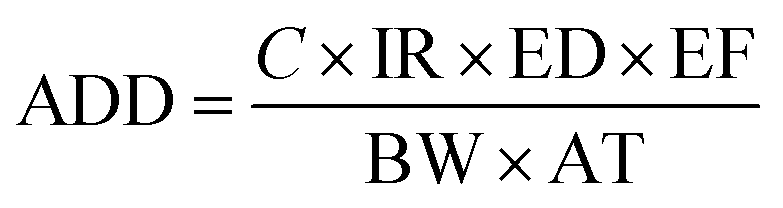 | (4) |
All detailed descriptions, values and units for each parameter in this equation are provided in Table S3.
Hazard quotients (HQs) have been widely used to assess the non-carcinogenic risk of trace elements in aquatic ecosystems.47,48 The following equation was used to calculate the HQ of REEs for humans (children, females and males).
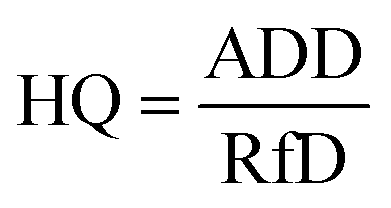 | (5) |
3 Results and discussion
3.1 Water chemistry in the JRB
The water chemistry characteristics of the JRB were published by Li et al.40 Briefly, the pH of the river water at the JRB ranged from 6.26 to 8.77 and was weakly alkaline at most of the sampling sites. Except for N2, the pH at other sites was within the WHO recommended range of 6.5 to 8.5. DO concentrations in the JRB were between 3.41 and 15.96 mg L−1, suggesting variable oxygen conditions along the river reach. TDS values were in the range of 24–10056 mg L−1. It is noteworthy that the TDS values in the estuarine samples were exceptionally high (≥5000 mg L−1), as a result of mixing with seawater in the estuary. Excluding these estuarine samples, the average TDS value for the Jiulong River was 133.9 mg L−1. The DOC and DIC values were in the ranges of 1.34–3.56 mg L−1 and 8.85–84.91 mg L−1, averaging 2.35 mg L−1 and 41.18 mg L−1, respectively. Dissolved Al, Fe and Mn ranged from 1.03 to 90.48 mg L−1, 23.60 to 294.35 mg L−1 and 1.34 to 1009.80 mg L−1 in the river water, respectively. The abundance of major anions is HCO3− > SO42− > Cl− > NO3− > F−, and that of the major cations is Ca2+ > Na+ > K+ > Mg2+ in this study (Table S4).3.2 REE concentration and spatial distribution in the JRB
The concentration of dissolved individual REEs in the Jiulong River is presented in Table S5 and Fig. 2a, where all the analyzed rare earth elements and Y were detected. The median concentrations of individual dissolved REEs were as follows (ng L−1): La (35), Ce (35), Pr (8), Nd (37), Sm (7), Eu (6), Gd (11), Tb (1), Dy (9), Ho (3), Er (10), Tm (2), Yb (10), Lu (2), and Y (77). Among these, Y, La, Ce, and Nd were notably abundant, consistent with observations in other global rivers.51,52 | ||
| Fig. 2 REE concentration in river water of the JRB: (a) individual REE concentrations; (b) LREE, MREE, HREE, and ΣREE concentrations. | ||
Furthermore, as illustrated in Fig. 2b, the dissolved total REE (ΣREE) concentration in the JRB varied widely, ranging from 23 to 2460 ng L−1, with a median of 177 ng L−1, which was higher than the global median concentration (156 ng L−1)53 and the median background concentration in Chinese rivers (161 ng L−1).54 The median ΣREE concentration was 147 ng L−1, 843 ng L−1, 276 ng L−1 and 122 ng L−1 in the North, West, South river and the estuary, respectively (Table S5). Notably, the West river consistently exhibited higher ΣREE concentrations. Compared with other rivers significantly impacted by anthropogenic activities, the ΣREE concentrations in the Jiulong River (23–2460 ng L−1) were comparable to or slightly higher than those reported for the Han river, South Korea (37–1460 ng L−1),13 the Moselle river, France (34–1395 ng L−1),55 and the Rhine river, Germany (27–610 ng L−1).12 They were also markedly higher than those in less industrially influenced rivers such as the Pearl River (29–71 ng L−1)56 and the Lancang River (9–360 ng L−1).41 These comparisons indicate that intensive agricultural activities, wastewater discharge, and urban inputs have significantly increased REE concentrations in the Jiulong River. The concentration of light REEs (LREEs, La to Nd) was highest in the North, West, and South rivers and the estuary, followed by middle REEs (MREEs, Sm to Dy) and heavy REEs (HREEs, Ho to Lu). As shown in Fig. 2b and Table S5, the REE pattern in the JRB is characterized by a distinctly higher prevalence of LREEs, which accounts for an average of 65.29% of the ΣREE in all water samples.
The spatial distribution patterns of LREEs, MREEs, HREEs, and ΣREE in the JRB were analyzed by the IDW method in Arcgis 10.5 (Fig. 3). The results revealed distinct spatial variations of REE concentrations in different regions of the JRB, with higher concentrations indicated in red and lower concentrations in blue. In particular, the spatial distributions of LREEs, MREEs, HREEs, and ΣREE showed the same trends in the North, West, South rivers, as well as in the estuarine areas of the JRB. The areas with elevated concentrations of LREEs, MREEs, HREEs, and ΣREE were mainly located in the southwestern (West river) and northwestern (upstream of the North river) regions of the basin, likely reflecting the influence of anthropogenic activities. In contrast, REE concentrations in the South river were more moderately distributed, while lower concentrations were predominantly observed in the estuary and the middle to lower reaches of the North river. A comparison of the spatial distribution in Fig. 3 revealed that the estuarine areas of the Jiulong River generally presented relatively lower concentration. This reduction is consistent with the removal effects of estuarine processes,57,58 where salt-induced flocculation leads to the removal of colloidal-bound REEs during the mixing of freshwater with seawater.59 However, in addition to this, the spatial distribution pattern of REEs in the JRB does reveal spatially heterogeneous variations of REEs in the river, which may be related to the local geological context, confluences with tributaries, or inputs from anthropogenic sources.
 | ||
| Fig. 3 Spatial distribution of LREE, MREE, HREE, and ΣREE concentrations (ng L−1) in river water samples from the Jiulong River basin. The maps were generated using the IDW interpolation method in ArcGIS 10.5, based on 42 river water samples. The maps illustrate spatial variation trends in dissolved REE concentrations in surface water. | ||
3.3 Association and controlling factors of REEs in the JRB
Fig. 4a showed that there was obvious correlation between individual REEs in river water (p < 0.01), with the correlation coefficients between 0.70 and 0.99. However, the correlations of Eu and Ce with other REEs were either not significant or relatively weak. Eu and Ce are likely to show higher fractionation tendencies compared to other rare earth elements as they can only exist in stable states under certain environmental conditions.60 Additionally, the pH, HCO3− and DIC in the river water showed significant negative correlations with most individual REEs and Y, while DOC and Ca2+ were only negatively correlated with LREEs (p < 0.05). In contrast, NO3− exhibited significant positive correlations with HREEs and Y (p < 0.01). The RDA results further revealed that the parameters (i.e., pH, HCO3−, NO3−, Ca2+, DIC and DOC) collectively contributed 95% (89% for axis 1 and 6% for axis 2) to the variation of REEs in the JRB (Fig. 4b). The RDA analysis highlighted pH as the primary driver of REE and Y concentration variations, followed by the HCO3− and DIC. In contrast, ORP and dissolved Al, Fe, Mn had little influence on the REE concentrations in this study, consistent with the results of the correlation analysis. | ||
| Fig. 4 Both heat map (a) and RDA (b) illustrate the relationships between REEs and environmental parameters. | ||
Physicochemical parameters are essential in regulating the abundance and distribution of REEs in river systems. Among these water chemistry parameters, variations in pH control the chemical speciation of REEs by determining the bicarbonate–carbonate equilibrium, which in turn affects the proportion of REE-carbonate complexes.61,62 When pH exceeds 7, carbonate complexes dominate REE speciation in river water, with inorganic anions like CO32− and HCO3− forming stable anionic complexes with REEs.63,64 In the JRB, HCO3− is the predominant anion with pH values close to neutral or slightly alkaline.40 Consequently, under weakly alkaline conditions, REEs and Y in this study are influenced by ion complexation and negatively correlated with pH and HCO3−. However, the positive correlation of HREEs and Y with NO3− indicates that anthropogenic inputs significantly affect REE abundance, particularly in the West river and the upstream of the North river (Fig. 4b). NO3− is an anthropogenic ion and can be used as a good indicator of the relative contribution of fertilizers, wastewater and fossil fuel combustion.65 Studies have shown that livestock effluent, domestic sewage, and industrial effluent are major contributors to the elevated NO3− concentrations in the West river and the upstream of the JRB.34 Wastewater treatment plants (WWTPs) were observed in the West river and the upstream of the North river (Fig. 1b), and WWTP effluents may be another source of dissolved REEs, suggesting that human activities are likely to influence the high REE concentrations in these areas.
3.4 REE fractionation and anomalies in the JRB
As presented in Fig. 5, the REE fractionation patterns were similar for most samples, with a general trend of HREE enrichment. All samples showed different degrees of negative Ce anomalies and positive Eu anomalies, with the most significant Eu anomalies observed in the South river and the estuary. The geochemical parameters (La/Yb)N, varied from 0.05 to 1 (Table S5), further suggested a great degree of fractionation between LREEs and HREEs, characterized by HREE enrichment. The δCe ranged from 0.14 to 0.88, and the mean δCe value was 0.50, indicating a pronounced negative Ce anomaly. The δEu values varied between 0.76 and 86.78, with an average value of 8.71 (Table S5), indicating a positive Eu anomaly. | ||
| Fig. 5 PAAS normalized patterns of dissolved REEs. | ||
The fractionation in the river water appears to depend on the pH of the water (Fig. 4a), with higher pH values resulting in lower (La/Yb)N ratios. In neutral to alkaline aqueous environments, HREEs exhibit a stronger complexation tendency toward ligands compared to LREEs, with HREEs having higher dissolved fractions due to the preferential formation of carbonate complexes.52 Concurrently, LREEs are more readily adsorbed on particle surfaces.3 As a result, HREE enrichment is a common pattern observed in riverine systems.
The negative Ce anomalies (δCe = 0.18–0.79) were found in the JRB, which are similar to those of the Lancang River (0.1–0.9),41 the Pearl river (0.07–0.84),66 but lower than those of the Orinoco River (0.65–1.14)67 and the Xijiang River (0.3–1.02).7 Ce is easily oxidized to the less soluble and more reactive Ce4+ in aquatic environments, and then precipitates with colloids or particles in the water column.7,68 Positive Eu anomalies are another important geochemical characteristic in the river water or the suspended particle matter.69,70 The unusual positive Eu anomalies may result from analytical artifacts caused by Ba interference during ICP-MS.56 However, in the case of the Jiulong River, no correlation was found between dissolved Ba concentrations and δEu values, so the analytical interference can be ruled out. The positive Eu anomalies maybe linked to the dissolution from suspended particles matter.71 A significant correlation was observed between δEu and Ca/Al ratios in the JRB (r = 0.50, p < 0.01), which suggested that the competition of major cations, such as Ca2+ and Mg2+, dissolved from clay particle surfaces, plays a key role in the release of Eu2+ back into the river water.72 Finally, the anomalies in Ce and Eu could also be influenced by anthropogenic factors, such as those derived from engineered Ce nanoparticles and Eu used as a contaminant tracer.73,74
3.5 Ecological risk assessment of REEs
The RQ values for individual REEs and the ΣREE in water samples from all sites along the river are shown in Fig. 6. The average RQ values for individual REEs, listed in descending order, are as follows: Y (0.323) > Nd (0.222) > Ce (0.186) > La (0.076) > Pr (0.066) > Yb (0.065) > Gd (0.045) > Sm (0.027) = Dy (0.027) > Eu (0.021) > Er (0.020) > Ho (0.008) > Tb (0.006) > Lu (0.005) > Tm (0.004). Although most individual REEs exhibit RQ values below 1, Y and most LREEs have RQ values between 0.1 and 1, particularly at sampling sites in the upstream of the North river and the tributary West river, indicating a moderate risk. | ||
| Fig. 6 RQ values of REEs at all sites of river water in the Jiulong River. | ||
Considering that REEs share similar physicochemical properties and may exhibit cumulative ecological toxicity effects,29 the ΣREE RQ value was calculated to assess the cumulative ecological risks of ΣREE. The ΣREE RQ values are between 0.02 and 1.50. Sampling sites N1, N2, N10, W5, W7, and W9 showed ΣREE RQ values greater than 1, indicating a high ecological risk and highlighting the importance of cumulative ecological risks of total REEs. Additionally, moderate cumulative ecological risks were observed at most sampling sites in the West and North rivers. The West and North rivers are characterized by dense livestock farming and frequent agricultural activities, while also receiving substantial wastewater discharges from densely populated areas such as Longyan and Zhangzhou.32,75 The anthropogenic release of REEs is likely to be the main factor for the higher ecological risk. The use of REE-containing fertilizers in agriculture can lead to the release of REEs into the aquatic environments via runoff,76 while livestock farming, steel plants, and sewage discharge can also contribute to REE contamination.46,77 Thus, this study highlights that in addition to the previously commonly recognized Gd anomalies associated with medical applications,55,78 the environmental concentrations of other REEs have increased in recent years due to their widespread use in various industries. This increase in concentrations elevates the risk of these elements entering freshwater ecosystems and warrants further attention.
3.6 Human health risk assessment of REEs
The La, Sm, Yb and Y were chosen to represent LREEs, MREEs, HREEs and Y to calculate the potential health risks of REEs; thus the potential health risks associated with La, Sm, Yb and Y oral ingestion were assessed and quantified using HQ values. The HQ values of La, Sm, Yb and Y for children, females and males in the Jiulong River were all less than 1, indicating that the ingestion exposure routes do not pose a significant risk to local residents (Fig. 7). However, La and Y had higher HQ values, suggesting that the exposure risks of LREEs and Y may be higher than those of MREEs and HREEs. Additionally, children exhibited a higher susceptibility to REE exposure than adult males and females, as shown in previous studies.46,79 This increased risk is attributed to the greater sensitivity of developing children to environmental contaminants. Furthermore, the consumption patterns and some oro-nasal exposure behaviors contribute to their increased vulnerability.46,80 Consequently, more attention needs to be paid to children in order to prevent adverse effects of REEs from surface water systems. | ||
| Fig. 7 HQ values of La (a), Sm (b), Yb (c) and Y(d) in river water for three groups of people in the Jiulong River. La, Sm and Yb represent LREEs, MREEs, and HREEs, respectively. | ||
The occurrence and accumulation of REEs in surface water are mainly affected by the weathering of mineral deposits, pollution from rare earth mining areas, and wastewater discharges.10,23,81 Water from groundwater, rivers and reservoirs can be used for agricultural irrigation or treated for daily drinking. However, regular exposure to or ingestion of surface water from these sources may pose potential health risks. This issue has raised widespread concern, particularly as existing research has emphasized the potentially significant health risks associated with prolonged exposure to elevated levels of REEs.46,82 Such exposures can adversely affect the metabolic systems of the human brain, lungs, bones, breast, testes and kidneys, leading to conditions such as pneumoconiosis, chest pain, shortness of breath, and heat sensitivity.17 Therefore, beyond reducing REE concentrations, it is critical to regulate the entry pathways of REEs to minimize the contamination risk of surface water systems and protect human health.
4 Conclusions
This study examined the occurrence of REEs in the Jiulong River, along with their ecological toxicity and potential human health risks. The results showed that ΣREE concentrations varied from 23 to 2460 ng L−1, with clear HREE enrichment relative to that of LREEs, accompanied by a pronounced negative Ce anomaly (average δCe = 0.50) and a strong positive Eu anomaly (average δEu = 8.71). IDW analysis revealed that higher REE concentrations were mainly distributed in the West river and the upper reaches of the North river. RDA analysis identified pH as the primary driver of variations in REE and Y concentrations, followed by HCO3− and DIC. Livestock wastewater, domestic sewage, and industrial effluents were the main contributors to elevated REE concentrations in the tributaries of the West river and the upper Jiulong River. Although most individual REEs had RQ values below 1, the ΣREE RQ values at the N1, N2, N10, W5, W7, and W9 sites exceeded 1, indicating a significant ecological toxicity risk and highlighting the importance of cumulative ecological risks of total REEs. Anthropogenic release of REEs is likely the primary contributor to these elevated ecological risks. Health risk assessment revealed that the exposure risks from LREEs and Y were higher compared to those from MREEs and HREEs, with children being more susceptible than adult males and females. The increasing concentrations of REEs in freshwater ecosystems warrant further attention due to their potential environmental and human health risks.Author contributions
Shunrong Ma: conceptualization, formal analysis, software, writing – original draft, writing – review and editing. Guilin Han: conceptualization, funding acquisition, project administration, supervision, writing – original draft, writing – review and editing.Conflicts of interest
The authors declare there are no competing interests.Data availability
The data supporting this article have been included as part of the supplementary information (SI). Supplementary information is available. See DOI: https://doi.org/10.1039/d5em00549c.Acknowledgements
This study was financially supported by the “Deep-time Digital Earth” Science and Technology Leading Talents Team Funds for the Central Universities for the Frontiers Science Center for Deep-time Digital Earth, China University of Geosciences (Beijing) (No. 2652023001) and National Natural Science Foundation of China (No. 41661144029). The authors gratefully acknowledge Dr Xiaoqiang Li, Man Liu, and Kunhua Yang, who came from the China University of Geosciences (Beijing) for their assistance with field sampling.References
- M. A. Haskin and L. A. Haskin, Rare Earths in European Shales: a redetermination, Science, 1966, 154, 507–509 CrossRef CAS.
- V. Balaram, Rare earth elements: a review of applications, occurrence, exploration, analysis, recycling, and environmental impact, Geosci. Front., 2019, 10, 1285–1303 CrossRef CAS.
- H. Elderfield, R. Upstill-Goddard and E. R. Sholkovitz, The rare earth elements in rivers, estuaries, and coastal seas and their significance to the composition of ocean waters, Geochim. Cosmochim. Acta, 1990, 54, 971–991 CrossRef CAS.
- A. Dia, G. Gruau, G. Olivié-Lauquet, C. Riou, J. Molénat and P. Curmi, The distribution of rare earth elements in groundwaters: assessing the role of source-rock composition, redox changes and colloidal particles, Geochim. Cosmochim. Acta, 2000, 64, 4131–4151 CrossRef CAS.
- P. Singh and V. Rajamani, REE geochemistry of recent clastic sediments from the Kaveri floodplains, southern India: implication to source area weathering and sedimentary processes, Geochim. Cosmochim. Acta, 2001, 65, 3093–3108 CrossRef CAS.
- N. Su, S. Yang, Y. Guo, W. Yue, X. Wang, P. Yin and X. Huang, Revisit of rare earth element fractionation during chemical weathering and river sediment transport, Geochem., Geophys., Geosyst., 2017, 18, 935–955 CrossRef CAS.
- Z. Xu and G. Han, Rare earth elements (REE) of dissolved and suspended loads in the Xijiang River, South China, Appl. Geochem., 2009, 24, 1803–1816 CrossRef CAS.
- O. Pourret and M. Davranche, Rare earth element sorption onto hydrous manganese oxide: a modeling study, J. Colloid Interface Sci., 2013, 395, 18–23 CrossRef CAS.
- O. Pourret, M. Davranche, G. Gruau and A. Dia, Rare earth elements complexation with humic acid, Chem. Geol., 2007, 243, 128–141 CrossRef CAS.
- T. Kim, H. Kim and G. Kim, Tracing river water versus wastewater sources of trace elements using rare earth elements in the Nakdong River estuarine waters, Mar. Pollut. Bull., 2020, 160, 111589 CrossRef CAS.
- V. Hatje, K. W. Bruland and A. R. Flegal, Increases in anthropogenic gadolinium anomalies and rare earth element concentrations in San Francisco Bay over a 20 year record, Environ. Sci. Technol., 2016, 50, 4159–4168 CrossRef CAS.
- S. Kulaksiz and M. Bau, Rare earth elements in the Rhine River, Germany: First case of anthropogenic lanthanum as a dissolved microcontaminant in the hydrosphere, Environ. Int., 2011, 37, 973–979 CrossRef CAS.
- H. Song, W. J. Shin, J. S. Ryu, H. S. Shin, H. Chung and K. S. Lee, Anthropogenic rare earth elements and their spatial distributions in the Han River, South Korea, Chemosphere, 2017, 172, 155–165 CrossRef CAS PubMed.
- X. Gao, G. Han, J. Liu and S. Zhang, Spatial distribution and sources of rare earth elements in urban river water: the indicators of anthropogenic inputs, Water, 2023, 15(4), 654 CrossRef CAS.
- F. Chen, Y. G. Gu, S. Z. Ma, Y. M. Wang, S. H. Yu, Y. Zhou, C. Wu and Z. Y. Peng, Rare earth elements in sediments of the Pearl River Estuary, China: distribution, influencing factors, and multi-index assessment, J. Soils Sediments, 2024, 24, 956–969 CrossRef CAS.
- X. Fu, X. Chen, F. Xie, Z. Zhang, T. Ma, X. Dong and Z. Liugen, Combining APCS-MLR model to evaluate the distribution and sources of rare earth elements in a large catchment, Environ. Pollut., 2024, 363, 125256 CrossRef CAS.
- M. Adeel, J. Y. Lee, M. Zain, M. Rizwan, A. Nawab, M. A. Ahmad, M. Shafiq, H. Yi, G. Jilani, R. Javed, R. Horton, Y. Rui, D. C. W. Tsang and B. Xing, Cryptic footprints of rare earth elements on natural resources and living organisms, Environ. Int., 2019, 127, 785–800 CrossRef CAS PubMed.
- G. Tuncay, A. Yuksekdag, B. K. Mutlu and I. Koyuncu, A review of greener approaches for rare earth elements recovery from mineral wastes, Environ. Pollut., 2024, 357, 124379 CrossRef CAS.
- Z. M. Migaszewski and A. Gałuszka, The characteristics, occurrence, and geochemical behavior of rare earth elements in the environment: a review, Crit. Rev. Environ. Sci. Technol., 2014, 45, 429–471 CrossRef.
- S. J. Ramos, G. S. Dinali, C. Oliveira, G. C. Martins, C. G. Moreira, J. O. Siqueira and L. R. G. Guilherme, Rare earth elements in the soil environment, Curr. Pollut. Rep., 2016, 2, 28–50 CrossRef CAS.
- W. Gwenzi, L. Mangori, C. Danha, N. Chaukura, N. Dunjana and E. Sanganyado, Sources, behaviour, and environmental and human health risks of high-technology rare earth elements as emerging contaminants, Sci. Total Environ., 2018, 636, 299–313 CrossRef CAS.
- X.-N. Wang, Y.-G. Gu and Z.-H. Wang, Rare earth elements in different trophic level marine wild fish species, Environ. Pollut., 2022, 292, 118346 CrossRef CAS.
- C. Zhao, J. Yang, X. Zhang, X. Fang, N. Zhang, X. Su, H. Pang, W. Li, F. Wang, Y. Pu and Y. Xia, A human health risk assessment of rare earth elements through daily diet consumption from Bayan Obo Mining Area, China, Ecotoxicol. Environ. Saf., 2023, 266, 115600 CrossRef CAS PubMed.
- Y.-G. Gu, X.-N. Wang, Z.-H. Wang, R. W. Jordan and S.-J. Jiang, Rare earth elements in sediments from a representative Chinese mariculture bay: Characterization, DGT-based bioaccessibility, and probabilistic ecological risk, Environ. Pollut., 2023, 335, 122338 CrossRef CAS.
- V. Gonzalez, D. A. Vignati, M. N. Pons, E. Montarges-Pelletier, C. Bojic and L. Giamberini, Lanthanide ecotoxicity: first attempt to measure environmental risk for aquatic organisms, Environ. Pollut., 2015, 199, 139–147 CrossRef CAS.
- S. Squadrone, P. Brizio, C. Stella, M. Mantia, M. Battuello, N. Nurra, R. M. Sartor, R. Orusa, S. Robetto, F. Brusa, P. Mogliotti, A. Garrone and M. C. Abete, Rare earth elements in marine and terrestrial matrices of Northwestern Italy: Implications for food safety and human health, Sci. Total Environ., 2019, 660, 1383–1391 CrossRef CAS PubMed.
- L. R. Bergsten-Torralba, D. P. Magalhães, E. C. Giese, C. R. S. Nascimento, J. V. A. Pinho and D. F. Buss, Toxicity of three rare earth elements, and their combinations to algae, microcrustaceans, and fungi, Ecotoxicol. Environ. Saf., 2020, 201, 110795 CrossRef CAS PubMed.
- Y. G. Gu, Y. P. Gao, H. H. Huang and F. X. Wu, First attempt to assess ecotoxicological risk of fifteen rare earth elements and their mixtures in sediments with diffusive gradients in thin films, Water Res., 2020, 185, 116254 CrossRef CAS.
- N. Lachaux, C. Cossu-Leguille, L. Poirier, E. M. Gross and L. Giamberini, Integrated environmental risk assessment of rare earth elements mixture on aquatic ecosystems, Front. Environ. Sci., 2022, 10, 974191 CrossRef.
- B. E. Ifon, B. Adyari, L. Hou, O. E. Ohore, A. Rashid, C. P. Yu and H. Anyi, Urbanization influenced the interactions between dissolved organic matter and bacterial communities in rivers, J. Environ. Manage., 2023, 341, 117986 CrossRef CAS PubMed.
- N. Chen, J. Wu, X. Zhou, Z. Chen and T. Lu, Riverine N2O production, emissions and export from a region dominated by agriculture in Southeast Asia (Jiulong River), Agric., Ecosyst. Environ., 2015, 208, 37–47 CrossRef CAS.
- Y. Wu, X. Wang, M. Ya, Y. Li and H. Hong, Seasonal variation and spatial transport of polycyclic aromatic hydrocarbons in water of the subtropical Jiulong River watershed and estuary, Southeast China, Chemosphere, 2019, 234, 215–223 CrossRef CAS PubMed.
- Q. Sun, Y. Li, M. Li, M. Ashfaq, M. Lv, H. Wang, A. Hu and C.-P. Yu, PPCPs in Jiulong River estuary (China): Spatiotemporal distributions, fate, and their use as chemical markers of wastewater, Chemosphere, 2016, 150, 596–604 CrossRef CAS.
- X. Liu, G. Han, J. Zeng, J. Liu, X. Li and P. Boeckx, The effects of clean energy production and urbanization on sources and transformation processes of nitrate in a subtropical river system: Insights from the dual isotopes of nitrate and Bayesian model, J. Cleaner Prod., 2021, 325, 129317 CrossRef CAS.
- X. Zhang, D. Zhang, H. Zhang, Z. Luo and C. Yan, Occurrence, distribution, and seasonal variation of estrogenic compounds and antibiotic residues in Jiulongjiang River, South China, Environ. Sci. Pollut. Res., 2012, 19, 1392–1404 CrossRef CAS PubMed.
- C. Lin, R. Yu, G. Hu, Q. Yang and X. Wang, Contamination and isotopic composition of Pb and Sr in offshore surface sediments from Jiulong River, Southeast China, Environ. Pollut., 2016, 218, 644–650 CrossRef CAS PubMed.
- H. Ehalt Macedo, B. Lehner, J. Nicell, G. Grill, J. Li, A. Limtong and R. Shakya, Distribution and characteristics of wastewater treatment plants within the global river network, Earth Syst. Sci. Data, 2022, 14, 559–577 CrossRef.
- S. Zhang, G. Han, J. Liu and X. Gao, Bayesian Model Revealing Segment-Scale Elemental Flux, Doubled CO2 Consumption, and Potential Anthropogenic Impact in the Upper Mekong Basin: Constraints from Strontium Isotopes, Environ. Sci. Technol., 2025, 59, 10253–10261 CrossRef CAS.
- J. Zhong, A. Galy, P. C. Kemeny, X. Zhu, G. Antler, C.-Q. Liu and S.-L. Li, Constraining sulfur cycling in the Eastern Tibetan Plateau: Evidence for cryptic sulfur cycling and implications for the weathering budget, Geochim. Cosmochim. Acta, 2025, 394, 137–147 CrossRef CAS.
- X. Li, G. Han, M. Liu, K. Yang and J. Liu, Hydro-geochemistry of the river water in the Jiulongjiang river basin, southeast china: Implications of anthropogenic inputs and chemical weathering, Int. J. Environ. Res. Public Health, 2019, 16(3), 440 CrossRef CAS.
- S. Ma, G. Han, Y. Yang and X. Li, Geochemistry of dissolved rare earth elements in the Lancang River with cascade dams and implications for anthropogenic impacts, Appl. Geochem., 2023, 159, 105854 CrossRef CAS.
- S. M. McLennan, Rare earth elements in sedimentary rocks: influence of provenance and sedimentary processes, Rev. Mineral. Geochem., 1989, 169–200 CAS.
- S. R. Taylor and S. M. McLennan, The Continental Crust: its Composition and Evolution, Blackwell Scientific Pub, Palo Alto, CA, United States, 1985 Search PubMed.
- H. Elderfield and M. J. Greaves, The rare earth elements in seawater, Nature, 1982, 296, 214–219 CrossRef CAS.
- J. Duenas-Moreno, I. Vazquez-Tapia, A. Mora, P. Cervantes-Aviles, J. Mahlknecht, M. V. Capparelli, M. Kumar and C. Wang, Occurrence, ecological and health risk assessment of phthalates in a polluted urban river used for agricultural land irrigation in central Mexico, Environ. Res., 2024, 240, 117454 CrossRef CAS PubMed.
- H. Liu, H. Guo, O. Pourret and Z. Wang, Anthropogenic impact of rare earth elements on groundwater and surface water in the watershed of the largest freshwater lake in China, Sci. Total Environ., 2024, 949, 175063 CrossRef CAS PubMed.
- L. Li, J. Wu, J. Lu, K. Li, X. Zhang, X. Min, C. Gao and J. Xu, Water quality evaluation and ecological-health risk assessment on trace elements in surface water of the northeastern Qinghai-Tibet Plateau, Ecotoxicol. Environ. Saf., 2022, 241, 113775 CrossRef CAS.
- J. Zeng, G. Han and K. Yang, Assessment and sources of heavy metals in suspended particulate matter in a tropical catchment, northeast Thailand, J. Cleaner Prod., 2020, 265, 121898 CrossRef CAS.
- G. Sun, Z. Li, T. Liu, J. Chen, T. Wu and X. Feng, Rare earth elements in street dust and associated health risk in a municipal industrial base of central China, Environ. Geochem. Health, 2017, 39, 1469–1486 CrossRef CAS.
- U.S. Environmental Protection Agency, Risk Assessment Guidance for Superfund (RAGS), Volume I: Human Health Evaluation Manual (Part E, Supplemental Guidance for Dermal Risk Assessment), EPA/540/R/99/005, Office of Solid Waste and Emergency Response, Washington, DC, 2004 Search PubMed.
- Z.-L. Wang and C.-Q. Liu, Geochemistry of rare earth elements in the dissolved, acid-soluble and residual phases in surface waters of the Changjiang Estuary, J. Oceanogr., 2008, 64, 407–416 CrossRef CAS.
- G. Han and C.-Q. Liu, Dissolved rare earth elements in river waters draining karst terrains in Guizhou Province, China, Aquat. Geochem., 2007, 13, 95–107 CrossRef CAS.
- C. W. Noack, D. A. Dzombak and A. K. Karamalidis, Rare earth element distributions and trends in natural waters with a focus on groundwater, Environ. Sci. Technol., 2014, 48, 4317–4326 CrossRef CAS.
- G. H. Zhou, B. B. Sun, Z. Y. Liu, H. l. Wei, D. M. Zeng and B. M. Zhang, Geochemical feature of rare earth elements in major rivers of eastern China, Geoscience, 2012, 26, 1028–1042 CAS.
- P. Louis, A. Messaoudene, H. Jrad, B. A. Abdoul-Hamid, D. A. L. Vignati and M. N. Pons, Understanding rare earth elements concentrations, anomalies and fluxes at the river basin scale: the Moselle River (France) as a case study, Sci. Total Environ., 2020, 742, 140619 CrossRef CAS.
- T. Wang, Q. Wu, Z. Wang, G. Dai, H. Jia and S. Gao, Anthropogenic Gadolinium Accumulation and Rare Earth Element Anomalies of River Water from the Middle Reach of Yangtze River Basin, China, ACS Earth Space Chem., 2021, 5, 3130–3139 CrossRef CAS.
- R. L. B. Andrade, V. Hatje, R. M. A. Pedreira, P. Böning and K. Pahnke, REE fractionation and human Gd footprint along the continuum between Paraguaçu River to coastal South Atlantic waters, Chem. Geol., 2020, 532, 119303 CrossRef CAS.
- E. Sholkovitz and R. Szymczak, The estuarine chemistry of rare earth elements,comparison of the Amazon, Fly, Sepik and the Gulf of Papua systems, Earth Planet. Sci. Lett., 2000, 179, 299–309 CrossRef CAS.
- X. Zhu, A. Gao, J. Lin, X. Jian, Y. Yang, Y. Zhang, Y. Hou and S. Gong, Seasonal and spatial variations in rare earth elements and yttrium of dissolved load in the middle, lower reaches and estuary of the Minjiang River, southeastern China, J. Oceanol. Limnol., 2018, 36, 700–716 CrossRef CAS.
- L. Wang, X. Han, S. Ding, T. Liang, Y. Zhang, J. Xiao, L. Dong and H. Zhang, Combining multiple methods for provenance discrimination based on rare earth element geochemistry in lake sediment, Sci. Total Environ., 2019, 672, 264–274 CrossRef CAS.
- T. Zheng, H. Lin, Y. Jiang, Y. Deng, X. Du, Y. Xie, J. Yuan and X. Pei, Insights from distribution and fractionation of the rare earth elements into As enrichment in the Singe Tsangpo River Basin, Sci. Total Environ., 2024, 906, 167388 CrossRef CAS PubMed.
- L. M. Och, B. Müller, A. Wichser, A. Ulrich, E. G. Vologina and M. Sturm, Rare earth elements in the sediments of Lake Baikal, Chem. Geol., 2014, 376, 61–75 CrossRef CAS.
- J. Tang and K. H. Johannesson, Controls on the geochemistry of rare earth elements along a groundwater flow path in the Carrizo Sand aquifer, Texas, USA, Chem. Geol., 2006, 225, 156–171 CrossRef CAS.
- T. Junqueira, N. Beckner-Stetson, V. Richardson, M. I. Leybourne and B. Vriens, Rare earth element distribution patterns in Lakes Huron, Erie, and Ontario, J. Hydrol., 2024, 629, 130652 CrossRef CAS.
- J. Zeng, G. Han, Q. Wu, R. Qu, Q. Ma, J. Chen, S. Mao, X. Ge, Z.-J. Wang and Z. Ma, Significant influence of urban human activities and marine input on rainwater chemistry in a coastal large city, China, Water Res., 2024, 257, 121657 CrossRef CAS.
- G. Han, K. Yang and J. Zeng, Spatio-Temporal Distribution and Environmental Behavior of Dissolved Rare Earth Elements (REE) in the Zhujiang River, Southwest China, Bull. Environ. Contam. Toxicol., 2022, 108, 555–562 CrossRef CAS PubMed.
- A. Mora, C. Moreau, J.-S. Moquet, M. Gallay, J. Mahlknecht and A. Laraque, Hydrological control, fractionation, and fluxes of dissolved rare earth elements in the lower Orinoco River, Venezuela, Appl. Geochem., 2020, 112, 104462 CrossRef CAS.
- E. H. De Carlo, X.-Y. Wen and M. Irving, The influence of redox reactions on the uptake of dissolved Ce by suspended Fe and Mn oxide particles, Aquat. Geochem., 1997, 3, 357–389 CrossRef CAS.
- G. Bayon, S. Toucanne, C. Skonieczny, L. André, S. Bermell, S. Cheron, B. Dennielou, J. Etoubleau, N. Freslon, T. Gauchery, Y. Germain, S. J. Jorry, G. Ménot, L. Monin, E. Ponzevera, M. L. Rouget, K. Tachikawa and J. A. Barrat, Rare earth elements and neodymium isotopes in world river sediments revisited, Geochim. Cosmochim. Acta, 2015, 170, 17–38 CrossRef CAS.
- M. I. Leybourne and K. H. Johannesson, Rare earth elements (REE) and yttrium in stream waters, stream sediments, and Fe–Mn oxyhydroxides: fractionation, speciation, and controls over REE+Y patterns in the surface environment, Geochim. Cosmochim. Acta, 2008, 72, 5962–5983 CrossRef CAS.
- Y. Nozaki, D. Lerche, D. S. Alibo and A. Snidvongs, The estuarine geochemistry of rare earth elements and indium in the Chao Phraya River, Thailand, Geochim. Cosmochim. Acta, 2000, 64, 3983–3994 CrossRef CAS.
- D. H. Dang, Q. K. Ha, J. Némery and E. Strady, The seasonal variations in the interactions between rare earth elements and organic matter in tropical rivers, Chem. Geol., 2023, 638, 121711 CrossRef CAS.
- B. Henriques, T. Morais, C. E. D. Cardoso, R. Freitas, T. Viana, N. Ferreira, E. Fabre, J. Pinheiro-Torres and E. Pereira, Can the recycling of europium from contaminated waters be achieved through living macroalgae? Study on accumulation and toxicological impacts under realistic concentrations, Sci. Total Environ., 2021, 786, 147176 CrossRef CAS PubMed.
- A. Azimzada, I. Jreije, M. Hadioui, P. Shaw, J. M. Farner and K. J. Wilkinson, Quantification and Characterization of Ti-, Ce-, and Ag-Nanoparticles in Global Surface Waters and Precipitation, Environ. Sci. Technol., 2021, 55, 9836–9844 CrossRef CAS.
- R. Li, J. Liang, Z. Gong, N. Zhang and H. Duan, Occurrence, spatial distribution, historical trend and ecological risk of phthalate esters in the Jiulong River, Southeast China, Sci. Total Environ., 2017, 580, 388–397 CrossRef CAS PubMed.
- F. Tommasi, P. J. Thomas, G. Pagano, G. A. Perono, R. Oral, D. M. Lyons, M. Toscanesi and M. Trifuoggi, Review of Rare Earth Elements as Fertilizers and Feed Additives: A Knowledge Gap Analysis, Arch. Environ. Contam. Toxicol., 2020, 81, 531–540 CrossRef.
- C. Hissler, P. Stille, J. F. Iffly, C. Guignard, F. Chabaux and L. Pfister, Origin and dynamics of rare earth elements during flood events in contaminated river basins: Sr-Nd-Pb isotopic evidence, Environ. Sci. Technol., 2016, 50, 4624–4631 CrossRef CAS PubMed.
- S. Kulaksız and M. Bau, Anthropogenic dissolved and colloid/nanoparticle-bound samarium, lanthanum and gadolinium in the Rhine River and the impending destruction of the natural rare earth element distribution in rivers, Earth Planet. Sci. Lett., 2013, 362, 43–50 CrossRef.
- Y. W. Shen, C. X. Zhao, H. Zhao, S. F. Dong, Q. Guo, J. J. Xie, M. L. Lv and C. G. Yuan, Insight study of rare earth elements in PM(2.5) during five years in a Chinese inland city: Composition variations, sources, and exposure assessment, J. Environ. Sci., 2024, 138, 439–449 CrossRef CAS.
- H. Wu, C. Xu, J. Wang, Y. Xiang, M. Ren, H. Qie, Y. Zhang, R. Yao, L. Li and A. Lin, Health risk assessment based on source identification of heavy metals: A case study of Beiyun River, China, Ecotoxicol. Environ. Saf., 2021, 213, 112046 CrossRef CAS PubMed.
- B. Wei, Y. Li, H. Li, J. Yu, B. Ye and T. Liang, Rare earth elements in human hair from a mining area of China, Ecotoxicol. Environ. Saf., 2013, 96, 118–123 CrossRef CAS PubMed.
- J. Veskovic, M. Lucic, M. Ristic, A. Peric-Grujic and A. Onjia, Spatial Variability of Rare Earth Elements in Groundwater in the Vicinity of a Coal-Fired Power Plant and Associated Health Risk, Toxics, 2024, 12(1), 62 CrossRef CAS.
| This journal is © The Royal Society of Chemistry 2026 |