Zonish
Zeb
abc,
Md Maruf
Ahmed
d,
Lubin
Ni
*a and
Yongge
Wei
*bc
aSchool of Chemistry and Chemical Engineering, Yangzhou University, Yangzhou, Jiangsu 225002, P. R. China. E-mail: lbni@yzu.edu.cn
bState Key Laboratory of Chemistry and Utilization of Carbon Based Energy Resources, College of Chemistry, Xinjiang University, Urumqi 830017, P. R. China
cKey Lab of Organic Optoelectronics & Molecular Engineering of Ministry of Education, Department of Chemistry, Tsinghua University, Beijing 100084, P. R. China. E-mail: yonggewei@tsinghua.edu.cn
dInstitute of Innovation Materials and Energy, School of Chemistry and Materials, Yangzhou University, Yangzhou 225002, P. R. China
First published on 1st December 2025
Intensified global energy demand and environmental concerns have made sustainable energy generation a global necessity. Water electrolysis and other processes, such as the CO2 reduction reaction (CO2RR) and nitrogen reduction reaction (NRR), are key green energy pathways that require efficient electrocatalysts with stability, multifunctionality, and structural diversity. Polyoxometalates (POMs) are exceptional due to their compositional diversity, structural versatility, active sites, and tunable electronic properties. However, challenges such as leaching, agglomeration, and low stability persist. In this frontier article, we focus on the exploration of POM-based and POM-derived materials for promising applications as electrocatalysts. We discuss advances in the POM materials (hybrids/derivatives) for electrocatalysis, with an emphasis on synthesis strategies, nanostructure design, and property enhancement through element doping, electronic modulation, heterojunction construction, morphological control, surface/interface engineering, and theoretical studies. We aim to summarize the current state of the art, highlight emerging trends, and provide insights into the future directions of POM electrocatalyst research to drive innovation in sustainable energy technologies.
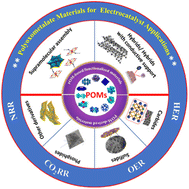
To date, abundant POM-based materials, including POM clusters, POM–MOFs (POM-contained metal–organic frameworks), and POM@Substrates (POMs deposited on conductive substrates), have been extensively explored for electrocatalytic water splitting, the CO2RR, and other reactions.12–18 Despite the significant progress, the POM-based materials face challenges, including inadequate structural stability under electrocatalytic conditions, low activity of bulk crystals, and poor electronic conductivity, all of which restrict their overall electrocatalytic performance.19 Studies have indicated that the POM-based hybrids act as precursors for the development of transition-metal-based oxides, carbides, phosphides and sulfides, which are promising materials for the hydrogen evolution reaction (HER), the oxygen evolution reaction (OER), and other energy-related electrocatalytic applications.10,20,21 In contrast to previous studies,14–16,20 this frontier article highlights the role of POM materials in water splitting and other electrocatalytic applications (Fig. 1) by offering a guideline to construct POM materials from molecular scale to the industrialization. It emphasizes the construction strategies of POM materials, along with highlighting the importance of the theoretical studies and advanced characterization techniques to unlock the potential of the POM materials. The design strategies have been discussed systematically with structural evolution, electronic modulation, support interactions, and structure–property relationships. Finally, the current challenges have been addressed with future directions, aimed at directing future research to devise optimized POM materials with industrial-level current generation and stability while mitigating the drawbacks in electrocatalysis.
![]() | ||
| Fig. 1 Schematic of the POM-based electrocatalysts driving the anodic OER with cathodic HER, CO2RR, and N2RR in an aqueous electrochemical system powered by renewable electricity. | ||
Different methods have been utilized to design new POM-based materials, including POM clusters, assemblies, organic–inorganic hybrids, and derivatives. These include room temperature, hydrothermal, solvothermal, ion exchange, chemical reduction, and electrodeposition synthesis methods. Furthermore, heat treatment methods for the POM derivatives include calcination, sulfidation, and phosphidation (Fig. 2).22–26 Utilizing these methods, specific topics include the strategies for introducing the enhanced properties through element doping, the construction of heterojunctions, the modulation of electronic structures, the regulation of morphology and surface/interface engineering. Thus, the potential applications of the POM materials in electrocatalysis are discussed.
![]() | ||
| Fig. 2 Categorization of the POM materials. Synthesis methods: (a) Room temperature synthesis. Reproduced with permission from ref. 22, with copyright permission 2024, Elsevier. (b) Hydrothermal method followed by carbonization and electrodeposition. Reproduced with permission from ref. 24, with copyright permission 2024, Elsevier. (c) Synthesis by chemical reduction and POM modification. Reproduced with permission from ref. 26, with copyright permission 2025, Wiley. | ||
![]() | ||
| Fig. 3 (a) Gibbs free energy diagram for the OER. Reproduced with permission from ref. 35, with copyright permission 2025, Wiley. (b) Polyhedral stick-and-ball model of the crystal structure of the Keggin-type tungstate (H3[PW12O40]) and its crown ether supramolecular compound (PW12@Crown). (c) Polyhedral stacking structure. Reproduced with permission from ref. 38, with copyright permission 2024, Elsevier. (d) Schematic of the synthesis route for NiCo2S4/PANI@PW12/rGO. Reproduced with permission from ref. 41, with copyright permission 2022, Elsevier. | ||
However, POM-based compounds used as electrocatalysts for water splitting suffer from poor stability and conductivity during electrochemical reactions.19 Integrating POMs with conductive materials improves leaching resistance and catalytic stability. This approach promotes heterogenization under electrocatalytic conditions, while simultaneously increasing the surface area and enhancing the electron transfer efficiency in water-splitting systems. The effective charge transfer between the POM catalysts and conductive substrates is vital for efficient HER and the multi-electron OER processes. A facile strategy for synthesizing Anderson-type POM-supported Cu dendrites (NiMo6O24@Cu/TNA) as efficient electrocatalysts for the HER in acidic media is presented. Enhanced H+ transfer and H atom adsorption are achieved through the integration of NiMo6O24, resulting in a significant reduction in the overpotential by 130 mV and improvement of the stability.39 A promising, low-cost route for a scalable energy conversion catalyst design is thus offered by this approach.
Graphene, a two-dimensional material, combines excellent conductivity and mechanical flexibility, enabling rapid electron transfer and uniform contact with the active species. These features improve charge transport, interfacial coupling, and stability, establishing graphene as an ideal support for high-performance and durable electrocatalysts.40 The three-dimensional (3D) nano-assembly of nickel cobalt sulphide/polyaniline @polyoxometalate/reduced graphene oxide (NiCo2S4/PANI@POM/rGO) was synthesized for the first time using a straightforward oxidative polymerization process, followed by a hydrothermal technique (Fig. 3d). The hybrid displayed sheet-like structures with uniformly distributed PANI@POM and NiCo2S4 on graphene, offering high structural integrity, large surface area, and abundant active sites. HER evaluation confirmed outstanding performance, featuring extremely low overpotential and remarkable long-term durability.41
Moreover, developing highly active and durable electrocatalysts for proton exchange membrane water electrolyzers (PEMWEs) operating at industry-relevant current densities remains a major challenge. At ampere-level current densities, the HER is hindered by the rapid interfacial proton depletion and sluggish kinetics. In this regard, anchoring tri-lacunary Keggin-type polyoxometalates on Pt enables proton-pump functionality and short-pathway hydrogen spillover, thereby overcoming interfacial proton depletion and the sluggish HER kinetics in PEMWEs. The as-optimized Pt NPs@SiW9 on the conductive carbon nanotube (denoted as Pt NPs@SiW9/CNT) delivered record mass activity (782.94 A mgPt−1) with 6000 h durability at 2000 mA cm−2 under ultralow Pt loading.26 Thus, it offers a promising pathway toward next-generation low-Pt electrocatalysts utilizing POMs with conductive materials for practical PEMWE applications.
Developing and utilizing the distinctive heterostructures of POM with other materials might serve as an innovative approach to enhance the overall catalytic performance and durability of catalysts.42 A POM incorporation strategy was employed to embed PW12 nanoparticles into ZnCoS nanowires derived from ZnCo DHNWs via ion exchange (Fig. 4a). The SEM and TEM images (Fig. 4b–d) revealed relatively thick, rough, and short nanowires with PW12 particles anchored on their surfaces. PXRD confirmed high crystallinity with characteristic peaks of Zn0.76Co0.24S and PW12 nanospheres, while Fourier transform infrared (FT-IR) spectra verified the [PW12O40]3− anchorage. The POM@ZnCoS nanohybrid grown on Ni foam exhibited superior OER and HER performance with the lowest Tafel slopes and remarkable stability in an alkaline electrolyte, outperforming commercial Pt/C and RuO2 catalysts (Fig. 4e–h).43 Additionally, a heterostructure composed of zinc iron oxide (ZnFe2O4) and POM nano plates (POM–ZnFe2O4) was fabricated using a hydrothermal method. The analysis of the HER and OER showed superior water splitting performance.44 Considering these studies, the synergistic role of POMs with other materials in tailoring the electronic and atomic-scale properties is vital for the next-generation electrolyzer design. A cost-effective ZnFe LDH-P2Mo18/NF hybrid was synthesized via a simple hydrothermal method by integrating Wells–Dawson POM with ZnFe-layered double hydroxide on the Ni foam (Fig. 4i). SEM images (Fig. 4j and k) revealed nanosheet arrays forming a porous hierarchical framework that promoted ion diffusion, electron transport, and electrode–electrolyte contact. This heterointerface engineering significantly boosted bifunctional HER/OER activity with low overpotentials through enhanced active sites and optimized electronic structures.45 Moreover, a dual-field strategy combining PW12O403− modification and electric field regulation promoted directional electron transfer, enabling Ni(OH)2 to achieve an overpotential of 215 mV at 10 mA cm−2 with a Tafel slope of 25.1 mV dec−1 and remain stable over 100 h, outperforming RuO2.46 Through rational hybridization with conductive supports,47 integration into porous metal organic frameworks (MOFs),48–50 and coupling with transition-metal-based compounds, POMs can achieve enhanced electron transfer, structural robustness, and high active-site density for electrocatalysis.
![]() | ||
| Fig. 4 (a) Schematic of the synthesis process, (b and c) SEM images and (d) TEM images of the POM@ZnCoS NWs. Comparison of (e) LSV curves and (f) the corresponding Tafel slopes for the OER. (g) LSV curves and (h) the corresponding Tafel slopes for the HER. Reproduced with permission from ref. 43, with copyright permission 2022, Elsevier. (i) Schematic synthesis route of the ZnFe-LDH-P2Mo18/NF hybrid. (j and k) SEM images of the ZnFe-LDH–P2Mo18 hybrid. Reproduced with permission from ref. 45, with copyright permission 2023, Elsevier. | ||
The electrocatalytic reduction of nitrite (NO2RR) and nitrate (NO3RR) to ammonia (NH3) provides a sustainable pathway for NH3 production while mitigating NOx pollution. Efficient catalysts are essential for this complex multi-electron process. POM-based hybrids markedly enhance NO2RR and NO3RR activity and durability.55–57 For example, a tremella-like P8W18/CoNi-LDH electrocatalyst is developed via a simple hydrothermal-exfoliation method for efficient NO2−-to-NH3 conversion, achieving a high NH3 yield (0.369 mmol h−1 mgcat−1) and 97.0% faradaic efficiency.58 A novel Keggin-type POM crystalline complex was synthesized from a Waugh-type [MnMo9O32]6− precursor, representing the first reported conversion of a Waugh-type POM into a Keggin structure under hydrothermal conditions. The complex exhibited excellent stability and dual functionality, serving as an efficient electrocatalyst for NO2RR.59 These functionalization strategies not only boost activity in key reactions but also provide a versatile platform for designing tunable and durable electrocatalysts.
![]() | ||
| Fig. 5 (a) Weak π–π stacking interactions between adjacent Mo4-CNP molecules. (b) Packing structure of Mo4-CNP. Color code: Mo, blue; C, black; N, green; P, pink; O, red; H, gray. Reproduced with permission from ref. 62, with copyright permission 2018, Wiley. (c) Schematic of the synthesis process of N@Mo2C-n/CFP. (d) DFT calculation results: the top view of 3N-Mo2C (121) and valence electron in the d-orbital of the surface-exposed Mo atoms. (e) The free energy diagram of the HER. Reproduced with permission from ref. 65, with copyright permission 2018, Wiley. | ||
To further address the stability and conductivity challenges, POM derivatives have been synthesized with various conductive substrates.20,63,64 For example, the precise atomic engineering of nitrogen implantation into porous Mo2C nanocrystals was achieved through the straightforward pyrolysis of organoimido-derivatized POMs (Mo6-nNAr) on a carbon fiber paper (CFP), a widely used conductive substrate (Fig. 5c). Combined experimental studies and density functional theory (DFT) calculations demonstrated that the inherently sluggish HER kinetics of the Mo2C catalysts could be significantly improved by nitrogen incorporation. This modification optimized the electronic structure of Mo2C, producing favorable Mo–H binding strength and thereby delivering outstanding HER activity (Fig. 5d and e).65 Further, using CFP, a tunable polyoxometalate-template-assisted strategy was used to atomically engineer metal doping sites on metallic 1T-MoS2 with exceptional HER performance (−46 mV overpotential at 10 mA cm−2, η10(HER)), resembling that of platinum. Theoretical calculations confirmed that metal and oxygen co-doping facilitated water dissociation and hydrogen generation, offering a general approach to boost catalyst activity through targeted electronic modulation and atomic efficiency.66
MOFs are organic–inorganic hybrids with metal centers linked by organic ligands, offering a high surface area and porosity. Thus, MOFs can serve as hosts to form POM-contained MOFs (POM–MOFs) to serve as ideal precursors for TM-based electrocatalysts.67 With their fascinating structures, large specific surface areas, numerous catalytically active sites, and distinctive electrical and catalytic capabilities, the POM–MOF materials typically combine the benefits of both POMs and MOFs. They have extensive applications. Transition metal composites derived from POM–MOFs have particularly unique advantages of maintaining good overall morphology as well as the synergistic interaction of highly dispersed particles, which can avoid the poor stability drawbacks of crystalline POM–MOFs as catalysts, promote charge transfer, and provide more active sites.30,31,68 A POM–MOF-assisted in situ confined conversion strategy was developed to synthesize octahedral molybdenum phosphide quantum dots embedded in porous carbon (MoP-QDs@PC) using a POM–MOF precursor (PMo12@UiO-66), achieving high dispersion, conductivity, and a large specific surface area. The phosphorization-derived superhydrophilic MoP-QDs@PC exhibited exceptional HER performance, outperforming Pt/C at η10(HER) higher than 197 mV and 233 mV in alkaline and acidic media, respectively, due to an optimized electronic structure and enhanced wettability.2 Recently, an Fe- and Mo-codoped NiS/Ni9S8 heterostructure on NF (Fe,Mo-NiS/Ni9S8/NF) was synthesized via interfacial engineering. First, NiMo6@MIL-100 was prepared hydrothermally (Fig. 6a) and confirmed by PXRD (Fig. 6b) and N2 adsorption/desorption (Fig. 6c). Hydrothermal sulfurization yielded the target catalyst, featuring abundant NiS/Ni9S8 interfaces with uniformly doped Fe and Mo atoms. The material exhibited ultralow OER overpotential at 10 mA cm−2 (η10(OER)) of 47 mV (Fig. 6d). Long-term chronopotentiometry (CP) testing in 1.0 M KOH at 1 A cm−2 confirmed excellent stability for 90 h with negligible voltage change (Fig. 6e). Its performance was attributed to low interfacial resistance, abundant active sites, super-hydrophilicity, and strong electronic interactions.69 This design strategy enables efficient water oxidation in challenging electrolytes.
![]() | ||
| Fig. 6 (a) Structure of the NiMo6 POM precursor. (b) PXRD pattern of NiMo6, MIL-100, and NiMo6@MIL-100. (c) N2 adsorption/desorption isotherms of MIL-100 and NiMo6@MIL-100. (d) OER activity in 1.0 M KOH. (e) CP curve of the Fe, Mo-NiS/Ni9S8/NF electrolyzer in 1.0 M KOH. Reproduced with permission from ref. 69, with copyright permission 2025, Elsevier. (f) Synthesis of Ni3S2-WO3/NF-1. Reproduced with permission from ref. 70, with copyright permission 2023, Elsevier. | ||
Moreover, the use of the lacunary POMs provides vacant sites that can be utilized for the insertion of another metal; thus, the uniform dispersion of metal atoms can be achieved. For example, an efficient Ni3S2-WO3/NF-1 electrocatalyst for water splitting was prepared using a lacunary POM precursor modified by vacancy-directed nucleophilic induction (Fig. 6f and g). Thus, the strategy guides the achievement of dispersed metal electrocatalysts for improved performance.70 A comparison of the HER and OER performance of the POM-derived materials is given in Table 1.
| Electrocatalyst | POM utilized | η 10(HER) | η 10(OER) | StabilityHER (h) | StabilityOER (h) | Electrolyte | Ref. |
|---|---|---|---|---|---|---|---|
| Pt@MoO2/MoOC | PMo12O40 | 98.99 | — | 48 | — | 0.5 M H2SO4 | 24 |
| AlO@Mo2N-NrGO | AlMo6 | 111 | — | 300 | — | 1.0 M KOH | 25 |
| Co-h-MoO3 | CoMo6 | 130*η100 | 359*η100 | 120 | 60 | 1.0 M KOH | 60 |
| CoMoO4 HTs | PMo12O40 | 75 | 210 | 60 | 72 | 1.0 M KOH | 61 |
| N@MoPCx-800 | (TBA)4[Mo8O26] | 108 | — | — | — | 0.5 M H2SO4 | 62 |
| NiO@1T-MoS2 | NiMo6 | 47 | — | 30 | — | 1.0 M KOH | 66 |
| Fe,Mo-NiS/Ni9S8/NF | NiMo6 | — | 47 | — | 100 | 1.0 M KOH | 69 |
| Ni3S2-WO3/NF-1 | [PW9O34]9− | 107 | 370*η200 | 12 | 12 | 1.0 M KOH | 70 |
| Ru/Ni/WC@NPC | Ni54W72 | 3 | 75 | — | — | 1.0 M KOH | 71 |
| (Fe-MoS2/Ni3S2@NF) | {Mo72Fe30} | 74 | 80 | 10 | 10 | 1.0 M KOH | 72 |
| P-CoN/CMO/Co3O4/NF | PMo12O40 | 109 | — | ≥110 | — | 1.0 M KOH | 73 |
| [Cu0.1-{MoO2}0.9] | [(Cu(pic)2)2(Mo8O26)]·8H2O | — | 374 | — | 18 | 0.5 M H2SO4 | 74 |
The current research on the POM derivatives for the CO2RR is relatively inadequate. Extensive studies focusing on the synthesis of multimetallic POM derivatives with the deep integration of theoretical modeling are required. This will enable predictive control over electronic structures, surface energetics, and active-site configurations in POM electrocatalysts. Moreover, tailoring the interfacial chemistry, enhancing the long-term operational stability, and scaling the synthesis strategies are critical for transitioning POM materials from laboratory demonstrations to practical energy devices.
In future research, comprehensive and well-designed strategies should be applied to address the above-mentioned challenges by (i) developing simple, scalable synthetic routes to facilitate the industrial application of POM electrocatalysts. Moreover, high-nuclearity POM precursors can be constructed by assembling polyanion units or incorporating heteroatoms to tune the electronic structures and accelerate charge transfer. (ii) The integration of POMs into porous matrices, such as MOFs, should be optimized to increase the surface area, promote heterogenization, and improve stability through strong POM-framework interactions. (iii) POMs should be integrated with the conductive substrates with enhanced binding abilities, and the structure–activity relationship should be studied to facilitate the charge transport and mitigate dissolution in different electrolytes. (iv) Multiple metals can be utilized in POMs with vacant sites as templates or precursors to synthesize nanostructured transition-metal compounds (e.g., sulfides, phosphides, and carbides) with tunable composition, morphology, and interfacial coupling. (v) In addition, a mechanistic understanding is equally important. Advanced in situ and operando techniques80 are indispensable for identifying active sites, probing intermediates, and monitoring dynamic structural and electronic transformations.
Together, these approaches would be beneficial to enhance electron/ion transport, increase active site density, improve durability, and elevate catalytic efficiency, thereby laying a solid foundation for the rational design of next-generation POM materials for industrial-scale electrocatalyst application.
| This journal is © The Royal Society of Chemistry 2026 |