

 Open Access Article
 This Open Access Article is licensed under a
 Creative Commons Attribution 3.0 Unported Licence
Future of concrete: autonomous self-healing with advanced microcapsule technology
Manvi
Singh
,
Nazia
Tarannum
 *,
Anshuman
Khari
,
Ishika
Pal
,
Ishu
Singh
and
Juhi
Bhatnagar
*,
Anshuman
Khari
,
Ishika
Pal
,
Ishu
Singh
and
Juhi
Bhatnagar
Department of Chemistry, Chaudhary Charan Singh University Meerut, 250004, India. E-mail: naz1012@gmail.com; manvisingh8859@gmail.com; anshumankhari@gmail.com; ishikapal06@gmail.com; 2021ishu@gmail.com; juhibhatnagar0302@gmail.com
First published on 8th December 2025
Abstract
The demand for durable and sustainable construction materials has driven significant interest in self-healing techniques for cement-based materials (CBMs). This review focuses on the comprehensive analysis of microcapsule-based self-healing systems, demonstrating their comparative advantages over conventional methods such as groove filling, structural strengthening, grouting and surface coating by enabling autonomous, localized repair of microcracks. Key microcapsule architectures, such as single-core, dual-core and multi-walled types, are examined to explain how their unique structures contribute to enhancing the efficiency and effectiveness of the self-healing process. A critical comparison of existing microcapsule formulations identifies major challenges such as premature leaching, shell instability and poor dispersion, alongside innovative strategies to overcome these issues. The review further explores diverse fabrication techniques and the influence of factors like pH, stirring speed and emulsifier type on microcapsule performance, providing valuable insights for optimized design. It also addresses the evaluation of self-healing efficiency in CBMs through different methods, emphasizing ways to accurately assess healing performance. Current characterization and healing evaluation techniques are evaluated, with recommendations for improving the accuracy and reliability of self-healing assessments. Finally, practical applications, implementation challenges and future prospects are discussed, positioning microcapsule-based self-healing as an emerging avenue to extend the lifespan and resilience of infrastructure while supporting sustainable development goals. This integrative review aims to guide researchers and engineers in advancing next-generation self-healing CBMs for safer and longer-lasting built environments.
 Manvi Singh | Manvi Singh is currently pursuing her Ph.D. in the Department of Chemistry at Chaudhary Charan Singh University, Meerut, India. Her research focuses on the development of self-healing microcapsules for cement-based materials. Her work involves the design, fabrication and characterization of microcapsule systems that enable autonomous repair of cracks in cementitious materials. |
 Nazia Tarannum | Dr Nazia Tarannum is an Assistant Professor in the Department of Chemistry at Chaudhary Charan Singh University, India. She obtained her Ph.D. in Analytical Chemistry from the Department of Chemistry, Banaras Hindu University, Varanasi, in August 2012. She completed her M.Sc. in Chemistry with specialization in Organic Chemistry at Lucknow University in 2007 and her B.Sc. at the same university in 2005. Her research interests include polymer synthesis, self-healing cementitious materials, molecularly imprinted polymers, waste management, environmental sustainability and green building materials. |
 Anshuman Khari | Anshuman Khari is an M.Sc. Chemistry student at the Department of Chemistry, Chaudhary Charan Singh University, Meerut. He is currently working on a research project focused on self-healing microcapsules for cement-based materials, contributing to the synthesis and characterization of microcapsule systems. |
 Ishika Pal | Ishika Pal is pursuing her M.Sc. in Chemistry at Chaudhary Charan Singh University, Meerut. Her research involves studying self-healing microcapsules for cementitious materials, with a focus on evaluating their performance in enhancing concrete durability. |
 Ishu Singh | Ishu Singh is an M.Sc. Chemistry student at the Department of Chemistry, Chaudhary Charan Singh University, Meerut. She is engaged in a project on self-healing microcapsules for cement-based materials, assisting in the development and testing of these innovative systems. |
 Juhi Bhatnagar | Juhi Bhatnagar is pursuing her M.Sc. in Chemistry at Chaudhary Charan Singh University, Meerut. Her research focuses on self-healing microcapsules for cementitious materials, specifically working on optimizing the fabrication and functional properties of the microcapsules. |
1. Introduction
Cement-based materials (CBMs) are building materials primarily composed of cement, which acts as a binding agent when combined with aggregates and water to produce mortar, concrete and other construction materials. Their popularity arises from their versatility across a wide range of structural applications, high compressive strength and ease of usage. CBMs are available in various forms, including conventional Portland cement concrete and advanced composites enhanced with additives and supplementary cementitious materials (SCMs), such as slag and fly ash, which contribute to increased durability and a reduction in environmental impact. The primary component of CBMs is Portland cement, which forms calcium silicate hydrate (C–S–H) gel during the hydration process, serving as the binding phase that holds the material together. Cement paste, mortar and concrete are the most widely used materials in the construction sector due to their affordability, notable durability, ease of production and wide-ranging applicability. However, these materials also exhibit several limitations, including low tensile strength, susceptibility to cracking when the tensile stress induced by deterioration exceeds their strain capacity and a tendency for sudden failure due to their brittle nature.1When CBMs develop cracks moisture, chemicals and pollutants can infiltrate the material, leading to corrosion of the reinforcement and a consequent reduction in structural integrity. This ingress not only weakens the load-bearing capacity but also accelerates deterioration through mechanisms such as alkali-silica reaction, sulfate attack and freeze–thaw cycles. These factors collectively contribute to a shortened service life of the structure and compromise its long-term durability. As a result, appropriate maintenance practices and effective crack prevention strategies are essential for improving the durability and structural performance of CBMs. The growing importance of durability, longevity and self-healing properties in materials is particularly evident in critical sectors such as electronics, construction and aerospace, where failure of materials can lead to severe safety hazards and high economic costs. Durable materials exhibit adaptability to prolonged mechanical and environmental stresses, thereby reducing the need for frequent replacement or repairs. By enhancing the endurance and durability of materials, engineers and researchers aim to reduce life-cycle costs while improving safety and operational stability in critical applications.
Self-healing properties are especially valuable in scenarios where manual inspection and repair are difficult, as these materials can autonomously recover from damage or require minimal external intervention, providing an additional level of durability. The longevity of materials is vital not only for economic efficiency but also for environmental sustainability. Longer-lasting materials contribute less to waste generation, reduce the consumption of raw materials and minimize the environmental footprint associated with repeated manufacturing and disposal. Review studies have demonstrated that self-healing properties, particularly in high-performance materials used in civil and aerospace engineering, can further extend service life by preventing the growth of microcracks and averting structural failure. This ability significantly enhances the durability and functionality of materials, even after they have sustained damage. One of the most notable advancements in this field is the integration of self-healing functionality into durable construction materials, especially those used in infrastructure that is subjected to long-term environmental exposure, such as moisture, temperature fluctuations and repeated mechanical loading. For example, self-healing additives in concrete, including bacteria-based systems2,3 and microencapsulated healing agents, can autonomously seal cracks, thereby increasing the service life and long-term reliability of structures. Self-healing concrete (SHC) has thus emerged as a subject of great academic and practical interest4 due to its ability to improve structural integrity, enhance public safety and reduce maintenance costs over time.
Materials capable of restoring their original properties after sustaining damage caused by heat, mechanical stress or other external factors are known as self-healing materials.1 These materials extend the useful life of components used in critical fields such as electronics, civil engineering and aerospace by enabling autonomous recovery from physical damage. Self-healing materials mimic biological repair processes, wherein damage triggers a sequence of responses that restore either the structural integrity or functional performance. Several self-healing mechanisms have been investigated by researchers,5 including vascular networks, intrinsic healing polymers and microcapsule-based systems. For instance, in concrete structures, self-healing additives can react to environmentally or mechanically induced cracks by automatically releasing compounds that fill and seal the fissures, thereby halting further structural degradation. In civil engineering, where infrastructure failure can incur substantial economic and safety risks, the application of self-healing systems is especially critical. These materials are expected to recover their original functionality after undergoing partial or complete healing of deterioration such as crack formation.6 A major advantage of self-healing materials is their capability to reduce maintenance and repair costs while increasing the operational lifespan of structures and devices, an outcome that carries significant economic and environmental advantages.7
Microcapsules are microscopic, spherical structures that encapsulate healing agents within a protective shell, with diameters typically ranging from a few micrometres to several hundred micrometres. They are designed to isolate, protect and control the release of the encapsulated material, which may include a wide range of healing agents. The shell is usually composed of polymers, lipids or proteins and can be engineered to react to targeted stimuli, such as changes in pH, temperature or mechanical stress, to release the contents in a controlled manner.8 Over the service life of concrete structures, deterioration is inevitable. Cracking is among the most prevalent forms of degradation in concrete buildings and significantly undermines both durability and structural performance, as depicted in Fig. 1.9 Repairing and maintaining concrete structures is labor-intensive and costly, and evaluating the extent of damage after construction is often challenging. One potential solution depends on the use of self-healing strategies, among which encapsulation is widely regarded10 as a versatile and effective approach. The incorporation of microcapsules into modern CBMs significantly enhances both durability and self-healing capacity. In these systems, microcapsules function as reservoirs that autonomously release healing agents following micro-damage or cracking caused by mechanical loads, environmental conditions or thermal cycles. When microcapsules rupture, the healing agents are discharged into the damaged zone, where they initiate chemical reactions that fill the cracks and restore structural integrity.11
 | ||
| Fig. 1 Cracking as a primary cause of structural damage.9 | ||
As cracks initiate and propagate, the stress concentration at the crack tip leads to the mechanical rupture of nearby embedded microcapsules. The healing agent contained within these capsules is subsequently released into the crack through capillary action, facilitating autonomous repair.12 The released healing agents have a high likelihood of effectively sealing early-stage cracks, thereby preventing their further propagation and reducing the risk of structural failure. The performance of microcapsule-based self-healing systems depends on several critical factors, which are illustrated in Fig. 2.13–15
 | ||
| Fig. 2 Key factors influencing the effectiveness of microcapsule-based self-healing. | ||
This review provides a comprehensive examination of microcapsule-based self-healing systems in CBMs, emphasizing their advantages over traditional self-healing methods. It begins by analyzing existing self-healing techniques and their limitations such as poor compatibility with cement matrices, low healing efficiency and activation dependence, and demonstrates how microcapsule-based approaches overcome these issues by enabling autonomous, localized crack repair. The review discusses various microcapsule structures, including single-core, dual-core and multi-walled types, detailing the roles they play in enhancing healing performance. A critical comparison of existing microcapsule systems is provided, focusing on common challenges such as premature leaching, shell instability and weak dispersion, along with innovative solutions to address these problems.
The paper further explores a wide range of fabrication techniques including in situ and interfacial polymerization, sol–gel method, spray drying, coacervation and layer-by-layer assembly, demonstrating their respective advantages, limitations and mitigation strategies. Additionally, factors influencing microcapsule shape, size and performance such as pH, stirring speed and emulsifier type are examined in detail to guide optimized design for CBMs. The review also assesses the current characterization and healing evaluation methods, identifies their limitations and proposes improvements to improve the reliability and precision of self-healing performance assessments. Furthermore, the assessment of self-healing efficiency in CBMs is addressed through parameters such as toughness, permeability, mechanical properties and crack-sealing ability. The review concludes by emphasizing the practical applications, implementation challenges and future prospects of microcapsule-based self-healing in CBMs, establishing this work as a novel, integrative reference that not only synthesizes current knowledge but also proposes forward-looking strategies for advancing durable and sustainable construction materials.
2. Existing approaches for self-healing in cement-based materials
The self-healing process refers to the capability of a system to heal or restore internal damage, whether physical, emotional, chemical, biological or technological, without external assistance. This concept draws inspiration from biological systems, particularly the healing mechanisms observed in flora and fauna, and has been implemented across various domains. The process has been extensively examined in polymer research and, more recently, in concrete technology.16–18 With respect to CBMs, self-healing denotes the capacity of the material to autonomously mend cracks or damage, thereby enhancing material longevity and minimizing the necessity for external intervention.19–21 Self-healing in CBMs is generally categorized into three primary types: intrinsic healing, microcapsule-based healing and vascular healing, as shown in Fig. 3.22 | ||
| Fig. 3 Types of self-healing strategies in concrete materials. | ||
Intrinsic self-healing in CBMs refers to the material's natural ability to autonomously repair cracks, attributable to its inherent properties, without the need for external assistance. This approach predominantly relies on autogenous healing mechanisms. The self-healing capacity in this context arises from unhydrated cement particles reacting with water to form new hydration products and calcium carbonate, which fill and seal the cracks. Autogenous healing is particularly effective for microcracks measuring less than 0.2 mm. However, the limitation of this mechanism is that it is confined to the closure of small fissures and is dependent on the availability of water to initiate the healing reaction.
The second and most extensively researched approach is microcapsule-based self-healing, which operates through an autonomous repair mechanism. This technique involves the incorporation of self-healing additives such as microcapsules containing healing agents or capsules embedded with bacterial spores.23 Encapsulation of healing agents within microcapsules has garnered significant attention24 in recent years due to its potential to repair cracks larger than those manageable by autogenous healing. These autonomous systems function by integrating microcapsules into the cementitious matrix, where they remain dormant until activated by external stimuli such as mechanical stress. Upon the application of stress, the capsules rupture, releasing the healing agent, which then reacts either with environmental elements like moisture, air and heat, or with components in the matrix itself. In some cases, the reaction is triggered through interaction with a secondary substance present in the matrix or introduced via supplementary capsules. These microcapsules typically exhibit cylindrical or spherical morphologies and generally range from 1 to 1000 µm in diameter, allowing for efficient storage and the targeted liberation of healing compounds.
The third technique, vascular-based self-healing, involves encapsulating the healing agent within a network of hollow tubes that connect the internal structure with the external environment. This strategy uses a single-channel vascular system when employing a single-component healing agent, whereas a multi-channel system is adopted when dealing with multicomponent healing agents. The primary drawback of vascular-based healing lies in maintaining the structural integrity of the embedded vascular network, which is susceptible to damage during casting and curing processes. Moreover, this self-healing technique is complex and costly, rendering it impractical for widespread or large-scale applications.
Table 1 presents a comparative overview of various self-healing methods used in CBMs, showing their respective advantages and limitations. It outlines key features such as healing efficiency, crack size applicability, cost and effectiveness.
| Approach | Sub-category | Description | Advantages | Disadvantages | Ref. |
|---|---|---|---|---|---|
| Intrinsic self-healing | Autogenous self-healing | Relies on continued hydration of partially hydrated cement particles and carbonation of Ca(OH)2 | Repairs narrow fissures (<300 µm), improves durability by limiting ingress of harmful substances | Requires water; ineffective in dry conditions. Limited for cracks wider than 300 µm | 19 and 25–27 |
| Improved autogenous healing | Enhances natural healing by controlling fracture width, ensuring water availability and promoting hydration or crystallization | Bacteria-mediated CaCO3 precipitation ensures sustainable healing. Superabsorbent polymers (SAPs) act as internal water reservoirs and prevent cracking | Additives may induce micro-cracks or imbalance; SAP swelling may create pores and reduce strength | 25 and 28–30 | |
| Healing in polymer-modified concrete (PMC) | Achieved by dispersing organic polymers in mixing water; similar to traditional concrete healing | Synergistic effect between wet cement and polymer film enhances healing capacity | Polymer addition increases cost and complexity; polymer coating delays hydration and early strength gain | 25 and 31–33 | |
| Microcapsule-based self-healing | Reaction due to air, moisture and heat | Uses agents like tung oil, methyl methacrylate (MMA) or cyanoacrylate (CA) that solidify upon air/moisture/heat exposure | Rapid sealing of fissures; adaptable to environmental triggers | Premature solidification may lower efficiency; dependent on environmental conditions (moisture, pH, temperature) | 25 and 34–36 |
| Reaction with cement matrix | Healing agent (e.g., Na2SiO3) reacts with Ca(OH)2 to form CSH for sealing cracks | Improves strength and reduces permeability | Dependent on Ca(OH)2 availability and hydration state | 37 | |
| Reaction with second component in matrix | Healing agent reacts with an additional component incorporated into the matrix | Provides quick and efficient crack repair; enhances mechanical restoration | Increases material design complexity; risk of cavities or weak zones from additives or capsules | 34 and 38 | |
| Reaction with second component in additional capsule | Multiple capsules release reactive materials that interact upon rupture | Ensures localized, precise healing; epoxy/polyurethane agents offer strong, waterproof seals | Technically complex production; excess capsules may reduce overall strength | 25 and 39–41 | |
| Vascular-based self-healing | One-channel system | Employs a single embedded glass tube to store and deliver healing agents | Open-end design allows manual refilling; fewer components simplify design and prolong service life | Glass tubes are brittle; hollow cores may reduce load-bearing capacity | 25 and 42–44 |
| Multi-channel system | Integrates two or more channels linked to reservoirs carrying distinct healing components | Enables repeated healing via external reservoirs; supports multi-component healing systems for enhanced durability | Poor mixing may cause incomplete healing; multiple channels create voids and weaken strength | 25, 39 and 45 |
Microcapsule-based self-healing stands out as a emerging approach compared with other self-healing methods due to its ease of synthesis and seamless integration into cementitious materials without significantly impairing mechanical performance. This technique is inherently autonomous, scalable for various construction applications and activates efficiently upon crack formation. Its ability to respond precisely and independently to damage makes it highly suitable for real-world infrastructure, where the occurrence of multiple large cracks is relatively uncommon. Table 2 offers a comparative analysis, demonstrating the advantages of microcapsule-based self-healing over other conventional self-healing strategies.
| Features | Intrinsic self-healing | Microcapsule-based self-healing | Vascular-based self-healing |
|---|---|---|---|
| Mechanism | Reversible chemical bonds facilitate rebonding | Capsules fracture upon impact, discharging the healing substance directly | The healing agent travels the vascular network to the crack |
| Activation | Usually autonomous, occasionally requires an exogenous stimulus (heat, moisture) | Completely autonomous, activated by a crack | Autonomous but dependent on an intact network |
| Healing efficiency | Recovery ranges from 70% to 90%, contingent upon the type and dosage of the capsule | Healing efficiency varies with the evaluation method typically 60–80% based on mechanical strength recovery, 70–90% for crack-closure performance and up to 99–99.99% for permeability reduction46 | High, repeatable with refilling |
| Mechanical impact | Reversible bonds result in lower strength | Strength impact is minimal at low capsule content but may drop by up to 25% at higher dosages46 | Hollow channels may decrease strength |
| Scalability | Depends on chemistry | Industrially feasible | Low scalability |
| Suitability for cement | Limited natural healing | Easy integration | Fragile networks |
| Crack healed (µm) | Microcracks <150–200 µm (ref. 25) | Up to ∼300 µm (ref. 25) | Up to ∼300 µm (ref. 25) |
| Durability/permeability reduction | ∼40–60% permeability reduction | Permeability reduction ranges from 50–60% under standard conditions and can reach up to 99–99.99% in optimized self-healing system46 | 65–75% permeability reduction |
| Healing time scale | Weeks to months, depending upon environmental factors | Composite shells nano-SiO2/paraffin and toluene di isocyanate (TDI) core repair surface fissures within approximately 4 hours; smaller fissures exhibit expedited healing, but larger or deeper fissures require extended time, affected by humidity and temperature47 | 7–14 days (depends on capsule dispersion and reaction) |
| Healing repeatability | Can be repeated as long as moisture/ions are present, but has a limited capacity | Mainly single use (capsules burst once)48 | Numerous healing cycles if unblocked49 |
| Shell rupture behaviour | Shells (5–15 µm thick) rupture under crack-induced stress and the healing efficiency depends on the shell material | Composite shells (nano-SiO2/paraffin/PE wax) fracture during crack propagation, releasing the healing agent and the cracks are typically repaired within approximately 4 hours47 | Hollow tubes must fracture or open upon crack formation; however, they remain fragile during the casting process49 |
3. Microcapsule-based self-healing
A self-healing process is defined as the material's capacity to automatically detect and repair internal damage without external intervention.50 Self-healing technology represents a significant advancement over conventional methods of repairing concrete cracks. Inspired by biological tissues, SHC systems autonomously release compounds to repair damage, mimicking natural healing mechanisms by responding to fissures through self-healing. These systems are highly effective at preventing the propagation of cracks and minimizing the losses associated with internal structural damage, which is often difficult to detect. Numerous experiments and research studies have introduced innovative self-healing mechanisms and methods for CBMs, including microcapsule self-healing materials, shape-memory alloys, intrinsic self-healing, osmotic crystallization, microbial self-healing and hollow fiber self-healing.1 SHC is created by integrating specific components, such as fibers or capsules, that contain healing solutions within the concrete mix. When cracks form, these fibers or capsules rupture, releasing the contained liquid to quickly seal the cracks.15Two distinct types of self-healing mechanisms identified in cementitious materials are autogenous and autonomous self-healing.50 Autonomous self-healing occurs by incorporating healing agents within grains, microcapsules or pellets embedded in the cementitious matrix. Commonly used healing agents include sodium nitrate, magnesium oxide, Portland cement, silica fume, sodium monofluorophosphate, sodium carbonate, bentonite, polyurethane and calcium sulfoaluminate cement.8 Autonomous or engineered healing can be categorized into “passive” or “active” types. The healing process initiated with human involvement is considered “active”, while the process that occurs without external assistance is classified as “passive”.51 Microcapsule-based self-healing is an example of passive healing.
Microcapsules are tiny particles with an exterior shell that encloses a core material. The stability, release performance and effectiveness of microcapsules are significantly influenced by the core fraction, which refers to the proportion of core material encapsulated by the capsule shell.6 These capsules are incorporated into materials in various industries, including construction, to facilitate the self-healing of cracks, with substances like air-entraining agents and phase change materials directly blended into the cementitious mix.52 The choice of shell material and healing agent plays a critical role in the functionality of the microcapsules, as it impacts both the rupture behaviour and the healing process. Table 3 outlines the various shell materials and healing agents commonly used in microcapsule formation, which vary depending on the intended application and the required performance of the microcapsules. It highlights their respective limitations, such as durability and release efficiency, and explores future prospects for improving these materials. Microcapsules are considered one of the most effective self-healing materials for engineering applications, attracting considerable attention from researchers worldwide. The spherical configuration of microcapsules allows for comprehensive contact with fine fissures from all angles, thus improving the activation rate and healing efficiency of cementitious materials. Additionally, microcapsules of different particle sizes (µm) can be synthesized by altering preparation conditions to meet the healing requirements of materials with various pore structures.6
| Shell material | Healing agent | Size (μm) | Method of preparation | Limitations | Future prospect | Ref. |
|---|---|---|---|---|---|---|
| Poly urea-formaldehyde (PUF) | Epoxy resin | 200 μm | In situ polymerization | Toxic formaldehyde, brittle shell | Formaldehyde-free alternatives, bio-based PUF for environmentally friendly encapsulation, nanostructured shells for better control over release behaviour | 54 and 55 |
| Phenol-formaldehyde resin | Sodium silicate | 98–632 μm | Solvent evaporation method | Formaldehyde release, large particle size | Eco-friendly phenolic resins to reduce toxicity, nano-silicate for improved dispersion and mechanical stability, hybrid alginate systems with inorganic shells for enhanced durability | 56 |
| Alginate biopolymer | A hardener (mercaptan/tertiary amine) and an epoxy (diglycidyl ether of bisphenol A) | 300–400 μm | Electro-spraying method | Poor mechanical strength, moisture sensitivity | Hybrid alginate systems with inorganic shells, pH-responsive release systems | 50 and 57 |
| Urea-formaldehyde | Calcium nitrate (Ca(NO3)2) | <100 μm | In situ polymerization | Formaldehyde toxicity, moisture sensitivity | Development of low-toxicity crosslinkers to minimize environmental impact, micro-nano hybrid shells for controlled and efficient healing agent release | 58 and 59 |
| Silica/polyurea hybrid | Hexa-methylene diisocyanate (HDI) | 57–328 μm | In situ, sol–gel process and interfacial polymerization | Complex synthesis, HDI toxicity | Greener isocyanates to reduce health and environmental risks, sol–gel optimization for efficient and scalable production | 51, 60 and 61 |
| Polyurea | Sodium silicate | 100–300 μm | In situ polymerization | Moderate stability, brittleness | Toughened polyurea blends for increased shell strength, nano-silicate reinforcement to improve mechanical properties | 58 and 62 |
| Silica | Epoxy | 5 μm | Sol–gel method | Brittle structure, low payload capacity | Flexible silica composites for better crack adaptability, functionalized silica for targeted delivery of healing agents | 63 |
| Polymethyl methacrylate (PMMA) | Epoxy prepolymer and pentaerythritol tetrakis (3-mercapto-propionate) (PETMP) | 10–35 μm | Phase separation technique | UV degradation, leaching | UV-stable PMMA for improved longevity in sunlight-exposed applications, green thiol crosslinkers for safer curing mechanisms, core–shell tuning to optimize release performance | 64 and 65 |
| Graphite paraffin polyethylene wax (PEW) | Toluene di isocyanate (TDI) | 10–1000 μm | Microwave method | Broad size range, TDI toxicity | Bio-based microcapsules for sustainable thermal healing systems, safer diisocyanates such as Isophorone Diisocyanate (IPDI) for reduced toxicity | 66 |
| Polyurethane/urea-formaldehyde (PU/UF) | Sodium silicate | — | In situ polymerization | Formaldehyde concerns, phase incompatibility | UF-free systems to eliminate formaldehyde emissions, nano-Si additives for enhanced dispersion and shell strength | 67 |
| Poly(urea–urethane) | Silica sol | 60–120 µm | Interfacial polymerization | Hydrolytic instability | Moisture-resistant urea linkages for improved durability in wet conditions, sol–gel shell systems for better thermal and chemical resistance, functionalization techniques for responsive behaviour | 68 |
| Melamine urea formaldehyde (MUF) | Rejuvenator (asphalt) | 130 μm | In situ polymerization | Brittleness, degradation | Bio-based MUF alternatives for eco-friendly applications, improved shell elasticity suitable for pavement and flexible surfaces | 46 |
| Gelatin-acacia gum | Sodium silicate | 300–700 μm | Complex coacervation | Poor mechanical strength, bio-degradation | Crosslinked protein–polysaccharide hybrids for biodegradable shells, microbial-resistant coatings to extend service life | 69 |
| Force-chloride ion triggered | PbSO4 | 53.8 μm | Interfacial polymerization | Lead toxicity, regulation issues | Lead-free systems to meet safety and regulatory requirements, ion-responsive polymer shells for controlled, safer deployment | 70–72 |
When cracks appear in the cementitious matrix, the dispersed microcapsules are mechanically ruptured, releasing their contents into the fracture. This principle underpins autonomic self-healing via microencapsulation as illustrated in Fig. 4. Similar to encapsulation, the self-healing process depends on the properties of the core material. Specifically, it can interact with the cementitious matrix such as byproducts of carbonation and hydration, like lime and an activator, provided in a two-component system, or external factors like air and moisture, to produce materials that fill, seal or heal the crack.52 In cementitious systems, microencapsulation is a prevalent technique for creating autonomous, self-healing components. This process involves directly embedding microcapsules into the matrix, which, upon crack formation, attract propagating fissures, leading to rupture and the release of the core material into the crack volume. Common capsule core materials, such as cyanoacrylate, enhance fracture resistance when exposed to moisture or air. The combination of concrete and the healing agent works synergistically to repair cracks.1 Dong et al.53 investigated the use of urea–formaldehyde/epoxy microcapsules in cementitious materials to impart self-healing capabilities. The epoxy resin core of these microcapsules is enclosed within a urea–formaldehyde shell and remains inert until cracks occur in the material. Upon cracking, the microcapsules rupture and release the epoxy resin, which then reacts with a catalyst embedded in the cement matrix to polymerize and seal the cracks. The study reported that increasing the concentration of microcapsules led to reduced water absorption and achieved crack-healing ratios ranging from 20.71% to 45.59%, indicating enhanced durability.53
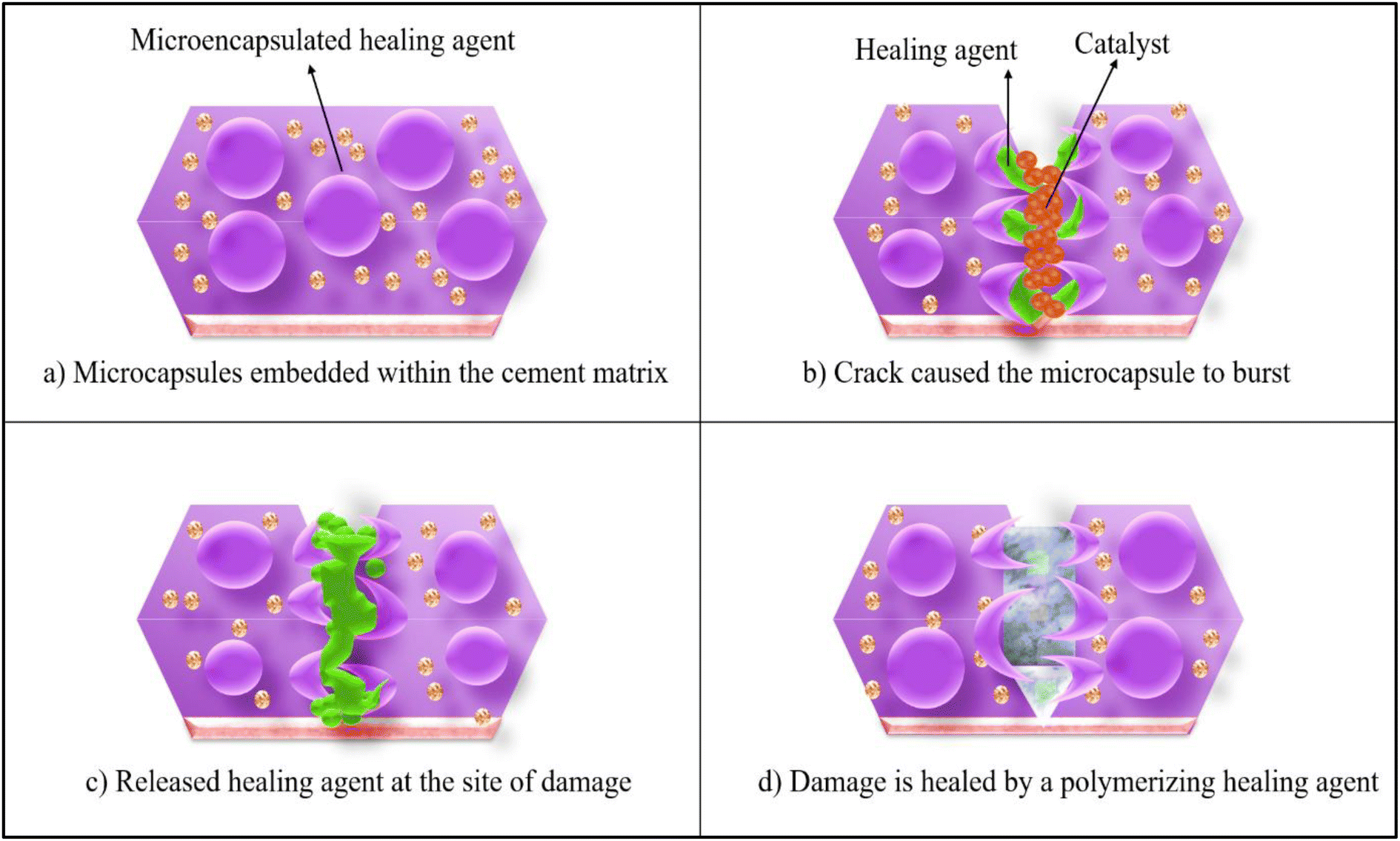 | ||
| Fig. 4 Schematic illustration of autonomic self-healing via microencapsulation, demonstrating the rupture of capsules (capsule size in µm) and release of healing agents upon crack formation. | ||
This approach addresses a common challenge in the construction industry of damage caused by cracks while providing a practical solution to mitigate the substantial maintenance and replacement costs associated with conventional repair techniques. Additionally, it offers a viable alternative for improving structural durability and reducing lifecycle costs, making it especially appealing for large-scale building projects.
4. Types of microcapsules
Microcapsules used in self-healing systems can be categorized based on their internal structure and composition. These structural variations directly influence the encapsulation efficiency, release behaviour and mechanical stability of the capsules. The three fundamental types of microcapsules are:4.1. Single core
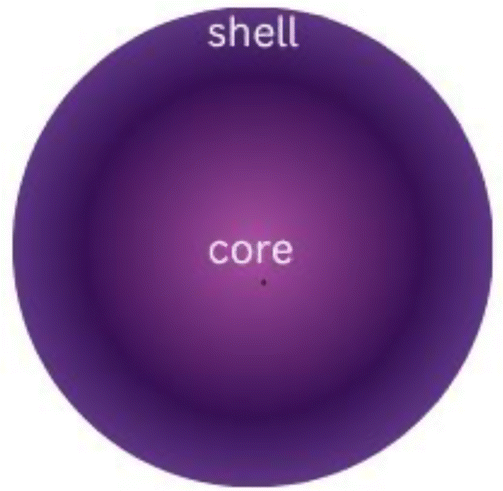
These microcapsules consist of a single core containing the healing agent, surrounded by a shell wall. They are simple in structure, easy to manufacture and commonly used in applications where only one component is needed for self-healing. The release of the healing agent occurs when the shell is ruptured by mechanical stress such as crack formation.4.2. Dual core
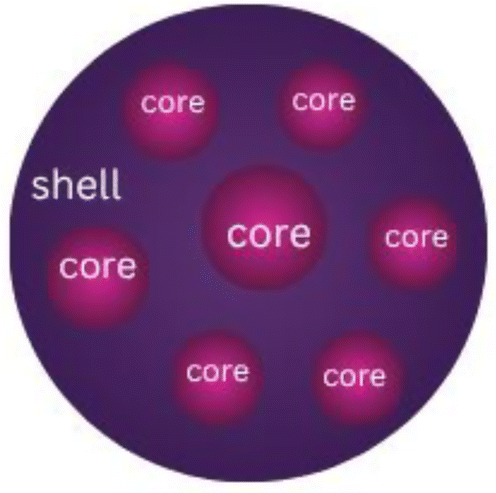
Dual-core microcapsules contain two separate compartments, typically housing different components of a healing system such as a healing agent and a curing agent. These compartments may be encapsulated within one shell or as two closely bonded capsules. They are useful for two-part self-healing systems that require in situ chemical reactions for crack sealing.4.3. Multi-walled
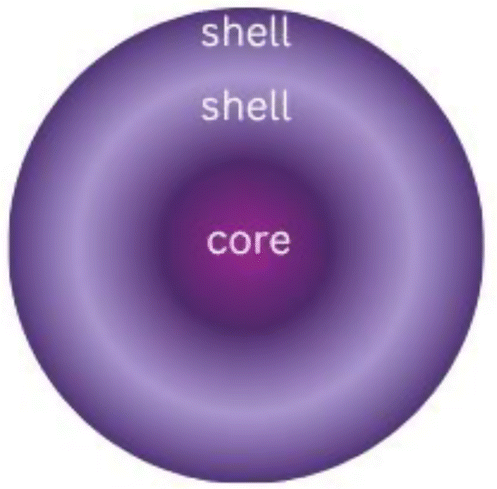
Multi-walled microcapsules feature multiple concentric shell layers around the core material. This complex structure enhances mechanical strength, improves thermal stability and allows for controlled or delayed release of the healing agent. Such capsules are beneficial in harsh environments or where prolonged shelf-life and delayed action are desired.Table 4 provides a comprehensive comparison among single-core, dual-core and multi-walled microcapsules based on several critical parameters. The table covers definitions and underlying mechanisms that explain how each type functions in self-healing systems. It also examines physical characteristics such as size, structural configuration and shell thickness. Key performance factors including mechanical strength, thermal stability and permeability are addressed, along with overall capsule stability. Furthermore, the table outlines the advantages and disadvantages of each microcapsule type, offering insight into their practical suitability for various applications in cementitious materials. This structured comparison helps in selecting the most appropriate microcapsule design based on specific self-healing requirements.
| S. no. | Parameters | Single core | Dual core | Multi-walled |
|---|---|---|---|---|
| 1 | Definition | Contain a single healing agent in one shell for efficient delivery | Hold two healing agents in one shell for simultaneous or sequential release | Have multiple concentric layers around the core for better protection, controlled release and stability |
| 2 | Mechanism | Releases healing agent when cracks or external stimuli trigger capsule rupture | First core releases quickly for immediate repair; second releases slowly for long-term durability (e.g., diamine for fast healing, isocyanates for gradual restoration)74 | Multiple layers enable staged healing: inner layer for rapid release, outer layers for sustained release, enhancing longevity |
| 3 | Size (µm) | 1–200 µm (ref. 73) | 10–500 µm (ref. 74 and 75) | 1–1000 µm (ref. 76) |
| 4 | Structure |
|
|
|
| 5 | Thickness of shell (µm) | 1–5 µm (ref. 73) | 1–10 µm (ref. 74) | >20 µm (ref. 76) |
| 6 | Healing effectiveness (µm) | 100–200 µm (ref. 73 and 77) | up to 300 µm (ref. 78) | >400 µm (ref. 79 and 80) |
| 7 | Properties | |||
| Mechanical strength | • Limited resistance to external forces | • Balanced structure enhances crack resistance | • Multiple layers provide enhancement in durability | |
| Thermal stability | • May degrade at high temperatures dependent on shell material | • Can be tailored for environmental conditions | • Layered structure ensures stability under extreme temperatures | |
| Permeability | • Minimizes leakage | Better leakage control due to advanced encapsulation74,76 | • Notable barrier properties | |
| • Shell integrity is critical73 | • Minimal leakage78,79 | |||
| 7 | Stability | Adequate under normal conditions but vulnerable to stress and temperature | • More resilient | • Layered design supports regulated and sustained release74 |
| • Dual cores and improved walls enhance robustness | ||||
| 8 | Advantages | • Simple and cost-effective | • Adaptable | • Customized and staged release |
| • Easy to manufacture and integrate | • Cores can serve distinct functions | • Improved recovery | ||
| • Efficient for targeted cracks | • Controlled release enhances durability | • Impermeability and reduced maintenance needs | ||
| 9 | Failure rates | Highly susceptible to cracking | Controlled fracture behaviour | Enhanced fracture resistance |
| 10 | Fracture toughness improvement | 10–25%73 | 20–40%74,75 | 30–60%76,78 |
| 11 | Dis-advantages | • Early release may reduce efficacy75 | • Complex manufacturing | • Production costly and time-consuming |
| • Single shell offers limited protection | • Potential uneven release76 | • Delayed release in urgent repairs | ||
| • Lower strength | • Stability dependent on shell design | • Possible material compatibility issues |
5. Techniques for microcapsule fabrication
The stability, functionality and compatibility of microcapsules with the cement matrix can be ensured through various fabrication methods specifically tailored for use in CBMs. These fabrication techniques play a critical role in determining the performance of microcapsules, including their ability to encapsulate healing agents effectively and discharge them when triggered by damage. Each approach presents unique advantages and faces specific limitations based on the core material, shell composition, environmental conditions and intended application. A detailed comparison of these methods including their strengths, drawbacks and possible mitigation strategies is presented in Table 5. Some of the commonly employed fabrication techniques are detailed below:| Process | Advantages | Disadvantages | Problem mitigation |
|---|---|---|---|
| In situ polymerization | • High encapsulation efficiency79 | • Toxic by-products | • Use biocompatible monomers |
| • Controlled particle size | • Agglomeration | • Add surfactants/stabilizers | |
| • Versatile core compatibility | • Poor shell thickness control | • Optimize concentrations and time | |
| • Strong, stable shells | • Irregular capsule shapes | • Control stirring and temperature | |
| • Industrial scalability | • Environmental sensitivity | • Use automated systems | |
| • Complex setup | |||
| Interfacial polymerization | • Rapid shell formation | • Toxic/reactive monomers | • Use safer monomers |
| • High encapsulation efficiency79 | • Poor shell control | • Optimize emulsification | |
| • Mild temperature processing | • Emulsion instability | • Use surfactants and precise conditions | |
| • Customizable shell properties | • Low reproducibility | • Post-process purification | |
| • Broad material compatibility | • Residual solvents | • Employ continuous systems | |
| • Scale-up issues | |||
| Sol–gel process | • Mild conditions | • Long processing time | • Use catalysts or adjust pH |
| • High purity and homogeneity | • Capsule shrinkage/cracking | • Employ freeze or supercritical drying | |
| • Thermally and mechanically stable | • Limited scalability | • Continuous processing techniques | |
| • Tunable porosity | • Use of solvents | • Aqueous sol–gel routes | |
| • Broad core material range | • Poor shell control | • Controlled precursor usage | |
| • Environmental sensitivity | |||
| Spray drying | • Fast and continuous | • Thermal degradation | • Use lower temperature protective carriers |
| • Low cost | • Low volatile retention | • Optimize feed/emulsion | |
| • Heat-stable material suitability | • Poor particle size control | • Adjust nozzle/drying settings | |
| • Simple and scalable | • Powder agglomeration | • Add anti-caking agents | |
| • Compatible with many wall materials | • Limited to liquid feeds | • Preprocess feeds | |
| • Wall material issues | |||
| Coacervation | • High encapsulation efficiency79 | • Multi-step and complex | • Automate steps |
| • Encapsulates diverse materials | • Sensitive to pH/temperature | • Maintain controlled conditions | |
| • Mild conditions | • Irregular shapes/sizes | • Optimize stirring/emulsion | |
| • Uses natural polymers | • Moderate shell strength | • Use safe crosslinkers | |
| • Controlled release properties | • Scale-up challenges | • Standardize parameters | |
| • Toxic crosslinkers | |||
| Layer-by-layer assembly | • Precise shell control | • Time-consuming | • Automate with robotics |
| • Versatile materials | • Complex | • Simplify protocols | |
| • Stable encapsulation | • Poor scalability | • Crosslink for shell stability | |
| • Functional group incorporation | • Layer instability | • Recycle reagents | |
| • Gentle processing | • High solvent/reagent use | • Standardize conditions | |
| • Batch variation |
5.1. In situ polymerization
In situ polymerization is a technique used for microcapsule formation by directly forming a polymer shell around a core material within a reaction mixture. Through this method, monomers are polymerized in the presence of a core substance, resulting in the development of microcapsules that encapsulate the intended healing agents. This technique is highly recommended for the industrial-scale manufacturing of microcapsules due to its straightforward approach and reliability. Fig. 5 illustrates the in situ polymerization process, showing the step-by-step encapsulation of the core material by the polymer shell within the reaction medium. Several crucial steps are involved in the in situ polymerization process. Firstly, the core material either solid or liquid is selected based on its compatibility with the polymer matrix. It is then combined with a solution of monomers dissolved in a solvent to initiate shell formation. A polymerization initiator is subsequently added to trigger the reaction, leading the monomers to form polymer chains that effectively encapsulate the core. After polymerization, any remaining solvent or unreacted monomers are removed and the resulting microcapsules are stabilized through drying or cross-linking. To ensure their suitability for self-healing applications in CBMs, the microcapsules are characterized for size, morphology, encapsulation efficiency and release behavior using analytical techniques such as Scanning Electron Microscopy (SEM) and Dynamic Light Scattering (DLS). | ||
| Fig. 5 Schematic representation of the in situ polymerization process showing stepwise encapsulation and shell formation around the core material, forming microcapsules sized 10–500 μm. | ||
The in situ polymerization technique offers several advantages. One of the most significant advantages is the ability to form the polymer shell directly around the core, ensuring a robust bond between them. Moreover, this technique allows precise control over shell thickness and capsule size, both of which can be optimized to regulate the release kinetics of the healing agents. Additionally, in situ polymerization can be carried out under mild conditions, minimizing the risk of degradation of sensitive healing substances. This method has emerged as one of the most essential processes for microcapsule fabrication and researchers continue to refine it to develop capsules with enhanced properties and specialized functionalities. For example, in situ polymerization has been successfully employed to fabricate microcapsules with a glycidyl methacrylate shell and an ammonium polyphosphate core. Commonly used components for forming the polymer shell include urea, melamine and formaldehyde.77 UF, melamine–formaldehyde (MF) and polyurethane (PUF) microcapsules are commonly synthesized through in situ polymerization. These capsules must withstand the highly alkaline pore solution of concrete. However, PUF shells are hydrophilic and exhibit poor resistance to heat and aging, whereas MF shells offer enhanced thermal and chemical stability, making them more suitable for harsh cementitious environments.78
Compatibility with the pore structure of concrete is also essential, as the healing agent must be able to flow effectively into microcracks. This behavior is influenced by capsule wall thickness and the viscosity of the core material. High encapsulation efficiencies have been reported; for instance, systems using the emulsifier Tween 60 produced smaller capsules with efficiencies exceeding 80%.79 The ASCE review by Gupta Souradeep et al.79 emphasized that capsule wall thickness significantly affects survival during mixing; walls that are too thin may rupture prematurely, while overly thick walls may hinder the release of the healing agent. Melamine-based capsules have demonstrated sufficient durability during concrete mixing when wall thickness is appropriately optimized.79 Therefore, achieving an optimal balance between shell chemistry, thickness and permeability is critical to meet the specific requirements of concrete applications. In situ polymerization typically produces microcapsules ranging from 10 to 500 μm in diameter, with encapsulation efficiencies between 70% and 85%. UF capsules (∼120 μm) have been shown to maintain concrete strength, while MUF shells provide thermal stability up to 300 °C. Additionally, sodium silicate capsules have sealed cracks up to 300 μm and epoxy-loaded capsules have achieved up to 80% flexural strength recovery.
5.2. Interfacial polymerization
The reaction–diffusion mechanism forms the basis of interfacial polymerization, which is primarily founded on the Schotten–Baumann reaction. This process involves the irreversible polymerization of two multifunctional monomers at the interface of two immiscible phases in a heterogeneous solution.80 It is essentially a type of polycondensation wherein highly reactive monomers dissolve in separate liquid phases and upon contact at the interface, undergo a localized and rapid reaction to form a polymer. As this technique does not require template processing before or after encapsulation, it is widely regarded as a practical and efficient method for encapsulating liquid core materials.80Fig. 6 illustrates the interfacial polymerization process, showing the formation of a polymer shell at the oil–water interface, where the core material becomes enclosed by a stable barrier.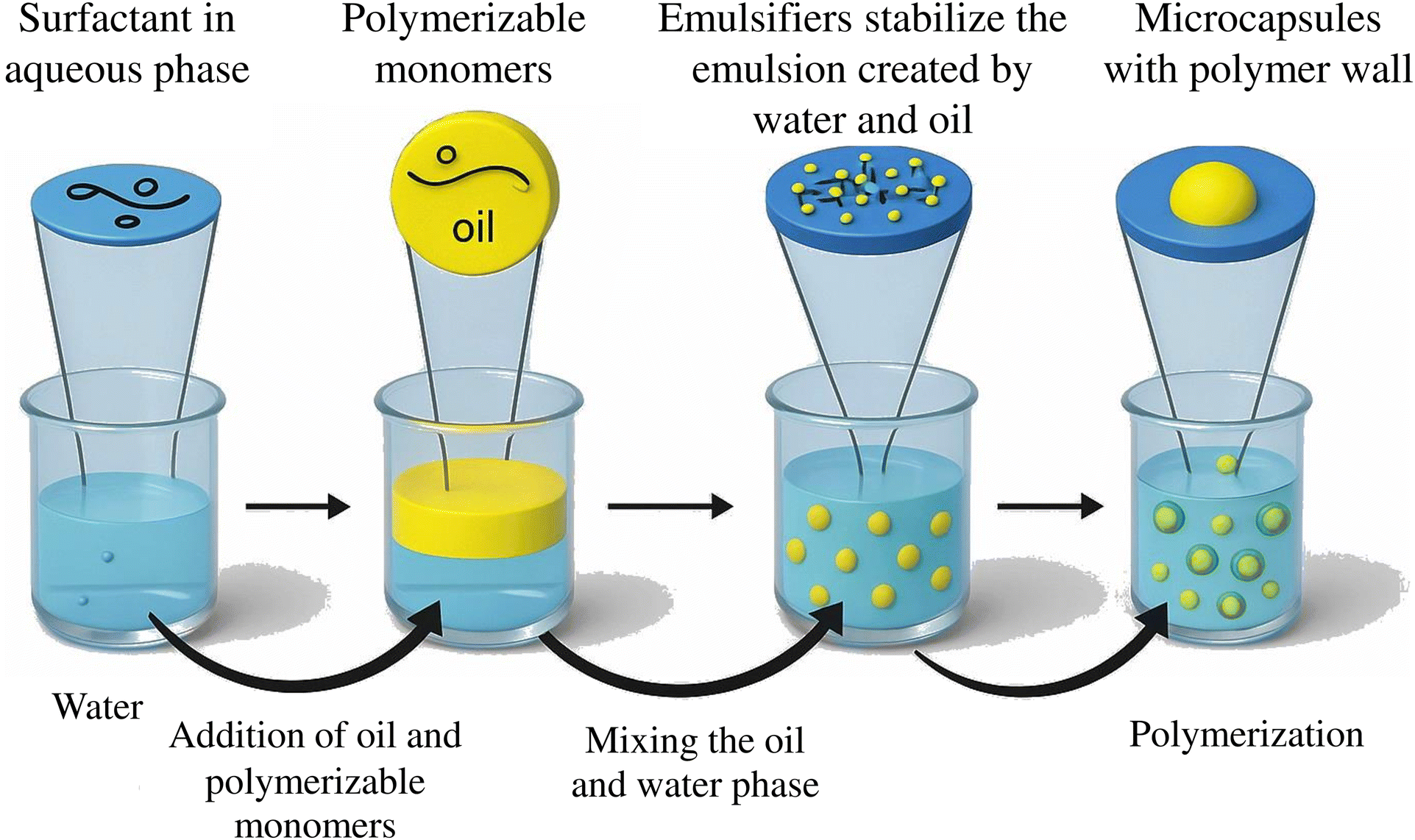 | ||
| Fig. 6 Microcapsule formation through interfacial polymerization method demonstrating the polymer shell formation at the oil–water interface and encapsulation of the core material, yielding capsules of 50–300 μm. | ||
In this technique, the polymer shell forms precisely at the interface between two immiscible liquid phases, typically an oil phase containing the core material and an aqueous phase containing the polymerizable monomers. The core, which may be a reactive liquid or healing agent, is first dispersed in the oil phase, while the aqueous phase containing emulsifiers is introduced to stabilize the emulsion. After the emulsion is formed, a polymerization initiator – either a chemical agent generating free radicals or a photoinitiator activated by UV light – is added to trigger the interfacial polymerization reaction.81 At the oil–water interface, the initiator facilitates the polymerization of monomers, leading to the development of a polymer shell around the core. As polymer chains grow, they enclose the core substance within a stable, protective barrier that preserves the encapsulated healing agents. Once polymerization is complete, the microcapsules are collected, washed to remove residual solvents and unreacted materials and subsequently dried to ensure structural stability. This method offers precise control over shell thickness and properties, making it a viable and versatile approach for developing advanced microencapsulation systems. Consequently, interfacial polymerization has gained significant attention81,82 for its applicability in self-healing cementitious materials (CBMs), where controlled release and protection of healing agents are critical.
5.3. Sol–gel method
Microencapsulation using the sol–gel technique is an emerging technology79 with the potential to enhance the stability of encapsulated materials such as natural scents and odors.83–88 Traditionally employed for the fabrication of glasses and ceramic oxides, the sol–gel process involves introducing alkoxide precursors that undergo hydrolysis and condensation reactions to form inorganic networks.85 Conducted at relatively low temperatures, this technique enables the synthesis of inorganic materials with precisely engineered microstructures. Its ability to operate under mild conditions and produce homogeneous products at the molecular level makes it particularly suitable for developing organic–inorganic hybrid materials.88 When applied to microcapsule fabrication, the sol–gel process integrates mild silica glass formation with emulsion chemistry, functioning similarly to interfacial polymerization. In this approach, emulsion droplets act as “microreactors” where the hydrolysis and condensation of silicon alkoxides occur. Surfactants both ionic and non-ionic serve as stabilizing agents, controlling particle size, porosity and dispersion stability.83In this method, a colloidal solution (sol) is converted into a solid gel to encapsulate a core substance such as a healing agent. The process begins with the preparation of the sol by mixing precursor materials (typically metal silicates or alkoxides) with stabilizers and solvents. These precursors undergo hydrolysis and polycondensation reactions in the presence of water and catalysts, forming a nanoparticle-rich sol. The healing agent is then introduced either directly into the sol or as an emulsion, leading to encapsulation within the developing gel network. By adjusting parameters such as pH, temperature and reactant concentrations, the gelation kinetics and final microcapsule properties can be optimized. After gel formation, the microcapsules are dried to remove solvents and may undergo heat treatment to enhance mechanical strength and thermal stability. Fig. 7 schematically illustrates the sol–gel transformation from a colloidal sol to a solid gel phase, encapsulating the healing agent within a porous inorganic shell suitable for self-healing CBMs. Characterization techniques such as X-ray diffraction (XRD) and SEM are used to examine the morphology, particle size and encapsulation efficiency of the resulting microcapsules.
 | ||
| Fig. 7 Sol–gel technique for microcapsule production showing transformation from colloidal sol to solid gel encapsulating healing agent, producing capsules of 100–500 µm. | ||
Using surfactant-assisted emulsion chemistry, the sol–gel process produces silica-based shells with tunable pore structures at moderate temperatures.81 This versatility allows pore diameters to be tailored to match concrete fracture widths, ensuring controlled and compatible release of healing agents. Unlike polymeric shells, the inorganic silica network can promote cement hydration and improve crack sealing efficiency. Moreover, the enhanced mechanical and chemical stability of sol–gel-derived capsules minimize premature rupture during mixing, while controlled porosity facilitates efficient release upon crack formation. In practice, sol–gel-encapsulated microcapsules have been reported with particle sizes ranging from 100 to 500 µm, offering sufficient alkali resistance for cementitious systems. Silica-based shells exhibit high encapsulation efficiency (∼70–80%) and improved thermal stability, maintaining integrity up to 250 °C. When incorporated into self-healing mortars, oil-core/silica-gel shell capsules have reduced gas permeability by approximately 50% within 3 days and successfully sealed microcracks up to 300 µm wide, thereby restoring material durability.79
5.4. Spray drying method
Spray drying is a widely used technique for producing microcapsules, particularly effective for generating dry powders containing encapsulated materials. The process begins with the preparation of a solution or suspension that includes the core material, either a solid or liquid healing agent along with a stabilizer or polymer. This mixture is atomized through a spray nozzle into fine droplets within a heated air chamber. As the droplets encounter hot air, the solvent rapidly evaporates and the remaining solid components form microcapsules encapsulating the core material. The resulting particles are collected at the base of the spray dryer and may undergo additional drying to remove residual moisture. Fig. 8 illustrates this process, showing how atomized droplets dry swiftly in a hot gas stream to form solid microcapsules that entrap the healing agents. Spray drying offers several advantages, including high production rates, scalability for industrial applications and the ability to encapsulate diverse core materials. The technique provides good control over particle morphology and size distribution while minimizing degradation of sensitive healing agents due to the short exposure time at elevated temperatures. The resultant microcapsules can also exhibit controlled release characteristics, triggered by mechanical stress or environmental stimuli, features particularly beneficial for self-healing cementitious materials.81,89 | ||
| Fig. 8 Rapid drying of atomized droplets to form solid microcapsules via spray drying, typically within 10–100 µm size. | ||
The spray drying process typically involves three main stages: (i) atomization, where the liquid feed (solution, dispersion or emulsion) is broken into fine droplets; (ii) drying, in which solvent evaporation converts droplets into solid particles; and (iii) collection, where the dried powders are separated from the gas stream.81,90,91 Air is commonly used as the drying gas, though nitrogen may be employed for heat- or oxidation-sensitive systems. The process can produce spherical particles ranging from a few micrometres to several tens of micrometres in diameter.81,92,93 While spray drying is attractive for its simplicity, low cost and suitability for large-scale production, high drying temperatures can sometimes degrade heat-sensitive core materials.81 This limitation is significant in concrete applications, where the microcapsules must survive mixing and curing conditions without compromising the encapsulated healing agents. According to the ASCE review by Gupta Souradeep et al.,79 capsules incorporated into concrete must also withstand shear stresses during mixing. Polymeric capsules with optimized wall thicknesses have shown effective resistance to such forces, unlike fragile shells that rupture prematurely. Therefore, although spray drying offers substantial scalability and economic advantages, successful implementation in SHC systems requires careful optimization of shell composition, thermal resistance and compatibility with curing conditions.
5.5. Coacervation and layer-by-layer assembly
Microcapsules have garnered significant attention81,82 in recent years due to their fascinating and essential applications across various sectors, including targeted administration, controlled release, biocompatibility and biodegradability. The development of complex microcapsules can be achieved through various methods, such as layer-by-layer assembly (LBL) and complex coacervation. Among these, LBL assembly has gained substantial recognition in the cement industry, evolving into a simple, distinctive and versatile method for producing microcapsules.80,94,95Coacervation is a physico-chemical encapsulation technique in which polymers separate within the liquid phase to form capsule shells around core droplets.81 This method is particularly suitable for heat-sensitive healing agents, as it enables encapsulation under mild thermal conditions, unlike spray drying. However, survivability during the vigorous mixing of concrete remains a challenge, as coacervated shells, often composed of gelatin or polymeric materials, tend to be more shear-sensitive and mechanically fragile. According to the ASCE review by Gupta Souradeep et al.,79 resistance to mixing stresses is one of the most critical parameters for any encapsulation method. To avoid premature rupture, coacervated capsules may require structural reinforcement or hybridization with more robust shell materials. Therefore, while coacervation offers efficient thermal compatibility with curing conditions, its success in self-healing concrete largely depends on improving the shear resistance of the capsule shells.
5.6. Recent advances in encapsulation
Advanced encapsulation strategies play a crucial role in ensuring microbial survival, controlled release and reliable performance in SHC, particularly under harsh environmental and loading conditions. Recent research has focused on developing encapsulation systems that not only protect microorganisms during mixing and curing but also enhance their resilience against mechanical, chemical and thermal stresses encountered in service. Recent studies (2025) have reported significant progress in microbial encapsulation for cementitious systems. Vedrtnam et al.97 developed tailored bacterial microcapsules capable of facilitating both self-healing and CO2 sequestration. Optimized encapsulation enhanced microbial viability and mineralization efficiency, achieving approximately 0.97 mm crack closure within 8 weeks and precipitating 75–100 mg CaCO3 g−1 biomass. Another study introduced a thermally resilient multilayer encapsulation system employing heat-shield and carbon-based barriers to maintain bacterial activity during ISO-834 fire exposure. Finite-element thermal modelling supported the design optimization, demonstrating that microbial healing resumed once ambient conditions were restored.98 A subsequent report further validated this approach in post-fire repair scenarios, revealing that controlled capsule composition, shell thickness and spatial distribution improved bacterial survival and enabled effective healing following high-temperature exposure.99Collectively, these studies highlight the development of thermally protected and biologically active encapsulation systems that extend microbial self-healing functionality to more extreme service environments, representing a significant advancement in the design of durable and adaptive cementitious materials.97–99
6. Effect of microcapsule morphology on cement matrix
6.1. Geometry of microcapsules
The geometry of microcapsules, including their size, shape and distribution, strongly influences both their performance and the mechanical behaviour of the cement matrix. According to Hafeez Ullah et al.100 capsule geometry affects the likelihood of crack interception and activation.100 Larger capsules have higher chances of intersecting cracks and can store more healing agent, but they may act as stress concentrators, creating weak zones within the matrix. In contrast, smaller capsules integrate better with the cement microstructure and cause less disruption, although they carry limited healing agent unless used in higher concentrations. Irregular or non-spherical capsules further increase the risk of poor bonding, interfacial gaps and microcrack initiation. Therefore, achieving uniform, spherical capsules with a controlled size distribution is crucial to maintaining matrix compactness, reducing permeability and ensuring effective healing.1006.2. Shell stiffness
Shell stiffness, determined by wall thickness and material composition, plays a key role in the mechanical response of microcapsules within the cement matrix. As reported by Hafeez Ullah et al.,100 thick or rigid shells resist rupture even under crack propagation, enhancing survivability during mixing and curing but limiting healing agent release under load. Conversely, thin or soft shells rupture more easily under stress, ensuring timely release of the healing agent. However, overly weak shells may break during mixing, leading to leakage and reduced healing efficiency. Therefore, an optimal balance where the shell is strong enough to survive mixing yet brittle enough to fracture during service is essential for effective self-healing. This balance ensures appropriate activation of the healing mechanism while maintaining mechanical compatibility with the cement matrix.1006.3. Wall permeability and porosity
The permeability behaviour of cementitious composites is also influenced by capsule morphology. As reported by Lu Jiang et al.,101 capsules with irregular shapes, rough surfaces or agglomerated structures often form weak interfacial zones and micro-voids, increasing overall permeability. In contrast, spherical and uniformly dispersed microcapsules integrate more seamlessly into the matrix, reducing interfacial gaps and limiting porosity. These well-formed capsules not only enhance compactness but also ensure controlled release of healing agents upon crack formation, effectively maintaining long-term durability.1016.4. Water sensitivity, shrinkage and viscosity of healing agents
The healing agent's water sensitivity, shrinkage behaviour and viscosity are vital for the success of capsule-based self-healing systems. Water-sensitive agents such as amines or certain epoxy formulations may dissolve or react prematurely, compromising capsule integrity and reducing durability. This limitation often necessitates organic-phase encapsulation or protective shell coatings to maintain stability.102 Polymerization shrinkage is another key factor, as excessive shrinkage can cause residual stresses, poor adhesion and secondary cracking. Ideally, the healing agent should exhibit low volumetric shrinkage to ensure stable crack repair.102 Viscosity also plays a dual role: high-viscosity agents improve capsule stability and reduce leakage risk, while low-viscosity agents promote efficient crack infiltration and surface wetting. Therefore, selecting healing agents with low shrinkage, water resistance and suitable viscosity is essential for achieving reliable and efficient self-healing.1027. Factors affecting microcapsules
The effectiveness of microcapsules is critically important, since it directly affects the overall efficiency of the self-healing process. Existing research highlights several key factors that influence microcapsule performance, including the type of emulsifier, stirring rate and pH level. In the following section, we will discuss these factors in detail and explore how each one impacts the effectiveness of self-healing microcapsules.7.1. Impact of pH on microcapsule performance
In order to guarantee stability, aimed at optimizing encapsulation efficiency, improving material compatibility and enabling controlled delivery of the encapsulated active agents, pH modification plays an essential role during the complex process of microcapsule manufacture. The durability of the microcapsule system is significantly influenced by the reaction pH. Certain encapsulation techniques, especially those based on emulsions, are highly sensitive to pH variations. Maintaining the pH within an ideal range makes it feasible to preserve the integrity of the suspension or emulsion and to prevent microcapsule instability throughout the synthesis procedure. The pH level of the solution plays a critical role in determining encapsulation efficiency, defined as the proportion of active compounds successfully encapsulated enclosed in the microcapsules. Specific pH values may facilitate better interaction between the shell and core materials, thereby enhancing the encapsulation process and improving overall efficiency. In this regard, the acid–base conversion mechanism used throughout in situ polymerization is particularly crucial. When using UF or melamine resin as the wall material, the pH is typically maintained between 3 and 4 during microcapsule fabrication. Chitosan, a natural biopolymer derived from chitin, has been extensively studied for microcapsule fabrication due to its biocompatibility, non-toxicity and ability to form stable shells under mildly acidic to neutral conditions.103 Its cationic nature enables strong electrostatic interactions with anionic compounds, making it particularly suitable for self-healing cementitious systems, where controlled release of healing agents and durability are critical. Microcapsules were prepared using chitosan as the shell material under controlled pH conditions ranging from 5 to 8, a range reported to provide optimal capsule stability and encapsulation efficiency.103Additionally, the pH can influence the discharge characteristics of microcapsules. The behaviour and release rate of the encapsulated active ingredients can be modulated by adjusting the pH of the core material or the surrounding environment.104 This pH-dependent release enables precise release of encapsulated components in several applications. Moreover, the pH of the solution may affect the compatibility of the shell and core materials. Given that different materials employed in microcapsule fabrication have distinct pH requirements, maintaining the pH within a suitable range promotes effective interaction and compatibility, enhancing the microcapsules’ overall quality and functionality. The effects of ionic strength and pH on the absorptive properties of glycinin microcapsules have been investigated using confocal laser scanning microscopy (CLSM) and fluorescein isothiocyanate–dextran (FITC-Dextran). These studies revealed that glycinin microcapsules exhibit efficient structural stability within a pH range of 1 to 11.5. However, when the pH drops below 3 or exceeds 11, the microcapsules begin to swell and they completely dissociate when the pH surpasses 11.5.105 At pH levels above 11, microcapsule permeability rises markedly. Significantly, when the pH drops below the isoelectric point of soybean globulin (∼pH 5), FITC-Dextran tends to spontaneously cluster inside the microcapsules, as illustrated in Fig. 9. Furthermore, noticeable agglomeration phenomena occur due to the significantly higher concentration of FITC-Dextran within the microcapsules compared with the bulk solution. Since pH has a substantial impact on the structure and integrity of individual microcapsules, it remains a critical factor throughout the entire preparation process of microcapsule. The microencapsulation fabrication process is often quite time-consuming, emphasizing the need for the development of a more efficient and streamlined method.
 | ||
| Fig. 9 CLSM micrographs showing soy glycinin microcapsule dispersions under varying pH conditions. (a) Dispersion morphology at pH 1–11.5 showing capsule swelling at extreme pH; (b) CLSM micrographs of FITC-Dextran-treated soybean glycinin microcapsules indicating fluorescence clustering below isoelectric point (pH 5).105 | ||
7.2. Stirring speed
The shape and size of microcapsules can be significantly influenced by the stirring rate during the encapsulation process. Higher stirring speeds may lead to capsule rupture or result in excessively small capsules, while lower speeds can produce irregularly shaped microcapsules or cause an uneven size distribution. An optimal stirring rate is therefore essential, as it ensures appropriate encapsulation and stability by promoting the formation of uniform and consistent microcapsule morphology.106 The encapsulation efficiency of microcapsules may also be affected by the stirring rate. Lower stirring speeds can reduce the effectiveness of healing agent encapsulation due to decreased encapsulation efficiency. Maintaining an appropriate stirring speed ensures that a sufficient amount of the healing agent is successfully encapsulated within the microcapsules. Furthermore, the stirring rate influences the dissolution of shell materials in the solvent. A suitable stirring rate enhances the homogeneous dispersion of shell materials, promoting the formation of a uniform and uniform coating layer. This uniformity is crucial for the functionality and quality of the microcapsule shells.Increased stirring speeds can also reduce fabrication time and enhance production efficiency, a critical factor in large-scale manufacturing. For instance, in the preparation of paclitaxel nano-suspensions, the emulsification process utilized both high-pressure homogenization and high speed followed by freeze-drying. The resulting paclitaxel nano-suspensions exhibited sustained-release properties along with a rapid onset of action.107 Lang et al.108 reported the synthesis of microcapsules using polyvinyl alcohol (PVA) stabilizers with different molecular weights (Mw) and varying stirring speeds. Their findings indicated that the average diameter of the UF resin microcapsules decreased from 138 μm to 48 μm as the PVA stabilizer Mw increased from 31 to 130 kDa. Additionally, increasing the stirring speed from 600 rpm to 900 rpm resulted in a reduction of the median particle size from 130 μm to 76 μm.108 These findings confirmed that an increase in shear stress, resulting from higher stirring rates, leads to a reduction in microcapsule diameter. Therefore, to ensure effective microcapsule preparation, selecting a precise and appropriate stirring rate is essential.
7.3. Effect of emulsifiers
The emulsifier concentration and speed of emulsification are important factors in producing uniform microcapsules, as they play a vital role in supporting the structural stability of the entire system. Emulsifiers are particularly important in emulsion polymerization, where they are typically used in concentrations ranging between 0.2% to 5% with respect to monomer mass. These agents promote the emulsification process, in which water and immiscible oil-based monomers combine to form a thermodynamically stable emulsion. Emulsifiers, due to their surfactant properties characterized by both hydrophilic and hydrophobic moieties, are able to stabilize mixtures. Depending on the nature of their hydrophilic groups, emulsifiers are generally classified into three main categories: anionic, cationic and non-ionic. Anionic emulsifiers possess hydrophilic groups such as carboxylate (–COO−), sulfate (–OSO3−) and sulfonate (–SO3−) ions, while their hydrophobic portions typically consist of alkyl-substituted phenyl or naphthyl groups or linear alkyl chains ranging from C1 to C17. Common examples of anionic emulsifiers include rosin soap, sodium fatty acids, sodium dioctyl naphthalene sulfonate (lignosulfonate), sodium dodecyl sulfonate and sodium dodecyl sulfate.109 These emulsifiers exhibit strong emulsifying capabilities and are well-suited for neutral or alkaline environments. However, their effectiveness can diminish in the presence of hard water or acidic conditions, as their water solubility decreases. To mitigate this issue, emulsion polymerization systems often employ buffer agents like sodium pyrophosphate or sodium bicarbonate to regulate pH.Cationic emulsifiers, in contrast, generally consist of long-chain alkyl groups derived from quaternary ammonium salts. Examples include dodecylamine hydrochloride and cetyl trimethylammonium bromide, which contain cationic hydrophilic groups. These emulsifiers are more commonly used in microemulsion polymerization rather than in conventional emulsion polymerization, due to their specific interaction properties. Non-ionic emulsifiers, on the other hand, feature non-ionic ether bonds as their hydrophilic groups. They have comparatively weaker emulsifying properties than anionic emulsifiers due to the absence of ionic groups, thus they offer enhanced chemical stability to emulsions. Their resistance to changes in pH makes them particularly advantageous in systems where chemical stability is a concern. Therefore, despite their lower emulsifying strength, non-ionic emulsifiers are often preferred for their robustness and versatility in various formulation environments. Chitosan-loaded citrus essential oil microcapsules were prepared using six different emulsifiers: Span 80, Tween 40, a 1![[thin space (1/6-em)]](https://www.rsc.org/images/entities/char_2009.gif) :1 mixture of Tween 20/SDBS, Tween 60, Tween 20 and a 1:1 mixture of Tween 20/Span 80. The study revealed that the type of emulsifier had a substantial effect on both the particle size and microcapsule encapsulation efficiency, with the Tween 60 group producing the smallest particle size.54 A schematic illustration of how different emulsifiers influence the emulsification of wood wax oil is presented in Fig. 10. Emulsification level affects not only the visual properties of the emulsion such as color and clarity, but also the amount of foam generated.
:1 mixture of Tween 20/SDBS, Tween 60, Tween 20 and a 1:1 mixture of Tween 20/Span 80. The study revealed that the type of emulsifier had a substantial effect on both the particle size and microcapsule encapsulation efficiency, with the Tween 60 group producing the smallest particle size.54 A schematic illustration of how different emulsifiers influence the emulsification of wood wax oil is presented in Fig. 10. Emulsification level affects not only the visual properties of the emulsion such as color and clarity, but also the amount of foam generated.
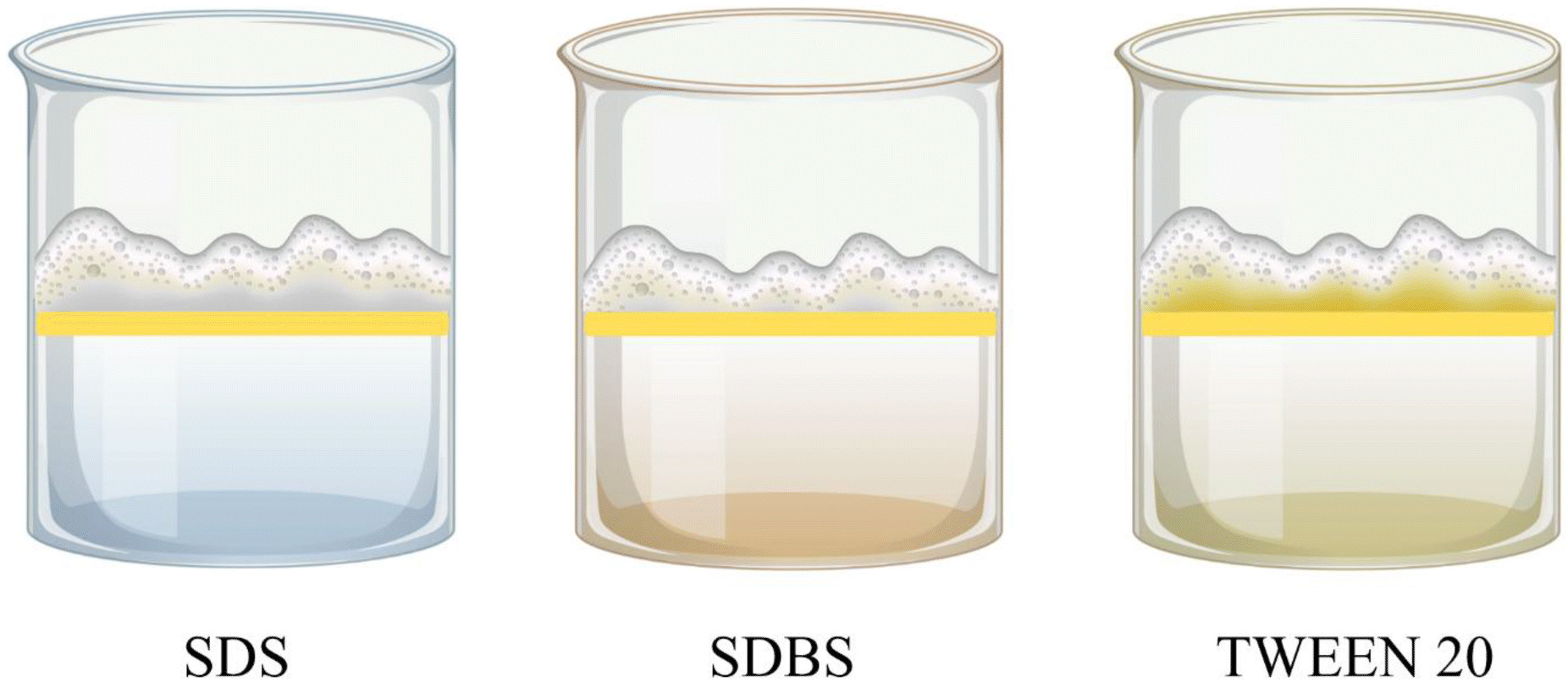 | ||
| Fig. 10 The influence of various emulsifiers on the emulsification performance of wood wax oil. | ||
8. Microcapsule characterization and analysis
Multiple techniques have been developed to characterize microcapsules. These characterization methods are crucial for maintaining the efficacy and reliability of self-healing microcapsules. They provide valuable insights into the mechanical, chemical and structural properties of the capsules, as well as their self-healing capabilities. Characterization techniques can be broadly classified into several categories, including morphological analysis, chemical composition analysis, mechanical testing, thermal stability evaluation and self-healing efficiency assessment.110 These categories serve to thoroughly examine the behaviour and performance of microcapsules. Furthermore, characterization is crucial for obtaining information about the chemical, mechanical, physical and electrical characteristics of the materials, which is essential for understanding their behaviour under different conditions and for designing innovative components with targeted functionalities. This section provides an overview of the various techniques used to characterize microcapsules, helping to assess their performance and properties in cementitious materials for self-healing applications.8.1. Fourier transform infrared spectroscopy (FTIR)
FTIR spectroscopy analyses the chemical composition of microcapsules by measuring the light transmitted or absorbed by the sample at various wavelengths. This method is essential for assessing the integrity, robustness and efficacy of microencapsulation in self-healing techniques. FTIR testing can identify the chemical makeup and concentration of the microencapsulated shell layer by detecting peak absorption values at different wavelengths, thus confirming the reliability and efficiency of microcapsules in self-repairing applications.111,112 In the field of self-healing microcapsules, FTIR testing is a vital tool, ensuring adherence to predetermined standards by facilitating the recognition and validation of the microcapsules’ exterior shell and inner core components. According to Zhao Yang's113 research, the stretching frequencies of the O–H and N–H bonds in UF resin are represented by strong absorptions that appear at 3384 cm−1 in the microcapsule spectrum. The spectra also reveal epoxy bands, including terminal epoxide group bands at 913 cm−1 and 831 cm−1, as well as benzene ring stretching vibrations at 1248 cm−1 and 1510 cm−1. This information confirms that the epoxy resin combination used as the core components is effectively encapsulated within a urea-formaldehyde shell.113–115FTIR spectroscopy has been widely employed in various studies to characterize capsule shell structures. For instance, Jun Ren et al.116 used FTIR analysis to examine the chemical structure and composition of four temperature-adaptive polymeric shells. They identified four characteristic absorption peaks at 1732 cm−1, 1451 cm−1, 1151 cm−1 and 990 cm−1, corresponding to C![[double bond, length as m-dash]](https://www.rsc.org/images/entities/char_e001.gif) O, C–H, C–O and C–O–C stretching vibrations, respectively.116
O, C–H, C–O and C–O–C stretching vibrations, respectively.116
8.2. Scanning electron microscopy (SEM)
SEM is essential for characterizing microcapsules as it provides detailed information about their size, shape and structural integrity. With its high-resolution imaging capabilities, SEM allows researchers to assess the thickness of the shell wall, identify surface flaws and check for uniformity in the capsule shell. This is crucial for ensuring that the microcapsules have a robust structure capable of withstanding environmental factors before rupturing. Additionally, SEM helps to detect any flaws or cracks in the shell that might lead to premature leakage, confirming that the healing agent is successfully encapsulated. Beyond structural analysis, SEM is also used to study the fracture behaviour of microcapsules upon rupture, which is essential for evaluating the effectiveness of the self-healing mechanism. By examining broken capsules, researchers can assess how well the healing agent is released during damage. Moreover, SEM is useful for investigating the distribution of microcapsules within a composite matrix, ensuring uniformity and suitable interaction with the host material. This insight is essential for enhancing the performance of self-healing materials in real-world applications such as coatings, polymers and structural composites.Several researchers have used SEM to examine various features such as microcapsules containing epoxy or hardener,111,117–122 microcapsule fracture surfaces,123,124 polyurethane and graphene self-healing nanocomposites,111,125 epoxy resins capable of self-repair,126 solvent-filled microcapsules incorporated into polyurethane coatings for restoring the electrical conductivity of silver ink lines,127 shape memory polymers124 and micro/nanocapsules128 embedded in anticorrosive coatings. Cheng Zhang127 conducted a study in which the surface morphology of microcapsules was examined using SEM. This study demonstrated the spherical shape of microcapsules when dispersed in deionized water. Both individual and aggregated microcapsules displayed rough surfaces. The rough texture of the microcapsules enhances interfacial interactions with the coating matrix.129 Additionally, the nonporous structure of the microcapsules reduces the permeability and dispersion of the encapsulated healing agent, allowing it to remain contained until the microcapsules rupture.130 Furthermore, the microcapsules’ size distribution showed an average diameter of 101 ± 48 μm, confirming the successful synthesis of spherical microcapsules based on morphological observations.127
Yujie Ying et al.131 fractured the microcapsules using a scalpel, then cleaned them with N-methyldiethanolamine and deionized water, followed by freeze-drying and platinum coating.131 The internal structure of the capsules was subsequently examined in detail using SEM. Similarly, Ahsanollah Beglarigale et al.132 observed that although the proportion of irregular particles increased with higher MDI concentrations, most of the microcapsules remained spherical and free-flowing.
8.3. Energy dispersive X-ray spectroscopy (EDX)
EDX, often used in conjunction with SEM, is a commonly employed method for determining a sample's elemental composition. When a sample is exposed to a concentrated electron beam, it emits X-rays that are indicative of its elemental makeup. EDX detects these X-rays and measures their energies, which correspond to specific elements present in the sample. The resulting spectrum displays peaks at various energy levels, with each peak representing a different element. The intensity of each peak indicates the relative quantity of that element in the sample. EDX is particularly useful for identifying and quantifying a material's elemental composition, including metals, ceramics and polymer samples, providing a valuable tool for the characterization of microcapsules.7 To ensure quantitative accuracy, recent studies have reported essential methodological parameters for EDX analysis. For instance, Yujie Ying et al.131 employed an accelerating voltage of 20 kV, which provided sufficient excitation of elemental X-ray signals within the microcapsule matrix and confirmed the presence of C, O, Na and Si, indicating a polyurethane shell and sodium silicate core. Measurements were performed on polished cross-sections to minimize surface topography artefacts and ensure signal stability. Micrometre-scale spot sizes were used to target the capsule wall and interfacial regions, enabling spatially resolved chemical analysis. Similarly, Yang et al.7 analyzed regions approximately 1 μm beneath the surface, confirming the presence of C, O and Si originating from PMMA-based healing products and fractured silica-gel shells.133 These studies also applied standardless quantification calibrated using internal atomic number-based correction factors (ZAF), which is suitable for heterogeneous cementitious matrices. Collectively, these findings demonstrate that appropriate EDX parameters such as a beam voltage of ∼20 kV, micrometre-scale spot sizing and elemental correction-based calibration facilitate reliable quantitative assessment of microcapsule composition within self-healing cementitious systems.8.4. Thermogravimetric analysis (TGA)
TGA is an important method for assessing the composition and thermal stability of microcapsules. TGA helps to determine the thermal decomposition behaviour of both the capsule shell and the encapsulated healing agent by monitoring weight loss in relation to temperature. This analysis is crucial to ensure that the microcapsules can withstand the manufacturing and operational temperatures of their intended applications. Furthermore, TGA provides insights into the encapsulation efficiency by determining the weight fraction of the core material inside the microcapsules, aiding in the optimized structure of microcapsules for optimal self-healing functionality. In addition to assessing encapsulation efficiency, TGA is used to investigate the decomposition kinetics of microcapsules, which is vital for understanding their long-term stability. By examining the thermal transitions and degradation temperatures of various host materials, TGA enables researchers to evaluate the compatibility of microcapsules with those materials. These data are essential for selecting suitable microcapsule formulations for various self-healing applications, including coatings, composites and polymers, ensuring their resilience in diverse environmental conditions.126 In an investigation by Iee Lee Hia,134 the thermal stability of pure alginate microcapsules, alginate/epoxy and alginate/mercaptan self-healing microcapsules was analyzed. The study revealed that both types of microcapsule exhibited minor mass loss at temperatures below 220 °C, which was attributed to the adsorbed moisture on the capsules.134 Between 250 and 500 °C, the majority of the weight, including that of both the core and shell materials, was lost. These self-healing microcapsules demonstrated good thermal stability and could withstand high processing temperatures up to 200 °C.8.5. Particle size distribution
Particle size analysis is a crucial technique for evaluating the size distribution and uniformity of microcapsules. The effectiveness of microcapsules including their ability to efficiently release healing agents, their rupture behaviour and their dispersion within composite materials is directly influenced by their size. Techniques such as DLS, laser diffraction and optical microscopy are frequently employed to measure particle size distribution. A carefully regulated size distribution ensures consistent self-healing properties, as larger capsules may not rupture effectively upon damage, while smaller ones may release healing agents prematurely. Thus, particle size analysis not only guarantees homogeneity but also plays a vital role in optimizing the synthesis of microcapsules. By analyzing size variations under different formulation conditions, researchers can adjust parameters such as stirring speed, emulsifier concentration and polymerization conditions to achieve the desired microcapsule size. Moreover, information on size distribution aids in selecting appropriate microcapsules for specific applications such as coatings, polymers or structural composites where different size ranges may be required for optimal self-healing performance and material compatibility.In this context, Dongsheng Xu135 conducted a study where the particle size distribution of microcapsules was examined using a laser particulate dimension analyzer capable of measuring particles ranging from 0.1 μm to 2000 μm.135 The analyzer demonstrated high precision, with standard errors below 1% and high repeatability. During the measurement, microcapsules were dispersed using a wet technique at a rotation speed of 2500 rpm. The results indicated that increasing the rotation speed led to a reduction in particle size, aligning with previous observations. Microcapsule particles were found to range broadly from 0 to 800 μm; however, when the synthesis rotation speed exceeded 450 rpm, the particle size distribution significantly narrowed.136
9. Mechanical interaction between capsule and cement matrix
9.1. Shell rupture due to shrinkage stress
Shrinkage stresses formed during cement hydration and drying significantly affect the interaction between the cement matrix and the polymeric shell of microcapsules. According to Leyang Lv et al.,137 the rupture force of phenol-fomaldehyde microcapsules increases with both shell thickness and capsule size, indicating that thicker-walled or larger capsules can better resist external stress.137 However, when embedded in the cement matrix, tensile stresses induced by shrinkage may act on the capsule shell and cause early rupture. This mechanical interaction suggests that smaller or thinner-shelled capsules may break and release the healing agent even before major cracking occurs if the shrinkage stress exceeds their rupture threshold. Such shrinkage-induced rupture can promote the preventive release of healing agents into microcracks and pores, providing an additional self-healing mechanism that enhances the longevity of cementitious composites.1379.2. Interfacial adhesion
Interfacial adhesion is critical in influencing the efficiency of capsule-based self-healing systems, as it directly influences both the release of the healing agent and the quality of the healed zone. Strong bonding between the capsule shell and the cement matrix ensures that the capsules rupture at appropriate locations when cracks propagate, releasing the healing agent exactly where needed. Conversely, poor adhesion may lead to debonding, premature failure or ineffective healing due to cracks propagating along the capsule–matrix interface. In addition, once the healing agent is released, good interfacial compatibility with the host matrix is essential for proper wetting and bonding of fracture surfaces.138 Studies on epoxy resin encapsulation show that interfacial bonding and healing efficiency improve significantly when the encapsulated polymer is chemically compatible with the surrounding matrix.138 Techniques such as creating double-shell structures or modifying capsule shells with compatible resin coatings have been proposed to overcome adhesion issues. These approaches enhance interfacial bonding and improve the mechanical stability of the capsules, thereby ensuring long-lasting mechanical recovery in composite materials.9.3. Degradation in alkaline media
The highly alkaline environment of cementitious matrices (pH ∼12–13) greatly influences the degradation behaviour of polymeric microcapsules, thereby affecting their interaction with the surrounding matrix. As reported by Hafeez Ullah et al.,100 many capsule shell materials gradually lose structural integrity due to hydrolysis or chemical attack under such conditions, weakening their walls and altering their load-bearing capability.100 This degradation may create weak interfacial zones or voids around the capsules, reducing matrix compactness and compromising mechanical strength. Moreover, deteriorated capsules may rupture prematurely under shrinkage or stress, causing early release of healing agents. While this can aid microcrack sealing, uncontrolled degradation risks reducing the system's long-term healing performance. Thus, alkaline-induced shell deterioration not only affects the timing and responsiveness of self-healing activation but also weakens the matrix–capsule interface and overall structural stability.1009.4. Effect of supplementary materials
Incorporating supplementary materials such as polymer modifiers, nanosilica or industrial by-products like electric arc furnace dust can significantly influence the self-healing ability of cementitious systems. These additives enhance the dispersion of microcapsules, refine crack structures and increase the likelihood of stress-induced healing agent release. However, the effect is not always linear, as excessive additions may reduce mechanical strength; hence, dosage optimization is essential. Superabsorbent polymers (SAPs) and fly ash have been shown to play a synergistic role in enhancing self-healing performance.139 SAPs absorb water and expand, blocking crack pathways and providing internal curing reservoirs, while fly ash contributes to denser microstructures through pozzolanic reactions. Although excessive SAP content may increase porosity and reduce compressive strength, the combined effect can achieve full crack closure and permeability recovery under wet–dry cycles.140 In microbial self-healing cement, fly ash has proved to be a more efficient microorganism carrier than blast furnace slag or nanosilica due to its compatibility with the cement matrix. When combined with calcium and nutrient-rich sustained-release microcapsules, it promotes microbial viability and calcite precipitation. Furthermore, incorporating glycerin and polyvinyl alcohol as stabilizers in capsule walls adds flexibility and enables controlled release, improving crack repair without compromising the slurry's rheology.1419.5. Polymerization kinetics
The polymerization kinetics of the healing agents significantly affect the mechanical interaction between microcapsules and the cement matrix. When a crack propagates, the capsule ruptures and releases its core such as methyl methacrylate (MMA) or dicyclopentadiene (DCPD) which polymerizes rapidly in the presence of catalysts like Grubbs’ catalyst or triethylborane.142,143 Fast polymerization ensures that the liquid healing agent completely fills the crack before diffusing away, forming covalent bonds that rejoin the fracture surfaces with the surrounding matrix.144 The rate of polymerization is thus critical for efficient stress transfer and long-term durability. A denser, cross-linked network resulting from faster conversion improves crack sealing, lowers permeability and enhances mechanical recovery under cyclic loading. Therefore, the coordination between capsule rupture behaviour and polymerization kinetics is vital for reliable self-healing and mechanical reinforcement of cementitious composites.9.6. Kinetics and environmental dependence of self-healing reactions
The self-healing efficiency of microcapsule systems is strongly influenced by time-dependent factors, primarily governed by curing kinetics and environmental stimuli. In particular, amino-resin-based shells release healing agents gradually, with their stability largely determined by the molar ratio of formaldehyde to melamine. A higher ratio produces a more cross-linked network, resulting in improved thermal stability and faster reaction rates, whereas a lower ratio yields less stable shells and slower curing behavior.81 Temperature is another critical factor affecting healing kinetics. Heat treatment at 80 °C for 5 hours was reported to cause approximately 10% shrinkage in polystyrenesulfonate (PSS)/poly allylamine hydrochloride (PAH) microcapsules, which in turn decreased their permeability and slowed the release of encapsulated agents.81 These findings emphasize that self-healing reactions in microcapsule-based systems are not instantaneous processes but evolve dynamically under varying environmental conditions. Therefore, understanding the interplay between curing kinetics, temperature and material stability is essential for accurately predicting and optimizing the autonomous healing performance of cementitious composites in real-world applications.10. Techniques for assessing self-healing efficiency in concrete
Concrete is widely recognized for its inherent brittleness, poor tensile strength, susceptibility to deformation and tendency to experience multiple fracturing behaviour.145–150 These characteristics, particularly the formation of cracks, significantly compromise the integrity of structures composed of CBMs. The inevitable development of cracks in cementitious materials diminishes their durability by allowing the ingress of harmful substances such as sulphates and chlorides. Depending on their size and severity, these cracks can lead to water permeability and initiate corrosion in reinforcing steel, potentially culminating in structural collapse. Moreover, the repair of fractured structures can be difficult or even unfeasible, necessitating continuous maintenance, which in turn leads to substantial repair costs. To address this issue, researchers have incorporated self-healing microcapsules into cement-based constructions to autonomously repair fissures. The concept of self-healing in CBMs refers to the microcapsules’ ability to repair cracks or damage, thereby enhancing the material's durability and reducing the need for external maintenance. This innovative approach not only extends the service life of concrete but also contributes to mitigating the environmental impact associated with cement production.148–153The effectiveness of self-healing in cement structures is commonly assessed through visual inspection, mechanical strength recovery, permeability reduction, durability improvement and microstructural analysis, as detailed in Table 6. Specifically, three primary criteria are employed to evaluate self-healing performance in CBMs: the restoration of mechanical strength, the enhancement of durability and the identification of healing materials responsible for sealing visible cracks.154–157 However, most SHC techniques result in only minimal recovery of mechanical strength. Consequently, the most reliable indicators of self-healing ability are physical fissure closure, reduced permeability (indicative of improved durability) and comprehensive microstructural evaluations.
| Self-healing assessment techniques | Methods for measurement | Identification | Limitation | Mitigation | Ref. |
|---|---|---|---|---|---|
| Visualization techniques | Microscopy | ||||
| Optical microscopy | To obtain the crack surface morphology and determine the crack width | The resolution capability of an optical microscope is limited by the thinness of the sections and the wavelength of light | Using high-resolution optical equipment or confocal microscopy can improve image clarity | 29, 44 and 158 | |
| Scanning electron microscopy (SEM) | Analysis of crystals’ form within the fissures | SEM equipment is expensive to operate and maintain | Using SEM models or working with centralized research centres can help to mitigate the cost | 159–161 | |
| Environmental scanning electron microscopy (ESEM) | Observe the capsule rupture under environmental conditions | The concrete becomes dehydrated when placed within the instrument due to the extremely low pressure at which it operates, altering its microstructure | Using low-vacuum ESEM modes or reducing exposure duration helps maintain hydration | 162 | |
| Imaging | |||||
| X-ray radiography | The primary purpose of radiography is visualization | Thin fissures or perpendicular defects may be hard to detect due to limited radiographic visibility | Using computed or multi-angle radiography techniques enhances detection sensitivity | 163 | |
| X-ray tomography | It effectively demonstrates the dispersion of encapsulated microcapsules within the matrix | It is only applicable for detecting small-sized microcracks within the matrix | Integrating neutron tomography or other imaging techniques can enhance the ability to detect larger magnitude cracks | 164 | |
| Neutron radiography | It facilitates the visualization and quantification of capillary water absorption within healed cracks | It is sensitive to external illuminating sources, which may affect measurement accuracy | This limitation can be addressed by using shielding techniques or performing imaging under controlled lighting conditions | 160 and 161 | |
| Digital image correlation | It detects the development or closure of cracks | It is sensitive to environmental conditions | To ensure data reliability, measurements must be conducted in environments with stable humidity and temperature | 165 | |
| Assessment of regained resistance | Spectroscopy | ||||
| X-ray diffraction analysis | Determines the presence of crystalline materials | Results may be inaccurate for excessively small and/or internally non-homogeneous crystals | Using complementary techniques like Transmission Electron Microscopy (TEM) for fine structures or advanced XRD methods such as synchrotron-based XRD | 159 | |
| X-Ray spectroscopy | Assessment of the precipitated products | It may not accurately distinguish between isotopes or particles of similar elements | For better element-specific resolution, combine X-ray radiation spectroscopy with other techniques such as Raman or EDS | 160 | |
| Raman spectroscopy | Chemical analysis of the solidified products | There are insufficient documented data on the Raman spectra of several chemical compounds | Developing Surface-Enhanced Raman Spectroscopy (SERS) and spectral databases enhances compound identification | 159 | |
| Infrared analysis | Assessment of the precipitated products | It may struggle to detect minimal quantities of minor constituents in the specimen | Applying FTIR with enhanced sensitivity setups improves detection of minor constituents | 44 | |
| Measurement of recovered durability | Transport properties | ||||
| Water/air permeability | Facilitates the flow of air or water through repaired fissures | Requires an airtight or watertight seal to ensure accurate permeability measurements | To ensure tightness, conduct pre-test leak checks and use specified sealing materials | 19, 26, 41 and 166–170 | |
| Sorptivity | Measured capillary water absorption rate | It is sensitive to environmental conditions | To reduce external variability, it is important to conduct tests in a climate-controlled chamber | 26 | |
| Chloride diffusivity | It measures chloride diffusion to assess the permeability and durability of self-healed concrete | The ambient temperature and moisture content impact the performance of microcapsules | Precondition the specimens and maintain a constant environment during testing | 171 and 172 | |
| Osmotic pressure | It measures the resistance to ion ingression | The specimen and the environment may affect the accuracy of the results | Manage the humidity and oxygenation levels of the testing environment or use membranes that are resistant to oxygen | 163 | |
| Resistivity and continuity | |||||
| Corrosion | Determine the locations of active and potential corrosion | Inadequate oxygen or moisture could impact the precision of the data | Pre-wet the surface, use oxygen-permeable coatings | 163 | |
| Frost/salt scaling | Measures the salt scaling resistance | Sensitive to the rate of temperature change | Use programmable temperature control systems to precisely regulate freezing and thawing cycles | 173 | |
| Ultrasonic measurements | Detect discontinuities and interior defects | The moisture quantity and the presence of reinforcement bars may alter the accuracy of the results | Before testing, manage moisture levels and calibrate equipment to account for reinforcement interference | 168 | |
| Recovery of mechanical strength | Mechanical | ||||
| Compression test | Measures regained stiffness and strength | Moisture content, specimen size and load application rate may affect test results | To reduce variance, standardize the specimen size, curing environment and automated load application | 169 and 174 | |
| Tensile test | Measures tensile strength, rigidity and energy | Brittle failure, misalignment, difficult specimen preparation, low tensile strength | Use indirect methods (e.g., Brazilian), careful setup, use strain measurement tools | 29 | |
| Bending test | Evaluates bending stress and crack mouth opening | Non-uniform stress, size dependency, crack unpredictability | Use notched beams | 42 and 175–179 | |
| Non-mechanical | |||||
| Acoustic emission analysis | Detection of discontinuities | Requires strong signal quality | Use high-sensitivity sensors and noise-reduction techniques and perform the test in isolated environments | 168, 180 and 181 | |
| Resonance frequency analysis | Measures dynamic modulus, healing speed, injury degree and recovery assessment | Surface collapse upon impact may affect the accuracy of the results | Before testing, use non-contact sensors or reinforce the specimens surface to ensure its integrity | 182 |
11. Assessment of healing efficiency in cementitious materials
Smart materials that can mend themselves after being damaged are known as self-healing materials.183 A self-healing mechanism can significantly enhance the durability and sustainability of materials. Over the past ten years, numerous studies have investigated the self-healing properties of concrete embedded with microcapsules.184 This advancement has the potential to lead to more sustainable construction practices, reduce greenhouse gas emissions, maintain infrastructure functionality and considerably lower maintenance and repair costs. As a result, various methods have been developed to evaluate the self-healing efficiency of concrete.185–190 Since microcapsules are foreign components introduced into the cement matrix, they can alter the properties of both fresh and hardened concrete. Therefore, the ideal self-healing material should enhance the overall performance of concrete while preserving its original properties. The shape of the capsule, the composition of its shell and the type of healing agent all influence the system's efficiency. Moreover, the extent to which the material regains its strength and durability during the healing process serves as a critical measure of the performance of the encapsulated healing agent. This section discusses the influence of microcapsules on various properties of CBMs.11.1. Toughness
The ability of CBMs to absorb energy and undergo plastic deformation before failure is referred to as toughness. It reflects the material's capacity to withstand impact, dynamic and static loading conditions, as well as to resist crack initiation and propagation. The effect of incorporating microcapsules on the toughness behaviour of SHC was assessed by Tsangouri et al.191 Microcapsules were produced using an adhesive-based biomaterial that exhibits autonomous healing properties. The study by Tsangouri et al.191 demonstrated that SHC exhibited a 35% improvement in toughness behaviour compared with the control specimen. To evaluate the strength retention or recovery of SHC, Cuenca et al.192 examined the toughness characteristics of the material under continuous cycles of cracking and healing. Additionally, the authors191 observed that incorporating fibers and biological materials to bridge gaps within the concrete matrix further enhanced toughness performance. In conclusion, microcapsules play a crucial role in enhancing the toughness of CBMs by enabling the material to autonomously repair cracks, thereby improving its mechanical performance and extending its service life.18411.2. Durability and permeability
There are relatively few studies on the durability performance of SHC. Indirect indicators such as water permeability or absorption are typically used to assess durability. The limited number of studies that directly address durability primarily focus on chloride infiltration and the actual corrosion of reinforcement. The performance of concrete is largely influenced by its fundamental properties, including permeability, pore volume and pore structure. Permeability governs the ease with which gases, liquids and dissolved hazardous substances can penetrate the concrete, directly impacting processes such as carbonation, erosion, steel reinforcement corrosion and freeze–thaw durability. This makes permeability a critical factor in determining the longevity of concrete structures. The formation of microcracks and alterations in pore structure can significantly influence concrete permeability, which in turn affects the material's self-healing capabilities and long-term durability. Therefore, evaluating the permeability of cement-based self-healing materials is essential for determining the effectiveness of their self-repairing functionality. Several techniques are available to assess concrete permeability and durability. Among these, the Rapid Chloride Penetration (RCP) test is commonly used to evaluate concrete resistance to chloride ion intrusion.193For permeability-based self-healing evaluation, cement mortar specimens incorporating UF/epoxy microcapsules prepared through in situ polymerization were tested to assess improvements in impermeability. The specimens were initially cured in a controlled chamber at 95 ± 5% relative humidity (RH) and 20 ± 2 °C. After 24 hours, they were demolded and subjected to an additional 59 days of curing under the same conditions to minimize secondary hydration effects and ensure a stable microstructure before testing. Microcracks were introduced by applying compressive loads corresponding to 30–70% of the ultimate compressive strength (σmax) in 10% increments, thereby generating controlled and repeatable crack patterns. Following pre-cracking, type II and type III specimens were allowed to heal at 30 °C, 40 °C, 50 °C and 60 °C for 3, 5, 7, 14 and 28 days, respectively. PVA fibers were incorporated into the mix to control crack width and promote uniform healing. After the healing period, the rapid chloride diffusion coefficient decreased significantly from 8.15 × 10⁻¹² m2 s−1 in unhealed specimens to 6.53 × 10⁻¹² m2 s−1 after 28 days of healing, indicating a marked improvement in impermeability. This enhancement was attributed to the effective release and polymerization of the encapsulated epoxy resin within the crack zone, which successfully sealed the microcracks and restricted ion transport through the matrix.46
| Q = ξΔPbw3/12ηd | (1) |
11.3. Mechanical properties
The performance and longevity of CBMs depend largely on their mechanical strength, which represents their ability to withstand applied stresses without structural failure. Mechanical properties are typically evaluated through compressive, tensile and flexural strength tests, which measure the material's resistance to crushing, pulling and bending forces, respectively. The incorporation of microcapsules can significantly influence these mechanical properties. While microcapsules enhance the self-healing capability of the cement matrix by promoting autonomous crack repair, their inclusion may alter the homogeneity of the matrix and lead to a partial reduction in strength.Overall, the findings confirmed that microcapsule size and dosage strongly influence the mechanical response of cementitious materials. At optimal dosages (2–4%), microcapsules improve the material's structural integrity by filling voids and enhancing crack resistance, whereas excessive contents (>6%) reduce both compressive and flexural strength due to poor matrix–capsule compatibility and increased porosity.
11.4. Self-healing efficiency
The ability of cementitious materials to mend cracks and recover their mechanical and durability properties such as strength and impermeability is referred to as self-healing efficiency. A higher percentage of self-healing efficiency indicates a greater degree of crack healing. The term healing efficiency has not yet been standardized in the literature. Different studies define it in various ways, including the ratio of crack closure, the percentage recovery of mechanical strength or the reduction in permeability. Snoeck and De Belie (2015)202 reported that autonomous self-healing processes can reduce the permeability of fractured cementitious materials by factors ranging from 100 to 10000, corresponding to healing efficiencies of approximately 99% to 99.99%. In another approach, the chloride diffusion coefficient is used to quantify the healing efficiency (ηRCM) of a self-healing system: | (2) |
However, since the effectiveness of healing systems relies on the simultaneous occurrence of multiple complex events, accurately evaluating their performance is often challenging. As a result, indirect test methods have been employed to assess the effectiveness of self-healing systems. These include visual examination,62,190,191 evaluation of the recovery of mechanical properties3,183,184,188,192–194 and/or measurement of the water or air permeability of the matrix.3,188,192–198 The self-healing efficiency of test specimens was calculated using the following formula eqn (3):
| % η = ((self-healed specimen)Ts/(virgin specimen)Ts) × 100; | (3) |
This equation implies that the self-healing efficiency of the system increases as the tensile strength of the material increases following the incorporation of microcapsules into the cementitious matrix.
Crack Mouth Opening Displacement (CMOD) is a well-established parameter in fracture mechanics, commonly employed to quantify variations in crack width and to monitor crack propagation and closure behavior in SHC. In the experimental program described by Abdallah et al. (2023),204 three-point bending (3PB) tests were performed on fibrous and high-strength concrete beams to evaluate fracture behavior through CMOD measurements. All beam specimens had uniform dimensions of 150 × 200 × 1000 mm3 with a clear span of 800 mm, maintaining a constant span-to-depth ratio (L/d = 4). The pre-notch or crack-depth ratios (a/d) were varied as 0.1, 0.3 and 0.5, corresponding to notch depths of 20, 60 and 100 mm, respectively. Loading was applied using a 1000 kN universal testing machine equipped with a 300 kN load cell and deformations were monitored by two high-precision linear variable differential transformers (LVDTs) (0.001 mm accuracy), one at the mid-span to record deflection and another across the notch to measure CMOD. Although the loading rate was not explicitly stated, the test followed quasi-static CMOD-controlled conditions (≈0.1 mm min−1), ensuring accurate capture of fracture response and toughness development. In this study, microcapsule contents ranging from 0.5% to 12% by cement weight were incorporated, yielding compressive strengths between 28 and 56 MPa and flexural strengths between 8.4 and 10.6 MPa.204,205 Healing efficiency was assessed by pre-cracking specimens at 30–70% of their maximum compressive strength, followed by a 28-day healing period under controlled conditions (30–60 °C). A noticeable reduction in CMOD after healing signified effective crack closure and mechanical recovery, attributed to the release and polymerization of the encapsulated healing agents.204,205
Furthermore, the J-integral, representing the energy release rate per unit crack extension, is widely utilized to evaluate fracture toughness and post-healing recovery in fiber-reinforced composites. Initial fracture toughness values typically range from 0.22 to 0.35 J m−2, with post-healing increments of up to 40%, demonstrating the material's restored resistance to crack propagation.206
11.5. Environmental durability of capsule-based self-healing systems
Microcapsule systems in cementitious materials must endure various environmental stressors including freeze–thaw cycles, wet–dry fluctuations and chloride exposure while maintaining shell integrity and preserving the healing agents. The self-healing behavior under these conditions plays a crucial role in determining long-term durability.207,208 Several studies166,209 have examined the self-healing performance of cementitious systems subjected to repeated freeze–thaw cycles.210 Jacobsen et al.211,212 observed complete recovery of resonance frequency in frost-damaged beams after undergoing freeze–thaw cycles in water. Furthermore, introducing a 30-day interval between cycles significantly enhanced self-repair and improved frost resistance.108 Microcapsule-based systems also demonstrated self-healing capability under wet–dry cycling (24 hours of drying followed by 24 hours of immersion). Mortars containing 4% microcapsules exhibited enhanced recovery compared with those using only superabsorbent polymers, as both the polymeric shell and the healing agent core contributed to the repair process. However, when the core content increased from 55.57% to 74.35%, the healing performance declined, suggesting that the polymeric shell played a more dominant role in the repair mechanism. The alternating wet–dry conditions hindered the epoxy curing within the capsules but promoted wall-driven autogenous healing.213Studies assessing chloride exposure further revealed that microcapsule coatings retained a healing efficiency of at least 75% at a depth of 6 mm, effectively extending the expected maintenance interval from 7 years to between 60 and 94 years. Collectively, these findings emphasize that the environmental durability of microcapsules is vital for ensuring long-term self-healing performance and structural longevity in real-world applications.214
12. Advantages of self-healing microcapsules
12.1. Life cycle assessment (LCA)
Life cycle assessment (LCA) highlights the considerable environmental footprint of cement production, which involves high CO2 emissions and intensive energy consumption. Integrating self-healing mechanisms, particularly microcapsule or polymer-based systems, offers a sustainable solution to mitigate these effects. The ability of concrete to autonomously repair microcracks reduces the demand for additional raw materials, minimizes the frequency of maintenance and extends the structure's lifespan. This, in turn, decreases waste generation and lowers the overall carbon footprint of infrastructure throughout its service life. By enhancing durability and resource efficiency, self-healing cementitious composites contribute positively to sustainability metrics across their entire life cycle.133To quantitatively evaluate these advantages, recent studies have adopted LCA approaches with clearly defined methodological parameters. Garces et al.215 employed a functional unit of 1 m3 of concrete (50 MPa) and a cradle-to-gate system boundary encompassing raw material extraction, microcapsule synthesis and concrete production. Environmental impacts were assessed using the CML-IA methodology, which includes indicators such as Global Warming Potential (GWP), Acidification Potential (AP), Eutrophication Potential (EP), Abiotic Depletion of Fossil Fuels (ADPF), Ozone Depletion Potential (ODP) and Photochemical Oxidation Potential (POCP), in accordance with ISO 14040/14044 standards.215 Their findings indicate that, while self-healing geopolymer concrete can reduce GWP relative OPC, other impact categories may increase due to the production of alkali activators and microcapsules.215 Complementary work by Rengaraju et al.216 demonstrated that SHC incorporating microcapsules may exhibit 30–50% higher embodied carbon during production compared with conventional concrete; however, structural design optimization can reduce steel requirements and decrease maintenance interventions by up to ∼25%, resulting in long-term environmental advantages.216 Additional analyses show that incorporating SCMs can mitigate these initial impacts and enhance environmental performance over the service life of the material. Collectively, these findings emphasize that the environmental advantages of self-healing systems arise not only from reductions at the material level but also from extended service life, reduced repair frequency and decreased resource demand, underscoring the importance of whole-life assessment in evaluating sustainable construction technologies.217
12.2. Cost benefits
In terms of cost-effectiveness, self-healing cementitious materials provide significant long-term cost advantages. Although the addition of healing agents or microcapsules increases the initial material cost, the reduced maintenance requirements and extended service life yield substantial financial savings over time. Self-healing concretes can autonomously fill cracks, prevent water ingress and protect embedded reinforcement from corrosion, thus delaying or even eliminating costly repairs. Furthermore, decreased labor and downtime during maintenance operations are particularly beneficial for large-scale infrastructures such as bridges, tunnels and high-rise buildings where repairs are often complex and expensive. Therefore, when analyzed through a life cycle cost framework, self-healing cementitious materials demonstrate strong financial feasibility by balancing higher upfront costs with substantial long-term economic and environmental returns.13312.3. Reduction in energy consumption
The adoption of self-healing microcapsule technology also contributes to significant reductions in energy consumption. Traditional maintenance and repair processes in concrete structures are energy-intensive, requiring material production, transport and labor. In contrast, self-healing systems autonomously discharge their healing agents upon crack formation, eliminating the requirement for external intervention and reducing the embodied energy associated with repeated repairs. Over the lifespan of infrastructure, this leads to considerable energy savings by minimizing resource use and repair frequency. Such systems are particularly advantageous for large and inaccessible structures where maintenance activities are energy-demanding and logistically challenging. Consequently, self-healing microcapsule technology not only improves structural durability but also supports sustainable construction by promoting energy efficiency and lowering the environmental burden throughout the operational phase.21812.4. Short- and long-term performance
Microcapsules embedded in cementitious materials offer both immediate and long-term improvements in structural performance. In the short term, these capsules act as active healing agents that rupture upon crack formation, releasing their core materials to seal microcracks, restore compressive strength and reduce permeability. This instantaneous repair mechanism protects against water and chloride ingress, effectively delaying the initiation of corrosion in reinforcement.144 Over extended periods, the presence of nanomodified or polymer-based microcapsules ensures sustained self-healing capacity, allowing the material to repeatedly heal newly formed cracks during service. This long-term self-healing behaviour enhances the structure's durability, particularly under harsh environmental conditions such as freeze–thaw cycles, sulfate exposure or high humidity.144 Therefore, microcapsule systems not only provide rapid crack healing in the short term but also contribute to prolonged service life and reduced maintenance in the long term, ensuring the continued mechanical stability and resilience of cementitious composites.13. Application, challenges and future prospect of microcapsules in CBMs
This section provides an overview of the diverse applications of microcapsules in CBMs as shown in Fig. 11, with emphasis on the role they play in enhancing durability, self-healing and overall performance of the composite. It also addresses key challenges related to material compatibility, long-term stability and large-scale implementation. In addition, potential future directions are discussed, showing emerging research trends and technological advancements aimed at optimizing microcapsule-based systems for broader use in construction materials. | ||
| Fig. 11 Application of microcapsules in CBMs. | ||
13.1. Corrosion resistance enhancement
Corrosion, a naturally occurring process, severely degrades the properties of metals. Current corrosion prevention techniques are expensive and often require the frequent replacement of protective metals, along with the unavoidable use of hazardous substances. To address these limitations, various extrinsic self-healing methods have been explored for preventing metal corrosion, aiming to make corrosion protection more cost-effective and environmentally friendly.219 In reinforced concrete structures, corrosion-related damage to embedded steel bars does not occur immediately after the structures are placed into service. This suggests that immediate corrosion prevention may not be required during the initial service life. One of the most effective strategies for preventing corrosion in reinforced concrete is the formation of a durable passive layer on the surface of steel bars. If a microcapsule possesses the ability to support this passive layer, it can be employed to enhance the longevity of concrete, particularly by preventing corrosion of the embedded steel reinforcement. This can be achieved through the continuous release of calcium hydroxide from the microcapsules, which helps to restore alkaline conditions, thereby maintaining a stabilized passive film that prevents corrosion on steel bars. Test findings have shown that the release behaviour of the microcapsules is time-dependent. Moreover, there appears to be a correlation between the release rate of core materials and the surrounding pH level. Specifically, the release rate increases significantly as the pH decreases, whereas it is inhibited under higher pH conditions.220 Despite these potential findings, there are still notable limitations, such as limited crack penetration that leaves deeper corrosion risks unaddressed and uneven distribution of microcapsules, which can result in inconsistent corrosion protection throughout the structure.Microcapsules can act as localized reservoirs for corrosion inhibitors, releasing their contents due to environmental stimuli such as moisture, pH variations or chloride ingress, as demonstrated in several studies. Benzotriazole-loaded microcapsules, for instance, exhibited pH-sensitive release behavior, maintaining minimal release under highly alkaline pore conditions while significantly increasing release as the pH decreased, thereby effectively delaying the onset of corrosion on steel surfaces.221 Similarly, colophony-based microcapsules encapsulating sodium nitrite (NaNO2) reinforced the passive film on embedded steel bars and showed controlled release in alkaline environments.222 More advanced systems, such as layered double hydroxide (LDH)–NO2 hybrid microcapsules, integrate inhibitor release with a physical barrier mechanism. These multifunctional capsules have achieved corrosion inhibition efficiencies exceeding 97% in reinforced cementitious systems.223
To further enhance self-healing efficiency, microcapsules based on nano-SiO2, paraffin and polyethylene wax have been developed. These capsules contribute to corrosion prevention by releasing healing agents following specific environmental triggers, such as elevated humidity or temperature.144 Looking ahead, future advancements could focus on formulating healing agents with higher flowability and improved infiltration into deeper cracks, ensuring more comprehensive protection. Additionally, employing advanced mixing techniques or incorporating 3D printing technologies224,225 could allow for the controlled placement of microcapsules, enabling more uniform distribution and improved overall efficiency in corrosion prevention strategies.
13.2. Enhancing durability through crack healing
A feasible technique to address durability and cracking issues in concrete buildings is the addition of self-healing microcapsules into CBMs. The durability of a structure is significantly compromised when cracks develop in cementitious materials because of mechanical stress, thermal expansion or environmental exposure. Unlike conventional repair methods that require manual intervention, self-healing microcapsules autonomously respond to damage. Embedded within the cement matrix, these microcapsules are engineered to remain intact during mixing and curing but rupture upon crack formation. The force exerted by the growing crack causes the capsules to break, releasing the healing agent contained within. This agent then fills the crack and reacts with the surrounding cementitious matrix, typically undergoing chemical interactions with carbon dioxide, moisture or other environmental elements, depending on its composition. Common healing agents such as epoxy resins, sodium silicate and polyurethane solidify upon exposure to air or water, thereby sealing the crack. Fig. 12 shows the reaction of sodium silicate healing agent encapsulated in a microcapsule with the cement matrix, where the released sodium silicate reacts with calcium hydroxide to form calcium silicate hydrate (C–S–H) precipitates that effectively fill and seal the cracks.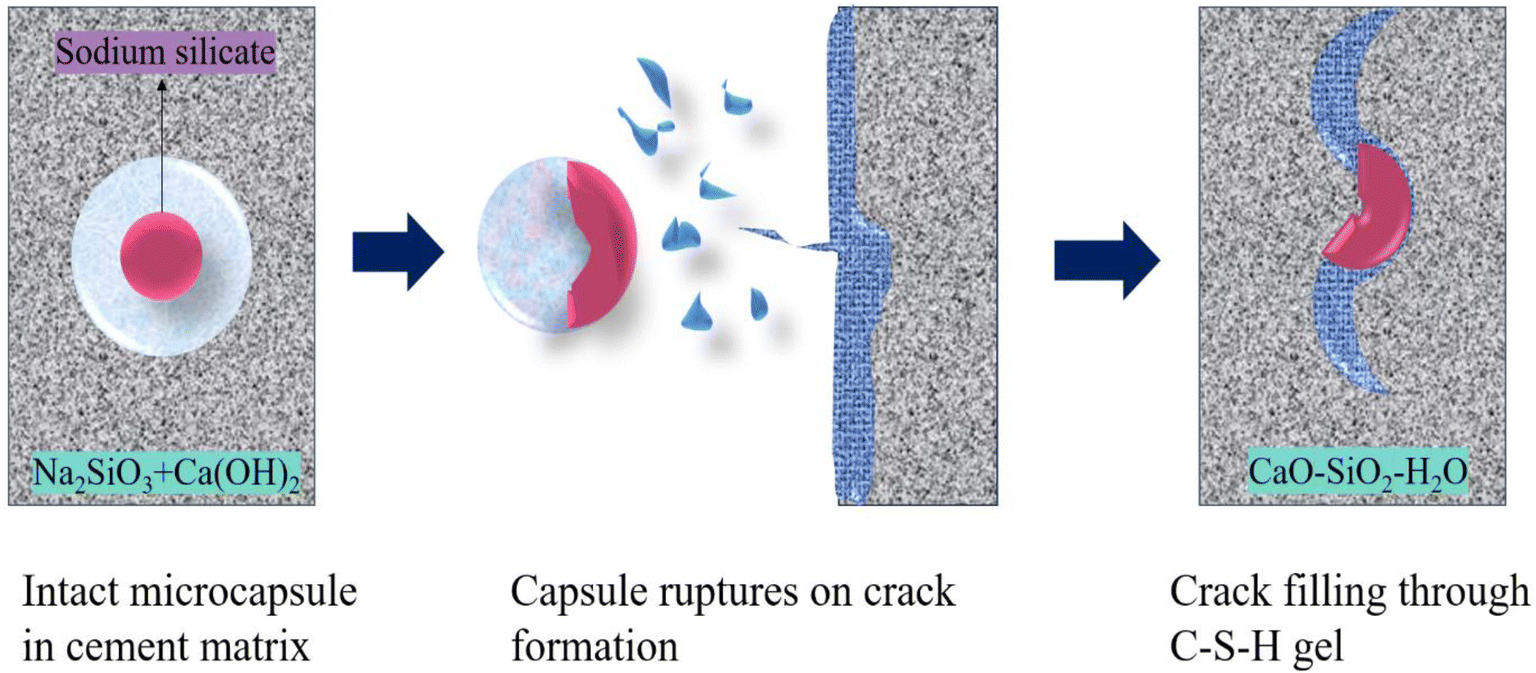 | ||
| Fig. 12 Mechanism of crack healing by sodium silicate microcapsules in cement matrix. | ||
Incorporating self-healing microcapsules into cement-based structures not only addresses crack repair but also enhances overall durability. These materials improve resistance to the ingress of harmful substances and extend service life through autonomous healing of microcracks.6 However, several limitations still exist. The healing capability of current microcapsule systems is generally confined to microcracks and is ineffective against larger or structural cracks. Furthermore, healing is often incomplete or partial, leaving residual porosity within the repaired zone, which can permit continued degradation over time. To address these challenges, future research may focus on developing hybrid systems or dual-action capsules capable of addressing both micro- and macrocracks. Additionally, incorporating self-sealing agents with enhanced bonding characteristics and enhanced volume-filling properties may significantly improve the efficacy and reliability of self-healing systems in concrete.
13.3. Strengthened mechanical properties
Concrete mechanical qualities are significantly improved by adding microcapsules, both before and after damage occurs. Concrete capacity to bear axial forces, such as the weight of the structure or external pressure, is determined by its compressive strength. It is among the most crucial characteristics of concrete, especially for structural applications. In structures designed to support massive loads, such as buildings, bridges, dams and roadways, compressive strength is vital. One important benefit of incorporating microcapsules into concrete is their ability to restore or even exceed the initial compressive strength after cracking. The capacity of SHC to regain its compressive strength once fractures emerge due to external pressures (such as vehicle loads or environmental conditions) ensures that structures can continue to support the loads for which they were initially designed. For instance, thanks to the microcapsule self-healing ability, a bridge or roadway that gradually develops microcracks may still maintain its load-bearing capacity.226 For structural elements primarily vulnerable to bending and tensile stresses such as beams, pavements, slabs and roofs, flexural strength is essential. Building beams and bridge girders, for example, are subjected to bending stresses that can cause tensile cracking. When fractures appear, concrete microcapsules break, discharging healing agents that seal the fissures and enhance the material's resistance to bending loads. This preserves the concrete flexural strength, ensuring the safety and longevity of the structure even after minor damage. Even small amounts of microcapsules can make concrete more resilient and economical by improving flexural strength and restoring compressive strength.227However, there are limitations to consider. The addition of microcapsules may sometimes lead to a decrease in compressive strength, as the capsules can act as voids, reducing the overall load-bearing capacity. Similarly, reduced flexural and tensile strength can result from a weak interface between the capsules and the cement matrix, creating stress concentrations. To address these challenges, future research should focus on using smaller capsules or tailoring the shell materials to enhance bonding with the cement matrix. Optimizing capsule size, content ratio and shell composition can minimize strength loss, while surface modification techniques of the capsules may improve their adhesion with the surrounding cement paste, leading to better mechanical performance without compromising self-healing functionality.
13.4. Prolonged infrastructure durability
Self-healing microcapsules in CBMs provide innovative solutions to enhance infrastructure lifespan, safety and durability. Roads, bridges and highways are examples of infrastructure continuously deteriorated by heavy traffic volumes, weather fluctuations and environmental conditions. Conventional concrete structures often require frequent repairs to address cracks and other damage caused by these stresses. SHC effectively extends infrastructure service life by autonomously healing minor cracks and damage without human intervention, thereby reducing the need for maintenance and repair activities. Advanced self-healing technologies have also been developed to prevent potholes without manual involvement. For instance, scientists have created an asphalt capable of self-repairing small cracks within an hour by bonding the material together, potentially increasing road longevity by 30%.6 Despite these potential advancements, limitations remain. There is a lack of long-term performance data, creating uncertainty about how well self-healing capsules will perform over decades under real-world conditions. Additionally, the high production and integration costs of microcapsules present challenges for their extensive implementation in large-scale infrastructure projects. To address these barriers, future efforts should focus on conducting long-term field studies and improving accelerated aging tests to better understand the durability of self-healing materials. Furthermore, increasing production-scale processes and utilizing cost-effective capsule materials will be essential to reduce overall costs and facilitate broader implementation.13.5. Protective coatings and waterproofing
Significant effectiveness for coating and waterproofing applications has been demonstrated through the incorporation of microcapsule technology into CBMs. Microcapsules, also referred to as self-healing coatings, can be designed to release healing agents in response to damage or fissures. In industries such as automotive, construction and aerospace, the concept of self-healing coatings plays a critical role in reducing repair frequency and enhancing surface durability. One notable type of microcapsule with high potential for detecting and repairing surface damage is the Thermosensitive Fluorescence (TSF) microcapsule. TSF microcapsules are structures able to respond to temperature variations. These capsules typically contain a material that becomes flowable upon heating or a healing agent activated by thermal changes. The outer shell is often composed of a thermo-responsive material that ruptures or degrades when surface temperatures rise due to external stress or impact. Upon rupture, the healing agent such as resin, polymer or adhesive is released into the crack, allowing the coating to autonomously seal the crack or surface damage.228In addition, water-absorbing microcapsules can swell upon exposure to moisture, healing fractures and preventing water ingress.213 For example: hydrophobic agents released from microcapsules can form a water-repellent barrier within cracks or on concrete surfaces, significantly reducing water penetration. This is particularly important for minimizing chloride ion transport, which is a major cause of steel reinforcement corrosion. By limiting water ingress, microcapsules reduce the chances of chloride ions reaching the reinforcement in the first place.229 Microcapsules can also promote the in situ precipitation of CaCO3 crystals within cracks or microfractures, enhancing waterproofing performance under cyclic wet–dry conditions. This effect is especially valuable in environments such as coastal structures, marine infrastructure and outdoor construction materials exposed to fluctuating moisture levels. However, some limitations persist. Capsule-based coatings may exhibit weak adhesion to concrete substrates, which can compromise their effectiveness in long-term protective applications. Additionally, limited water uptake capacity in certain formulations may result in delayed or incomplete healing, particularly under low-moisture conditions. To overcome these challenges, future advancements should focus on enhancing coating formulations with surface-compatible polymers or adhesion promoters to improve bonding strength. Furthermore, developing microcapsules with hydrogel-based or superabsorbent polymer (SAP) cores can increase moisture responsiveness and ensure timely, effective healing even under variable environmental conditions.
14. Conclusion
Microcapsule-based self-healing systems offer a potential and innovative solution for enhancing the durability and service life of CBMs. Through the integration of healing agents encapsulated in core–shell structures, these systems enable autonomous crack repair with minimal human intervention. The review highlights that among the various types, single-core, dual-core and multi-walled microcapsules each provide distinct advantages in terms of healing performance, release behavior and structural stability. While fabrication techniques such as in situ polymerization, interfacial polymerization, sol–gel, spray drying and coacervation each present unique advantages, the success of microcapsule-based systems greatly depends on factors such as pH, stirring rate, emulsifier type and shell integrity. Despite their many advantages, challenges like premature leaching, limited mechanical strength and shell brittleness remain critical barriers to widespread application. However, advancements in materials chemistry, shell engineering and evaluation techniques are progressively addressing these issues. With continued research, particularly in the development of environment-friendly, durable and scalable capsule systems, microcapsule-based self-healing concrete has strong potential to transform future construction practices by improving structural resilience and reducing maintenance costs.Abbreviations
| CBMs | Cement-based materials |
| SCMs | Supplementary cementitious materials |
| C–S–H | Calcium silicate hydrate |
| SAP | Super absorbent polymer |
| PMC | Polymer-modified concrete |
| MMA | Methyl methacrylate |
| CA | Cyanoacrylate |
| SHC | Self-healing concrete |
| PUF | Poly urea formaldehyde |
| PMMA | Polymethyl methacrylate |
| PEW | Paraffin polyethylene wax |
| PU | Polyurethane |
| UF | Urea formaldehyde |
| MUF | Melamine urea formaldehyde |
| HDI | Hexamethylene diisocyanate |
| CS | Colloidal silica |
| PETMP | Pentaerythritol tetrakis (3-mercaptopropionate) |
| TDI | Toluene di isocyanate |
| IPDI | Isophorone diisocyanate |
| SEM | Scanning electron microscopy |
| DLS | Dynamic light scattering |
| XRD | X-ray diffraction |
| LBL | Layer-by-layer |
| AFM | Atomic force microscopy |
| CLSM | Confocal laser scanning microscopy |
| FITC-Dextran | Fluorescein isothiocyanate-dextran |
| PVA | Polyvinyl alcohol |
| M w | Molecular weights |
| FTIR | Fourier transform infrared |
| EDX | Energy dispersive X-ray |
| TGA | Thermogravimetric analysis |
| PSS | Polystyrenesulfonate |
| PAH | Polyallylamine hydrochloride |
| ESEM | Environmental scanning electron microscopy |
| TEM | Transmission electron microscopy |
| SERS | Surface-enhanced Raman spectroscopy |
| RCP | Rapid chloride penetration (RCP) |
| CMOD | Crack mouth opening displacement |
| LDH | Layered double hydroxide |
| C–S–H | Calcium silicate hydrate |
| TSF | Thermosensitive fluorescence |
| LCA | Life cycle assessment |
| DCPD | Dicyclopentadiene |
| RH | Relative humidity |
| GWP | Global warming potential |
| AP | Acidification potential |
| EP | Eutrophication potential |
| ADPF | Abiotic depletion of fossil fuels |
| ODP | Ozone depletion potential |
| POCP | Photochemical oxidation potential |
Conflicts of interest
The authors declare that they have no known competing financial interests or personal relationships that could have appeared to influence the work reported in this paper.Data availability
This review article does not include any original data. All data referenced in the text are publicly available from the cited literature.Acknowledgements
The authors would like to acknowledge Department of Science and Technology (DST) Inspire, New Delhi (DST/INSPIRE/03/2022/006575/[IF220511]) for financial assistance.References
- L. Jiang, M. Wu, F. Du, D. Chen, L. Xiao, W. Chen, W. Du and Q. Ding, Polymers, 2024, 16, 3165 CrossRef CAS.
- P. Y. Wong, J. Mal, A. Sandak, L. Luo, J. Jian and N. Pradhan, Sci. Total Environ., 2024, 947, 174553 CrossRef CAS.
- I. M. Elgendy, N. E. Elkaliny, H. M. Saleh, G. O. Darwish, M. M. Almostafa, K. Metwally, G. Yahya and Y. A.-G. Mahmoud, J. Ind. Microbiol. Biotechnol., 2025, 52, kuae051 CrossRef CAS.
- L. Lv, Z. Yang, G. Chen, G. Zhu, N. Han, E. Schlangen and F. Xing, Constr. Build. Mater., 2016, 105, 487–495 CrossRef CAS.
- S. Ilyaei, R. Sourki and Y. H. A. Akbari, Crit. Rev. Solid State Mater. Sci., 2021, 46, 491–531 CrossRef CAS.
- B. Liu, M. Wu, W. Du, L. Jiang, H. Li, L. Wang, J. Li, D. Zuo and Q. Ding, Polymers, 2023, 15, 2718 CrossRef CAS PubMed.
- Z. Yang, J. Hollar, X. He and X. Shi, Cem. Concr. Compos., 2011, 33, 506–512 CrossRef CAS.
- L. Yuan, A. Gu and G. Liang, Mater. Chem. Phys., 2008, 110, 417–425 CrossRef CAS.
- D. Gardner, R. Lark, T. Jefferson and R. Davies, Case Stud. Constr. Mater., 2018, 8, 238–247 Search PubMed.
- S. Wang and M. W. Urban, Nat. Rev. Mater., 2020, 5, 562–583 CrossRef CAS.
- V. Cappellesso, D. di Summa, P. Pourhaji, N. Prabhu Kannikachalam, K. Dabral, L. Ferrara, M. Cruz Alonso, E. Camacho, E. Gruyaert and N. De Belie, Int. Mater. Rev., 2023, 68, 556–603 CrossRef CAS.
- D. Albuhairi and L. Di Sarno, Buildings, 2022, 12, 1196 CrossRef.
- S. Luhar and G. Suthar, J. Civ. Eng. Res., 2015, 5(3), 53–58 Search PubMed.
- A. Gojević, I. Netinger Grubeša, B. Marković, S. Juradin and A. Crnoja, Materials, 2023, 16, 7391 CrossRef.
- M. Amran, A. M. Onaizi, R. Fediuk, N. I. Vatin, R. S. Muhammad Rashid, H. Abdelgader and T. Ozbakkaloglu, Materials, 2022, 15, 3214 CrossRef CAS.
- S. R. White, N. R. Sottos, P. H. Geubelle, J. S. Moore, M. R. Kessler, S. R. Sriram, E. N. Brown and S. Viswanathan, Nature, 2001, 409, 794–797 CrossRef CAS.
- V. K. Thakur and M. R. Kessler, Polymer, 2015, 69, 369–383 CrossRef CAS.
- P. Zheng and T. J. McCarthy, J. Am. Chem. Soc., 2012, 134, 2024–2027 CrossRef CAS.
- H.-W. Reinhardt and M. Jooss, Cem. Concr. Res., 2003, 33, 981–985 CrossRef CAS.
- E. Schlangen, N. ter Heide and K. van Breugel, in Measuring, Monitoring and Modeling Concrete Properties, ed. M. S. Konsta-Gdoutos, Springer Netherlands, Dordrecht, 2006, pp. 273–284 Search PubMed.
- S. Granger, A. Loukili, G. Pijaudier-Cabot and G. Chanvillard, Cem. Concr. Res., 2007, 37, 519–527 CrossRef CAS.
- V. Lesovik, R. Fediuk, M. Amran, N. Vatin and R. Timokhin, Sustainability, 2021, 13, 9033 CrossRef CAS.
- F. B. da Silva, N. De Belie, N. Boon and W. Verstraete, Constr. Build. Mater., 2015, 93, 1034–1041 CrossRef.
- M. Kosarli, Composites, Part B, 2019, 171, 78–86 CrossRef CAS.
- K. Van Tittelboom and N. De Belie, Materials, 2013, 6, 2182–2217 CrossRef CAS.
- C.-M. Aldea, W.-J. Song, J. S. Popovics and S. P. Shah, J. Mater. Civ. Eng., 2000, 12, 92–96 CrossRef.
- C. Edvardsen, ACI Mater. J., 1999, 96, 448–454 CAS.
- M. Li and V. C. Li, ACI Mater. J., 2011, 108, 333–340 CAS.
- D. Homma, H. Mihashi and T. Nishiwaki, J. Adv. Concr. Technol., 2009, 7, 217–228 CrossRef CAS.
- H. X. D. Lee, H. S. Wong and N. R. Buenfeld, Adv. Appl. Ceram., 2010, 109, 296–302 CrossRef CAS.
- A. M. Abd_Elmoaty, Alexandria Eng. J., 2011, 50, 171–178 CrossRef CAS.
- Y. Ohama, Adv. Cem. Based Mater., 1997, 5, 31–40 CrossRef CAS.
- X. Yuan, W. Sun, X. Zuo and H. Li, J. Wuhan Univ. Technol., Mater. Sci. Ed., 2011, 26, 774–779 CrossRef CAS.
- E. Cailleux and V. Pollet, IN Proceedings of 2nd international conference on self-healing materials, Chicago, IL, USA, 2009.
- C. M. Dry, Cem. Concr. Res., 2000, 30, 1969–1977 CrossRef CAS.
- T. D. P. Thao, T. J. S. Johnson, Q. S. Tong and P. S. Dai, IES J., Part A: Civ. Struct. Eng., 2009, 2, 116–125 Search PubMed.
- H. M. Jonkers, In-Genium, 2021, 84–93 Search PubMed.
- J. Y. Wang, N. De Belie and W. Verstraete, J. Ind. Microbiol. Biotechnol., 2012, 39, 567–577 CrossRef CAS.
- H. Mihashi, Y. Kaneko, T. Nishiwaki and K. Otsuka, Trans. Jpn. Concr. Inst., 2000, 22, 441–450 Search PubMed.
- Z. Yang, J. Hollar, X. He and X. Shi, Transp. Res. Rec., 2010, 2142, 9–17 CrossRef CAS.
- K. Van Tittelboom, N. De Belie, D. Van Loo and P. Jacobs, Cem. Concr. Compos., 2011, 33, 497–505 CrossRef CAS.
- C. Joseph, A. D. Jefferson, B. Isaacs, R. Lark and D. Gardner, Mag. Concr. Res., 2010, 62, 831–843 CrossRef.
- L. Sun, W. Y. Yu and Q. Ge, Adv. Mater. Res., 2011, 250–253, 28–32 Search PubMed.
- T. Nishiwaki, M. Koda, M. Yamada, H. Mihashi and T. Kikuta, J. Adv. Concr. Technol., 2012, 10, 195–206 CrossRef CAS.
- C. Dry and W. McMillan, Smart Mater. Struct., 1996, 5, 297 CrossRef CAS.
- B. Dong, G. Fang, Y. Wang, Y. Liu, S. Hong, J. Zhang, S. Lin and F. Xing, Cem. Concr. Compos., 2017, 78, 84–96 CrossRef CAS.
- L. Jiang, M. Wu, F. Du, D. Chen, L. Xiao, W. Chen, W. Du and Q. Ding, Polymers, 2024, 16, 3165 CrossRef CAS.
- J.-S. Lee, H.-W. Kim, J.-S. Lee, H.-S. An and C.-M. Chung, Materials, 2021, 14, 6198 CrossRef CAS.
- Y. Shields, T. Van Mullem, N. De Belie and K. Van Tittelboom, Sustainability, 2021, 13, 12948 CrossRef CAS.
- M. Rajczakowska, K. Habermehl-Cwirzen, H. Hedlund and A. Cwirzen, J. Mater. Civ. Eng., 2019, 31, 03119001 CrossRef CAS.
- D. J. De Souza and L. F. M. Sanchez, Cem. Concr. Res., 2023, 172, 107219 CrossRef CAS.
- A. Al-Tabbaa, C. Litina, P. Giannaros, A. Kanellopoulos and L. Souza, Constr. Build. Mater., 2019, 208, 669–685 CrossRef.
- B. Dong, G. Fang, W. Ding, Y. Liu, J. Zhang, N. Han and F. Xing, Constr. Build. Mater., 2016, 106, 608–617 CrossRef CAS.
- W. Li, Z. Jiang and Z. Yang, Cem. Concr. Compos., 2017, 84, 48–61 CrossRef CAS.
- Y. Liu, A. Zhao, L. Sun, H. Zhou, G. Xia, Y. Hu and X. Zhu, J. Hazard. Mater., 2023, 443, 130156 CrossRef CAS.
- A. Kanellopoulos, P. Giannaros and A. Al-Tabbaa, Constr. Build. Mater., 2016, 122, 577–593 CrossRef CAS.
- J. Ress, U. Martin, J. Bosch and D. M. Bastidas, ACS Appl. Mater. Interfaces, 2020, 41, 46686–46700 CrossRef PubMed.
- M. M. Hassan, J. Milla, T. Rupnow, M. Al-Ansari and W. H. Daly, Transp. Res. Rec., 2016, 2577, 8–16 CrossRef.
- P. Giannaros, A. Kanellopoulos and A. Al-Tabbaa, Smart Mater. Struct., 2016, 25, 084005 Search PubMed.
- Isocyanates – Overview|Occupational Safety and Health Administration, https://www.osha.gov/isocyanates, (accessed 7 October 2025).
- L. Souza and A. Al-Tabbaa, Constr. Build. Mater., 2018, 184, 713–722 CrossRef CAS.
- V. Harish and B. S. Reddy, J. Neonat. Surg., 2025, 14, 516–521 Search PubMed.
- M. Nasehi Ghashouieh, M. Malekinejad and M. Amiri, Int. J. Concr. Struct. Mater., 2024, 18, 74 Search PubMed.
- F. Ahangaran, M. Hayaty, A. H. Navarchian and F. Picchioni, Polym. Test., 2017, 64, 330–336 CrossRef CAS.
- B. Liu, M. Wu, W. Du, L. Jiang, H. Li, L. Wang, J. Li, D. Zuo and Q. Ding, Polymers, 2023, 15, 2718 CrossRef CAS PubMed.
- Y. Li, J. Yu, Z. Cao, P. He, Q. Liu, X. Han and Y. Wan, Constr. Build. Mater., 2021, 304, 124616 CrossRef.
- E. Mostavi, S. Asadi, M. M. Hassan and M. Alansari, J. Mater. Civ. Eng., 2015, 27, 04015035 CrossRef.
- N. P. B. Tan, L. H. Keung, W. H. Choi, W. C. Lam and H. N. Leung, J. Appl. Polym. Sci., 2016, 133 CAS.
- W. Xiong, J. Tang, G. Zhu, N. Han, E. Schlangen, B. Dong, X. Wang and F. Xing, Sci. Rep., 2015, 5, 10866 CrossRef PubMed.
- O. Nguon, F. Lagugné-Labarthet, F. A. Brandys, J. Li and E. R. Gillies, Polym. Rev., 2018, 58, 326–375 CrossRef CAS.
- A. L. Wani, A. Ara and J. A. Usmani, Interdiscip. Toxicol., 2015, 8, 55–64 CrossRef CAS.
- Lead poisoning, https://www.who.int/news-room/fact-sheets/detail/lead-poisoning-and-health, (accessed 7 October 2025).
- H. Mu, Y. Deng, W. Zou, X. Yang and Q. Zhao, Coatings, 2024, 14, 410 CrossRef CAS.
- F. M. Galogahi, Y. Zhu, H. An and N.-T. Nguyen, J. Sci.: Adv. Mater. Devices, 2020, 5, 417–435 CAS.
- B. T. Lobel, D. Baiocco, M. Al-Sharabi, A. F. Routh, Z. Zhang and O. J. Cayre, ACS Appl. Mater. Interfaces, 2024, 16, 31 CrossRef.
- Y. Chang, X. Yan and Z. Wu, Colloid Interface Sci. Commun., 2023, 56, 100736 CrossRef CAS.
- Z. Tan, S. Chen, X. Peng, L. Zhang and C. Gao, Science, 2018, 360, 518–521 CrossRef CAS PubMed.
- M. G. Bah, H. M. Bilal and J. Wang, Soft Matter, 2020, 16, 570–590 RSC.
- G. Souradeep and H. W. Kua, J. Mater. Civ. Eng., 2016, 28, 04016165 CrossRef.
- W. Chen, X. Liu and D. W. Lee, J. Mater. Sci., 2012, 47, 2040–2044 CrossRef CAS.
- M. G. Bah, H. M. Bilal and J. Wang, Soft Matter, 2020, 16, 570–590 RSC.
- D. Y. Zhu, M. Z. Rong and M. Q. Zhang, Prog. Polym. Sci., 2015, 49–50, 175–220 CrossRef CAS.
- M. A. Ashraf, A. M. Khan, M. Sarfraz and M. Ahmad, Front. Chem., 2015, 3, 42 Search PubMed.
- L. R. Allain, K. Sorasaenee and Z. Xue, Anal. Chem., 1997, 69, 3076–3080 CrossRef CAS.
- R. Ciriminna, M. Sciortino, G. Alonzo, A. de Schrijver and M. Pagliaro, Chem. Rev., 2011, 111, 765–789 CrossRef CAS.
- H.-Y. Lee, J. Kim, C.-H. Hwang, H.-E. Kim and S.-H. Jeong, Macromol. Mater. Eng., 2018, 303, 1800213 CrossRef.
- P. Vidinha, V. Augusto, M. Almeida, I. Fonseca, A. Fidalgo, L. Ilharco, J. M. S. Cabral and S. Barreiros, J. Biotechnol., 2006, 121, 23–33 CrossRef CAS.
- A. Stunda-Zujeva, Z. Irbe and L. Berzina-Cimdina, Ceram. Int., 2017, 43, 11543–11551 CrossRef CAS.
- M. I. Ré, Drying Technol., 1998, 16, 1195–1236 Search PubMed.
- M.-I. Ré, Drying Technol., 2006, 24, 433–446 Search PubMed.
- S. Keshani, W. R. W. Daud, M. M. Nurouzi, F. Namvar and M. Ghasemi, J. Food Eng., 2015, 146, 152–162 Search PubMed.
- T. M. Ho, T. Truong and B. Bhandari, in Non-Equilibrium States and Glass Transitions in Foods, ed. B. Bhandari and Y. H. Roos, Woodhead Publishing, 2017, pp. 111–136 Search PubMed.
- D. Zhang, M. Zhang and X. Gu, in Bioactive Seaweeds for Food Applications, ed. Y. Qin, Academic Press, 2018, pp. 153–175 Search PubMed.
- Y. Wang, J. Zhou, X. Guo, Q. Hu, C. Qin, H. Liu, M. Dong and Y. Chen, Mater. Sci. Eng., C, 2017, 81, 13–19 CrossRef CAS PubMed.
- D. D. S. Bastos, M. D. P. Gonçalves, C. T. de Andrade, K. G. D. L. Araújo and M. H. M. da Rocha Leão, Food Bioprod. Process., 2012, 90, 683–692 CrossRef CAS.
- A. Dzionek, D. Wojcieszyńska, M. Adamczyk-Habrajska, J. Karczewski, I. Potocka and U. Guzik, Mater. Sci. Eng., C, 2021, 118, 111474 CrossRef CAS.
- A. Vedrtnam, K. Kalauni and M. T. Palou, Sustainability, 2025, 17, 5353 CrossRef CAS.
- A. Vedrtnam, M. T. Palou, H. Varela, D. Gunwant, K. Kalauni and G. Barluenga, Sci. Rep., 2025, 15, 9731 Search PubMed.
- A. Vedrtnam, D. Gunwant, K. Kalauni and M. T. Palou, Constr. Build. Mater., 2025, 474, 141175 CrossRef.
- H. Ullah, K. A. M. Azizli, Z. B. Man, M. B. C. Ismail and M. I. Khan, Polym. Rev., 2016, 56, 429–485 CrossRef CAS.
- L. Jiang, M. Wu, F. Du, D. Chen, L. Xiao, W. Chen, W. Du and Q. Ding, Polymers, 2024, 16, 3165 CrossRef CAS.
- Md. M. Adil, M. S. Rabbi and T. Tasnim, Alexandria Eng. J., 2025, 122, 1–17 CrossRef.
- C.-W. M. Yuen, J. Yip, L. Liu, K. Cheuk, C.-W. Kan, H.-C. Cheung and S.-Y. Cheng, Carbohydr. Polym., 2012, 89, 795–801 CrossRef CAS.
- R. Daniels and E. M. Mittermaier, J. Microencapsulation, 1995, 12, 591–599 CrossRef CAS.
- N. Chen, J. Zhang, L. Mei and Q. Wang, Langmuir, 2018, 34, 9711–9718 CrossRef CAS PubMed.
- Y. Jialan, Y. Chenpeng, Z. Chengfei and H. Baoqing, Prog. Org. Coat., 2019, 132, 440–444 CrossRef.
- Y. Li, X. Zhao, Y. Zu and Y. Zhang, Int. J. Pharm., 2015, 490, 324–333 CrossRef CAS PubMed.
- S. Lang and Q. Zhou, Prog. Org. Coat., 2017, 105, 99–110 CrossRef CAS.
- P. Pan, X. Yan and W. Peng, Coatings, 2022, 12, 1166 CrossRef CAS.
- A. Mohan and S. Poobal, Alexandria Eng. J., 2018, 57, 787–798 CrossRef.
- D. G. Bekas, K. Tsirka, D. Baltzis and A. S. Paipetis, Composites, Part B, 2016, 87, 92–119 CrossRef CAS.
- M. Tripathi, Rahamtullah, D. Kumar, C. Rajagopal and P. Kumar Roy, J. Appl. Polym. Sci., 2014, 131, 40572 CrossRef.
- Y. Zhao, W. Zhang, L. Liao, S. Wang and W. Li, Appl. Surf. Sci., 2012, 258, 1915–1918 CrossRef CAS.
- H. Jin, C. L. Mangun, D. S. Stradley, J. S. Moore, N. R. Sottos and S. R. White, Polymer, 2012, 53, 581–587 CrossRef CAS.
- H. Wang, S. Hu, S. Cai and F. Yu, Polym. Bull., 2014, 71, 2407–2419 CrossRef CAS.
- J. Ren, X. Wang, D. Li, N. Han, B. Dong and F. Xing, Composites, Part B, 2021, 223, 109138 CrossRef CAS.
- M. Zhang, D. Xu, X. Yan, J. Chen, S. Dong, B. Zheng and F. Huang, Angew. Chem., Int. Ed., 2012, 51, 7011–7015 CrossRef CAS.
- M. Sharma, D. Mondal, C. Mukesh and K. Prasad, Carbohydr. Polym., 2013, 98, 1025–1030 CrossRef CAS PubMed.
- D. Y. Zhu, M. Z. Rong and M. Q. Zhang, Polymer, 2013, 54, 4227–4236 CrossRef CAS.
- T. Kakuta, Y. Takashima, M. Nakahata, M. Otsubo, H. Yamaguchi and A. Harada, Adv. Mater., 2013, 25, 2849–2853 CrossRef CAS PubMed.
- L. Haiyan, W. Rongguo and L. Wenbo, J. Reinf. Plast. Compos., 2012, 31, 924–932 CrossRef.
- X. Liu, H. Zhang, J. Wang, Z. Wang and S. Wang, Surf. Coat. Technol., 2012, 206, 4976–4980 CrossRef CAS.
- S. Meure, D. Y. Wu and S. Furman, Acta Mater., 2009, 57, 4312–4320 CrossRef CAS.
- M. Kopeć, K. Szczepanowicz, G. Mordarski, K. Podgórna, R. P. Socha, P. Nowak, P. Warszyński and T. Hack, Prog. Org. Coat., 2015, 84, 97–106 CrossRef.
- A. R. Hamilton, N. R. Sottos and S. R. White, J. R. Soc., Interface, 2011, 9, 1020–1028 CrossRef.
- N. Saadatkhah, A. Carillo Garcia, S. Ackermann, P. Leclerc, M. Latifi, S. Samih, G. S. Patience and J. Chaouki, Can. J. Chem. Eng., 2020, 98, 34–43 CrossRef CAS.
- C. Zhang, H. Wang and Q. Zhou, Prog. Org. Coat., 2018, 125, 403–410 CrossRef CAS.
- I. A. Kartsonakis, A. Kontiza and I. A. Kanellopoulou, Appl. Sci., 2024, 14, 8396 CrossRef CAS.
- P. D. Tatiya, R. K. Hedaoo, P. P. Mahulikar and V. V. Gite, Ind. Eng. Chem. Res., 2013, 52, 1562–1570 CrossRef CAS.
- A. B. Chaudhari, P. D. Tatiya, R. K. Hedaoo, R. D. Kulkarni and V. V. Gite, Ind. Eng. Chem. Res., 2013, 52, 10189–10197 CrossRef CAS.
- Y. Ying, M. Hu, J. Han, W. Liu, B. Qi and J. Guo, J. Cleaner Prod., 2023, 395, 136465 CrossRef CAS.
- A. Beglarigale, Y. Seki, N. Y. Demir and H. Yazıcı, Constr. Build. Mater., 2018, 162, 57–64 CrossRef CAS.
- J. Ren, B. Liu, H. Li, J. Zhang, H. Zhu, M. Xiao, G. Liu and S. Luo, Polymers, 2022, 14, 2497 CrossRef CAS PubMed.
- I. L. Hia, E.-S. Chan, S.-P. Chai and P. Pasbakhsh, J. Mater. Chem. A, 2018, 6, 8470–8478 RSC.
- D. Xu, W. Chen and X. Fan, Constr. Build. Mater., 2020, 256, 119343 CrossRef CAS.
- N. Islam Khan, S. Halder, S. Das and M. S. Goyat, Mater. Today: Proc., 2018, 5, 2295–2299 CAS.
- L. Lv, E. Schlangen, Z. Yang and F. Xing, Materials, 2016, 9, 1025 CrossRef.
- S. Ilyaei, R. Sourki and Y. H. A. Akbari, Crit. Rev. Solid State Mater. Sci., 2021, 46, 491–531 CrossRef CAS.
- D. Sun, Q. Pang, X. Zhu, Y. Tian, T. Lu and Y. Yang, ACS Sustainable Chem. Eng., 2017, 5, 9881–9893 CrossRef CAS.
- P. Chindasiriphan, H. Yokota and P. Pimpakan, Constr. Build. Mater., 2020, 233, 116975 CrossRef CAS.
- L. Li, Y. Yu, Q. Liang, T. Liu, G. Jiang, G. Yang and C. Tang, Sustainability, 2025, 17, 6989 CrossRef CAS.
- L. Lv, Z. Yang, G. Chen, G. Zhu, N. Han, E. Schlangen and F. Xing, Constr. Build. Mater., 2016, 105, 487–495 CrossRef CAS.
- C. A. Fernandez, M. Correa, M.-T. Nguyen, K. A. Rod, G. L. Dai, L. Cosimbescu, R. Rousseau and V.-A. Glezakou, J. Mater. Sci., 2021, 56, 201–230 CrossRef CAS.
- X. Xie, S. Zhang, X. Qi, S. Guo and R. Ren, Processes, 2024, 12, 128 CrossRef CAS.
- S. Vantadori, A. Carpinteri, L.-P. Guo, C. Ronchei and A. Zanichelli, Composites, Part B, 2018, 147, 197–206 CrossRef CAS.
- L. Wang, S. H. Zhou, Y. Shi, S. W. Tang and E. Chen, Composites, Part B, 2017, 130, 28–37 CrossRef CAS.
- K. Sun, S. Wang, L. Zeng and X. Peng, Composites, Part B, 2019, 163, 282–289 CrossRef CAS.
- L. Chi, S. Lu and Y. Yao, Composites, Part B, 2019, 164, 26–36 CrossRef CAS.
- M. Jalal, E. Teimortashlu and Z. Grasley, Composites, Part B, 2019, 163, 497–510 CrossRef CAS.
- V. Corinaldesi and A. Nardinocchi, Composites, Part B, 2016, 98, 389–396 CrossRef CAS.
- D. Gardner, R. Lark, T. Jefferson and R. Davies, Case Stud. Constr. Mater., 2018, 8, 238–247 Search PubMed.
- F. U. A. Shaikh, Int. J. Concr. Struct. Mater., 2018, 12, 3 CrossRef.
- D.-Y. Yoo, S. Kim, M.-J. Kim, D. Kim and H.-O. Shin, J. Mater. Res. Technol., 2019, 8, 827–839 CrossRef CAS.
- T. Qureshi, A. Kanellopoulos and A. Al-Tabbaa, Constr. Build. Mater., 2018, 192, 768–784 CrossRef CAS.
- T. Qureshi, A. Kanellopoulos and A. Al-Tabbaa, Constr. Build. Mater., 2019, 194, 266–275 CrossRef CAS.
- T. S. Qureshi and A. Al-Tabbaa, Smart Mater. Struct., 2016, 25, 084004 CrossRef.
- T. S. Qureshi, A. Kanellopoulos and A. Al-Tabbaa, Constr. Build. Mater., 2016, 121, 629–643 CrossRef CAS.
- V. Wiktor and H. M. Jonkers, Cem. Concr. Compos., 2011, 33, 763–770 CrossRef CAS.
- T.-H. Ahn and T. Kishi, J. Adv. Concr. Technol., 2010, 8, 171–186 CrossRef CAS.
- K. Van Tittelboom, D. Snoeck, P. Vontobel, F. H. Wittmann and N. De Belie, Mater. Struct., 2013, 46, 105–121 CrossRef.
- W. Zhong and W. Yao, Constr. Build. Mater., 2008, 22, 1137–1142 CrossRef.
- V. C. Li, Y. M. Lim and Y.-W. Chan, Composites, Part B, 1998, 29, 819–827 CrossRef.
- V. C. Li, S. Wang and C. Wu, Mater. J., 2001, 98, 483–492 CAS.
- M. Wu, B. Johannesson and M. Geiker, Constr. Build. Mater., 2012, 28, 571–583 CrossRef.
- B. Gencturk, K. Hossain, A. Kapadia, E. Labib and Y.-L. Mo, Measurement, 2014, 47, 505–515 CrossRef.
- S. Jacobsen and E. J. Sellevold, Cem. Concr. Res., 1996, 26, 55–62 CrossRef CAS.
- T. Nishiwaki, H. Mihashi, B.-K. Jang and K. Miura, J. Adv. Concr. Technol., 2006, 4, 267–275 CrossRef CAS.
- J. Wang, K. Van Tittelboom, N. De Belie and W. Verstraete, Constr. Build. Mater., 2012, 26, 532–540 CrossRef.
- M. Kunieda, K. Shimizu, T. Eguchi, N. Ueda and H. Nakamura, J. Jpn. Soc. Civ. Eng., Ser. E2 (Mater. Concr. Struct.), 2011, 67, 508–521 Search PubMed.
- RILEM, 221-SHC, https://www.rilem.net/groupe/221-shc-self-healing-phenomena-in-cement-based-materials-228, (accessed 12 November 2025).
- P. Termkhajornkit, T. Nawa, Y. Yamashiro and T. Saito, Cem. Concr. Compos., 2009, 31, 195–203 CrossRef CAS.
- Standard Test Method for Electrical Indication of Concrete's Ability to Resist Chloride Ion Penetration, https://store.astm.org/c1202-18.html, (accessed 12 November 2025).
- K. Sisomphon, O. Çopuroğlu and A. L. A. Fraaij, Constr. Build. Mater., 2011, 25, 823–828 CrossRef.
- Standard Test Method for Compressive Strength of Cylindrical Concrete Specimens, https://store.astm.org/c0039_c0039m-21.html, (accessed 12 November 2025).
- K. Yoshikazu, F. Toshibumi, S. Yuji and I. Masanori, SPIE Proc., 2003 DOI:10.1117/12.482680.
- S. Qian, J. Zhou, M. R. de Rooij, E. Schlangen, G. Ye and K. van Breugel, Cem. Concr. Compos., 2009, 31, 613–621 CrossRef CAS.
- Standard Test Method for Flexural Performance of Fiber-Reinforced Concrete (Using Beam With Third-Point Loading), https://store.astm.org/c1609_c1609m-12.html, (accessed 12 November 2025).
- Standard Test Method for Linear-Elastic Plane-Strain Fracture Toughness KIc of Metallic Materials, https://store.astm.org/e0399-17.html, (accessed 12 November 2025).
- RILEM, RILEM – Recommendations, https://www.rilem.net/recommendations, (accessed 12 November 2025).
- J. Wang, K. Van Tittelboom, N. De Belie and W. Verstraete, Constr. Build. Mater., 2012, 26, 532–540 CrossRef.
- S. Granger, G. Pijaudier Cabot, A. Loukili, D. Marlot and J. C. Lenain, Cem. Concr. Res., 2009, 39, 296–302 CrossRef CAS.
- Y. Yang, M. D. Lepech, E.-H. Yang and V. C. Li, Cem. Concr. Res., 2009, 39, 382–390 CrossRef CAS.
- O. Zaid, J. Ahmad, M. S. Siddique, F. Aslam, H. Alabduljabbar and K. M. Khedher, Sci. Rep., 2021, 11, 12822 CrossRef CAS.
- F. Althoey, O. Zaid, M. M. Arbili, R. Martínez-García, A. Alhamami, H. A. Shah, A. M. Yosri, F. Althoey, O. Zaid, M. M. Arbili, R. Martínez-García, A. Alhamami, H. A. Shah and A. M. Yosri, Case Stud. Constr. Mater., 2023, 18, e01997 Search PubMed.
- A. R. Suleiman and M. L. Nehdi, Sci. Rep., 2021, 11, 7245 CrossRef CAS PubMed.
- A. R. Suleiman and M. L. Nehdi, Cem. Concr. Res., 2018, 111, 197–208 CrossRef CAS.
- A. R. Suleiman, A. J. Nelson and M. L. Nehdi, Cem. Concr. Compos., 2019, 103, 49–58 CrossRef CAS.
- D. Snoeck, J. Dewanckele, V. Cnudde and N. De Belie, Cem. Concr. Compos., 2016, 65, 83–93 CrossRef CAS.
- P. Azarsa, R. Gupta and A. Biparva, Cem. Concr. Compos., 2019, 99, 17–31 CrossRef CAS.
- R. P. Borg, E. Cuenca, E. M. Gastaldo Brac and L. Ferrara, J. Sustainable Cem.-Based Mater., 2018, 7, 141–159 CrossRef CAS.
- E. Tsangouri, F. A. Gilabert, N. De Belie, D. Van Hemelrijck, X. Zhu and D. G. Aggelis, Constr. Build. Mater., 2019, 218, 424–433 CrossRef.
- E. Cuenca, A. Tejedor and L. Ferrara, Constr. Build. Mater., 2018, 179, 619–632 CrossRef.
- E. Ryan, E. Burdette, R. Ankabrandt, R. Nidiffer and B. Buchanan, J. Mater. Civ. Eng., 2014, 26, 698–704 CrossRef CAS.
- M. Maes, K. Van Tittelboom and N. De Belie, Constr. Build. Mater., 2014, 71, 528–537 CrossRef.
- L. Ferrara, T. Van Mullem, M. C. Alonso, P. Antonaci, R. P. Borg, E. Cuenca, A. Jefferson, P.-L. Ng, A. Peled, M. Roig-Flores, M. Sanchez, C. Schroefl, P. Serna, D. Snoeck, J. M. Tulliani and N. De Belie, Constr. Build. Mater., 2018, 167, 115–142 CrossRef CAS.
- E. Gruyaert, B. Debbaut, D. Snoeck, P. Díaz, A. Arizo, E. Tziviloglou, E. Schlangen and N. De Belie, Smart Mater. Struct., 2016, 25, 084007 CrossRef.
- W. Tang, O. Kardani and H. Cui, Constr. Build. Mater., 2015, 81, 233–247 CrossRef.
- C. Litina, G. Bumanis, G. Anglani, M. Dudek, R. Maddalena, M. Amenta, S. Papaioannou, G. Pérez, J. L. García Calvo, E. Asensio, R. Beltrán Cobos, F. Tavares Pinto, A. Augonis, R. Davies, A. Guerrero, M. Sánchez Moreno, T. Stryszewska, I. Karatasios, J.-M. Tulliani, P. Antonaci, D. Bajare and A. Al-Tabbaa, Materials, 2021, 14, 2024 CrossRef CAS.
- K. J. Shin, W. Bae, S.-W. Choi, M. W. Son and K. M. Lee, Constr. Build. Mater., 2017, 151, 907–915 CrossRef.
- K. Van Tittelboom, N. De Belie, W. De Muynck and W. Verstraete, Cem. Concr. Res., 2010, 40, 157–166 CrossRef CAS.
- N. D. Belie, B. V. Belleghem, Y. Ç. Erşan and K. V. Tittelboom, MATEC Web Conf., 2019, 289, 01003 CrossRef.
- D. Snoeck and N. De Belie, Constr. Build. Mater., 2015, 95, 774–787 CrossRef.
- M. A. Reda and S. E. Chidiac, Materials, 2022, 15, 7302 CrossRef CAS.
- M. A. Abdallah, A. A. Elakhras, R. M. Reda, H. E.-D. M. Sallam and M. Moawad, Buildings, 2023, 13, 2010 CrossRef.
- H. R. Fattahi Amirdehi, S. M. N. Ghoreishi, M. R. M. Aliha, S. Hesami, P. Jafari Haghighatpour and N. Choupani, Fatigue Fract. Eng. Mater. Struct., 2024, 47, 3858–3873 CrossRef CAS.
- M. Harirsaz, A. Ghanbari and G. T. Mehrjardi, J. Eng. Geol., 2024, 18, 664–680 Search PubMed.
- T. C. Powers , Portland Cement Assoc R & D Lab Bull.
- A. R. G. de Azevedo, S. Klyuev, M. T. Marvila, N. Vatin, N. Alfimova, T. E. S. de Lima, R. Fediuk and A. Olisov, Fibers, 2020, 8, 69 CrossRef CAS.
- R. J. Jamshidi, C. B. Lake, P. Gunning and C. D. Hills, J. Mater. Civ. Eng., 2016, 28, 04016162 CrossRef.
- Y. Zhu, Y. Yang and Y. Yao, Constr. Build. Mater., 2012, 34, 522–530 CrossRef.
- S. Jacobsen, J. Marchand and H. Hornain, Cem. Concr. Res., 1995, 25, 1781–1790 CrossRef CAS.
- S. Jacobsen, E. J. Sellevold and S. Matala, Cem. Concr. Res., 1996, 26, 919–931 CrossRef CAS.
- Q. Mao, J. Chen, W. Wu, R. Li, S. Shi, Z. Wang and S. Cui, Polymers, 2023, 15, 428 CrossRef CAS.
- B. Van Belleghem, P. Van den Heede, K. Van Tittelboom and N. De Belie, Materials, 2017, 10, 5 CrossRef.
- J. I. T. Garces, I. J. Dollente, A. B. Beltran, R. R. Tan and M. A. B. Promentilla, Cleaner Eng. Technol., 2021, 4, 100147 CrossRef.
- S. Rengaraju, N. Arena, F. Kanavaris, A. Jędrzejewska and A. Al-Tabbaa, J. Build. Eng., 2025, 111, 113105 CrossRef.
- S. Rengaraju and A. Al-Tabbaa, MATEC Web Conf., 2023, 378, 06004 CrossRef CAS.
- H. Li, C. Zhang, X. Zou, W. Li, G. Zhao, Q. Ma, P. Guo and Y. Sheng, Int. J. Pavement Res. Technol., 2021, 659–675 CAS.
- S. An, M. W. Lee, A. L. Yarin and S. S. Yoon, Chem. Eng. J., 2018, 344, 206–220 CrossRef CAS.
- Y. Wang, G. Fang, W. Ding, N. Han, F. Xing and B. Dong, Sci. Rep., 2015, 5, 18484 CrossRef CAS PubMed.
- J. Huang, Y. Zhu, Y. Ma, J. Hu, H. Huang, J. Wei and Q. Yu, Materials, 2021, 14, 5517 CrossRef CAS PubMed.
- R.-G. Du, Y. Guo, Y.-F. Zhu, W. Chen, X.-P. Wang and C.-J. Lin, Meet. Abstr., 2012, MA2012-02, 2116–2116 CrossRef.
- Y. Zhong, X. Wang, F. Zou, W. Tian, G. Guo and C. Ma, Cem. Concr. Compos., 2025, 163, 106203 CrossRef CAS.
- C. De Nardi, D. Gardner, D. Cristofori, L. Ronchin, A. Vavasori and T. Jefferson, Mater. Des., 2023, 230, 111939 CrossRef CAS.
- Z. Wan, Y. Xu, Y. Zhang, S. He and B. Šavija, Eng. Fract. Mech., 2022, 267, 108471 CrossRef.
- W. Hao, H. Hao, H. Kanwal and S. Jiang, JRM, 2022, 11, 1687–1697 Search PubMed.
- S. Jiang, Z. Lin, C. Tang and W. Hao, Materials, 2021, 14, 4866 CrossRef CAS PubMed.
- H. Zhang, Q. Wang, Y. Li and Y. Zhao, Gels, 2022, 8, 583 CrossRef CAS PubMed.
- J. Gilford, M. M. Hassan, T. Rupnow, M. Barbato, A. Okeil and S. Asadi, J. Mater. Civ. Eng., 2014, 26, 886–896 CrossRef CAS.
| This journal is © The Royal Society of Chemistry 2026 |