Chenyang Zha†
a,
Cheng Ji†ac,
Junjie Zhangb,
Liming Shen*a,
Xiaoyan Zhanga,
Shuai Dongb and
Ningzhong Bao*ac
aState Key Laboratory of Materials-Oriented Chemical Engineering, College of Chemical Engineering, Nanjing Tech University, Nanjing, Jiangsu 210009, P. R. China. E-mail: lshen@njtech.edu.cn; nzhbao@njtech.edu.cn; Fax: +86-25-83172244; Tel: +86-25-83172244
bDepartment of Physics, Southeast University, Nanjing, Jiangsu 211189, P. R. China
cJiangnan Graphene Research Institute, Changzhou, Jiangsu 213159, P. R. China
First published on 26th October 2016
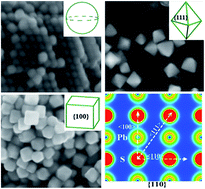
Monodisperse PbS nanocrystals with controlled spherical, octahedral, and cubic shapes were synthesized via simple thermal decomposition of lead–oleate complex precursors by simply changing the synthetic procedure and the Pb and S precursor concentrations. Spherical nanocrystals with mixed facets exposed and octahedral nanocrystals with {111} facets exposed were synthesized through a “hot-injection” process. Cubic nanocrystals with {100} facets exposed were prepared via a “heating-up” growth process. The three types of monodisperse PbS nanocrystals showed shape- and facet-dependent photoresponse behaviors. The thin film of cubic PbS nanocrystals with {100} facets exposed exhibited the largest current enhancement (91.3%) after irradiation as compared with the other two shapes. Meanwhile, the results of density functional theory calculation confirmed that the photoexcited electrons can be driven in the {100} facets with mixed Pb/S atoms through σ bonding consisting of the overlapping s(Pb 6s)–p(S 3p) orbitals. This significantly shortens the carrier transfer distance and reduces the carrier recombination. The present facet engineering strategy can be extended to the other semiconducting nanocrystal syntheses and solar energy conversion applications.
Thermal decomposition of organometallic compounds in high-boiling-point solvents has been developed to successfully prepare a variety of high-quality monodisperse nanocrystals with good crystallinity and uniform size.10–13 The procedures for thermal decomposition can be classified into two types. One is the well-known “hot-injection” of highly reactive reactants into high-boiling-point solvents, yielding a variety of noble semiconductor nanocrystals or magnetic nanocrystals.14–26 The other is the “heating up” of homogeneous reaction systems containing high-boiling-point solvents and dissolved reactants.14–17,26–29 The synthesis of monodisperse PbS nanocrystals generally involves the use of surfactants such as trioctylphosphine oxide, organometallic compounds, and the reactants PbO, PbCl2, Pb(S2CNEt2)2, etc.30,31 We have reported on simple “hot-injection” or “heating-up” thermolysis routes for the synthesis of a variety of monodisperse nanocrystals with chalcogenide14–17,24–28,42–44 and oxide14,29 components in a high-boiling-point solvent utilizing organometallic complex precursors, particularly, the precursors based on inexpensive, nontoxic metal salts.14–17,43,44 Although nanocrystals with various shapes and sizes have long been known, technological applications of various-shaped nanocrystals have been limited because of the lack of better control of product yield, size uniformity, and shape selectivity.
In the present study, we report the efficient synthesis of monodisperse shape- and facet-controlled PbS nanocrystals through both “hot-injection” and “heating-up” thermolysis of the inexpensive, nontoxic Pb–oleate complex precursor. The new Pb–oleate precursor is formed via low-temperature reaction of lead nitrate with sodium oleate. The formation and growth processes of PbS nanocrystals have been analyzed, which generally involve two main steps: an initial nucleation and subsequent crystal growth.32 The concentration of the crystalline clusters formed at the initial nucleation stage is critical to directing the product shape of the crystals. The subsequent crystal growth is controlled by either surface thermodynamics or kinetics, depending on reaction conditions such as the precursor concentration, supersaturation of monomers, temperature, etc.33 Therefore, the underlying growth mechanisms for controlling the nanocrystal shapes involve the initial nucleation of seeds in the form of the thermodynamically most stable cuboctahedral shape14–16,25,44 and a kinetically controlled anisotropic growth, which is induced through blocking of the desired facet orientations by suitable capping ligands,13–17 selective oxidative etching of undesired facets,43,44 and element-specific anisotropic growth.46 Based on a fundamental analysis of the formation mechanism of PbS nanocrystals, PbS nanocrystals with precisely tailored spherical, octahedral, and cubic shapes have been obtained by simply varying the type and amount of solvents. The self-assembled PbS nanocrystal particles exhibit interesting enhanced shape-dependent optical absorption in UV-visible light regions. A current enhancement is observed under illumination for all the three samples. Among all three samples, the photocurrent exhibits an increasing trend in the order of spherical < octahedral < cubic, which is likely due to different carriers' excitation, separation, and transfer rates caused by the different exposed {111}, {100}, or mixed-crystal facets, as confirmed by the results of density functional theory (DFT) computational calculations and the crystal structural analysis.
CH(CH2)7COONa, 98%), 1-octadecene (ODE, CH3(CH2)15CH
CH2, 90%), dodecanethiol (Dod-SH, CH3(CH2)10CH2SH, 98%), and sublimed sulfur (S, chemically pure) were used as received without any further purification.
m. The lattice optimization was performed using the function GGA-PBESOL with the energy of 1 × 10⁻⁵ eV per atom, a maximum force of 0.03 eV per atom, a maximum stress of 0.05 GPa, and a maximum displacement of 1 × 10⁻³. The optimized bond length of Pb–S is 2.965 Å, which agrees well with the experimental value. The calculated energy band structure of the PbS crystal shows that PbS is an intrinsic semiconductor with a direct band gap of 0.44 eV between the valence and the conduction bands at the Fermi level.
To better understand the formation of PbS nanocrystals, we have monitored the reaction progress of octahedral PbS nanocrystals as a function of reaction temperature. The crystallinity and structure of the intermediate products were characterized by XRD. Fig. 2a–d and 3, respectively, show the XRD patterns and SEM images of the intermediate products. When the Dod-SH (5 mL) was injected to the high-boiling-point solvent (26 mL) containing Pb(C18H33O2)2 (2 g) at 230 °C, the reaction solution immediately turned black. The XRD pattern (Fig. 2a) indicates that the main product formed at 10 s is PbS. Some additional peaks that can be assigned to the remaining precursor or some intermediates appeared. As seen in SEM image (Fig. 3a), the product formed at 10 s contains very fine PbS nanocrystals and a lot of flake-like agglomerates that are likely composed of the remaining precursor or the intermediates. By prolonging the reaction time, the peak intensity of PbS increases, while the intensity of impurities decreases, and eventually, all impurity peaks disappear after 40 min reaction, as shown in Fig. 2b–d. For the products formed at 40 min (Fig. 2d), all the peaks well match with the standard XRD pattern (JCPDS No. 05-0592) of the face-centered cubic (fcc)-structured PbS with a lattice constant of a = 5.936 Å. No peaks of other impurities are detected, revealing the high purity of the as-synthesized products. Correspondingly, the SEM images of the products formed at 20, 30, and 40 min (Fig. 3b–d) show a significant increase in the size of the PbS nanocrystals. Meanwhile, the flake-like agglomerates disappeared after 30 min reaction, agreeing with the XRD result (Fig. 2c) containing an almost-clean XRD pattern of PbS and a trace impurity peak at low degrees. Further 10 min aging triggers the Ostwald ripening process and results in the formation of relatively larger octahedral PbS nanocrystals with uniform size (Fig. 3d). Similar results were observed for the spherical and cubic nanocrystal samples. As seen in Fig. 2e and f, all diffraction peaks of the spherical and cubic nanocrystal samples well match with the standard XRD pattern of fcc PbS, indicating the high purity of the as-synthesized products.
![]() | ||
| Fig. 2 XRD patterns of the intermediate products formed at (a) 10 s, (b) 20 min, (c) 30 min, and (d) 40 min during the formation of octahedral PbS nanocrystals shown in Fig. 1c and d. XRD patterns of (e) spherical and (f) cubic PbS nanocrystals shown in Fig. 1a, b, e and f, respectively. Standard XRD pattern (JCPDS No. 05-0592) of PbS is also provided. | ||
Many reports have mentioned that PbS crystals generally nucleate as tetra-decahedron seeds, exposing six {100} and eight {111} facets.6,7 The difference in relative growth rates, corresponding to different surface energies, of the six {100} side facets (six side faces of a cube) and the eight {111} facets (eight corners of a cube) of the growth bases determines the anisotropic growth and structure of the PbS nanoarchitectures.17–19 By adjusting the Pb/S ratio, octahedra bounded by the most stable {111} planes can be formed at the Pb/S ratio of 1.73, and perfect cubes bounded by the less stable {100} planes will result if the Pb/S ratio is reduced to 0.58.20 In the present study, spherical and octahedral PbS nanocrystals were prepared via “hot-injection” process, through thermodynamically and kinetically controlled growth, respectively; cubic PbS nanocrystals were prepared via “heating-up” process, through kinetically controlled growth. The formation processes of these three types of PbS nanocrystals are illustrated in Fig. 4.
As shown in Fig. 4, in the “hot injection” process, spherical PbS nanocrystals were formed in 14 mL ODE, while octahedral PbS nanocrystals were obtained in 26 mL ODE. The less ODE used, the higher concentrations of Pb and S were in the reaction system. The addition of 5 mL sulfur source Dod-SH into the homogeneously mixed 2 g Pb(C18H33O2)2 and 14 mL ODE at 230 °C resulted in a rapid nucleation with abundant crystalline monomers. The subsequent growth of the PbS nanocrystals was via the Ostwald ripening process under thermodynamic equilibrium conditions. The growth rates for the {111} and {100} facets were comparable, and no preferred growth direction for the PbS nuclei was observed. Therefore, the spherical shape was formed for minimum surface energy. In contrast, the homogeneous mixture of 2 g Pb(C18H33O2)2 and 26 mL ODE had much more diluted Pb concentration. Upon the “hot injection” of 5 mL Dod-SH into Pb-containing solution at 230 °C, the Dod-SH drops were surrounded by the low-concentration Pb(C18H33O2)2–ODE solvent, which effectively lowered the supersaturation degree of crystalline monomers. Meanwhile, the unreacted Dod-SH molecules selectively bound to the {111} facets of nearby crystalline monomers so that the six {100} facets of PbS crystalline monomers grew faster than the eight {111} facets and eventually disappeared, resulting in the formation of octahedral PbS nanocrystals that are thermodynamically unstable. The Dod-SH molecules can stabilize the {111} facets via μ3–Pb3–SR bridging bonds, while they can also weakly bind to the {100} facets via a single bonding mode.47 Similar formation mechanism was also observed by Cheon et al., who did “hot injection” of Pb(S2CNEt2)2 precursor into phenyl ether solvent containing Dod-SH as both sulfur source and capping agent.48 In the “heating-up” process, although the reactants were mixed prior to the reaction, the concentration of crystalline monomers was controlled by the heating process and thus maintained a very low supersaturation degree for the nanocrystal growth. Since the surface energy of the {111} facets was higher than that of the {100} facets,34–38 relatively fast growth along the 〈111〉 direction resulted in the kinetically controlled formation of cube-shaped nanocrystals with {100} facets exposed.
The photoresponse performance of the PbS nanocrystals have been studied in order to evaluate their potential as an active layer for photovoltaic applications.15,16,39–41,45–50 For this purpose, we prepared PbS thin films by spray-painting colloidal ink on ITO glass using hexane as solvent. The fast solvent evaporation allowed the sprayed ink to form densely packed nanocrystal thin films. The thin films were then annealed under N2 atmosphere at 300 °C for 30 min to eliminate the capping ligands and improve the conductivity. As seen in Fig. 5a–c, the nanocrystals within annealed thin films maintained their original morphologies, which is important for evaluating the shape- and facet-dependent photoresponse performance. The insets in Fig. 5a–c clearly show the stable morphology of three different structures after annealing treatment. The cell performance of photoresponse devices with ITO/PbS/ITO structure was evaluated by measuring current–voltage (I–V) curves both in the dark and under AM1.5 irradiation (100 mW cm−2). As shown in Fig. 5d, the octahedral PbS nanocrystal thin film exhibits very low photocurrent (∼0 mA) both in the dark and under irradiation even at 1 V, indicating the insulating characteristics of the sample; the spherical PbS nanocrystal thin film shows higher dark current compared to that of the octahedral, and the photocurrent was slightly enhanced upon irradiation. The cubic PbS nanocrystal thin film has the highest dark current and the greatest enhancement (91.3%) after irradiation.
The observed shape-dependent photoresponse activities are primarily determined by the material properties including crystal structure, electronic structure, and exposed crystal facets, which strongly influence the photon absorption and the excitation, separation, and transport of charge carriers. The electronic structure of the fcc PbS was investigated by plane-wave density functional theory (DFT) calculations.50,51,56 Fig. 6a shows the calculated density of states and energy band dispersion of fcc PbS. The PbS is an intrinsic semiconductor with a direct band gap of about 0.44 eV, and the top of the valence band consists of hybridized (Pb 6s)–(S 3p) orbitals,51,53,56 whereas the bottom of the conduction band is primarily composed of Pb 6p orbitals. The hybridized (Pb 6s)–(S 3p) orbitals form three equivalent σ bonds, namely px, py, and pz, through the s(Pb 6s)–p(S 3p) overlap. It is instructive to examine the hybridization of the Pb and S atomic orbitals within this bonding scheme, which includes Pb 6s with S 3px, 3py, or 3pz, as shown in Fig. 6b. Take the case of the hybridization in the [001] direction for example, the wave function of σ band is φ(L,σ) ≥ α (6s) + (1 − α)1/2 (3pz), where L is angular momentum and α is orbital wave function.51–57 The S 3pz and Pb 6s atomic orbitals all are orthogonal to each other. Thus, the condition for the normalization of φ(L,σ) is α2 + [(1 − α)1/2]2 = 1 as shown in the insert of Fig. 6a. This hybridization orients the S atom charge density towards the Pb atom along the z-axis, leading to an increased overlap between Pb and S atomic wave functions. This strong hybridization between the Pb 6s and S 3pz orbitals increases the bonding energy of the Pb–S bond in the [001] direction, enhancing the covalence of the bond and increasing the electron density conducive to carrier transport in the [001] direction.
![]() | ||
| Fig. 6 (a) The density of states and the energy band dispersion of the fcc PbS. The inset of Fig. 6a shows the σ bonding through the s(Pb 6s)–p(S 3p) overlap, revealing the valance band structure. (b) Illustration of the orientations of sulfur p orbitals px, py, and pz, corresponding to [100], [100], and [001] directions, respectively, in the fcc structure. (c) Ball-and-stick model of the crystal structure of fcc PbS with 〈100〉 and 〈111〉 directions marked. (d) Partial electron density difference maps of the PbS {110}, {100}, and {111} facets. The 〈100〉, 〈110〉, and 〈111〉 directions are marked on the {110} plane. | ||
The band structure indicates that the electrons are primarily photoexcited from the hybridized states in the directions of three equivalent σ bonds and then move to the Pb 6p orbitals. As seen in Fig. 6c, the rock salt-structured PbS has a fcc crystal structure in which the {100} facets contain both Pb/S atoms, but the {111} facets contain either Pb or S atoms. Obviously, the {100} facets are preferred for carrier transport. Moreover, the orientations of hybridized (Pb 6s)–(S 3p) orbitals align with the crystal orientations of [100], [010], and [001] directions in the fcc structure. Therefore, the mixed Pb/S atoms and strong σ bonds of {100} facets can greatly shorten the carrier transport distance and reduce the carrier recombination.56,57
We have analyzed the electron densities based on the electron state between 0.445 eV and the Fermi level. The partial electron density of states was obtained by projecting the wave functions onto spherical harmonics centered on each atom with a radius of 2.965 Å for both Pb and S atoms. These radii of Pb and S atoms were chosen because they give rise to reasonable space filling. The calculation with the removal of Pb 6s and S 3s (and S 3p) states omits the asymmetric density of the orbitals, but does consider the contribution of these orbitals and the overlap or binding of different orbitals to the states. Fig. 6d shows the electron density difference map based on the {110} plane with 〈100〉, 〈110〉, and 〈111〉 directions marked. On the 〈100〉 directions, Pb and S atoms are closely aligned to each other; on the 〈110〉 directions, the same type of atoms (Pb or S atoms) are aligned on a line with larger spacing distance; on the 〈111〉 directions, the same type of atoms (Pb or S atoms) have the fastest spacing distance. As shown in Fig. 6d, the Pb and S atoms on the {100} facets are closely packed with one sulfur atom located at the center of the rock salt structure, which results in the highest atom density and maximum electron cloud overlapping area, while the {110} facets have apparently lower atom density and the {111} facets have the lowest atom density with one type of atom on each layer. Obviously, the {100} facets of fcc PbS have more advantages for electronic delivery due to the closely packed Pb/S atoms and strong σ bonds consisting of the overlapped s(Pb 6s)–p(S 3p) bands, which can greatly shorten the carrier transfer distance and reduce the carrier recombination.9,50–57 Therefore, the cubic PbS nanocrystals with exposed {100} facets exhibit the best photoresponse properties among the three kinds of PbS nanocrystals studied in the present work.
Footnote |
| † These authors contributed equally to this work. |
| This journal is © The Royal Society of Chemistry 2016 |