DOI:
10.1039/C6RA23235C
(Paper)
RSC Adv., 2016,
6, 99361-99366
Ionic liquid crystals with novel thermal properties formed by the gemini surfactants containing four hydroxyl groups†
Received
18th September 2016
, Accepted 12th October 2016
First published on 13th October 2016
Abstract
Modification of the molecular structures of surfactants is a feasible way to construct ionic liquid crystals (ILCs) with novel properties. Five quaternary ammonium gemini surfactants with different spacers, whose head groups were substituted by four hydroxyethyl groups, abbreviated as 12(2OH)-s-12-(2OH) (s = 3, 4, 5, 6, 8), were prepared. The mesomorphic behaviors of these gemini surfactants were investigated by polarized optical microscopy (POM), differential scanning calorimetry (DSC), X-ray diffraction (XRD) and temperature-dependent FT-IR spectroscopy. These surfactants form smectic A (SmA) phases, the region of which is dependent on the spacer length. The presence of suitable spacer length and multiple hydroxyl groups is helpful in stabilizing the mesophases. Noticeably, because of synergistic effect of the spacer and the hydroxyl groups, the phase enthalpy change of SmA to crystal transitions can be slowly released below the phase transition temperature. This interesting discovery, which has never been reported in ILC systems formed by small molecular weight surfactants, could pave the way for special applications of ILCs in the area of sustained-release materials of heat and could widen the application of ionic liquid crystals.
1 Introduction
Liquid crystals are important anisotropic soft materials and are considered as the fourth state of matter. Ionic liquids, melting at temperatures below 100 °C, are liquid salts that consist of cations and anions. They have wide applications as catalysts for chemical reactions, solvents for chemical synthesis and heat transfer fluids.1–3 In recent years, ionic liquid crystals (ILCs), which are usually regarded as the combination of ionic liquids and liquid crystals, emerged and achieved a great deal of attention4,5 because of their prospective applications as ion-conductive materials,6–8 optoelectronics,9–11 ordered reaction media,12,13 and self-assembled nano-materials.14 Ionic surfactants are one of a number of important compounds that can form ILCs upon heating. The interactions between the ionic head groups and their corresponding opposite ions are the key factors that stabilize the thermotropic mesophases.4 Modification of the molecular structure of surfactants is a helpful method used to improve the properties of resultant ILCs.
Gemini surfactants (dimeric surfactants) are comprised of two head groups and two alkyl chains linked by a spacer at or near their head groups. Compared with those of the conventional surfactants, the complex molecular structures of gemini surfactants bring out novel aggregates in solutions.15,16 Some ionic gemini surfactants are also investigated for their abilities in forming thermotropic ILCs with fascinating mesophases and properties.17–22 The spacer is the featured structure in a gemini surfactant molecule. It was recently reported that the spacer type was responsible for the temperature range of the mesophase formed by a series of imidazolium-based gemini compounds.23 Obviously, a spacer, which is located in the head group region, can affect the interactions between the head groups and their counter ions and thus the crystalline state of a gemini surfactant with its steric chemistry. However, the detailed relationship between the spacer structure and the mesophase state of gemini surfactants still needs to be discovered. Moreover, the introduction of hydrogen bonds is becoming an effective method10,20,24–26 to stabilize or optimize the thermotropic liquid crystalline structures. The work carried out by Wei et al.20 indicates that a series of quaternary ammonium gemini surfactants with a hydroxyl group at the spacer have relatively low melting points and form thermotropic mesophases over a broad temperature range. Since hydrogen bonds are important molecular interactions, it is thus expected that the existence of multiple hydroxyl groups in one surfactant molecule would bring out interesting properties in formed ILCs.
To learn more about the ILC behavior formed by gemini surfactants and to produce more ILC systems with novel properties, a series of quaternary ammonium gemini surfactants containing four hydroxyl groups, namely alkanediyl-α,ω-bis[di(2-hydroxylethyl) dodecylammonium bromide], abbreviated as 12(2OH)-s-12(2OH), where s = 3, 4, 5, 6, and 8, were investigated for their thermotropic ionic liquid crystal behavior. The molecular structure of these surfactants is shown in Fig. 1. The four hydroxyl groups are located near the quaternary ammonium head groups and are responsible for the formed mesophase structures. After detailed research with thermogravimetric analysis (TGA), differential scanning calorimetry (DSC), polarizing optical microscopy (POM), temperature-dependent X-ray powder diffraction (XRD) and temperature-dependent FT-IR, the synergistic effects of the spacer structure and the hydroxyl groups are revealed.
 |
| | Fig. 1 The molecular structures of 12(2OH)-s-12(2OH), s = 3, 4, 5, 6, 8. | |
2 Experimental section
2.1 Materials
1-Bromododecane (98%), diethanolamine (99.5%), 1,3-dibromopropane (99%), 1,4-dibromobutane (98%), 1,5-dibromopentane (98%), 1,6-dibromohexane (97%), and 1,8-dibromooctane (98%) were obtained from Aladdin Reagent Co., Ltd. (Shanghai, China) and were used as received. Other common solvents or reagents used were analytical grade.
2.2 Synthesis
The detailed synthetic process is included in the ESI.† The brief synthetic procedure is described as follows.
1-Bromododecane and diethanolamine were first mixed and reacted at 60 °C to obtain N-dodecyldiethanolamine, which was purified by vacuum distillation. N-Dodecyldiethanolamine, α,ω-dibromoalkane and ethanol were mixed in a sealed system. The reaction was carried out at 110–120 °C for 72 h. After the cooling and removal of ethanol, the residue was recrystallized with ethanol and ethyl acetate three times. The final product was obtained as a white solid after being dried under vacuum.
2.3 Thermal analysis
The thermogravimetric analysis (TGA) was carried out with a NETZSCH TG 209F1 Iris instrument with the scanning rate of 5 °C min−1 under a N2 atmosphere. The differential scanning calorimetry (DSC) was performed with a Pyris Diamond DSC system under a N2 atmosphere. The highest temperature for the DSC tests was set to 160–170 °C for 12(2OH)-s-12(2OH), s = 3, 4, 5, 6, 8 to make sure that no decomposition occurred. The sample was held for 2 min at the beginning and the end of a DSC scanning process, respectively. The scanning rate was 5 °C min−1 over the investigated temperature range under a N2 atmosphere. The time to finish a heating or cooling DSC process is about 32 min for 12(2OH)-s-12(2OH), s = 3, 5, 6, 8 and 34 min for 12(2OH)-4-12(2OH).
2.4 The polarizing optical microscope (POM) observation
The liquid crystalline textures of 12(2OH)-s-12(2OH) were observed with a polarizing optical microscope (Leica DMLP) equipped with a hot stage (Linkam THM 600/S) and a digital camera. The heating or cooling rate was 2 °C min−1.
2.5 XRD measurements
The XRD analysis at room temperature was carried out with a Bruker D8 Focus diffractometer equipped with a small-angle attachment. The step size was 0.01°. The temperature-dependent XRD patterns were recorded using a Rigaku D/MAX-RC X-ray powder diffractometer with Cu Kα radiation (λ = 1.5408 Å). The samples were tested at the chosen temperature under vacuum after waiting for 10 min. The step size was 0.02°.
2.6 The temperature-dependent infrared spectroscopy
The temperature-dependent infrared spectroscopy was measured by a Perkin-Elmer Spectrum 2000 FT-IR spectrometer equipped with a high-temperature attachment. Each sample was kept for 10 min at the chosen temperature before test.
3 Results and discussion
3.1 Thermal studies
The decomposition temperatures of the five compounds are 212.8 °C, 225.8 °C, 220.4 °C, 220.1 °C, and 213.2 °C, according to the TGA results (see ESI Fig. S2†). The highest temperatures in the DSC measurements are thus lower than these values to avoid any decomposition of these surfactants. According to the first heating curve of the DSC traces (ESI Fig. S3†), the solid phase transitions of the five compounds with the temperature are shown in the simple Bar-graph of Fig. 2 for convenient comparison. For 12(2OH)-3-12(2OH) with the spacer containing the three carbon atoms, there exist two endothermic peaks in the first heating curve in the temperature range examined. The first peak corresponds to the crystal to crystal transition. The second peak at 92.8 °C indicates the crystal to mesophase (SmA) transition as identified by the XRD measurements. Wei et al.20 have investigated a quaternary ammonium gemini surfactant C12-3(OH)–C12, whose spacer is decorated with only one hydroxyl group. Although the alkyl chain length is the same as 12(2OH)-3-12(2OH), C12-3(OH)–C12 forms an SmA phase until 120 °C. This comparison reveals that rationally adjusting the hydroxyl group location or increasing the number of hydroxyl groups is helpful to further decrease the temperature of mesophase formation and expand the mesophase region. The temperature range for the SmA phase of 12(2OH)-3-12(2OH) is at least 67 °C, which is rare to find among the ILC systems formed by simple quaternary ammonium surfactants.27
 |
| | Fig. 2 Phase transitions of 12(2OH)-s-12(2OH). Abbreviations: Iso = isotropic liquid; Cr, Cr1 = crystal; SmA = smectic A phase. | |
The spacer of 12(2OH)-4-12(2OH) is only one carbon atom more than that of 12(2OH)-3-12(2OH). However, the behavior shows obvious differences. Although with the positive effect of hydroxyl groups in forming mesophases, the crystal to SmA phase transition was observed at 159.3 °C. As a result, the SmA phase region was sharply narrowed. This indicates that 12(2OH)-4-12(2OH) can form stable crystals, whose lattice is strong enough to resist the influence of high temperatures. A further increase in the spacer length again reduces the lattice strength of the surfactant crystals. 12(2OH)-5-12(2OH) forms an SmA phase at 95 °C, and 12(2OH)-6-12(2OH) forms an SmA phase at 90 °C and melts at 140 °C. 12(2OH)-8-12(2OH) directly forms an isotropic liquid after two overlapped phase transitions at approximately 104 °C. This indicates that the extremely long spacer in a gemini surfactant molecule is unable to keep the order of the SmA state. They may fold and entangle with each other in the solid state, as in their aqueous solutions.28
In summary, it is clearly observed that the solid phase transitions of these gemini surfactants are affected by their spacer length. With the increase of spacer length from s = 3 to s = 6, the formation temperature of the SmA phase was first increased and then generally decreased. The length of the spacer in a gemini surfactant molecule is able to modulate the distance between the two head groups and affect the crystal strength. As a result, different phase transition behavior was observed.
3.2 XRD investigations
The smectic phases formed by surfactants are usually lamellar structures which can be divided into a hydrophobic sublayer and hydrophilic ionic sublayers. The hydrophobic sublayer is composed of the hydrophobic chains held together by van der Waals interactions. The ionic head groups together with their bounded opposite ions form the hydrophilic ionic sublayer. The two sublayers with different polarity are periodically arranged. Such smectic structures are widely recognized in the mesophase state formed by ionic surfactants.29–31 To gain more details on the molecular arrangements of 12(2OH)-s-12(2OH) in the liquid crystalline state, variable-temperature X-ray diffraction was performed. The results are shown in Fig. 3. For their solid state at room temperature, sets of Bragg diffractions can be found both in the small-angle and medium angle region, indicating their well-developed three-dimensional crystal structures. It is worth mentioning that the XRD pattern of 12(2OH)-4-12(2OH) at room temperature clearly shows reciprocal spacing in the ratio of 1
:
2
:
3
:
4 at low angle region. This indicates again that 12(2OH)-4-12(2OH) forms more uniform and stable lamellar structures compared with the other compounds. XRD measurements were then performed at the temperatures corresponding to their liquid crystalline region to identify the type of the mesophases. For 12(2OH)-s-12(2OH) (s = 3, 4, 5, 6), only one sharp peak appeared in the small-angle region of the XRD patterns. Such a pattern can be assigned to the typical SmA phase. Additionally, a diffuse peak, which is caused by the melting of alkyl chains, appears at approximately 120 °C for s = 3, 5, 6 and at 165 °C for s = 4. No sharp peaks at small angle region were observed at the XRD pattern of 12(2OH)-8-12(2OH). This means that 12(2OH)-8-12(2OH) transforms to the isotropic state after the phase transition at 104 °C. The smectic state of these surfactants can be further confirmed by POM observations. As shown in Fig. 4, some fan-like textures can be clearly observed for 12(2OH)-3-12(OH) at 120 °C and 12(2OH)-4-12(OH) at 165 °C, indicating the presence of the SmA phase. Because the samples are very viscous, the textures of 12(2OH)-5-12(OH) and 12(2OH)-6-12(OH) are not well-developed.
 |
| | Fig. 3 X-ray diffraction patterns of 12(2OH)-s-12(2OH) (s = 3, 4, 5, 6, 8) at different temperatures. | |
 |
| | Fig. 4 POM texture observations of 12(2OH)-s-12(2OH) (s = 3, 4, 5, 6). | |
The layer thickness of the SmA phase can be calculated from the 001 line of the XRD pattern as shown in Fig. 3. The variation of the layer spacing with the spacer length of these compounds, except for 12(2OH)-8-12(2OH), is listed in Table 1. Although the carbon atoms contained in the spacer have been varied from 3 to 6, the layer spacing is kept almost the same. In other words, the length of the spacer has little effect on the layer thickness of the formed liquid crystalline phase. This information reveals that the orientation of the spacer in the lamellar structures of the SmA phase is perpendicular to the layer normal. The arrangement and configurations of the gemini surfactant molecules in the smectic state are thus possible to speculate. The proposed molecular arrangements of the gemini surfactants in the SmA phases are shown in Fig. 5. Tanford32 proposed an equation to calculate the length of a fully extended zigzag alkyl chain: lc (Å) = 1.5 + 1.265nc, where nc denotes the carbon number. The hydrophobic chain of these compounds with 12 carbons is calculated to be 16.7 Å. The hydrophilic sublayer was unknown until now. According to the reported results on the ionic liquid crystals formed by quaternary ammonium surfactants,20 the hydrophilic sublayer is estimated to be 8–9 Å. The calculated layer thickness of the liquid crystal phases based on the molecular arrangement manner is approximately 24.7–25.7 Å. This value is smaller than the experimental results of approximately 30 Å. However, this is reasonable when considering that the interdigitated alkyl chains are melted in the liquid crystal state and cannot totally overlap with each other.
Table 1 The layer spacing d (Å) of 12(2OH)-s-12(2OH) with different spacer length in the SmA phases
| s |
t/°C |
Phase |
d-Spacing (Å) |
| 3 |
120 |
SmA |
29.7 |
| 4 |
165 |
SmA |
30.9 |
| 5 |
120 |
SmA |
29.4 |
| 6 |
120 |
SmA |
30.4 |
| 8 |
120 |
Iso |
— |
 |
| | Fig. 5 The proposed molecular arrangement of surfactants in their SmA state (a = hydrophilic ionic sublayers; b = hydrophobic sublayer; c = d-spacing). | |
3.3 An unusual phase transition behavior
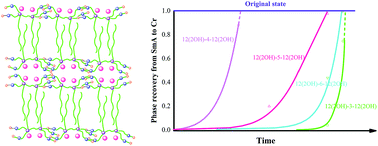
While investigating the phase transition behavior of 12(2OH)-s-12(2OH) with DSC methods, an unexpected phenomenon was observed. Taking 12(2OH)-3-12(2OH) as an example, whose DSC curves and DSC time-dependent effect curves are shown in Fig. 6, at the first heating curve and upon increasing the temperature, the sample experiences two solid phase transitions revealed by two endothermic peaks. However, when this sample was cooled, no exothermic peaks were observed. The sequential second heating and second cooling processes also indicated that a phase transition was absent. During this phenomenon, it was usually assumed that the first heating process eliminated the thermal history of the sample, and the state without any phase transitions corresponds to the steady state of the thermodynamics. However, if the sample experiencing the above process was stored in a drier for 3 days at room temperature, the repeated performance of the heating process indicates that a peak with small enthalpy appear in the DSC traces. This indicates that the phase recovery of 12(2OH)-3-12(2OH) from the SmA state to the crystal state could occur at a slow rate. This sample was then cooled and further stored in the drier for another 7 days at room temperature. The repeated heating DSC traces show that two endothermic peaks similar to the original ones were observed. The total enthalpy change of the recovered sample indicated that after waiting for 7 days, the sample was recovered to about 74.8% of the original state (estimated from the total enthalpy change ΔH shown in Table 2). For 12(2OH)-5-12(2OH), two partially overlapped peaks appeared at 90 °C. Similar to that of 12(2OH)-3-12(2OH), no peaks were observed at the first cooling curve. At the sequential second heating curve, two peaks with small enthalpy change at 64.4 °C and 92.5 °C were observed (ESI Fig. S3†). The two peaks become more obvious when the sample was stored in the drier for 3 hours at room temperature. The 12(2OH)-5-12(2OH) sample experiencing the first heating and the first cooling processes can almost recover to the original state after storage in a drier for 3 days at room temperature, indicating that the recovery rate of 12(2OH)-5-12(2OH) is obviously faster than that of 12(2OH)-3-12(2OH). For the 12(2OH)-6-12(2OH), the peaks corresponding to the melting point appeared at 140 °C for the first heating curve and at 128 °C for the first cooling curve. The phase recovery from the SmA phase to the crystal is similar to that of 12(2OH)-3-12(2OH). After the sample experiences the heating and cooling processes, the original state was regained after 7 days. Among the investigated compounds, 12(2OH)-4-12(2OH) shows the fastest phase recovery rate. An obvious endothermic peak appears in the DSC traces of the immediately implemented second heating process.
 |
| | Fig. 6 The DSC curves of 12(2OH)-s-12(2OH) (s = 3, 4, 5, 6) at different temperatures. | |
Table 2 The phase transition temperatures and the corresponding total enthalpy changes of 12(2OH)-s-12(2OH) at the heating curves after different sample storage time
| s |
Sample storage time |
t/°C |
Total ΔH (kJ mol−1) |
| 3 |
Original sample |
68.4, 91.3 |
56.3 |
| 3 days |
82.9 |
2.3 |
| 7 days |
65.2, 87.7 |
42.1 |
| 4 |
Original sample |
159.3 |
64.2 |
| About 34 min |
154.2 |
56.6 |
| 5 |
Original sample |
84.9, 95 |
82.2 |
| 3 hours |
64.4, 92.5 |
16.5 |
| 3 days |
86.9, 93.4 |
80.4 |
| 6 |
Original sample |
90.0, 140 |
37.3 |
| 3 days |
92.8 |
16.4 |
| 7 days |
88.1, 136.3 |
37.9 |
The phenomenon observed in 12(2OH)-3-12(2OH), 12(2OH)-5-12(2OH) and 12(2OH)-6-12(2OH) samples indicates that the SmA phases formed by these compounds can be kept for a long time at temperatures lower than the mesophase region. The phase recovery from the SmA phase to the crystal state happened slowly, and the enthalpy change of phase transition was also slowly released. This has never been reported in ILC systems formed by ionic surfactants.33–35 The prerequisite condition in such systems is that the crystal lattice is weak, which is related to the spacer length near the head group. In a 12(2OH)-4-12(2OH) molecule, a spacer containing four carbon atoms is beneficial in forming strong crystals as illustrated above. As a result, 12(2OH)-4-12(2OH) shows the fastest recovery rate. Comparatively, the crystal lattices of 12(2OH)-s-12(2OH), s = 3, 5, and 6 are weak as revealed by the fact that they form the SmA phase at rather lower temperatures. As a result, the SmA phases formed by these surfactants are stable enough to resist the effect of low temperature over a period of time.
Furthermore, hydroxyl groups are well known to form hydrogen bonds, which may contribute to the unusual properties of these systems. To confirm this, temperature-dependent infrared spectroscopy was carried out. The results are shown in Fig. 7. At 25 °C, the peaks at 3230 cm−1, 3229 cm−1 and 3285 cm−1 for 12(2OH)-3-12(2OH), 12(2OH)-5-12(2OH) and 12(2OH)-6-12(2OH), respectively, were attributed to the stretching of the associated hydroxyl groups. Their shoulder peaks, which almost merged and indicated with a dotted ellipse, were attributed to the interactions between hydroxyl groups and bromide anions.24 It is worth noting that the shoulder peak of 12(2OH)-4-12(2OH) at 3332 cm−1 was especially obvious, indicating that the hydroxyl groups interact strongly with the bromide ions in 12(2OH)-4-12(2OH) crystals. This may be responsible for the strong crystal lattice and high phase transition temperature of 12(2OH)-4-12(2OH). When the temperature was increased to their liquid crystalline region, the peaks corresponding to the stretching of the associated hydroxyl groups become wider and shift to higher wavenumbers. No peaks above 3600 cm−1 corresponding to the presence of free hydroxyl groups were observed. This means that the hydrogen bonds between the surfactant molecules still work even in the liquid crystalline state at a high temperature. In the SmA state, a polymer-like structure composed of 12(2OH)-s-12(2OH) molecules containing four hydroxyl groups is expected because of the presence of multi-connected hydrogen bonds. As a result, the crystallization tendency of 12(2OH)-3-12(2OH), 12(2OH)-5-12(2OH) and 12(2OH)-6-12(2OH) was depressed.
 |
| | Fig. 7 The IR spectrum of 12(2OH)-s-12(2OH) (s = 3, 4, 5, 6) at different temperatures. | |
The unusual phase transition behavior of 12(2OH)-s-12(2OH), that is, the slow release behavior of the phase enthalpy, may endow this kind of ILC system with novel potential applications. It is well known that the phase transition heat is usually much larger than the specific heat of the materials. In the heat storage and heat transfer processes, it is highly effective at utilizing the phase transition processes. However, the phase heat of most materials would be released immediately when the temperature is lower than the phase transition temperature, which is hard to control and apply in practical industrial processes. The ILC systems presented here reveal that the phase transition heat can be slowly released at the temperatures lower than the phase transition temperatures, showing good sustained-release properties.
4 Conclusions
The ILC properties of a series of gemini surfactants, whose head groups contain four hydroxyl groups, were investigated. The spacer locates near the ionic head groups of these surfactants, affecting tremendously the ILC properties. The presence of multiple hydroxyl groups facilitates the ILC phase formation at rather low temperatures. Unusual phase transition behavior, the slow release behavior of phase enthalpy below the phase transition temperature, has been discovered in 12(2OH)-s-12(2OH) samples. This phenomenon is the synergistic results of spacer length and multiple hydroxyl groups and is rare to find in ILC systems formed by low-molecular weight surfactants. In the future, novel sustained-release materials of phase transition heat based on ILC materials, are expected in heat storage and transfer applications.
Acknowledgements
Supports from the National Natural Science Foundation of China (31300486) and the open research fund of Jiangsu Province Biomass Energy and Materials Laboratory (JSBEM201501) are gratefully acknowledged.
Notes and references
- A. S. Amarasekara, Chem. Rev., 2016, 116, 6133–6183 CrossRef CAS PubMed.
- H. Niedermeyer, J. P. Hallett, I. J. Villar-Garcia, P. A. Hunt and T. Welton, Chem. Soc. Rev., 2012, 41, 7780–7802 RSC.
- R. Patel, M. Kumari and A. B. Khan, Appl. Biochem. Biotechnol., 2014, 172, 3701–3720 CrossRef CAS PubMed.
- K. Binnemans, Chem. Rev., 2005, 105, 4148–4204 CrossRef CAS PubMed.
- K. Goossens, K. Lava, C. W. Bielawski and K. Binnemans, Chem. Rev., 2016, 116, 4643–4807 CrossRef CAS PubMed.
- K. Hoshino, M. Yoshio, T. Mukai, K. Kishimoto, H. Ohno and T. Kato, J. Polym. Sci., Part A: Polym. Chem., 2003, 41, 3486–3492 CrossRef CAS.
- T. Ichikawa, M. Yoshio, A. Hamasaki, T. Mukai, H. Ohno and T. Kato, J. Am. Chem. Soc., 2007, 129, 10662–10663 CrossRef CAS PubMed.
- M. Yoshio, T. Kato, T. Mukai, M. Yoshizawa and H. Ohno, Mol. Cryst. Liq. Cryst., 2004, 413, 2235–2244 CAS.
- F. Lo Celso, I. Pibiri, A. Triolo, R. Triolo, A. Pace, S. Buscemi and N. Vivona, J. Mater. Chem., 2007, 17, 1201–1208 RSC.
- J. Y. Z. Chiou, J. N. Chen, J. S. Lei and I. J. B. Lin, J. Mater. Chem., 2006, 16, 2972–2977 RSC.
- Q. Zhang, X. Wang, C. J. Barrett and C. G. Bazuin, Chem. Mater., 2009, 21, 3216–3227 CrossRef CAS.
- T. D. Do and A. R. Schmitzer, RSC Adv., 2015, 5, 635–639 RSC.
- X. J. Wang, M. Sternberg, F. T. U. Kohler, B. U. Melcher, P. Wasserscheid and K. Meyer, RSC Adv., 2014, 4, 12476–12481 RSC.
- J. W. Gilman, W. H. Awad, R. D. Davis, J. Shields, R. H. Harris, C. Davis, A. B. Morgan, T. E. Sutto, J. Callahan, P. C. Trulove and H. C. DeLong, Chem. Mater., 2002, 14, 3776–3785 CrossRef CAS.
- D. P. Acharya, H. Kunieda, Y. Shiba and K. Aratani, J. Phys. Chem. B, 2004, 108, 1790–1797 CrossRef CAS.
- K. Jennings, I. Marshall, H. Birrell, A. Edwards, N. Haskins, O. Sodermann, A. J. Kirby and P. Camilleri, Chem. Commun., 1998, 1951–1952 RSC.
- S. Fuller, N. N. Shinde, G. J. T. Tiddy, G. S. Attard and O. Howell, Langmuir, 1996, 12, 1117–1123 CrossRef CAS.
- M. Sikiric, I. Smit, L. Tusek-Bozic, V. Tomasic, I. Pucic, I. Primozic and N. Filipovic-Vincekovic, Langmuir, 2003, 19, 10044–10053 CrossRef CAS.
- Y. J. Wang and E. F. Marques, J. Phys. Chem. B, 2006, 110, 1151–1157 CrossRef CAS PubMed.
- Z. B. Wei, X. L. Wei, D. Z. Sun, J. Q. Liu and X. J. Tang, J. Colloid Interface Sci., 2011, 354, 677–685 CrossRef CAS PubMed.
- M. Dreja, S. Gramberg and B. Tieke, Chem. Commun., 1998, 1371–1372 RSC.
- T. H. Zhou and J. X. Zhao, J. Colloid Interface Sci., 2009, 338, 156–162 CrossRef CAS PubMed.
- M. Yang, K. Stappert and A. V. Mudring, J. Mater. Chem. C, 2014, 2, 458–473 RSC.
- M. Arkas, D. Tsiourvas, C. M. Paleos and A. Skoulios, Chem.–Eur. J., 1999, 5, 3202–3207 CrossRef CAS.
- T. H. Zhou and J. X. Zhao, J. Colloid Interface Sci., 2009, 331, 476–483 CrossRef CAS PubMed.
- B. L. Song, S. B. Shang and Z. Q. Song, J. Colloid Interface Sci., 2012, 382, 53–60 CrossRef CAS PubMed.
- K. Iwamoto, Y. Ohnuki, K. Sawada and M. Sen, Mol. Cryst. Liq. Cryst., 1981, 73, 95–103 CrossRef CAS.
- R. Zana, M. Benrraou and R. Rueff, Langmuir, 1991, 7, 1072–1075 CrossRef CAS.
- Z. B. Wei, X. L. Wei, X. H. Wang, Z. N. Wang and J. Liu, J. Mater. Chem., 2011, 21, 6875–6882 RSC.
- A. E. Bradley, C. Hardacre, J. D. Holbrey, S. Johnston, S. E. J. McMath and M. Nieuwenhuyzen, Chem. Mater., 2002, 14, 629–635 CrossRef CAS.
- D. J. Abdallah, A. Robertson, H. F. Hsu and R. G. Weiss, J. Am. Chem. Soc., 2000, 122, 3053–3062 CrossRef CAS.
- C. Tanford, J. Phys. Chem., 1972, 76, 3020–3024 CrossRef CAS.
- R. Klein, H. Dutton, O. Diat, G. J. T. Tiddy and W. Kunz, J. Phys. Chem. B, 2011, 115, 3838–3847 CrossRef CAS PubMed.
- A. Tolentino, A. Alla, A. M. de Ilarduya, M. Font-Bardia, S. Leon and S. Munoz-Guerra, RSC Adv., 2014, 4, 10738–10750 RSC.
- S. Kohmoto, Y. Someya and K. Kishikawa, Liq. Cryst., 2010, 37, 209–216 CrossRef CAS.
Footnote |
| † Electronic supplementary information (ESI) available. See DOI: 10.1039/c6ra23235c |
|
| This journal is © The Royal Society of Chemistry 2016 |
Click here to see how this site uses Cookies. View our privacy policy here.