DOI:
10.1039/C6RA20098B
(Paper)
RSC Adv., 2016,
6, 115101-115112
Triester–amide based on thiophene and ricinoleic acid as an innovative primary plasticizer for poly(vinyl chloride)
Received
9th August 2016
, Accepted 1st November 2016
First published on 15th November 2016
Abstract
It is necessary to replace phthalate plasticizers which are used in PVC as they are found to be carcinogenic and hazardous to human health. They can be substituted with other bio based plasticizers which are non toxic. We have synthesized a triester amide of thiophene (THPRABA) with ricinoleic acid (RA) and benzoic acid (BA) reacting with a diester derivative of 2-aminothiophene (THP) which itself is procured by using Gewald multicomponent synthesis. The structure of the THPRABA was confirmed by IR, 1H NMR, acid value, and hydroxyl value. The DOP was replaced entirely by THPRABA as a plasticizer for PVC in all samples with a varying proportion of THPRABA from 10 phr to 50 phr with a fixed heat stabilizer content as 5 phr. The incorporation of THPRABA shows a decrease in tensile and mechanical properties, glass transition temperature (Tg), crystallinity and shore hardness properties. The yellowness index shows darkening of PVC sheets with a decrease in whiteness. Hence it can replace DOP in plasticizer application successfully in some application areas of PVC.
Introduction
Polyvinyl chloride (PVC) is a widely used thermoplastic polymer and can be used in both rigid and flexible forms. In 2013 around 39 million tons of PVC were produced annually; having a growth rate of 5% and approximately 17–18% of total polymer production worldwide. PVC is the most widely used plastic after polyethylene (PE) and polypropylene (PP).1 Though PVC is rigid and difficult to process, different additives like plasticizers, stabilizers, impact modifiers, anti oxidants, fillers, lubricants, and pigments make the processing simple. The addition of different additives makes the PVC suitable for different commercial and healthcare materials. PVC is mainly used in different applications like furniture, pipes, clothing material, packaging, healthcare units, flooring,2 cables and wires and so on.
Plasticizers are of two types; primary and secondary. Primary plasticizers are more compatible with polar PVC chains and can be used in sufficiently high quantity. On the other hand secondary plasticizers are less compatible with PVC. They are used as supplementary for primary plasticizer for PVC to improve flexibility and softness of PVC and to decrease the production cost. Plasticizers are added to PVC in 10 to 60 phr.3
The esters of phthalic acid, adipic acid, trimellitic acid of aliphatic or some branch chain alcohols and some epoxidised oils are used as PVC plasticizers.4 The carbon long chain in plasticizer separates the two PVC chains from each other and thus imparts flexibility. As distance between two chains is increased the cohesive forces between adjacent polymer chains are suppressed making them process able for different commercial application. The most famous PVC plasticizer is dioctyl phthalate famously known as DOP. It comprises of about 85% of total phthalate consumption all over world. Other phthalates which are also used are dibutyl phthalate (DBP), dinonyl phthalate (DNP), etc.5
Phthalates are diesters of phthalic acid with alcohols like 2-ethyl hexanol, butanol, nonanol etc. with aromatic ring as backbone attached with long alkyl chains. Similarly trimellitates which are triesters of trimellitic acid are also aromatic ring containing triester group are new development in PVC plasticizers. Apart from aromatic ring for ester backbone some aliphatic esters are also working efficiently as plasticizers for PVC like adipates, citrate,6etc.
Due to revelation of toxic nature of phthalate based plasticizers in PVC it has become essential to replace it with bio based or non hazardous plasticizers. The phthalates were found to be apparent carcinogens and reproductive, developmental toxicants in humans especially in babies.7,8 Hence European Union had banned the use of phthalate plasticizers in children toys. But in country like India it is still widely used as plasticizer for PVC due to its cheap cost and lack of availability of alternate eco friendly plasticizer.
From last few years researchers took interest in exploring new plasticizers for PVC devoid of phthalate esters to decrease toxicity. The chemicals which played vital role in this development were vegetable oils and their derivatives. Epoxidised soya bean oil (ESBO) has become commercially used oil based plasticizer for PVC and is produced approximately 20![[thin space (1/6-em)]](https://www.rsc.org/images/entities/char_2009.gif) 000 tons worldwide. Recently Calò et al. had synthesized cardanol based plasticizer cardanol acetate (CA) by esterification and used as secondary plasticizer with DOP in partial replacement producing soft PVC.9 In one such attempt Mehta et al. had synthesized benzyl ester of dehydrated castor oil fatty acid and used as secondary plasticizer along with DOP and epoxidised soya bean oil (ESBO). They had successfully replaced DOP up to 65% weight with this bio based system.10 Nihul et al. had synthesized epoxidised rice bran oil (ERBO) with 82% oxirane content by action of in situ peroxy acid and became successful in replacing 60% of DOP making it as secondary plasticizer.11 Recently Baltacioğlu et al. had synthesized zinc stearate and along with epoxidised soya bean oil (ESBO) used as secondary plasticizer with DOP in PVC. They were able to use it in 5 phr along with DOP.12
000 tons worldwide. Recently Calò et al. had synthesized cardanol based plasticizer cardanol acetate (CA) by esterification and used as secondary plasticizer with DOP in partial replacement producing soft PVC.9 In one such attempt Mehta et al. had synthesized benzyl ester of dehydrated castor oil fatty acid and used as secondary plasticizer along with DOP and epoxidised soya bean oil (ESBO). They had successfully replaced DOP up to 65% weight with this bio based system.10 Nihul et al. had synthesized epoxidised rice bran oil (ERBO) with 82% oxirane content by action of in situ peroxy acid and became successful in replacing 60% of DOP making it as secondary plasticizer.11 Recently Baltacioğlu et al. had synthesized zinc stearate and along with epoxidised soya bean oil (ESBO) used as secondary plasticizer with DOP in PVC. They were able to use it in 5 phr along with DOP.12
Wide research is being carried on for the development of vegetable oil based plasticizer either by esterification or amide formation. Savvashe et al. had developed a greener plasticizer with the help of ricinoleic acid (RA) along with benzoic acid and dibutyl amine. They had prepared an ester amide plasticizer of RA and successfully utilized it as a primary plasticizer for PVC with total replacement of DOP.13 Waskitoaji et al. had synthesized ester compounds of palm oil fatty acid which mainly contains oleic acid as main constituent with various alcohols like iso-butanol, 1,4-butandiol and 2-ethyl hexyl alcohol using concentrated sulphuric acid as a catalyst. Out of these products they had found out isobutyl oleate as most suitable plasticizer for PVC which can replace up to 80% of primary plasticizer.14
Multicomponent reactions are unique as single product can be derived selectively by means of proper conditioning. One such popular reaction is Gewald synthesis of substituted 2-amino thiophene first presented by Karl Gewald.15 The product formed in that reaction was a substituted diester amine thiophene which is used mostly in medical field as precursor for production of different medicines. The substituted thiophene formed can be further modified for different commercial uses in medicine as CNS antidepressant,16 anticancer agents,17 antiallergic, analgesic, anti-inflammatory and ocular hypotensive activities. They can also be used as azo dyes in dye chemistry,18 conductivity-based sensors,19etc.
The use of substitute 2-amino thiophenes can be converted either into diesters, amide or used as it is for examining its plasticizer nature. The procured substituted thiophene can work as heteroaromatic backbone for ester groups which can either work as primary plasticizer or can be process with other primary plasticizers as secondary plasticizer. The prepared PVC sheets can be analyzed for its mechanical, rheological, thermal and other properties.
Ricinoleic acid is a major constituent of castor oil which is obtained from the endosperm of castor-bean (Ricinus communis) in the triacylglycerol form i.e. castor oil. As castor oil is widely produced in India the cost of it is 0.41 $ per pound.20 RA is cis isomer having both carboxyl and hydroxyl group along with a double bond.21 The presence of two active reacting group along with double bond makes RA special for different chemical reactions like synthesis of polyurethanes and polyesters.
We made an attempt to prepare thiophene amide of ricinoleic acid as primary plasticizer for PVC. It is prepared in three a step of which first is synthesis of diester amine thiophene (THP) by multicomponent Gewald reaction. In the second step RA is treated thiophene procured in first step without using catalyst followed by treating it with benzoic acid (BA) at higher temperature in the presence of catalyst i.e. concentrated sulphuric acid. Synthesized final product was used in different proportions in PVC as primary plasticizer and thermal, mechanical, rheological, exudation and crystalline properties were determined of the prepared sheets.
Experimental
Materials and methods
The chemicals sulphur (Thomas Baker, India), ethyl acetoacetate, ethyl cyanoacetate, benzoic acid (BA) and morpholine (LR, S. D. Fine Chem., Mumbai, India) were used as it is without further purification. The solvent ethanol (Sterling Chemicals, Pune, India) was used as it is without further purification. Solvents iso propyl alcohol and chloroform were provided by local supplier and were used after vacuum distillation. Ricinoleic acid (RA) was obtained by Jayant Agro, Mumbai, India. Polyvinyl chloride (PVC, Grade: K57, suspension resin, bulk density: 0.53 g cm−2, particle size: 200 mesh, inherent viscosity: 0.7 dL g−1) was provided by Vansh Polyvinyl India Ltd., Mumbai, India. Lead based one packed stabilizer was procured by Ala Chemicals, Mumbai, India.
Synthesis of triester – amide thiophene (THPRABA) plasticizer
The synthesis of triester amide thiophene (THPRABA) plasticizer is a three step process. The first step involves the synthesis of diester amine thiophene (THP) as mentioned earlier by Gewald using multicomponent synthesis. The second step is carried out by reacting ricinoleic acid with equimolar quantity of synthesized substituted thiophene (THP) at high temperature without addition of any catalyst to form THPRA. The third step is formation of ester of benzoic acid at high temperature in presence of concentrated sulphuric acid to produce benzoate ester of THPRA i.e. THPRABA. The first step of the reaction was synthesis of diester amine thiophene synthesis by multi component reaction suggested by Gewald.15,22,23 The reaction was carried out in three necked round bottom flask attached with thermocouple arrangement, condenser and addition funnel, water bath for heating and magnetic stirrer. The equimolar mixture of sulphur, ethyl acetoacetate and ethyl cyanoacetate were charged at 35 °C followed by drop wise addition of morpholine as a catalyst. This reaction was then stirred at 1000 rpm for 24 h at 55 °C for successful completion of reaction. The product synthesized was filtered and washed thoroughly with 3 × 30 mL of ethanol, dried and recrystallized with ethanol to procured purified product which was dried and used for further reactions. The second step of the reaction was carried out in a four necked reactor equipped with thermocouple arrangement, Dean–Stark apparatus, nitrogen gas purging system and mechanical stirrer. The obtained THP is reacted in equimolar quantity i.e. 1:1 mole with RA in the absence of any catalyst. The reactants were heated gradually from 170 °C to 180 °C at 500 rpm under nitrogen gas as purger. The progress of the reaction was monitored by calculating acid value of the reactants at interval of 30 minutes. The reaction was carried out till acid value of the reactants was decreased below 15 mg KOH per g of sample and that required almost 18 hours. The next step was performed without further purification of the product obtained in earlier step. The obtained product was heated gradually from 170 °C to 180 °C at 500 rpm under nitrogen gas with equimolar quantity of benzoic acid using 98% conc. sulphuric acid (0.1% w/w of benzoic acid) as catalyst. By calculating acid value of the reactants at interval of 30 minutes progress of the reaction was monitored. Reaction was continued till acid value was decreased below 15 mg KOH per g of sample which required 18 hours. The final product produced was used as it is without further purification as PVC plasticizer. Reaction scheme for the synthesis of THPRABA is given in Fig. 1.
 |
| | Fig. 1 Reaction scheme for the synthesis of triester amide thiophene (THPRABA) from substituted 2-amino thiophene, ricinoleic acid and benzoic acid. | |
Yield of diester amide thiophene derivative of ricinoleic benzoate (THPRABA) is given by following formula:
| Yield of plasticizer = (weight of plasticizer synthesized)/(theoretical yield of plasticizer) |
Analysis and characterization
Acid value.
Acid value is number of milligrams of potassium hydroxide required to replace free carboxyl acid group present in one gram of sample and is determined according to ASTM D1980.24 In a 125 mL Erlenmeyer flask approximately 1 g of THPRABA plasticizer was taken and dissolved in 50 mL of benzene alcohol mixture in 1:1 ratio. The flask was heated on water bath for somewhat 5–10 minutes for dissolution of THPRABA. To this solution 5–6 drops of phenolphthalein indicator were added and shaken well. The solution was titrated with 0.5 N alcoholic KOH to determine acid value. The end point was colourless to light pink where pink colour remains persistent for approximately 30 seconds. The calculation of acid value was determined by following formula:
| Acid value = (volume of alc. KOH × normality of alc. KOH × 56.1)/(weight of sample) |
Hydroxyl value.
The ASTM standard D1957 describes the procedure and determination of hydroxyl value of sample.25 Hydroxyl number is number of replaceable hydroxyl group by potassium hydroxide in one gram of sample. In a 250 mL Erlenmeyer flask 5 grams of accurately weighed sample was dissolved in 20 mL of acetic anhydride: pyridine (1:4 volume ratio) reagent attached with air condenser. Whereas another Erlenmeyer flask was without sample and treated as blank equipped with air condenser with prior addition of 20 mL of acetic anhydride: pyridine (1:4 volume ratio) reagent. Both the flasks were then immersed in oil bath up to liquid level and temperature of bath was maintained at 95 °C to 100 °C. To ensure complete dissolution of sample the flasks were shaken vigorously and reaction was carried out for 1 hour to assure uniform reaction. After the completion of reaction the flask were cooled to room temperature followed by addition of 10 mL of water through air condenser in both the flasks. For the hydrolysis of excess acetic anhydride both the flasks were heated again on oil bath for 15 minutes. Flasks were then cooled to room temperature and 25 mL of neutralized alcohol was added to it (partially through condenser which was removed afterwards). The mixtures in the flasks were then swirled meticulously and 1 mL of phenolphthalein indicator was added. Both the mixtures were then titrated with 0.5 N standardized alcoholic KOH till faint pink colour was obtained as end point which remained persistent for 30 seconds or more. The calculation of hydroxyl value is determined by following formula:
| Hydroxyl value = [56.1 × normality of alc. KOH × (mL KOH blank − mL KOH sample)]/[weight of sample] − acid value. |
Preparation of PVC sheets.
For the preparation of PVC sheets it is necessary to obtain uniform mixture of required quantity of PVC, novel THPRABA and one pack stabilizer. The required compositions were dry blended in a high speed mixer for 5 minutes. Table 1 provides the information of compositions arranged and there nomenclature. Melt bending was carried on a two – roll mill at 180 °C for half an hour to convert all the mixture in to uniform molten mass. Materials procured from two – roll mill were predried in oven for 6 to 8 hours to get rid of any absorbed or adsorbed moisture (Table 1).
Table 1 Prepared PVC/THPRABA compositions and their nomenclature
| Sample name |
PVC (g) |
One pack stabilizer |
THPRABA |
| phr |
g |
phr |
g |
| PVCVIRGIN |
200 |
5 |
10 |
0 |
0 |
| THPRABA10 |
200 |
5 |
10 |
10 |
20 |
| THPRABA20 |
200 |
5 |
10 |
20 |
40 |
| THPRABA30 |
200 |
5 |
10 |
30 |
60 |
| THPRABA40 |
200 |
5 |
10 |
40 |
80 |
| THPRABA50 |
200 |
5 |
10 |
50 |
100 |
Compression molding.
Sample sheets for testing were prepared with the help of upward stroke compression molding machine of molten mass. The upper and lower platen temperatures were maintained at 180 °C and 185 °C respectively along with applied pressure of 20 MPa. During the compression stage heat and pressure were applied for 15 to 20 minutes. Additional 40–45 minutes were required for cooling of the prepared sheets to room temperature. The dimensions of the sheets procured were 20 cm × 20 cm × 2 mm which were cut to get samples of required measurement for further testing.
Fourier transform – infrared spectroscopy (FT-IR).
The instrument Bruker, India was utilized to record the FT-IR spectrum of the synthesized THPRABA plasticizer. The 1–2% solution of THPRABA was prepared in chloroform as solvent. The background spectrum was run prior to analysis of the chloroform and used its peak as baseline for automatic subtraction from sample peaks. The prepared PVC sheets with varying concentration of plasticizer along with virgin PVC sheet were characterized on Bruker ATR. The samples were scanned in the range of 600–4000 cm−1 with a resolution of 4 cm−1.
1H nuclear magnetic resonance (1H NMR).
The 1H NMR of synthesized THPRABA plasticizer was carried on Mercury Plus 300 MHz Spectrometer, Varian, USA. The sample was dissolved in DMSO-d6 solvent and NMR was run from 0 to 12.5 ppm scale.
Mechanical properties.
With the help of Universal Testing Machine (LR-50K, Lloyds Instrument, UK) tensile properties (tensile strength, tensile modulus and percentage elongation at break) and flexural properties like flexural strength were measured respectively in accordance with ASTM standard D638 and D790 at ambient condition.26,27 The crosshead speed was preserved constant at 50 mm min−1 with initial partition in grip was 50 mm and load cell of 100 N. For flexural analysis the speed was maintained at 2.8 mm min−1 for sample length of 80 mm.
Shore D hardness.
Shore D hardness of all the prepared virgin and THPRABA added PVC sheets were calculated in accordance with ASTM D-2240. Sheet dimension were 2 cm × 2 cm × 0.2 cm and samples were analyzed at 10 to 15 different locations.
X-ray diffraction analysis.
For the determination of effect of added diester thiophene amide of ricinoleic acid benzoate (THPRABA) on the crystallinity of the prepared PVC sheets X-ray diffraction was carried out. The X-ray diffraction analysis was accomplished on Rigaku Miniflex (Japan) which was operating on 40 kV and 30 mA having a copper X-ray tube (Cu, Kα), wavelength (K = 1.5418 Å). Scan speed was maintained at 3° min−1. The scan range for diffraction angle, 2θ was from 2 to 60° while data was collected continuously. Data analysis was executed on Jade 6.0 software which was supplied by manufacturer.
Percent crystallinity was calculated according to the equation stated below:
| % crystallinity = {(total area of crystalline peaks)/(total area of all peaks)} × 100. |
Exudation test.
The prepared sheets of THPRABA added PVC along with DOP added PVC sheet were kept to check the exudation in between two pieces of tissue paper. The joint PVC sample sheet along with tissue paper was kept at room temperature for 1 week. After completion of one week tissue paper was separated and weighed for the determination of extent of thiophene exudation.
Colorimetric analysis.
According to ASTM standard D1925 yellowness – C of the PVC samples was determined. CIE L*, a*, b* and ΔE values for the THPRABA plasticizer compositions were determined using Colour Spectrophotometer (Colour Eye 7000, Optiview Light Quality Control 1.9, Gretag Macbeth, Germany). Observer was placed at 10°. Illuminant used was D65.
Differential scanning calorimetry.
By using differential scanning calorimetry (Q 100 DSC, TA instruments Ltd., India) the deviation in glass transition temperature of THPRABA included PVC sheets were determined. Scanning rate of 20 °C min−1 was maintained for the heating cycle and nitrogen gas purge rate was maintained at 50 mL min−1. Samples were scanned from range −40 °C to 120 °C.
Thermo gravimetric analysis.
The thermo gravimetric analysis was carried on Pyris 1 TGA, Perkin Elmer, India to study degradation and percent weight loss of synthesized THPRABA plasticizer along with prepared PVC sheets varying in plasticizer concentration. Scanning rate was maintained at 20 °C min−1 for heating range of 50 °C to 650 °C. The nitrogen purge rate was sustained at 35 mL min−1.
Rheological analysis.
For the determination of viscosity behaviour of dioctyl phthalate (DOP) and THPRABA a Brookfield viscometer (Rheotec) with spindle type: L2 having rotation speed 150 rpm was utilized. The THPRABA added PVC samples were analyzed at temperature ∼200 °C along with DOP and THPRABA; both were measured at room temperature ∼30 °C to understand detailed flow behaviour of materials.
For the verification of rheological behaviour THPRABA and to compare it with that of DOP, rheometer (MCR 101, Anton Paar, Austria) was used. Cone and plate (spindle name: CP35-2-SN20784, diameter: 35 mm, cone angle: 2°) were separated by a distance of 0.147 mm during the rheological study. Rheoplus/32V3.40 software was used for the data analysis and was provided by the supplier for operating. During the rheological study the temperature was maintained constant at 200 °C. The test was carried out in the experimental time of 200 s. Twenty-five viscosity/shear rate data points were obtained, at 6 points per decade. The shear rate during the shearing of the samples was maintained from 0.1 s−1 to 500 s−1.
Results and discussion
The plasticizer plays a very important role in difficult to process thermoplastic polymers by improving their flexibility, tensile strength, process ability and reducing glass transition temperature (Tg), melt viscosity, etc. In present study we have prepared diester amide of thiophene with the help of ricinoleic acid and benzoic acid and used it for various characterizations like acid value, hydroxyl value, FT-IR, 1H NMR, rheology. The PVC sheets prepared with THPRABA were characterized for FT-IR, exudation, mechanical, thermal, rheological, crystallinity, chemical resistance, etc.
Characterisation of THPRABA plasticizer
The acid value and hydroxyl value of the synthesized THPRABA was found to be 10.8 and 11.2 mg KOH per g of sample.
Plasticizer demand value.
The plasticizer absorption value for prepared triester amide plasticizer and DOP were found to be 45.2 g and 52.8 g resp. per 100 g of PVC.
FT-IR analysis.
The Fig. 2 provides the FT-IR spectrum of THPRABA plasticizer. The FT-IR analysis of synthesized THPRABA shows a broad band of low intensity around 3302.87 cm−1 which jointly predicts the presence of unreacted hydroxyl group (–OH) and amine (–NH2) group present in ricinoleic acid and THP respectively. It also confirms the primary amide bond formed of THP with RA. The bands at 2923.46 cm−1 and 2855.91 cm−1 represent the asymmetric and symmetric stretching of –CH2 groups in RA respectively. The spectrum shows a broad band around 1699.10 cm−1 which belongs to ![[double bond splayed left]](https://www.rsc.org/images/entities/char_e009.gif) CO stretching collectively implies the occurrence of two ester group from THP, one ester group formed due to benzoate ester including newly formed amide carbonyl (–CON
CO stretching collectively implies the occurrence of two ester group from THP, one ester group formed due to benzoate ester including newly formed amide carbonyl (–CON![[double bond splayed right]](https://www.rsc.org/images/entities/char_e00a.gif) ) bond. The spectrum does not show four CO stretching frequencies but collectively shows a broad sharp stretch at 1699.10 cm−1. The band observed at 1550.66 cm−1 and 1505.42 cm−1 are of medium intensity and indicates C–C stretching of benzene ring. The peak at 1449.77 cm−1 belongs to C–N stretching of primary amide. The band observed at 1373.95 cm−1 indicates the –CH3 symmetric bending vibration of RA. The peak at 1229.75 cm−1 indicates stretching vibration of C–O–C linkage. The band at 708.92 cm−1 implies the C–H bending vibration of mono-substituted benzene group. Hence FT-IR analysis proves the synthesis of THPRABA.
) bond. The spectrum does not show four CO stretching frequencies but collectively shows a broad sharp stretch at 1699.10 cm−1. The band observed at 1550.66 cm−1 and 1505.42 cm−1 are of medium intensity and indicates C–C stretching of benzene ring. The peak at 1449.77 cm−1 belongs to C–N stretching of primary amide. The band observed at 1373.95 cm−1 indicates the –CH3 symmetric bending vibration of RA. The peak at 1229.75 cm−1 indicates stretching vibration of C–O–C linkage. The band at 708.92 cm−1 implies the C–H bending vibration of mono-substituted benzene group. Hence FT-IR analysis proves the synthesis of THPRABA.
 |
| | Fig. 2 FT-IR spectrum obtained for THPRABA plasticizer. | |
1H NMR analysis.
The 1H NMR spectrum for synthesized THPRABA plasticizer is shown in Fig. 3. Figure illustrates all the chemical shifts corresponding to protons in correlation with structure of THPRABA plasticizer. The chemical shift values at 0.68 ppm and 0.84 ppm are due to long aliphatic chain representing C-17 and C-16 resp. present in ricinoleic acid as shown in figure. The multiplet at 1.27 ppm is due to aliphatic –CH2 groups of carbon numbering 3, 4, 5, 14 and 15 as displayed in figure. Methyl protons of aromatic thiophene ring show singlet with chemical shift of 2.39 ppm where as protons of benzene ring appeared downfield having multiplet at 7.56 ppm. The ethyl ester protons of thiophene ring attached to C-19 and C-22 display multiplet at 4.23 ppm whereas protons belonging to carbon number 20, 23 represent peak at 1.51 ppm. The protons attached to carbon numbering 11 which is a benzoate ester shows peak at 5.34 ppm. The protons adjacent to double bond of RA i.e. protons belonging to C-7 and C-10 exhibit chemical shift value 1.95. The protons corresponding to double bond of RA i.e. protons attached to C-8 and C-9 show down field shift at 6.81. The formation of amide is confirmed by chemical shift value at 7.96 ppm. There is no presence of peak between 10 to 12 ppm which indicates no presence of carboxylic proton in plasticizer molecule. This indicates that complete conversion of ricinoleic acid into its amide–benzoate ester.
 |
| | Fig. 3
1H NMR spectrum for synthesized THPRABA plasticizer. | |
Thermo gravimetric analysis.
The TGA of synthesized THPRABA plasticizer is displayed in Fig. 4. The figure shows single step degradation of plasticizer which clearly suggests that plasticizer gets degraded completely in the specified temperature range of 50 °C to 650 °C. The onset and end set temperatures are 311.83 °C and 413.83 °C resp. The percent loss is found to be 96.109% while ash content is 3.19%. The entire plasticizer gets degraded with elimination of CO2 and CO from ester and amide group resp. and polyenes from THPRABA.
 |
| | Fig. 4 TGA analysis of THPRABA plasticizer. | |
Characterisation of PVC sheets
FT-IR analysis.
The spectrum shows characteristic band for PVC at 2915.43 cm−1, 959.12 cm−1 and 688.37 cm−1. The Fig. 5 shows overlay spectrum of PVC plasticized with THPRABA plasticizer with concentration varying from 10 phr to 50 phr along with virgin PVC. The THPRABA10 shows band at 1660.48 cm−1 which corresponds to C![[double bond, length as m-dash]](https://www.rsc.org/images/entities/char_e001.gif) O stretching of plasticizer molecule and it increased as concentration of plasticizer increases. The peak value at 1660.48 cm−1 corresponding to THPRABA10 goes on increasing to 1671.28 cm−1 which continue to increase up to 1673.78 cm−1 then slightly decreases to 1667.33 cm−1 and again increases to some extent to 1669.25 cm−1 respectively for increasing concentration of plasticizer from 20 phr to 50 phr in PVC. The ester C–O band increases gradually from 1213.26 cm−1 to 1232.12 cm−1 for 10 phr to 30 phr plasticizer concentration which decreased to 1223.00 cm−1 for increasing concentration of plasticizer for 40 phr and remains nearly constant at 1225.60 cm−1 for 50 phr of THPRABA. The amide N–H stretching frequency for THPRABA10 is found to be 3394.33 cm−1 which increases slightly to 3398.34 cm−1 for THPRABA20 and then decreases to 3381.14 cm−1 for 30 phr plasticizer concentration which increases again for THPRABA40 to 3397.35 cm−1 and then almost remains constant to attain value of 3398.09 cm−1 for THPRABA50. The C–N stretching frequency also gradually increased from 1424.76 cm−1 to 1429.99 cm−1 for 10 phr to 50 phr increase in THPRABA concentration on PVC. The aliphatic C–H stretching frequencies have found to be increased slightly to 2918.03 cm−1, 2917.35 cm−1 resp. for 20 and 30 phr PVC sheet but for remaining samples do not show much variation and remains approximately constant. However there is no drastic change in characteristic PVC bands at 959.12 cm−1 and 688.37 cm−1 due to addition of plasticizer.
O stretching of plasticizer molecule and it increased as concentration of plasticizer increases. The peak value at 1660.48 cm−1 corresponding to THPRABA10 goes on increasing to 1671.28 cm−1 which continue to increase up to 1673.78 cm−1 then slightly decreases to 1667.33 cm−1 and again increases to some extent to 1669.25 cm−1 respectively for increasing concentration of plasticizer from 20 phr to 50 phr in PVC. The ester C–O band increases gradually from 1213.26 cm−1 to 1232.12 cm−1 for 10 phr to 30 phr plasticizer concentration which decreased to 1223.00 cm−1 for increasing concentration of plasticizer for 40 phr and remains nearly constant at 1225.60 cm−1 for 50 phr of THPRABA. The amide N–H stretching frequency for THPRABA10 is found to be 3394.33 cm−1 which increases slightly to 3398.34 cm−1 for THPRABA20 and then decreases to 3381.14 cm−1 for 30 phr plasticizer concentration which increases again for THPRABA40 to 3397.35 cm−1 and then almost remains constant to attain value of 3398.09 cm−1 for THPRABA50. The C–N stretching frequency also gradually increased from 1424.76 cm−1 to 1429.99 cm−1 for 10 phr to 50 phr increase in THPRABA concentration on PVC. The aliphatic C–H stretching frequencies have found to be increased slightly to 2918.03 cm−1, 2917.35 cm−1 resp. for 20 and 30 phr PVC sheet but for remaining samples do not show much variation and remains approximately constant. However there is no drastic change in characteristic PVC bands at 959.12 cm−1 and 688.37 cm−1 due to addition of plasticizer.
 |
| | Fig. 5 FT-IR spectra obtained for PVC sheets: virgin and plasticized with varying concentration of THPRABA plasticizer. | |
There is slight change in characteristic PVC peak of 959.12 cm−1 to 964.44 cm−1, 962.44 cm−1 and 963.65 cm−1 resp. for 30 phr, 40 phr and 50 phr plasticizer addition. The characteristic PVC band at 688.37 cm−1 increases slightly for each increasing plasticizer addition to finally attain value of 692.65 cm−1 for THPRABA50 sheet (Table 2).
Table 2 Effect of THPRABA plasticizer addition on the wave number of specific peaks of PVC sheets: virgin and plasticized with varying concentration of THPRABA plasticizer
| Sample name |
FT-IR peaks |
| Amide N–H stretching |
Aliphatic C–H stretching |
Ester & amide CO stretching |
Amide C–N stretching |
Ester C–O stretching |
Distinctive PVC peaks |
PVC peaks C–Cl |
| PVCVIRGIN |
— |
2915.43 |
— |
— |
— |
959.12 |
688.37 |
| THPRABA10 |
3394.33 |
2915.31 |
1660.48 |
1424.76 |
1213.26 |
960.44 |
686.80 |
| THPRABA20 |
3398.34 |
2918.03 |
1671.28 |
1428.84 |
1229.23 |
961.23 |
689.09 |
| THPRABA30 |
3381.14 |
2917.35 |
1673.78 |
1425.43 |
1232.12 |
964.44 |
691.62 |
| THPRABA40 |
3397.35 |
2915.40 |
1667.33 |
1430.33 |
1223.00 |
962.44 |
691.17 |
| THPRABA50 |
3398.09 |
2915.78 |
1669.25 |
1429.99 |
1225.60 |
963.65 |
692.65 |
Mechanical properties.
The difference in electro negativity value of chlorine and hydrogen can impart electrostatic attraction between the same when present on adjacent molecules. Hence adjacent PVC chains show electrostatic attraction between chlorine from one PVC chain to hydrogen of other PVC chain due to dipole–dipole interaction. This makes PVC hard and rigid material to process. The addition of plasticizers reduces this dipole–dipole interaction by placing itself in between two PVC molecules. The plasticizer acts as a spacer reducing tensile strength, tensile modulus, flexural strength and simultaneously it enhances the elongation of polymer chain which expands its application area.
The values for tensile modulus, tensile strength, percent elongation and flexural strength for PVC were found to be 1978.04 MPa, 56.54 MPa, 1.3% and 116.07 MPa. After the addition of THPRABA plasticizer the tensile modulus decreases gradually from 1771.59 MPa for 10 phr sample sheet to 561.4 MPa for 50 phr PVC sheet. Tensile strength for PVC shows slight decrease from 45.92 MPa for 10 phr PVC sheet to 44.72 MPa for 20 phr sheet and then decreases gradually to attain value of 19.2 MPa for 50 phr sheet. The PVC sheet containing 10 phr plasticizer exhibits only 2.52% elongation which drastically increases up to 143.92% for 50 phr sheet making it easier to process. The values for tensile modulus, tensile strength, percent elongation and flexural strength for PVC sheets with varying concentration from 10 phr to 50 phr are given in Table 3. The combine graph showing effect on tensile modulus, tensile strength, percent elongation and flexural strength due to addition of plasticizer in varying concentration on PVC is displayed in Fig. 6. The tensile modulus, tensile strength, and flexural strength display overall reduction of 71.618%, 65.917% and 65.606% reduction for THPRABA50 sheet in comparison with virgin PVC sheet.
Table 3 Summarization of tensile modulus (MPa), tensile strength (MPa), percent elongation at break and flexural strength (MPa) for PVC sheets: virgin and plasticized with varying concentration of THPRABA
| Sample name |
Tensile modulus (MPa) |
Tensile strength (MPa) |
% elongation |
Flexural strength (MPa) |
| PVCVIRGIN |
1978.03 ± 4.23% |
56.54 ± 1.33% |
1.3 ± 0.98% |
116.07 ± 1.43% |
| THPRABA10 |
1771.58 ± 1.18% |
45.92 ± 0.78% |
2.52 ± 2.15% |
149.03 ± 4.65% |
| THPRABA20 |
1426.91 ± 3.63% |
44.72 ± 1.91% |
5.40 ± 0.73% |
148.49 ± 1.01% |
| THPRABA30 |
1091.61 ± 2.19% |
42.60 ± 0.59% |
28.68 ± 0.37% |
101.24 ± 4.68% |
| THPRABA40 |
851.76 ± 4.11% |
27.48 ± 2.65% |
89.2 ± 1.17% |
65.07 ± 1.05% |
| THPRABA50 |
561.4 ± 1.64% |
19.27 ± 2.02% |
143.92 ± 4.89% |
39.92 ± 2.56% |
 |
| | Fig. 6 Summarization of tensile modulus (MPa), tensile strength (MPa) and elongation at break (%) for PVC sheets: virgin and plasticized with varying concentration of THPRABA plasticizer. | |
Shore D hardness.
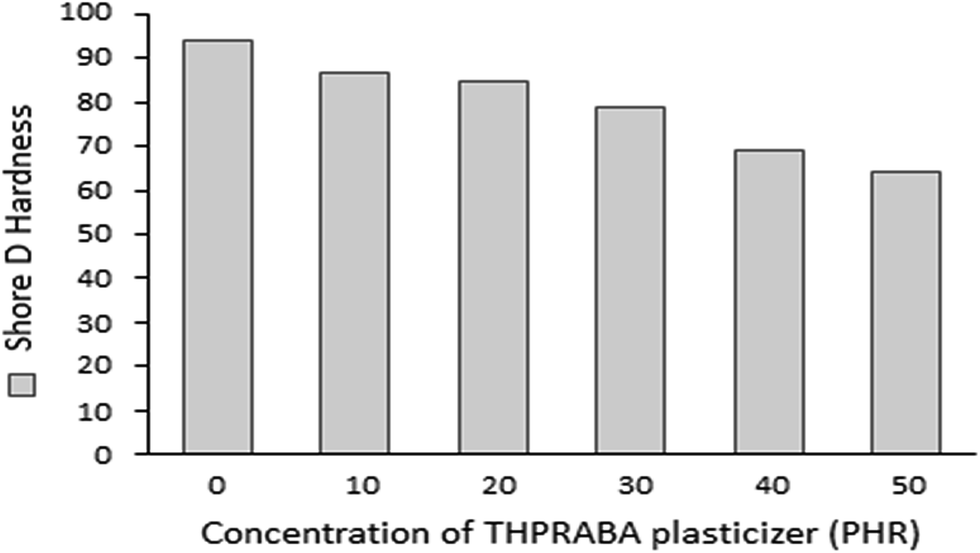
The virgin PVC has Shore D hardness value 94. After the addition of plasticizer the Shore D hardness value decreases gradually indicating increased plasticity and reduction in rigidity of plasticized PVC. The Shore D value of THPRABA10 is found to be 87 which decreased up to 64 for THPRABA50. The percent decrease in Shore D value for THPRABA50 is 32%. The Shore D hardness values for THPRABA10–50 are 87, 85, 79, 69 and 64 resp. The presence of different polar groups like thiophene ring, benzene ring, ester CO linkage, amide N–H group etc. in plasticizer molecule helps it to disperse uniformly into PVC matrix. These polar groups interact with C–Cl group of PVC while acting as a spacer and thus number of PVC molecules occupying per unit area decreases. This leads to decrease in packing density of PVC imparting flexibility to PVC.
The graph displaying relation of Shore D hardness with that of PVC sheets with increased concentration of plasticizer is shown in Fig. 7.
 |
| | Fig. 7 Shore D hardness of PVC sheets: virgin and plasticized with varying concentration of THPRABA plasticizer. | |
X-ray diffraction.
The X-ray diffractograms were obtained for PVC sheets added with THPRABA plasticizer along with virgin PVC sheet and are summarized in Fig. 8. As can be seen in the figure X-ray diffractogram does not show appreciable changes in peaks. However the percent crystallinity of the sheets was decreased simultaneously from PVCVIRGIN to plasticizer added PVC sheets. The PVCVIRGIN shows crystallinity of 9.2% which gradually decreases to 8.94%, 7.19%, 6.72%, 5.85% and 5.13% resp. for THPRABA10–50 sheets. Thus it shows 44% decrease in crystallinity for THPRABA50 as compared to PVCVIRGIN sheet and is a substantial decrease for amount of plasticizer added. The decrease in percent crystallinity is in accordance with mechanical and thermal analysis. The plasticizer molecule places itself in between PVC matrix in such a way that the polar attraction exhibited by chlorine and hydrogen atoms of adjacent chain gets decreased and ultimately intermolecular forces of attraction between PVC sheets reduced. This in turn ensures decrease in crystallinity due to changes in molecular alignment.
 |
| | Fig. 8 X-ray diffractograms obtained for PVC sheets: virgin and plasticized with varying concentration of THPRABA. | |
Exudation test.
The exudation test results show that exudation of 0.1 to 0.5% for PVC/THPRABA sheets as given in Fig. 9 and are comparable with that of PVC/DOP sheets which shows similar exudation results. There is no weight loss in THPRABA plasticized PVC sheets while carrying out different analysis. This can be attributed to better compatibility of THPRABA plasticizer with PVC chains.
 |
| | Fig. 9 Exudation test results obtained for PVC sheets plasticized with DOP and THPRABA plasticizer. | |
Colorimetric analysis.
The values for L*, a*, b*, ΔE*, yellowness index and whiteness index for PVC sheets which are virgin and plasticized with THPRABA are summarized in Table 4. RA is dark yellow liquid which on reacting with substituted thiophene (THP) and BA becomes even more dark red. Hence slight addition of plasticizer in 10 phr also imparts PVC a dark colour which on further addition of plasticizer gets intensified. As given in table the values for L* decreases gradually from 37.123 for virgin PVC to 31.314 and 27.383 resp. for 10 and 20 phr sheet which there after shows slight reduction and attains value of 26.514 for 50 phr sheet. ΔE* values show increase for 10 to 30 phr sheet from 6.438 to 10.242 which afterwards increases slightly for 40 and 50 phr sheet by attaining values of 10.634 and 10.721 resp. The reflectance of PVC sheet is found to be always higher than plasticized PVC sheet with THPRABA from wavelength range 400 μm to 750 μm. The reflectance of all the plasticized PVC sheets almost remain constant up to 400 μm to 610 μm after which there is a gradual increase in reflectance with increase in plasticizer concentration up to 750 μm. The yellowness index for virgin PVC was found to be 13.371 which drastically increase to 26.262 for 10 phr sheet indicating more yellowness in sheet. It is important to note that the point indicating colour of 10 phr PVC sheet is found to be on positive Y axis indicating more yellowness of sheet. However for rest all the samples of PVC the point is found to be on negative Y axis indicating reddishness of sample sheet which slightly increases with every addition of plasticizer confirming decrease in yellowness index values for 20 to 50 phr sheets resp. The whiteness index of virgin PVC sheet is found to be −24.112 which drastically decrease to −60.397 on little addition of THPRABA plasticizer in 10 phr concentration. It increases to −17.685 for 50 phr plasticizer concentration in PVC sheet. It is very much clear that on addition of THPRABA plasticizer in to PVC matrix makes PVC sheets redder and bluer resulting in decrease in yellowness index and dark redder, almost blackish in appearance.
Table 4 Colorimetric analysis for prepared PVC/THPRABA sheets
| Name |
L* |
a* |
b* |
ΔE* |
Yellowness index |
Whiteness index |
| PVCVIRGIN |
37.123 |
−0.169 |
3.49 |
— |
13.371 |
−24.112 |
| THPRTABA10 |
31.314 |
−0.188 |
6.185 |
6.438 |
26.262 |
−60.397 |
| THPRTABA20 |
27.383 |
0.116 |
2.578 |
9.781 |
12.958 |
−25.218 |
| THPRTABA30 |
26.958 |
0.189 |
2.221 |
10.242 |
11.532 |
−21.398 |
| THPRTABA40 |
26.573 |
0.059 |
2.105 |
10.634 |
10.807 |
−20.388 |
| THPRTABA50 |
26.514 |
0.158 |
1.877 |
10.721 |
9.916 |
−17.685 |
Differential scanning calorimetry.
The glass transition curves obtained for virgin PVC along with plasticized PVC are summarized in Fig. 10. The Tg for virgin PVC was found to be 84.69 °C which was in accordance with the literature value for unplasticized PVC.28 The plasticized PVC however show dramatic reduction in Tg with addition of 10 phr THPRABA and has Tg 8.79 °C which shows slight reduction in Tg for 20 to 50 phr THPRABA sheets. The THPRABA50 sheet has Tg value 5.59 °C which is a drastic reduction in Tg as compare to virgin PVC. The curves also show reduction in melting point for PVC due to plasticizer effect. The melting point for PVC virgin is 103.24 °C which decreased up to 77.30 °C for THPRABA10 sheet. After that it gives slight gradual reduction of 71.28 °C, 69.56 °C, 70.56 °C and 69.57 °C resp. for 20 to 50 phr sheets. Thus it is clear from the graph that plasticizer molecule adjusted itself between two PVC sheets in such a way that the dipole attraction exhibited by adjacent sheets due to C–Cl interaction is decreased.
 |
| | Fig. 10 Glass transition curves obtained for PVC sheets: virgin and plasticized with varying concentration of THPRABA. | |
The synthesized THPRABA decreases the glass transition temperature of PVC sheet. It is in accordance with tensile and X-ray diffraction results which suggest plasticization effect shown by product. The polar group present in plasticizer like CO, N–H along with aromatic ring of thiophene and benzene places them self in between two PVC sheets placing them further apart. Due to this reduction in glass transition and melting point is observed. Simultaneously it decreases the number of per unit area of PVC molecules. Decrease in glass transition temperature and melting point helps by making PVC easier to process which is otherwise difficult to process without plasticizer.
Thermo gravimetric analysis.
The thermogram of all PVC plasticized and non plasticized sheets are shown in Fig. 11. The degradation pattern for all sheets remains same irrespective of the percentage of plasticizer added. The first peak implies loss of HCl from PVC in case of virgin sheet whereas for plasticized sheets the first peak implies loss of HCl along with added plasticizer. The released HCl catalyzed the degradation of PVC. The loss of CO2 from plasticizer moiety takes place in between the first step and continues before the start of second degradation step. The released HCl accelerates the formation of polyenes from PVC chains due to dehydrochlorination. The second peak determines the loss of polyenes from PVC chain. The onset and end set temperatures for both peaks are mentioned in Table 5.
 |
| | Fig. 11 Thermo gravimetric analysis of the synthesized PVC sheets: virgin and plasticized with THPRABA plasticizer. | |
Table 5 Summarization of onset and end set temperatures, % weight loss, % ash content for PVC sheets: virgin and plasticized with THPRABA plasticizer
| Sample name |
Peak 1 |
Peak 2 |
| Onset temperature (°C) |
End set temperature (°C) |
Weight loss% |
Onset temperature (°C) |
End set temperature (°C) |
Weight loss% |
Ash content% |
| PVCVIRGIN |
268.99 |
346.21 |
57.29 |
454.99 |
527.83 |
22.79 |
20.343 |
| THPRABA10 |
278.23 |
364.69 |
59.95 |
451.93 |
527.87 |
23.66 |
16.681 |
| THPRABA20 |
270.33 |
351.10 |
56.56 |
431.68 |
527.97 |
27.93 |
15.959 |
| THPRABA30 |
269.73 |
347.57 |
56.74 |
427.46 |
528.39 |
29.08 |
14.604 |
| THPRABA40 |
269.49 |
347.67 |
56.70 |
429.39 |
523.97 |
29.86 |
14.078 |
| THPRABA50 |
275.08 |
357.67 |
57.12 |
427.85 |
529.18 |
29.77 |
14.343 |
The onset and end set temperature for all plasticized sheets are lower than the virgin sheets and they gradually increased as concentration of plasticizer increases for first peak. For virgin PVC sheet on set and end set temperatures for first and second peak are 268.99 °C, 346.21 °C, 454.99 °C, 527.83 °C resp. The onset and end set temperature values of first weight loss peak are 278.23 °C and 364.69 °C for THPRABA10 sheet which gradually decreases to 270.33 °C and 351.10 °C resp. for THPRABA20 and remains almost same for 30 and 40 phr sheet. The THPRABA50 sheet however shows slight increase in onset and end set temperatures by exhibiting values of 275.08 °C and 357.67 °C for first weight loss resp. The onset temperature values of second weight loss peak are 451.93 °C for THPRABA10 sheet which gradually decreases to 427.85 °C for THPRABA50 resp. and end set temperature values have increased slightly from 527.87 °C for THPRABA10 to 529.18 °C for THPRABA50. The percent ash content for virgin PVC sheet is found to be 20.343% which decreases to 16.681% for THPRABA10 sheet. PVC sheets containing 20 to 50 phr concentration do not exhibit gradual decrease in ash content and are found to have values of 15.959%, 14.604%, 14.078% and 14.343% for 20 to 50 phr THPRABA plasticized PVC sheets resp. Thus it is very clear that there is no significant change in temperature of PVC degradation due to addition of THPRABA plasticizer.
Conclusion
Triester amide plasticizer was synthesized from three step reaction by reacting ricinoleic acid (RA) with diester amine thiophene which was procured by Gewald multicomponent reaction at high temperature followed by treating it with benzoic acid (BA) in presence of 98% concentrated sulphuric acid as catalyst. The obtained THPRABA plasticizer was characterized by FT-IR and posses high viscosity than DOP plasticizer due to presence of long carbon chain and polar groups in plasticizer molecule which exhibit high intermolecular forces of attraction. The nature of plasticizer has been dark red coloured viscous liquid and plasticizer absorption value was found to be 45.225 g per 100 g of PVC. PVC sheets were prepared with 10, 20, 30, 40 and 50 phr concentration by using this novel plasticizer by completely excluding commercial DOP plasticizer. The 50 phr PVC sheet have shown drastic reduction in tensile modulus, tensile strength, flexural strength and crystallinity by 71.618%, 65.917%, 65.606% and 44.24% resp. The elongation at break was found to be 56 times more than non plasticized PVC. DSC analysis has shown that the Tg for 50 phr sheet was estimated at 5.59 °C as compared to −25 °C for 40 phr DOP sheet.29 The base ring for DOP carrying two ester groups with 8 carbon in chain imparting plasticity to PVC is benzene ring whereas in THPRABA plasticizer molecule it is thiophene ring with ester linkage having chain of two carbons i.e. ethyl chain and amide linkage by ricinoleic acid. The role of thiophene in holding esters and amide groups and simultaneously imparting plasticity in PVC is appreciable as the decrease in Tg is significant as compared to virgin PVC. The viscosity of all the sheets has reduced gradually on increasing concentration of plasticizer revealing non-Newtonian shear thinning behaviour. Though the dark colour of all sheets could limit its application areas, the exudation tests illustrated samples migration stability.
Acknowledgements
Authors would like to acknowledge University Grants Commission (UGC) for providing financial assistance to carry out research work.
Notes and references
-
M. W. Allsopp and G. Vianello, Ullmann's Encyclopedia of Industrial Chemistry, Wiley-VCH, Weinheim, 2012 Search PubMed.
- S. S. Cox, J. C. Little and A. T. Hodgson, J. Air Waste Manage. Assoc., 2001, 51, 8 Search PubMed.
-
P. Frenkel, U S Pat., US20120214920, 2012.
-
H. P. Benecke, B. R. Vijayendran and J. D. Elhard, US pat., US6797753 B2, 2004.
- M. Rahman and C. S. Brazel, Prog. Polym. Sci., 2004, 29, 1223 CrossRef CAS.
- M. Rahman and C. S. Brazel, Polym. Degrad. Stab., 2006, 91, 3371 CrossRef CAS.
- J. Doulla, R. Cattleyb, C. Elcombec, B. G. Laked, J. Swenberge, C. Wilkinsonf, G. Williamsg and M. Gemerth, Regul. Toxicol. Pharmacol., 1999, 29, 327 CrossRef PubMed.
- G. Latini, Biol. Neonate, 2000, 78, 269 CrossRef CAS PubMed.
- E. Calò, A. Greco and A. Maffezzoli, Polym. Degrad. Stab., 2011, 96, 784 CrossRef.
- B. Mehta, M. Kathalewar and A. Sabnis, Polym. Int., 2014, 63, 1456 CrossRef CAS.
- P. Nihul, S. Mhaske and V. Shertukade, Iran. Polym. J., 2014, 23, 599 CrossRef CAS.
- H. Baltacioğlu and D. Balkösej, J. Appl. Polym. Sci., 1999, 74, 2488 CrossRef.
- P. Savvashe, P. Kadam and S. Mhaske, J. Appl. Polym. Sci., 2015, 132, 41913 CrossRef.
- W. Waskitoajia, E. Triwulandaria and A. Haryono, Procedia Chem., 2012, 4, 313 CrossRef.
- K. Gewald, E. Schinke and H. Bottcher, Chem. Ber., 1966, 99, 94 CrossRef CAS.
- K. A. El-Sharkawy, N. N. E. El-Sayed and M. Y. Zaki, Int. Res. J. Pure Appl. Chem., 2012, 2, 91 CrossRef CAS.
- R. Mohareb and A. Fahmy, Eur. Chem. Bull., 2013, 2(8), 545 CAS.
- M. S. Yen and I. J. Wang, Dyes Pigm., 2004, 61, 243 CrossRef CAS.
- D. M. Vriezema, J. Hoogboom, K. Velonia, K. Takazawa, P. C. M. Christianen, J. C. Maan, A. E. Rowan and R. J. M. Nolte, Angew. Chem., Int. Ed., 2003, 42, 772 CrossRef CAS PubMed.
- M. M. Gui, K. T. Lee and S. Bhatia, Energy, 2008, 33, 1646 CrossRef CAS.
- M. A. Meier, J. O. Metzger and U. S. Schubert, Chem. Soc. Rev., 2007, 36, 1788 RSC.
- A. M. Asiri, Molbank, 2003, M341 CrossRef.
- Z. Puterová, A. Krutošíková and D. Végh, ARKIVOC, 2010, 1, 209 Search PubMed.
-
ASTM D-1980, Standard test method for acid value of Fatty Acids and Polymerized Fatty Acids, 1998 Search PubMed.
-
ASTM D-1957, Standard Test Method for Hydroxyl Value of Fatty Oils and Acids, 2001 Search PubMed.
-
ASTM D-638, Standard Test Method for Tensile Properties of Plastics, 2010 Search PubMed.
-
ASTM D-790, Standard Test Methods for Flexural Properties of Unreinforced and Reinforced Plastics and Electrical Insulating Materials, 2010 Search PubMed.
-
J. A. Brydson, Plastics Materials, Butterworth-Heinemann, Oxford, 1999, ch. 12, p. 311 Search PubMed.
- B. Mehta, M. Kathalewar and A. J. Sabnis, Appl. Polym. Sci., 2014, 131, 40354 CrossRef.
|
| This journal is © The Royal Society of Chemistry 2016 |
Click here to see how this site uses Cookies. View our privacy policy here.