
Polyoxometalates-mediated facile synthesis of Pt nanoparticles anchored on an ordered mesoporous carbon for electrochemical applications

Bingqian Li, Tongrui Zhang, Huan Wang, Xiaoqing Zhao, Fang Li, Mengjun Liu, Jincan Zhao and Yufan Zhang*
Key Laboratory of Analytical Science and Technology of Hebei Province, College of Chemistry and Environmental Science, Key Laboratory of Medicinal Chemistry and Molecular Diagnosis, Ministry of Education, Hebei University, 071002 Baoding, P. R. China. E-mail: zyf@hbu.edu.cn; Fax: +86 312 5079403; Tel: +86 312 5079403

Received 8th August 2016 , Accepted 18th September 2016

First published on 19th September 2016


Abstract

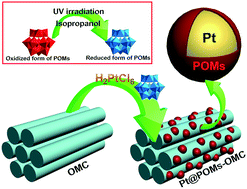
This study demonstrates a green and facile strategy to develop electrochemical sensors through the rational design of platinum nanoparticles@polyoxometalate decorating ordered mesoporous carbon (Pt@POMs-OMC) nanohybrids. The Keggin-type POMs, H3PW12O40, was applied to serve as a both reducing and stabilizing agent. The as-prepared nanohybrids were characterized comprehensively by X-ray diffraction, X-ray photo-electron spectroscopy, energy-dispersive X-ray spectroscopy, and transmission electron microscopy. The novel nanohybrids of Pt@POMs-OMC can provide new features for electro-catalytic applications because of the synergetic effects of Pt nanoparticles and OMC materials. This study reports on the use of Pt@POMs-OMC as an effective sensing template for enhanced hydrazine, hydrogen peroxide (H2O2), and nitrobenzene (NB) electrochemical detection for the first time. It exhibits a steady amperometric response towards hydrazine in the linear concentration range of 10–840 μM with a sensitivity of 2.92 μA mM−1 and from 840 to 1400 μM with a sensitivity of 7.32 μA mM−1; the limit of detection was calculated to be 3.41 μM. It shows a steady amperometric response towards H2O2 in the linear concentration range of 5–5400 μM with a sensitivity of 10.64 μA mM−1 and a limit of detection of 1.09 μM. The NB sensor displays a linear range of 3.98–672.55 μM with a sensitivity of 102.62 μA mM−1 and a limit of detection of 3.82 μM. The successful fabrication of Pt@POMs-OMC holds great promise for the design of electrochemical sensors and is a promising material to promote the development of new electrode materials.

1. Introduction

In recent years, with the development of science and technology, carbon materials are used widely in electrochemical fields, including lithium batteries, supercapacitors, methanol fuel cells, and electrochemical sensor.1–8 Among the numerous carbon materials, highly ordered mesoporous carbon (OMC) has attracted considerable attention since its discovery by Ryoo et al. in 1999.9 OMC materials are essential for numerous modern applications because of their favourable properties, including unique mesoporous structure, exceptional chemical inertness, and good thermal and mechanical stability.10–15 In particular, the combination of large specific surface area and high electrical conductivity makes OMC highly promising as an electrocatalyst platform for supporting other nanoentities to form novel hybrid nanostructures with synergetic effects.16–23 The combination of noble metal nanoparticles and carbon materials is of special interest; it is known to show obviously enhanced electrocatalytic activity. However, the reduction processes of noble metal particles are complex and mostly require a specific high temperature and long time. In addition, the reaction process is normally not environmentally friendly, which limit the practical applications of noble-metal/carbon materials.

Polyoxometalates (POMs) are a subset of inorganic polynuclear metal–oxygen clusters, which exhibit remarkably rich redox and optical properties, and thus show promising applications in several fields, including catalysis, medicine and materials sciences.24–27 POMs also are a class of photoactive materials; in their reduced forms, their electron and proton transfer and/or storage abilities may act as efficient donors or acceptors of several electrons. The reduced POMs have been shown to serve as reducing and capping agents for noble-metal nanostructures. Moreover, POMs were reported to be adsorbed on various solid materials and this property has been exploited for the stabilization of nanoparticles.28–31

This study reports an alternative, easy and green-chemistry type procedure for the decoration of Pt nanoparticles on OMC using POMs as both the reductant and bridging molecules. Hydrazine, hydrogen peroxide (H2O2), and nitrobenzene (NB) were selected as marking molecules to evaluate the electrochemical activity of the Pt@POMs-OMC nanocomposite. The electrochemical results showed that the Pt@POMs-OMC exhibited significant electrocatalytic activity towards hydrazine, H2O2, and NB in neutral solutions, indicating that the Pt@POMs-OMC composite may hold great promise for the design of electrochemical environmental sensors.

2. Experimental

2.1. Chemical reagents

H3PW12O40 (POMs), isopropanol, and Nafion solution (5 wt% in 15–20% water/lower aliphatic alcohols) were used as purchased from Aldrich. H2PtCl6·6H2O was purchased from Sinopharm Chemical Reagent Co. Ltd. Hydrazine, H2O2, and NB were obtained from Sigma. 0.1 M phosphate buffer solution (PBS pH 7.0), which was made using NaH2PO4, Na2HPO4, and H3PO4, was employed as a supporting electrolyte. All other reagents were of analytical grade, and all solutions were prepared using double distilled water.

2.2. Instrumentation

All the electrochemical experiments were performed with a CHI760e electrochemical Analyzer (CH Instruments, Shanghai Chenhua Instrument Corporation, China). Electrochemical impedance spectroscopy (EIS) was conducted using a PARSTAT 2273 Potentiostats-Electrochemistry Workstation (AMETEK Instruments, USA) in a 0.1 M KCl solution containing 5.0 mM K3Fe(CN)6/K4Fe(CN)6, from 0.1 Hz to 10.0 kHz. X-ray diffraction (XRD) patterns were obtained on an X-ray D/max-2200vpc (Rigaku Corporation, Japan) instrument operated at 40 kV and 20 mA using Cu Kα radiation (k = 0.15406 nm). Scanning electron microscopy (SEM) images were determined with a Philips XL-30 ESEM operating at 3.0 kV. Transmission electron microscopy (TEM) images and energy-dispersive X-ray spectra (EDX) were obtained using a JEM-2100F transmission electron microscope JEOL (Japan) operating at 200 kV. X-ray photoelectron spectroscopy (XPS) measurements were performed with a thermo ESCALAB spectrometer (USA). A conventional three electrode cell was used; the working electrode was a glassy carbon electrode (GCE) or the modified electrode; a platinum electrode was used as the counter electrode, whereas an Ag/AgCl (in saturated KCl solution) electrode served as the reference electrode. All potentials in this study were measured and reported versus Ag/AgCl. It can be noted that in this study, all the sample solutions were purged with purified nitrogen for 20 min to remove oxygen prior to the beginning of a series of experiments and all experiments were carried out at laboratory temperature.

2.3. Synthesis of nanohybrids of Pt@POMs-OMC

OMC was prepared according to the method reported by Ryoo et al.32 The POMs were first reduced photochemically. A 500 W Hg lamp was used as a ultra-violet (UV) light source. In a typical synthesis, 20 mg of POMs and 50 μL of isopropanol were mixed with doubly distilled water (5 mL). The resulting solution was then irradiated under UV light for 30 min. This solution of reduced POMs was mixed with prepared OMC suspension (0.2 mL, 5 mg mL−1) and an aqueous solution of H2PtCl6·6H2O (12 μL, 100 mg mL−1) at room temperature and then stirred for 10 min; the tri-component nanohybrids were prepared. The suspension was isolated by centrifugation at 9000 rpm, followed by several consecutive washing/centrifugation cycles with doubly distilled water. The obtained Pt@POMs-OMC was dried in a vacuum oven at 60 °C for 24 h. An illustration of the preparation of Pt@POMs-OMC is presented in Scheme 1.
image file: c6ra19995j-s1.tif
Scheme 1 Illustration of the preparation of Pt@POMs-OMC composites.

2.4. Preparation of the modified electrodes

Prior to the modification, GCE (model CHI104, 3 mm diameter) was polished before each experiment with 1, 0.3 and 0.05 μm alumina power, rinsed thoroughly with double distilled water between each polishing step, and then sonicated successively in 1[thin space (1/6-em)]:[thin space (1/6-em)]1 nitric acid, absolute alcohol, and double distilled water. The cleaned electrode was dried with a nitrogen stream for the next modification. To prepare the modified electrodes, 2 mg of the electrode materials were dispersed into a mixture of 0.1 mL (5 wt%) Nafion and 0.9 mL doubly distilled water to give a homogeneous suspension upon bath sonication. A 5 μL sample of the suspension was dropped onto GCE and the electrode was then dried at room temperature.

3. Results and discussion

3.1. Characterization of the as-prepared samples

The morphologies of OMC and Pt@POMs-OMC were characterized initially by SEM and TEM analysis. Fig. 1A shows a SEM image of pure OMC. The OMC was made of small grains, which have a submicrometer-scale particle size with the length of 0.5–1.5 μm. Fig. 1B shows a TEM image of the OMC before decoration with Pt nanoparticles. Bright contrast strips on the planar TEM image represent the pore-wall images, whereas dark contrast cores display empty channels. The typical TEM image of Pt@POMs-OMC is presented in Fig. 1C; Pt nanoparticles are uniformly dispersed on the surface of OMC. The high-resolution TEM image of Pt@POMs-OMC shown in Fig. 1D reveals that the spacing of the adjacent fringes along the wire growth direction is 0.23 nm, corresponding to the (111) interplanar distance of face-centered cubic structure. The average diameter of these Pt nanoparticles determined from a statistical study of 100 nanoparticles is 3.92 nm (Fig. 1E). The composition of the as-synthesized Pt@POMs-OMC was confirmed by EDX spectroscopy, as shown in Fig. 1F. It shows the peaks corresponding to carbon, oxygen, tungsten, and platinum (the strong peaks of Cu are from the copper grid), confirming the existence of Pt@POMs in the Pt@POMs-OMC nanohybrids.
image file: c6ra19995j-f1.tif
Fig. 1 SEM (A) and TEM (B) images of OMC, TEM (C) and HRTEM (D) images of Pt@POMs-OMC, columnar distribution of Pt nanoparticles size for Pt@POMs-OMC (E), and EDX spectra of Pt@POMs-OMC (F).

The nanohybrids were characterized further by XPS and XRD patterns analysis. XPS was carried out to investigate the surface chemical component of the as-prepared materials (Fig. S1). The sample shows obvious peaks, which were assigned to the signals of W4f, Pt4f, W4d, C1s, and O1s. The XPS spectrum of the as-prepared Pt@POMs-OMC nanohybrids shows the Pt4f7/2 and Pt4f5/2 (Fig. 2A). With the charge effect corrected by fixing the photoelectric peak 1s of carbon at 284.6 eV, the 4f7/2 level is located at 71.2 eV and the 4f5/2 level at 75.1 eV. These values suggest unambiguously that Pt is present only in metallic form, indicating the formation of Pt nanoparticles on the surface of OMC. The presence of W was also detected by XPS despite thorough washing of the samples. As shown in Fig. 2B, there is W4f5/2 and W4f7/2 doublet with the binding energies of 35.9 and 38.1 eV, respectively. These values indicate that W is in its full oxidation form in POMs when assembled in the nanohybrids. As shown in the XRD pattern of the Pt@POMs-OMC (Fig. 2C), the characteristic peak at 25° belongs to the C (002) plane and other diffraction peaks at 39.2°, 44.9°, 66.1° and 78.9° can be indexed to Pt (111), (200), (220) and (311) planes of face-centered cubic crystalline of Pt, respectively. Moreover, diffraction peaks from the POMs were also observed. Their presence provides conclusive evidence of the formation of tri-component nanohybrids of Pt@POMs-OMC.


image file: c6ra19995j-f2.tif
Fig. 2 High-resolution XPS spectra of Pt4f (A) and W4f (B). XRD patterns of the Pt@POMs-OMC (C). EIS of the bare GCE (blue curve), OMC–GCE (black curve) and Pt@POMs-OMC–GCE (red curve) in a 0.1 M KCl solution containing 5.0 mM K3Fe(CN)6/K4Fe(CN)6 from 0.1 Hz to 10.0 kHz (D).

EIS experiments can provide useful information on the impedance changes of the electrode surface. The charge transfer resistance (Rct) at the electrode surface can be used to describe the interface properties of the electrode. Fig. 2D shows the Nyquist plots of EIS for bare GCE, OMC–GCE, and Pt@POMs-OMC–GCE. It can be observed that bare GCE exhibits a semicircle part at high frequency. After being modified with OMC, the diameter of the semicircle decreases markedly, indicating that OMC can form good electron pathways between the electrode and electrolyte and can be expected to be a good electrochemical platform. Moreover, the charge-transfer resistance of Pt@POMs-OMC–GCE decreases, indicating that the electron transfer ability of Pt nanoparticles has been improved greatly by incorporating OMC. The Rct values for the Fe[(CN)6]4−/3− couple at different electrodes were recorded and are shown in Table S1.

3.2. Electrocatalysis of hydrazine, H2O2 and NB and their detection

The present study reports the use of Pt@POMs-OMC as an effective sensing template for enhanced hydrazine, H2O2, and NB electrochemical detection for the first time. Initially, the CVs for hydrazine oxidation at different electrodes were investigated in a PBS solution. The CVs were performed in the range from −0.6 V to 0.4 V vs. Ag/AgCl (Fig. 3A). It shows a weak electrocatalytic oxidation current towards hydrazine at a bare GCE. Apparently, the oxidation current of hydrazine at the OMC–GCE exhibits a stronger signal than that of the bare GCE. Interestingly, the Pt@POMs-OMC–GCE shows much higher electrochemical response upon the addition of hydrazine than the OMC–GCE, which may have resulted from the excellent conductivity of OMC with a large surface area and unique electrocatalytic properties of Pt nanoparticles. Fig. 3B displays the current–time responses of Pt@POMs-OMC–GCE for hydrazine detection at pH = 7.0 with the applied potential of 0 V. The inset of Fig. 3B shows the amperometric response of a low concentration of hydrazine at Pt@POMs-OMC–GCE. The corresponding calibration plot for the reduction of hydrazine at Pt@POMs-OMC–GCE is shown in Fig. 3C. It exhibits a steady amperometric response towards hydrazine in the linear concentration range of 10–840 μM (R2 = 0.994) with a sensitivity of 2.92 μA mM−1 and from 840 to 1400 μM (R2 = 0.993) with a sensitivity of 7.32 μA mM−1. The limit of detection was calculated to be 3.41 μM with the signal to noise ratio of three (S/N = 3). The reproducibility of the sensor was also investigated using a current–time method for five repetitive measurements with additions of 100 μM hydrazine at 0 V (pH = 7.0). The RSD of the sensitivity was less than 4.1%. When the Pt@POMs-OMC–GCE was stored at 4 °C for two weeks, the current response to 100 μM hydrazine remained at 94.1% of its original value, suggesting the long-term stability of the modified electrode. The performance of the Pt@POMs-OMC–GCE was also compared with other hydrazine sensors (Table S2).
image file: c6ra19995j-f3.tif
Fig. 3 (A) CVs of bare GCE, OMC–GCE, and Pt@POMs-OMC–GCE in the presence of 100 μM hydrazine. Scan rate: 50 mV s−1; pH = 7.0. (B) Typical amperometric current–time curve of Pt@POMs-OMC–GCE with successive additions of hydrazine (pH = 7.0). Inset: the amperometric response with the successive addition of hydrazine at lower concentration. (C) Relationship between the hydrazine concentration and current signal for Pt@POMs-OMC–GCE.

Fig. 4A displays the CVs of different electrodes in the presence of H2O2 (2.0 mM). There was a small electrochemical response at bare GCE. However, it exhibits an increase in catalytic current for H2O2 reduction at OMC–GCE compared to bare GCE. More interestingly, Pt@POMs-OMC–GCE shows an obvious decrease in over-potential as well as a response current increase for H2O2 reduction compared to bare GCE and OMC–GCE. The calibration curve of the reduction current is depicted in Fig. 4C, it exhibits a steady amperometric response towards H2O2 in the linear concentration range of 5–5400 μM (R2 = 0.998) with a sensitivity of 10.64 μA mM−1. The limit of detection is 1.09 μM. The inset of Fig. 4C shows the amperometric response of low concentration of H2O2 at Pt@POMs-OMC–GCE. The reproducibility of the sensor was also investigated using the current–time method. The RSD of the current signal for 200 μM H2O2 was less than 4.2% for five measurements for the same electrode. After being stored at 4 °C for two weeks, 6.9% current loss was observed at Pt@POMs-OMC–GCE on the amperometric response of 200 μM H2O2. A detailed comparison of H2O2 detection performance using different H2O2 sensors is summarized in Table S3.


image file: c6ra19995j-f4.tif
Fig. 4 (A) CVs of bare GCE, OMC–GCE, and Pt@POMs-OMC–GCE in the presence of 2.0 mM H2O2. Scan rate: 50 mV s−1; pH = 7.0. (B) Typical amperometric current–time curve of Pt@POMs-OMC–GCE with successive additions of H2O2 (pH = 7.0). (C) Relationship between the H2O2 concentration and current signal for Pt@POMs-OMC–GCE. Inset: the amperometric response with successive addition of H2O2 at lower concentration.

The electrochemical behavior of the bare GCE, OMC–GCE, and Pt@POMs-OMC–GCE in 0.1 M PBS (pH = 7.0) solution was studied using CVs. As shown in Fig. 5A, only a weak reduction peak was observed on the bare GCE and OMC–GCE in the presence of 400 μM NB. Interestingly, Pt@POMs-OMC–GCE shows an obvious response current increase for NB reduction compared to bare GCE and OMC–GCE. The feasibility of the proposed electrochemical sensor for target NB detection was verified by differential pulse voltammetry (DPV). Clearly, a series of the DPV curves ((a) → (i)) were obtained from different concentrations of NB (Fig. 5B). A plot of I versus concentration of NB exhibited a linear relationship (Fig. 5C). The NB sensor displayed a linear range of 3.98–672.55 μM (R2 = 0.991) with a sensitivity of 102.62 μA mM−1. The limit of detection was calculated to be 3.82 μM. The reproducibility of the sensor was also investigated by the DPV method. The RSD of current signal for 100 μM NB was less than 3.3% for five measurements for the same electrode. After being stored at 4 °C for two weeks, 4.9% current loss at Pt@POMs-OMC–GCE was obtained by the amperometric response of 100 μM NB. A detailed comparison of NB detection performance using different NB sensors is summarized in Table S4.


image file: c6ra19995j-f5.tif
Fig. 5 (A) CVs of bare GCE, OMC–GCE, and Pt@POMs-OMC–GCE in the presence of 0.4 mM NB. Scan rate: 50 mV s−1; pH = 7.0. (B) DPV curves of NB (a–i): 3.98, 5.96, 25.79, 45.54, 65.22, 84.81, 281.50, 477.41 and 672.55 μM in PBS (0.1 M, pH 7.0) at the Pt@POMs-OMC–GCE. (C) The linear dependence of the current response with different concentrations of NB.

In general, from these findings of electrochemical experiments, the Pt@POMs-OMC–GCE sample could offer a favourable microenvironment for transferring species in a solution and would also be beneficial for accelerating electron transfer between the electrode and species in a solution. Hence, the decrease in the overvoltage and a marked increase in peak current for hydrazine, H2O2 and NB reaction allow the convenient electrochemical detection at the Pt@POMs-OMC–GCE. The results indicate that the novel nanohybrids of Pt@POMs-OMC can provide new features of electro-catalytic activities, because of the synergetic effects of Pt nanoparticles and OMC materials.

4. Conclusions

This article reported the preparation of a novel Pt@POMs-OMC composite using a facile, green, and one-pot synthesis method. POMs were used as both the reductant and bridging molecules. The OMC can offer a platform for supporting Pt to form novel hybrid nano-structures with synergetic effects. The unique architecture of the Pt@POMs with a uniform size distribution facilitates mass transport and electron conductivity, leading to improved sensing performance. Through an analyses of the characterization and electrochemical experiments, we found that the nanosized Pt@POMs obtained by the attachment of OMC greatly improved the electrochemical activity of the composite. A sensitive biosensor for hydrazine, H2O2, and NB was developed based on the Pt@POMs-OMC, which showed a wide linear range, low detection limit, high sensitivity, and good stability. The successful fabrication of Pt@POMs-OMC holds great promise for the design of biosensors and is a promising way to promote the development of new electrode materials.

Acknowledgements

The authors gratefully acknowledge the support from the National Natural Science Foundation of China (No. 21505031), the Natural Science Foundation of Hebei Province (No. B2016201018), and the science technology research and development guidance programme project of Baoding City (No. 15ZG040).

References

  1. Y. Song, Y. Luo, C. Zhu, H. Li, D. Du and Y. Lin, Biosens. Bioelectron., 2016, 76, 195–212 CrossRef CAS PubMed.
  2. H. J. Qiu, Y. Ito, W. Cong, Y. Tan, P. Liu, A. Hirata, T. Fujita, Z. Tang and M. Chen, Angew. Chem., 2015, 127, 14237–14241 CrossRef.
  3. Z. Cai, F. Li, P. Wu, L. Ji, H. Zhang, C. Cai and D. F. Gervasio, Anal. Chem., 2015, 87, 11803–11811 CrossRef CAS PubMed.
  4. Y. Zhang, X. Bo, A. Nsabimana, C. Han, M. Li and L. Guo, J. Mater. Chem. A, 2015, 3, 732–738 CAS.
  5. Y. Deng, Y. Xie, K. Zou and X. Ji, J. Mater. Chem. A, 2016, 4, 1144–1173 CAS.
  6. L. Hadidi, E. Davari, M. Iqbal, T. K. Purkait, D. G. Ivey and J. G. C. Veinot, Nanoscale, 2015, 7, 20547–20556 RSC.
  7. G. Shen, X. Sun, H. Zhang, Y. Liu, J. Zhang, A. Meka, L. Zhou and C. Yu, J. Mater. Chem. A, 2015, 3, 24041–24048 CAS.
  8. Y. Zhang, X. Bo, A. Nsabimana, A. Munyentwali, C. Han, M. Li and L. Guo, Biosens. Bioelectron., 2015, 66, 191–197 CrossRef CAS PubMed.
  9. R. Ryoo, S. H. Joo and S. Jun, J. Phys. Chem. B, 1999, 103, 7743–7746 CrossRef CAS.
  10. S. Wang, Q. Zhao, H. Wei, J. Wang, M. Cho, H. S. Cho, O. Terasaki and Y. Wan, J. Am. Chem. Soc., 2013, 135, 11849–11860 CrossRef CAS PubMed.
  11. Y. Lv, F. Zhang, Y. Dou, Y. Zhai, J. Wang, H. Liu, Y. Xia, B. Tu and D. Zhao, J. Mater. Chem., 2012, 22, 93–99 RSC.
  12. J. Wei, D. Zhou, Z. Sun, Y. Deng, Y. Xia and D. Zhao, Adv. Funct. Mater., 2013, 23, 2322–2328 CrossRef CAS.
  13. Z. Sun, B. Sun, M. Qiao, J. Wei, Q. Yue, C. Wang, Y. Deng, S. Kaliaguine and D. Zhao, J. Am. Chem. Soc., 2012, 134, 17653–17660 CrossRef CAS PubMed.
  14. Y. Deng, J. Wei, Z. Sun and D. Zhao, Chem. Soc. Rev., 2013, 42, 4054–4070 RSC.
  15. Z. Zhou and M. Hartmann, Chem. Soc. Rev., 2013, 42, 3894–3912 RSC.
  16. Y. Zhang, X. Bo, A. Nsabimana, C. Luhana, G. Wang, H. Wang, M. Li and L. Guo, Biosens. Bioelectron., 2014, 53, 250–256 CrossRef CAS PubMed.
  17. Y. Li, B. Yuan, J. Fu, S. Deng and X. Lu, J. Colloid Interface Sci., 2013, 408, 181–190 CrossRef CAS PubMed.
  18. Y. Zhang, X. Bo, C. Luhana and L. Guo, Electrochim. Acta, 2011, 56, 5849–5854 CrossRef CAS.
  19. J. Gao, X. Wang, Q. Zhao, Y. Zhang and J. Liu, Electrochim. Acta, 2015, 163, 223–231 CrossRef CAS.
  20. K. Wang, Y. Wang, Z. Liang, Y. Liang, D. Wu, S. Song and P. Tsiakaras, Appl. Catal., B, 2014, 147, 518–525 CrossRef CAS.
  21. J. Gao, X. Wang, Y. Zhang, J. Liu, Q. Lu, M. Chen and Y. Bai, Electrochim. Acta, 2016, 192, 234–242 CrossRef CAS.
  22. Y. Wang, H. Zhao and G. Zhao, Appl. Catal., B, 2015, 164, 396–406 CrossRef CAS.
  23. X. Zhang, J. He, T. Wang, M. Liu, H. Xue and H. Guo, J. Mater. Chem. A, 2014, 2, 3072–3082 CAS.
  24. N. Mizuno, K. Yamaguchi and K. Kamata, Coord. Chem. Rev., 2005, 249, 1944–1956 CrossRef CAS.
  25. C.-Y. Sun, S.-X. Liu, D.-D. Liang, K.-Z. Shao, Y.-H. Ren and Z.-M. Su, J. Am. Chem. Soc., 2009, 131, 1883–1888 CrossRef CAS PubMed.
  26. U. Kortz, A. Müller, J. van Slageren, J. Schnack, N. S. Dalal and M. Dressel, Coord. Chem. Rev., 2009, 253, 2315–2327 CrossRef CAS.
  27. M. Ammam, J. Mater. Chem. A, 2013, 1, 6291–6312 CAS.
  28. D.-L. Long, R. Tsunashima and L. Cronin, Angew. Chem., Int. Ed., 2010, 49, 1736–1758 CrossRef CAS PubMed.
  29. F. M. Toma, A. Sartorel, M. Iurlo, M. Carraro, P. Parisse, C. Maccato, S. Rapino, B. R. Gonzalez, H. Amenitsch, T. DaRos, L. Casalis, A. Goldoni, M. Marcaccio, G. Scorrano, G. Scoles, F. Paolucci, M. Prato and M. Bonchio, Nat. Chem., 2010, 2, 826–831 CrossRef CAS PubMed.
  30. N. Kawasaki, H. Wang, R. Nakanishi, S. Hamanaka, R. Kitaura, H. Shinohara, T. Yokoyama, H. Yoshikawa and K. Awaga, Angew. Chem., Int. Ed., 2011, 50, 3471–3474 CrossRef CAS PubMed.
  31. X. An, X. Yu, J. C. Yu and G. Zhang, J. Mater. Chem. A, 2013, 1, 5158–5164 CAS.
  32. R. Ryoo, S. H. Joo and S. Jun, J. Phys. Chem. B, 1999, 103, 7743–7746 CrossRef CAS.

Footnote

Electronic supplementary information (ESI) available. See DOI: 10.1039/c6ra19995j

This journal is © The Royal Society of Chemistry 2016
Click here to see how this site uses Cookies. View our privacy policy here.