Unpowered oil absorption by a wettability sponge based oil skimmer

Ziai Liua, Xuyue Wanga, Mingqian Gaoa, Jinlong Song*a, Liu Huanga, Jiyu Liua, Xin Liua, Wei Xub and Danyang Zhaoa
aKey Laboratory for Precision and Non-Traditional Machining Technology of Ministry of Education, Dalian University of Technology, Dalian 116024, China. E-mail: songjinlong@dlut.edu.cn
bSchool of Mechanics and Civil Engineering, China University of Mining and Technology (Beijing), 100083, China

Received 3rd August 2016 , Accepted 3rd September 2016

First published on 7th September 2016


Abstract

Oil spills seriously pollute the environment and cause huge economic losses. Recently, materials with extreme wettability are widely used for oil/water separation. However, the existing methods have drawbacks including complicated and costly fabrication processes for oil/water separation materials, limited oil collecting capacity and reduced oil/water separation efficiency after being polluted by oil, etc. Therefore, an efficient and low-cost method for oil spill collection is urgently needed. We proposed a one-step immersion method to fabricate an oil spill absorption material. Superhydrophobicity and superoleophilicity were obtained by a common polyurethane sponge after being immersed into a cupric stearate solution and drying process. Water droplets can be supported as a spherical shape with a contact angle above 155.5° and can easily roll off from the surface, while hexane, hexadecane, diesel oil, peanut oil and lubricating oil can spread completely on the modified sponge. The prepared sponge can maintain water repellency after continuous oil spill collection for more than 4 h. A large-scale oil skimmer was designed to collect oil spills by employing the extreme wettability sponge and was successfully used for the collection of floating diesel oil, peanut oil, and lubricating oil on water. This method is simple, low cost and mass-producable, and the obtained oil skimmer possesses a high oil collection capacity, excellent durability and recyclability. Therefore, it has application prospects for the collection of oil spills on the sea or under other harsh conditions.

1. Introduction

During oil exploration, transportation and storage, oil spills happen accidentally, easily resulting in serious environmental destruction and economic losses because of their characteristics such as extensive range, long duration, hard to be removed and damage to biology. The explosion that occurred at the US Gulf Coast drilling platform in 2010 caused 319 million barrels of crude oil to spill into the Gulf of Mexico. The corresponding economic losses amounted to $930 million due to the lack of effective methods to collect or remove the floating oil on the sea. Therefore, developing a stable and effective method of removing oil spills has important value in theory and application.

To date, numerous methods have been proposed to dispose oil spills, including physical absorption method, pre-collection method, oil-well pump recovery, in situ combustion, condensation, biological degradation and electro-coagulation method etc. Physical absorption method1–3 directly lays commercial polypropylene-based felts on surfaces of oil spills. The absorbed oil can be collected by salvaging and manually extruding the saturated felts. This method is widely used for oil pollution disposal thanks to its low cost. However, selectivity and recyclability of this method are relatively poor. More importantly, it requires complicated and time-consuming manual recovery process. Likewise, other materials like zeolites, graphene transistors and wool products have the similar limitations.4–6 Some separation methods based on pre-collection have also been proposed, such as gravity method7 and centrifugal separation method.8 These methods can realize direct oil/water separation, but it is necessary to pre-collect the oil spills and the sea water before conducting oil/water separation process, thus causing disadvantages like high cost and low efficiency. For thick oil spills, it is feasible to dispose them by oil-well pump recovery9,10 or in situ combustion.11 Nevertheless, the amount of seawater pumped into the pipes is far greater than that of the floating oil, resulting in low selectivity and efficiency. Moreover, the corrosivity12 of crude oil due to its composition13 including sulfur, hydrogen sulfide, naphthenic acid and chlorine will cause irreparable damage to the ship hull, which increases the oil removal cost. Similarly, in situ combustion generates toxic fumes, and the combustion process tends to stop when the layer of oil spills becomes thinner.14 More importantly, this method cannot recollect oil spills, thus resulting in the waste of resources, which is also the main defect of methods like condensation,15 spraying dispersants16 and biodegrading.17 Apart from these methods, electro-coagulation18 is also employed to clean oil spills. This method can dispose a variety of oil spills and react rapidly, but the anode is severely consumed, and the sediments generated in the method may cause secondary pollution to the ocean. Therefore, it has been the focus of extensive research in this area to propose an environment-friendly separation method with high efficiency, excellent selectivity and low cost.

As a kind of non-renewable energy, it is better to collect crude oil rather than remove it using chemical methods. Consequently, materials with extreme wettability (superhydrophilicity, superoleophilicity, superhydrophobicity, superoleophobicity) used for oil/water separation have attracted researchers' interest in recent years.19–22 Extreme wettability can be obtained by adjusting micro/nanostructures on their surfaces or changing their surface energy. Currently, there have been some reports about using superhydrophobic–superoleophilic or superhydrophilic–superoleophobic materials including textile fabrics,23,24 filter paper,25 carbon nanotube–graphene hybrid aerogels,26,27 metal meshes22,28 and sponges5,24,29,30 to realize oil/water separation. These materials can repel water (oils) when absorbing oils (water) and often possess high oil/water separation efficiency and good selectivity. However, textile fabrics and filter paper have poor mechanical stability and are therefore likely to be broken under harsh environmental conditions (ocean wave or wind), thus losing oil absorption capability. Using metal meshes needs to firstly construct micro/nanostructures followed by surface modification of low energy substances, which is complex in preparation process. Moreover, pores on the metal meshes tend to be blocked due to pollution and impurity, and the meshes will then lose oil absorption capability. Likewise, carbon nanotube–grapheme hybrid aerogels also need complicated preparation technology, long preparation time and expensive instruments (programmable immersion robots, magnetron sputtering apparatus or electrochemical instruments), which are not suitable for large-scale collection of oil spills. Compared with the aforementioned materials, sponges are less easily blocked on account of their three-dimensional porous structures, and can absorb liquids driven by surface tension. Therefore, sponges are appropriate for absorbing liquids and oil/water separation. There already has some methods for fabricating superhydrophobic–superoleophilic sponges, but the complicated preparation involving highly corrosive and toxic solutions which will pose threats to the experimenters and environment. Wang24 used 1H,1H,2H,2H-perfluorodecane thiol (97%) and n-octadecyl thiol (96%) to fabricate robust superhydrophobic sponges via in situ growth of nanometers metal crystal, which are relatively more costly. Wu31 reported a nanocomposite preparation method of magnetical sponges by using TEOS (99.9%), which is flammable liquid and produces noxious vapor. Zhu5 et al. proposed an etching method to obtain the sponges. However, CrO3 and H2SO4 (98 wt%) are contained in his etching solution, which is harmful to the environment, and the preparation processes are quite complicated. To solve these problems, we present a new synthetic strategy to fabricate oil/water separation materials. A one-step immersion method is proposed to fabricate the polyurethane sponge with both superhydrophobicity and superoleophilicity. The obtained sponges show good superhydrophobic stability and ideal superoleophilicity to different kinds of oils including hexane, hexadecane, diesel oil, peanut oil and lubricating oil. Moreover, using the modified sponge as oil/water separation materials exhibits good absorption capacity and high selectivity. More importantly, the superhydrophobic–superoleophilic sponges can maintain water repellency after continuous oil-spills collection for more than 4 h, showing better superhydrophobicity compared with other separation materials. This fabrication method has good stability and practicality, which should significantly reduce the cost of disposing oil spills on sea. In addition, in order to explore its practical application value, we combined the sponge and glass barrel into an oil skimmer. The oil skimmer allows collection and storage without pre-collection and squeezing process, which is appropriate for practical oil/water separation for cleaning the oil spills or leaking in factories.

2. Experimental

2.1 Materials

The stearic acid solid was purchased from Tianjin GuangFu Fine Chemical Research Institute. Anhydrous ethanol, CuCl2 and NaOH were obtained from Tianjin Kermel Chemical Reagent Co. Hexane was purchased from Beijing Chemical Factory. Hexadecane was purchased from Aladdin Industrial Corporation (USA). Peanut oil was obtained from Luhua Co. (China). Diesel oil and lubricating oil were purchased from Sinopec, Dalian, China. Sponge was purchased from Aimos Co., Ltd. Hexane, hexadecane and peanut oil were respectively dyed red, yellow and purple using oil red, oil yellow and oil purple to aid visualization in the oil absorption effect experiment. Diesel oil and lubricating oil were dyed red and deep green by oil red and oil deep green for preview purposes in oil collection experiment. The oil dyes did not change the absorption process of the sponge.

2.2 Preparation of superhydrophobic–superoleophilic sponge and oil skimmer

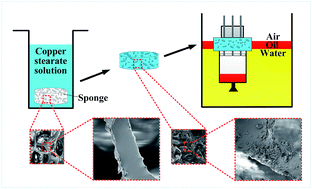
As shown in Fig. 1(a), the mixed solution of 0.05 mol L−1 stearic acid ethanol solution and 0.05 mol L−1 copper chloride solution with a volume ratio of 1[thin space (1/6-em)]:[thin space (1/6-em)]2 was confected firstly at room temperature. Afterwards, 0.1 mol L−1 sodium hydroxide solution was added into the mixed solution with a volume ratio of 1[thin space (1/6-em)]:[thin space (1/6-em)]3 to obtain 0.0125 mol L−1 cupric stearate solution on a magnetic stirrer at room temperature. Polyurethane sponges were cutted as cylinders with various inner hole diameters (0 mm, 50 mm, 60 mm and 70 mm) by a heating-wire cutting machine (AIK-S) and then immersed in the 0.0125 mol L−1 cupric stearate solution for 1 min. Then the sponges were taken out and dried using a drying oven (DHG-9031A) at 65 °C for 10–11 hours. The prepared sponges turned blue from their original white color and became superhydrophobic–superoleophilic. Fig. 1(b) is the digital photo of the oil skimmer. Superhydrophobic–superoleophilic columniform sponges with different inner hole diameters were installed firmly in the collection chamber which is a self-designed glass barrel (inner diameter 150 mm, tall 200 mm), to form the oil skimmer. The top of the skimmer is compressed by a cap with a handle. As shown in Fig. 1(c), counterweight device was hung at the bottom of the barrel to ensure that the oil skimmer kept vertical, which was the best state for oil collection and observation of the absorption process. A glass vat (inner diameter 300 mm, tall 500 mm) containing 20 L deionized water was used for the oil collection experiment. The volumes of diesel oil, peanut oil and lubricating oil were all controlled as about 1 L in order to observe more easily and directly. It should be noted that the designed device could be easily scaled up for larger volume of oil collection and real-world applications.
image file: c6ra19571g-f1.tif
Fig. 1 (a) The preparation process of superhydrophobic–superoleophilic sponges. (b) Digital photo of the oil skimmer. (c) Schematics of the oil collection procedures.

2.3 Characterization

Surface morphology and chemical composition of sponge samples was observed by a field emission scanning electron microscope (SEM, JSM-6360LV, Japan), energy-dispersive X-ray analysis (EDS, INCA, Energy, Oxford Instruments) and X-ray diffraction (XRD-6000, Japan). The X-ray source was a Cu Kα radiation (λ = 0.15418 nm), which was operated at 40 kV and 40 mA with a scanning rate of 2θ = 0.026 deg min−1 and a range of 4–90°. In order to increase electrical conductivity, sponge was electroplated with a layer of uniform aurum before the SEM and EDS investigations. Water droplet contact angle (CA) measurements were performed using an optical contact angle meter (Krüss, DSA100, Germany).

Oil droplet contact angle was measured by a high speed camera (Hot Shot 512 SC camera equipped with a Nikon105 mm f/2.8 G lens) from NAC Image Technology Inc (USA) at room temperature by dropping 10 μL droplets onto the prepared sponge surfaces, and the averages of three measurements obtained at different positions were used as the final CA. The oils used in the present study include hexane, hexadecane, diesel oil, peanut oil, and lubricating oil, and their relevant properties are summarized in Table 1.32–35 The oil absorption efficiency R (%) = (Mc/Mo), where Mo and Mc denote the oil mass in the initial oil/water mixture and collected oil, respectively. The mass-based oil collection capacity (weight gain) Km = (Mc/Ms), where Ms denotes the sponge's mass. The volume-based oil-collection capacity (volume gain) Kv = (Vc/Vs) = (Mc/ρo)(Ms/ρs), where ρs and ρo are the density of sponge and oils, respectively.36

Table 1 Oil properties32–35
Oil Hexane Hexadecane Diesel oil Peanut oil Lubricating oil
Density at 25 °C [g cm−3] 0.65 0.77 0.84 0.92 0.84
Surface tension at 20 °C [mN m−1] 17.9 27.5 28.3 23.6 40.1
Kinematic viscosity at 40 °C [cSt] 0.42 2.9 3.8 39.6 74.4


2.4 Mechanical and chemical stability tests

The mechanical stability of superhydrophobic–superoleophilic sponge was tested by scratch using a cutter knife and by stretch using hand.38

The chemical stability of superhydrophobic–superoleophilic sponge was tested by measuring the variation of CA of corrosive liquid droplets with the time.38–40 The main compositions of three corrosive water droplets were 1 mol L−1 hydrochloric acid, 1 mol L−1 sodium chloride solution and 1 mol L−1 sodium hydroxide, respectively.

3. Results and discussion

3.1 Effect of surface morphology on oleophobicity

Fig. 2(a) shows a digital photo of ordinary sponge (top) and superhydrophobic–superoleophilic sponge (bottom). The ordinary sponge looks white while superhydrophobic–superoleophilic sponge looks green. Fig. 2(b) and (c) show SEM images of ordinary sponge surface and superhydrophobic–superoleophilic sponge surface at different magnifications. At the low magnification, both ordinary sponge and superhydrophobic–superoleophilic sponge have the same cross-linking structures, indicating that these structures were not destroyed after immersion and squeezing process in cupric stearate solution. However, at the large magnifications, the skeleton wall surface of ordinary sponge was very smooth while the wall of superhydrophobic–superoleophilic sponge was rough and covered with needle-shaped structures with length of 2–5 μm and width of 200–400 nm which were gather into micron-sized aggregates. EDS shown in Fig. 2(d) detected the peak from element Cu at the superhydrophobic–superoleophilic sponge. XRD shown in Fig. 2(e) detected the well-defined diffraction peaks from cupric stearate on the superhydrophobic–superoleophilic sponge.37 Both the results between EDS and XRD indicate that the main composition of needle-like structures on the skeleton wall surface is cupric stearate, which is the main reason for the green color of superhydrophobic–superoleophilic sponge.
image file: c6ra19571g-f2.tif
Fig. 2 Surface morphology and chemical composition of the sponge before and after immersion in cupric stearate solution: (a) digital photo of ordinary sponge (top) and superhydrophobic–superoleophilic sponge (bottom); (b) SEM images of ordinary sponge; (c) SEM images of superhydrophobic–superoleophilic sponge; (d) EDS spectra of original sponge (d1) and superhydrophobic–superoleophilic sponge (d2); (e) XRD patterns of original sponge (bottom) and superhydrophobic–superoleophilic sponge (top).

Fig. 3(a) is the digital photograph of 10 μL water droplet on superhydrophobic sponge surface. The modified sponge shows great superhydrophobicity and water droplet shows a perfect sphere on it. At same time, oil droplets can spread fast, indicating a good superoleophilicity. Fig. 3(b) shows the variation of contact angles of water, hexane, peanut oil, hexadecane and lubricating oil on the sponge surface with the time. All oils can spread with CA of 0° within 5 s. It requires 1.5 s and 5 s for peanut oil and lubricating oil to completely spread on the sponge surfaces, and the time for CAs of hexane and hexadecane to shrink to 0° is even shorter, just 6 ms and 64 ms respectively. Water CA on the sponge surface remains stable at around 155.5°. The modified sponge presents good water repellency and superoleophilicity due to the significant differences in surface tension of various liquids according to Table 1. Therefore, oil/water separation can be actually realized based on the different surface tension of oils and water.


image file: c6ra19571g-f3.tif
Fig. 3 The superhydrophobicity and superoleophilicity of the fabricated sponge: (a) digital photo of 10 μL water droplet on superhydrophobic sponge; (b) the variation of contact angles of water, hexane, peanut oil, hexadecane and lubricating oil droplets on sponge samples on time in air.

The different extreme wettability for water and oil of as-prepared sponges has been confirmed by contact angle measurements. In order to test the oil absorption effect of the sponges, oil absorption experiments were carried out, as shown in Fig. 4. The modified sponges were put into four different oil/water mixtures (hexane, hexadecane, peanut oil and lubricating oil). After the absorptions, there was no visible floating oil (the rightmost column of Fig. 4), indicating that the superhydrophobic–superoleophilic sponges fabricated by this method have good absorption capacity.


image file: c6ra19571g-f4.tif
Fig. 4 Absorption processes of the different floating oil using superhydrophobic–superoleophilic sponge.

Wight gain and volume gain of the superhydrophobic–superoleophilic sponge with collected oil are shown in Fig. 5. For the as-prepared small piece of sponge with weight of 0.4 g and volume of 15.625 cm3, the weight gains were 22.63 ± 2.69 (hexane), 26.57 ± 1.54 (hexadecane), 23.52 ± 0.88 (lubricating oil) and 21.02 ± 1.92 (peanut oil), respectively. The corresponding volume gains were 0.87 ± 0.1 (hexane), 0.86 ± 0.05 (hexadecane), 0.57 ± 0.3 (lubricating oil) and 0.7 ± 0.05 (peanut oil), respectively.


image file: c6ra19571g-f5.tif
Fig. 5 Absorption capacity of the floating oil using a small bar of superhydrophobic–superoleophilic sponge: (a) weight gain and (b) volume gain.

The above results validate the feasibility of using superhydrophobic–superoleophilic sponge to absorb the oil spills. However, the storage capacity of the sponges are quite limited, and their oil absorption volumes are therefore constrained. Consequently, it is meaningful to design a glass barrel to store the collected oil and realize simultaneous removal and collection. Thus, an oil skimmer mainly composed of superhydrophobic–superoleophilic sponge and container was designed. Compared with the absorption by merely using sponges, oil skimmer collection is more convenient, as it does not need workers to manually squeeze the sponge for recycling. The floating oils are absorbed by sponge first because of surface tension and then flow into the container because of gravity. Diesel oil, peanut oil and lubricating oil were selected as the experimental oil spills, because they have obvious differences in density, surface tension, kinematic viscosity (Table 1). The oil collection capacity of the oil skimmer for the three kinds of oils was observed and analyzed.

Fig. 6 shows the removal and collection processes of floating diesel oil (Video 1), peanut oil (Video 2) and lubricating oil (Video 3) on water by oil skimmer. The kinematic viscosity has a big influence on the collection time. The collection time for diesel oil with kinematic viscosity of 3.8 cSt at 40 °C was shortest. Nearly half of the diesel oil was collected in the first minute, and most diesel was collected after 12 min. The absorbing process of peanut oil with kinematic viscosity of 39.6 cSt at 40 °C was relatively slower and lasted for 60 min. The absorption process of lubricating oil with kinematic viscosity of 74.4 cSt at 40 °C was slowest with the collection time for more than 4 h.


image file: c6ra19571g-f6.tif
Fig. 6 Removal and collection processes of 1 L floating oil: (a) diesel oil, (b) peanut oil and (c) lubricating oil.

We studied the variation of oil collection mass with the collection time of oil skimmer at the different inner hole diameters of hollow superhydrophobic–superoleophilic sponges. As shown in Fig. 7(a), the inner hole diameters of hollow sponges has small influence on oil (diesel oil) collection mass.


image file: c6ra19571g-f7.tif
Fig. 7 The variation of the collection mass and collection velocity with the collection time for diesel oil: (a) oil collection mass and (b) oil collection velocity.

The oil collection mass, MD, of the oil skimmer containing sponges with different inner hole diameters is in keeping with the following cure-fit

 
MD = 0.40505 − 0.39931[thin space (1/6-em)]e−0.78191t (1)
where t denotes the collection time. Therefore, the oil collection mass per minute, D, is
 
D = dMD/dt = 0.31222[thin space (1/6-em)]e−0.78191t (2)

The increasing trends of the diesel oil collection mass in oil skimmer with different inner diameters are similar. During 0–3 min, the oil collection mass increased rapidly with time.

The corresponding fitting curve is shown in Fig. 7(b). Then, the mass increased gradually before the collection velocity reduced to 0 kg min−1 at 12 min.

Since the hollow sponges can be fabricated by specific molds, the small influence of inner holdiameters of hollow superhydrophobic–superoleophilic sponges indicates it is possible to realize batch production of these sponges, saving materials and reduce cost. From Fig. 7(b), we can find the biggest collection velocity of diesel oil was about 0.31 kg min−1.

The variation of oil collection mass with the collection time for peanut oil and lubricating oil are shown in Fig. 8(a) and (b).


image file: c6ra19571g-f8.tif
Fig. 8 The variation of the collection mass and collection velocity with the collection time: (a) peanut oil and (b) lubricating oil.

The time variation of the peanut oil collection mass, MP, in the oil skimmer and a curve-fit.

 
MP = 0.51244 − 0.55466[thin space (1/6-em)]e−0.051625t (3)

Therefore, the oil collection mass per minute, P, is

 
P = dMP/dt = 0.028634[thin space (1/6-em)]e−0.051625t (4)

The time variation of the lubricating oil collection mass, ML, in the oil skimmer and a curve-fit.

 
ML = 0.70921 − 0.72668[thin space (1/6-em)]e−0.0047595t (5)

Therefore, the oil collection mass per minute, L, is

 
L = dML/dt = 0.0034587[thin space (1/6-em)]e−0.0047595t (6)

Fig. 9 shows the oil collection efficiency of the oil skimmer containing a sponge with 60 mm internal diameter for diesel oil (12 min), peanut oil (60 min) and lubricating oil (250 min). The collection efficiency of diesel oil was the highest (97%), while the efficiencies of peanut oil and lubricating oil was respectively 94.7% and 87.1%. The differences in oil collection efficiency should be determined by their dissimilar surface tension and kinematic viscosity.


image file: c6ra19571g-f9.tif
Fig. 9 Oil collection efficiency for different types of oil.

We also studied the stability of the superhydrophobic–superoleophilic sponge. The mechanical stability of the sponge can be confirmed by the scratching and stretching experiments shown in Fig. 10(a) and (b). The water droplet was still a sphere on the sponge surface owing to the three dimensional structures of sponge, demonstrating that the prepared sponge is robust.


image file: c6ra19571g-f10.tif
Fig. 10 Mechanical and chemical stability tests: (a) scratching with a cutter knife for 50 times; (b) stretching by hand for 50 times; (c) digital photo of spherical droplets of hydrochloric acid, sodium chloride solution and sodium hydroxide (all of them are 1 mol L−1); (d) the variation of CA of corrosive liquid droplets on superhydrophobic–superoelophilic sponge with the time.

The superhydrophobic–superoleophilic sponge fabricated in this paper are expected to be used in the complex ocean environment. Therefore, the chemical stability of the sponge was also studied. As shown in Fig. 10(c) and (d), liquid droplets of strong acid (1 mol L−1 hydrochloric acid), salt (1 mol L−1 sodium chloride solution) and strong alkali (1 mol L−1 sodium hydroxide) kept as spherical shape with CA larger than 150° for more than 6 hours, demonstrating a good chemical stability.

4. Conclusions

In summary, we developed a relatively simpler and more economical one-step immersion method to fabricate superhydrophobic–superoleophilic sponge. SEM, EDS and XRD analyses indicated that the superhydrophobicity obtained on the sponge surface was attributed to the formation of micron-size needle-like cupric stearate. Contact angles of water and oil droplets on the sponge surfaces were 155.5° and 0°, respectively. The superhydrophobic–superoleophilic sponge could separate various oil/water mixture with a high separation efficiency. Based on the resulted superhydrophobic–superoleophilic sponge, an oil skimmer composed of sponge and container was designed. The oil spills absorbed by the sponge would flow into the container due to surface tension and gravity, thus realizing unpowered oil absorption and storage. After 4 h collection, there was no water leakage in the oil skimmer, indicating that water will not pollute the collected oil. The oil collection efficiency ranged from 87.1% to 97.0% for different oils, which was determined by their surface tension and kinematic viscosity. Additionally, the feasibility of using hollow sponges to collect oil spills has also been confirmed by our experiments, which should be favorable for batch production by using specific molds to fabricate the hollow sponges. Since large-scale production of the oil skimmer can be realized, and the oil skimmer can be repeatedly used and scaled up for larger volume of oil collection and real-world applications, it should have promising application prospects in numerous fields.

Acknowledgements

This project was financially supported by National Natural Science Foundation of China (NSFC, Grant No. 51605078, No. 51321004 and No. 51275071) and the Fundamental Research Funds for the Central Universities (DUT15RC(3)066).

References

  1. Z. Xue, S. Wang, L. Lin, L. Chen, M. Liu and L. Feng, Adv. Mater., 2011, 23, 4270–4273 CrossRef CAS PubMed.
  2. M. Soleimani, L. Tabil, S. Panigrahi and A. Opoku, J. Polym. Environ., 2008, 16, 74 CrossRef CAS.
  3. J. Zhang and S. Seeger, Adv. Funct. Mater., 2011, 21, 4699–4704 CrossRef CAS.
  4. M. M. Radetic, D. M. Jocic, P. M. Jovancic, Z. L. Petrovic and H. F. Thomas, Environ. Sci. Technol., 2003, 37, 1008 CrossRef CAS PubMed.
  5. Q. Zhu, Q. Pan and F. Liu, J. Phys. Chem. C, 2011, 115, 17464 CAS.
  6. H. Hu, Z. Zhao, Y. Gogotsi and J. Qiu, Environ. Sci. Technol. Lett., 2014, 1, 214 CrossRef CAS.
  7. S. J. Rehm and R. J. Shaughnessy, SPE Prod. Oper., 1983, 1, 11562 Search PubMed.
  8. O. Urdahl, P. Berry, N. Wayth, T. Williams, K. Nordstad, A. Bailey and M. Thew, SPE Annu. Tech. Conf. Exhib., 1998, 1, 4–8 Search PubMed.
  9. B. R. Peachey and C. M. Matthews, J. Can. An. Petrol. Techno., 1994, 33, 1007 Search PubMed.
  10. K. T. Klasson, P. A. Taylor and J. F. Walker Jr, Sep. Sci. Technol., 2005, 40, 453–462 CrossRef CAS.
  11. J. D. M. Belgrave, R. G. Moore and M. G. Ursenbach, SPE Adv. Tech., 1993, 1, 98–107 CrossRef.
  12. G. C. Laredo, C. R. López, R. E. Álvarez, J. J. Castillo and J. L. Cano, Energy Fuels, 2004, 18, 1687 CrossRef CAS.
  13. W. L. Orr, AAPG Bull., 1974, 58, 2295–2318 Search PubMed.
  14. A. Bayat, S. F. Aghamiri, A. Moheb and G. R. Vakili Nezhaad, Chem. Eng. Technol., 2005, 28, 1525 CrossRef CAS.
  15. R. Xiao, N. Miljkovic, R. Enright and E. N. Wang, Sci. Rep., 2013, 3, 1988 Search PubMed.
  16. R. Moreno, Am. Ceram. Soc. Bull., 1992, 71, 1521 CAS.
  17. R. R. Lessard and G. DeMarco, Spill Sci. Technol. Bull., 2000, 6, 59 CrossRef CAS.
  18. H. Inan, A. Dimoglo, H. Şimşek and M. Karpuzcu, Sep. Purif. Technol., 2004, 36, 23 CrossRef CAS.
  19. F. Zhang, W. B. Zhang, Z. Shi, D. Wang, J. Jin and L. Jiang, Adv. Mater., 2013, 25, 4192 CrossRef CAS PubMed.
  20. W. Zhang, Z. Shi, F. Zhang, X. Liu, J. Jin and L. Jiang, Adv. Mater., 2013, 25, 2071 CrossRef CAS PubMed.
  21. Z. Xue, Y. Cao, N. Liu, L. Feng and L. Jiang, J. Mater. Chem. A, 2014, 2, 2445 CAS.
  22. J. Song, S. Huang, Y. Lu, X. Bu, J. E. Mates, A. Ghosh, R. Ganguly, C. J. Carmalt, I. P. Parkin and W. Xu, ACS Appl. Mater. Interfaces, 2014, 6, 19858 CAS.
  23. C. Xue, P. Ji, P. Zhang, Y. Li and S. Jia, Appl. Surf. Sci., 2013, 284, 464 CrossRef CAS.
  24. B. Wang, J. Li, G. Wang, W. Liang, Y. Zhang, L. Shi, Z. Guo and W. Liu, ACS Appl. Mater. Interfaces, 2013, 5, 1827 CAS.
  25. C. Du, J. Wang, Z. Chen and D. Chen, Appl. Surf. Sci., 2014, 313, 304 CrossRef CAS.
  26. S. Kabiri, D. N. Tran, T. Altalhi and D. Losic, Carbon, 2014, 80, 523 CrossRef CAS.
  27. C. Feng, Z. Yi, F. She, W. Gao, Z. Peng, C. J. Garvey, L. F. Dumée and L. Kong, ACS Appl. Mater. Interfaces, 2016, 8, 9977 CAS.
  28. L. Feng, Z. Zhang, Z. Mai, Y. Ma, B. Liu, L. Jiang and D. Zhu, Angew. Chem., Int. Ed., 2004, 43, 2012 CrossRef CAS PubMed.
  29. C. Wang and S. Lin, ACS Appl. Mater. Interfaces, 2013, 5, 8861 CAS.
  30. H. Sun, A. Li, Z. Zhu, W. Liang, X. Zhao, P. La and W. Deng, ChemSusChem., 2013, 6, 1057 CrossRef CAS PubMed.
  31. L. Wu, J. Zhang, B. Li and A. Wang, Polym. Chem., 2014, 5, 2382 RSC.
  32. F. M. Bento, F. A. de Oliveira Camargo, B. C. Okeke and W. T. Frankenberger, Microbiol. Res., 2005, 160, 249 CrossRef CAS PubMed.
  33. R. Chen and C. Chen, Exp. Fluids, 2006, 41, 453 CrossRef CAS.
  34. A. Srivastava and R. Prasad, Renewable Sustainable Energy Rev., 2000, 4, 111 CrossRef CAS.
  35. G. I. Taylor, Proc. R. Soc. London, Ser. A, 1934, 146, 501 CrossRef CAS.
  36. N. Chen and Q. Pan, ACS Nano, 2013, 7, 6875 CrossRef CAS PubMed.
  37. L. Feng, L. Jiang and S. Wang, Adv. Mater., 2006, 6, 767–770 Search PubMed.
  38. B. Li, L. Li, L. Wu, J. Zhang and A. Wang, ChemPlusChem., 2014, 6, 850–856 CrossRef.
  39. L. Wu, L. Li, B. Li, J. Zhang and A. Wang, ACS Appl. Mater. Interfaces, 2015, 7, 4936–4946 CAS.
  40. B. Li, L. Wu, L. Li, S. Seeger, J. Zhang and A. Wang, ACS Appl. Mater. Interfaces, 2014, 6, 11581–11588 CAS.

Footnote

Electronic supplementary information (ESI) available. See DOI: 10.1039/c6ra19571g

This journal is © The Royal Society of Chemistry 2016
Click here to see how this site uses Cookies. View our privacy policy here.