DOI:
10.1039/C6RA17376D
(Paper)
RSC Adv., 2016,
6, 83456-83465
Influence and mechanism of different molecular weight organic molecules in natural water on ultrafiltration membrane fouling reversibility†
Received
7th July 2016
, Accepted 5th August 2016
First published on 5th August 2016
Abstract
To investigate the influence of different molecular weight distributions on UF membrane fouling, NOM in natural water was fractionated into five components: <5 kDa, 5–10 kDa, 10–50 kDa, 50–100 kDa, and 100 kDa-0.45 μm, based on their size and potential to develop irreversible membrane fouling (IF). Reversible membrane fouling (RF) was conducted by unstirred cell test. The size fractionation combined with PARAFAC of three-dimensional fluorescence excitation-emission matrix (EEM) of fractions was performed to identify the substances responsible for IF and RF. Moreover, a mass balance analysis coupled with a correlation analysis was performed to acquire information on the organic matter fouling behavior. Based on the fouling effect, a scanning electron microscope (SEM) was used for mechanism analysis. In the five fractions, the 100 kDa-0.45 μm fraction, which only accounted for 7.2% DOC and in which protein-like substances recognized by EEM-PARAFAC existed, contributed the most to the membrane flux decline caused by both IF and RF. The <5 kDa fraction, which accounted for 70% DOC and mainly contained humic-like substances and protein-like substances, caused little flux decline, but the contribution was irreversible. Mechanism analysis made it clear that the small molecular substances (<5 kDa, 5–10 kDa) caused irreversible flux decline of the membrane through pore blocking, and large organic molecules (50–100 kDa, 100 kDa-0.45 μm) contributed to irreversible and reversible membrane fouling through pore blocking and cake layer forming. It is important to consider the contribution of <5 kDa and 100 kDa-0.45 μm in the choice of pretreatment technologies to control membrane fouling.
1. Introduction
The use of ultrafiltration (UF) technology for drinking water production and wastewater reclamation1 is increasing because of its advantages, such as high-efficiency removal of pollutants from water with low energy consumption, low operating costs, simple operation, and a large processing capacity.2,3 However, one disadvantage that limits the wide application of UF is membrane fouling, especially hydraulically irreversible membrane fouling. A number of studies have shown that the main irreversible membrane foulant is NOM in natural water, which contains humic substances, polysaccharides and proteins.4–9 For a better understanding of the physical and chemical fouling behavior of NOMs for membrane fouling, studies were carried out to illuminate the fouling process by investigating the characteristics of the membrane (membrane material,10 surface chemical properties,11 surface structure12), the features of the NOMs (molecular weight and polarity),10 the interactions between the membrane and NOM,13 the solution characteristics (ionic strength, pH),14 operating conditions (types of filtration,15 pressure,10 concentration polarization16,17) and fluid characteristics.18 These studies provided understanding of the mechanisms of NOM fouling during filtration.
As the core of the membrane fouling mechanism analysis, the influence of molecule weight distribution on membrane fouling has attracted great attention.19–22 The molecular weight distribution of the pollutants will result in decline of the membrane flux. In the process of filtration, smaller molecules can be adsorbed on the membrane pores, which leads to membrane pore blocking and some large molecules or colloids may completely block the membrane holes and form a cake layer. Hermia first proposed the four fouling mechanisms of pore constriction, cake formation, complete blocking and intermediate blocking in the filtration process based on the size of the foulants.23 Many studies have tried to identify the fractions in natural water responsible for the membrane fouling based on the size distribution.20,21,24 Investigators found that NOM larger than 3k dalton (or 3 nm) has a significant impact on the membrane fouling.25,26 Kim suggested that NOM in the molecular weight ranges of 300–2000 Da and 20–40 kDa were mainly responsible for the fouling.27 Yang et al. found that it was macromolecular organic matter (>30 kDa) in natural water that caused higher membrane fouling.28 At the same time, other researchers were also concerned with the influence of the molecular weight distribution on membrane fouling in wastewater treatment. Liu et al. studied the fouling resistance of foulants in domestic sewage and concluded that the 100 kDa-0.45 μm fraction caused a higher fouling resistance than other fractions.22 Zheng et al. found that the most pronounced fouling was caused by dissolved substances within the fraction of 0.026–0.45 μm, which contributed to more than 50% of the total fouling resistance in a secondary effluent.29 Lee et al. evaluated the factors affecting the pretreatment conditions for hybrid UF membrane processes for reuse of the secondary effluent. The experimental results obtained from the UF membrane process showed that the particles in the size range between 0.2 and 1.2 μm caused a significant impact on membrane fouling.30 The results of the molecular weight fractionation of commercial humic substances indicated that those molecules with the largest molecular weight (6.5–22.6 kDa) exhibited the worst flux decline, whereas the smallest fraction (160–650 Da) had little effect on the flux decline.31 These efforts to study foulant molecular weight distribution could help to integrate UF with an appropriate pretreatment process to improve foulant removal efficiency and lighten membrane fouling and clogging.32 These studies investigated the influence of fractions on membrane flux decline; however, they did not differentiate between reversible and irreversible fouling by the fractions, which was possibly governed by different fouling mechanisms. They did not combine the fractionation and EEM-PARAFAC to identify the responsible matter in natural water. Additionally, it is necessary to perform a mass balance of NOM to explore membrane fouling mechanisms by different molecular weight distribution fractions.
This study focuses on the impact of the different molecular weight fractions on membrane fouling, their effect on fouling reversibility, and the fouling mechanism of IF and RF by fractions. The NOM in natural water was fractionated into five components, and flux decline was used to assessing the fouling contribution of each fraction. Membrane fouling by different fractions was calculated to obtain the IF and RF. The EEM-PARAFAC of fractions was performed to identify the responsible substances for IF and RF. Meanwhile, mass balance coupled with a correlation analysis was performed to acquire information on the organic matter fouling behavior. Based on the above results, SEM of the UF membrane after permeation was observed to analyze the mechanism of membrane fouling for different fractions.
2. Materials and methods
2.1 Raw water samples and fraction experiments
River water was collected from the SongHua River (HeiLongjiang province, china) on December 15, 2015 and was used in the fraction experiment. The samples were stored at 4 °C and used within 72 h of collection. The quality parameters of the raw water samples are listed in Table S1.†
River water was pre-filtered using a 0.45 μm cellulose ester membrane to remove particulate matter and larger colloids. The polyethersulfone membranes (OM005076, OM010076, OM050076, OM100076, pall, America) with MWCO of 5 kDa, 10 kDa, 30 kDa, 50 kDa, 100 kDa were used for size fractionation of the pre-filtered water. NOM in the water was fractioned into five components corresponding <5 kDa, 5–10 kDa, 10–50 kDa, 50–100 kDa and 100 kDa-0.45 μm, respectively. Then, the dead-end UF experiment was conducted with the fractions and used the 100 kDa UF membrane (OM100076, pall, America) with an effective membrane area of 41.8 cm2. A fresh membrane soaked in ultrapure water for 48 h was used in each of the UF experiments. The DOC concentration of the fractionated water was not adjusted to the same level and was maintained at the original concentration found in raw water to observe the fouling behavior of intrinsic organic substances. Meanwhile, pore blocking could be observed on the membrane surface of the membrane filtering the low concentration fractions.
UF tests were carried out in a dead-end ultrafiltration unit that had an effective volume of 400 mL (Amicon 8400, Millipore, America). A schematic diagram of the UF unit is shown in Fig. 1. The operating pressure was maintained at 0.08 MPa by a pressure controller. The permeate water was collected in a beaker on an electronic scale (SI-2002, Denver Instrument, China) connected to a personal computer equipped with a data acquisition system.
 |
| | Fig. 1 Diagram of the ultrafiltration experimental setup. | |
2.2 Reversible and irreversible fouling tests
In the ultrafiltration, the concentration polarization (CP) on the membrane surface can cause flux decline apart from membrane fouling.16 In order to remove the concentration polarization (CP) from the fouling calculation, a method was used as reported by Sun et al.9 As shown in Fig. 2(a) filtration cycle was divided into five steps: (i) measuring the initial flux J100-1 using 100 mL of ultrapure water; (ii) filtering 300 mL of the water sample; (iii) filtering 100 mL of ultrapure water again to determine the end flux J100-2 after the first cycle; (iv) backwashing the UF membrane with 50 mL of ultrapure water on the permeate side; and (v) filtering 100 mL of ultrapure water through the membrane to determine the flux J100-3 after backwashing, which was used as the initial flux of the next cycle.
 |
| | Fig. 2 Schematic of the total membrane fouling (TF), reversible membrane fouling (RF) and irreversible membrane fouling (IF), UW: ultrapure water, BW: backwashing, CP: concentration polarization. | |
The irreversible fouling (IF) for the UF membrane was defined as the cumulative fouling that could not be removed by backwashing after filtration, and it was calculated by the following eqn (1). The reversible fouling (RF) was defined as the fouling that could be removed by backwashing, which was calculated by eqn (2). The total fouling (TF) on the UF membrane after two cycles of filtration could be calculated using the sum of IF and RF, as shown in eqn (3).9
| | |
IF = (J100-1 − J100-3)/J100-1
| (1) |
| | |
RF = (J100-3 − J100-2)/J100-1
| (2) |
2.3 Analytical methods
The DOC and UV254 of the water samples were measured to determine the organic matter in the fractions with a total organic carbon analyzer (TOC-VCPH, Shimadzu, Japan) and a UV spectrophotometer (752N, Jingke, China), respectively. A fluorescence spectrophotometer (F7000, Hitachi, Japan) was employed to acquire the fluorescence EEMs of the water samples with excitation wavelengths between 250 and 420 nm at 5 nm increments and the emission wavelengths between 250 and 550 nm at 1 nm increments.9 Dried membranes with a metal coating of the new membrane and the fouled membranes were taken for microscopic observations under a Scanning Electronic Microscope (SEM) (Helios NanoLab 600i, FEI, USA). In order to observe the nuances between the new membrane and the fouled membrane, an image processing software package (FMans 10, China) was used to analyze the SEM images, which could identify the pores on the membrane to determine geometrical parameters.
2.4 Parallel factor analysis of the EEMs
PARAFAC analysis has been shown to be a valuable technique that can decompose complex fluorescence signals into individual fluorescent data to provide qualitative and quantitative information on the corresponding fluorescent components.33 In this study, a dataset of 21 EEMs were modeled in Matlab 2012a with the DOMFluor Toolbox to identify the responsible components that lead to IF and RF, as recommended by Stedmon and Bro.34 PARAFAC models of three to seven components were conducted to decide on the best simulated result after residual analysis, spectral properties examination, split half analysis and random initializations. The maximum fluorescence intensity (Fmax) of the component identified by the PARAFAC modeling was used to estimate the relative concentration of the corresponding component.
2.5 NOM fractionation
Four polyethersulfone (PES) UF membranes with a molecular weight cut-off (MWCO) of 5, 10, 50 and 100 kDa were used in the size fractionation. Two liters of raw water were first concentrated to 50 mL using a small MWCO membrane (SMM). Then, the concentrated solution was diluted to 2 L by adding ultrapure water, and the 2 L of water were concentrated to 50 mL again. After three cycles, the small foulants (<MWCO of SMM) had almost been removed, and the 2 L of water were filtered by a large MWCO membrane (LMM) to remove foulants larger than the MWCO of LMM. The permeate water was the sample in which organic matter of SMM-LMM existed. The water was fractionated into five components: <5 kDa, 5–10 kDa, 10–50 kDa, 50–100 kDa, 100 kDa-0.45 μm, and the DOC, UV254 and EEM-Fmax were measured and are listed in Table 1.
Table 1 Organic parameters of DOC, UV254 and the components identified by EEM-PARAFAC
| Fractions |
DOC (mg L−1) |
UV254 |
Raw water EEM-PARAFAC |
| C1 |
C2 |
C3 |
| <5k |
8.03 |
0.091 |
211.11 |
222.98 |
157.74 |
| 5–10k |
0.52 |
0.003 |
5.63 |
10.64 |
81.04 |
| 10–50k |
0.21 |
0.002 |
11.02 |
14.96 |
85.45 |
| 50–100k |
0.94 |
0.008 |
17.33 |
29.56 |
145.97 |
| 100–0.45 |
0.86 |
0.009 |
18.74 |
22.09 |
88.80 |
| Raw water |
8.95 |
0.097 |
211.80 |
227.83 |
176.84 |
3. Results and discussion
3.1 Mass balance analysis of organic matter for different fractions and correlation with membrane fouling
UF experiments were performed after the water was fractionated, and 350 mL of the fractionated solutions were fed into an unstirred cell with 300 mL filtered. DOC deposited on the membrane (DM), and the 300 mL permeates water (PW) and the 50 mL retentate water (RW) were used for the mass balance analysis as shown in Fig. 3. From Fig. 3(a), it can be seen that the majority of the organic substances (67% DOC) in raw water were smaller molecules (<5 kDa), while the other fractions, 5–10 kDa, 10–50 kDa, 50–100 kDa, 100 kDa-0.45 μm, only accounted for 5.8%, 1.8%, 9.2% and 7.2%, respectively, just as Chiang et al. found that samples from surface water had more smaller molecules.35 Fig. 3(b) demonstrates the ratio of DOC in DM, PW and RW fractions. Most of the foulants that appeared in the PW after UF were from the big size fraction of 100 kDa-0.45 μm. This implies that organic matter larger than the membrane pore size (100 kDa, 11 nm) could get through the membrane and were not affected by the size of the foulants. This was according to the view of Leppard et al. who suggested that loose aggregates could pass through the filters even when the aggregate size was larger than the pore size.36 Meanwhile, a small number of foulants in all the water samples was restricted by the UF membrane, leading to deposits on the membrane in the form of adsorption in the pores of the membrane and the surface of the membrane, or it appeared in the retentate.
 |
| | Fig. 3 Organic matter mass balance analysis in the UF processing of fractionated water and raw water. (a) DOC on the membrane, in retentate water and in permeate water after filtrated 350 mL samples; (b) the ratio of DOC on membrane, in permeate water and in retentate water. DM: deposited on membrane, PW: permeate water, RW: retentate water. | |
A correlation analysis was performed between membrane fouling and the DOC. As demonstrated in Table 2a strong correlation could be found between DOC on the membrane and TF and IF, which implied that foulants adsorbed on the membrane are responsible for the total fouling and irreversible fouling. DOC on the membrane also contributed to the reversible membrane fouling as the Pearson correlation coefficient reached 0.74. It was also seen that the DOC in raw water, permeate and retentate correlated with IF and RF relatively strongly, which indicated that NOM in natural water contributes to both reversible and irreversible membrane fouling. Only 6 samples were used in the correlation analysis, and this conclusion needs to be further verified.
Table 2 Relationships between the organic matter (DOC and EEM components) and the membrane fouling (TF, IF, RF)a
| Fouling type |
Correlation, analysis |
DOC in raw water |
DOC in permeate |
DOC in retentate |
DOC on membrane |
EEM-C1 |
EEM-C2 |
EEM-C3 |
| R: Pearson correlation. *: correlation is significant at the 0.05 level. |
| TF |
Pearson correlation |
0.70 |
0.66 |
0.79 |
0.91* |
0.53 |
0.54 |
0.58 |
| Sig. |
0.12 |
0.15 |
0.06 |
0.01 |
0.28 |
0.27 |
0.22 |
| IF |
Pearson correlation |
0.81 |
0.78 |
0.87* |
0.95* |
0.65 |
0.66 |
0.72 |
| Sig. |
0.05 |
0.07 |
0.02 |
0.00 |
0.16 |
0.15 |
0.11 |
| RF |
Pearson correlation |
0.44 |
0.40 |
0.55 |
0.74 |
0.26 |
0.27 |
0.30 |
| Sig. |
0.38 |
0.44 |
0.26 |
0.09 |
0.61 |
0.61 |
0.57 |
3.2 Fouling potentials of different fractions on the 100 kDa ultrafiltration membrane
Fig. 4(a) shows the changes in the permeate flux obtained from the bench-scale filtration tests of five fractionated samples. As can be seen, the fractions smaller than 50 kDa, including <5 kDa, 5–10 kDa and 10–50 kDa, caused the lowest flux decline, and the final J/J0 only decreased to 0.85. A more severe flux decline was observed for the fraction of 50–100 kDa, which had a final J/J0 value of 0.79. The most severe flux decline was found for the fraction of 100 kDa-0.45 μm, and the J/J0 decreased to 0.68 after 2 filtration cycles. All of the fractions contributed to the flux decline of raw water with a final J/J0 value of 0.38, as demonstrated in Fig. 4(b). It is interesting that the small size organics (<10 kDa) accounted for more than 70% of DOC but only contributed to 15% of the flux decline. On the contrary, 7.2% of DOC in raw water caused 32% of the flux decline to occur in the 100 kDa-0.45 μm fraction, and 9.2% of DOC in raw water caused 21% of the flux decline to occur in the fraction of 50–100 kDa. This indicated that the large size molecules (50–100 kDa, 100 kDa-0.45 μm) played an important role in the flux decline. The result was in accordance with the study of Liu et al. who pointed out that the 100 kDa-0.45 μm fraction caused higher fouling than other fractions in the process of filtering domestic sewage.22
 |
| | Fig. 4 (a) Membrane flux decline curves for the fractions of <5 kDa, 5–10 kDa, 10–50 kDa, 50–100 kDa, 100 kDa-0.45 μm; (b) membrane flux decline curves for raw water. | |
In order to investigate the effect of reversible membrane fouling and irreversible membrane fouling by five fractions in the UF test, the IF and RF were calculated according to eqn (1)–(3), and the results are shown in Fig. 5. The fraction of <5 kDa and 5–10 kDa only contribute to the irreversible membrane fouling, and the flux did not recovery after backwashing with ultrapure water. This phenomenon can also be proven by Fig. 3. The initial flux of the second cycle is lower by 6% than the end flux of the first cycle, which implied that the NOM of <5 kDa and 5–10 kDa adsorbed in the pores or deposited on the surface of the membrane and could not be removed by hydraulic backwash. As for the fraction of 10–50 kDa, reversible fouling could be observed in Fig. 5, but it was not obvious in Fig. 4. This might be relevant to the fouling contribution from the concentration polarization, which was subtracted in the calculation of RF. Moreover, similar irreversible fouling takes place in the filtration of 50–100 kDa and 100 kDa-0.45 μm, and the main difference between the two fractions was the accumulation of reversible fouling, which led to a bigger total fouling for 100 kDa-0.45 μm than 50–100 kDa. This implies that the bigger fractions in the natural waters caused the severe membrane fouling, which was caused by both IF and RF.
 |
| | Fig. 5 The reversibility and irreversibility of UF membrane fouling by fractions of <5 kDa, 5–10 kDa, 10–50 kDa, 50–100 kDa, 100 kDa-0.45 μm; RF: reversible fouling, IF: irreversible fouling. | |
3.3 Fluorescence of different fractions and components identified by PARAFAC
Considering the severe membrane fouling was caused by big size molecules of NOM in natural water, it was necessary to identify the responsible substances in NOM to select an appropriate ultrafiltration pretreatment for better control of membrane fouling. Therefore, three-dimensional fluorescence EEM was performed to distinguish the different organic components in the water samples. The typical EEMs of natural water are illustrated in Fig. S1.† From the spectra, 4 main peaks could generally be observed, and they can be associated with humic-like substances (Region V), fulvic-like substances (Region III), protein-like substances (Region IV), and tyrosine-like proteins (II), respectively, by comparing the peak locations with those reported in previous studies.9
In order to identify the responsible substances in each fraction, EEM was performed on samples of the five fractions and the raw water. The EEMs are shown in Fig. 6. From the spectra, III (fulvic-like substances), IV (protein-like substances), and V (humic-like substances) were found in raw water and in the fraction of <5 kDa. From Section 3.1 and 3.2, the fraction of <5 kDa accounts for most of the NOM in natural water and contributes little to the irreversible flux decline. This fact demonstrates that smaller molecular humic-like substances and protein-like substances contribute to irreversible membrane fouling and cause little flux decline. Also, only IV (protein-like substances) appeared in the fraction of 5–10 kDa, 10–50 kDa, 50–100 kDa, 100 kDa-0.45 μm, which means that the fouling behavior of the four fractions is caused by protein-like substances. Thus, it could be concluded that protein-like substances contributed the most to flux decline and caused severe irreversible membrane fouling and reversible membrane fouling. This is consistent with Sun et al. and Tian et al. who thought that protein-like substances were responsible for the irreversible membrane fouling.8,9 From Table S1,† the Pearson correlation coefficient among TF, IF and DOC was higher than that among TF, IF and the relative concentration (C1, C2, C3) identified by EEM-PARAFAC, which means there is another substance in DOC that cannot be reflected by EEM. It is important to note that other substances with no fluorescence signals, such as polysaccharides, also contribute to flux decline and irreversible membrane fouling.37
 |
| | Fig. 6 EEM for the raw water and the five fractions of <5 kDa, 5–10 kDa, 10–50 kDa, 50–100 kDa, 100 kDa-0.45 μm. | |
Besides, the quantitative information from the different fluorescent components was obtained by PARAFAC analysis, which was applied to the 21 three-dimensional fluorescence EEM matrixes of the fractions and raw water. The three-component model was the most representative model for the water samples in this work after residual analysis, spectral properties examination, split half analysis and random initializations. The three fluorescent components identified are shown in Fig. 7. Component 1 (C1) had a primary and secondary excitation peak at approximately 270 and 360 nm, respectively, and a single emission peak at approximately 450 nm. This component displayed similar characteristics to terrestrially derived humic-like substances.38 Component 2 (C2) showed two excitation maxima at 240 and 310 nm, with a broad emission band centered on 400 nm, which might be identified as microbial humic-like substances.39 Component 3 (C3) exhibited a single excitation maximum at 280 nm and a single emission peak at 340 nm. The C3 likely represented the protein-like substances, which might be associated with soluble microbial byproducts in the waters.40,41 The maximum fluorescence intensity (Fmax) of the component identified by the PARAFAC modeling was used to estimate the relative concentration of the corresponding component.
 |
| | Fig. 7 Fluorescence contour map of components 1, 2 and 3. C1: component 1, C2: component 2, C3: component 3. | |
The correlation analysis for the Fmax of each component in each fraction and membrane fouling were conducted to find out the relationship between the fluorescent components and reversible and irreversible fouling of the UF membrane. As shown in Table 2, a good correlation was observed between the C1, C2, C3 and the IF, RF. This observation confirmed that humic-like substances (C1, C2) and protein-like substances (C3) contributed to the irreversible membrane fouling together, which leads to the evident flux decline (TF). Meanwhile, efforts were also made to evaluate the effect of the fluorescent components on reversible membrane fouling during UF of different fractions. However, no reliable correlation was found between the C1, C2, C3 and the reversibility of either TF or IF. This might be associated with the membrane fouling mechanism and the low concentration samples used in the UF test. From Section 3.1 and 3.2, the reversible membrane fouling was related to the formation of the cake layer, but only fractions of 100 kDa-0.45 μm formed the cake layer on the surface membrane. The relationship between the reversible membrane fouling and fluorescent components could not be established accordingly. Although humic-like substances and protein-like substances could contribute to the membrane fouling, the correlation was weaker in contrast with the DOC on the membrane; this revealed that some other substances also contributed to the membrane fouling, such as polysaccharides. More pollutant identification technology is needed to verify the responsible membrane pollutants.
3.4 Morphological characterization of fouled membranes
SEM was used for morphological analysis to characterize the membrane fouling by fractions after UF fractionation. Images of the 100 kDa membrane after filtration of five fractions and raw water are presented in Fig. 8. It can be observed in Fig. 8(e), only the membrane filtered fraction of 100 kDa-0.45 μm formed a cake layer, while the other membrane surface was relatively “clean”. In Section 3.1, the fraction of 100 kDa-0.45 μm contributed the biggest membrane fouling, and a half membrane fouling was reversible. This implies that the cake layer may cause the reversible membrane fouling. As for the other membrane, the change mainly occurred in the surface pore size without forming a cake layer, which may be associated with the foulants deposited on the membrane surface or adsorbed in the membrane pore leading to the flux decline. The mean pore size of the membrane was used to determine the effect of the fractions on the membrane fouling, and their SEM images were quantitatively analyzed using an image processing software package, as demonstrated in Fig. 9. The mean pore diameter of a new membrane was about 12 nm. In comparison with a new membrane, the mean pore diameter of a fouled membrane decreased noticeably, and the pore diameter distribution also narrowed to some extent. This demonstrated the existence of pore blockage fouling, which implies that pore blockage fouling could cause irreversible and reversible membrane fouling. The fact was demonstrated in Section 3.1, and NOM in natural water has a high correlation with irreversible membrane fouling, indicating that membrane pore blockage leads to irreversible membrane fouling no matter the size of foulants.
 |
| | Fig. 8 SEM of the 100 kDa UF membrane after filtration of different fractionated samples: (a) <5 kDa, (b) 5–10 kDa, (c) 10–50 kDa, (d) 50–100 kDa, (e) 100 kDa-0.45 μm, (f) new membrane. | |
 |
| | Fig. 9 The pore size fractions of <5 kDa, 5–10 kDa, 10–50 kDa, 50–100 kDa and new membrane obtained by SEM image analysis. | |
3.5 Mechanism analysis of different fractions with the UF membrane
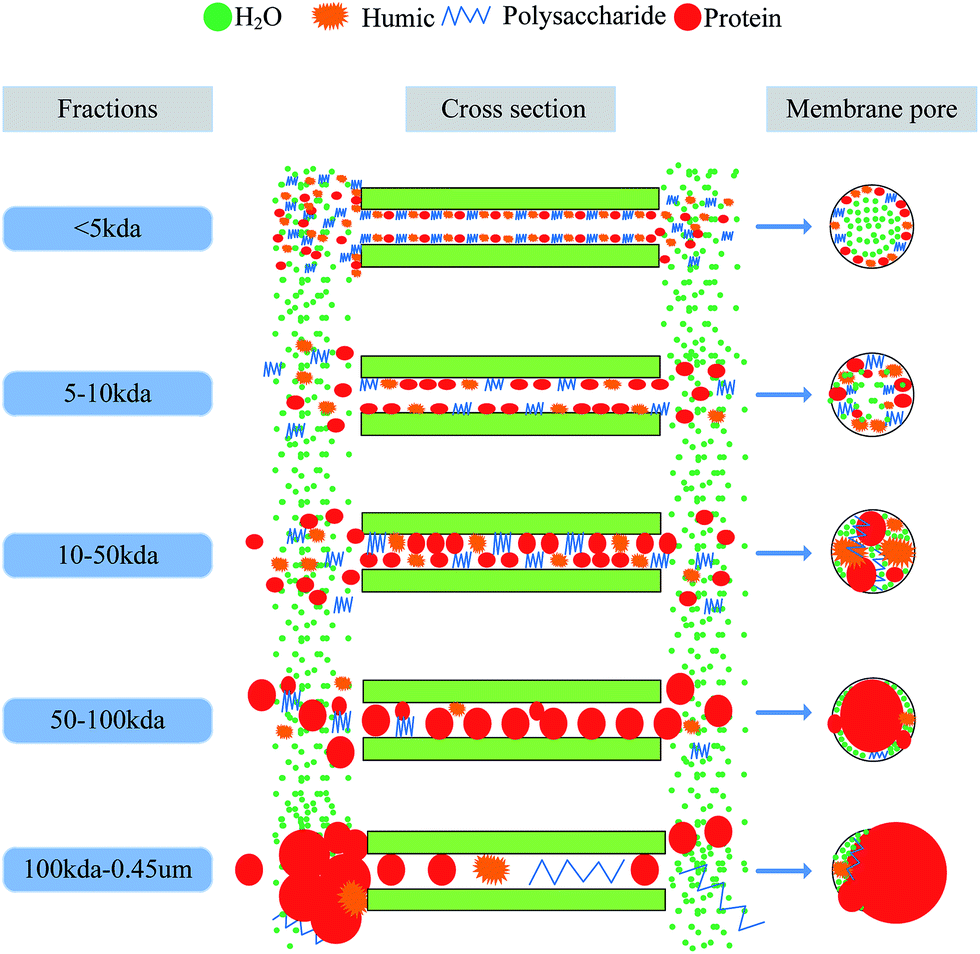
Pore blocking and cake layer formation were the two main mechanisms of membrane fouling in this study. The fouling process of fractions in natural water with the UF membrane could be demonstrated as Fig. 10. Small molecular foulants (<5 kDa, 5–10 kDa) were absorbed on the surface or in the internal UF membrane which narrowed the pore and was shown in Fig. 8. From Fig. 4(a) and 5, fractions of <5 kDa, 5–10 kDa caused little flux decline, and the decline was irreversible. The main substances were humic-like substances and protein-like substances as Fig. 6 reflected and a polysaccharide may exist. These substances mainly got through the UF membrane as demonstrated by Fig. 3 and only a little of the substances was trapped on the membrane. The image of the SEM in Fig. 8(a) shows that there are also a lot of pores on the filtered membrane, which means that the flux declined a little. For fractions of 10–50 kDa and 50–100 kDa, some bigger molecules might adsorb on the internal pores and only a small space would allow the pollutants to get through, which can be seen in Fig. 9. When the pore size got smaller, the attraction among foulants makes the filtration more difficult, which leads to a more severe flux decline. From Fig. 4(a) 100 kDa-0.45 μm caused the most serious flux decline, and the flux could be recovered after backwashing. The foulants with larger molecular weights (100 kDa-0.45 μm) will completely block the pores of the UF membrane. When most of the area of the membrane surface was plugged by foulants, the foulants will accumulate on the surface of the membrane and form the cake layer as Fig. 8(e) showed. It is important to note that it is a simultaneous process in ultrafiltration NOM. Mechanism research based on the size of the foulants can help to better understand the membrane fouling process by NOM and could provide a reference for subsequent research and selection of appropriate pretreatment technology.
 |
| | Fig. 10 The mechanisms of membrane fouling for different fractions including <5 kDa, 5–10 kDa, 10–50 kDa, 50–100 kDa, 100 kDa-0.45 μm. | |
4. Conclusions
In order to observe the ultrafiltration membrane fouling process with different molecular weight foulants, the NOM in natural water was fractionated into five fractions, including <5 kDa, 5–10 kDa, 10–50 kDa, 50–100 kDa, 100 kDa-0.45 μm. The experiments were performed under low DOC concentrations to find out the responsible fractions. The irreversible and reversible membrane foulings with different sizes of organic matter were studied with SEM image analysis and EEM-PRAFAC identification to find the responsible substances. The mechanisms of fractions for membrane fouling were also studied and the following conclusions can be drawn:
(1) Most small molecule matter (<5 kDa, 5–10 kDa) in natural water leads to a minor flux decline and contributed to irreversible membrane fouling. The SEM image analysis revealed that the surface of the membrane after filtration of small molecule matter did not form a cake layer, which means that the membrane fouling was mainly controlled by pore blocking. Small size foulants include humic-like substances and protein-like substances.
(2) The relative macromolecular substances (50–100 kDa, 100 kDa-0.45 μm), mainly protein-like substances, contributed more to flux decline because of the cake layer formation in the processing of UF. Meanwhile, macromolecules can also block the pores of the membrane, leading to irreversible membrane fouling. Fortunately, the concentration of macromolecular matter was lower.
(3) Correlation analyses suggested that for all the fractions, the protein-like substances could be considered as a major component contributing to the total membrane fouling and irreversible membrane fouling. As for the small molecule matter, both humic-like substances and protein-like substances caused irreversible membrane fouling. Meanwhile, some other substances exist in natural water that also contributed to the membrane fouling. DOC on membrane fouling played a decisive role in irreversible membrane fouling.
Symbol description
| PARAFAC | Parallel factor analysis |
| PCA | Principal component analysis |
| EEM | Three-dimensional fluorescence excitation-emission matrix |
| Fmax | Maximum fluorescence intensity |
| SEM | Scanning electronic microscopy |
| PES | Polyethersulfone |
| NOM | Natural organic matter |
| BW | Backwashing |
| UF | Ultrafiltration |
| MF | Microfiltration |
| RF | Reversible fouling |
| IF | Irreversible fouling |
| TF | Total fouling |
| C1 | Component 1 |
| C2 | Component 2 |
| C3 | Component 3 |
| UW | Ultrapure water |
| CP | Concentration polarization |
| P | Permeate |
| R | Retentate |
| RAW | Raw water |
| kDa | 1000 dalton |
| MWCO | Molecular weight cut-off |
| SMM | Small MWCO membrane |
| LMM | Large MWCO membrane |
Acknowledgements
This work was supported by the National Natural Science Foundation of China (No. 51208140) and the National Water Pollution Control and Treatment Science and Technology Major Project of China (No. 2012ZX07201002).
Reference
- X. Ke, R. Hongqiang, D. Lili, G. Jinju and Z. Tingting, Environ. Sci. Pollut. Res. Int., 2013, 20, 771–777 CrossRef CAS PubMed.
- G. S. Ajmani, D. Goodwin, K. Marsh, D. H. Fairbrother, K. J. Schwab, J. G. Jacangelo and H. O. Huang, Water Res., 2012, 46, 5645–5654 CrossRef CAS PubMed.
- J. M. Laine, C. Campos, I. Baudin and M. L. Janex, Understanding membrane fouling: a review of over a decade of research, I W a Publishing, London, 2003 Search PubMed.
- M. Nystrom, K. Ruohomaki and L. Kaipia, Desalination, 1996, 106, 79–87 CrossRef CAS.
- T. Carroll, S. King, S. R. Gray, B. A. Bolto and N. A. Booker, Water Res., 2000, 34, 2861–2868 CrossRef CAS.
- J. Haberkamp, M. Ernst, G. Makdissy, P. M. Huck and M. Jekel, J. Environ. Eng. Sci., 2008, 7, 651–660 CrossRef CAS.
- K. S. Katsoufidou, D. C. Sioutopoulos, S. G. Yiantsios and A. J. Karabelas, Desalination, 2010, 220–227 CrossRef CAS.
- J. Y. Tian, M. Ernst, F. Y. Cui and M. Jekel, Water Res., 2013, 47, 1218–1228 CrossRef CAS PubMed.
- W. Sun, J. Nan, J. Xing and J. Tian, J. Environ. Sci., 2016, 45, 215–223 CrossRef PubMed.
- S. Nakatsuka, I. Nakate and T. Miyano, Desalination, 1996, 106, 55–61 CrossRef CAS.
- K. Khatib, J. Rose, O. Barres, W. Stone, J. Y. Bottero and C. Anselme, J. Membr. Sci., 1997, 130, 53–62 CrossRef CAS.
- J. C. Mierzwa, V. Arieta, M. Verlage, J. Carvalho and C. D. Vecitis, Desalination, 2013, 314, 147–158 CrossRef CAS.
- D. Jermann, W. Pronk and M. Boller, Environ. Sci. Technol., 2008, 42, 9129–9136 CrossRef CAS PubMed.
- W. Yuan and A. L. Zydney, Desalination, 1999, 122, 63–76 CrossRef CAS.
- K. Glucina, J. M. Laîne and L. Durand-Bourlier, Desalination, 1998, 118, 205–211 CrossRef CAS.
- W. Yuan and A. L. Zydney, Environ. Sci. Technol., 2000, 34, 5043–5050 CrossRef CAS.
- T. Thorsen, J. Membr. Sci., 2004, 233, 79–91 CrossRef CAS.
- A. Córdova, C. Astudillo, C. Guerrero, C. Vera and A. Illanes, Desalination, 2016, 393, 79–89 CrossRef.
- M. D. Kennedy, H. K. Chun, V. A. Q. Yangali, B. G. J. Heijman and J. C. Schippers, Desalination, 2005, 178, 73–83 CrossRef CAS.
- A. Costa, M. Depinho and M. Elimelech, J. Membr. Sci., 2006, 281, 716–725 CrossRef CAS.
- F. Qu, H. Liang, J. Zhou, J. Nan, S. Shao, J. Zhang and G. Li, J. Membr. Sci., 2014, 449, 58–66 CrossRef CAS.
- Y. Liu, X. Li, Y. Yang, W. Ye, S. Ji, J. Ren and Z. Zhou, Desalination, 2014, 347, 191–198 CrossRef CAS.
- J. Hermia, Trans. Inst. Chem. Eng., 1982, 60, 183–187 CAS.
- A. Charfi, N. Ben Amar and J. Harmand, Water Res., 2012, 46, 2637–2650 CrossRef CAS PubMed.
- K. J. Howe and M. M. Clark, Environ. Sci. Technol., 2002, 36, 3571–3576 CrossRef CAS PubMed.
- L. Fan, J. L. Harris, F. A. Roddick and N. A. Booker, Water Res., 2001, 35, 4455–4463 CrossRef CAS PubMed.
- H. C. Kim, J. H. Hong and S. Lee, J. Membr. Sci., 2006, 283, 266–272 CrossRef CAS.
- J. X. Yang, W. X. Shi, S. L. Yu and Y. Lu, Desalination, 2009, 239, 29–37 CrossRef CAS.
- X. Zheng, M. Ernst and M. Jekel, Water Res., 2009, 43, 238–244 CrossRef CAS PubMed.
- C. W. Lee, S. D. Bae, S. W. Han and L. S. Kang, Desalination, 2007, 202, 239–246 CrossRef CAS.
- C. F. Lin, O. J. Hao and Y. J. Huang, Water Res., 1999, 33, 1252–1264 CrossRef CAS.
- Y. Zhang, X. H. Zhao, X. B. Zhang and S. Peng, Desalination, 2015, 360, 118–129 CrossRef CAS.
- S. L. Shao, H. Liang, F. S. Qu, H. R. Yu, K. Li and G. B. Li, J. Membr. Sci., 2014, 464, 33–42 CrossRef CAS.
- C. A. Stedmon and R. Bro, Limnol. Oceanogr.: Methods, 2008, 6, 572–579 CrossRef CAS.
- P. C. Chiang, E. E. Chang and C. H. Liang, Chemosphere, 2002, 46, 929–936 CrossRef CAS PubMed.
- G. G. Leppard, J. Buffle and R. Baudat, Colo. J. Int. Environ. Law Policy, 1986, 20, 185–196 CAS.
- H. R. Yu, F. S. Qu, H. Liang, Z. S. Han, J. Ma, S. L. Shao, H. Q. Chang and G. B. Li, Desalination, 2014, 337, 67–75 CrossRef CAS.
- S. K. Ishii and T. H. Boyer, Environ. Sci. Technol., 2012, 46, 2006–2017 CrossRef CAS PubMed.
- Y. Yamashita and R. Jaffé, Environ. Sci. Technol., 2008, 42, 7374–7379 CrossRef CAS PubMed.
- C. A. Stedmon, S. Markager and R. Bro, Mar. Chem., 2003, 82, 239–254 CrossRef CAS.
- Y. Yamashita and E. Tanoue, Mar. Chem., 2003, 82, 255–271 CrossRef CAS.
Footnote |
| † Electronic supplementary information (ESI) available. See DOI: 10.1039/c6ra17376d |
|
| This journal is © The Royal Society of Chemistry 2016 |
Click here to see how this site uses Cookies. View our privacy policy here. 

 *a,
Jia Xingb and
Jiayu Tian*a
*a,
Jia Xingb and
Jiayu Tian*a