Nitrogen-doped graphene/tungsten oxide microspheres as an electro-catalyst support for formic acid electro-oxidation

Yang Zhouab, Chen Lic, Junxiang Fua, Changlin Yua and Xian-Chao Hu*c
aEngineering Research Institute Jiangxi University of Science and Technology, 86 Hongqi Road, Ganzhou 341000, PR China. E-mail: yangzhou1998@126.com
bKey laboratory of power batteries & relative materials, Ganzhou 341000, Jiangxi Province, PR China
cResearch Center of Analysis and Measurement, Zhejiang University of Technology, 18 Chaowang Road, Hangzhou 310032, PR China. E-mail: huxc@zjut.edu.cn

Received 6th July 2016 , Accepted 8th September 2016

First published on 13th September 2016


Abstract

Tungsten trioxide (WO3) spheres decorated with nitrogen-doped graphene (NRGO–WO3) were synthesized by applying the spray-drying procedure and characterized for their ability to serve as an electro-catalyst support for formic acid electro-oxidation. A possible mechanism for the formation of NRGO–WO3 was proposed based on the results of tunneling electron microscopy (TEM) and X-ray photoelectron spectroscopy (XPS). Pd nanoparticles with dimensions of 4.8 nm were loaded onto the surface of NRGO–WO3 using a conventional sodium borohydride reduction method. The electrocatalytic performances of Pd/NRGO–WO3 for formic acid oxidation were investigated by using cyclic voltammetry and chronoamperometry. Due to the decrease in the resistance to electron transfer resulting from the modification of N-doped graphene, which produced an excellent electrical conductor, as well as due to the hydrogen spill-over effect, which accelerated the dehydrogenation of formic acid on Pd active sites, a great enhancement of the electrochemical performances was achieved.

1. Introduction

With the merits of reduced toxicity, high practical power density and limited crossover through a Nafion membrane, formic acid is considered as a promising alternative fuel for liquid fuel cells.1–3 The Pd-based catalyst has been shown to exhibit excellent activity and stability towards the formic acid electro-oxidation (FAEO) reaction by overcoming the CO poisoning effect.4–6 In the past few decades, metal oxides used as carriers or co-catalyst have attracted considerable attention due to their bifunctional mechanism.7–9 Among these metal oxides, tungsten trioxide (WO3) has many attractive properties, such as its insolubility in acid solution, hydrogen spill-over effect and the bifunctional mechanism.10–12 However, WO3 suffers from a low specific surface area and low electrical conductivity because it is an n-type semiconductor with a reported band gap of about 2.6 to 2.8 eV.

The introduction of carbon materials and surface modifications are generally used to enhance the electrochemical performance of WO3. Various carbon materials, such as carbon nanotubes13 and Vulcan XC-72R carbon,14 can decrease resistance to charge transport. However, the activity and stability of these electro-catalysts remain unsatisfactory due to the low chance of contacts forming between palladium and WO3. In addition, our previous research demonstrated that also including some WO2 could enhance the electrochemical performances of WO3 for methanol electro-oxidation (MOR) because the presence of WO2, which is a conductive oxide, decreases the resistance to charge transfer.15 Unfortunately, however, WO2 becomes irreversibly oxidized to WO3 during the methanol electro-oxidation. Consequently, many efforts are still being made to improve the electrochemical performance of WO3.

Recently, three-dimensional (3D) graphene (GR) has gained much attention as a potential component material of composites with noble metals for MOR or FAEO due to its extraordinary electronic and structural properties.16 Herein, tungsten oxide microspheres modified with nitrogen-doped 3D graphene have been prepared by applying a simple spray-drying process and a subsequent thermal reduction in a nitrogen atmosphere. This work offers a facile approach for enhancing the electrochemical performance of WO3 by combining the inclusion of carbon materials with surface modification, which can provide a highly efficient electro-catalyst support for FAEO.

2. Experimental

Preparation of NRGO/WO3 microsphere

All chemical reagents were of analytical grade. Graphene oxide (GO) was prepared by oxidizing graphite powder (99.9% purity, Alfa Aesar, USA) using the modified Hummers' method.17,18 Subsequently, 1000 mL aqueous suspensions of GO (0.1 mg mL−1) and ammonium metatungstate (AMT, 5 mg mL−1) were prepared. After being ultrasonicated for 30 min, the mixed solutions were subjected to spray drying using a SD1000 spray dryer (EYELA) under a blower flux of 0.7 m3 min−1, feeding speed of 600 mL h−1, and inlet temperature of 200 °C. The as-prepared powder samples above were then put into a ceramic boat under an atmosphere of nitrogen. The temperature of the furnace was raised to 673 K and held there for 1 h, and then raised to 1073 K for 3 h, with nitrogen all the while having been passed through the furnace. The samples were cooled to room temperature, and were denoted as NRGO–WO3.

Preparation of Pd/h-WO3 and Pd/NRGO–WO3 electrocatalysts

WO3 microspheres (h-WO3) were previously synthesized by our groups.19 Subsequently, the Pd/NRGO-WO3 catalyst was prepared by using the improved liquid phase reduction method. In a typical procedure, 50 mg of the as-prepared NRGO–WO3 support and 11.4 mL of a 5 mM H2PtCl6 solution were dispersed in 50 mL of water by sonication. Then, after the pH of this resulting solution was adjusted to nearly 9 using 1 M NaOH, a volume of 10 mL of freshly prepared 0.1 M NaBH4 was added to the solution, followed by stirring for 2 h. The resulting solution was filtered, washed, and dried at 85 °C for 10 h in a vacuum oven, yielding a 20 wt% Pd loading on the supports, which was denoted as Pd/NRGO–WO3. For comparison, Pd supported on the h-WO3 catalyst with the same Pd loading amount was prepared by using the same procedure described above, and was denoted as Pd/h-WO3. Commercial 10 wt% Pd/C (JM Pd/C) was purchased from Johnson Matthy Co., Ltd. and used as contrast samples.

Characterizations

The phases present in the synthesized materials were identified using an X-ray diffractometer (XRD, Panalytical X'Pert Pro, Cu Kα1 radiation source (λ = 0.1541 nm), voltage of 40 kV, current of 40 mA). The morphologies and structures of the products were characterized using a field emission scanning electron microscope (FE-SEM, Hitachi S-4700 II), and a tunneling electron microscope (TEM, Tecnai G2 F30) with an energy-dispersive X-ray spectroscope (EDS). Thermogravimetric analysis (TGA) was performed with a TA Q600 at a heating rate of 10 °C min−1 from room temperature to 1200 °C under air flow (100 mL min−1). X-ray photoelectron spectroscopy (XPS) was carried out on a Kratos AXIS Ultra DLD. All XPS spectra were corrected using the C 1s line at 284.6 eV. Curve fitting and background subtraction were performed.

Electrochemical measurements

The electrochemical measurements were performed using a three-electrode cell with an Ivium electrochemical workstation at room temperature. To prepare the electrode, a mass of 2 mg of electrocatalyst was ultrasonically mixed with 200 μL of an ethanol–water solution to form a homogeneous ink, followed by administering 2 μL of the electrocatalyst ink onto the surface of a glassy carbon (GC) electrode (with a diameter of 3 mm), to which was added 5 μL of 1.0% Nafion (DuPont, USA) in ethanol to fix the electrocatalyst on the GC electrode surface. A glassy carbon disk electrode served as the substrate for the support. Prior to use, the GC electrode was polished using an aqueous alumina suspension. And then the catalyst suspension was pipetted, using a micropipette, onto the GC surface to produce a Pd loading of about 0.056 mg cm−2. A Pt foil and saturated calomel electrode (SCE) were used as the counter and reference electrodes, respectively. The electrocatalytic activity of the catalysts for the oxidation of formic acid was studied in a 0.5 M H2SO4 aqueous solution containing 1.0 M HCOOH at a scan rate of 50 mV s−1.

3. Results and discussion

Structure and morphology

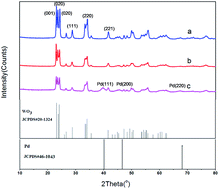
The XRD patterns of the synthesized samples are shown in Fig. 1. The main diffraction peaks matched well with those of the orthorhombic phase WO3 (JCPDS-20-1324) except for the weak diffraction peaks at 39.4°, 45.8° and 66.9°, which resulted from the Pd(111), (200) and (220) planes, respectively. No obvious characteristic GO peak at about 11° was observed in the diffraction pattern of the NRGO–WO3 sample (Fig. 1b), which suggests that GO was reduced to GR during the thermal treatment.20 Meanwhile the characteristic (002) peak of graphite at about 26° was also absent from this diffraction pattern (Fig. 1b), due to the overlap of the (120) peak of WO3. Moreover, the overall intensity of the NRGO–WO3 diffraction was weaker than that of the h-WO3 diffraction; it was weaker because the surface of NRGO–WO3 was encapsulated by the carbon, as shown by the TEM results described below. A thermogravimetric analysis (TGA) of the NRGO–WO3 composite was also carried out, in air, in order to quantify its content of carbon. The TGA (Fig. 2) yielded a slight weight loss up to a temperature of 100 °C, which could be attributed to dehydration. A 2% loss of weight was observed from 200 °C to 1200 °C, and this weight loss was attributed to combustion of the graphene,21 and was close to the actual amount of graphene loaded.
image file: c6ra17344f-f1.tif
Fig. 1 XRD patterns of (a) h-WO3, (b) NRGO–WO3 and (c) Pd/NRGO–WO3.

image file: c6ra17344f-f2.tif
Fig. 2 TGA curve of the NRGO–WO3 sample in air.

The structures and morphologies of as-prepared samples were characterized by using scanning electron microscopy (SEM) and tunnel electron microscopy (TEM) analyses. The SEM images (Fig. 3) of the as-prepared samples showed well-defined spherical structures with the diameters of about 1–5 μm. Graphene displayed a three-dimensional crumpled structure (Fig. 3a and c), due to π–π stacking and van der Waals attraction, and this crumpled structure prevented its irreversible aggregation and stacking.22 The TEM results further revealed the smooth-surfaced nature of the spherical structures (Fig. 4a). The high-resolution TEM (HRTEM) image of NRGO-WO3 showed its hierarchical core–shell structure (Fig. 4b). The C, W and N mapping images (Fig. 4e) demonstrated uniform distributions of these elements. According to the results of the TEM analysis above, it could concluded that the surface of WO3 was decorated by nitrogen-doped graphene.


image file: c6ra17344f-f3.tif
Fig. 3 SEM images of (a and c) NRGO–WO3 and (b and d) h-WO3.

image file: c6ra17344f-f4.tif
Fig. 4 TEM images of (a and b) NRGO–WO3 and (c and d) Pd/NRGO–WO3, and (e) elemental mapping of NRGO–WO3. The Pd particle size distribution of Pd/NRGO–WO3 is shown in the inset of panel (d).

Palladium particles were loaded on the surface of NRGO–WO3 or GR by means of the conventional sodium borohydride reduction method. As can be seen in Fig. 4c and d, palladium particles with narrow size distributions were well dispersed on the surfaces of NRGO–WO3 and GR. The average size of the Pd/NRGO–WO3 catalyst particles was estimated from their histogram to be approximately 5 nm. X-ray photoelectron spectroscopy (XPS) was used to investigate the composition and surface chemical state of Pd/NRGO–WO3. Fig. 5 shows segments of the XPS spectrum of this catalyst corresponding to the C 1s, W 4f, N 1s and Pd 3d photoemissions. As shown in Fig. 5a, the C 1s peak can be deconvoluted into four peaks. The main peak located at 284.7 eV can be assigned to the C–C bond, with the other small peaks at 288.9 eV, 286.8 eV, 285.6 eV attributed to the –COOH, –C–O–C and –C–OH functional groups, respectively.23 The Pd 3d peak was also deconvoluted into two pairs of doublets (Fig. 5d), which were assigned as metallic Pd (335.1 eV and 340.9 eV) and Pd2+ (337.2 eV and 342.9 eV), suggesting that the Pd was mainly in the metallic state.24 In addition, the peak located at 399.5 eV (Fig. 5c) was attributed to the nitrile N species, suggesting that N was incorporated into the GR structure, consistent with the STEM (scanning transmission electron microscopy) result. No obvious characteristic peak of the low valence state of tungsten (Fig. 5c) was observed, suggesting that WO3 was not reduced by GR during the thermal treatment.


image file: c6ra17344f-f5.tif
Fig. 5 XPS spectrum of Pd/NRGO–WO3, showing the peaks for the (a) C 1s, (b) N 1s, (c) W 4f and (d) Pd 3d elements.

Based on these TEM and XPS results, we suggest that the as-prepared NRGO–WO3 composites formed using the following process. After the as-prepared GO was sonicated with AMT in deionized water and the mixed solution including GO and AMT was pumped into the spray-drying apparatus, the GO sheets spontaneously assembled on the surface of the droplets due to their amphiphilicity and subsequently encapsulated the AMT microspheres during the spray drying. Then, during the calcination under an atmosphere of nitrogen, ammonia gas was generated as a result of AMT decomposition, and was used as a nitrogen source to react with functional groups such as carboxyl and hydroxyl on the surface of the GO, which was also simultaneously reduced to GR by the heat treatment. Finally, the surfaces of the WO3 microspheres were modified by the nitrogen-doped graphene to form the observed core–shell hierarchical structure.

Activity toward formic acid oxidation

Fig. 6a shows the cyclic voltammograms (CV) of three catalyst electrodes, each in a solution of 0.5 M H2SO4 and 1 M HCOOH at a scan rate of 50 mV s−1. In each case, the current density was calculated by normalization to the mass of loaded Pd because the intercalation of protons in WO3 to form tungsten bronzes occurred in the same potential region (−0.24 to 0.05 V) as did the hydrogen underpotential deposition (H-UPD) on Pd.25,26 As shown in Fig. 6a, of the samples tested, the Pd/NRGO–WO3 catalyst exhibited the best activity for formic acid oxidation, with a peak current density of 932 mA mg−1. This value was specifically 2.4 and 3.5 times greater than the 380 mA mg−1 and 264 mA mg−1 values displayed by the JM Pd/C and Pd/h-WO3 catalysts, respectively. It was also better than those previously reported for Pd/WO3 catalysts,27,28 indicating that the modification of N-doped graphene greatly enhanced the kinetics of the Pd/WO3 catalyst for the FAEO reaction. This enhanced kinetics may have been due to the decrease of the resistance to electron transfer resulting from the modification of N-doped graphene that produced an excellent electrical conductor as well as due to the hydrogen spill-over effect accelerating the dehydrogenation of formic acid on the Pd active site.26 Nitrogen and oxygen on the surface of GR provided many active sites for anchoring Pd nanoparticles, which was also beneficial for the FAEO reaction. Also, as seen in Fig. 6b, the current density decreased rapidly with increasing cycle number for the commercial JM Pd/C catalysts, in contrast to that observed for the other two electro-catalysts, indicating that the introduction of WO3 played an important role during the FAEO reaction.
image file: c6ra17344f-f6.tif
Fig. 6 (a) Cyclic voltammetric curves and (b) CV stability performances of Pd/NRGO–WO3, Pd/h-WO3 and JM Pd/C catalysts each in a solution of 0.5 M H2SO4 and 1 M HCOOH at a scan rate of 50 mV s−1.

The electro-catalytic stability of the various catalysts were further investigated by performing chronoamperometry (CA) tests at a constant voltage of 0.1 V (Fig. 7) for 6000 s in a solution containing 0.5 M H2SO4 and 1 M HCOOH. The stability of the three catalysts for the FAEO reaction followed the order Pd/NRGO–WO3 > JM Pd/C > Pd/h-WO3. The significantly greater catalytic stability of Pd/NRGO–WO3 may have been due to the hydroxyl functional groups on the surfaces of tungsten oxide and N-doped GR facilitating the oxidation of poisonous CO intermediates on the active Pd sites.29,30 Combining these results with the CA and CV results, we conclude that, of the catalysts tested, the Pd/NRGO–WO3 catalyst has the highest catalytic performance toward the FAEO reaction.


image file: c6ra17344f-f7.tif
Fig. 7 Chronoamperometric curves of Pd/NRGO–WO3, Pd/h-WO3 and JM Pd/C catalysts at 0.1 V in a solution of 0.5 M H2SO4 and 1 M HCOOH.

4. Conclusions

In summary, we have demonstrated a facile approach for enhancing the electrochemical performance of WO3 by combining the inclusion of carbon materials with surface modification, which can produce a highly efficient electro-catalyst support for formic acid electro-oxidation. The catalytic performance of the as-prepared Pd/NRGO–WO3 towards formic acid oxidation was superior to the performances of commercial Pd/C and Pd/h-WO3 catalysts. The inherent characteristics of NRGO–WO3 composites may also make them suitable for applications in photocatalysis, photochromism and gas sensing.

Acknowledgements

The research was financially supported by the National Natural Science Foundation of China (No. 51404110 and 21506187), Education Department Project Fund of Jiangxi Province (GJJ150665 and GJJ150633) and the Jiangxi Natural Science Foundation of China (No. 20151BAB213011).

Notes and references

  1. J. Zhao, Z. S. Liu, H. Q. Li, W. B. Hu, C. Z. Zhao, P. Zhao and D. L. Shi, Langmuir, 2015, 31, 2576–2583 CrossRef CAS PubMed.
  2. L. Y. Zhang, Z. L. Zhao and C. M. Li, Nano Energy, 2015, 11, 71–77 CrossRef CAS.
  3. K. Zhang, F. F. Ren, H. W. Wang, C. Q. Wang, M. S. Zhu and Y. K. Du, Chempluschem, 2015, 80, 529–535 CrossRef CAS.
  4. P. Kannan, T. Maiyalagan and M. Opallo, Nano Energy, 2013, 2, 677–687 CrossRef CAS.
  5. T. Jin, S. J. Guo, J. L. Zuo and S. H. Sun, Nanoscale, 2013, 5, 160–163 RSC.
  6. H. Y. Qian, H. J. Huang and X. Wang, J. Power Sources, 2015, 275, 734–741 CrossRef CAS.
  7. B. Habibi and N. Delnavaz, RSC Adv., 2015, 5, 73639–73650 RSC.
  8. Q. Du, J. B. Wu and H. Yang, ACS Catal., 2014, 4, 144–151 CrossRef CAS.
  9. H. J. Huang and X. Wang, Phys. Chem. Chem. Phys., 2013, 15, 10367–10375 RSC.
  10. A. U. Rehman, S. S. Hossain, S. U. Rahman, S. Ahmed and M. M. Hossain, Appl. Catal., A, 2014, 482, 309–317 CrossRef CAS.
  11. L. G. Feng, L. A. Yan, Z. M. Cui, C. P. Liu and W. Xing, J. Power Sources, 2011, 196, 2469–2474 CrossRef CAS.
  12. K. Y. Chen, P. K. Shen and A. C. C. Tseung, J. Electrochem. Soc., 1995, 142, L54–L56 CrossRef CAS.
  13. C. A. Ma, Y. X. Jin, M. Q. Shi, Y. Q. Chu, Y. H. Xu, W. P. Jia, Q. H. Yuan, J. B. Chen, H. L. Pan and Q. W. Dai, Ionics, 2014, 20, 1419–1426 CrossRef CAS.
  14. Z. H. Zhang, Y. J. Huang, J. J. Ge, C. P. Liu, T. H. Lu and W. Xing, Electrochem. Commun., 2008, 10, 1113–1116 CrossRef CAS.
  15. Y. Zhou, X.-C. Hu, X.-H. Liu and H.-R. Wen, Chem. Commun., 2015, 51, 15297–15299 RSC.
  16. Y. Zhou, X.-C. Hu, Q.-z. Fan and H.-R. Wen, J. Mater. Chem. A, 2016, 4, 4587–4591 CAS.
  17. W. S. Hummers and R. E. Offeman, J. Am. Chem. Soc., 1958, 80, 1339 CrossRef CAS.
  18. L. J. Cote, F. Kim and J. X. Huang, J. Am. Chem. Soc., 2009, 13, 1043–1049 CrossRef PubMed.
  19. Y. Zhou, X. C. Hu, Y. J. Xiao and Q. Shu, Electrochim. Acta, 2013, 111, 588–592 CrossRef CAS.
  20. J. Z. Wang, C. Zhong, D. Wexler, N. H. Idris, Z. X. Wang, L. Q. Chen and H. K. Liu, Chem.–Eur. J., 2011, 17, 661–667 CrossRef CAS PubMed.
  21. X. W. Yang, J. W. Zhu, L. Qiu and D. Li, Adv Mater, 2011, 23, 2833–2877 CrossRef CAS PubMed.
  22. J. Y. Luo, H. D. Jang, T. Sun, L. Xiao, Z. He, A. P. Katsoulidis, M. G. Kanatzidis, J. M. Gibson and J. X. Huang, Acs Nano, 2011, 5, 8943–8949 CrossRef CAS PubMed.
  23. A. Halder, S. Sharma, M. S. Hegde and N. Ravishankar, J. Phys. Chem. C, 2009, 113, 1466–1473 CAS.
  24. Y. Li, X. B. Fan, J. J. Qi, J. Y. Ji, S. L. Wang, G. L. Zhang and F. B. Zhang, Nano Res., 2010, 3, 429–437 CrossRef CAS.
  25. S. Jayaraman, T. F. Jaramillo and E. W. McFarland, Abstr. Pap. Am. Chem. Soc., 2005, 229, U1094 Search PubMed.
  26. I. A. Rutkowska, D. Marks, C. Perruchot, M. Jouini and P. J. Kulesza, Colloids Surf., A, 2013, 439, 200–206 CrossRef CAS.
  27. X. C. Hu, Y. Zhou, H. R. Wen and H. M. Zhong, J. Electrochem. Soc., 2014, 161, F583–F587 CrossRef CAS.
  28. Y. Zhou, X. C. Hu, L. Q. Li and X. R. Chen, Acta Chim. Sin., 2014, 30, 83–87 CAS.
  29. P. K. Shen and A. C. C. Tseung, J. Electrochem. Soc., 1994, 141, 3082–3090 CrossRef CAS.
  30. S. Sharma, A. Ganguly, P. Papakonstantinou, X. P. Miao, M. X. Li, J. L. Hutchison, M. Delichatsios and S. Ukleja, J. Phys. Chem. C, 2010, 114, 19459–19466 CAS.

This journal is © The Royal Society of Chemistry 2016
Click here to see how this site uses Cookies. View our privacy policy here.