
Hydrothermal synthesis of blue-fluorescent monolayer BN and BCNO quantum dots for bio-imaging probes

Qi Xuea, Huijie Zhangb, Minshen Zhua, Zifeng Wanga, Zengxia Peia, Yang Huanga, Yan Huanga, Xiufeng Songc, Haibo Zengc and Chunyi Zhi*ad
aDepartment of Physics and Materials Science, City University of Hong Kong, Hong Kong, China. E-mail: cy.zhi@cityu.edu.hk
bThe Key Laboratory of Carbohydrate Chemistry and Biotechnology, Ministry of Education, School of Biotechnology, Jiangnan University, Wuxi, Jiangsu, China
cInstitute of Optoelectronics and Nanomaterials (ION), Herbert Gleiter Institute of Nanoscience (HGI), College of Materials Science and Engineering, Nanjing University of Science and Technology, Nanjing, China
dShenzhen Research Institute, City University of Hong Kong, Shenzhen, China

Received 29th June 2016 , Accepted 12th August 2016

First published on 15th August 2016


Abstract

Fluorescent monolayer boron nitride based quantum dots, including boron nitride quantum dots and boron carbon oxynitride quantum dots, were successfully fabricated via a hydrothermal method by cutting the bulk material assisted by a basic solution. The boron nitride/boron carbon oxynitride quantum dots are water-soluble with uniform lateral sizes around 3.3 and 4.0 nm respectively. The application of the as-prepared quantum dots as promising bio-imaging probes was demonstrated through labeling HeLa cells with boron nitride/boron carbon oxynitride quantum dots, indicating single layered boron nitride/boron carbon oxynitride quantum dots could be further used in biological applications.

Introduction

Quantum dots (QDs), zero-dimensional nanomaterials, have attracted great attention and been applied in biological, electrical and environmental areas due to their superior optical and physical properties.1–6 With great effort, fabricating QDs has been proved to be an effective way to broaden the application fields of materials. Some well-known two-dimensional nanomaterial including graphene, molybdenum disulfide and carbon nitride have been cut into nanoscaled QDs.3–5

Similar to graphene, hexagonal boron nitride (h-BN) has layer-stacked structure which is built up of hexagonal covalent bond and possess planar networks interacted by van der Waals forces.7–10 Boron nitride nanosheets (BNNSs), few-layered h-BN, can be peeled off from the bulk h-BN, which have some interesting properties like high chemical stability, excellent mechanical properties and high thermal conductivity.11–17 Boron carbon oxynitride (BCNO), is an organ phosphor containing additional C and O element basically derived from of h-BN with tunable bandgap and photoluminescence (PL) performance, which is a promising candidate for white light emitting diodes.18–28 In addition, when being cut into nano-scaled size, the BN/BCNO would represent some interesting phenomenon such as tunable band gap and controllable PL.28,29 A method was reported to fabricate ultrathin BN QDs from h-BN flakes using metal K and successfully applied that as fluorescent probe.29 However, the quantum yield is low and the method is violent with metal K involved. Up to now, a facial and mild approach to achieve BN-based QDs with high quantum yields remained to be highly challenging.

Herein, ultra-small BN/BCNO QDs with uniform sizes were prepared through a hydrothermal method by cutting bulk BN and BCNO assisted by bases (KOH and NH3·H2O). In addition, this method is cheap and robust refraining from using any expensive and sophisticated equipment or devices. The BN/BCNO QDs are water-soluble and easily dispersed in ethanol. The obtained BN and BCNO QDs show strong PL with quantum yields of 1.8% and 5%, respectively. In addition, hydrothermal process would create some amino groups on the edge of BN/BCNO QDs, consequently, the as-obtained BN/BCNO QDs acquire stable PL upon different pH values. The application of BN/BCNO QDs as promising bio-imaging probes was demonstrated through labelling HeLa cell with BN/BCNO QDs, indicating single layered BN/BCNO QDs can be further used in biological applications.

Experimental section

Hexagonal boron nitride was purchased from Wako (special grade, Wako Pure Chemical Ind., Ltd.). Potassium hydroxide, sodium hydroxide were purchased from Uni-chem (china). Boric acid was purchased fro Fisher Scientific. Polyvinyl butyral and ethanol were purchased from Sigma-Aldrich. Ammonia was purchased from VWR BDH Prolabo. Reagents are of analytical reagent grade and used as received.

Synthesis of BCNO

Boric acid and polyvinyl butyral were mixed in ethanol and stirred for half an hour to obtain homogeneous solutions. After drying, the precursor was annealed at 800 °C at a heating rate of 5 °C min−1 for five hours under the protection of NH3 and O2.

Synthesis of BN QDs

First the bulk BN flakes were exfoliated through melt bases method. In detail, h-BN powder (0.248 g) was mixed with sodium hydroxide (2.0600 g) and potassium hydroxide (2.7160 g), then the mixture was grounded well into a homogeneous form. The mixture was put into autoclave followed by heating for 2 h at 180 °C. After centrifuged for several times until pH close to 7, the exfoliated BNNSs were obtained.12 Then 10 mg exfoliated BNNSs (several layers) were added into 30 mL DI water in a 75 mL Teflon-lined stainless steel autoclave and further hydrothermally for 24 h with the aid of KOH (pH > 10). The hydrothermal process creates many defects on the BNNSs. After the autoclave cooled down naturally, then the dispersion was sonicated with a sonic tip for 2 h. The BNNSs with sufficient defects break into quantum-sized nanoparticles with the aid of ultrasonic. The ultra-small BN QDs solution were prepared by filtering the mixture with 220 nm membrane.

Synthesis of BCNO QDs

BCNO QDs were synthesized through a simple hydrothermal method. Firstly, 10 mg BCNO was added to 20 mL DI water in 40 mL beaker, then mix was adjusted to pH 10 with NH3. The mixture was transferred into 75 mL Teflon-lined stainless steel autoclave and reacted at 100 °C for 6 h followed by sonication for 2 h. The light yellow BCNO QDs solution were collected by filtrating the mixture with 220 nm membrane.

Characterization methods

An ultrasonic homogenize is used for ultrasounding (JY 92-IIN from SCIENZ CO. LTD). A Varian Cary 50 Conc. Spectrophotometer is used for absorption spectroscopy. A Varian Cary Eclipse is used for photoluminescence spectroscopy. Powder X-ray diffraction (XRD) patterns were recorded on a BRUKER D2 PHASER diffractometer, which is equipped with Cu Kα irradiation (λ = 1.54184 Å) and working at 10 mA and 30 kV. A Philips FEG CM200 transmission electron microscope (TEM) was employed for the TEM investigations. The morphology and structure of the obtained samples were investigated by scanning electron microscopy (SEM, FEI/Philips XL30), and high-resolution transmission electron microscopy (HR-TEM, JEOL 2010). The thickness of samples were analysed by Veeco Multimode-V atomic force microscope (Veeco, USA). X-ray photoelectron spectra (XPS) were acquired on Scanning Auger XPS PHI Model 5802 (PHI, USA). The fitting of the XPS spectra was carried out with XPS Peak software.

Cell viability

The mouse leukemic monocyte macrophage RAW264.7 cell line was purchased from Cell Bank of Chinese Academy of Sciences (Shanghai, China). Cell viability was determined by MTT assay with RAW264.7 cells. RAW264.7 cells were seeded into 96-well plates (5 × 10³ cells per well) for 24 h at 37 °C before treatment. Cells cultured in the medium without adding QDs sample were taken as the control. BN QDs and BCNO QDs with concentration at 15ug mL−1 were separately introduced to the plates followed by incubating for 24 h at 37 °C. After adding CCK-8, the absorbance at 450 nm were measured followed by the calculation of relative cell viability.

Bio-imaging

HeLa cells were seeded in 24-well plate at a density of 20[thin space (1/6-em)]000 cells per well in DMEM supplemented with 10% (v/v) fetal bovine serum and 1% (v/v) penicillin/streptomycin, and cultured in 5% CO2 at 37 °C for 48 h. The cells were then treated with different samples. After another 4 h incubation, cells were washed with PBS for a few times to remove excessive samples, immersed in medium and taken for imaging on a Leica SP5 confocal microscope. The fluorescence of samples (emission range 450–550 nm) could be detected under 405 nm excitation.

Results and discussion

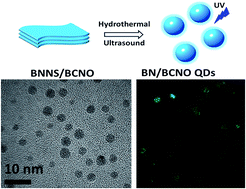
The synthesis process of monolayer BN/BCNO QDs are schematically exhibited in Fig. 1. Briefly, BNNSs were obtained by a typical exfoliation method.12 (Experimental part in the ESI). The transmission electron microscope (TEM) image exfoliated BNNSs and scanning electron microscopy (SEM) image of bulk BCNO phosphor are shown in Fig. S2. The ultra-small BN/BCNO QDs were prepared through hydrothermally cutting BNNSs/BCNO into structure with defect assisted by KOH and NH3·H2O, respectively. Subsequently, the corresponding precursor were broken into quantum-sized nanoparticles with the aid of ultrasound, followed by filtering through 220 nm membrane. The obtained transparent aqueous solution contains BN/BCNO QDs.
image file: c6ra16744f-f1.tif
Fig. 1 Schematic representation of the fabrication process to prepare ultra-small BN/BCNO QDs through a hydrothermal method.

Fig. 2a and b shows the TEM images of as-prepared BN and BCNO QDs. In Fig. S3a, the size distribution of BN QDs ranges from 2 to 5.5 nm with an average size at 3.3 nm. Moreover, the high-resolution TEM (HRTEM) image reveals that the lattice fringe of 2.15 Å matches well the BN (100) planes.29 Similarly, the BCNO QDs display uniform sizes with an average size of 4.0 nm (Fig. S3b). Different from bulk BN/BCNO flakes with large size, the BN/BCNO QDs can be well dispersed in deionized water and ethanol with ultra-small size which may create the suitable condition for entering the cells. The atomic force microscopy (AFM) image of BN QDs shows that they possess an average thickness of 1.05 nm, indicating approximately 70% of BN QDs corresponds to monolayered QDs.11,30 The average thickness of BCNO QDs is 0.8 nm, implying the majority of BCNO QDs come out to be monolayer QDs.


image file: c6ra16744f-f2.tif
Fig. 2 (a) TEM images of as-prepared BN QDs. (Inset is HRTEM image of the obtained BN QDs.) (b) TEM images of BCNO QDs. (c and d) AFM image and thickness distribution of as-synthesized BN QDs. (e and f) AFM image and thickness distribution of BCNO QDs.

The composition and structure of the as-prepared BN/BCNO QDs were comprehensively investigated by Fourier transform infrared spectroscopic (FT-IR) and X-ray photoelectron spectroscopy (XPS) elemental analysis studies. In Fig. 3a, the surface of BN/BCNO were passivated by N–H groups and –OH groups, which are deemed to be responsible for good water solubility of as-obtained BN/BCNO QDs.3 Two bands at around 1400 and 800 cm−1 correspond to characteristic bands of B–N vibrations in h-BN. The vibrations at around 1200 and1650 cm−1 suggest the formation of the C–B and C–N bonds.31–33


image file: c6ra16744f-f3.tif
Fig. 3 (a) FT-IR spectra typical BN/BCNO QDs. (b) XPS fully scanned spectrum of BN/BCNO QDs. (c–e) High resolution XPS spectra of B1s, C1s and N1s of as-synthesized BN QDs. (f–h) High resolution XPS spectra of B1s, C1s and N1s of as-synthesized BCNO QDs.

These conclusions about the surface groups and structure were further verified by XPS analysis (Fig. 3b). Fig. 3b makes it clear that the BN/BCNO QDs were composed of B, C, N and O elements. In Fig. 3c, the main peak at 284.6 eV was assigned to be C–C, C[double bond, length as m-dash]C or contamination on the tape which is a tool in the XPS test, there are C–B, C–N, C–N/C–O–B bonds centred at 283.5, 286, 288.6 eV, respectively. In Fig. 3d and e, there are intensive peak of B–N bonds, which implying that h-BN domains the as prepared BN QDs sample.34,35 In Fig. 3f, the main peak at 284.6 eV was assigned to be C–C, C[double bond, length as m-dash]C or contamination on the tape, which is similar to C1s analysis of BN QDs.29,34 There are C–B, C–N, C–N/C–O–B bonds centred at 283.5, 286.3, 287.3 eV respectively. In Fig. 3g, B–C is the main peak, followed by weak signals of B–O and B–N bonds, indicating that B–C structure domains the sample. For N1s signal, the main peak C–B–N was located at 398.9 eV, two weak signals close to N–B bonding are N–C and graphitic N bonds.29,34,35 These XPS analysis of BN/BCNO QDs are well consistent with the above qualitative analysis.

As shown in Fig. 4, the optical properties of as-prepared BN/BCNO QDs were thoroughly studied. Fig. 4a and c show the UV-vis absorption spectra of BN/BCNO QDs, respectively. The resultant BN/BCNO QDs could reveal an absorption around 290 nm, and the broad emissions of Ex 290 nm is centered at 410 nm (Fig. 4a) and 415 nm (Fig. 4c) with half width at half maximum (HWHM) around 130 and 110 nm, respectively. For BN and BCNO QDs, the photoluminescence excitation (PLE) spectra (detection wavelength of 410 nm for BN QDs and 415 nm for BCNO QDs) both show main peak at 320 nm and weak peak at 290 nm which is correlated with absorption spectra. The insets show that the BN/BCNO QDs solution represent blue light under the exposure of 365 nm UV light. The as-obtained BN/BCNO QDs show strong PL under the excitation of different wavelengths. As shown in Fig. 4b and d, normalized PL spectra of both BN/BCNO QDs show an excitation-dependent effect, which means the PL spectra shift with varied excitation energies. Through comparative method, the quantum yield of BN/BCNO QDs was measured to be 1.8% and 5%, respectively. Furthermore, PL intensity of BN/BCNO QDs perform great in neutral-pH solution, while the BCNO QDs exhibit better PL stability against the variation of pH of the solutions from strong acid to strong base than that of BN QDs due to larger amount of N–H groups created in the hydrothermal process (Fig. 4e and f).36,37


image file: c6ra16744f-f4.tif
Fig. 4 UV-vis absorption spectra, PL, PLE spectra of BN and BCNO QDs. In detail, (a) UV-vis absorption spectra, PL spectra (Ex = 290 nm), PLE spectra of BN QDs. (c) UV-vis absorption spectra, PL spectra (Ex = 290 nm), PLE spectra of BCNO QDs. (Insets are BN and BCNO QDs solution under visible and UV light.) (b and d) The normalized PL spectra of BN and BCNO QDs. (e and f) the PL intensity of BN and BCNO QDs upon different pH values (pH 1–12).

For PL mechanism of BN QDs, the introduction of defects centers like BO2− and C replaced N vacancy points is believed to lead to the luminescence.32,38,39 Moreover, PL of BN QDs is dominated by emission from BO2 species while the emissions from the zigzag carbene edge and 3 B centers is weak. Since the defects like, BO-species and N vacancies are observed in the BCNO QDs, transition between different energy level could result in the strong luminescence of BCNO QDs.24,25 Similar to emissions mechanism of BCNO raw material that arisen from energy transitions between different energy levels including nitrogen vacancy levels, carbon impurity levels and oxygen energy levels, we believe luminescence mechanism of BCNO QDs is likely supposed to be high concentration of defects and N vacancies dominated.20,40,41

As BN QDs have demonstrated favorable fluorescence properties and high biocompatibility, the as-synthesized BN QDs exhibit great potential for biological and optical application. The cytotoxicity of BN/BCNO QDs was measured by using a MTT viability assay with RAW264.7 cells. As shown in Fig. S8, BN/BCNO QDs are nontoxic to the viability of cells, indicating the BN/BCNO QDs possess high biocompatibility and low cell cytotoxicity.29,42 Furthermore, to demonstrate the potential application of the ultra-small BN/BCNO QDs as bio-imaging probe, the cell imaging performance were preliminarily investigated. HeLa cells were incubated with BN/BCNO QDs for 4 hours respectively before the laser excitation by a confocal microscope. Fig. 5b and d show the confocal fluorescence images of HeLa cell stained with BN and BCNO QDs respectively. Notably, the emissions mainly locate at cytoplasmic regions and clear boundary exists between cells, indicating the BN/BCNO QDs were easily taken up through the endocytosis of Hele cell after incubated with HeLa cell for 4 h. Moreover, exceedingly weak fluorescent spots are found in the nucleus region, indicating that the BN/BCNO QDs can easily penetrate into the cell without reaching the nucleus, in which the genetic disruption could not occur. Both these two kinds of QDs show bright fluorescence, revealing that they possess the promising practical applications in biological field.


image file: c6ra16744f-f5.tif
Fig. 5 Confocal laser scanning microscopy image of HeLa cells incubated with BN QDs and BCNO QDs for 4 h under 405 nm excitation. In detail, (a and b) the bright-field and confocal fluorescence images of BN QDs. (c and d) The bright-field and confocal fluorescence images of BCNO QDs.

Conclusions

We successfully fabricated monolayered BN/BCNO QDs through a robust hydrothermal method refraining from using any sophisticated equipment. The robust hydrothermal method for preparation QDs is environmental-friendly without using any toxic organic reagent. The average size of ultra-small BN/BCNO QDs is 3.3 nm and 4.0 nm respectively. When compared to the precursors, the obtained BN/BCNO QDs emit strong PL with a quantum yield of 1.8% for BN QDs and 5% for BCNO QDs due to the defect-rich structure. The as-synthesized BCNO QDs possess relative stable PL intensity upon different pH values (from 1 to 12) due to the passivated amino groups created in the hydrothermal process. Simultaneously, the BN/BCNO QDs achieve high biocompatibility and low cytotoxicity. The application of BN/BCNO QDs as bio-imaging probes was demonstrated by labelling HeLa cell with BN/BCNO QDs. Furthermore, the stable PL properties and high biocompatibility of BN/BCNO QDs render other optical and biological applications possible.

Acknowledgements

This research was supported by the Early Career Scheme of the Research Grants Council of Hong Kong SAR, China, under Project CityU109213, NSFC/RGC Joint Research Scheme (5151101197), under Project N_CityU123/15, the Science Technology and Innovation Committee of Shenzhen Municipality (Grant JCYJ20140419115507579) and a grant from the City University of Hong Kong.

Notes and references

  1. X. G. Peng, L. Manna, W. Yang, J. Wickham, E. Scher, A. Kadavanich and A. P. Alivisatos, Nature, 2000, 404, 59–61 CrossRef CAS PubMed.
  2. L. Manna, D. J. Milliron, A. Meisel, E. C. Scher and A. P. Alivisatos, Nat. Mater., 2003, 2, 382–385 CrossRef CAS PubMed.
  3. D. Pan, J. Zhang, Z. Li and M. Wu, Adv. Mater., 2010, 22, 734–738 CrossRef CAS PubMed.
  4. W. Dai, H. Dong, B. Fugetsu, Y. Cao, H. Lu, X. Ma and X. Zhang, Small, 2015, 11, 4158–4164 CrossRef CAS PubMed.
  5. X. Zhang, H. Wang, H. Wang, Q. Zhang, J. Xie, Y. Tian, J. Wang and Y. Xie, Adv. Mater., 2014, 26, 4438–4443 CrossRef CAS PubMed.
  6. I. L. Medintz, H. T. Uyeda, E. R. Goldman and H. Mattoussi, Nat. Mater., 2005, 4, 435–446 CrossRef CAS PubMed.
  7. C. Y. Zhi, Y. Bando, C. C. Tang, H. Kuwahara and D. Golberg, Adv. Mater., 2009, 21, 2889–2893 CrossRef CAS.
  8. Y. Wang, Z. X. Shi and J. Yin, J. Mater. Chem., 2011, 21, 11371–11377 RSC.
  9. H. Zeng, C. Zhi, Z. Zhang, X. Wei, X. Wang, W. Guo, Y. Bando and D. Golberg, Nano Lett., 2010, 10, 5049–5055 CrossRef CAS PubMed.
  10. D. Golberg, Y. Bando, Y. Huang, T. Terao, M. Mitome, C. Tang and C. Zhi, ACS Nano, 2010, 4, 2979–2993 CrossRef CAS PubMed.
  11. Y. Lin, T. V. Williams, T. B. Xu, W. Cao, H. E. Elsayed-Ali and J. W. Connell, J. Phys. Chem. C, 2011, 115, 2679–2685 CAS.
  12. X. L. Li, X. P. Hao, M. W. Zhao, Y. Z. Wu, J. X. Yang, Y. P. Tian and G. D. Qian, Adv. Mater., 2013, 25, 2200–2204 CrossRef CAS PubMed.
  13. Y. Lin, T. V. Williams and J. W. Connell, J. Phys. Chem. Lett., 2010, 1, 277–283 CrossRef CAS.
  14. A. Pakdel, C. Zhi, Y. Bando, T. Nakayama and D. Golberg, ACS Nano, 2011, 5, 6507–6515 CrossRef CAS PubMed.
  15. L. H. Li, J. Cervenka, K. Watanabe, T. Taniguchi and Y. Chen, ACS Nano, 2014, 8, 1457–1462 CrossRef CAS PubMed.
  16. C. H. Lee, M. Xie, V. Kayastha, J. Wang and Y. K. Yap, Chem. Mater., 2010, 22, 1782–1787 CrossRef CAS.
  17. C. H. Lee, S. Qin, M. A. Savaikar, J. Wang, B. Hao, D. Zhang, D. Banyai, J. A. Jaszczak, K. W. Clark, J. C. Idrobo, A. P. Li and Y. K. Yap, Adv. Mater., 2013, 25, 4544–4548 CrossRef CAS PubMed.
  18. J. Dwivedi, P. Kumar, G. Kedawat and B. K. Gupta, New J. Chem., 2015, 39, 5161–5170 RSC.
  19. B. W. Nuryadin, T. P. Pratiwi, F. Iskandar, M. Abdullah, K. Khairurrijal, T. Ogi and K. Okuyama, Adv. Powder Technol., 2014, 25, 891–895 CrossRef CAS.
  20. S. Yan, X. H. Zhang, Z. M. Lu, M. Yu, X. W. Xu, J. Lin, Y. Fan, X. Zhang, F. B. Meng and C. C. Tang, Ceram. Int., 2014, 40, 7617–7620 CrossRef CAS.
  21. X. Liu, S. Ye, Y. Qiao, G. Dong, Q. Zhang and J. Qiu, Chem. Commun., 2009, 4073–4075 RSC.
  22. Q. Liu, P. Jiang, Z. H. Pu, A. M. Asiri, A. O. Al-Youbi and X. P. Sun, Sens. Actuators, B, 2014, 194, 492–497 CrossRef CAS.
  23. X. H. Zhang, X. B. Jia, H. Liu, Z. M. Lu, X. K. Ma, F. B. Meng, J. L. Zhao and C. C. Tang, RSC Adv., 2015, 5, 40864–40871 RSC.
  24. X. H. Zhang, Z. M. Lu, H. Liu, J. Lin, X. W. Xu, F. B. Meng, J. L. Zhao and C. C. Tang, J. Mater. Chem. C, 2015, 3, 3311–3317 RSC.
  25. X. H. Zhang, S. Yan, Y. H. Cheng, K. H. Gao, Z. M. Lu, F. B. Meng, J. Lin, X. W. Xu, J. L. Zhao and C. C. Tang, Mater. Lett., 2013, 102, 102–105 CrossRef.
  26. O. Takashi, K. Yutaka, F. Iskandar, W. N. Wang and O. Kikuo, Adv. Mater., 2008, 20, 3235–3238 CrossRef.
  27. W. N. Wang, T. Ogi, Y. Kaihatsu, F. Iskandar and K. Okuyama, J. Mater. Chem., 2011, 21, 5183–5189 RSC.
  28. H. Iwasaki, T. Ogi, F. Iskandar, K. Aishima and K. Okuyama, J. Lumin., 2015, 166, 148–155 CrossRef CAS.
  29. L. Lin, Y. Xu, S. Zhang, I. M. Ross, A. C. Ong and D. A. Allwood, Small, 2014, 10, 60–65 CrossRef CAS PubMed.
  30. Y. Shi, C. Hamsen, X. Jia, K. K. Kim, A. Reina, M. Hofmann, A. L. Hsu, K. Zhang, H. Li, Z. Y. Juang, M. S. Dresselhaus, L. J. Li and J. Kong, Nano Lett., 2010, 10, 4134–4139 CrossRef CAS PubMed.
  31. Q. Weng, B. Wang, X. Wang, N. Hanagata, X. Li, D. Liu, X. Wang, X. Jiang, Y. Bando and D. Golberg, ACS Nano, 2014, 8, 6123–6130 CrossRef CAS PubMed.
  32. X. H. Zhang, Z. M. Lu, J. Lin, L. L. Li, Y. Fan, L. Hu, X. W. Xu, F. B. Meng, J. L. Zhao and C. C. Tang, Mater. Lett., 2013, 94, 72–75 CrossRef CAS.
  33. F. Lu, X. H. Zhang, Z. M. Lu, X. W. Xu and C. C. Tang, J. Lumin., 2013, 143, 343–348 CrossRef CAS.
  34. Z. Y. Chu, Y. Kang, Z. H. Jiang, G. Y. Li, T. J. Hu, J. Wang, Z. F. Zhou, Y. H. Li and X. J. Wang, RSC Adv., 2014, 4, 26855–26860 RSC.
  35. M. A. Mannan, H. Noguchi, T. Kida, M. Nagano, N. Hirao and Y. Baba, Thin Solid Films, 2010, 518, 4163–4169 CrossRef.
  36. H. Tetsuka, R. Asahi, A. Nagoya, K. Okamoto, I. Tajima, R. Ohta and A. Okamoto, Adv. Mater., 2012, 24, 5333–5338 CrossRef CAS PubMed.
  37. S. Y. Lim, W. Shen and Z. Q. Gao, Chem. Soc. Rev., 2015, 44, 362–381 RSC.
  38. K. Atobe, M. Honda, M. Ide, H. Yamaji, T. Matsukawa, N. Fukuoka, M. Okada and M. Nakagawa, Jpn. J. Appl. Phys., Part 1, 1993, 32, 2102–2104 CrossRef CAS.
  39. J. Agreiter, M. Lorenz, A. M. Smith and V. E. Bondybey, Chem. Phys., 1997, 224, 301–313 CrossRef CAS.
  40. C. Zhang and J. Lin, Chem. Soc. Rev., 2012, 41, 7938–7961 RSC.
  41. Y. Kaihatsu, F. Iskandar, H. Widiyandari, W. N. Wang and K. Okuyama, Electrochem. Solid-State Lett., 2009, 12, J33–J36 CrossRef CAS.
  42. H. Hirotani, N. A. Tuohy, J. T. Woo, P. H. Stern and N. A. Clipstone, J. Biol. Chem., 2004, 279, 13984–13992 CrossRef CAS PubMed.

Footnote

Electronic supplementary information (ESI) available. See DOI: 10.1039/c6ra16744f

This journal is © The Royal Society of Chemistry 2016
Click here to see how this site uses Cookies. View our privacy policy here.