DOI:
10.1039/C6RA16320C
(Paper)
RSC Adv., 2016,
6, 106600-106607
The bio-reduction of chromate with periplasmic reductase using a novel isolated strain Pseudoalteromonas sp. CF10-13†
Received
24th June 2016
, Accepted 24th October 2016
First published on 27th October 2016
Abstract
The bioremediation of Cr(VI) polluted soil and water is economical and eco-friendly compared to physical and chemical methods. However, the application of most reported bacterial Cr(VI) reduction processes could be limited by moderate/low temperatures. In this study, a marine bacterium strain, Pseudoalteromonas sp. CF10-13, with a high Cr(VI) reduction efficiency was isolated. The effects of pH, salinity, temperature and initial Cr(VI) concentration, Cr(VI) transformation, and the characterization of Cr(VI) reductase were investigated. Results showed that Cr(VI) could be almost completely reduced within 48 h at an initial concentration of <70 mg L−1, with a maximum rate of 0.86 mg g−1 h−1. A high reduction efficiency (>85%) was obtained for a wide range of temperatures (15–30 °C). It was illustrated that Cr(VI) was reduced to Cr(III), with only a small part bound to the functional groups of EPS, while most was probably soluble organic-Cr(III) in solution. Based on enzyme activity tests, the Cr(VI) reductase was a kind of inducible enzyme located in the periplasm. The activity of the Cr(VI) reductase was unaffected by ionic Cu and Pb, but inhibited by ionic Zn, Cd, and Cr(III). Sodium lactate could act as a suitable electron donor for Cr(VI) reduction through Pseudoalteromonas sp. CF10-13. Our study may provide a potential bacterial strain for application to Cr(VI) bioremediation at extended temperatures.
1. Introduction
Chromium is one of the most toxic heavy metals and has been discharged into our ecosystem from many industrial processes, such as electroplating, leather tanning, textile dying and metal processes.1 Chromium oxyanions are typical mobile species in the environment. Hexavalent chromium (Cr(VI)) is soluble with the highest risk for carcinogenicity and teratogenicity, while Cr(III) is less toxic and easily adsorbed.2 Thus Cr(VI) being reduced from industrial wastewater before discharge is strictly regulated. Conventional methods for the removal of Cr(VI) include precipitation, ion exchange, adsorption, membrane separation, etc.1 However, these approaches are often characterized by high cost, are not suited to the treatment of the huge amount of chemical sludge generated, and are troublesome for the secondary pollution caused by chemical dosing.3 Recently, the potential biotreatment of Cr(VI) using microorganisms has drawn more attention for its low cost, eco-friendliness, and effective performance even at low concentrations of Cr(VI), compared with other methods.1,4,5
Several potential bacteria have been reported for their capabilities to reduce Cr(VI) to Cr(III), such as Halomonas,1,3 Shewanella,6 Streptomyces griseus,7 Pseudomonas,8 Ochrobactrum,5 Acinetobacter,9 etc. However some environmental/water quality parameters, such as temperature, could influence microbial activity and Cr(VI) reduction obviously.10 For most reported bacteria, high temperatures (≥30 °C) are needed for maximum Cr(VI) reduction, but when the temperature drops, even to a normal temperature of 25 °C, the reduction rate drops sharply. For instance, Halomonas,1 Bacillus CBS-4,2 Acinetobacter HK-1,9 Bacillus cereus,11 etc. all have been reported to reduce Cr(VI) completely at 35–37 °C, but the reduction rate drops to less than 50% at temperatures of 25 °C. Streptomyces griseus7 showed even more sensitivity to temperature, as the reduction rate worsened to only 8.87% at 22 °C while it was 100% at 28 °C for an initial Cr(VI) concentration of 52 mg L−1. As reported, temperature could affect the affinity of the enzyme for the substrate,12,13 and the microbial and enzyme activity directly or indirectly.14 Normally, higher temperatures within a suitable range favor metabolic process.15 And this could give a possible explanation for the high Cr(VI) reduction rate obtained at relatively higher temperatures for most reported bacteria. However, while the temperature of soil could easily reach >30 °C, the temperature of wastewater is generally around 25 °C in many areas. Thus the application of Cr(VI) reducing microbes at moderate temperatures is greatly necessary for wastewater treatment. Since raising the temperature in water treatment is unpractical due to the high cost and inefficiency, potential Cr(VI) reducing bacteria are intriguing for exploration.
As is known, bioremediation is dependent on biomass growth and enzyme activity greatly. Both the microbial growth and enzyme activity are highly sensitive to temperature.14,16 In previous reports, the bioreduction of Cr(VI) could be classified from unspecific extracellular reducing products such as Fe(II) and HS−, or the reducing enzyme (reductase).17 Among those mechanisms, the enzymatic reduction of Cr(VI) to Cr(III) is one of the most effective defense mechanism to protect cells from the toxicity of Cr(VI).11 To reduce the toxicity of Cr(VI), microbes can secrete different Cr(VI) reductases, including extracellular Cr(VI) reductase, intracellular Cr(VI) reductase, membrane-bound Cr(VI) reductase, etc.17 Generally, Cr(VI) is reduced by membrane-bound enzymes, or it acts as the electron acceptor in the electron transport chain with anaerobic microbes,17 such as Desulfotomaculum reducens18 and Enterobacter cloacae.19,20 While under aerobic conditions, Cr(VI) reductase was mainly reported as existing in cytosol21 such as for Bacillus coagulans,22 E. coli,23 P. putida and Pseudomonas ambigua.24 As is known, anaerobic reactions in practice always bring poisonous gases, and are more sensitive to environmental parameters such as temperature, pH, etc.25 On the other hand, the transient, highly reactive intermediate Cr(V) radical is usually generated accompanying Cr(VI) reduction in cytoplasm, which is readily oxidized back to Cr(VI) immediately by donating one electron to dioxygen to generate reactive oxygen species (ROS). ROS are considered to cause serious damage to DNA and proteins.17 Besides, Cr(III) in the cytoplasm can bind to DNA via a phosphate-bound Cr(III) atom or carboxyl and sulfhydryl groups in proteins.26 These are the main toxic effects of chromium. Although some bacteria reportedly could resist ROS toxicity through ROS detoxifying enzymes,17 this is essentially inefficient and energy-intensive for microbes. Since several advantages of separated enzymes used for biotreatment have been revealed from many studies in the last few years,27,28 periplasmic enzymes have attracted more attention for their convenience and cost-effectiveness in extraction and purification.23,29 And as a distinct subcellular compartment of Gram-negative bacteria,29 periplasm may provide a potential buffering effect for periplasmic reductase activity to resist toxic substances and adverse environments. However, there are few reports about periplasmic reductase used for Cr(VI) reduction.
As is known, marine bacteria have been reported to have relatively higher metabolic activity under a wider range of temperatures and a higher salinity (3%).16,30 Marine bacteria with the potential for Cr(VI) reduction may provide a route for the bioremediation of Cr(VI) in wastewater treatment. For this aim, a marine bacterium which could reduce Cr(VI) efficiently was screened. Effects of different parameters (salinity, pH, temperature, initial Cr(VI) concentration) on Cr(VI) reduction, chromium transformation and accumulation in cells, and the location of Cr(VI) reductase were investigated. The results obtained were expected to provide useful knowledge for Cr(VI) bioremediation and application to water treatment.
2. Materials and methods
2.1 Screening and identification of a Cr(VI)-resistant bacterium
The bacterial strains used in the experiment were isolated from abyssal sediments from the South China Sea which were provided by the State Key Laboratory of Microbial Technology, Shandong University. Bacteria were cultured in Luria–Bertani (LB) medium (tryptone, 10.0 g L−1; yeast extract, 35.0 g L−1; NaCl, 30.0 g L−1) with Cr(VI) (50 mg L−1) on a rotary shaker (200 RCF) at 25 °C. From the reduction rate of Cr(VI) after cultivation for 48 h, the most efficient strain was screened for further study. All reagents used in this study were of analytical grade. A stock solution of Cr(VI) was prepared by dissolving K2Cr2O7 to a concentration of 5 g L−1 in deionized water.
The species of the selected strain was then identified using 16S rDNA gene sequencing. After cultivation for 24 h, the genomic DNA was extracted, purified and obtained, and then an amplifying reaction was carried out using a polymerase chain reaction (PCR) with bacteria-specific forward primers of 27f (5′-GAGTTTGATCACTGGCTCAG-3′) and 1492r (5′-TACGGCTACCTTGTTACGACTT-3′). The method of 16S rDNA gene sequencing was performed according to previous reports.31 And the result was then submitted to the Gene Bank Database, and the comparative analysis was made using the NCBI program and database.
2.2 Determination of Cr(VI) and the total Cr
Cr(VI) was measured spectrophotometrically at 540 nm using 1,5-diphenyl carbazide (DPC) reagent (UV-752, Spsic, China) after centrifugation (10
000 RCF, 10 min) and filtering through a filter membrane (0.45 μm). And the total Cr was measured using a flame atomic absorption spectrophotometer (TAS-990, Purkinje General).
2.3 Effects of salinity, pH, temperature and initial Cr(VI) concentration
The optimal salinity, pH, temperature and initial Cr(VI) concentration for Cr(VI) reduction were determined through cultivating cells at different salinities, ranging from 0.50% to 5%, pH values, from 4 to 10, temperatures, from 15 °C to 35 °C, and initial Cr(VI) concentration values, from 5 to 150 mg L−1, respectively. The pH was measured using a pH meter (PHS-3C, Spsic, China); biomass was determined using OD600. All data are the average of triplicate samples and each of the experiments without Cr(VI) was used as a control.
2.4 Accumulation of total Cr in cells
The cells were cultivated in LB media containing different initial Cr(VI) concentrations (5–100 mg L−1) for 48 h. Different cell departments (CFE, periplasm, membrane fractions, EPS) were extracted using the methods mentioned as follows, and the total Cr in different extracts was measured.
The cell free extract (CFE) was prepared using the method reported in earlier reports.32 Cells grown overnight were centrifuged (10
000 RCF; 10 min) and re-suspended in Tris–HCl (concentrated 20 times), after washing three times with sterile water. The re-suspended cells were then disrupted using ultrasonication (10 cycles for 2 min; 5 s on and 5 s off at 200 W) in an ice-bath. And then, after centrifugation (12
000 RCF; 30 min), the supernatant was identified as the cell-free extract (CFE, containing cytoplasm and periplasm) and the precipitation was identified as the membrane fraction containing cell membrane and cell wall.
The periplasm fraction was extracted using the methods mentioned earlier.33 Cells were re-suspended in Tris–HCl (pH = 8, 30 mM, sucrose 20%) after centrifugation (10
000 RCF; 10 min), and stirred slowly in an ice-bath for 15 min along with the addition of EDTA. The final concentration of EDTA was 1 mM, and the volume of the additional EDTA did not exceed 1% of the total volume. And then, after centrifugation (15
000 RCF, 20 min), the pellets were re-suspended in 5 mM MgSO4 and stirred again in an ice-bath for 15 min. Then, the re-suspension was centrifuged again (15
000 RCF for 30 min), and the supernatant was regarded as the periplasm fraction.
Besides, EPS was extracted using a cation exchange resin.34,35
2.5 FTIR and XPS analysis
The surface analysis of the bacteria without or with 50 mg L−1 Cr(VI) was investigated using Fourier transform infrared spectroscopy (FTIR) and X-ray photoelectron spectrometry (XPS).36 After cultivation for 48 h, bacteria were washed twice with sterile water, centrifuged at 10
000 RCF for 15 min, vacuum freeze dried at −55 °C to −50 °C and grinded into powder. And then they were examined as KBr tablets in the range of 400–4000 cm−1 using FTIR (20SX, Nicolet, U.S.). The XPS analysis was performed with a spectrometer (ESCALAB 250, USA), using a mono-chromatized focused Al Kα X-ray source (1486.6 eV).37
2.6 Determination of the Cr(VI) reductase activity
After different cell departments were extracted as mentioned in Section 2.2, each of these extracts was divided into two groups. One group was added immediately to a reaction system which contained 50 mM Tris–HCl, 4 mM NADH and 25 mg L−1 Cr(VI). And in the other group, the cells were deactivated in a boiling water bath for 60 min, and then added to the same reaction system. Samples were taken to measure the residual Cr(VI) and enzyme activity after 3 h. One unit of enzyme activity (U) was defined as the amount of enzyme that could reduce 1 μmol Cr(VI) per h at 25 °C, and pH 8. All assays were carried out in triplicate.
2.7 Inducibility of Cr(VI) reductase
After being grown in the absence or presence of Cr(VI) (10 mg L−1) for 24 h, the cells were harvested through re-suspension in Tris–HCl (50 mM, pH 8). And then they were inoculated in Cr(VI) solution, which contained 25 mg L−1 or 50 mg L−1 Cr(VI). No additional electron donor was added. After 24 h, samples were taken to measure the residual Cr(VI).
2.8 Effect of electron donors and metal ions on Cr(VI) reductase
Six electron donors (sodium acetate, sodium citrate, sodium lactate, sodium pyruvate, glucose and glycerinum; 100 mM) were used as the sole electron donor for Cr(VI) reduction, respectively. The reaction system consisted of 100 mM electron donor, 25 mg L−1 Cr(VI) and resting cells (concentrated 10 times). The concentrated resting cells were prepared through the resuspension of 200 mL of growing cells with 20 mL of Tris–HCl (50 mM, pH = 8) after washing three times.
Besides, five metal ions (Cu, Cr(III), Zn, Pb, Cd; 50 mg L−1) were supplemented in the LB-media containing 50 mg L−1 Cr(VI), respectively. After cultivation for 48 h, samples were withdrawn and centrifuged (10
000 RCF; 10 min) to determine the residual Cr(VI). Media without any additional ions were used as controls.
3. Results and discussion
3.1 Screening and identification of Cr(VI) reducing bacteria
To obtain an effective Cr(VI)-reducing bacterium, 52 strains isolated from sediment of the South China Sea were screened in Luria–Bertani (LB) media containing 50 mg L−1 Cr(VI). According to the Cr(VI) reduction rates (data not shown here), the strain CF10-13 was picked out due to its highest reduction efficiency (98.50%) after cultivation for 48 h at 25 °C.
The phylogenetic tree of CF10-13 was produced, based on 16S rDNA gene sequencing, showing that the strain CF10-13 belonged to the genus Pseudoalteromonas, and was designated as Pseudoalteromonas sp. CF10-13 (GenBank: KP294525.1). Up to now, no report introduced the potential role of Pseudoalteromonas in Cr(VI) reduction. This study on the performance and mechanism of Cr(VI) reduction using Pseudoalteromonas sp. CF10-13 (P. sp. CF10-13) expands the knowledge of marine bacteria used for Cr(VI) decontamination (Fig. 1).
 |
| | Fig. 1 Phylogenetic tree of Pseudoalteromonas sp. CF10-13, constructed based on 16S rDNA. | |
3.2 Effects of conditional parameters on Cr(VI) reduction
The temperature, initial Cr(VI) concentration, salinity and pH are important parameters that affect the microbial activity and Cr(VI) reduction greatly.10 The effects of these parameters on biomass growth and Cr(VI) reduction for P. sp. CF10-13 are shown in Fig. 2.
 |
| | Fig. 2 Effects of temperature (a), initial Cr(VI) concentration (b), salinity (c) and pH (d) on bacterial growth and Cr(VI) reduction (error bars are one times the standard deviation), with n = 3, at a temperature of 25 °C, salinity of 3%, and pH of 8.0, with an initial Cr(VI) concentration of 50 mg L−1, for 48 h, at 200 rpm; if not mentioned, the same conditions apply for the other figures). | |
It was reported that moderate/high temperatures were necessary for most Cr(VI) reducing bacteria, while efficiency dropped quickly when temperatures fell to <25 °C. Thus potential Cr(VI) reducing bacteria adapted to moderate/low temperatures are desirable. It can be seen from Fig. 2a that both an efficient Cr(VI) reduction rate and good biomass growth of P. sp. CF10-13 were obtained for a wide range of temperatures from 15 °C to 30 °C. More than 85% of Cr(VI) could be reduced with good biomass growth, even at a low temperature of 15 °C. It was suggested that P. sp. CF10-13 could maintain a high metabolic activity and enzyme activity under relatively low temperatures. To our knowledge, this was the first report of a marine bacterium which could reduce Cr(VI) efficiently at a wide range of temperatures (15–30 °C). The novel strain P. sp. CF10-13 provided the potential for Cr(VI) reduction without physical heating for practical bioremediation and water treatment.
To explore the maximum tolerated concentration of Cr(VI), the initial Cr(VI) concentration was ranged from 5 to 150 mg L−1. It was found that with an increase in the initial Cr(VI) concentration, the biomass (OD600) decreased slightly from 1.86 to 1.69 (Fig. 2b), suggesting the good resistance capacity of P. sp. CF10-13 toward Cr(VI). According to previous reports, Halomonas sp. could reduce 92.32% of Cr(VI) at an initial Cr(VI) concentration of 36 mg L−1, but this dropped to 33.26% when the Cr(VI) concentration was increased to 54 mg L−1.3 And Arthrobacter sp. achieved its highest reduction rate at a Cr(VI) concentration of 13 mg L−1.38 The bacteria of Bacillus sp., Leucobacter sp. and Exiguobacterium sp. were reported to achieve a maximum Cr(VI) reduction rate at an initial Cr(VI) concentration of 9.98 mg L−1, while this dropped to 40% at 80 mg L−1 Cr(VI).32 From Fig. 2b, Cr(VI) could be completely reduced at an initial concentration of Cr(VI) of <70 mg L−1, showing a higher Cr(VI) reduction efficiency than other bacterial species. A sharp decline in the reduction rate was observed for a Cr(VI) concentration of > 70 mg L−1; this was mainly due to the cytotoxicity of Cr(VI) at this concentration.3
Besides, the optimum salinity for P. sp. CF10-13 growth and Cr(VI) reduction was about 2–4%, with a maximum Cr(VI) reduction rate of above 97%, as shown in Fig. 2c. Beyond this salinity range, although the biomass did not change too much, the Cr(VI) reduction rate fell obviously. As reported, Halomonas1 and Halomonas aquamarina3 could reduce Cr(VI) efficiently at salinities of 2% and 2.4%, respectively, but the reduction rate dropped sharply beyond the optimal salinity. And Bacillus sp. KSUCr5 (ref. 39) has been reported to completely reduce Cr(VI) at a salinity of 1.5%, but it showed a poor reduction rate at salinities beyond 2%. Cr(VI) reduction efficiency followed a growth-dependent trend. P. sp. CF10-13, as a marine bacterium, could maintain high enzyme activity under high salinities (2–4%) which are close to sea salinity levels. While the enzyme activity could be inhibited when the salinity was not at the optimal value, even cell lysis could be generated,40 which may explain the poor performance for Cr(VI) reduction of P. sp. CF10-13 under salinities below 3%. Since a lot of chromium-containing wastewater contains high levels of salinity, such as tanning wastewater,1 the application of marine bacteria in Cr(VI) reduction would be of great interest.
In addition, the solution pH is another important factor for redox reactions.41 As shown in Fig. 2d, for pH values ranging from 4 to 8, the biomass and reduction rate increased synchronously, but decreased for a pH beyond 8. The maximum biomass (1.83) and Cr(VI) reduction rate (100%) were obtained at pH 8, indicating that Cr(VI) reduction using P. sp. CF10-13 needs neutral/alkalescent pH conditions. This was consistent with most Cr(VI) reducing bacteria, such as Bacillus CSB-4,2 Acinetobacter HK-1,9 Streptomyces griseus,7 and Bacillus.26 Besides, during the cultivation of P. sp. CF10-13, the solution pH could be adjusted to approximately 8, regardless of whether the initial solution pH was 6, 7 or 9, as shown in Fig. S1.† It was indicated that P. sp. CF10-13 may produce some weak alkali extracellular substances during its cultivation. Since additional alkaline substances are usually required to maintain a relatively neutral pH for practical engineering,42 P. sp. CF10-13 in the reactor had the potential to maintain a relatively neutral pH without additives. However, this was excepted when the initial pH was 4, 5, or 10; the damage to the cells under strong acid or alkaline conditions may be accountable for that.11
It is briefly summarized that P. sp. CF10-13 was highlighted for its potential application to Cr(VI) reduction at wider temperature ranges, as well as its adaption to different salinity, pH and Cr(VI) concentration values.
3.3 Characteristics of total Cr removal
3.3.1 Accumulation of total Cr in cells. The biological detoxification degree of Cr(VI) in solution involves the toxicity of the reducing species, the adsorption/accumulation of Cr in cells and the reducing rate. The results for Cr(VI) conversion and total Cr accumulation in cells are shown in Fig. 3. Complete reduction of Cr(VI) was achieved after 48 h and thereafter levels were observed to be constant. Similar results had been obtained in an early report.1 Besides, it could be also seen from Fig. 3a that, along with Cr(VI) reduction, a simultaneous increase in Cr(III) was obtained. Based on the difference in values between Cr(VI) and Cr(III) concentration, it could be found that about 20% of the total Cr was accumulated in bacterial cells, while nearly 80% was still dissolved in solution. As reported, although less toxic than Cr(VI), ionic Cr(III), as the main Cr species from Cr(VI) reductase, is still toxic in a certain concentration range. However, as shown in Fig. 3a, the curve of biomass growth presented no obvious inhibition effects from the reducing species. As reported, Cr(VI) reduction in the presence of cellular organic metabolites could form soluble organic-Cr(III) end-products43 and in the presence of low molecular weight amino acids or their derivatives, Cr(III) on the cell surface could more likely leach into the supernatant.17,44 Based on these discussions, it could be assumed that P. sp. CF10-13 could reduce Cr(VI) effectively to soluble organic-Cr(III) with a fraction bound to EPS. To testify to this, Cr accumulation in cells was detected and the data is shown in Fig. 3b.
 |
| | Fig. 3 Chromium conversion with time (a) and its accumulation in cells (b), and FTIR spectra of P. sp. CF10-13 cultured without (c1) or with Cr(VI) (c2) at initial Cr(VI) concentration of 50 mg L−1. | |
It was found that the overall Cr accumulated in cells increased with the initial Cr(VI) concentration, ranging from 5 mg L−1 to 70 mg L−1, and decreased when the initial Cr(VI) concentration was above 70 mg L−1, consistent with the results obtained in Fig. 2b. The majority of the total Cr accumulated was stored in extracellular polymeric substances (EPS) with a maximum accumulation of 3.24 mg g−1 at an initial Cr(VI) concentration of 50 mg L−1, suggesting the important role of EPS in chromium bio-decontamination using P. sp. CF10-13. Besides, compared to other cell departments, a dramatic increased accumulation in periplasm from 0.012 mg g−1 to 0.36 mg g−1 (30 times) was also noticed, suggesting that periplasm might also play a role in Cr removal. FTIR and XPS analysis gave a further understanding of Cr accumulation and the main functional groups involved in P. sp. CF10-13.
3.3.2 FTIR and XPS analysis. As known, many microbes can produce extracellular polymeric substances (EPS) in the presence of toxic substances for detoxification.45 FTIR spectra, with a slight interaction between the reduced species and the functional groups of EPS, were obtained, as shown in Fig. 3c. The highly complex spectra indicated the complex nature of the composition of EPS. But different functional groups from the biomass were still observed as being involved in Cr binding. The strong bands in the region of 3500–3000 cm−1 were characteristic of O–H and N–H stretching vibrations, which indicated the presence of glucose and proteins respectively.36,43 And the band identified at 1660–1550 cm−1 may be attributed to –NH bending of primary and secondary amides.46 As shown in Fig. 3c and S2,† slight shifting at 2853 cm−1 and 1543 cm−1 was observed, mainly attributed to the C–H of –CH3 and –CH2–, and N–H (amide II) vibration, respectively.46 And changes to peaks at 789.18 and 635.77 cm−1 were also observed (Fig. S2†). The appearance of a low intensity peak at 840–725 cm−1 has been reported to represent Cr–O vibration.2,47 Thus, certain functional groups such as N–H, O–H, C–H, etc. were possibly involved in the binding process.In addition, analysis of the C peaks for biomass cultured with Cr(VI) for 24 h and 52 h is shown in the ESI (Table S2 and Fig. S3†). It was revealed that the major C peak was fitted to three curves from the following groups: C–C or C–H at the binding energy (BE) of 284.60 eV (Peak 1); the C–O from phenol, an alcohol, at 285.90 eV (Peak 2); and the C
O or O–C
O of ketone, lactone, ester and carboxyl groups at 287.80 eV (Peak 3).48 As shown in Fig. S2,† the intensity of peak 1 and peak 2 decreased slightly, while the intensity of peak 3 showed no obvious change, indicating that C–C/C–H and C–O may participate in the binding process. Besides, the binding energy (BE) of peak 1 and peak 2 increased accordingly, while the BE of peak 3 hardly changed, suggesting that C
O or O–C
O did not participate in interactions in the chromium binding process.
Therefore, it could be illustrated that P. sp. CF10-13 reduced Cr(VI) effectively to soluble organic-Cr(III) end-products, a fraction of which was bounded to EPS. And according to the theory of hard and soft acids and bases, the solubility and toxicity of the organic-Cr(III) in solution was changed.
3.4 Characteristics of the Cr(VI) reductase
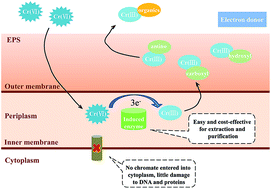
3.4.1 Localization of the Cr(VI) reductase activity. Furthermore, to locate the Cr(VI) reductase, different departments of cells were extracted to test the enzyme activity, and the results are shown in Fig. 4. It was found that the CFE and periplasm showed high Cr(VI) reduction rates and enzyme activity (6.60 U mL−1 and 6.78 U mL−1, respectively), while no Cr(VI) was reduced with the deactivated cell departments, which was mainly due to the inactivation of enzymes at high-temperature. It could be concluded that Cr(VI) reduction using P. sp. CF10-13 was a kind of enzymatic reaction, and the Cr(VI) reductase was cytosolic proteins present in the soluble departments of cells. This was similar to most reported aerobic bacteria, like Pseudomonas ambigua and P. putida, E. coli24 and Bacillus coagulans,17 which have been found to reduce Cr(VI) with soluble proteins. However, unlike those soluble proteins, reported as being located in the CFE, periplasm extract of P. sp. CF10-13 also showed relatively high Cr(VI) reduction rates and enzyme activity compared to those of the CFE (Fig. 4). Since the cell membrane is nearly impermeable to Cr(III),49 considerable amounts of Cr should have been accumulated in the cytoplasm if Cr(VI) was reduced in cytoplasm. However this contradicts the data for the total Cr accumulation, shown in Fig. 3b, where there was no Cr accumulated in the cytoplasm, but a dramatically increased accumulation (30 times) in the periplasm space was obtained with an increase in the initial Cr(VI) concentration. Therefore, it could be deduced that Cr(VI) was mainly reduced to Cr(III) in the periplasm space by P. sp. CF10-13 and was then transported extracellularly. Similar results have been reported.50 Enzymatic Cr(VI) reduction in the periplasm space could offer a contribution to reducing Cr(VI) using P. sp. CF10-13 in two ways. One is to prevent Cr(VI) from entering into the cytoplasm to detoxify Cr(VI) for cells. The other is the convenience and cost-effectiveness of enzyme proteins in extraction and purification.
 |
| | Fig. 4 Determination of Cr(VI) reductase activity for different cell departments (an initial Cr(VI) concentration of 25 mg L−1). | |
3.4.2 Effect of electron donors on Cr(VI) reduction. A suitable electron donor can increase the Cr(VI) reduction rate.11 In most biological redox reactions, electron transfer is mediated through NADH and NADPH.51 However, NADPH is not a cost-efficient electron donor for large scale wastewater treatment. Hence, selecting the optimal electron donors for Cr(VI) reduction is necessary. For instance, Pseudomonas CRB5 and Vibrio fischeri52,53 preferred sodium citrate and glycerinum for Cr(VI) reduction. And Achromobacter sp. Ch-1 (ref. 54) and Ochrobactrum sp. CSCr-3(I)5 preferred lactate and glucose as suitable electron donors, respectively. Results showed that P. sp. CF10-13 can utilize a variety of substrates as electron donors for Cr(VI) reduction (Fig. 5a). Sodium acetate, sodium citrate, sodium lactate, sodium pyruvate, glucose and glycerinum yield 37.48%, 29.66%, 90.00%, 75.81%, 39.79%, and 23.86% reduction rates respectively, with the control (without any additional electron donor) showing a 21.62% reduction rate. It was revealed that the presence of electron donors could increase Cr(VI) reduction and sodium lactate could act as one of the suitable electron donors for P. sp. CF10-13.
 |
| | Fig. 5 Effects of electron donors (100 mM) and metal ions (concentrations were all 50 mg L−1) on Cr(VI) reduction. | |
3.4.3 Effect of metal ions on Cr(VI) reductase. Anions, cations or other heavy metal ions present at contaminated sites are problematic for Cr(VI) removal from industrial effluents through reduction.7 Thus, the inhibitory effects of heavy metal ions on Cr(VI) reduction were also studied here. It was found that the addition of Cu and Pb had no obvious effects, whereas Zn, Cd and Cr(III) ions inhibited Cr(VI) reduction significantly (Fig. 5b). The inhibition effect was in the following order: Zn > Cd > Cr(III). As reported, Zn and Cd could form a mercaptide bond with the sulfhydryl groups of the enzyme molecule, which could generate an inhibited effect on enzyme activity.55 Similar results could be found for Halomonas,1 and Arthrobacter rhombi-RE.51 Cr(III) ions inhibited the Cr(VI) reduction rate from 100% to 41.70%, which proved our above assumption that Cr(VI) was reduced to less toxic organic-bound Cr(III) instead of toxic Cr(III) using P. sp. CF10-13. Cu is a prosthetic group for many reductase enzymes and its main function has been reported to be related to electron transport protection or to act as a single-electron redox centre.38,56 Hence, Cu had a lesser inhibitory effect on many bacteria. However, it was exceptional that there was no inhibition from Pb on Cr(VI) reduction using P. sp. CF10-13, since it inhibited other bacteria such as Halomonas,1 and Arthrobacter rhombi-RE.51 The mechanism is still not known by us.
4. Conclusions
A novel deep-sea strain with high Cr(VI) reduction efficiency (0.86 mg g−1 h−1) was screened and identified as Pseudoalteromonas sp. CF10-13, based on 16S rDNA analysis. Pseudoalteromonas sp. CF10-13 could reduce Cr(VI) efficiently at moderate/low temperatures (15–30 °C), a salinity of 3% and a pH of 8. Cr(VI) was reduced in the periplasm space with the induced Cr(VI) reductase, and the reduction products were speculated to exist mainly in two forms, soluble organic-Cr(III) present in solution and Cr(III) bound to EPS. Sodium lactate was selected as a suitable electron donor for Cr(VI) reduction using Pseudoalteromonas sp. CF10-13. And metal ions such as Zn, Cd and Cr(III) could inhibit the Cr(VI) reductase, while Cu and Pb had no inhibitory effect. Based on the results, Pseudoalteromonas sp. CF10-13 could have potential applications to bioremediation at a wider range of temperatures.
Acknowledgements
The authors are gratitude to the supports of Natural Science Foundation of China (51178255); Science and Technology Development Project of Shandong province (2016GGSF117019); and Fundamental Research Funds of Shandong University (2014JC035).
References
- S. Murugavelh and K. Mohanty, Chem. Eng. J., 2012, 203, 415–422 CrossRef CAS.
- B. Dhal, H. Thatoi, N. Das and B. D. Pandey, J. Chem. Technol. Biotechnol., 2010, 85, 1471–1479 CAS.
- S. Focardi, M. Pepi, G. Landi, S. Gasperini, M. Ruta, P. Di Biasio and S. E. Focardi, Int. Biodeterior. Biodegrad., 2012, 66, 63–70 CrossRef CAS.
- G. J. Cheng and X. H. Li, Eur. J. Soil Biol., 2009, 45, 483–487 CrossRef CAS.
- Z. G. He, F. L. Gao, T. Sha, Y. H. Hu and C. He, J. Hazard. Mater., 2009, 163, 869–873 CrossRef CAS PubMed.
- C. R. Myers, B. P. Carstens, W. E. Antholine and J. M. Myers, J. Appl. Microbiol., 2000, 88, 98–106 CrossRef CAS PubMed.
- A. C. Poopal and R. S. Laxman, J. Hazard. Mater., 2009, 169, 539–545 CrossRef CAS PubMed.
- M. Rajkumar, R. Nagendran, K. J. Lee and W. H. Lee, Curr. Microbiol., 2005, 50, 266–271 CrossRef CAS PubMed.
- H.-K. Zhang, H. Lu, J. Wang, J.-T. Zhou and M. Sui, Environ. Sci. Technol., 2014, 48, 12876–12885 CrossRef CAS PubMed.
- S. Dey and A. Paul, Br. Microbiol. Res. J., 2013, 3, 325 CrossRef CAS.
- S. Murugavelh and K. Mohanty, Chem. Eng. J., 2013, 230, 1–9 CrossRef CAS.
- P. A. Fields, Comp. Biochem. Physiol., Part A: Mol. Integr. Physiol., 2001, 129, 417–431 CrossRef CAS.
- M. A. Bradford, The Microbial Regulation of Global Biogeochemical Cycles, 2014, p. 116 Search PubMed.
- B. S. Razavi, E. Blagodatskaya and Y. Kuzyakov, Soil Biol. Biochem., 2016, 97, 15–22 CrossRef CAS.
- M. Fadhlaoui and P. Couture, Aquat. Toxicol., 2016, 180, 45–55 CrossRef CAS PubMed.
- H. H. Jeong, S. G. Jeong, A. Park, S. C. Jang, S. G. Hong and C. S. Lee, Anal. Biochem., 2014, 446, 90–95 CrossRef CAS PubMed.
- H. Thatoi, S. Das, J. Mishra, B. P. Rath and N. Das, J. Environ. Manage., 2014, 146, 383–399 CrossRef CAS PubMed.
- B. M. Tebo and A. Y. Obraztsova, FEMS Microbiol. Lett., 1998, 162, 193–198 CrossRef CAS.
- P. C. Wang, K. Toda, H. Ohtake, I. Kusaka and I. Yabe, FEMS Microbiol. Lett., 1991, 78, 11–15 CrossRef CAS.
- P. C. Wang, T. Mori, K. Komori, M. Sasatsu, K. Toda and H. Ohtake, Appl. Environ. Microbiol., 1989, 55, 1665–1669 CAS.
- V. Sedlacek and I. Kucera, Arch. Microbiol., 2010, 192, 919–926 CrossRef CAS PubMed.
- L. Philip, L. Iyengar and C. Venkobachar, J. Environ. Eng., 1998, 124, 1165–1170 CrossRef CAS.
- G. Hannig and S. C. Makrides, Trends Biotechnol., 1998, 16, 54–60 CrossRef CAS PubMed.
- H. Shen and Y. T. Wang, Appl. Environ. Microbiol., 1993, 59, 3771–3777 CAS.
- H. Kjerstadius, J. de Vrieze, J. la Cour Jansen and Å. Davidsson, Water Res., 2016, 106, 429–438 CrossRef CAS PubMed.
- S. Das, J. Mishra, S. K. Das, S. Pandey, D. S. Rao, A. Chakraborty, M. Sudarshan, N. Das and H. Thatoi, Chemosphere, 2014, 96, 112–121 CrossRef CAS PubMed.
- D. H. Pieper, V. t. A. P. Martins dos Santos and P. N. Golyshin, Curr. Opin. Biotechnol., 2004, 15, 215–224 CrossRef CAS PubMed.
- T. D. Sutherland, I. Horne, K. M. Weir, C. W. Coppin, M. R. Williams, M. Selleck, R. J. Russell and J. G. Oakeshott, Clin. Exp. Pharmacol. Physiol., 2004, 31, 817–821 CrossRef CAS PubMed.
- M. J. Han, J. Y. Kim and J. A. Kim, J. Biosci. Bioeng., 2014, 117, 437–442 CrossRef CAS PubMed.
- X. Li, Y. Zong, Z. Zheng, G. Huang and H. Xiong, Quaternary Int., 2016 DOI:10.1016/j.quaint.2016.05.023.
- M. Pepi, M. Volterrani, M. Renzi, M. Marvasi, S. Gasperini, E. Franchi and S. E. Focardi, J. Appl. Microbiol., 2007, 103, 2299–2308 CrossRef CAS PubMed.
- A. Sarangi and C. Krishnan, Bioresour. Technol., 2008, 99, 4130–4137 CrossRef CAS PubMed.
- N. Cadieux, C. Bradbeer, E. Reeger-Schneider, W. Koster, A. K. Mohanty, M. C. Wiener and R. J. Kadner, J. Bacteriol., 2002, 184, 706–717 CrossRef CAS PubMed.
- S. S. Adav and D. J. Lee, J. Hazard. Mater., 2008, 154, 1120–1126 CrossRef CAS PubMed.
- W. Zhou, H. o. Zhang, Y. Ma, J. Zhou and Y. Zhang, Extremophiles, 2013, 17, 723–731 CrossRef CAS PubMed.
- X. F. Sun, Y. Ma, X. W. Liu, S. G. Wang, B. Y. Gao and X. M. Li, Water Res., 2010, 44, 2517–2524 CrossRef CAS PubMed.
- Y. F. Xi, M. Mallavarapu and R. Naidu, Mater. Res. Bull., 2010, 45, 1361–1367 CrossRef CAS.
- S. Dey and A. K. Paul, Chemosphere, 2016, 156, 69–75 CrossRef CAS PubMed.
- A. S. Ibrahim, M. A. El-Tayeb, Y. B. Elbadawi and A. A. Al-Salamah, Afr. J. Biotechnol., 2011, 10, 7207–7218 CAS.
- M. Narayani and K. V. Shetty, Crit. Rev. Environ. Sci. Technol., 2013, 43, 955–1009 CrossRef CAS.
- K. H. Cheung, H. Y. Lai and J. D. Gu, J. Microbiol. Biotechnol., 2006, 16, 855–862 CAS.
- P. J. Williams, E. Botes, M. M. Maleke, A. Ojo, M. F. DeFlaun, J. Howell, R. Borch, R. Jordan and E. van Heerden, Water Sanit., 2014, 40, 549–554 CrossRef CAS.
- S. Deng and Y. P. Ting, Environ. Sci. Technol., 2005, 39, 8490–8496 CrossRef CAS PubMed.
- Y. Cheng, F. Yan, F. Huang, W. Chu, D. Pan, Z. Chen, J. Zheng, M. Yu, Z. Lin and Z. Wu, Environ. Sci. Technol., 2010, 44, 6357–6363 CrossRef CAS PubMed.
- G. P. Sheng, H. Q. Yu and Z. B. Yue, Appl. Microbiol. Biotechnol., 2005, 69, 216–222 CrossRef CAS PubMed.
- M. N. Kathiravan, R. Karthick, N. Muthu, K. Muthukumar and M. Velan, Appl. Biochem. Biotechnol., 2010, 160, 2000–2013 CrossRef CAS PubMed.
- S. K. Das and A. K. Guha, Colloids Surf., B, 2007, 60, 46–54 CrossRef CAS PubMed.
- H. Liu, Q. Gao, P. Dai, J. Zhang, C. L. Zhang and N. Bao, J. Anal. Appl. Pyrolysis, 2013, 102, 7–15 CrossRef CAS.
- M. I. Ramirez-Diaz, C. Diaz-Perez, E. Vargas, H. Riveros-Rosas, J. Campos-Garcia and C. Cervantes, BioMetals, 2008, 21, 321–332 CrossRef CAS PubMed.
- A. Ganguli and A. K. Tripathi, J. Microbiol. Biotechnol., 2001, 11, 355–361 CAS.
- R. Elangovan, L. Philip and K. Chandraraj, Appl. Biochem. Biotechnol., 2010, 160, 81–97 CrossRef CAS PubMed.
- E. Fulladosa, V. Desjardin, J. C. Murat, R. Gourdon and I. Villaescusa, Chemosphere, 2006, 65, 644–650 CrossRef CAS PubMed.
- J. McLean and T. J. Beveridge, Appl. Environ. Microbiol., 2001, 67, 1076–1084 CrossRef CAS PubMed.
- Z. M. Ma, W. J. Zhu, H. Z. Long, L. Y. Chai and Q. W. Wang, Process Biochem., 2007, 42, 1028–1032 CrossRef CAS.
- R. Elangovan, L. Philip and K. Chandraraj, Appl. Biochem. Biotechnol., 2009, 160, 81 CrossRef PubMed.
- F. Abe, T. Miura, T. Nagahama, A. Inoue, R. Usami and K. Horikoshi, Biotechnol. Lett., 2001, 23, 2027–2034 CrossRef CAS.
Footnote |
| † Electronic supplementary information (ESI) available. See DOI: 10.1039/c6ra16320c |
|
| This journal is © The Royal Society of Chemistry 2016 |
Click here to see how this site uses Cookies. View our privacy policy here.