DOI:
10.1039/C6RA16268A
(Communication)
RSC Adv., 2016,
6, 86597-86601
Ecofriendly fabrication of ultrathin colorful fibers via UV-assisted solventless electrospinning†
Received
23rd June 2016
, Accepted 2nd September 2016
First published on 5th September 2016
Abstract
A new technique to fabricate ultrathin colorful fibers has been developed via ultraviolet (UV)-assisted solventless electrospinning. The precursor solution contains UV curable polyurethane acrylate (PUA) and colorful UV gel nail polish, and can be electrospun into ultrathin fibers without solvent evaporation in the atmosphere of nitrogen, owing to rapid curing of the acrylate bonds in the spinning jet under the radiation of UV light. The resulting fibers have good color fastness and high stretchability (more than 140%). In addition, various fiber colors can be conveniently adjusted and obtained through formulating the recipe of the precursor solution. Compared to the traditional dyeing process, this method is ecofriendly and promising to prepare colorful fibers, which may be used in textiles, clothing, and anticorrosive coatings.
1 Introduction
Electrospinning (e-spinning) is an effective method to fabricate micro-/nanofibers which have outstanding properties such as huge specific surface area, flexibility and a widespread selectivity of polymer materials and composites,1–3 and has been receiving more and more attention. Because of its operational simplicity and extensive applicability, in recent years, it is widely used in the fabrication of biomedicines,4 airfiltration,5 metal compounds,6 electronic devices7 and protective clothing,8 etc. Typically, an e-spinning device consists of a high-voltage power supply (HVPS), a spinneret, and a metal collector. In the traditional solution e-spinning process, to prepare the precursor solution, polymers or composites are dissolved or dispersed in organic solvents firstly, and the concentration is usually less than 25 wt%. During e-spinning, the solvent is volatilized and hard to recycle. Compared with solution e-spinning, except for when using a water solution, solventless e-spinning uses no volatile solvents and does no harm to the environment. Now there are several kinds of solventless e-spinning techniques including melt e-spinning,9 wet-curing e-spinning10,11 and UV-curing e-spinning.12 Melt e-spinning requires more complicated equipment,13,14 and the fabricated fibers typically have a larger diameter of several microns.15,16 Liu et al.10 reported the moisture curing of ethyl cyanoacrylate (ECA, 502 glue) and fabricated ultrathin fibers assisted by polymethylmethacrylate (PMMA), but ∼10 wt% of the ECA monomer was released because the ECA monomer was volatilized easily.
It is well-known that the colorful fibers or fabrics are mostly obtained by dyeing. However, the complicated dyeing process requires high temperature to support a large amount of steam, which an energy consuming method. Meanwhile, the rest of unfixed dye results in a great deal of wastewater and possible pollution to the environment.17 Recently, the e-spinning process for fabricating colorful fibers is considerably attractive. The fibers (membranes) were obtained by e-spinning and then colored by fixing the natural or synthetic dyes.18–22,24,25 Similar to the traditional dyeing process, the electrospinning-dyeing process is also complex and inefficient. The improved scheme is colored solution e-spinning,23,26–28 in which dyes are dissolved or dispersed in the e-spinning precursor solution by vigorous stirring to spinning colorful fibers.18 Unfortunately, the large amount of solvent used (∼80–90 wt%) is released to the atmosphere in this process.
UV curable materials are applied widely in the field of paint, coating and adhesive,29,30 which can be cured and solidified rapidly under the UV radiation. As they are employed as e-spinning precursor solution, the jet could be cured in situ quickly. It could be a simple way to achieve solventless e-spinning. In this paper, we adopted the commercial polyurethane acrylate (PUA) adhesive (DR-U301) and colorful UV gel nail polishes (GNPs, base resin: PUA) as UV curable materials to produce fibers by e-spinning. The colorful fibers were afforded by this solvent-free e-spinning successfully and in a low toxicity, tasteless, and ecofriendly process. This is a novel and environmentally friendly route to fabricate colorful fibers and moreover, the resulting fibers have high transparency, better toughness, and good color fastness.
A home-made UV-assisted e-spinning setup was used and the jet cured in the atmosphere of nitrogen to avoid the oxygen inhibition of UV curable materials polymerization, especially when affording high-surface-area products.31 The e-spinning mechanism, morphological, structural, and mechanical properties have been studied.
2 Experimental
2.1 Materials
DR-U301 (base resin: polyurethane acrylate, PUA, viscosity ∼5500 mPa s at 25 °C, Taiwan Eternal Chemical Co., Ltd.), and colorful UV gel nail polishes (GNPs, the base resin is also PUA, containing other low volatile monomers of acrylate and ∼2 wt% of pigments (e.g., CI 15850, red; CI 47005, yellow; and CI 42090, blue), 5 wt% of benzophenone etc., viscosity ∼3000 mPa s at 25 °C, Yiwu MeiChao Cosmetics Co., Ltd., China) are commercial products. All components except for pigments in both DR-U301 and colorful GNPs (red GNP: R-GNP, yellow GNP: Y-GNP and blue GNP: B-GNP) are sensitive to UV light. Photo-initiator 1173 (2-hydroxy-2-methyl-propiophenone) is purchased from Sigma-Aldrich Corporation. All the reagents are used without further purification.
2.2 E-spinning apparatus
Fig. 1 shows the schematic diagram of the UV-assisted solventless e-spinning apparatus for this research.12 The home-made setup mainly includes an HVPS (DW-P303-1ACFO, Tianjin Dongwen), a spinneret with an inner diameter of 0.5 mm as a positive electrode, and a negatively charged metal cylinder collector, having a radius of 2.5 cm, is linked to a speed-adjustable motor. The UV light source (400 W) is placed 10–20 cm away from the spinneret, and nitrogen continuously passes in the box by hose to keep oxygen concentration less than 5% (mole percentage).
 |
| | Fig. 1 Schematic diagram of the UV-assisted solventless e-spinning apparatus.12 | |
2.3 Preparation of solutions and e-spinning process
In a 25 ml conical flask, 4.0 g of DR-U301, 0.2 g of photo-initiator 1173 and 0.4 g of colorful UV GNPs were added. The flask was parceled by aluminum foil to keep out of the sun, placed in 40–50 °C water bath, and then stirred by a magnetic stirrer for 1 to 2 hours. 4.0 g colored precursor solution was taken and loaded into the spinneret. Nitrogen was blowing with 3 to 9 mm3 s−1 into the box for 3–5 minutes to keep oxygen concentration less than 5%. Then the power of UV light, adjustable motor and HVPS were put on. The cylinder collector was 10 cm away from the spinneret, and the electrostatic voltage was 30 kV. The revolving speed of the roller collector has an adjusted range from 200 to 320 rpm. After 10 minutes, consecutive ultrathin fibers were obtained and taken off for characterization. To evaluate the mechanical properties, the e-spun fibers were twisted into micro-ropes.
When 4.0 g of DR-U301 doped with 0.24 g of red GNP and 0.16 g of blue GNP (6![[thin space (1/6-em)]](https://www.rsc.org/images/entities/char_2009.gif) :4 of mass ratio), instead of mono-color GNP mentioned above, a pink precursor solution was given and accordingly pink fibers were afforded after e-spinning. While the mass ratio of red GNP to blue GNP was 4:6, purple fibers were obtained.
:4 of mass ratio), instead of mono-color GNP mentioned above, a pink precursor solution was given and accordingly pink fibers were afforded after e-spinning. While the mass ratio of red GNP to blue GNP was 4:6, purple fibers were obtained.
2.4 Characterization
The viscosity of the precursor solution was measured using a viscosimeter (Viscotester VT-O4F, Rion) at 25 °C. The structure change of spinning solution and the resulting fibers was recorded by Fourier transform infrared spectroscopy (FT-IR Nicolet AVATAR 370DTGS). The morphologies of e-spun fibers and micro twisted ropes were characterized by a digital camera (Nikon D3), an optical microscope (Olympus BX51), and a scanning electron microscope (SEM, TM-1000, Hitachi). Thermal properties of the e-spun fibers were recorded by a thermogravimetric analyzer (Mettler-Toledo). Mechanical properties of the twisted micro-ropes were measured by a tensile tester (WDW-100, China). Contact angles of the e-spun fibrous membranes were examined by static water contact angle measurement (DSA100). Color fastness of the e-spun colorful fibers was measured by using three kinds of 0.5 wt% standard warm soap solution (pH = 8, pH = 6, and pH = 7, 40 ± 2 °C). A piece of e-spun fibrous membrane with 1.0 cm2 was immersed into the solution for 7 days, and then the exhausted standard soap solution was monitored using a UV-Vis spectrophotometer (UV-2450) to characterize the amount of dye release from the membrane. The absorbance of the dye in the solution was measured in the visible range from 400 to 800 nm, which included the absorbance peak of the dyes.
3 Results and discussion
3.1 Solvent-free e-spinning
As shown in Fig. 2, the jet left from the spinneret was irradiated by UV light. The initiator was decomposed immediately to produce radicals, which initiated the polymerization of C![[double bond, length as m-dash]](https://www.rsc.org/images/entities/char_e001.gif) C in PUA. Because the reaction speed of radical polymerization was very fast and complete instantaneously, the jet was solidified in situ. As showed in Table 1, the weight of the resulting fibers was close to that of their precursor used for e-spinning, and the weight loss only about 0.3 wt%, indicating that the e-spinning process is solventless.
C in PUA. Because the reaction speed of radical polymerization was very fast and complete instantaneously, the jet was solidified in situ. As showed in Table 1, the weight of the resulting fibers was close to that of their precursor used for e-spinning, and the weight loss only about 0.3 wt%, indicating that the e-spinning process is solventless.
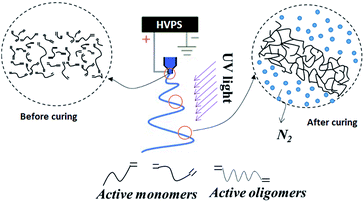 |
| | Fig. 2 Schematic diagram of the e-spinning mechanism for the UV-assisted solventless e-spinning in the atmosphere of nitrogen under UV radiation. | |
Table 1 Weight loss after e-spinning
| Run |
Recipes of e-spinning solution |
After e-spinning |
| DR-U301, 85% |
Red GNP, 15% |
Total/g |
wt of fibers |
wt loss |
| 1 |
0.3791 |
0.0669 |
0.4460 |
0.4446 |
0.31% |
| 2 |
0.3598 |
0.0635 |
0.4233 |
0.4220 |
0.31% |
| 3 |
0.5009 |
0.0884 |
0.5893 |
0.5875 |
0.30% |
The raw materials, DR-U301, red GNP (R-GNP), their mixture solution (R-GNP + U301) and e-spun fibers, were characterized by FT-IR, as shown in Fig. 3a. The medium intensity absorption peaks appearing at 1600–1645 cm−1 are assigned to the light active CC bonds of PUA, which disappear in the e-spun fibers (blue line, Fig. 3a). It is illustrated clearly that the jet cured completely during this process and converted into solid fibers under irradiation of UV light. The strong absorption peaks at ∼1725 cm−1 are assigned to stretching vibration of CO bonds of urethane and acrylate.
 |
| | Fig. 3 (a) FT-IR spectra of DR-U301, red GNP (R-GNP), e-spinning solution (R-GNP + U301) and e-spun fibers. (b) TGA curves of e-spinning solution (R-GNP + U301) and e-spun fibers. | |
The thermogravimetric analysis (TGA) curves of the e-spinning solution and e-spun fibers are shown in Fig. 3b. The decomposition temperatures (Td) of the e-spinning solution at 5% and 10% weight losses were 136.2 °C and 173.6 °C, respectively, while Td of the e-spun fibers were raised to 283.4 °C and 303.0 °C. There were some low volatile monomers and easily decomposed initiator at high temperature in the e-spinning solution, which caused 5% and 10% weight losses at 136.2 °C and 173.6 °C. After the precursor solution was e-spun and the jet cured under UV radiation, all the components were solidified into fibers. So, the decomposed temperature was raised to more than 280 °C when 5% weight loss occurred, indicating that the jet cured completely. Unlike conventional solution e-spinning process, there was chemical reaction taking place in the jet, no solvent released to environment in this e-spinning process.
3.2 The influence of GNP concentration on e-spinning
Fig. 4 shows the digital images of the e-spun fibers from DR-U301 doped with different content of red GNP, 0, 5, 10, 15 and 20 wt%, respectively. With increasing concentration of GNP, the color of resulting fibers becomes deep. When the concentration of GNP was higher than 20 wt% (Fig. 4e2), more beaded and irregularly shaped fibers were observed and the e-spinning process was hard to maintain because some particles were produced in the precursor solution (Fig. 4f). As shown in Fig. 4g, for pure red GNP, only rodlike short fibers were obtained, which demonstrated the pure GNP was hardly to be electrospun at the present conditions. The red ultrathin fibers (Fig. 4b2–d2) had very smooth morphology and were similar to the control group (Fig. 4b1). It is concluded that the preferable dosage of GNP is about 15 wt%.
 |
| | Fig. 4 Digital (a1–e1) and optical (a2–e2) images of the ultrathin colorful fibers e-spun from DR-U301 doped with different content of red GNP (0, 5, 10, 15 and 20 wt%). The scale bar is 200 μm. (f) Enlarged images of 20 wt% of red GNP in the precursor. (g) Optical image of e-spun red GNP. All the e-spinning operations were carried out in atmosphere of N2, the spinning voltage was maintained at 30 kV, and the revolving speed of collector was 280 rpm. | |
3.3 The influence of rotating speed on fiber diameter
Fig. 5a–d shows the optical images of the red fibers produced under different rotating speed. And the average diameters of fibers are shown in Fig. 5e. When rotating speed increased from 200 to 320 rpm, the average diameter was reduced from 33 μm to 24 μm and arranged in good order. The high speed has a distinct effect on diameter and alignment of e-spun fibers. However, if the revolving speed is more than 320 rpm, the radiation time of the initial jet will not be enough for curing, which results in soft fibers (because the inner of fibers is not completely cured) and the fibers' bonding each other. So, the optimal rotation speed is about 280 rpm.
 |
| | Fig. 5 Optical images of the red fibers e-spun under different rotating speed of collector drum: (a) 200 rpm, (b) 240 rpm, (c) 280 rpm, and (d) 320 rpm, respectively. The scale bar is 200 μm. (e) Average diameters of the e-spun fibers. | |
3.4 Mechanical properties
The mechanical properties of the colorful twisted micro-ropes were checked by using a tensile tester at a fixture speed of 20 mm min−1 at 25 °C, as showed in Fig. 6 and Table 2. Based on the high elasticity of polyurethane chains, the e-spun fibers show good elastic performance, and the resulting twisted fibrous micro-ropes have higher elongation at break than 140%.
 |
| | Fig. 6 (a) Optical image and enlarged SEM image of a blue twisted fibrous rope, (b) strain versus stress of the colorful twisted micro-ropes. | |
Table 2 Tensile properties of the colorful twisted fiber micro-ropes
| Testing mechanical properties |
Colorful ropes |
| Red |
Yellow |
Blue |
Pink |
Purple |
| Micro-rope diameter (mm) |
0.78 |
0.86 |
0.60 |
0.73 |
0.69 |
| Elongation at break (%) |
188.49 |
145.13 |
147.29 |
170.05 |
191.34 |
| Young's modulus (MPa) |
0.011 |
0.010 |
0.022 |
0.011 |
0.012 |
The SEM images of the colorful twisted micro-ropes are presented in Fig. 6a. All the colorful twisted microropes have a compact microstructure (please see the inset with a magnification of 500). In addition, the surface of micro-rope was relatively homogeneous and smooth. The different colorful micro-ropes exhibited approximate tensile properties as shown in Fig. 6b, which indicated the colorful fibers can be blended and may be used in the field of textile and clothing.
3.5 Various colorful fibers
As shown in Fig. 7, the colorful fibers were afforded successfully by the e-spinning process from UV curable PUA doped with different colorful GNPs by 15 wt%. The red, yellow, and blue fibers were obtained by the solventless e-spinning method, which avoided the possible pollution caused by traditional e-spinning process and conventional dyeing process in industry production. At the same time, because the color of resulting fibers is similar to their e-spinning solutions, a variety of colorful fibers can be achieved by adjusting recipe of the e-spinning precursor solution, which offered a feasible route to prepare a series of colorful fibers. As shown in Fig. 7d and e, the pink and purple fibers were obtained conveniently by adjusting the ratio of red GNP to blue one. Especially, the pigment or dye solidified into a part of fibers can make the fabrics have better washing fastness, perspiration fastness, and rubbing fastness. For example, as shown in Fig. S1 (ESI†), the e-spun colorful fibers have good color fastness (40 ± 2 °C for 7 days) in alkaline soap solution (pH = 8), deionized water (pH = 7) and acid solution (pH = 6). In addition, the e-spun colorful fibrous membranes show hydrophobicity with water contact angles ranging from 107.1 to 116.7 (Table S1, ESI†).
 |
| | Fig. 7 Digital images of different precursor solutions and the corresponding e-spun ultrathin fibers. The precursor solutions were DR-U301 doped with 15 wt% of colorful GNPs: (a) red, (b) yellow, (c) blue, (d) pink (6:4 of red GNP to blue GNP), and (e) purple (4:6 of red GNP to blue GNP), respectively. The e-spinning process was carried out in the atmosphere of N2, the electrostatic voltage was maintained at 30 kV, and the revolving speed of collector was 280 rpm. | |
4 Conclusions
We have developed a novel way to fabricate colorful ultrathin fibers via solventless e-spinning based on UV curable materials, DR-U301 and colorful GNPs. The home-made UV-assisted e-spinning setup and the spinning parameters were optimized. The preferable content of colorful GNPs was 15 wt% and the rotational speed was 280 rpm. The ultrathin ordered colorful fibers were obtained and their twisted micro-ropes showed good elongation and elasticity (more than 140%). This ecofriendly solventless e-spinning method is a promising route to prepare colorful fibers to contrast with traditional dyeing or colored solution e-spinning process, and except for PUA, there are many types of UV curable materials available in the market for this UV-assisted e-spinning. The resulting colorful fibers may be applied potentially in textiles, clothing, coatings and strain sensors.
Acknowledgements
This work was supported by the National Natural Science Foundation of China (51373082 and 51673103), the Taishan Scholars Program of Shandong Province, China (ts20120528), and the Postdoctoral Scientific Research Foundation of Qingdao City.
Notes and references
- C. Huang, S. J. Soenen, J. Rejman, B. Lucas, K. Braeckmans, J. Demeester and S. C. Smedt, Chem. Soc. Rev., 2011, 40, 2417–2434 RSC.
- S. Cavaliere, S. Subianto, I. Savych, D. J. Jones and J. Rozière, Energy Environ. Sci., 2011, 4, 4761–4785 CAS.
- Y. Z. Long, M. M. Li, C. Z. Gu, M. X. Wan, J. L. Duvail, Z. W. Liu and Z. Y. Fan, Prog. Polym. Sci., 2011, 36, 1415–1442 CrossRef CAS.
- T. H. Ying, D. Ishii, A. Mahara, S. Murakami, T. Yamaoka, K. Sudesh, R. Samian, M. Fujita, M. Maeda and T. Iwata, Biomaterials, 2008, 29, 1307–1317 CrossRef CAS PubMed.
- M. M. Munir, A. Y. Nuryantini, Khairurrijal, M. Abdullah, F. Iskandar and K. Okuyama, Mater. Sci. Forum, 2013, 737, 159–165 CrossRef CAS.
- H. Nesrin, T. Didem, O. Cebrail, O. Salih and D. M. Mustafa, New J. Chem., 2014, 38, 5761–5768 RSC.
- W. Zheng, X. F. Lu, W. Wang, Z. Y. Li, H. N. Zhang, Y. Wang, Z. J. Wang and C. Wang, Sens. Actuators, B, 2009, 142, 61–65 CrossRef CAS.
- X. Mao, Y. C. Chen, Y. Si, Y. Li, H. G. Wan, J. Y. Yu, G. Sun and B. Ding, RSC Adv., 2013, 3, 7562–7569 RSC.
- H. W. Dietmar and D. D. Paul, Chem.–Asian J., 2011, 6, 44–56 CrossRef PubMed.
- S. L. Liu, Y. Z. Long, Y. Y. Huang, H. D. Zhang, H. W. He, B. Sun, Y. Q. Sui and L. H. Xia, Polym. Chem., 2013, 4, 5696–5700 RSC.
- R. H. Dong, C. C. Qin, X. Qiu, X. Yan, M. Yu, L. Cui, Y. Zhou, H. D. Zhang, X. Y. Jiang and Y. Z. Long, Nanoscale, 2015, 7, 19468–19475 RSC.
- Y. Z. Long, H. W. He, L. Wang, L. H. Zhang, X. P. Duan, R. H. Dong, C. C. Qin, H. Zhao and L. H. Xia, A UV-curing solventless electrospinning apparatus, China Patent: ZL201520643134.5, 2015.
- N. Ogata, S. Yamaguchi, N. Shimada, G. Lu, T. Iwata, K. Nakane and T. Ogihara, J. Appl. Polym. Sci., 2007, 104, 1640–1645 CrossRef CAS.
- Z. Eduard, D. Cho and Y. L. Joo, Polymer, 2010, 51, 4140–4144 CrossRef.
- P. D. Dalton, D. Grafahrend, K. Klinkhammer, D. Klee and M. Moller, Polymer, 2007, 48, 6823–6833 CrossRef CAS.
- C. C. Qin, X. P. Duan, L. Wang, L. H. Zhang, M. Yu, R. H. Dong, X. Yan, H. W. He and Y. Z. Long, Nanoscale, 2015, 7, 16611–16615 RSC.
- K. Zeeshan, A. A. Rabia, W. J. Abdul, M. Gopiraman, K. Wei and K. Ick-Soo, Cellulose, 2013, 20, 1469–1476 CrossRef.
- D. Fantini and L. Costa, Polym. Adv. Technol., 2009, 20(2), 111–121 CrossRef CAS.
- K. S. Lee, B. S. Lee, Y. H. Park, Y. C. Park, Y. M. Kim, S. H. Jeong and S. D. Kim, Fibers Polym., 2005, 6, 35–41 CrossRef CAS.
- Z. Khatri, G. Mayakrishnan, Y. Hirata, K. Wei and I. S. Kim, Carbohydr. Polym., 2013, 91(1), 434–443 CrossRef CAS PubMed.
- Z. Khatri, A. Khatri, U. Saleem, G. Mayakrishnan, B. S. Kim, K. Wei and I. S. Kim, Color. Technol., 2013, 129(2), 159–163 CAS.
- Z. Khatri, R. A. Arain, A. W. Jatoi, G. Mayakrishnan, K. Wei and I. S. Kim, Cellulose, 2013, 20(3), 1469–1476 CrossRef CAS.
- H. P. Xu, F. X. Qiu, Y. Y. Wang, W. L. Wu, D. Y. Yang and Q. Guo, Prog. Org. Coat., 2012, 73, 47–53 CrossRef CAS.
- L. Pauling, Proc. Natl. Acad. Sci. U. S. A., 1939, 25, 577–582 CrossRef CAS.
- W. Yuan, N. Zhou, L. Shi and K. Q. Zhang, ACS Appl. Mater. Interfaces, 2015, 7(25), 14064–14071 CAS.
- J. Yoon, S. K. Chae and J. M. Kim, J. Am. Chem. Soc., 2007, 129(11), 3038–3039 CrossRef CAS PubMed.
- I. Steyaert, G. Vancoillie, R. Hoogenboom and K. De Clerck, Polym. Chem., 2015, 6(14), 2685–2694 RSC.
- I. Steyaert, H. Rahier and K. De Clerck, Electrospinning for High Performance Sensors, Springer International Publishing, Switzerland, 2015, pp. 157–177 Search PubMed.
- D. B. Otts, E. Heidenreich and M. W. Urban, Polymer, 2005, 46(19), 8162–8168 CrossRef CAS.
- D. K. Chattopadhyay and K. V. S. N. Raju, Prog. Polym. Sci., 2007, 32(3), 352–418 CrossRef CAS.
- K. Studer, C. Decker, E. Beck and R. Schwalm, Prog. Org. Coat., 2003, 48, 92–100 CrossRef CAS.
Footnotes |
| † Electronic supplementary information (ESI) available. See DOI: 10.1039/c6ra16268a |
| ‡ These authors contributed to this work equally. |
|
| This journal is © The Royal Society of Chemistry 2016 |
Click here to see how this site uses Cookies. View our privacy policy here. 


