
TiO2 nanosheet-anchoring Au nanoplates: high-energy facet and wide spectra surface plasmon-promoting photocatalytic efficiency and selectivity for CO2 reduction

Meng Wang abcd, Qiutong Hanabcd, Yong Zhou*abcd, Ping Liabcd, Wenguang Tuabcd, Lanqin Tangabcde and Zhigang Zou*acd
aJiangsu Key Laboratory for Nano Technology, Nanjing University, Nanjing 210093, P. R. China. E-mail: zhouyong1999@nju.edu.cn
bKey Laboratory of Modern Acoustics, MOE, Institute of Acoustics, School of Physics, Nanjing University, Nanjing 210093, P. R. China
cEcomaterials and Renewable Energy Research Center (ERERC), Nanjing University, Nanjing, Jiangsu 210093, P. R. China. E-mail: zgzou@nju.edu.cn
dNational Laboratory of Solid State Microstructures, Collaborative Innovation Center of Advanced Microstructures, Nanjing University, Nanjing 210093, P. R. China
eCollege of Chemistry and Chemical Engineering, Yangcheng Institute of Technology, Yancheng 22401, P. R. China

Received 7th June 2016 , Accepted 10th August 2016

First published on 15th August 2016


Abstract

An Au–TiO2 nanocomposite consisting of (001) exposed TiO2 nanosheet-anchored Au nanoplates was successfully fabricated using bifunctional linker molecules and applied for the photocatalytic reduction of CO2 into hydrocarbon fuels. This unique nanocomposite benefits from the combination of the higher photocatalytic activity of TiO2 (001) and the visible to near-infrared region plasma resonances of anisotropic Au nanostructures. Several carbon fuels were selectively produced over the Au–TiO2 nanocomposite, including CO, CH4, CH3OH and CH3CH2OH, under different forms of light irradiation and in different reaction systems. Both photoresponse testing and electrochemical impedance spectroscopy measurements confirm the importance of the Au surface plasmon for the photocatalytic activity.

Introduction

The rapid development of human society based on fossil fuels has resulted in serious environmental and energy problems, and the excessive consumption of fossil fuels has lead to an energy crisis. Subsequently, the unregulated emission of greenhouse gases, particularly carbon dioxide (CO2), could deteriorate the global climate. As solar energy is a clean and abundant energy source, photocatalytic reduction of CO2 to yield fuels/chemicals is a promising route to solve the above problems. During the reaction process, photocatalysts play a critically important role. In order to find appropriate photocatalysts, various materials such as TiO2, Zn1.7GeN1.8O, ZnAl2O4, Bi2WO6, InTaO4, ZnGaNO etc. have been studied.1

The irradiation of noble metals (e.g. Au or Ag) with light near their surface plasmon resonance (SPR) frequency will generate intense local electric fields near the surface of the metals.2,3 The electric field intensity of local plasmonic “hot spots” can become much higher than that of the incident electric field. Thus an increased amount of photo-induced electron–hole pairs is generated locally in the photocatalyst due to the local field enhancement of the plasmonic metal nanoparticles. Tatsuma’s group first proposed a charge transfer mechanism in 2004, in which the SPR excites electrons in Au or Ag, which are then transferred to the conduction band of the adjacent TiO2 to take part in the redox reaction.4,5 The surface plasmon frequency is determined by not only the dispersion relation of the metal but also a number of other parameters, such as particle size and shape, surface modification of the particle, and changes in the dielectric constant of the surrounding medium.6 While spherical nanoparticles were widely studied for their surface plasmon-enhanced photocatalytic efficiency as semiconductors, both experimental data and theoretical calculations show that the plasma resonances of anisotropic nanostructures, in particular for one-dimensional nanorods, are strong and tunable throughout the visible to near-infrared (NIR) regions of the spectrum. Not only is transversal plasma similar to spherical particles, but also the resonance of the longitudinal mode is red-shifted and strongly depends on the aspect ratio of the anisotropic nanostructures. The wide-range visible and NIR light harvesting of TiO2 nanoparticles has been frequently reported through introducing Au nanorods as antennas.7

The order of the average surface energies of anatase TiO2 is 0.90 J m−2 for (001) > 0.53 J m−2 for (100) > 0.44 J m−2 for (101).8,9 The (001)-exposed TiO2 was demonstrated to possess a more effective photocatalytic performance.10,11 While Au nanoparticle-promoted SPR enhancement of the photoactivity of the TiO2 nanosheet was exploited through anchoring the metal nanoparticle onto it,12,13 the beneficial combination of the higher photocatalytic activity of TiO2 (001) and the visible to near-infrared region plasma resonances of anisotropic Au nanostructures has not yet been reported because of the technical difficulties in tightly attaching the TiO2 nanosheets onto the anisotropic metal nanostructures, typically like Au nanorods due to their curved surface.

Two-dimensional, regular Au nanoplates with flat surfaces attract a lot of attention for enhancing the wide-range spectrum-based SPR-promoted photocatalytic efficiency of TiO2 nanosheets. The nanoplates not only exhibit strong surface plasmon absorption in the visible region and the NIR region,14 but can also combine with TiO2 nanoplates from the viewpoint of morphology configuration. In this paper, we report the synthesis of an Au–TiO2 nanocomposite through anchoring nm-sized (001) exposed TiO2 nanosheets onto μm-sized Au nanoplates. The unique Au–TiO2 nanocomposite exhibits great performance for the efficient photoreduction of CO2 into renewable hydrocarbon fuels under visible light, or even in the NIR region. The enhancement of the high photoactivity was induced by both the transversal and longitudinal plasma of the Au nanoplates. Various carbon fuels from the photoreduction of CO2 including CO, CH4, CH3OH, and CH3CH2OH can be produced over the present Au–TiO2 nanocomposite, depending on both the applied light wavelength and the reaction media.

Experimental section

Preparation of Au–TiO2 composites

Typically, 20 ml ethylene glycol (EG) in a round-bottom flask was heated to 150 °C in an oil bath under an air atmosphere while stirring magnetically. 4 ml HAuCl4 solution (0.05 M, in EG) and 8 ml hexadecyl trimethyl ammonium bromide (CTAB) solution (0.05 M, in EG) were mixed together and then kept at 80 °C in an oven for 10 minutes.14 After preheating, the mixture was injected quickly into the heated EG solution within 15 seconds. Then 6 ml polyvinylpyrrolidone (PVP) solution (111 mg ml−1, in EG) was injected dropwise over a period of 2 min. The reactant mixture was continuously stirred at 150 °C for 30 min. For subsequent use, the samples were centrifuged with acetone at ∼3000 rpm for 20 min. To remove any possible contamination, the product was centrifuged with ultrapure deionized water twice. The final samples were kept in ultrapure deionized water.

The TiO2 nanosheets with (001) exposed active facets were prepared using a modified method.15 Typically, 1.5 ml of tetrabutyl titanate and 0.7 ml of hydrofluoric acid (30% m/m) were injected into a mixture of 20 ml propanol and 20 ml isopropanol, and a white suspension was obtained. The reactant was magnetically stirred for 3 h, and then transferred to a Teflon-lined stainless-steel autoclave. The autoclave was heated to 200 °C for 18 h and cooled down naturally. Finally, a white precipitate was collected, washed, and dried by lyophilization.

To obtain Au–TiO2 composites with TiO2 nanosheets loaded on Au nanoplates, 157 mg (calculated according to 0.8 mmol of participant HAuCl4) of the as-prepared Au nanoplates was first incubated in mercaptopropionic acid (MPA) solution to create a monolayer on the nanoplate surfaces with the thiol group attached to Au and the carboxylic acid group exposed outward. 300 mg TiO2 nanosheets was dispersed in deionized water, and then injected into the above solution of Au nanoplates while the solution was magnetically stirred. The mixed solution was stirred vigorously at room temperature for 24 h. After 10 hours’ standing, there were precipitates on the bottom of the beaker. Removing the supernatant white precipitates, the lower purplish grey precipitates were collected and dried by lyophilization. Finally, the samples were heated at 300 °C for 4 h to remove any contamination.

Characterization of the Au–TiO2 composites

The morphology of the samples was observed using field emission scanning electron microscopy (FE-SEM) (FEI NOVA NanoSEM230, USA) and transmission electron microscopy (TEM) (JEOL 3010, Japan). Atomic force microscopy (AFM) images were collected using a MFP3D microscope (Asylum Research, MFP-3D-SA, USA). The crystallographic phases of these as-prepared products were determined using powder X-ray diffraction (XRD) (Rigaku Ultima III, Japan) with Cu-Kα radiation (λ = 0.154178 nm). The X-ray photoelectron spectroscopy (XPS) spectrum (K-Alpha, THERMO FISHER SCIENTIFIC) was calibrated with respect to the binding energy of the adventitious C 1s peak at 284.8 eV. The UV-visible (UV-vis) diffuse reflectance spectra were recorded using a UV-vis spectrophotometer (UV-2550, Shimadzu) and the UV-vis-NIR room temperature diffuse reflectance spectra were recorded using a UV-vis-NIR spectrophotometer (UV-3600, Shimadzu) and transformed to the absorption spectra according to the Kubelka–Munk relationship.

Measurement of photocatalytic activity

In the photocatalytic reduction of CO2 in a gas–solid reaction system, 0.1 g of the as-prepared Au–TiO2 samples was uniformly dispersed on a circular glass reactor with an area of 4.2 cm2. A 300 W Xe lamp was used as the light source for the photoreduction. The volume of the reaction system was about 230 ml. The reaction setup was vacuum-treated several times, and then a high purity of CO2 gas was maintained in the reaction setup to reach ambient pressure. 0.4 ml of deionized water was injected into the reaction system as a reducer. The samples were allowed to equilibrate in the CO2–H2O atmosphere for several hours to ensure that the adsorption of gas molecules was completed. During the irradiation, 1 ml of gas was continually taken from the reaction cell at given time intervals for subsequent CH4 or CO concentration analysis using a gas chromatograph (GC-2014, Shimadzu Corp., Japan).

In the photocatalytic reduction of CO2 in aqueous solution, 0.1 g of photocatalyst was dispersed in 100 ml of l.0 M NaHCO3 aqueous solution. The suspension was placed into a quartz photoreactor, which had an effective volume of 300 ml. Pure CO2 gas was subsequently bubbled through the photocatalyst suspension for at least 30 min to purge the air and to saturate the solution. Then the reactor was sealed with a rubber stopper and the reaction solution was stirred continuously with a magnetic stirrer to prevent sedimentation of the photocatalyst. The reactor was irradiated using a 300 W Xe lamp and was cooled using a recirculating cooling water system. During irradiation, 2 ml of solution was continually taken from the photoreactor at given time intervals for subsequent constituent and concentration analysis using a headspace autosampler and a gas chromatograph (Agilent 7697A HS and Agilent 7890B GC).

In situ DRIFTS analysis

In situ diffuse reflectance infrared Fourier transform spectroscopy (DRIFTS) is one of the most powerful tools to identify and characterize adsorption species and reaction intermediates on the catalyst surface. The IR spectra were recorded using a Nicolet 6700 spectrometer. The spectra were displayed in absorbance units and acquired with a resolution of 4 cm−1, using 32 scans. The dome of the DRIFTS cell has two KBr windows allowing IR transmission and a third (quartz) window allowing the transmission of irradiation.

Prior to adsorption/desorption, the sample was purged using N2 for 1 h at 300 °C to clean the catalyst surface. A CO2–H2O mixture was continuously introduced to the DRIFTS cell for 20 min, followed by a 20 min stream of N2 to purge any physical absorption over the catalyst surface. Finally, UV-visible irradiation was introduced to the cell for 20 min to investigate the effect of photo irradiation on the conversion of reaction intermediates and desorption of products.

Photoresponse test and electrochemical impedance spectroscopy (EIS) measurement

Au–TiO2 composites were deposited on FTO electrodes via electrophoresis. The photoelectrochemical properties of Au–TiO2 were tested in a three-electrode cell using an electrochemical analyzer (CHI-630D, Shanghai Chenhua). The electrolyte was 1 M NaOH aqueous solution (pH 13.6). A hematite photoanode was used as a working electrode. A Pt wire and a saturated calomel electrode (SCE) were used as a counter and a reference electrode, respectively. The area of the film exposed to light was 0.28 cm2. The light source was a 500 W xenon lamp. The light intensity was 128 mW cm−2. The electrochemical impedance spectra (EIS) of the samples were measured using an electrochemical analyzer (Solartron 1260 + 1287) with a 10 mV amplitude perturbation and frequencies between 0.1 Hz and 1 MHz. 0.1 M Na2SO4 aqueous solution was used as an electrolyte for the EIS measurements.

Results and discussion

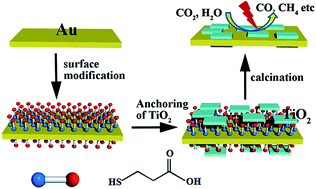
We decorated Au nanoplates with TiO2 nanosheets using a bifunctional linker molecule, mercaptopropionic acid (MPA, HS–R–COOH). The preparation procedure is schematically illustrated in Fig. 1. For the anchoring of TiO2 onto the Au nanoplate, the Au nanoplate surface was firstly modified with MPA solution as the thiol group tends to attach to the Au nanoplate. Thus, the carboxylic acid group on the other side of the MPA molecule was exposed outward. With the injection of a suspension of TiO2 nanosheets into the above MPA-modified Au nanoplate suspension, the TiO2 nanosheets then adhere onto the Au nanoplate through bonding with the carboxylic acid group.16 Finally, calcination to remove MPA allows for the production of clean Au–TiO2 composites.
image file: c6ra14821b-f1.tif
Fig. 1 Schematic illustration of the preparation procedure of the Au–TiO2 composites.

The FE-SEM image shows that the TiO2 nanosheet exhibits a regular square shape (Fig. 2a). TEM images clearly reveal that the nanosheets possess a regular lamellar shape with an edge size of ∼20–30 nm and thickness of 7–8 nm (Fig. 2b). The high resolution TEM (HRTEM) image shows clear lattice fringes, perfectly aligning across the entire surface (Fig. 2c), indicating a single-crystalline structure of the TiO2 nanosheet. The distances of the 2D crystal lattices are both 3.52 Å, which can be indexed to (101) planes of anatase TiO2. The HRTEM image of a vertically standing nanosheet shows the basal (001) plane with a lattice fringe of d(001) = 2.37 Å (Fig. 2d).17 These data demonstrate that the TiO2 nanosheet grows preferentially along the {101} surrounding planes, and was enclosed by {001} top and bottom surfaces. The typical FE-SEM image of the Au nanoplates shows that the products were dominated by hexagonal and triangular nanoplates (Fig. 4a). The edge size of the nanoplates varies from about 1 μm to 5 μm. The section analysis on the AFM image shows that the nanoplate has quite a smooth surface over the width and an average thickness of about 26 nm (Fig. S1, see ESI). Fig. 3 shows the FE-SEM images of the TiO2 nanosheet-attached Au nanoplate. Relative to the bare Au nanoplates, numerous TiO2 nanosheets were stuck on the Au nanoplate tightly, typically replicating the triangle morphology of the Au nanoplate. The TEM image further reveals that the considerably smaller TiO2 nanosheets were attached on the Au nanoplates (Fig. 4b). The electron diffraction pattern identifies the presence of Au and TiO2 (Fig. 4c).


image file: c6ra14821b-f2.tif
Fig. 2 (a) FE-SEM image of the TiO2 nanosheets, (b) TEM image and (c and d) HRTEM images of the TiO2 nanosheets.

image file: c6ra14821b-f3.tif
Fig. 3 FE-SEM images of the TiO2 nanosheet-attached Au nanoplate.

image file: c6ra14821b-f4.tif
Fig. 4 (a) FE-SEM image of the Au nanoplates; (b) TEM image of a TiO2 nanosheet-attached Au nanoplate and (c) the electron diffraction pattern.

The XRD pattern of the Au–TiO2 nanocomposite confirms the presence of anatase TiO2 and cubic-phase Au (Fig. S2). The XPS spectrum of the Au–TiO2 composites also shows the presence of Au 4f, Ti 2p, and O 1s peaks (Fig. S3). The bonding energies of the Au 4f7/2 peak and Au 4f5/2 peak are located at 82.75 eV and 86.51 eV, respectively, indicating that the Au element persisted in metallic format. The Ti 2p peaks appear at 458.3 eV and 463.9 eV, and the O 1s peak at 529.4 eV.

UV-visible diffuse reflectance spectroscopy shows that the pristine TiO2 nanosheets with an absorption edge at about 380 nm display a bandgap of 3.2 eV (Fig. 5a), which indicates that the TiO2 nanosheets only respond to ultraviolet light. The Au–TiO2 nanocomposite exhibits very strong light absorbance in the UV-visible and near infrared range (Fig. 5b).18 While the absorption wavelength shorter than 400 nm is assigned to TiO2, the peak near 500 nm originated from the transverse mode of the plasmon resonance of the Au nanoplate, and the peaks near 730 nm and in the near-infrared region at 1350 nm are assigned to the longitudinal mode of plasmon resonance.19–21


image file: c6ra14821b-f5.tif
Fig. 5 (a) UV-vis diffuse reflectance spectroscopy of TiO2 and (b) UV-vis-NIR diffuse reflectance spectroscopy of the Au–TiO2 nanocomposites.

To evaluate the photocatalytic activity of the Au–TiO2 composites, we performed the photocatalytic CO2 reduction in the presence of water vapor. Under UV-visible light irradiation, the CH4 evolution rate of the Au–TiO2 nanocomposite was detected as ∼0.65 μmol h−1 g−1, two times higher than that for pure TiO2 nanosheets (0.32 μmol h−1 g−1) (Fig. 6, curve b and a, respectively). A blank experiment with identical conditions using Ar to replace CO2 shows no appearance of CH4, proving that the carbon source is completely derived from CO2. With visible light (λ > 420 nm) irradiation, the pure TiO2 nanosheet with a wide bandgap of 3.2 eV exhibited no apparent photocatalytic activity, and no hydrocarbon species were reasonably detected. In contrast, visible-light irradiation of the Au–TiO2 nanocomposite enables the production of not only CH4 but also CO with evolution rates of 0.039 μmol h−1 g−1 and 0.049 μmol h−1 g−1, respectively (Fig. 6, curve c and d). Interestingly, the Au–TiO2 composite irradiated under NIR light (λ > 800 nm) also produced CH4 at a rate of 0.0125 μmol h−1 g−1 after 8 h irradiation. This demonstrates that the Au–TiO2 nanocomposites truly exhibit a photocatalytic response toward the NIR spectrum, assigned to the weak SPR absorption peak at 1350 nm. It should be mentioned that CO was not detected using NIR irradiation, possibly due to the yield being below the minimum limitation of detection. The visible and NIR light activity of the photocatalysis obviously originates from the SPR effect of both the transversal and longitudinal modes of the Au nanoplate.


image file: c6ra14821b-f6.tif
Fig. 6 CH4 evolution rate of (a) TiO2 and (b) Au–TiO2 under UV-vis light irradiation; (c) CH4 and (d) CO evolution rate of Au–TiO2 under visible-light irradiation.

Considering different products generated under UV-vis irradiation and visible light irradiation (Fig. 7), on the one hand, the formation of CH4 (Eredox/SCE = −0.48 V) is thermodynamically more feasible than the formation of CO (Eredox/SCE = −0.77 V) if the supply of protons and electrons is high enough.22 On the other hand, the sorts of products also kinetically depend on the number of electrons and protons. CO is formed by reaction with two protons and two electrons, while CH4 formation needs eight electrons and eight protons. The simultaneous formation of CH4 and CO under visible light irradiation is possibly owing to the compromise between charge transfer and thermodynamics. CO was produced under visible light possibly due to the paucity of electrons. UV-visible light promotes the generation of electron–hole pairs on the TiO2 of the Au–TiO2 composites. Because the Fermi level of Au is lower than the TiO2 conduction band, the Schottky barriers can remove the photoexcited electrons from the surface of TiO2 to Au and they accumulate therein, subsequently reducing the electron–hole recombination.2 At the same time, the SPR excitation in the Au nanoplate also generates hot electrons that occupy energy levels above the Fermi level of Au. Thus, enough electrons and protons were available for the CO2 molecules to get the necessary eight electrons to convert into CH4. Under visible-light irradiation, in contrast, only energetic hot electrons in Au injecting into the conduction band of TiO2 participate in the photoreduction of CO2. Therefore, local electron density would be relatively low, which results in some of the CO2 molecules obtaining only two electrons to form CO.


image file: c6ra14821b-f7.tif
Fig. 7 Schematic illustration of charge separation and transfer in the Au–TiO2 system and photoreduction of CO2 into different products.

To further understand the origin of the different products from the photoreduction of CO2 under different forms of light irradiation, in situ DRIFTS spectra of CO2 and H2O co-interacting with the Au–TiO2 catalyst were traced under light irradiation. CO2 and H2O were firstly adsorbed on Au–TiO2, and a stream of N2 was then introduced continuously to the DRIFTS cell for 20 min to purge any molecules physisorbed on the surface. Several peaks were observed including bidentate carbonate (b-CO32−, 1230, 1411 and 1479 cm−1), monodentate carbonate (m-CO32−, 1294 cm−1), surface H2O (1624 cm−1) and bicarbonate (HCO3, 1660 cm−1) (Fig. 8a). Bicarbonate (HCO3) was possibly formed from CO2 interacting with OH groups and Ti3+ sites,23,24 while b-CO32− is produced by CO2 coordination with an unsaturated O2 and OH groups are produced by surface H2O. Upon UV-vis irradiation, the peak for surface H2O disappeared due to photosplitting (Fig. 8b). Under visible light irradiation, a new peak which represents the adsorption of formic acid (HCOOH, 1725 cm−1) appeared via CO2 + 2H+ + 2e → HCOOH25 (Fig. 8c), compared to that under UV-vis light irradiation. HCOOH was generally considered to be an intermediate in the production of CO through HCOOH → CO + H2O.26 The apparent peaks for surface H2O may also possibly originate from HCOOH dissociation.


image file: c6ra14821b-f8.tif
Fig. 8 In situ DRIFTS spectra of (a) CO2 and H2O adsorption on Au–TiO2 in the dark, (b) under UV-vis light irradiation for 20 min, and (c) under visible light irradiation for 20 min.

The product selectivity is dependent on not only different forms of light irradiation, but also on the reaction media. While CO and CH4 were generated as the major C1 chemicals in the solid–gas system, other hydrocarbon fuels (e.g., CH3OH, CH3CH2OH etc.) can be mainly produced in a solid–liquid system. We tested the CO2 photoreduction in CO2-saturated NaHCO3 aqueous solution (the pH was adjusted to ∼8.0). A variety of C1 and C2 products were obtained after 6 h of irradiation, as displayed in Table 1. UV-visible light irradiation of both pure TiO2 and the Au–TiO2 nanocomposite generates CH3OH, and the yield when using the Au–TiO2 nanocomposite was reasonably higher than when using the pure TiO2. In addition, C2 species including CH3CH2OH and CH3CHO were also detected under visible light irradiation. Obviously, the selectivity of products with C1 or C2 is also closely related to the irradiation spectral region in the aqueous reaction medium. While the reaction mechanism of the CO2 photoreduction is very complex, the present C2 species may come from a coupling reaction between intermediate radicals, such as ˙CH3. A detailed mechanism is currently under investigation.

Table 1 Photocatalytic product yields in aqueous solution after 6 hours of irradiation
Spectral region Photocatalytic product yield (μmol g−1)
CH3OH CH3CH2OH CH3CHO
(TiO2) UV-visible light 14.71 0 0
(Au–TiO2) UV-visible light 20.98 0 0
(Au–TiO2) visible light 0 3.77 0.86


To further demonstrate the SPR effect on the enhancement of photocatalytic performance of the Au nanoplates, the photoresponses of the Au–TiO2 electrodes were studied (Fig. 9). The photoresponse curves were measured with light on/off cycles at 0 V versus SEC (saturated calomel electrode). Compared to TiO2, a fast and uniform photocurrent response is observed for each light-on and light-off cycle in the Au–TiO2 electrode under both UV-visible and visible light irradiation. The photocurrent density of the Au–TiO2 electrode is detected as 5.5 μA cm−2 under UV-visible light irradiation (Fig. 9a), which originates from both TiO2 excitation and the Au SPR effect. To only consider the SPR effect and eliminate TiO2 excitation, the Au–TiO2 electrode was visible-light irradiated and still shows obvious photocurrent response, reaching about ∼3.5 μA cm−2 (Fig. 9b). Fig. 10 shows the EIS Nyquist plots of the Au–TiO2 nanocomposite in the dark, under visible irradiation, and UV-visible irradiation. The radius of the arc on the EIS spectra reflects the reaction rate occurring at the surface of the electrode.27–30 The smaller arc radius on the EIS Nyquist plot measured under visible or UV-visible irradiation indicates that a more effective separation of the photogenerated electron–hole pairs and a faster interfacial charge transfer occurred. The depressed arc radius measured under UV-visible light irradiation compared to visible light irradiation also agrees with the efficiency of the photocatalytic reduction of CO2 under different forms of light irradiation.


image file: c6ra14821b-f9.tif
Fig. 9 Photoresponses of Au–TiO2 (a) under UV-visible light irradiation and (b) under visible light irradiation, and pure TiO2 (c) under UV-visible light irradiation and (d) under visible light irradiation.

image file: c6ra14821b-f10.tif
Fig. 10 EIS Nyquist plots of the Au–TiO2 composites in the dark, under visible light irradiation and under UV-visible light irradiation.

Conclusions

An Au–TiO2 nanocomposite consisting of (001) exposed TiO2 nanosheet-anchored Au nanoplates was successfully fabricated using bifunctional linker molecules. The nanocomposites exhibit promising activity for the photoreduction of CO2 to renewable fuels in the presence of water under visible light and even near-infrared light. The enhancement of the high photocatalytic activity was induced by both the transversal and longitudinal plasma of the Au nanoplates. Various products of the photoreduction including CH4, CO, CH3OH, and CH3CH2OH were detected, and their generation is closely related to not only different forms of light irradiation, but also the reaction media.

Acknowledgements

This work was supported by 973 Programs (No. 2014CB239302 and 2013CB632404) and the National Natural Science Foundation of China (No. 21473091, 51272101, and 51202005).

Notes and references

  1. (a) A. Dhakshinamoorthy, S. Navalon, A. Corma and H. Garcia, Energy Environ. Sci., 2012, 5, 9217–9233 RSC ; (b) W. G. Tu, Y. Zhou and Z. G. Zou, Adv. Mater., 2014, 26, 4607–4626 CrossRef CAS PubMed ; (c) G. A. Ozin, Adv. Mater., 2015, 27, 1957–1963 CrossRef CAS PubMed .
  2. S. Linic, P. Christopher and D. B. Ingram, Nat. Mater., 2011, 10, 911–921 CrossRef CAS PubMed .
  3. W. B. Hou and S. B. Cronin, Adv. Funct. Mater., 2013, 23, 1612–1619 CrossRef CAS .
  4. Y. Tian and T. Tatsuma, Chem. Commun., 2004, 1810–1811,  10.1039/b405061d .
  5. Y. Tian and T. Tatsuma, J. Am. Chem. Soc., 2005, 127, 7632–7637 CrossRef CAS PubMed .
  6. (a) J. J. Mock, M. Barbic, D. R. Smith, D. A. Schultz and S. Schultz, J. Chem. Phys., 2002, 116, 6755–6759 CrossRef CAS ; (b) K. Kolwas, A. Derkachova and M. Shopa, J. Quant. Spectrosc. Radiat. Transfer, 2009, 110, 1490–1501 CrossRef CAS ; (c) K. H. Kim, A. Husakou and J. Herrmann, Opt. Express, 2010, 18, 7488–7496 CrossRef CAS PubMed ; (d) T. Atay, J. H. Song and A. V. Nurmikko, Nano Lett., 2004, 4, 1627–1631 CrossRef CAS .
  7. (a) L. Q. Liu, S. X. Ouyang and J. H. Ye, Angew. Chem., Int. Ed., 2013, 52, 6689–6693 CrossRef CAS PubMed ; (b) B. H. Wu, D. Y. Liu, S. Mubeen, T. T. Chuong, M. Moskovits and G. D. Stucky, J. Am. Chem. Soc., 2016, 138, 1114–1117 CrossRef CAS PubMed .
  8. M. Lazzeri, A. Vittadini and A. Selloni, Phys. Rev. B: Condens. Matter Mater. Phys., 2002, 65, 119901 CrossRef .
  9. U. Diebold, Surf. Sci. Rep., 2003, 48, 53–229 CrossRef CAS .
  10. X. G. Han, Q. Kuang, M. S. Jin, Z. X. Xie and L. S. Zheng, J. Am. Chem. Soc., 2009, 131, 3152–3153 CrossRef CAS PubMed .
  11. J. S. Chen, Y. L. Tan, C. M. Li, Y. L. Cheah, D. Y. Luan, S. Madhavi, F. Y. C. Boey, L. A. Archer and X. W. Lou, J. Am. Chem. Soc., 2010, 132, 6124–6130 CrossRef CAS PubMed .
  12. M. Diak, E. Grabowska and A. Zaleska, Appl. Surf. Sci., 2015, 347, 275–285 CrossRef CAS .
  13. C. Hu, X. Zhang, X. S. Li, Y. Yan, G. C. Xi, H. F. Yang and H. Bai, Chem.–Eur. J., 2014, 20, 13557–13560 CrossRef CAS PubMed .
  14. C. Wang, C. Kan, J. Zhu, X. Zeng, X. Wang, H. Li and D. Shi, J. Nanomater., 2010, 2010, 1–9 Search PubMed .
  15. S. W. Liu, J. G. Yu and M. Jaroniec, J. Am. Chem. Soc., 2010, 132, 11914–11916 CrossRef CAS PubMed .
  16. H. Choi, P. K. Santra and P. V. Kamat, ACS Nano, 2012, 6, 5718–5726 CrossRef CAS PubMed .
  17. M. Liu, L. Y. Piao, L. Zhao, S. T. Ju, Z. J. Yan, T. He, C. L. Zhou and W. J. Wang, Chem. Commun., 2010, 46, 1664–1666 RSC .
  18. W. B. Hou, W. H. Hung, P. Pavaskar, A. Goeppert, M. Aykol and S. B. Cronin, ACS Catal., 2011, 1, 929–936 CrossRef CAS .
  19. T. A. El-Brolossy, T. Abdallah, M. B. Mohamed, S. Abdallah, K. Easawi, S. Negm and H. Talaat, Eur. Phys. J.: Spec. Top., 2008, 153, 361–364 CrossRef .
  20. E. T. Castellana, R. C. Gamez, M. E. Gomez and D. H. Russell, Langmuir, 2010, 26, 6066–6070 CrossRef CAS PubMed .
  21. W. Ni, X. Kou, Z. Yang and J. F. Wang, ACS Nano, 2008, 2, 677–686 CrossRef CAS PubMed .
  22. A. J. Morris, G. J. Meyer and E. Fujita, Acc. Chem. Res., 2009, 42, 1983–1994 CrossRef CAS PubMed .
  23. L. J. Liu, C. Y. Zhao, D. Pitts, H. L. Zhao and Y. Li, Catal. Sci. Technol., 2014, 4, 1539–1546 CAS .
  24. L. J. Liu, C. Y. Zhao and Y. Li, J. Phys. Chem. C, 2012, 116, 7904–7912 CAS .
  25. C. C. Chuang, W. C. Wu, M. C. Huang, I. C. Huang and J. L. Lin, J. Catal., 1999, 185, 423–434 CrossRef CAS .
  26. L. J. Liu, H. L. Zhao, J. M. Andino and Y. Li, ACS Catal., 2012, 2, 1817–1828 CrossRef CAS .
  27. H. Liu, S. A. Cheng, M. Wu, H. J. Wu, J. Q. Zhang, W. H. Li and C. N. Cao, J. Phys. Chem. A, 2000, 104, 7016–7020 CrossRef CAS .
  28. W. H. Leng, Z. Zhang, J. Q. Zhang and C. N. Cao, J. Phys. Chem. B, 2005, 109, 15008–15023 CrossRef CAS PubMed .
  29. Y. J. Wang, R. Shi, J. Lin and Y. F. Zhu, Appl. Catal., B, 2010, 100, 179–183 CrossRef CAS .
  30. Y. J. Wang, X. J. Bai, C. S. Pan, J. He and Y. F. Zhu, J. Mater. Chem., 2012, 22, 11568–11573 RSC .

Footnotes

Electronic supplementary information (ESI) available. See DOI: 10.1039/c6ra14821b
M. W. and Q. H. contributed equally to this work.

This journal is © The Royal Society of Chemistry 2016
Click here to see how this site uses Cookies. View our privacy policy here.