Electrochemically synthesized sulfur-doped graphene as a superior metal-free cathodic catalyst for oxygen reduction reaction in microbial fuel cells

Thi Hiep Han a, Nazish Parveena, Sajid Ali Ansaria, Jun Ho Shimb, Anh Thi Nguyet Nguyenb and Moo Hwan Cho*a
aSchool of Chemical Engineering, Yeungnam University, Gyeongsan, Gyeongsangbuk-do 38541, Republic of Korea. E-mail: mhcho@ynu.ac.kr; Fax: +82-53-810-4631; Tel: +82-53-810-2517
bDepartment of Chemistry, Daegu University, Gyeongsan, Gyeongsangbuk-do 38453, Republic of Korea

Received 31st May 2016 , Accepted 20th October 2016

First published on 25th October 2016


Abstract

Platinum nanoparticles (PtNPs) have long been regarded as the benchmark catalyst for the oxygen reduction reaction (ORR) in the cathode of microbial fuel cells (MFCs). On the other hand, the practical applications of these catalysts are limited by the high cost and scarcity of Pt. Therefore, developing an alternative catalyst to PtNPs for efficient ORR activity is essential for meeting the future demands for practical applications in MFCs. In this study, sulfur-doped graphene (S-GN) was synthesized via the environmental friendly, economical and facile one pot electrochemical exfoliation of graphene in a unique combination of electrolytes, which both catalyzed the exfoliation reaction and acted a sulfur source. The initial activity of S-GN as an ORR active catalyst was examined by cyclic voltammetry (CV), which showed that the as-synthesized S-GN exhibited better ORR activity than the plain material. Furthermore, the application of S-GN as a cathode material was also studied in MFCs. The results showed that the MFC equipped with the S-GN cathode produced a maximum power density of 51.22 ± 6.01 mW m−2, which is 1.92 ± 0.34 times higher than that of Pt/C. The excellent performance of S-GN as a cathode catalyst in MFCs could be due to the doping of graphene with heteroatoms, which increased the surface area and improved the conductivity of graphene through a range of interactions. Based on the above MFC performance, the as-synthesized S-GN catalyst could help reduce the cost and scale up the design of MFCs for practical applications in the near future.

1. Introduction

MFCs are electrochemical devices that use bacteria as biocatalysts to oxidize or decompose organic/inorganic matter to generate a reasonable amount of electricity.1 MFCs have attracted considerable interest because of their ability to generate sustainable energy coupling with wastewater treatment under mild and cost-effective conditions.2 In the MFC cathode, oxygen has been used widely as an electron acceptor in most MFC research because of its unlimited availability and high standard redox potential.3 In the absence of a catalyst, the kinetic oxygen consumption rate is very slow, which is considered the main factor limiting the power production performance of MFCs.4 To avoid these problems, platinum has been used widely as a cathode catalyst in MFCs to enhance the oxygen reduction reaction and improve the overall performance of MFCs.

On the other hand, the practical applications of Pt-based ORR electrode catalysts are limited by its susceptibility and CO deactivation,5,6 as well as the high cost of Pt, sensitivity to poisoning, and the limited reserves of Pt in nature.6,7 Therefore, it is important to develop an efficient and low cost catalyst for an effective ORR using a simple and cost effective method, which will be helpful in the design of MFCs for future applications.

The innovation of graphene has opened up a new era of 2-dimensional (2D) structures in the field of science and technology. Graphene is a building block for carbon materials of all other dimensionalities, such as 1D nanotubes, and 3D graphite. This unique planar structure of graphene has attracted considerable attention worldwide for its promising applications in a range of fields, such as electrical, electrochemical, supercapacitor, photochemical, optical, etc.8 Owing to its large surface area, rich electronic states, graphitic structure, and good mechanical properties, graphene-based materials have played important roles in non-platinum-based catalysts in several fields.9–15

In recent years, single or multi-atom doped graphene has been studied widely as a good catalyst for the ORR in MFCs, which exhibited better catalytic performance than pristine graphene.6,9,16 Among them, nitrogen-doped graphene has attracted considerably more attention because of its better electrocatalytic activity, long-term stability, and comparable performance compared to the benchmark Pt catalyst. Some studies have also reported that nitrogen-doped graphene synthesized by various different methods worked well in real MFC systems. On the other hand, its catalytic performance in the ORR and stability are unsatisfactory, which limit its utilization as an effective electrode material for a range of purposes.6,16–19 These studies reported that the MFCs system catalyzed by nitrogen-doped graphene performs better than that of commercial platinum nanoparticles on a carbon black (Pt/C) catalyst.

More recently, S-GN synthesis with high catalytic performance has attracted considerable interest in catalysts for the ORR.20–24 The high activity of the ORR of S-GN was attributed mainly to highly graphitized structures, S-related active sites, and hierarchically porous textures.23 Therefore, many studies induced catalytic behavior in graphene by the introduction of sulfur in the graphene matrix using a range of methods. Despite this, the synthetic procedure involved in the synthesis of S-GN is limited by the many steps, high running cost, and hazardous chemicals. To solve these problems, a recent study reported the one-step synthesis of S-GN using the electrochemical exfoliation technique in a unique combination of electrolytes, where the electrolyte acted as a sulfur source and also catalyzed the exfoliation reaction. The above-synthesized S-GN were characterized by X-ray diffraction (XRD), Raman spectroscopy, and X-ray photoelectron spectroscopy (XPS), which clearly revealed the presence of the S atom in the graphene sheet. Briefly, the interlayer distance obtained from the XRD pattern clearly showed a slight increase in the interlayer distance of S-GN after sulfur doping. The high-resolution XP spectra of S 2p displayed three characteristic peaks. The 2p3/2 peaks observed at a binding energy (BE) of 163.5 eV, 164.5 eV, and 168.0 eV were assigned to the different types of bonding, which are a clear indication of the presence of sulfur in S-GN. This study extended this approach further to synthesize S-GN and examine the ORR catalytic activity and real power generation in MFCs. The ORR activity of the as-synthesized S-GN electrode was examined by CV and the performance was compared with that of the commercially available Pt/C. The CV results showed that the electrode coated with S-GN exhibited much better performance than commercially available Pt/C. After the initial assessment by CV, the real assessment as an ORR catalyst was performed in a MFC equipped with the S-GN catalyst. The enhanced power generation in the MFC equipped with S-GN compared to the benchmark catalyst was attributed to the high surface area, conducting behavior, and different interactions between the sulfur and graphitic carbon. This study further highlights the potential applications of S-GN in a range of fields.

2. Experimental

2.1 Materials

Graphene (graphite rods) was acquired from KOMAX, South Korea. Sodium thiosulfate (Na2S2O3), sulfuric acid (H2SO4), and ethanol were purchased from Duksan Pure Chemicals, Co. Ltd. Korea. The water used in these experiments was de-ionized water obtained from a PURE ROUP 30 water purification system. A Nafion solution was purchased from Sigma-Aldrich and platinum was obtained from Alfa Aesar, USA. Carbon paper (without wet proof) and 10 wt% Pt on carbon paper (0.5 mg cm−2) were supplied by Fuel Cell Earth LLC, USA. The Pt/C powder catalyst (20%, Alfa Aesar, USA) and all other chemicals used in this study were of analytical grade and used as received.

2.2 Material fabrication

The S-GN was synthesized using the electrochemical exfoliation method, which was demonstrated in a previous study.25 Briefly, electrochemical exfoliation was carried out by applying a positive voltage (5.0 V) to the graphite electrode in the combination of an electrolytic solution (Na2S2O3 + H2SO4 at a 3[thin space (1/6-em)]:[thin space (1/6-em)]1 ratio). The distance between the two graphite rods were kept to ∼2 cm throughout the electrochemical process. The entire process was conducted under ultra-sonication bath conditions. After 3 hours, the dissociated exfoliated graphite sheet was filtered under suction, and washed with excess water and ethanol to remove the impurities. Subsequently, the prepared S-GN was dried at 80 °C, further heated to 120 °C for 6 h, and stored in a desiccator for further experiments.

The S-GN-coated cathode electrode was prepared by mixing 90 wt% of the S-GN catalyst with 10 wt% of Nafion binder in 5 mL of ethanol and sonicated further for 60 min. The above well-dispersed suspension was coated on carbon paper, 2.5 × 4.5 cm in size, and dried at room temperature. For comparison, the carbon paper coated with commercial Pt/C was prepared using the same method with the same loading.

2.3 MFC construction and operation

The H-type MFCs were constructed from two 300 mL glass bottles that were separated physically by a Nafion 117 membrane, as described previously.2,26 The anode chamber contained 250 mL of Luria Broth (LB) medium inoculated with an overnight culture of S. oneidensis at a ratio of 1[thin space (1/6-em)]:[thin space (1/6-em)]100. The medium used to inoculate the bacteria and fill the anode chamber was purged with nitrogen gas for 10 min to remove any dissolved oxygen present.

The cathode chamber was filled with a 50 mM phosphate-buffered saline (PBS pH 7) solution (NH4Cl, 0.31 g L−1; KCl, 0.13 g L−1; NaH2PO4·2H2O, 3.32 g L−1; Na2HPO4·12H2O, 10.36 g L−1) and purged continuously with air at 150 cm3 air per min. The carbon paper coated with the S-GN or Pt/C catalyst was used as the cathode electrode. To avoid contamination, the MFCs were autoclaved at 121 °C for 30 min prior to set-up and all experiments were maintained under sterile conditions. The electrodes were hung on titanium wire and connected to an external resistance box with a fixed load of 1000 Ω. The experiments were duplicated to assess the reproducibility of the data. Each set of experiments consisted of three separate MFCs: one with a carbon paper cathode without a catalyst, one with the S-GN catalyst, and the other with a commercial Pt/C catalyst.

2.4 Analysis and calculation

The output voltage was monitored continuously across an external resistor with a fixed load of 1000 Ω using a digital multi-meter (Agilent 34405A, Agilent Technologies, Inc., USA), which was connected to a personal computer. The power density was calculated to be P = V2/(ARext), where V is the measured voltage, A is the surface area of the anode electrode, and Rext is the external resistance. The open circuit voltage was determined when the MFCs reach the stationary phase, and a polarization test was performed. A polarization curve was obtained by plotting the potential and power density as a function of the current density, which were measured by varying the external resistance from 6000 Ω to 100 Ω, and stabilizing each resistor for 30 min.

2.5 Electrochemical measurements

Both CV and electrochemical impedance spectroscopy (EIS) were carried out using a potentiostat (Versa STAT 3, Princeton Research, USA) in a 50 mM PBS solution, pH 7 as an electrolyte at room temperature. EIS was performed under open circuit (0.01 V) conditions at a frequency range of 0.001 Hz to 10[thin space (1/6-em)]000 Hz. CV (scan rate of 10 mV s−1) was conducted in a three-electrode with platinum plate as the counter electrode, and Ag/AgCl 3 M KCl as the reference electrode. S-GN or Pt/C-coated carbon paper was used as the working electrode. The working electrodes for the electrochemical measurements were prepared in a similar manner, as mentioned above.

The linear sweep voltammetry (LSV) experiments using a rotating disk electrode (RDE) were performed using the methodology reported elsewhere.27 All electrochemical RDE experiments were carried out using a RDE-2 of BASi electrochemical analyzer (Bioanalytical Systems Inc., West Lafayette, IN). Prior to coating with the catalysts, the glassy carbon rotating disk working electrode (0.071 cm2) was wet-polished on an Alpha A polishing cloth (Mark V Lab) using 0.3 and 0.05 μm aluminum slurries, sequentially. The electrode was then rinsed with distilled water and finally sonicated in distilled water for 30 s to remove the residual aluminum slurry from the electrode surface. All RDE experiments were conducted in a 50 mM PBS solution, pH 7 saturated with either oxygen or nitrogen at a scan rate of 10 mV s−1 and a potential range from −0.6 to −0.6 V vs. a saturated calomel reference electrode (SCE) with a Pt wire counter electrode. The ORR currents were recorded at electrode rotating speeds ranging from 400 to 3600 rpm.

3. Results

3.1 Electrochemical performance

CV was performed to examine the electro-catalytic activity of the catalysts for the ORR. Fig. 1 presents the CV data for carbon paper coated with different catalysts in 50 mM PBS electrolyte (pH = 7) saturated with air and N2. A single peak corresponding to the ORR was observed by CV. The appearance of the ORR confirmed that the S-GN is catalytically active towards the ORR.18 The air-saturated electrolyte showed a prominent ORR peak compared to the N2-saturated electrolyte due to the unavailability of dissolved oxygen involved in the initial ORR. This indicates that the S-GN and Pt/C catalysts have high electrocatalytic selectivity for the ORR.
image file: c6ra14114e-f1.tif
Fig. 1 Cyclic voltammograms (CVs) of carbon paper electrodes modified with S-GN or Pt/C under saturated air (a) and N2 (b) in 50 mM PBS (pH = 7.0) at a scan rate of 10 mV s−1. (c) Represents the CVs of only carbon paper electrodes modified with S-GN in saturated air and N2.

The onset potential, capacitance and sharpness of the oxygen reduction peak obtained from the CV are important for evaluating the ORR activity.28 The first observation is that the CVs of S-GN showed a larger background current than Pt/C, indicating that S-GN has a higher capacitance current, which is in agreement with previous work25 and the EIS data presented below. Therefore, the as-synthesized S-GN can store more electrons for the ORR. Furthermore, although the onset potential of S-GN is more negative than that of Pt/C (−0.22 vs. 0.15 V), the current peak of S-GN was much sharper with an enhanced current compared to Pt/C.

The LSV measurements on a RDE were performed to further examine the ORR activity of the as-synthesized S-GN. The current density of Pt/C and S-GN increased with increasing rotation rate from 400 to 3600 rpm (Fig. 2a and b). The LSV measurement at 1600 rpm (Fig. 2c) revealed an onset potential of S-GN of −0.15 V, which was more negative than that of Pt/C (0.22 V). This is evidently compared to the onset potential observed by CV and previous study.23


image file: c6ra14114e-f2.tif
Fig. 2 Linear sweep voltammograms (LSVs) for Pt/C (a) and S-GN (b) in O2-saturated PBS at different rotation rates. (c) LSVs for Pt/C and S-GN in O2-saturated PBS at 1600 rpm. (d) K–L plots for Pt/C and S-GN at −0.5 V vs. SCE.

The Koutecky–Levich (K–L) plots at a potential of −0.5 V showed good linearity, indicating first-order kinetics with respect to the reactant concentration. The number of electrons transferred (n) for the ORR calculated from the slope of the K–L plots on the base of the K–L equation as following,27

image file: c6ra14114e-t1.tif
where j is the measured limiting current density, jk is the kinetic current density, and jd is the diffusion-limited current density, F is the Faraday constant, CO2 (1.2 × 10⁻⁶ mol cm−3) is the saturated concentration of oxygen, DO2 (1.9 × 10⁻⁵ cm2 s−1) is the diffusion coefficient of oxygen, v is the kinematic viscosity of the solution, and w is the electrode rotation rate. As a result, the number of electrons transferred was 2.67 and 3.96 for S-GN and Pt/C, respectively. This suggests that oxygen is reduced via a four-electron transfer pathway on Pt/C, whereas both two- and four-electron transfer processes occurred simultaneously on S-GN in the PBS solution.

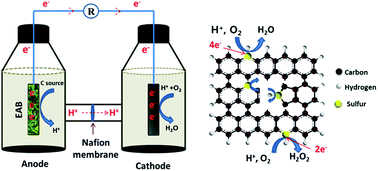
According to the number of electrons transferred from the RDE measurement, the mechanism of the ORR on the surface of S-GN in the cathode of the MFC was partially revealed. Fig. 3 presents a schematic diagram of the operation principal of the MFCs with ORR mechanism of the S-GN in the cathode. The electrochemically active biofilm (EAB) on carbon paper oxidizes the carbon source to produce electrons and protons. The protons then permeate to the cathode chamber through the Nafion membrane, whereas the electrons are transferred from the anode to the cathode through an external circuit. These combined processes produced a reasonable amount of electricity, which was measured by a multi-meter. In the cathode, the general ORR can occur simultaneously through a direct four-electron transfer pathway and two-electron pathway over the equipped catalyst-coated electrode, according to the overall reaction described below.29

Two-electron transfer pathway: O2 + 2H+ + 2e → H2O2

Four-electron transfer pathway: O2 + 4H+ + 4e → 2H2O


image file: c6ra14114e-f3.tif
Fig. 3 Schematic diagram of the ORR activity of S-doped graphene in a microbial fuel cell.

The EIS technique is the most valuable technique for examining the charge transfer resistance phenomenon occurring in the electrodes and electrolyte interface. Fig. 4 presents a Nyquist plot of S-GN-coated carbon paper, Pt/C-coated carbon paper, and plain carbon paper (no catalyst) electrodes. Charge transfer through the electrode/electrolyte interface is smaller with a smaller semicircle at the middle frequency.30 As shown in Fig. 4a, the diameter of the semicircle of the plain carbon paper electrode was quite large (165[thin space (1/6-em)]915.9 Ω cm2), indicating the high charge transfer resistance of the plain carbon paper. With the presence of catalysts, the charge transfer resistance was reduced significantly to 4.83 Ω cm2, even though the semicircles were not observed clearly. As shown in Fig. 4c, the appropriate equivalent fitting circuit comprised three components: ohmic resistance (R1), charge transfer resistance (R2), and constant phase element (CPEdl). The ohmic resistance of S-GN was similar to Pt/C at approximately 49.09 Ω cm2. The charge transfer resistance of the electrode coated with the S-GN or Pt/C catalysts was very small compared to the plain electrode, which was attributed to the high electrical conductivity of those catalysts. A significant difference in the CPEdl value was observed among S-GN (0.082, n = 0.92), Pt/C (0.0082, n = 0.8), and without catalyst (0.000038 sn Ω−1 cm−2, n = 0.94). The higher CPEdl represented the less resistive and higher capacitive double layers of S-GN compared to Pt/C.31


image file: c6ra14114e-f4.tif
Fig. 4 (a and b) Nyquist plots of the S-GN and Pt/C-coated carbon paper compared to plain carbon paper (no catalyst). (c) Zoom at the high frequency region of the Nyquist plot. The inset shows the appropriate equivalent circuit.

3.2 MFC performance in comparison with the different cathodic catalysts

The real applications of the as-synthesized S-GN as a cathodic catalyst in an H-type MFC were assessed and the results were compared with those of commercially available Pt/C-coated carbon paper and plain carbon paper. The power generation performance of those catalysts were evaluated in three separate H-type MFC systems with the same dimensions. Those MFC systems were operated simultaneously under the same conditions, such as pH, temperature, aeration flow rate, inoculum in the anode, and anode electrode. The only difference among the three MFC systems is the catalysts coated on the cathode electrode (S-GN-coated carbon paper, Pt/C-coated carbon paper, and plain carbon paper). The catalyst loading on carbon paper was also similar: 3.07 g cm−2 for S-GN and 2.96 g cm−2 for Pt/C.

Fig. 5 presents the polarization tests curve and power density curve of the plain carbon paper, Pt/C-coated carbon paper, and S-GN-coated carbon paper. As expected, the MFC without the catalyst produced a very low power density of 1.96 ± 2.23 mW m−2. The MFC equipped with the S-GN catalyst and Pt/C catalyst produced a maximum power density of 51.22 ± 6.01 mW m−2 and 26.69 ± 6.52 mW m−2, respectively. Compared to the plain carbon paper and Pt/C-coated carbon paper catalyst, the power density of the S-GN-coated carbon paper was quite high. The S-GN-coated carbon paper showed double the power output of the commercially available Pt/C catalyst. Moreover, the OCV of the MFC equipped with the S-GN catalyst (0.87) was also higher than that of the Pt/C catalyst (0.65) and plain carbon paper electrode (0.55). This improved power generation in the MFC was attributed to the conducting behavior of the heteroatom-doped graphene, which is a well-established ORR catalyst in MFCs. MFCs are sustainable and prominent energy-producing devices. Therefore, the long-term durability of the prepared catalyst electrode is also an important factor. The durability of the prepared catalyst was also examined under similar conditions, i.e., the cell voltages of the cathode catalyst-equipped MFCs were examined as a function of time at a fixed external resistance. The fresh LB media was replaced whenever the cell voltage of the studied MFCs was decreased to 0.05 V. The minimal voltage generation was observed for the plain carbon paper electrode, which compelled its modification by the highly efficient ORR catalytic materials. The higher voltage generation observed on the S-GN catalyst than the Pt/C catalyst showed that S-GN has higher ORR catalytic activity than Pt/C. Fig. 6 clearly shows that the S-GN-coated carbon exhibited a stable voltage response with time compared to the other catalysts: coated and uncoated carbon paper. The S-GN-coated carbon also showed high catalytic activity for up to continuous 4 cycles (approximately 400 h of operation). A previous study also reported that the as-synthesized S-GN has excellent electrochemical stability.25


image file: c6ra14114e-f5.tif
Fig. 5 Power density and polarization curve of the MFCs with different catalysts.

image file: c6ra14114e-f6.tif
Fig. 6 Power density response with time of the MFCs with different catalysts. The sharp decrease in voltage indicated the complete consumption of the carbon source and new media was replaced.

On the other hand, for a broader context of the work, the performance of the MFC with the S-GN was compared with that of other reported cathodic catalysts, as shown in Table 1. In addition to its own electrocatalytic property, the MFC performance depends on many other factors, such as MFC configuration, electrode material, biocatalyst, etc. Therefore, each catalyst shows a different performance in MFC. Compared to other catalysts prepared, such as Pani–MnO2 and PtOx@M-TiO2, the as-synthesized S-GN exhibited superior performance in the cathode of the same MFCs system using the same experiment set-up and under the same conditions. The as-synthesized S-GN produced a 12.3 times higher power density than PtOx@M-TiO2 (ref. 32) and was comparable to a power density of Pani–MnO2.33 The performance of the as-synthesized S-GN was also compared with that of a commercial 10 wt% Pt 0.5 mg cm−2 on carbon paper electrode purchased from Fuel Cell Earth USA, in which the catalyst synthesis and electrode preparation procedure were optimized and well controlled on a commercial scale. As a result, a maximum power density of 57.6 mW m−2 was produced by the MFC equipped with a commercial 10 wt% Pt 0.5 mg cm−2 on carbon paper electrode (data not shown), which is similar to previous reports using the same MFC design, experimental set up, and S. oneidensis as a biocatalyst.26,34 This shows that the electrocatalytic activity of as-synthesized S-GN toward the ORR is comparable to that of the commercial 10 wt% Pt 0.5 mg cm−2 on carbon paper electrode from Fuel Cell Earth. The better ORR response of commercial 10 wt% Pt 0.5 mg cm−2 on carbon paper from Fuel Cell Earth compared to that of commercial powder Pt/C-coated carbon paper might be due to the optimized preparation procedure. This means that the ORR activity of the as-synthesized S-GN can be improved by optimizing the synthesis and electrode preparation. These optimization experiments will be carried out near in the future.

Table 1 Summary of the previous performances of some cathodic ORR catalysts in MFC
Cathodic catalyst Anode/cathode material MFC configuration Power density (catalyst vs. Pt/C, mW m−2) Biocatalyst Reference
Co-naphthalocyanine Carbon paper Two-chamber 64.7 vs. 81.3 Anaerobic sludge 35
Pyrolyzed iron ethylenediaminetetraacetic acid Carbon brush Air-cathode 1122 vs. 1166 Mixed culture 36
Carbon nanotube supported MnO2 Carbon cloth Air-cathode 97.8 vs. 152 Mixed culture 37
MnO2–graphene nanosheet Carbon felt/carbon paper Air-cathode 2083 vs. 1714 Anaerobic sludge 15
Nanotubular MnO2/graphene oxide composites Carbon cloth Air-cathode 3359 vs. 3059 Anaerobic sludge 11
Iron- and nitrogen-functionalized graphene Carbon felt/carbon paper Air-cathode 1149.8 vs. 561.1 Anaerobic sludge 12
Cobaltosic oxide and nitrogen-doped graphene Glass carbon Two-chamber 1340 vs. 1470 S. oneidensis 30
Nitrogen-doped graphene/CoNi alloy Carbon brush/carbon cloth Two-chamber 2000 vs. 2600 Mix culture 38
Cobalt oxide/nanocarbon hybrid materials (graphene and carbon nanotube) Carbon cloth Air cathode 469 vs. 603 Anaerobic sludge 39
Nitrogen- and sulfur-co doped porous carbon nanosheets Carbon brush/carbon cloth Two-chamber 1500 vs. 2300 Mixed culture 40
Nitrogen-doped carbon Carbon brush/carbon paper Air cathode 1159.3 vs. 858.59 Anaerobic sludge 41
Nitrogen-doped carbon nanosheet on graphene Graphite fiber brush/stainless steel mesh Air cathode 1041 vs. 584 Mixed culture 18
Nitrogen-doped activated carbon Carbon cloth Two-chamber 650 vs. 450 Mix culture 21
Pani–MnO2 composite Carbon paper Two-chamber 58.8 vs. S. oneidensis 32
PtOx@M-TiO2 nanocomposites Carbon paper Two-chamber 4.34 vs. S. oneidensis 33
S-Doped graphene Carbon paper Two-chamber 51.22 vs. 26.69 S. oneidensis This study


4. Discussion

The number of electrons transferred in the ORR at S-GN is 2.67, which is lower than Pt/C (2.67 vs. 3.96). Moreover, the onset potential of Pt/C obtained from the CVs and LSVs was more positive than that of S-GN, which can somehow reduce the over-potential and result in a larger cell voltage.19 Those data confirms that the inherent ORR activity of S-GN is not as good as Pt/C. On the other hand, the extrinsic ORR performance of S-GN in real MFCs was approximately 1.92 ± 0.34 times higher than Pt/C. Many previous publications also revealed an inverse correlation of RDE and MFC12,18 that are in agreement with our study. Recently, Yue et al.18 reported that MFC catalyzed by N-doped carbon (n = 2.95, onset potential = 0.21 V) performed 1.78 times higher power density than that catalyzed by Pt/C (n = 3.74, onset potential = 0.32 V). In 2012, Li et al. reported the iron- and nitrogen-functionalized graphene (Fe–N-G) generated 2.1 times higher power density than Pt/C in MFC even RDE displayed a dissimilar to MFC, Fe–N-G (onset potential = 0.22 V) showed a lower current response to ORR. All of those reports noticed the limitation of proton or oxygen transfer onto the Pt/C layer, the poisoning of Pt, and the invasion of microbes on the surface of the cathode, which attributed to the difference of the catalytic performance between a defined three-electrode system using RDE and an aerated MFC cathode.

It is well known that the rotation present in RDE measurements grants optimal conditions without the usual diffusion limitations found in MFC cathodes. Note that the experimental conditions in MFCs and LSVs measurement were completely different in this study. The MFCs were conducted at the stationary phase in PBS electrolyte with air sparging. In contrast, the LSVs by RDE were performed at high rotating speeds with oxygen sparging, in which the oxygen diffusion limitation was eliminated. In addition, the differences in catalyst layer preparation, the amount of binder, the thin layer of catalyst used in RDE measurement, compared to the large amount of catalyst used in MFC cathodes, can increase diffusion and electrical conductivity limitation.42 Therefore, it is difficult to compare RDE data with performance result from real MFC experiments.

Further information from CV in which experiment condition are more similar to MFC (same working electrode and applied air sparging under stationary conditions) may simulate the MFCs performance more precisely. In LSVs under no oxygen diffusion limitation, the current density peak of Pt/C was sharper than S-GN. When the LSVs were recorded without rotation, the LSVs were similar to the CV measurements, the current density peak of S-GN was sharper than that of Pt/C, which is well correlated with MFC result. Therefore, the ORR performance of a catalyst in a real MFC is more reliable, meaningful and practical than its performance in a three-electrode system LSV by RDE.

There are several reasons for the better performance of S-GN compared to Pt/C in MFCs. As discussed above, diffusion limitation is the key factor causing the dissimilar performances of S-GN and Pt/C in MFCs. The surface area of S-GN was 2.77 times larger than that of the commercial Pt/C (261 m2 g−1 vs. 93.67 m2 g−1). The high surface area causes the easy transfer of electrolyte ions and O2 during the ORR.41 Moreover, as presented above in the CV measurement and EIS data, S-GN has higher capacitance than Pt/C, which means that S-GN can store more electrons for the ORR. Furthermore, the formation of different types of bonds between the dopant and graphene matrix during exfoliation may also play an important role in enhancing the catalytic ORR. For example, Yang et al.20 reported that S-GN has high ORR activity due to the presence of different types of C–S interactions, which provides active sites for the catalytic ORR. They also attributed the ORR activity to the different C–S interactions, which may introduce a positive charge on the neighboring carbon atoms and create centers for the ORR. Similarly, in the present case, different interactions occur due to sulfur doping, which lead to the formation of a large number of catalytic active sites for promoting the ORR activity in the cathode chamber of the MFC. In addition, heteroatom doping in the graphitic materials also decreases the electroneutrality of graphitic materials. This leads to the development of a positive charge side for the adsorption of O2, which is also favorable for the high ORR activity.43 Overall, the presence of different interactions between similar electroneutrality atoms, i.e., carbon and sulfur, are responsible for the high ORR activity of S-GN in the cathode of MFCs. These results are also in accordance with previous studies.20,29,43 On the other hand, the precise and detail relationship between the catalytic activity and the S-GN structure is quite complicated and requires further investigation.

5. Conclusions

S-GN, which was synthesized by a simple, economical and facile one pot electrochemical method, was applied as an electro-catalyst for the ORR in MFCs. CV and LSV using a three-electrode experimental setup in an aqueous electrolyte examined the basic catalytic ORR behavior of the S-GN. Real analysis as a cathode catalyst in a MFC was also performed. The results showed that maximum power density of 51.22 ± 6.01 mW m−2 was generated in the H-type MFC catalyzed by S-GN, which was also 1.92 ± 0.34 times higher than that of the Pt/C catalyst (26.69 ± 6.52 mW m−2). The greatly enhanced power density of S-GN was attributed to the presence of sulfur in the graphene, which leads to enhanced ORR reactive sites, increased surface area, and improved conductive behavior of the materials. In addition to the superior electro-catalytic activity for the ORR, the high stability of S-GN makes it a suitable alternative to commercially available platinum-based ORR catalysts in MFCs.

Acknowledgements

This study was supported by the Priority Research Centers Program (NRF Grant No. 2014R1A6A1031189) through the National Research Foundation of Korea (NRF) funded by the Ministry of Education.

Notes and references

  1. B. E. Logan, B. Hamelers, R. Rozendal, U. Schröder, J. Keller, S. Freguia, P. Aelterman, W. Verstraete and K. Rabaey, Environ. Sci. Technol., 2006, 40, 5181 CrossRef CAS PubMed.
  2. T. H. Han, S. Y. Sawant, S. J. Hwang and M. H. Cho, RSC Adv., 2016, 6, 25799 RSC.
  3. D. A. Jadhav, A. N. Ghadge, D. Mondal and M. M. Ghangrekar, Bioresour. Technol., 2014, 154, 330 CrossRef CAS PubMed.
  4. G. C. Gil, I. S. Chang, B. H. Kim, M. Kim, J. K. Jang, H. S. Park and H. J. Kim, Biosens. Bioelectron., 2003, 18, 327 CrossRef CAS PubMed.
  5. M. Winter and R. J. Brodd, Chem. Rev., 2004, 104, 4245 CrossRef CAS PubMed.
  6. L. Qu, Y. Liu, J. B. Baek and L. Dai, ACS Nano, 2010, 4, 1321 CrossRef CAS PubMed.
  7. H. R. Yazdi, S. M. Carver, A. D. Christy and O. H. Tuovinen, J. Power Sources, 2008, 180, 683 CrossRef.
  8. N. Parveen, M. O. Ansari and M. H. Cho, RSC Adv., 2015, 5, 44920 RSC.
  9. G. Wu and P. Zelenay, Acc. Chem. Res., 2013, 46, 1878 CrossRef CAS PubMed.
  10. V. Chabot, D. Higgins, A. Yu, X. Xiao, Z. Chen and J. Zhang, Energy Environ. Sci., 2014, 7, 1564 CAS.
  11. G. G. Kumar, Z. Awan, K. S. Nahm and J. S. Xavier, Biosens. Bioelectron., 2014, 53, 528 CrossRef PubMed.
  12. S. Li, Y. Hua, Q. Xu, J. Sun, B. Hou and Y. Zhang, J. Power Sources, 2012, 213, 265 CrossRef CAS.
  13. S. Khilari, S. Pandit, M. M. Ghangrekar, D. Das and D. Pradhan, RSC Adv., 2013, 3, 7902 RSC.
  14. N. Garino, A. Sacco, M. Castellino, J. A. Muñoz-Tabares, A. Chiodoni, V. Agostino, V. Margaria, M. Gerosa, G. Massaglia and M. Quaglio, ACS Appl. Mater. Interfaces, 2016, 8, 4633 CAS.
  15. Q. Wen, S. Wang, J. Yan, L. Cong, Z. Pan, Y. Ren and Z. Fan, J. Power Sources, 2012, 216, 187 CrossRef CAS.
  16. Q. Wen, S. Wang, J. Yan, L. Cong, Y. Chen and H. Xi, Bioelectrochemistry, 2014, 95, 23 CrossRef CAS PubMed.
  17. L. Feng, L. Yang, Z. Huang, J. Luo, M. Li, D. Wang and Y. Chen, Sci. Rep., 2013, 3, 3306 Search PubMed.
  18. G. Yue, K. Meng and Q. Liu, ChemPlusChem, 2015, 80, 1133 CrossRef CAS.
  19. Y. Liu, H. Liu, C. Wang, S. X. Hou and N. Yang, Environ. Sci. Technol., 2013, 47, 13889 CrossRef CAS PubMed.
  20. L. Yang, S. J. Jiang, Y. Yu, L. Zhu, S. Chen, X. Z. Wang, Q. Wu, J. Ma, Y. W. Ma and Z. Hu, Angew. Chem., Int. Ed., 2011, 50, 7132 CrossRef CAS PubMed.
  21. B. Zhang, Z. Wen, S. Ci, S. Mao, J. Chen and Z. He, ACS Appl. Mater. Interfaces, 2014, 6, 7464 CAS.
  22. J. Park, Y. J. Jang, Y. J. Kim, M. Song, S. Yoon, D. H. Kim and S. J. Kim, Phys. Chem. Chem. Phys., 2014, 16, 103 RSC.
  23. J. Wang, R. Ma, Z. Zhou, G. Liu and Q. Liu, Sci. Rep., 2015, 5, 9304 CrossRef PubMed.
  24. L. Chen, X. Cui, Y. Wang, M. Wang, R. Qiu, Z. Shu, L. Zhang, Z. Hua, F. Cui, C. Wei and J. Shi, Dalton Trans., 2014, 43, 3420 RSC.
  25. N. Parveen, M. O. Ansari, S. A. Ansari and M. H. Cho, J. Mater. Chem. A, 2016, 4, 233 CAS.
  26. T. H. Han, M. H. Cho and J. Lee, Biotechnol. Bioprocess Eng., 2014, 19, 126 CrossRef CAS.
  27. J. Son, S. Cho, C. Lee, Y. Lee and J. H. Shim, Langmuir, 2014, 30, 3579 CrossRef CAS PubMed.
  28. D. W. Chang, H. J. Choi and J. B. Baek, J. Mater. Chem. A, 2015, 3, 7659 CAS.
  29. L. Zhang, J. Niu, M. Li and Z. Xia, J. Phys. Chem. C, 2014, 118, 3545 CAS.
  30. Y. Su, Y. Zhu, X. Yang, J. Shen, J. Lu, X. Zhang, J. Chen and C. Li, Ind. Eng. Chem. Res., 2013, 52, 6076 CrossRef CAS.
  31. V. Pifferi, M. M. Barsan, M. E. Ghica, L. Falciola and C. M. A. Brett, Electrochim. Acta, 2013, 98, 199 CrossRef CAS.
  32. S. A. Ansari, N. Parveen, T. H. Han, M. O. Ansari and M. H. Cho, Phys. Chem. Chem. Phys., 2016, 18, 9053 RSC.
  33. S. A. Ansari, M. M. Khan, M. O. Ansari and M. H. Cho, Ceram. Int., 2015, 41, 9131 CrossRef.
  34. V. J. Watson and B. E. Logan, Biotechnol. Bioeng., 2010, 105, 489 CrossRef CAS PubMed.
  35. J. R. Kim, J. Y. Kim, S. B. Han, K. W. Park, G. D. Saratale and S. E. Oh, Bioresour. Technol., 2011, 102, 342 CrossRef CAS PubMed.
  36. L. Wang, P. Liang, J. Zhang and X. Huang, Bioresour. Technol., 2011, 102, 5093 CrossRef CAS PubMed.
  37. M. Lu, S. Kharkwal, H. Y. Ng and S. F. Y. Li, Biosens. Bioelectron., 2011, 26, 4728 CrossRef CAS PubMed.
  38. Y. Hou, H. Yuan, Z. Wen, S. Cui, X. Guo, Z. He and J. Chen, J. Power Sources, 2016, 307, 561 CrossRef CAS.
  39. T. S. Song, D. B. Wang, H. Wang, X. Li, Y. Liang and J. Xie, Int. J. Hydrogen Energy, 2015, 10, 3969 Search PubMed.
  40. H. Yuan, Y. Hou, Z. Wen, X. Guo, J. Chen and Z. He, ACS Appl. Mater. Interfaces, 2015, 7, 18672 CAS.
  41. Q. Wen, S. Wang, J. Yan, L. Cong, Y. Chen and H. Xi, Bioelectrochemistry, 2014, 95, 23 CrossRef CAS PubMed.
  42. V. J. Watson, PhD Dissertation, The Pennsylvania State University, 2013.
  43. K. Gong, F. Du, Z. Xia, M. Durstock and L. Dai, Science, 2009, 323 Search PubMed.

Footnote

Thi Hiep Han and Nazish Parveen contributed equally to this work.

This journal is © The Royal Society of Chemistry 2016
Click here to see how this site uses Cookies. View our privacy policy here.