DOI:
10.1039/C6RA12699E
(Paper)
RSC Adv., 2016,
6, 79307-79316
Preparation of piperlongumine-loaded chitosan nanoparticles for safe and efficient cancer therapy
Received
16th May 2016
, Accepted 6th August 2016
First published on 15th August 2016
Abstract
Development of biocompatible nanocarriers has gained much attention for cancer therapy because they can enhance cellular uptake and bioavailability of anticancer drugs with low toxicity. Chitosan has been intensively explored for biocompatible drug carriers due to high biodegradability and low toxicity. In this study, chitosan was used to synthesize biocompatible nanocarriers that can stably encapsulate piperlongumine (PL), a hydrophobic anticancer drug with cancer-specific antiproliferative activity via modulation of intracellular reactive oxygen species (ROS) in cancer cells. The PL-loaded chitosan nanoparticles (PL–CSNPs) prepared via ionic gelation showed an average particle size around 361 nm. The PL loading efficiency of the PL–CSNPs was 12 ± 2%. A drug release study revealed that the release of PL from the CSNPs was sustainable and pH-dependent. The PL–CSNPs showed efficient cytotoxicity against human gastric carcinoma (AGS) cells via dramatic increase of intracellular ROS leading to cell apoptosis. This study demonstrates that CSNPs are promising drug carriers for safe and effective PL delivery that can mediate efficient anticancer activity against gastric cancer cells.
1. Introduction
In recent years, drug delivery systems (DDS) have gained much attention for treating cancer. Several DDS have been available, which include microspheres, liposomes, hydrogels, and nanoparticles.1 Nanoparticles have been developed as a novel platform for DDS.2 They can offer many advantages as drug carriers, including enhanced solubility of poorly water-soluble drugs, prolonged blood circulation, increased cellular uptake, and improved bioavailability.3,4 Moreover, nanoparticles can passively target a tumor and thus enhance the anticancer activity of drugs owing to the enhanced permeability and retention (EPR) effect.5 The tumor-targeting efficiency of the nanoparticles can be further increased by their surface functionalization with cell-targeting ligands such as antibodies.6
Recently, biodegradable nanoparticles have attracted widespread interest due to safe drug delivery and effective clearance from the body. Various materials, including synthetic polymers, proteins, and polysaccharides have been utilized to prepare biodegradable nanoparticles.7 Among them, natural polymers have been intensively employed for the preparation of nanoparticles as drug carriers, due to their excellent biocompatibility.8
Chitosan, a chitin-based derived natural polymer with a wide range of bioactivities,9 has been widely utilized as drug carriers with high biocompatibility.10,11 Recently, chitosan-based nanoparticles (CSNPs) demonstrated their high potential for safe and efficient delivery of anticancer drugs and proteins.10 Compared with other nanoscale drug carriers such as micelles, CSNPs exhibited several advantages, including increased stability, mild fabrication conditions, and use of aqueous solutions instead of organic solvents.12,13 CSNPs can be prepared using various techniques such as ionic gelation, emulsion cross-linking, precipitation, spray-drying, emulsion droplet method, reverse micellar method, and sieving method.14–17
Piperlongumine (PL) is a bioactive alkaloid isolated from Piper longum Linn. Recent studies have demonstrated that PL exerts anti-inflammatory, anticancer, antiangiogenic, anti-atherosclerotic, antidiabetic, antibacterial, and antifungal activity.18,19 PL has attracted special attention as a potent anticancer drug because it can selectively kill cancer cells over normal cells at a very low concentration level by increasing intracellular reactive oxygen species (ROS), followed by inhibition of PI3K/Akt/mTOR pathways.20,21 However, hydrophobicity of the PL hampers its use for in vivo applications, resulting in limited routes of administration and low bioavailability. Therefore, development of suitable drug carriers that can efficiently encapsulate PL and render it dispersible in water is crucial to enhance its therapeutic efficacy in vivo.22 However, most of the currently developed carriers for PL delivery have relied on synthetic polymers.23,24 Development of PL drug carriers using natural polymers such as chitosan has not been investigated yet.
In this study, we prepared stable, PL-loaded, chitosan-based nanoparticles (PL–CSNPs) as effective and biocompatible drug carriers for cancer treatment via ionic gelation. It is hypothesized that the ionically cross-linked CSNPs would increase water solubility and bioavailability of PL with reduced systemic toxicity due to hydrophilic and biocompatible chitosan. Tumor-selective drug release would be accomplished because of pH-sensitivity of the chitosan. PL–CSNPs were prepared and characterized, and their pH-sensitive drug release and anticancer efficacy were investigated in vitro.
2. Materials and methods
2.1. Materials
Low molecular weight chitosan, sodium tripolyphosphate (NaTPP), and Hoechst 33342 were purchased from Sigma Aldrich (St. Louis, MO, USA). Piperlongumine (PL) was purchased from Cayman Chemical (Ann Arbor, MI, USA). AGS gastric carcinoma cells and PC-3 human prostate cancer cells were purchased from ATCC (Manassas, VA, USA). All other chemicals used were of analytical grade.
2.2. Preparation of PL-loaded CSNPs (PL–CSNPs)
An ionic gelation method was used to synthesize PL–CSNPS utilizing NaTPP as a gelating agent according to the previously reported method with some modification.15,25 Briefly, chitosan (1.25 g) was dissolved in 500 mL of 1% (v/v) acetic acid along with 0.25% (1.25 mL) of Tween 80 to yield a chitosan solution at a concentration of 2.5 mg mL−1. The chitosan solution was continuously stirred overnight at room temperature, and the pH of the solution was adjusted to 5.5 using 1 M NaOH aqueous solution.
Encapsulation of PL into the CSNPs was achieved by adding a PL solution in anhydrous ethanol (3 mg mL−1) to the prepared chitosan solution (2.5 mg mL−1, 10 mL), followed by stirring for 1 h at 1000 rpm. Then, NaTPP solution in water (0.25 mg mL−1, 25 mL) was added dropwise to the chitosan/PL mixture under mild stirring.25 The resulting mixture was allowed to stir for 1 h under room temperature to form the PL–CSNPs. The PL–CSNPs were isolated by centrifugation at 13
000 rpm for 20 min to remove unreacted chitosan and free PL. The isolated nanoparticles were rinsed with fresh water and then lyophilized. PL-free, plain CSNPs were also prepared by using the same fabrication procedure except for the addition of PL.
2.3. Quantification of PL loading efficiency
To quantify the PL loading efficiency of PL–CSNPs, they were centrifuged at 13
000 rpm to separate the pellet (containing PL–CSNPs) from the supernatant (containing free PL). The amount of PL remained in the supernatant was determined by using UV-Vis spectroscopy at 328 nm.24 The amount of PL loaded in the PL–CSNPs was calculated by subtracting the amount of PL in the supernatant from the total amount of the PL used in the formulation. The pellet of PL-CNSPs was collected, lyophilized, and stored at 4 °C for future use. The PL loading efficiency was calculated according to the following equation:
2.4. Size and morphological analysis of PL–CSNPs
The size of PL–CSNPs was measured by dynamic light scattering (DLS) analysis using Malvern mastersizer 3000 (Worcestershire, UK) at 25 °C. The morphological features of PL–CSNPs were observed by using field emission-scanning electron microscopy (FE-SEM) (JSM-6700F, JEOL, Japan) and transmission electron microscopy (TEM) (H-7500, Hitachi Ltd, Japan). The freeze-dried samples for FE-SEM were sprinkled onto a double-sided tape and sputter-coated with a 5 nm-thick gold layer. The freeze-dried samples for TEM were diluted with methanol and then placed on a copper grid for analysis.
2.5. FT-IR analysis
The FT-IR spectra of PL–CSNPs were obtained using a FT-IR spectrophotometer (FT/IR-4100, JASCO, Japan) in the range of 4000–400 cm−1 at a resolution of 2 cm−1. Spectra were calculated from a total of 16 scans. Briefly, ca. 5 mg of sample was mixed with 100 mg of potassium bromide (KBr) and then compressed into a pellet using hydraulic press up to 10 bar for 5 min. All spectra were corrected against the reference spectrum of a KBr pellet.
2.6. Drug release study of PL–CSNPs
Drug release study was carried out using a dialysis method under different pH buffers. Briefly, a suspension of PL–CSNPs (10 mg mL−1) was transferred to a dialysis membrane bag (molecular weight cutoff = 10 kDa). The dialysis bag was placed in 20 mL of buffers with different pH (i.e., pH 5.0 and pH 7.4) under magnetic stirring at 120 rpm at 37 °C. At a predesignated time, the sample solution (1 mL) was taken and replaced with an equal volume of a fresh buffer. The amount of PL released into the solution was determined by UV measurement at 328 nm.
2.7. Cell culture
AGS gastric cancer cells and PC-3 human prostate cancer cells were used to investigate the anticancer activity of PL–CSNPs. AGS and PC-3 cells were maintained in Dulbecco's modified Eagle medium (DMEM) and supplemented with 10% fetal bovine serum (FBS), 3% L-glutamine, 100 IU mL−1 penicillin, and 100 μg mL−1 of streptomycin. The cells were grown in 5% CO2 atmosphere at 37 °C.
2.8. Cytotoxicity analysis
Anticancer activity of PL–CSNPs against cancer cells (e.g., AGS and PC-3 cells) was investigated by using a 3-(4,5-dimethylthiazol-2-yl)-2,5 diphenyl tetrazolium bromide (MTT) cell proliferation assay. Briefly, cells were seeded in 24-well plates at a density of 1 × 10⁵ cells per mL and incubated overnight under standard culture conditions. The cells were then treated with PL–CSNPs at different concentrations of 1, 5, 10 and 20 μM and further incubated for 24 h. The MTT assay was performed by replacing the culture medium with 100 μL of culture medium containing 0.5 mg mL−1 MTT. After 4 h of incubation at 37 °C, the formazan crystals formed by living cells were dissolved in 200 μL of DMSO. Cell viability was quantified using a microplate reader (GENios®, Tecan Austria GmBH, Grödig, Austria) at an absorbance of 570 nm.
2.9. Hoechst staining
AGS cells treated with PL–CSNPs, CSNPs, and free PL were stained with Hoechst 33342 for qualitative analysis of apoptosis. Briefly, AGS cells were seeded in 24-well plates at a density of 2.5 × 10⁴ cells per mL and incubated for 24 h. The cells were treated with PL–CSNPs, CSNPs, and free PL at various concentrations and incubated for 24 h. Then, the solution in the well was aspired, and the cells were fixed with 4% paraformaldehyde aqueous solution at 4 °C. After the paraformaldehyde solution was removed, the cells were treated with 1 mL of Hoechst staining solution (10 μM) and further incubated for 10 min at room temperature. The cells were washed, and the nuclear morphologies of the cells were observed by fluorescence microscopy (CTR 6000, Leica, Wetzlar, Germany).
2.10. Intracellular ROS detection assay
AGS cells were treated with PL–CSNPs and CSNPs at a final concentration of 20 μg mL−1 for 6 h. The AGS cells were rinsed and then incubated for 20 min at 37 °C with 10 μM 2′,7′-dichlorofluorescein diacetate (DCF-DA, Sigma Aldrich), a cell permeable dye that is oxidized to a highly fluorescent DCF by ROS. The mean fluorescence intensities from the cells were quantified by using a flow cytometer (FACS Calibur, BD Sciences, Heidelberg, Germany).
2.11. Annexin V-FITC/propidium iodide (PI) staining
Annexin V-FITC staining was used to examine the apoptosis progress in the AGS cells treated with PL–CSNPs. PI staining was used to differentiate the necrotic cells from the apoptotic ones based on the membrane integrity. Briefly, AGS cells were treated with PL–CSNPs, CSNPs, and free PL at final concentration of 50 μg mL−1 (based on the weight of chitosan) for 12 h. Then, cold phosphate buffered saline (PBS) was used to rinse the cells two times. After rinsing, 3 × 10⁵ of AGS cells were stained with Annexin V-FITC (BD Sciences) for 15 min in the dark, followed by propidium iodide (PI) staining. The mean fluorescence intensities from the stained cells were measured using a flow cytometer. The results were expressed as a percentage of, live cells (Annexin V−, PI−) necrotic cells (Annexin V−, PI+), early apoptotic cells (Annexin V+, PI−), and late apoptotic/dead cells (Annexin V+, PI+). The percentage of apoptotic cells after treatment with PL–CSNPs was compared to untreated cells.
2.12. Statistical analysis
Triplicate data were analyzed using one-way analysis of variance (ANOVA) on the significance level of p < 0.01 and presented as mean ± standard deviation.
3. Results and discussion
3.1. Preparation of PL–CSNPs
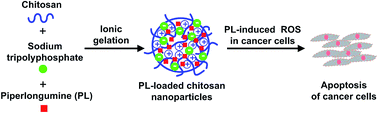
In this study, an ionic gelation method was used to prepare CSNPs encapsulating PL (Fig. 1). Chitosan was mixed with NaTPP at a 4
:
1 weight ratio. The ionic gelation method has many advantages over other methods (emulsion method, nanoprecipitation method, etc.). The main advantage of this method is to avoid toxic chemicals during the preparation of nanoparticles. For example, emulsion and nanoprecipitation methods are usually involved in toxic chemicals such as dichloromethane and acetone.26
 |
| | Fig. 1 A schematic illustration showing the synthesis of PL–CSNPs through ionic gelation. The interaction between primary amino groups of chitosan and negatively charged of NaTPP leads to the formulation of stable PL-loaded CSNPs. | |
Physicochemical properties of the formulated CSNPs have been known to be strongly influenced by the degree of deacetylation of chitosan, NaTPP concentration, chitosan concentration, chitosan/TPP molar ratio, and pH condition.27 The formation of CSNPs was carried out under pH 5.5 condition because chitosan can be actively self-assembled into nanoparticles in acidic aqueous solution through ionic cross-linking with multivalent anions. The PL loading efficiency of the CSNPs was calculated to be 12 ± 2%.
3.2. Characterizations of size and morphology of PL–CSNPs
The sizes of PL–CSNPs and CSNPs were found to be 361 nm and 252 nm, respectively, as determined by DLS analysis. The prepared CSNPs and PL–CSNPs were polydispersed and positively charged. The zeta potentials of CSNPs and PL–CSNPs were 15 mV and 4 mV, respectively. These results were similar to the previous reports showing the particle size of lamivudine-loaded poly(lactic acid) (PLA)–CSNPs, which was in the range of 300–350 nm.28 Because PL is a hydrophobic drug, it can be aggregated during the encapsulation process in which aqueous solution is mainly used. This aggregated PL could increase the size of the PL–CSNPs when being encapsulated. We have also found out that the particle size of the PL–CSNPs can be controlled by stirring speed, temperature, and a feeding rate of NaTPP solution during the preparation process (data not shown).
The surface morphologies of chitosan, CSNPs, and PL–CSNPs were evaluated using FE-SEM (Fig. 2). From the FE-SEM images in Fig. 2, pure chitosan showed a flat large surface with sharp edges (Fig. 2A). Both CSNPs and PL–CSNPs showed almost similar surface morphologies (Fig. 2B and C). They obviously showed rough surface morphologies with many granules, indicating the aggregated nanoparticles during the lyophilization process. Morphologies of the CSNPs and PL–CSNPs were also observed by TEM (Fig. 3). CSNPs without PL showed an elliptical shape of particles with irregular edges (Fig. 3A). In contrast, PL–CSNPs were almost spherical particles (Fig. 3B), and the size of the PL–CSNPs was much bigger than that of CSNPs.
 |
| | Fig. 2 FE-SEM images of (A) chitosan, (B) CSNPs, and (C) PL–CSNPs. | |
 |
| | Fig. 3 TEM images of (A) CSNPs and (B) PL–CSNPs. | |
3.3. Characterization of PL–CSNPs by FT-IR analysis
The formation of PL-loaded CSNPs by ionic gelation was examined by FT-IR spectroscopy. FT-IR spectra of NaTPP, chitosan, PL, CSNPs, and PL–CSNPs are represented in Fig. 4. In the spectra of chitosan, the strong band was observed around 3456 cm−1, which corresponds to OH vibration. The peak for asymmetric stretch of C–O–C was found at around 1100 cm−1, and the peak at 1387 cm−1 belongs to C–N stretching vibration of type I amine. In the spectra of CSNPs, the peak of 3456 cm−1 found in the chitosan spectrum was shifted to 3445 cm−1 and became wider, indicating increased hydrogen bonding. In addition, the peaks for N–H bending vibration of amine I at 1387 cm−1 and amide II carbonyl stretch at 1651 cm−1 were shifted to 1534 cm−1 and 1626 cm−1, respectively.29 The presence of PL in the CSNPs was clearly confirmed by a shift of the peaks at 1377 cm−1, 1534 cm−1, and 1626 cm−1 found in the spectra of CSNPs to 1393 cm−1, 1550 cm−1, and 1640 cm−1 in the spectra of PL–CSNPS, respectively.
 |
| | Fig. 4 FT-IR spectra of (A) NaTPP, (B) chitosan, (C) PL, (D) CSNPs, and (E) PL–CSNPs. | |
3.4. Characterization of PL–CSNPs by XRD analysis
X-ray diffraction was used to investigate the phase identification of CSNPs and the physical form of drug dispersion in the CSNPs.30 The XRD graphs of chitosan, CSNPs, PL–CSNPs, NaTPP, and PL are shown in Fig. 5. Two broad peaks were observed at 2θ = 10.0° and 20.0°, which are typical peaks for chitosan (pattern A in Fig. 5).31 CSNPs showed the broad peak at 2θ = 25.0°, which might be attributed to the addition of NaTPP (pattern B in Fig. 5). A similar kind of a peak at 2θ = 25.0° was observed for PL–CSNPs. The addition of PL did not induce a dramatic peak shift (pattern C in Fig. 5). The broad peak of PL–CSNPs and CSNPs at 2θ = 25.0° indicate that they are in an amorphous state. In contrast, the sharp peaks were observed for NaTPP and PL, confirming their crystalline properties (patterns D and E in Fig. 5).
 |
| | Fig. 5 X-ray diffraction patterns of (A) chitosan, (B) CSNPs, (C) PL–CSNPs, (D) NaTPP, and (E) PL. | |
3.5. pH-sensitive drug release of PL–CSNPs
PL release from CSNPs was assessed using a dialysis method under different pH buffers at 37 °C. PL–CSNPs exhibited a sustained release of PL, regardless of pH conditions (Fig. 6). Approximately 37% of the encapsulated PL was released from the CSNPs after 24 h of incubation at pH 7.4 (Fig. 6). By contrast, ca. 55% of the encapsulated PL was released from the CSNPs at pH 5.0 within 24 h, which was significantly higher than the one released from the CSNPs at pH 7.4. This pH-sensitive drug release by CSNPs was similarly observed in other previous studies. 5-Fluorouracil (5-FU)-loaded CSNPs, which were also produced via ionic gelation, showed a dramatically increased drug release rate at pH 5.0 as compared to pH 7.4.32 These results clearly demonstrate a pH-sensitive drug release by CSNPs. At pH 7.4, swelling of CSNPs is not efficient, leading to slow release of the entrapped PL. However, when the pH decreased to mildly acidic pH 5.0, the CNSPs are substantially swollen due to highly protonated amine groups of the chitosan and the consequently increased hydrophilicity. Therefore, the entrapped PL can be efficiently released from the CSNPs in the acidic conditions. This pH-sensitivity of the PL–CSNPs implies that they hold high potential for tumor-targeted drug release because tumor microenvironment is mildly acidic compared to normal tissues.33
 |
| | Fig. 6 Drug release profiles of PL–CSNPs at pH 5.0 and 7.4. PL–CSNPs showed rapid initial burst release, followed by sustained PL release in a pH-dependent manner. | |
3.6. Efficient anticancer activity of PL–CSNPs
Anticancer activity of PL–CSNPs against AGS gastric cancer cells was evaluated using a conventional MTT assay. PL–CSNPs and free PL showed high cytotoxicity against AGS cells in a dose-dependent manner (Fig. 7A). Importantly, PL–CSNPs and free PL showed similar anticancer activities at equivalent PL concentrations. This might be attributed to the efficient drug release by CSNPs. Both PL–CSNPs and free PL killed the most of AGS cells at 10 μM PL concentration. Meanwhile, cytotoxicity of PL-free, plain CSNPs was also investigated. The AGS cells treated with the plain CSNPs showed cell viability higher than 80% even at high concentrations of CSNPs (e.g., 50 μg mL−1) (Fig. 7B). These results indicate that CSNPs are highly biocompatible and can be utilized as a safe anticancer drug carrier.
 |
| | Fig. 7 (A) Cytotoxicity evaluation of PL–CSNPs and free PL against AGS cancer cells by MTT assay. There is no significant difference between PL–CSNPs and free PL in cell viability. (B) Cell viability of AGS cells treated with plain CSNPs without PL at different concentrations (ns: non-significant; **p < 0.01). The chitosan amount in 20 μg mL−1 of CSNPs is almost equal to the one in the PL–CSNPs at 6.5 μM of PL concentration. | |
Anticancer activity of PL–CSNPs was also investigated on PC-3 human prostate cancer cells in comparison with plain CSNPs and free PL (Fig. 8). PC-3 cells were treated with PL–CSNPs and free PL at varying PL concentrations (i.e., 5 and 10 μM). As shown in Fig. 8, both PL–CSNPs and free PL exhibited marked cytotoxicity in PC-3 cells. By contrast, the cells treated with plain CSNPs exerted high cell viability higher than 88%. High anticancer activities of PL–CSNPs against AGS and PC-3 cancer cells demonstrate that PL–CSNPs are effective anticancer carriers.
 |
| | Fig. 8 Cytotoxicity evaluation of CSNPs, free PL, and PL–CSNPs against PC-3 human prostate cancer cells at different PL concentrations. The chitosan concentration of CSNPs was adjusted to be identical to that of PL–CSNPs used (ns: non-significant; **p < 0.01). | |
3.7. Induced cell apoptosis by PL–CSNPs
Apoptosis of AGS cells treated with PL–CSNPs and free PL at various concentrations was investigated using Hoechst staining that can indicate nuclear damage of the apoptotic cells (Fig. 9). The AGS cells treated with PL–CSNPs showed nuclear fragmentation and chromatin condensation, typical characteristics of apoptosis (Fig. 9). The cells treated with PL–CSNPs exhibited more destructive nuclear damage as compared to those treated with plain CSNPs at an equivalent chitosan concentration (20 μg mL−1). The cells treated with plain CSNPs showed negligible cell apoptosis, demonstrating their high biocompatibility.
 |
| | Fig. 9 Hoechst DNA staining of (A) untreated AGS cancer cells, (B) AGS cancer cells treated with CSNPs (20 μg mL−1), and (C) AGS cancer cells treated with PL–CSNPs (20 μg mL−1). Apoptotic cells with nuclear damage were indicated by white arrows. | |
Cell apoptosis induced by PL–CSNPs in AGS cancer cells was also assessed by flow cytometry with Annexin V-FITC/PI staining (Fig. 10). Annexin V−/PI+ cells were considered to be necrotic, whereas Annexin V+/PI+ cells were considered to be late apoptotic. Annexin V+/PI− cells were identified as apoptotic cells. A majority of the AGS cells treated with plain CSNPs remained viable (88.09% in the lower left quadrant), indicating high biocompatibility of the CSNPs. In contrast, a high percentage of the AGS cells treated with PL–CSNPs at an equivalent chitosan concentration of 50 μg mL−1 were in a late stage of apoptosis or already dead, as represented by positive staining for both Annexin V-FITC and PI (44.57% in the upper right quadrant) (Fig. 10). Quantification of live, necrotic, early apoptotic, and late apoptotic cells from the flow cytometry histograms was represented in Fig. 10E. These results were consistent with previous studies showing that PL effectively induces apoptosis of cancer cells such as breast cancer and lung cancer cells through inhibition of PI3K/Akt/mTOR pathway.34,35
 |
| | Fig. 10 Apoptosis of AGS cancer cells treated with PL–CSNPs. Flow cytometric analysis of (A) untreated AGS cells, (B) AGS cells treated with CSNPs (50 μg mL−1 of chitosan), (C) AGS cells treated with PL–CSNPs (50 μg mL−1 of chitosan), and (D) AGS cells treated with free PL at the concentration equivalent to the one in PL–CSNPs (50 μg mL−1 of chitosan). (E) Quantification of live, necrotic, early apoptotic, and late apoptotic cells from the flow cytometry histograms (A–D). | |
3.8. Increased intracellular ROS induced by PL–CSNPs
Intracellular ROS levels in AGS cancer cells after treatment of CSNPs, PL–CSNPs, and free PL were quantified by using ROS-sensitive DCF-DA dye. The AGS cells treated with CSNPs (20 μg mL−1) did not cause a dramatic increase of intracellular ROS as compared to untreated cells (Fig. 10). In contrast, the cells treated with PL–CSNPs and free PL indicated a significant increase in intracellular ROS (Fig. 11). Recent studies have reported that PL can elevate intracellular ROS in several cancer cells, leading to high cell apoptosis.31,36–38 Therefore, it is speculated that increased intracellular ROS in the AGS cancer cells by PL–CSNPs contributes to the PL-induced apoptosis, as shown in Fig. 9 and 10.
 |
| | Fig. 11 Flow cytometry histograms indicating intracellular ROS levels in AGS cancer cells after treatment with CSNPs, PL–CSNPs and PL, respectively, as determined by DCF-DA staining. AGS cancer cells were treated with CSNPs (20 μg mL−1 of chitosan), PL–CSNPs (20 μg mL−1 of chitosan), and free PL at a concentration equivalent to the one in PL–CSNPs (20 μg mL−1 of chitosan), respectively. | |
4. Conclusions
Biocompatible CSNPs encapsulating PL were prepared by ionic gelation and utilized for anticancer therapy. The CSNPs successfully encapsulated hydrophobic PL with drug loading efficiency of 12 ± 2%. The CSNPs exhibited sustained release of the encapsulated PL with pH-sensitivity. PL–CSNPs showed effective anticancer activity against AGS gastric cancer cells in a dose-dependent manner. In contrast, PL-free, plain CSNPs showed very low cytotoxicity, demonstrating their high biocompatibility. It was also found that PL–CSNPs significantly increased intracellular ROS level in AGS cancer cells, thus leading to high cell apoptosis. These results demonstrate that CSNPs are biocompatible drug carriers for efficient PL loading and high anticancer activity in gastric cancer cells. Further surface modification of PL–CSNPs such as poly(ethylene glycol) (PEG) conjugation is currently under way to utilize the PL–CSNPs as drug carriers for in vivo study. PEG conjugation can improve in vivo stability and blood circulation of cationic PL–CSNPs by avoiding adsorption of serum proteins and rapid clearance by the reticuloendothelial system (RES). It can also further reduce toxicity of CSNPs.
Acknowledgements
This work was supported by the Post-Doctor Research Program (2016) through Incheon National University (INU), Incheon, Republic of Korea.
References
- T. R. Hoare and D. S. Kohane, Polymer, 2008, 49, 1993–2007 CrossRef CAS.
- D. Peer, J. M. Karp, S. Hong, O. C. Farokhzad, R. Margalit and R. Langer, Nat. Nanotechnol., 2007, 2, 751–760 CrossRef CAS PubMed.
- V. P. Torchilin, Adv. Drug Delivery Rev., 2012, 64, 302–315 CrossRef.
- S. M. Moghimi, A. C. Hunter and J. C. Murray, FASEB J., 2005, 19, 311–330 CrossRef CAS PubMed.
- J. Fang, H. Nakamura and H. Maeda, Adv. Drug Delivery Rev., 2011, 63, 136–151 CrossRef CAS PubMed.
- S. Hirsjarvi, C. Passirani and J.-P. Benoit, Curr. Drug Discovery Technol., 2011, 8, 188–196 CrossRef CAS.
- A. Mahapatro and D. K. Singh, J. Nanobiotechnol., 2011, 9, 1–11 CrossRef PubMed.
- P. B. Malafaya, G. A. Silva and R. L. Reis, Adv. Drug Delivery Rev., 2007, 59, 207–233 CrossRef CAS PubMed.
- N. V. Thomas, J. Venkatesan, P. Manivasagan and S.-K. Kim, Journal of Chitin and Chitosan Science, 2015, 3, 1–10 CrossRef.
- M. R. Kumar, R. A. Muzzarelli, C. Muzzarelli, H. Sashiwa and A. Domb, Chem. Rev., 2004, 104, 6017–6084 CrossRef PubMed.
- K. Nagpal, S. K. Singh and D. N. Mishra, Chem. Pharm. Bull., 2010, 58, 1423–1430 CrossRef CAS PubMed.
- Z. Liu, Y. Jiao, Y. Wang, C. Zhou and Z. Zhang, Adv. Drug Delivery Rev., 2008, 60, 1650–1662 CrossRef CAS PubMed.
- T. K. Bronich, P. A. Keifer, L. S. Shlyakhtenko and A. V. Kabanov, J. Am. Chem. Soc., 2005, 127, 8236–8237 CrossRef CAS PubMed.
- S. A. Agnihotri, N. N. Mallikarjuna and T. M. Aminabhavi, J. Controlled Release, 2004, 100, 5–28 CrossRef CAS PubMed.
- P. Calvo, C. Remunan-Lopez, J. Vila-Jato and M. Alonso, J. Appl. Polym. Sci., 1997, 63, 125–132 CrossRef CAS.
- K. A. Janes, M. P. Fresneau, A. Marazuela, A. Fabra and M. A. J. Alonso, J. Controlled Release, 2001, 73, 255–267 CrossRef CAS PubMed.
- S. Mitra, U. Gaur, P. Ghosh and A. Maitra, J. Controlled Release, 2001, 74, 317–323 CrossRef CAS PubMed.
- D. P. Bezerra, F. O. D. Castro, A. P. N. Alves, C. Pessoa, M. O. D. Moraes, E. R. Silveira, M. A. S. Lima, F. J. M. Elmiro, N. Alencar and R. O. Mesquita, J. Appl. Toxicol., 2008, 28, 156–163 CrossRef CAS PubMed.
- C. Khushbu, S. Roshni, P. Anar, M. Carol and P. Mayuree, Int. J. Res. Ayurveda Pharm., 2011, 2, 157–161 Search PubMed.
- L. Raj, T. Ide, A. U. Gurkar, M. Foley, M. Schenone, X. Li, N. J. Tolliday, T. R. Golub, S. A. Carr and A. F. Shamji, Nature, 2011, 475, 231–234 CrossRef CAS PubMed.
- P. Makhov, K. Golovine, E. Teper, A. Kutikov, R. Mehrazin, A. Corcoran, A. Tulin, R. Uzzo and V. M. Kolenko, Br. J. Cancer, 2014, 110, 899–907 CrossRef CAS PubMed.
- J. Wang, K. Yao, C. Wang, C. Tang and X. Jiang, J. Mater. Chem. B, 2013, 1, 2324–2332 RSC.
- C. C. Sharkey, J. Li, S. Roy, Q. Wu and M. R. King, Technology, 2016, 4, 60–69 CrossRef.
- Y. Liu, Y. Chang, C. Yang, Z. Sang, T. Yang, W. Ang, W. Ye, Y. Wei, C. Gong and Y. Luo, Nanoscale, 2014, 6, 4325–4337 RSC.
- A. Rampino, M. Borgogna, P. Blasi, B. Bellich and A. Cesàro, Int. J. Appl. Pharm., 2013, 455, 219–228 CrossRef CAS PubMed.
- A. Mitra and B. Dey, Indian J. Pharm. Sci., 2011, 73, 355–366 CAS.
- S. S. Omar Zaki, M. N. Ibrahim and H. Katas, J. Nanotechnol., 2015, 2015, 919658 Search PubMed.
- A. Dev, N. S. Binulal, A. Anitha, S. V. Nair, T. Furuike, H. Tamura and R. Jayakumar, Carbohydr. Polym., 2010, 80, 833–838 CrossRef CAS.
- N. Mohammadpour Dounighi, R. Eskandari, M. Avadi, H. Zolfagharian, A. Mir Mohammad Sadeghi and M. Rezayat, J. Venomous Anim. Toxins Incl. Trop. Dis., 2012, 18, 44–52 CAS.
- R. K. Nanda, S. S. Patil and D. A. Navathar, Pharma Chem., 2012, 4, 1619–1625 CAS.
- B. Li, C.-L. Shan, Q. Zhou, Y. Fang, Y.-L. Wang, F. Xu, L.-R. Han, M. Ibrahim, L.-B. Guo and G.-L. Xie, Mar. Drugs, 2013, 11, 1534–1552 CrossRef CAS PubMed.
- R. S. Tiğli Aydin and M. Pulat, J. Nanomater., 2012, 2012, 313961 Search PubMed.
- K. Engin, D. Leeper, J. Cater, A. Thistlethwaite, L. Tupchong and J. McFarlane, Int. J. Hyperthermia, 1995, 11, 211–216 CrossRef CAS PubMed.
- S. Shrivastava, P. Kulkarni, D. Thummuri, M. K. Jeengar, V. Naidu, M. Alvala, G. B. Redddy and S. Ramakrishna, Apoptosis, 2014, 19, 1148–1164 CrossRef CAS PubMed.
- F. Wang, Y. Mao, Q. You, D. Hua and D. Cai, Int. J. Immunopathol. Pharmacol., 2015, 28, 362–373 CrossRef CAS PubMed.
- H.-U. Simon, A. Haj-Yehia and F. Levi-Schaffer, Apoptosis, 2000, 5, 415–418 CrossRef CAS PubMed.
- G.-Y. Liou and P. Storz, Free Radical Res., 2010, 44, 479–496 CrossRef CAS PubMed.
- L.-H. Gong, X.-X. Chen, H. Wang, Q.-W. Jiang, S.-S. Pan, J.-G. Qiu, X.-L. Mei, Y.-Q. Xue, W.-M. Qin, F.-Y. Zheng, Z. Shi and X.-J. Yan, Oxid. Med. Cell. Longevity, 2014, 2014, 906804 Search PubMed.
Footnote |
| † These two authors contributed equally to this work. |
|
| This journal is © The Royal Society of Chemistry 2016 |
Click here to see how this site uses Cookies. View our privacy policy here.