Modulation of the surface properties of protein particles by a surfactant for stabilizing foams

Yuan Zoua, Zhili Wana, Jian Guoa, Jinmei Wanga, Shouwei Yina and Xiaoquan Yang*ab
aFood Protein Research and Development Center, Department of Food Science and Technology, South China University of Technology, Guangzhou 510640, P. R China. E-mail: fexqyang@scut.edu.cn; fexqyang@163.com; Fax: +86 20 87114263; Tel: +86 20 87114262
bGuangdong Province Key Laboratory for Green Processing of Natural Products and Product Safety, South China University of Technology, Guangzhou 510640, P. R China

Received 14th May 2016 , Accepted 1st July 2016

First published on 6th July 2016


Abstract

In this study, a detailed investigation into the behavior of foams stabilized by mixtures of zein/TA colloidal particles (ZTP) with a conventional anion surfactant (sodium dodecyl sulfate, SDS) has been made. Foams stabilized by either particles or surfactants alone break down completely within one day at all concentrations tested in the present study. However, ZTP can be induced to form fractal clusters in the presence of a surfactant. In mixed particle–surfactant systems, a synergism occurs with respect to foam properties, since the fractal clusters can be used as building blocks with reaction activity to form stable foams with an orderly interfacial architecture. The formability of ZTP–SDS mixtures increases with the increase of SDS concentration. However, the foam stability increases to a maximum at 0.6 mM SDS followed by a decrease at higher SDS concentrations. In addition, the presence of SDS increases the surface tension decay rate and dilatational modulus, but it seems that their changes are not directly proportional to the SDS concentration. This study indicates that particle–surfactant mixtures can be a potential strategy to modify the particle surface properties and therefore improve foam properties, facilitating the application of zein-based particles in the food and cosmetic industry.

Introduction

Foams are dispersions of gas in a continuous liquid phase and crucial for the food, cosmetics, and detergent industry. Recently, foams stabilized by colloidal particles have attracted increasing interests due to their high stability.1,2 Since most of the bare particles are not sufficient to stabilize the air–water interface, the surfaces of the particles usually need to be modified chemically or through the physical adsorption of oppositely charged surfactants for the preparation of particle-stabilized foams. For example, it has been reported that silica particles obtained after silanization with dichlorodimethylsilane, and silica/di-C10DMAB (di-decyldimethylammonium bromide) mixtures, have the ability to stabilize foams against coalescence and coarsening.3,4 To date, studies on particle-stabilized foams mainly focus on inorganic particles. However, this has recently been shifting toward using bio-derived particles for stabilization since they are sustainable and environmentally friendly materials.

The anisotropic cellulose particles are more widely used to stabilize stable foams compared to spherical particles.1,5,6 It is suggested that anisotropic particles with a high aspect ratio are more efficient than spherical particles for stabilizing foams due to their higher surface coverage and the possibility of forming intertwined networks of high mechanical stability.7 Many kinds of spherical particles are able to stabilize Pickering emulsions without the use of additional surfactants, such as starch particles,8 soy protein nanoparticles,9 but similar results are rarely shown for foams. In general, the stabilization of emulsions is easier than foams, which may be resulted from these followed reasons: the large capillary pressures in the air–water foam films; the larger density difference between the dispersed (gas) and continuous phases (water) in air–water system compared to that in oil–water system, which may result in phase separation; the solubility and diffusivity of gas in water is higher than that of oil in water, which is easier to cause foam destabilization; the size scale of foam is much larger than that of emulsion, and larger blocks are needed to stabilize bubble films.10–12

As a green and valuable food-grade biomaterials, zein with amphipathicity shows great potential and promising prospects to prepare foams in food and cosmetic industry. In our previous study, we fabricated a novel ZTP with high positive charge of +56.9 mV based on the hydrogen-bonding interaction between zein and TA by using a simple antisolvent approach, and it was successfully used to prepare Pickering emulsion gels.13 Unfortunately, similar to those bio-derived particles mentioned above, ZTP alone can't effectively stabilize foams.

The present study therefore attempts to prepare fractal clusters as large blocks for stabilizing foams via adsorption of oppositely charged surfactants on ZTP surfaces. SDS is a conventional anion surfactant and highly soluble in water with a high critical micelle concentration (8 mM), which can be used as a model of negatively charged surfactant. It is able to adsorb on the surface of ZTP through electrostatic interactions and decrease electrostatic repulsion between ZTPs, thus leading to increase of cohesion between particles and formation of fractal clusters. Considering the fact that the interfacial rheology properties can strongly influence the foam characteristics including foamability and foam stability, therefore, to what extend interfacial properties control foam properties was also studied. Subsequently, the foamability and foam stability in mixed particle–surfactant systems were determined.

Materials and methods

Materials

Zein, tannin acid (TA), sodium dodecyl sulfate (SDS) were purchased from Sigma-Aldrich, Inc. (St. Louis, MO, USA). α-Zein is the major component of commercial zein, it has two subtypes (Z19 and Z22) confirmed by SDS-PAGE. Other chemicals were of analytical grade.

Preparation of mixed ZTP–SDS systems

ZTP was prepared as described in our previous study.13 Zein powders (2.5 g) were dispersed in 70[thin space (1/6-em)]:[thin space (1/6-em)]30 (v/v) ethanol/water solution (100 mL) and stirred by using a magnetic stirrer for 2 h, then stored overnight at 4 °C to allow complete hydration. TA was added to the zein stock solution with a zein[thin space (1/6-em)]:[thin space (1/6-em)]TA ratio of 1[thin space (1/6-em)]:[thin space (1/6-em)]0.2 (w/w). Subsequently, the resultant mixed zein–TA solution was quickly poured into water with a zein–TA solution/water ratio of 1[thin space (1/6-em)]:[thin space (1/6-em)]2.5 (v/v) under continued stirring (1000 rpm). After 15 min of stirring, the ethanol in zein–TA solution was further removed, and preconcentration of particle (final concentration was 1%) was performed by using an RV 10 digital rotary evaporator (IKA-Works Inc., Germany). Different concentrations of SDS (0, 0.1, 0.3, 0.6, and 1.0 mM) was added to the resultant ZTP solution for formation of mixed ZTP–SDS systems. Then, they were stored at 4 °C for further use.

Particle size and zeta (ζ)-potential measurements

The mixed ZTP–SDS systems were diluted to 1 mg mL−1 with Millipore water, and the pH was adjusted to 3.5. A Nano ZS Zetasizer instrument (Malvern Instruments, Worcestershire, UK) was used to measure particle size and ζ-potential. In addition, due to the fact that the ZTP–SDS mixtures with SDS concentrations of 0.6–1.0 mM is micro-sized, the size was determined using a Malvern MasterSizer 3000 (Malvern Instruments Ltd., Worcestershire, UK). All measurements were performed three replicates at 25 °C.

Transmission electron microscopy (TEM)

A 5 μL aliquot of sample solution, which was previously diluted to a protein concentration of 5 μg mL−1 with pH 3.5 distilled water, was applied onto carbon-coated copper grids for 3 min, then the excess solution at the edge of grid was wiped away with a filter paper. Next, the samples were negatively stained with 5 μL phosphotungstic acid (1% w/v), the excess solution at the edge of grid was also wiped away with a filter paper after 5 min. The resulting samples were imaged after air-drying for 2 h. Subsequently, they were observed with a HITACHI H-7650 (Hitachi, Tokyo, Japan).

Contact angle measurements

The three-phase contact angle (θa/w) of ZTP–SDS mixtures was measured by using an OCA 20 AMP (Dataphysics Instruments GmbH, Germany). Firstly, the ZTP–SDS mixtures were lyophilized for 24 h (Christ Delta 1-24 LSC, Martin Christ, Germany) and then ground into homogenous powders. The ZTP–SDS powders were prepared as pellets of 13 mm in diameter and 2 mm in thickness, then the pellets were placed into an optical glass cuvette. Subsequently, a drop of Milli-Q water (pH 3.5, 5 μL) was deposited on the surface of the pellets via using a high-precision injector. The drop image was photographed immediately using a high-speed video camera, the profile of the droplet was numerically solved and fitted to Laplace–Young equation. Contact angles were measured on each of six pellets per sample at 25 °C.

Dynamic surface tension

The dynamic surface properties of ZTP and ZTP–SDS mixtures at the air–water interface were monitored by recording temporal evolution of surface tension using an optical contact angle meter (OCA-20, DataPhysics Instruments GmbH, Germany), as described in our previous study.14 The sample solutions with protein concentration of 1% (w/v) were placed in the syringe, and a drop of the sample solution (10 μL) was then delivered to a cuvette and kept for 30 min to adsorb sample to the air–water interface. The cuvette was sealed with a silver paper and partially filled with water under test to saturate the air surrounding the drop and reduce the water evaporation. An image of the drop was continuously recorded by a CCD camera and digitalized. The surface tension (γ) was calculated through the shape analysis of a pendant drop according to the Young–Laplace equation analysis.

Langmuir trough measurements

The Langmuir trough (KSV liquid–liquid trough, Finland) used in this work has a working area of 200.88 cm2, it is equipped with two hydrophilic Delrin® barriers allowing symmetric compression–expansion of the free liquid surface. The surface tension (γ) is measured according to the Willhelmy method and using a platinum Willhelmy plate (effective perimeter 39.44 mm, supplied by KSV), which is calibrated by using the weighing method. Surface pressure is obtained as Π = γwγ, where γw is the surface tension of pure water. All measurements were performed three replicates at 25 °C. Before each experiment, the air–water interface was compressed and cleaned by aspiration until the pressure was lower than 0.5 mN m−1 for ensuring the absence of any surface active impurities. ZTP–SDS mixtures (30 μL, 1% w/v) were dropped using a Hamilton syringe on the aqueous sub-phase (250 mL pH 3.5 pure water with a resistivity of 18.2 MΩ cm) in the Langmuir trough, a waiting time of 30 min was allowed for spreading. Next, slow compression (8 mm min−1) was carried out until a desired value of surface pressure was reached. At the same time the surface pressure (Π) were recorded by computer.

The dynamic dilatational surface elasticity at Π = 20 mN m−1 was measured by the oscillating barrier method using the KSV liquid–liquid trough. The instrument is equipped with two Teflon barriers oscillating symmetrically at a given frequency and amplitude at the pressure chosen by the operator. Once the surface pressure reaches the predesigned value during the monolayer compression, the surface is subjected to small periodic sinusoidal compressions and expansions, and the response of the surface pressure is monitored. For the amplitude sweeps measured at a surface of 20 mN m−1, the amplitude increased from 10% to 30% at a constant frequency of 30 mHz. The dilatational modulus is a complex quantity, which includes real and imaginary parts (E = Ed + iEv). The real part of the dilatational modulus (storage component) is the dilatational elasticity, Ed = |E|cos[thin space (1/6-em)]θ. The imaginary part of the dilatational modulus (loss component) is the surface dilatational viscosity, Ev = |E|sin[thin space (1/6-em)]θ. In addition, the Langmuir trough was also used to investigate the surface pressure response to large area deformation.

Foam formation and stability measurements

Foams were produced by using a mechanical low shear mixer (HARIO, CQT-45, Japan). It is a hand held electric mixer which has a circular rotor (outer diameter = 23 mm) with a coiled wire along the circumference. ZTP–SDS mixtures (15 mL) with different SDS concentrations (0–1 mM) were placed inside glass containers with inner diameter = 3.1 cm and height = 9.8 cm. The foams were generated by placing the mixing head centrally and around 1 cm below the air–water interface. The whipping was done for a fixed time of 1 min at room temperature. Foam volumes were recorded for different time points, and calculated as total volume (liquid + foam) minus the volume of the drained liquid.

Foam morphology observation

To visualize the location of ZTPs at the air–water interface, a series of experiments were conducted where fluorescently labeled ZTP and confocal laser scanning microscopy (CLSM) was used. To label ZTP, 600 μL Nile Blue A (1 mg mL−1, excite at 633 nm) was added to 15 mL ZTP–SDS mixtures. Subsequently, foams were generated according to the procedure described above, and the stained foams were immediately placed on concave slides and covered with coverslips. They were observed with a Leica TCS SP5 confocal laser scanning microscope (Leica Microsystems Inc., Heidelberg, Germany).

Results and discussion

Properties of ZTP–SDS mixtures

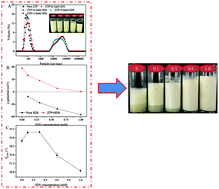
The stability of aqueous dispersion of ZTP was monitored for 24 h after mixing with oppositely charged surfactants (SDS), and the appearances of the mixed dispersions were shown in Fig. 1A inset. In the absence of SDS, the ZTP was stable without visible sediments. Upon adding SDS, the initial stable ZTP dispersion became unstable and flocculated. The size distribution of the ZTP–SDS mixtures are shown in Fig. 1. With the low concentration of SDS (0.0–0.3 mM), the size distribution was around 100 nm, while that for 0.6–1.0 mM SDS ranged from 4 μm to 144 μm (0.6 mM, d32 = 21.4 μm; 1.0 mM, d32 = 24.6 μm).
image file: c6ra12569g-f1.tif
Fig. 1 (A) The size distribution, (B) ζ-potential, and (C) air–water three phase contact angle (θa/w) of pure SDS and ZTP–SDS mixtures as a function of SDS concentration (0.1–1.0 mM). (Inset) morphology of the ZTP–SDS mixtures after storage at room temperature (25 °C) for 24 hours.

In addition, ZTP–SDS mixtures were taken for TEM analysis (Fig. 2). In the absence of SDS, discrete and spherical particles were visible (Fig. 2a). At 0.3 mM SDS (Fig. 2b), particles were surrounded by surfactants and more attractive forming small chains, although the degree of coagulation was not sufficient to induce sedimentation. Further increase of SDS concentration (0.6 mM), the particles orderly assembled into fractal clusters instead of large aggregates (Fig. 2c), and uniform particles within fractal clusters could be clearly observed (Fig. 2d). These changes come from the surface adsorption of surfactants on the ZTP, which can be reflected by the zeta potential (Fig. 1B). When the SDS concentration increased from 0.1 mM to 1.0 mM, the corresponding zeta potential increased from −11.20 mV to −54.90 mV. In the absence of SDS, due to a relatively high positive zeta potential (+56.90 mV), which might contribute to the strong electrostatic repulsion among particles, the ZTP exhibited colloidal stable, nanosized, and nearly monodisperse size distribution (Fig. 1A). Electrostatic adsorption of oppositely charged surfactant monomer onto ZTP surfaces gradually decreased the zeta potential from +56.90 mV at 0.0 mM SDS to +0.94 mV at 0.10 mM SDS. This configuration can screen the electrostatic repulsion between particles, thus increase of cohesion between particles and formation of fractal clusters (Fig. 2b and c). This phenomenon was similar to that seen in mixtures of silica nanoparticles with a typical cationic surfactant N′-dodecyl-N,N-dimethylacetamidinium bicarbonate.15


image file: c6ra12569g-f2.tif
Fig. 2 TEM images of the ZTP–SDS mixtures with 0 (a), 0.3 (b), and 0.6 mM SDS (c and d).

Since the interfacial wettability of the particles plays a crucial role for the preparation of foam, air–water contact angle (θa/w) of ZTP–SDS pellets was measured, as shown in Fig. 1C. Compared to the pure zein particle (ZP) (θa/w = 60°),16 the θa/w of ZTP decreased to 40.7° (Fig. 1B), suggesting TA could increase its hydrophilicity. This may result from that the interactions between zein and TA increase in the hydroxyl groups on the surface of zein particles. The oil–water contact angles also decreased from 107° to 86° after adding TA to zein particle.13 With the increase of SDS concentration, the θa/w slightly increased to a maximum of 44.3° followed by a significant decrease at higher SDS concentrations. ZTP–SDS surfaces thus underwent a transition from hydrophilic to more hydrophobic to hydrophilic again. Similar changes were also observed in θo/w of ZTP–SDS mixtures (data not shown). The initial increase of θa/w may be associated with that the surfactants occupy the hydrophilic positions on the ZTP surface; and the subsequent gradual decrease of θa/w may be related to the formation of SDS co-micelles on the surface of ZTPs and thus expose of more hydrophilic chains in the bulk.

Surface behavior of ZTP–SDS mixtures

Surface adsorption and equilibrium properties. The time evolution of surface tension (γ) for ZTP–SDS mixtures at the air–water interface is shown in Fig. 3A. In all cases, the surface tension values gradually decreased with adsorption time, which might be associated with the surface-active substances adsorption at the interface. It was noticed that the presence of surfactant significantly increased the surface tension decay rate of ZTP–laden interface. At low surfactant concentration (0.1–0.3 mM), the surface tension decay rate of ZTP–SDS mixtures increased with the increase of surfactant concentration, while it decreased when further increasing the surfactant concentration (0.6–1.0 mM). In the first stage (0.1–0.3 mM SDS), the increase of SDS concentration results in the enhancement of the particle's hydrophobicity and thereby of the interparticle force and adsorption energy, probability of particle desorption decreases and the whole adsorption process is accelerated.17 Moreover, the SDS at the air–water interface also can contribute to the increase of surface tension decay rate.18 Consequently, the surface tension decay rate increases with the increase of SDS concentration. In the second stage (0.6–1.0 mM SDS), the hydrophobicity and ζ-potential of ZTP decrease, which may decrease the interactions between the particles and air–water interface since the air/oil–water interface is negatively charged,19 thus leading to decrease of the migration rate to surface. Also, the large size of ZTP–SDS flocs and the steric hindrance may affect the fast adsorption to interface. Furthermore, we found that the addition of TA can significantly decreased the surface tension decay rate of ZP and ZTP (Fig. S1). This may result from that the preferential adsorption of TA molecules over ZPs/ZTPs leads to the formation of a surface layer covered mainly by TA, and the pure TA film shows relatively high surface tension (data not shown). TA molecules combined on the ZTP surface via weak hydrogen bonds may be replaced by high concentration of surfactant, thus lead to increase of free TA. This may also contribute to the decrease of surface tension decay rate at high surfactant concentrations (0.6–1.0 mM SDS). In addition, we compared the time evolution of surface pressure (Π) on the air–water interface stabilized by ZTP–SDS mixtures after 30 min equilibrium (Fig. 3B). It was noticed that by adding the anion surfactant (SDS), the surface pressure of particle–laden interface increased. Of which, the surface pressure increased to a maximum at 0.3 mM SDS, after which a slight decrease was observed. These results are in accordance with the changes of surface tension decay rate in Fig. 3A.
image file: c6ra12569g-f3.tif
Fig. 3 (A) Surface tension (γ) and (B) pressure (Π) as a function of time for ZTP–SDS mixtures with various SDS concentrations (0.0, 0.1, 0.3, 0.6, and 1.0 mM) at air–water interface.
Surface dilatational rheology. Fig. 4 shows the dilatational modulus obtained at 20 mN m−1 with a fixed frequency of 30 mHz and amplitude of 10%. The magnitude of dilatational modulus increased to a maximum at 0.3 mM SDS before decreasing to a minimum at 1.0 mM SDS. The observation is well agreement with the results of surface adsorption (Fig. 3). In addition, it has been pointed out that there are certain disadvantages in using the first-harmonic Fourier moduli outputted by equipment, since both odd and even higher harmonics may be neglected in dilatational experiments when the deformation is very high. Therefore, by using the first-harmonic Fourier moduli for analyzing dilatational rheology, the nonlinearity properties presented in the raw signal may be disregarded.20 Recently, Lissajous plots of surface pressure versus deformation have gained increasing interest in analyzing interfacial dilatational rheology.21 For example, van Kempen et al.22 has well demonstrated how Lissajous plots can be used to analyze the surface dilatational rheology during amplitude sweeps for the surfaces stabilized by oligofructose fatty acid esters and the relationships between surface rheology properties and interfacial microstructures. By analyzing the Lissajous plots, they found that the interface was strain softening during extension and strain hardening during compression at the highest applied amplitudes (up to 30%). Herein, for better understanding the dilatational rheological behavior of interfaces stabilized by ZTP–SDS mixtures, we used Lissajous plots to further analyze the results of the amplitude sweeps, and expected to explain the relationships between rheological response and surface microstructure.
image file: c6ra12569g-f4.tif
Fig. 4 Surface dilatational modulus of the air–water surfaces stabilized by ZTP–SDS mixtures with various SDS concentrations (0.0, 0.1, 0.3, 0.6, and 1.0 mM) at a surface pressure of 20 mN m−1. Frequency: 0.1 Hz. Amplitude of deformation: 10%.

Fig. 5 showed typical Lissajous plots of interfaces stabilized by ZTP–SDS mixtures at a fixed surface pressure of 20 mN m−1, obtained by plotting the surface pressure versus deformation area, i.e., against the compression (deformation < 0) and expansion (deformation > 0) cycles. It can be clearly seen that, in all cases, the shape of Lissajous plots strongly depended on amplitude and SDS concentration. For pure ZTP–laden interfaces, the respective ΔΠ values obtained as ΠmaxΠmin, where Πmax is the largest surface pressure values in Lissajous plots, and Πmin is the lowest surface pressure in Lissajous plots, for 10%, 20% and 30% amplitudes were 4.13, 7.38, and 12.39 mN m−1. Of which the ΔΠ values mean the size of the slope for Lissajous plots. When high amplitudes (20% and 30%) were imposed, a widening of Lissajous plots was observed and it increased with the increase of amplitude, indicating an increase of the viscous components. In extension, the slope of the Lissajous plots increased with increasing amplitude, which points to strain softening. In compression, the slope of the plots decreased with increasing amplitude, implying a strain hardening of interfaces.21,22 Based on these results, we argue that the rheological responses during amplitude sweeps are most likely the result of the formation of soft glass phases by ZTP at the air–water surface. In the presence of SDS, the respective ΔΠ values for 10%, 20% and 30% amplitudes increased, indicating increase of surface response to deformation. However, a widening of Lissajous plots disappeared in the interfaces stabilized by ZTP–SDS mixtures with low SDS concentrations (0.1–0.3 mM), suggesting a decrease of viscous components and formation of highly elastic interfaces. Interestingly, a widening appeared again when the SDS concentration increased to 0.6 mM, such interface showed strain softening during extension and strain hardening during compression, and the ΔΠ values is larger than that for pure ZTP–laden interface. It was noticeable that a widening disappeared again with further increasing the SDS concentration to 1.0 mM, which might be relative to that the excess SDS at the interface weaken the interfacial microstructure, and the decrease of TA on the ZTP surface, due to replacement by excess SDS, increase the rigidity of zein particles.


image file: c6ra12569g-f5.tif
Fig. 5 Typical Lissajous plots at air–water surfaces stabilized by ZTP–SDS mixtures with various SDS concentrations (0.0, 0.1, 0.3, 0.6, and 1.0 mM) at a surface pressure of 20 mN m−1 as a function of amplitude (10%, 20%, 30%). Frequency: 0.1 Hz.

Properties of foams stabilized by ZTP–SDS mixtures

Images of the foams stabilized by TA–SDS and ZTP–SDS mixtures with different SDS concentrations (0.0–1.0 mM) just after whipping (foamability) and 24 hours later (foam stability) are shown in Fig. 6. For TA–SDS mixtures, the foamability at 0.1 mM SDS was very low, while it remarkably increased when the SDS concentration increased to 0.3 mM, which is ascribed to the increasing interfacial adsorption amount of surfactant, and slightly increased with further increase of SDS concentration (0.6–1.0 mM) due to the saturation of surfactant at interface (Fig. 6a).23,24 After 24 hours of storage, the foams completely disappeared at low SDS concentration (0.1 mM), and at high SDS concentrations (0.3–1.0 mM), the foam volumes significantly decreased and the size of bubbles became very large (Fig. 6a′). Similar results were also observed in foams stabilized by SDS alone (data not shown). For ZP, the foams were extremely unstable to coalescence with no bubbles remaining 5 min after aeration (Fig. S2). By adding 0.6 mM SDS, the foamability of ZP–SDS mixed system increased, but the foams were also unstable like ZP-stabilized foams (Fig. S2). The foams stabilized with the ZP–TA mixtures showed much smaller bubbles compared to ZTP (Fig. S2), which may be associated with that more free TA molecules in the ZP–TA system quickly adsorb at liquid interface. Although TA improved the foam properties (e.g. bubble size, foam stability) of zein particle to some extent, the foams almost disappeared after short time storage (ZTP, 24 hours; ZP + TA, 5 min, Fig. 6b′ and S2). As expected, the presence of oppositely charged surfactant (SDS) gradually increased the foamability of ZTP with increase of SDS concentration. When the SDS concentration increased to 0.6 mM, the foams stabilized by ZTP–SDS mixtures showed a highest foam volume after 24 hours compared to other systems (Fig. 6b and b′), suggesting that SDS not only could drive ZTPs to adsorb at interface but also behave as crosslinks between ZTPs to form particle–laden bubble films. However, further increase of the surfactant concentration decreased the foam stability (1.0 mM SDS, Fig. 6b and b′). ZTP is based on the hydrogen-bonding interactions between zein and TA.13 The weak binding of TA can be replaced by the high concentration of SDS, leading to the increase of free TA in the systems. In addition, by adding TA to the ZTP system, the foamability and foam stability of ZTP–TA mixed systems decreased (Fig. S2). This is well consistent with the surface adsorption results (Fig. S1). Thus, it is suggested that at 1.0 mM, the excess SDS can break the hydrogen bonding between zein and TA when the surface of ZTPs is saturated by SDS, lead to desorption of TA. The preferential adsorption of free TA and SDS at interface can weaken the bubble films, thus leading to decrease of foam stability of ZTP–SDS mixtures at high SDS concentration (1.0 mM). In addition, it was noticed that the drained liquid was turbid at low SDS concentration (0.0–0.3 mM), suggesting there were a large number of particles in it (Fig. 6b and b′). However, the drained liquid became clearer and more transparent when the SDS concentration increased to 0.6–1.0 mM, this meant that the concentration of particle increased in the foam phases and there were more particles in the plateau border (Fig. 6b and b′).
image file: c6ra12569g-f6.tif
Fig. 6 Images of foams stabilized by TA–SDS mixtures (2 mg mL−1 TA) taken immediately (a) and 24 h (a′) after whipping of 15 mL of solution. Images of foams stabilized by ZTP–SDS mixtures taken immediately (b) and 24 h (b′) after whipping of 15 mL of solution. SDS in images from left to right are: 0.0, 0.1, 0.3, 0.6, and 1.0 mM.

Because the main concept introduced in the present work is to stabilize air bubbles with zein-based particles, it is necessary to show that there is indeed an accumulation of protein particles around the air bubbles. This was done using CLSM method just after whipping, and the results were shown in Fig. 7. In all cases, the fluorescent protein particles (labeled in red) were located around the air bubbles. The large bubbles were observed in foams stabilized with pure ZTP, and the bubble size tended to decrease in the presence of SDS (Fig. 7a–c). For the foams prepared by ZTP–SDS systems with a SDS concentration of 0.0–0.1 mM, a small number of particles were observed around the air bubbles, led to the formation of large air bubbles (Fig. 7a and b) and turbid drained liquid (Fig. 6b and b′). In contrast, more particles could be observed around the air bubbles with a SDS concentration of 0.6 mM, led to the formation of relatively small air bubbles (Fig. 7c) and transparent drained liquid (Fig. 6b and b′). Higher magnification confocal images clearly showed that the interfacial architecture was formed on the air–water surface stabilized by zein-based particles with a SDS concentration of 0.6 mM (Fig. 7d).


image file: c6ra12569g-f7.tif
Fig. 7 CLSM images of the foams stabilized by ZTP–SDS mixtures with different SDS concentrations. Protein was stained red. (a) 0.0 mM SDS, (b) 0.1 mM SDS, (c) 0.6 mM SDS, (d) digital amplification of images for foams stabilized by ZTP–SDS with a SDS concentration of 0.6 mM.

The maximum foam volume of different systems was measured to assess their foamability, as shown in Fig. 8A. Even in addition of low SDS concentration (0.1 mM), the maximal foam volume was significantly larger than that of pure ZTP. Moreover, with the increase of SDS concentration from 0.1 mM to 1.0 mM, a gradual increase in the maximal foam volume was observed. It is suggested that the presence of surfactant could improve the foaming capacity of ZTP. Similar results were also observed in mixed silica/n-amylamine systems4 and mixed silica/N′-dodecyl-N,N-dimethylacetamidinium bicarbonate systems.15 On the other hand, under SDS concentration range from 0.1 mM to 1.0 mM, the ZTP–SDS mixtures displayed a higher foaming capacity as compared to TA–SDS mixtures.


image file: c6ra12569g-f8.tif
Fig. 8 (A) Maximum foam volume and (B) foam volume versus time obtained from the solutions of TA–SDS mixtures (TA, 2 mg mL−1) and ZTP–SDS mixtures with various SDS concentration (0.0–1.0 mM).

Foams are thermodynamically unstable, and their relative stability is governed by factors such as liquid drainage, coarsening, and coalescence.25 The foam volume which was plotted as a function of time was used to evaluate the foam stability, as shown in Fig. 8B. For TA–SDS mixtures, the rate of foam decay significantly decreased with increase of SDS concentration. As expected, in different SDS concentrations, the foam decay rate of mixed ZTP–SDS systems was much smaller than that for mixed TA–SDS systems. Moreover, the foam decay rate of mixed ZTP–SDS systems decreased to a minimum at 0.6 mM SDS, after which it slightly increased. When the SDS concentration was 0.6 mM, the foams stabilized by ZTP–SDS mixtures exhibited a fast decay rate of foam in 30 min, but remained the highest volume after 7 hours storage (Fig. 8B).

General discussion

Since many particle types are inherently hydrophilic or hydrophobic, attaching weakly to fluid interfaces, one of the ways to increase their surfactivity is through in situ physisorption, lead to the improvement of foam formation and stability.15,26 In this study, SDS, as a conventional negatively charged surfactant, was selected to mix with positively charged ZTP in water. These particle–surfactant mixtures with tuned size, zeta potential and θa/w can be successfully used for the preparation of stable foams in a proper surfactant concentration.

In the literature, the formation and stability of foams have often been related to the adsorption rate of surface active compounds at the air–water interface and to the rheological properties of the formed interfacial layer, respectively.14,27,28 The dynamic surface tension versus time are generally considered to give information about the stabilizing properties shortly after bubble formation. In this study, the presence of surfactant (SDS) obviously increased the surface tension decay rate within 30 minutes adsorption and surface pressure during compression in Langmuir trough, but these effects were not proportional to the SDS concentration (Fig. 3). It is suggested that surfactant increases the surfactivity of zein-based particles, but the large size of ZTP–SDS flocs (0.6–1.0 mM, Fig. 1A), low ζ-potential (Fig. 1B), and the free TA (Fig. S1) can affect the fast adsorption of particles to interface. However, the foam maximum volume of ZTP–SDS systems increased with the increase of the surfactant concentration (Fig. 8A). Similar to the surface adsorption, the presence of surfactant significantly increased the magnitude of dilatational modulus of ZTP. It increased to a maximum at 0.3 mM SDS, after which a decrease could be observed at higher SDS concentration (Fig. 4). However, the foams stabilized by ZTP–SDS mixtures with a SDS concentration of 0.6 mM exhibited the highest volume after 7 hours storage (Fig. 8B). Therefore, for the particle–surfactant systems studied here, the surface adsorption and dilatational modulus were not a limiting factor for foamability and foam stability, respectively. Therefore, it may be concluded that the surface tension decay rate and the dilatational modulus cannot directly explain the differences observed in foam properties (Fig. 6 and 8). This supports recent findings by other researchers who did not find a correlation between foam properties and surface adsorption/dilatational modulus.12,29 Indeed, from the Lissajous plots in Fig. 5, it can be found that the air–water surfaces stabilized by ZTP–SDS mixtures with SDS concentrations of 0.1, 0.3, and 1.0 mM were highly elastic, without a widening in Lissajous plots. For ZTP–SDS mixtures with SDS concentrations of 0.0 and 0.6 mM, a widening appeared in Lissajous plots, suggesting increase of viscous components for the air–water interface with strain softening during extension and strain hardening during compression. However, in the absence of SDS, a small number of protein particles can adsorb at the air–water interface (Fig. 6a). The presence of SDS may increase the surfactivity of particles and the adsorption on the air–water interface (Fig. 6b and c), lead to formation of dense and orderly interfacial network (Fig. 6d). Therefore, most stable air bubble is formed when the SDS concentration is 0.6 mM, where the surface is stabilized with large number of zein-based particles and form dense and orderly interfacial network with viscoelasticity.

A significant difference in particle size distribution of ZTP–SDS mixtures with different SDS concentrations (0.1–1.0 mM) was observed (Fig. 1A). It was noticed that ZTP–SDS mixtures with large size (∼21 μm, 0.6 mM SDS) showed strong foamability and foam stability, while similar phenomena couldn't be observed at 0–0.3 mM SDS with small size (∼100 nm, Fig. 6 and 8). These observations suggest that the proper concentration of SDS can form co-micelles between particles which can behave as crosslinks and thereby drive the formation of fractal clusters and dense bubble films.23,24 Further increase of the SDS concentration (1.0 mM), the maximum foam volume of ZTP–SDS mixtures with large size (∼24 μm) was highest, but the foam stability decreased (Fig. 6 and 8B). This may be associated with that at 1.0 mM SDS, desorption of TA molecules from ZTP surface (Fig. S1) can lead to formation of highly elastic air–water interface (Fig. 5), and the free SDS and TA molecules can weaken the air–water films (Fig. S1 and S2). Therefore, the relationship between particle size and foam properties (foam formation and stability) can lead to the conclusion that the presence of larger colloidal particles is advantageous for foam stability in this case. It has been reported that the foams stabilized with silica particles showed the most stable when particles were strongly flocculated.26 Moreover, a similar role of protein aggregates in foam stability has been reported. Whey protein aggregates induced by heating were observed to associate and build a network within thin films to enhance foam stability.30 Casein micelle dispersions (CMD4°C, 500 nm) obtained via redispersing at 4 °C exhibited significantly higher foam stability than those for obtained at 20 °C (CMD20°C, 200 nm), while the foam stability of CMD4°C decreased to that of CMD20°C when the aggregates were broken down by homogenization.12

Combining all the results of particle size and zeta potential, TEM images, contact angle, dynamic surface tension, dilatational rheology, and foam properties, we try to conclude the mechanism of foam stabilization in particle–surfactant mixtures of opposite charge. The addition of SDS significantly improves the surfactivity of ZTP and drives ZTP to migrate to interface, also the foamability and foam stability of ZTP–SDS mixtures are dependent on SDS concentration. At low SDS concentration (0.1–0.3 mM), surfactant ions adsorb individually or form hemi-micelles on ZTP surface by the electrostatic interactions. Although the addition of SDS screens the electrostatic repulsion to some degree, the size of particle clusters remains at around 100 nm (Fig. 1A and B). Due to size limit, these nanoparticles (Fig. 1A) can't effectively form orderly interfacial network at large bubble films, thus leading to poor foamability and foam stability (Fig. 6 and 8). Further increase of SDS concentration to 0.6 mM, co-micelles between ZTPs may be formed, which behaves as crosslinks and thereby drives the formation of fractal clusters as large blocks (Fig. 1A and 2c). This can facilitate to forming stable forms with dense films against drainage, coarsening, and coalescence. At high SDS concentration (1.0 mM), coating with more surfactants further decreases the θa/w of particles (Fig. 1C). The high hydrophilicity may result in that most part of a cluster adsorbed at interface immerses in water phase and the other small part of a cluster is in air phase, thus leading to low coverage at the interface. Also, the excess free SDS and TA can weaken the bubble films, thus leading to a decrease of foam stability in this range (Fig. S2).

Conclusion

In conclusion, the foams stabilized with zein-based particles can be prepared by modification of positively charged ZTP in situ with a trace amount of a conventional anion surfactant like SDS. ZTP alone is ineffective foamers due to the low surface activity and size limit, but the active particles can orderly assemble into fractal clusters in the presence of surfactant. At intermediate surfactant concentration (e.g. 0.6 mM SDS), the fractal clusters can be used as building blocks with reaction activity to form stable foams with orderly interfacial architecture. This study indicates that particle–surfactant mixtures can be a potential strategy to modify the particle surface and therefore improve foam properties, facilitating the application of zein-based particles in food and cosmetic industry.

Acknowledgements

This research was supported by grants from the China National Natural Science Foundation (No. 31130042, 31371744).

References

  1. N. T. Cervin, L. a. Andersson, J. B. S. Ng, P. Olin, L. Bergström and L. Wågberg, Biomacromolecules, 2013, 14, 503–511 CrossRef CAS PubMed.
  2. U. T. Gonzenbach, A. R. Studart, E. Tervoort and L. J. Gauckler, Angew. Chem., Int. Ed., 2006, 45, 3526–3530 CrossRef CAS PubMed.
  3. B. P. Binks and T. S. Horozov, Angew. Chem., 2005, 117, 3788–3791 CrossRef.
  4. L. R. Arriaga, W. Drenckhan, A. Salonen, J. A. Rodrigues, R. Iniguez-Palomares, E. Rio and D. Langevin, Soft Matter, 2012, 8, 11085–11097 RSC.
  5. H. Jin, W. Zhou, J. Cao, S. D. Stoyanov, T. B. Blijdenstein, P. W. de Groot, L. N. Arnaudov and E. G. Pelan, Soft Matter, 2012, 8, 2194–2205 RSC.
  6. S. Kim, H. Barraza and O. D. Velev, J. Mater. Chem., 2009, 19, 7043–7049 RSC.
  7. R. G. Alargova, D. S. Warhadpande, V. N. Paunov and O. D. Velev, Langmuir, 2004, 20, 10371–10374 CrossRef CAS PubMed.
  8. M. Rayner, A. Timgren, M. Sjöö and P. Dejmek, J. Sci. Food Agric., 2012, 92, 1841–1847 CrossRef CAS PubMed.
  9. F. Liu and C. H. Tang, J. Agric. Food Chem., 2014, 62, 2644–2654 CrossRef CAS PubMed.
  10. T. N. Hunter, R. J. Pugh, G. V. Franks and G. J. Jameson, Adv. Colloid Interface Sci., 2008, 137, 57–81 CrossRef CAS PubMed.
  11. S. Lam, K. P. Velikov and O. D. Velev, Curr. Opin. Colloid Interface Sci., 2014, 19, 490–500 CrossRef CAS.
  12. M. Chen, R. Bleeker, G. Sala, M. Meinders, H. van Valenberg, A. van Hooijdonk and E. van der Linden, Int. Dairy J., 2016, 56, 151–158 CrossRef CAS.
  13. Y. Zou, J. Guo, S. W. Yin, J. M. Wang and X. Q. Yang, J. Agric. Food Chem., 2015, 63, 7405–7414 CrossRef CAS PubMed.
  14. Z. L. Wan, L. Y. Wang, J. M. Wang, Y. Yuan and X. Q. Yang, J. Agric. Food Chem., 2014, 62, 6834–6843 CrossRef CAS PubMed.
  15. Y. Zhu, J. Jiang, Z. Cui and B. P. Binks, Soft Matter, 2014, 10, 9739–9745 RSC.
  16. Z. M. Gao, X. Q. Yang, N. N. Wu, L. J. Wang, J. M. Wang, G. Jian and S. W. Yin, J. Agric. Food Chem., 2014, 62, 2672–2678 CrossRef CAS PubMed.
  17. P. Yazhgur, B. Noskov, L. Liggieri, S. Y. Lin, G. Loglio, R. Miller and F. Ravera, Soft Matter, 2013, 9, 3305–3314 RSC.
  18. V. Alahverdjieva, K. Khristov, D. Exerowa and R. Miller, Colloids Surf., A, 2008, 323, 132–138 CrossRef CAS.
  19. K. Roger and B. Cabane, Angew. Chem., Int. Ed., 2012, 51, 5625–5628 CrossRef CAS PubMed.
  20. D. Ahirwal, H. Palza, G. Schlatter and M. Wilhelm, Korea-Australia Rheology Journal, 2014, 26, 319–326 CrossRef.
  21. L. M. C. Sagis and P. Fischer, Curr. Opin. Colloid Interface Sci., 2014, 19, 520–529 CrossRef CAS.
  22. S. E. H. J. V. Kempen, H. A. Schols, E. V. D. Linden and L. M. C. Sagis, Soft Matter, 2013, 9, 9579–9592 RSC.
  23. Q. Deng, H. Li, H. Sun, Y. Sun and Y. Li, Colloids Surf., B, 2016, 141, 206–212 CrossRef CAS PubMed.
  24. Q. Deng, H. Li, C. Li, W. Lv and Y. Li, RSC Adv., 2015, 5, 61868–61875 RSC.
  25. D. L. Weaire and S. Hutzler, The physics of foams, Oxford University Press, 2001 Search PubMed.
  26. B. P. Binks, M. Kirkland and J. A. Rodrigues, Soft Matter, 2008, 4, 2373–2382 RSC.
  27. A. Stocco, W. Drenckhan, E. Rio, D. Langevin and B. P. Binks, Soft Matter, 2009, 5, 2215–2222 RSC.
  28. P. Wierenga and H. Gruppen, Curr. Opin. Colloid Interface Sci., 2010, 15, 365–373 CrossRef CAS.
  29. F. J. Lech, P. Steltenpool, M. B. Meinders, S. Sforza, H. Gruppen and P. A. Wierenga, Colloids Surf., A, 2014, 462, 34–44 CrossRef CAS.
  30. T. Nicolai, M. Britten and C. Schmitt, Food Hydrocolloids, 2011, 25, 1945–1962 CrossRef CAS.

Footnote

Electronic supplementary information (ESI) available. See DOI: 10.1039/c6ra12569g

This journal is © The Royal Society of Chemistry 2016
Click here to see how this site uses Cookies. View our privacy policy here.