
Effect of diamond surface chemistry and structure on the interfacial microstructure and properties of Al/diamond composites

Zifan Cheab, Jianwei Lia, Luhua Wanga, Yingxu Qia, Yang Zhang a, Hailong Zhanga, Xitao Wang*a, Jinguo Wang*b and Moon J. Kim*b
aState Key Laboratory for Advanced Metals and Materials, University of Science and Technology Beijing, Beijing, 100083, China. E-mail: xtwang@ustb.edu.cn
bDepartment of Materials Science and Engineering, The University of Texas at Dallas, Richardson, Texas 75080, USA. E-mail: jinguo.wang@utdallas.edu; moonkim@utdallas.edu

Received 7th May 2016 , Accepted 9th July 2016

First published on 11th July 2016


Abstract

Diamond particle reinforced aluminum matrix (Al/diamond) composites have been considered as promising thermal management materials. As the reinforcement phase, the surface chemistry and structure of the diamond particles can significantly affect the interfacial microstructure and the properties of the composites. Thus, understanding and controlling the diamond surface chemistry and structure are crucial for the improvement of the properties of Al/diamond composites. Herein, we report the modification of the diamond surface by controlling the pre-annealing period during fabrication. Our study reveals the sp3 to sp2 carbon transformation on both diamond (111) and (100) surfaces ((111)D and (100)D surfaces). This transformation is more preferential on (111)D surfaces, whereas the transformation on (100)D surfaces is relatively slow and associated with the formation of (111)D facets. The formation of sp2 carbon enhances the interfacial reaction and intensifies the formation of (111)D steps on the diamond surfaces. Therefore, interfacial bonding is improved with mechanical interlocking by larger Al4C3 particles penetrating deeper into both the Al matrix and diamond surface, which promotes both the mechanical and thermal properties of Al/diamond composites. We conclude that the modification of diamond surface chemistry and structure may serve as a simple yet powerful strategy to improve the properties of Al/diamond composites for their practical application.

1. Introduction

Advanced thermal management materials offer high thermal conductivity (TC), suitable coefficient of thermal expansion (CTE) and reliable mechanical performance required by the electronics industry. As a new generation of thermal management materials, diamond particle reinforced aluminum matrix (Al/diamond) composites have been widely studied, since they combine the outstanding thermal and mechanical properties of diamond with the low density of an Al matrix.1,2 The properties of composite materials are determined by many factors, including the intrinsic properties of the matrix and reinforcement phases as well as the quality of the interface. The latter has a particular relevance in reactive system such as Al/diamond composites. Interfacial bonding is essential for minimizing the interfacial thermal resistance and enhancing the thermal conductivity.3–5 On the other hand, the improved interfacial bonding also ensures effective load transfer and uniform stress assignment through the interface, which helps to improve the mechanical properties of composites.6,7 Consequently, developing new concepts to improve the bonding strength of Al/diamond interfaces has drawn great attention.

For Al/C system, the wetting of aluminum on carbon could only be attained when a reaction layer of aluminum carbide (Al4C3) has been formed on the carbon surface.8,9 Thus, liquid metal infiltration techniques which incorporate elevated temperature (normally 750 to 850 °C) and longer heating period have been developed to promote the formation of Al4C3 carbide and enhance the interfacial bonding in Al/diamond composites. To ensure a direct and uniform contact between molten matrix and diamond, mechanical/gas pressure has been applied in fabrication processes, such as gas pressure infiltration (GPI) technique.3,5,10–12 So far, the TC higher than 700 W m−1 K−1 has been reported in Al/diamond composites produced by GPI method.12,13

In fact, the infiltration of molten Al is limited until the introduction of pressure during liquid metal infiltration procedure, which leads to a pre-annealing process for diamond particles. By controlling this pre-annealing period, diamond surface chemistry and structure could be modified. Researchers have observed the graphitization of diamond surface in the temperature range from 700 to 1400 °C in vacuum,14 causing the transformation from sp3 to sp2 carbon structure.15,16 The formation of amorphous carbon layer on diamond surface of Al/diamond composites has also been reported.3,10 Furthermore, researches on Al/carbon fiber composites have found that the fiber surface structure determines the formation of Al4C3 carbide.17,18 Carbon fibers with an irregular sp2 carbon structure on the surface would result in more active interfacial reaction with Al. Therefore, it is reasonable to deduce that the transformation of diamond surface structure may significantly affect the interfacial structure and the resulting properties of Al/diamond composites. Unfortunately, the researches on controlling the diamond surface transformation and its effect on Al/diamond composites are rarely reported.

Our recent research shows the inhomogeneous nucleation and diffusion controlled growth mechanisms of interfacial Al4C3 particles.19 In this study, we perform a systematic research on annealed diamond surface to reveal its structure and chemistry transformation. In order to study the effect of this transformation on the interfacial reaction and properties of Al/diamond composites, systematic experiments were conducted to examine the interfacial microstructure and properties of Al/diamond composites produced by GPI method with various diamond surface conditions.

2. Experimental procedures

2.1. Al/diamond composites synthesis

The metal matrix and reinforcement material for composites were commercial aluminum with a purity of 99.97 wt% (Beijing Cuibolin Non-ferrous Technology Development Co., China) and MBD8-type synthetic monocrystalline diamond particles with diameter range from 150 to 180 μm (Henan Huanghe Whirlwind Co., China).

Al/diamond composites were produced by GPI method.12 The fabrication process is described as follows. First, diamond particles were poured into a graphite mould and treated with high frequency vibration to form a disc-like preform (50 mm in diameter and 3 mm in thickness). The packed mould was placed in a crucible with a block of Al on the top. After the furnace was evacuated to a pressure lower than 1.0 × 10⁻¹ Pa, the mould and Al were pre-annealed to 800 °C and maintained for a period (10 to 30 min) to obtain different diamond surface conditions. Afterwards, high-purity argon was piped into the furnace until a pressure of 1.0 MPa to ensure the infiltration of molten Al. Then, the composite was cooled to room temperature.

2.2. Characterization

A field emission scanning electron microscope (SEM, ZEISS SUPRA 55, Germany) and scanning probe microscope (SPM, Veeco Multimode V, USA) were used to analyse the surface morphology of diamond particles annealed at 800 °C in vacuum from 0 to 30 min. Raman spectroscopy (Renishaw, confocal Raman system, Britain) and X-ray photoelectron spectroscopy (XPS, PHI, Versa ProbeII, USA) were used to reveal the chemical structure transformation. Raman spectra were collected in the range of 1000 to 3200 cm−1 with a 532 nm wavelength laser source, and the spectra were normalized by diamond sp3 peak at 1332 cm−1. The XPS spectra were collected by using the monochromatic Al Kα ( = 1486.6 eV) with a charge neutralizer. The binding energy (BE) value was calibrated using the Au 4f7/2 peak located at 84.0 eV.20

Al/diamond composites with 10 and 30 min pre-annealing time were analyzed by X-ray diffraction with Cu Kα radiation (XRD, Riguka DMAX-RB, Japan) to characterize the phase structure. The interface of Al/diamond composites was observed by a dual beam focused ion beam workstation (FIB, FEI Nova 200 FIB, USA). Composites were then treated by hydrochloric acid solution to remove both Al matrix and interfacial products. The bare diamond surfaces were examined by SPM to confirm its morphological change after interfacial reaction.

2.3. Mechanical testing and thermal conductivity measurement

Tensile tests of Al/diamond composites with 10 to 30 min pre-annealing period were conducted on a material testing platform (MTS 809, MTS Systems Corporation, USA), and the loading rate was 0.5 mm min−1. The tensile test samples with dimensions of 3 mm × 3 mm × 20 mm were machined by laser beam cutting and polished by diamond wheel to minimize the effect of cutting process. At least three specimens were used for each test. The tensile strength was derived on the average of three tests, and the error was thus determined. The fracture surfaces of tested samples were observed by SEM to identify the interfacial bonding of composites.

Thermal conductivities of the above Al/diamond composites were calculated by using K = αρCp, where K is thermal conductivity, α is thermal diffusivity, ρ is bulk density of sample and Cp is specific heat capacity.12 The thermal diffusivity of composite was measured by a laser flash apparatus (LFA427/3/G, Netzsch, Germany) at room temperature with disk-shaped samples (10 mm in diameter and 3 mm in thickness). The specific heat capacity was measured by differential thermal analysis (DSC 204, Netzsch, Germany) and the sample density was examined by Archimedes method. At least three measurements were conducted for each Al/diamond composite sample to derive a thermal conductivity value, and the error was determined as well.

3. Results and discussion

3.1. Diamond surface characterization during annealing

3.1.1. Diamond (111) surface. The hexagonal shape of (111)D surface and its surface roughness variation for diamond particles annealed in vacuum is shown in Fig. 1. As can be seen from Fig. 1(a) and (b), the average surface roughness of (111)D surface decreases from 31.4 ± 2.3 nm to 3.5 ± 0.5 nm after 10 min annealing at 800 °C. It has been reported that the reaction between diamond surface and absorbed impurity could change the diamond surface morphology.10 The following Raman and XPS results also reveal the reaction between (111)D surface and the absorbed impurity. The formation of surface steps and terrace structure could be observed in Fig. 1(c). Since (111)D plane is the close-packed plane of diamond with lowest surface energy,21 reaction between carbon atoms and foreign species mainly occurs along the edge of surface steps to lower the surface energy, resulting in a terrace structure. Extending annealing time to 30 min, the average surface roughness shows a slight decrease to 2.1 ± 0.3 nm. However, the enlarged SPM image in Fig. 1(e) and the line profile of surface steps in Fig. 1(f) show the average depth of surface steps increases from 1.9 ± 0.3 nm to 4.1 ± 0.4 nm. Meanwhile, the density of the steps decreases, which is caused by the merging of the active edges.
image file: c6ra11905k-f1.tif
Fig. 1 SEM image and SPM analysis of diamond (111)D surface; (a) surface roughness of as-received (111)D surfaces; (b and d) surface roughness of (111)D surfaces annealed at 800 °C in vacuum for 10 and 30 min; (c and e) enlarged view of the steps in (b and d); (f) surface roughness measurement along the arrow in (c and e).

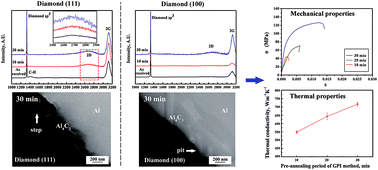
Raman and XPS spectra on (111)D surface are presented in Fig. 2. As shown in Fig. 2(a), on (111)D surface, Raman spectra consist of three major features: a sharp peak at 1332 cm−1 (diamond sp3 peak), a broad peak at 3100 cm−1 (2G), and a weak peak centered at 2680 cm−1 (2D).22,23 The 2G peak represents the stretching vibration of any pair of sp2 carbon atoms in both ring and chain structure, while the 2D peak corresponds to the breathing mode of sp2 sites in disordered ring structure. The prominence of 2D peak indicates the sp2 carbon are beginning to organize into small graphitic clusters.24


image file: c6ra11905k-f2.tif
Fig. 2 Raman and XPS analysis of diamond (111)D surface annealed at 800 °C in vacuum; (a) Raman spectra of (111)D surface annealed from 0 to 30 min; (b and c) XPS spectra of as-received and 30 min annealed (111)D surface.

On as-received (111)D surface, the Raman spectrum shows diamond sp3 peak, 2G peak and a weak peak centered at 1400 cm−1. Since 2D peak is not observed in the spectrum, we believe that the 2G peak is an indication of the existence of sp2 carbon impurity.10 This could also be confirmed by the presence of the weak peak at 1400 cm−1 which usually represents the C–H bond in hydrocarbon absorber on diamond surface.25,26 Therefore, on as-received (111)D surface, we observed a diamond sp3 structure with absorbed hydrocarbon impurity. After 10 min annealing, the C–H peak disappears while the 2D peak emerges, indicating the decomposition of surface impurity and the formation of sp2 graphite-like carbon. As the spectrum range from 2500 to 2900 cm−1 shows, the intensity of 2D peaks increases with annealing time increasing from 10 to 30 min, which indicates the growth of sp2 graphite-like carbon.

The XPS C 1s spectra were collected on both as-received and 30 min annealed (111)D surfaces. As shown in Fig. 2(b) and (c), the C 1s spectra could be deconvoluted into three peaks at about 284.4 eV, 285.2 eV and 286.6 eV which correspond to the sp2 carbon, sp3 carbon and C–O bond, respectively.27–29 The weak C–O bond is attributed to the absorbed oxygen species on diamond surface. The percentage of sp2 carbon peak increases significantly from 29.3% to 73.4% and the C–O peak disappears after 30 min annealing, which confirms the desorption of surface impurity and the transformation from sp3 to sp2 carbon on (111)D surface.

3.1.2. Diamond (100) surface. Surface morphology change of the rectangular (100)D surface through annealing at 800 °C is illustrated in Fig. 3. The average surface roughness decreases from 15.6 ± 1.1 nm to 1.6 ± 0.4 nm after 10 min annealing, which could also be attributed to the reaction between absorbed impurity and diamond surface. Very few surface steps could be observed on (100)D surface after 10 min annealing, as shown in Fig. 3(c). Further annealing to 30 min, the average surface roughness of (100)D surface increases slightly to 2.8 ± 0.5 nm. Fig. 3(e) and (f) show that the increased surface roughness is mostly caused by the formation of high density steps with an inclination angle of 54.74°. As proved in our previous study,19 these inclined steps are (111)D facets on (100)D surface. Since the (111)D surface has lowest surface energy,21 surface reconstruction would occur on (100)D surface during annealing, leading to the formation of high density (111)D facets. Some of those facets also merge together to form surface pits.
image file: c6ra11905k-f3.tif
Fig. 3 SEM image and SPM analysis of diamond (100)D surface; (a) surface roughness of as-received (100)D surfaces; (b and d) surface roughness of (100)D surfaces annealed at 800 °C in vacuum for 10 and 30 min; (c and e) enlarged view of the steps in (b and d); (f) surface roughness measurement along the arrow in (c and e).

Fig. 4 shows the Raman and XPS spectra on (100)D surface. As shown in Fig. 4(a), only diamond sp3 peak and a weak 2G peak could be detected on as-received diamond (100)D surface, which represents a diamond sp3 structure with absorbed sp2 carbon impurity as well. The intensity of 2G peak on as-received (100)D surface is lower when compared with that on as-received (111)D surface, since diamond (111)D surface tends to absorb more surface impurity.10 After 10 min annealing, the reaction between absorbed impurity and diamond surface causes the decrease of the intensity of 2G peak. However, no 2D peak has been observed, which means the sp3 to sp2 carbon transformation is not detectable on (100)D surface. Further annealing to 30 min at 800 °C, the appearance of 2D peak indicates the formation of sp2 graphite-like carbon. Since the formation of (111)D facets and the occurrence of sp2 graphite-like carbon happen simultaneously, we believe that the surface transformation on (100)D surface takes place on (111)D facets.


image file: c6ra11905k-f4.tif
Fig. 4 Raman and XPS analysis of diamond (100)D surface annealed at 800 °C in vacuum; (a) Raman spectra of (100)D surface annealed from 0 to 30 min; (b and c) XPS spectra of as-received and 30 min annealed (100)D surface.

The XPS C 1s spectra on (100)D surfaces are shown in Fig. 4(b) and (c). On as-received (100)D surface, the sp2 carbon, sp3 carbon peaks and a strong C–O bonding peak could be detected. Since there are two dangling bonds for each carbon atom on (100)D surface, oxygen could be easily absorbed on diamond surface to form carbon–oxygen contamination, such as lactone group.28,29 After 30 min annealing, the C–O peak disappears, and the percentage of sp2 carbon increases from 14.5% to 35.2%, confirming the decomposition of absorbed surface impurity and the transformation from sp3 to sp2 carbon on (100)D surface.

Therefore, the pre-annealing creates surface steps and pits on both diamond surfaces and triggers the sp3 to sp2 carbon transformation. From a crystallographic point of view, diamond (111)D plane consists of buckled hexagonal rings, and the projected size of the buckled hexagonal ring is very close to that of the six-fold ring in graphite. Phenomenologically, the graphitization of (111)D surface only requires the flattening of the buckled hexagonal ring. In comparison, the carbon atoms on (100)D surface require much more atomic rearrangement to form a graphite plane.15 Thus, the surface transformation is more preferential on (111)D surface or (111)D facets on (100)D surface. The formation of sp2 graphite-like carbon could be found on (111)D surface after 10 min pre-annealing, which could be promoted by extending the pre-annealing time. While on (100)D surface, the sp3 to sp2 carbon transformation which is associated with the formation of (111)D facets could only be observed after 30 min pre-annealing.

3.2. Interfacial microstructure of Al/diamond composites

XRD analysis of Al/diamond composites with 10 and 30 min pre-annealing is shown in Fig. 5(a). There are three phases in both samples, including diamond, Al and Al4C3. The detection of Al4C3 phase indicates the formation of aluminum carbide as interfacial product. The intensity of Al4C3 peaks increases with increasing the pre-annealing time from 10 to 30 min, which means the 30 min pre-annealing prepares the diamond surface better for interfacial reaction and results in more interfacial Al4C3 carbide. The corresponding interfacial microstructure of composites is shown in Fig. 5(b)–(e). On (111)D surface, Al4C3 particles nucleate along the normal steps and grow parallel to form a plate shape. On (100)D surface, Al4C3 particles nucleate and grow at (111)D facets with an 54.74° inclination angle. With increasing the pre-annealing time from 10 to 30 min, the Al4C3 particles become larger and penetrate deeper into steps (or pits) on both diamond surfaces. It's also worth to notice that the density of carbide particles on (100)D surface is higher than that on (111)D surface after 30 min pre-annealing. It has been reported in our previous study that the formation of Al4C3 nuclei is an inhomogeneous nucleation process which depends upon the diamond surface morphology.19 Compared with the relatively less dense vertical steps on (111)D surface, 30 min pre-annealing creates high density of surface pits on (100)D surface which act as nucleation sites for Al4C3 carbide.
image file: c6ra11905k-f5.tif
Fig. 5 XRD analysis and interfacial microstructure of Al/diamond composites which produced by GPI method with 10 and 30 min pre-annealing time; (a) XRD pattern; (b and d) interface between diamond (111)D surface and Al with different pre-annealing time; (c and e) interface between diamond (100)D surface and Al with different pre-annealing time.

The above Al/diamond composites were treated by hydrochloric acid solution to remove both Al and Al4C3 carbide. Fig. 6 shows the surface morphology of bare diamond particles. Compared with pre-annealed diamond particles, steps and pits on both diamond surfaces become deeper, indicating the continuous dissolution of carbon atoms from diamond surface during the interfacial reaction. These carbon atoms could diffuse to Al4C3 particles to provide carbon source for the growth of carbide, which leaves deeper surface features. When extending the pre-annealing time from 10 to 30 min, the average depth of surface steps on (111)D surfaces increases from about 41 ± 10 nm to 124 ± 27 nm. Meanwhile, the average depth of surface pits on (100)D surfaces increases from 34 ± 8 nm to 97 ± 19 nm.


image file: c6ra11905k-f6.tif
Fig. 6 SPM analysis of bare diamond surfaces (after remove both Al and Al4C3 carbide) in Al/diamond composites which produced by GPI methods with different pre-annealing period; (a and c) surface roughness of diamond (111)D surface with 10 and 30 min pre-annealing; (b and d) surface roughness of diamond (100)D surface with 10 and 30 min pre-annealing; (e) surface roughness measurement along the arrow in (a and c); (f) surface roughness measurement along the arrow in (b and d).

It has been reported that the sp2 graphite-like structure formed during surface transformation is relatively disordered and the edge of the graphite cluster is highly active.15,17 Carbon atoms can easily detach from the graphite-like cluster formed along the edge of vertical steps or (111)D facets on both diamond surfaces, which are also the nucleation sites for Al4C3 nuclei. With extended pre-annealing time, the formation of active graphite-like clusters provide more dissolved carbon atoms to promote the nucleation and growth of interfacial Al4C3 carbide. As a result, larger Al4C3 particles penetrate deeper into surface steps (or pits) on both diamond surfaces. Since the transformation from sp3 to sp2 carbon is more obvious on (111)D surface, Al4C3 particles grow faster on (111)D surface to form larger plate-like carbide which covers diamond surface and limits the formation of new Al4C3 nuclei. Thus, higher density of smaller carbide particles could be observed on (100)D surface, as shown in Fig. 5.

3.3. Interfacial bonding and properties of Al/diamond composites

The representative tensile stress–strain curves and the tensile strength of Al/diamond composites with different pre-annealing time are shown in Fig. 7. When the pre-annealing time is 10 min, Al/diamond composite shows an ultimate tensile strength of 44.8 MPa and a strain at fracture lower than 0.25%. The relatively small strain at fracture indicates there is almost no plastic deformation of aluminum matrix, since the Al/diamond interface is weak and cannot provide an effective load transfer between diamond and Al. Extending the pre-annealing time from 10 to 20 and 30 min, the mechanical properties of composites increase significantly. With 30 min pre-annealing time, the ultimate tensile strength and strain at fracture of Al/diamond composite are 127.4 MPa and 1.5%, respectively. The tensile stress–strain curve shows a plastic deformation plateau at higher stress, reflecting stronger Al/diamond interfaces and effective load transfer through interface.
image file: c6ra11905k-f7.tif
Fig. 7 Representative tensile stress–strain curves and tensile strength of Al/diamond composites which produced by GPI methods with 10 to 30 min pre-annealing period.

Fig. 8(a) shows the fracture surface after performing tensile test on the Al/diamond composite sample with 10 min pre-annealing time, which reflects a brittle fracture feature. Cleavage fracture occurs and propagates along the Al/diamond interfaces. Fig. 8(b) and (c) illustrate the enlarged (111)D and (100)D fracture surfaces mirrored on Al matrix, which reveal the dent and remains of both diamond (111)D and (100)D surfaces on the matrix. Most of the Al4C3 particles were peeled off from diamond surface and bonded on Al side after breaking, reflecting a weak connection between diamond and Al4C3. Increasing the pre-annealing time to 30 min, the interfacial bonding is improved significantly. As shown in Fig. 8(d), (100)D surface is fully covered by Al matrix and (111)D surface is partially covered. Ductile dimples and tear ridges of Al could be found on both diamond surfaces, indicating that the interfacial bonding is stronger than the strength of Al matrix. Thus, the fracture mechanism is the ductile fracture of aluminum matrix. Fig. 8(e) and (f) show the enlarged images of (111)D fracture surface, Al4C3 particles are well bonded on diamond surface, indicating the enhanced connection between diamond and Al4C3 particles.


image file: c6ra11905k-f8.tif
Fig. 8 Fracture surface of Al/diamond composites which produced by GPI methods with different pre-annealing period; (a) fracture surface of composite with 10 min pre-annealing time; (b and c) enlarged SEM images of the mirrored (100)D and (111)D fracture surfaces on Al matrix; (d) fracture surface of composite with 30 min pre-annealing period; (e) enlarged SEM image of diamond (111)D surface; (f) enlarged SEM image of the rectangular area in (e).

It has been reported that the contact angle of pure Al on carbon substrate is about 130° at a temperature above 800 °C, and the contact angle of Al on Al4C3 substrate is about 55°.8,9 The adhesion energy of Al/Al4C3 interface is about four times higher than that of Al/C interface.8 Thus, the formation of Al4C3 carbide on diamond surface could significantly enhances the wetting of Al on diamond, which makes the interconnection between Al4C3 and diamond to be a determining factor on the interfacial bonding of Al/diamond composite.

For Al/diamond composites with 10 min pre-annealing time, the formation of sp2 carbon on (111)D surface is limited by the relatively short pre-annealing period, and there is no observable sp3 to sp2 carbon transformation on (100)D surface due to the lack of surface reconstruction. On both diamond surfaces, there are very few active graphite-like clusters which act as additional carbon sources for the formation of Al4C3 carbide. Small Al4C3 particles form around shallow surface steps or pits. The connection between diamond and Al4C3 carbide is weak, due to the relatively small area of connected diamond/Al4C3 interface. Al4C3 particles could be easily peeled off from diamond surface, resulting in a brittle fracture along the interface of composites.

Increasing the pre-annealing time to 30 min, the surface transformation on (111)D surface is enhanced and the emergence of (111)D facets also triggers the formation of sp2 carbon on (100)D surface. On both diamond surfaces, larger Al4C3 particles penetrate and extend deeper into diamond and Al matrix, resulting in the formation of a reinforcement network. This network of Al4C3 carbide could act as a mechanical interlock to transfer load effectively. The interfacial strength in Al/diamond composites is improved by the chemical bond and the mechanical bond at both Al/Al4C3 and Al4C3/diamond interfaces, leading to the ductile fracture of Al matrix during tensile test.

Compared with the plate-like carbide formed on (111)D surface, the (100)D surface and Al4C3 particles show a 54.74° geometrical relationship. Carbide particles penetrate deeper into both diamond surface and Al matrix on (100)D surface, which could be observed in Fig. 5 and 6. After 30 min pre-annealing, the diamond surface transformation and surface morphology change also cause the formation of high density of smaller Al4C3 particles and less dense larger carbide particles on (100)D and (111)D surface, respectively. Thus, the mechanical interlock on (100)D surface is more significant than that on (111)D surface. Interfacial strength for the Al matrix on diamond (100)D surface is stronger than on (111)D surface, and Al matrix could be observed to fully cover the (100)D surface at the fracture surface. Recently, the formation of Al4C3 carbide on both diamond surfaces has been reported.5,13,30 The well bonded (100)D surface to the Al matrix has been attributed to the extensive Al/diamond interfacial reaction compared to (111)D surface.4,9 However, our results show that the crystallographic orientation, the morphology of carbides and the formation of Al4C3 mechanical interlock play an important role in differentiating the bonding strength at Al/diamond interface, which provides new concept to design Al/diamond composite with strong interfaces.

The thermal conductivity of Al/diamond composites increases from 540 to 710 W m−1 K−1 when the pre-annealing time increases from 10 to 30 min, as shown in Fig. 9. This could be attributed to the minimization of interfacial thermal resistance by improved interfacial bonding in Al/diamond composites.


image file: c6ra11905k-f9.tif
Fig. 9 Thermal conductivity of Al/diamond composites which produced by GPI methods with 10 to 30 min pre-annealing period.

4. Conclusions

On the basis of the investigation carried out in the present research, the main conclusions can be summarized as follows:

(1) The pre-annealing of diamond particles initiates the sp3 to sp2 carbon transformation on diamond surface. The surface transformation is more preferential on (111)D surface, while on (100)D surface, the transformation is relatively slow and associated with the formation of (111)D facets.

(2) The active sp2 graphite-like clusters formed during surface transformation enhance the dissolution of carbon atoms from diamond surface, which act as additional carbon source for the growth of Al4C3 particles. More Al4C3 particles penetrate deeper into both diamond and Al matrix with extended pre-annealing time, resulting in the formation of mechanical interlock to enhance the interfacial bonding.

(3) Due to the 54.74° geometrical relationship between (100)D surface and the high density of small Al4C3 particles, the mechanical interlock on (100)D surface is more significant. Thus, the interfacial strength for the Al matrix on diamond (100)D surface is stronger than on (111)D surface.

(4) The improved interfacial bonding is beneficial to both the mechanical and thermal properties of Al/diamond composite, since it allows the effective load transfer through interface and decreases the interfacial thermal resistance. The fracture mechanisms of composites change from cleavage at interface to the ductile fracture of Al with increasing the pre-annealing time from 10 to 30 min. Al/diamond composite produced with 30 min pre-annealing period exhibits a tensile strength of 127.4 MPa and a strain at fracture of 1.5%. Meanwhile, the thermal conductivity of Al/diamond composites has also been improved from 540 to 710 W m−1 K−1.

The results reveal the role of diamond surface chemistry and structure on adjusting interfacial reaction and interfacial microstructure of Al/diamond composites, which provides important guidance for the further improvement of composite properties. Additionally, researches on extended pre-annealing period for diamond particles should be conducted to obtain an optimized diamond surface structure. By doing so, a feasible and efficient fabrication process of Al/diamond composite with better thermal and mechanical properties could be developed.

Acknowledgements

This work was partially supported by the International Science and Technology Cooperation Program of China (No. 2014DFA51610), National Natural Science Foundation of China (No. 51301018, 51271017), Fundamental Research Funds for the Central Universities (No. FRF-TP-033A2), State Key Lab of Advanced Metals and Materials (No. 2013-F01), Louis Beecherl, Jr endowment funds, and Chinese Academy of Sciences President's International Fellowship Initiative (2015VTA031).

References

  1. X. H. Qu, L. Zhang, M. Wu and S. B. Ren, Prog. Nat. Sci., 2011, 21, 189–197 CrossRef.
  2. G. Jiang, L. Diao and K. Kuang, Advanced Thermal Management Materials, Springer, 2011 Search PubMed.
  3. O. Beffort, F. Khalid, L. Weber, P. Ruch, U. Klotz, S. Meier and S. Kleiner, Diamond Relat. Mater., 2006, 15, 1250–1260 CrossRef CAS.
  4. P. W. Ruch, O. Beffort, S. Kleiner, L. Weber and P. J. Uggowitzer, Compos. Sci. Technol., 2006, 66, 2677–2685 CrossRef CAS.
  5. I. E. Monje, E. Louis and J. M. Molina, Composites, Part A, 2013, 48, 9–14 CrossRef CAS.
  6. H. Zhang, J. Wu, Y. Zhang, J. Li and X. Wang, J. Mater. Eng. Perform., 2015, 24, 2556–2562 CrossRef CAS.
  7. J.-H. Wu, H.-L. Zhang, Y. Zhang, J.-W. Li and X.-T. Wang, Rare Met., 2015, 1–4,  DOI:10.1007/s12598-015-0515-4.
  8. K. Landry, S. Kalogeropoulou and N. Eustathopoulos, Mater. Sci. Eng., A, 1998, 254, 99–111 CrossRef.
  9. S. Kleiner, F. A. Khalid, P. W. Ruch, S. Meier and O. Beffort, Scr. Mater., 2006, 55, 291–294 CrossRef CAS.
  10. O. Beffort, Diamond Relat. Mater., 2004, 13, 1834–1843 CrossRef CAS.
  11. N. Chen, X. F. Pan and M. Y. Gu, Mater. Sci. Technol., 2009, 25, 400–402 CrossRef CAS.
  12. Y. Zhang, J. Li, L. Zhao and X. Wang, J. Mater. Sci., 2015, 50, 688–696 CrossRef CAS.
  13. J. M. Molina-Jordá, Composites, Part A, 2015, 70, 45–51 CrossRef.
  14. W. Shao, V. Ivanov, L. Zhen, Y. Cui and Y. Wang, Mater. Lett., 2004, 58, 146–149 CrossRef CAS.
  15. V. Kuznetsov, I. Zilberberg, Y. V. Butenko, A. Chuvilin and B. Segall, J. Appl. Phys., 1999, 86, 863–870 CrossRef CAS.
  16. I. E. Monje, E. Louis and J. M. Molina, Scr. Mater., 2016, 115, 159–163 CrossRef CAS.
  17. K.-C. Chang, K. Matsugi, G. Sasaki and O. Yanagisawa, JSME Int. J., Ser. A, 2005, 48, 205–209 CrossRef CAS.
  18. K.-C. Chang, Z.-F. Xu, K. Matsugi and G. Sasaki, Mater. Trans., 2009, 50, 1510–1518 CrossRef CAS.
  19. Z. Che, Y. Zhang, J. Li, H. Zhang, X. Wang, C. Sun, J. Wang and M. J. Kim, J. Alloys Compd., 2016, 657, 81–89 CrossRef CAS.
  20. M. Seah, Surf. Interface Anal., 1989, 14, 488 CrossRef CAS.
  21. S. Adachi, Properties of semiconductor alloys: group-IV, III-V and II-VI semiconductors, John Wiley & Sons, 2009 Search PubMed.
  22. A. Ferrari and J. Robertson, Phys. Rev. B: Condens. Matter Mater. Phys., 2001, 64, 075414 CrossRef.
  23. X. Zhang, B. R. Rajaraman, H. Liu and S. Ramakrishna, RSC Adv., 2014, 4, 28987–29011 RSC.
  24. Z. Jiaqi, H. Jiecai, H. Xiao, M. Songhe, J. Zechun, Y. Jin and C. Kun, Scr. Mater., 2006, 55, 1167–1170 CrossRef.
  25. A. Ferrari and J. Robertson, Phys. Rev. B: Condens. Matter Mater. Phys., 2001, 63, 121405 CrossRef.
  26. S. S. Lobanov, P.-N. Chen, X.-J. Chen, C.-S. Zha, K. D. Litasov, H.-K. Mao and A. F. Goncharov, Nat. Commun., 2013, 4, 2446 Search PubMed.
  27. M. Caccia, A. Rodríguez and J. Narciso, JOM: Journal of the Minerals, metals, and Materials Society, 2014, 66, 920–925 CrossRef CAS.
  28. D. G. David, M.-A. Pinault-Thaury, D. Ballutaud and C. Godet, Appl. Surf. Sci., 2013, 273, 607–612 CrossRef CAS.
  29. P. Merel, M. Tabbal, M. Chaker, S. Moisa and J. Margot, Appl. Surf. Sci., 1998, 136, 105–110 CrossRef CAS.
  30. I. Monje, E. Louis and J. Molina, Composites, Part A, 2014, 67, 70–76 CrossRef CAS.

Footnote

Present address: Advanced Manufacture Technology Center, China Academy of Machinery Science & Technology, Beijing, 100083, PR China.

This journal is © The Royal Society of Chemistry 2016
Click here to see how this site uses Cookies. View our privacy policy here.