Wen Liu,
Xiao Zhao,
Zhengqing Cai,
Bing Han and
Dongye Zhao*
Environmental Engineering Program, Department of Civil Engineering, Auburn University, Auburn, Alabama 36849, USA. E-mail: zhaodon@auburn.edu
First published on 11th July 2016
Aggregation and stability of multiwalled carbon nanotubes (MWNTs) in aqueous solutions were investigated in the presence of two polysaccharide stabilizers (carboxymethyl cellulose (CMC) and a water soluble starch) and a natural organic matter (leonardite humic acid (LHA)). While all stabilizers inhibited aggregation of MWNTs, the stabilization effectiveness ranked as CMC > starch > LHA. In the presence of 0.06 wt% of CMC or 0.08 wt% of starch, 10 mg L−1 of MWNTs were fully stabilized (no gravity settling). At 10 mg L−1 of MWNTs, the addition of 5 mg L−1 as total organic carbon of CMC increased the critical coagulation concentration (CCC) of MWNTs from ∼25 to ∼210 mM in NaCl solution and from ∼0.9 to ∼2.6 mM in CaCl2 solution. The three stabilizers showed very different effects on the electrophoretic mobility (EPM) of MWNTs: the coating of negatively charged CMC enhanced EPM from −3.24 × 10⁻⁸ m2 V−1 s−1 for bare MWNTs to −5.22 × 10⁻⁸ m2 V−1 s−1, while the coating of neutral starch slightly curbed EPM to −2.24 × 10⁻⁸ m2 V−1 s−1, and LHA hardly affected EPM. Derjaguin–Landau–Verwey–Overbeek (DLVO) theory can interpret the stabilization mechanisms, which reveals that CMC stabilizes MWNTs through enhanced electrostatic repulsion, primary energy barrier and steric hindrance, whereas starch and LHA work primarily through steric hindrance. CMC and starch exert greater steric hindrance than LHA, partially due to the long chains of the polysaccharides and the associated steric hindrance. The information can facilitate environmental applications of carbon nanotubes and improve our understanding of the environmental fate and transport of engineered stabilized nanomaterials.
Due to their unique 3-dimensional structure and the morphological heterogeneity, tubular nanomaterials like CNTs often display distinctly different physical–chemical characteristics (e.g., transport, aggregation, and sedimentation) from other particulate nanomaterials.7,8 Therefore, it is important to characterize the aggregation and stability of CNTs, in order to predict their environmental fate and transport behaviors. From an application viewpoint, aggregation of CNTs will reduce available specific surface area and active sites, and thus may lose the nano-scale effects (e.g., high reactivity). Furthermore, aggregated CNTs are much less deliverable or transportable in environmental media (e.g., soil and water). Therefore, various surface modifications of CNTs have been practiced to inhibit aggregation of CNTs using various stabilizers. Such stabilization techniques not only preserve high specific surface area and reactivity of CNTs, but also facilitate broader environmental application of CNTs (e.g., in situ remediation of soil by delivering CNTs into the subsurface).
In recent years, natural or modified polysaccharides, such as carboxymethyl cellulose (CMC) and water-soluble starch, have been shown to be effective, “green” and low-cost stabilizers for a variety of nanoparticles. These stabilizers can effectively prevent aggregation of nanoparticles via electrostatic and/or steric stabilization, and facilitate delivery of nanoparticles into contaminated soil.9–15 For instance, fully stabilized zero-valent iron, Pd, and MnO2 nanoparticles have been prepared using low concentrations of CMC or starch as a stabilizer.11–15 Compared to conventional non-stabilized aggregates, the stabilized nanoparticles showed not only much improved soil deliverability (a critical feature for in situ remediation of contaminated soil and groundwater), but also much improved reactivity or catalytic activity.11–15 Compared to other synthetic stabilizers, CMC and starch are considered not only more effective but also cheaper, more environmentally friendly and biodegradable, and thus, represent a class of important stabilizers in the fabrication and application of stabilized nanomaterials.13,14 While CMC and starch have been shown effective for stabilizing various metallic and metal (hydr)oxides nanoparticles (e.g., ZVI, Pd and MnO2),11–15 little information has been available on their effectiveness for stabilizing CNTs. Such information becomes increasingly desired as it can not only facilitate further engineered material development or modification, but also improve our understanding of interactions of CNTs with natural organic matter (NOM) and the fate and transport of CNTs in engineered and natural eco-systems. Given the unique tubular structure and physico-chemical properties of CNTs, the interactions between the nanomaterials and the stabilizers and the stabilization effectiveness and mechanisms can differ significantly from those for the inorganic nanomaterials studied so far. In addition, there is little information on effect of leonardite humic acid (LHA), a representative NOM, on aggregation and stabilization of CNTs.
Many studies have investigated aggregation behaviors of CNTs under various water chemistry conditions.16–22 For instance, common cations such as Na+ and Ca2+ have been found to enhance aggregation in accord with the classic double-layer compression theory.16,17 Dissolved organic matter (DOM) can be adsorbed on various colloidal particles including CNTs, thereby altering the surface potential and interparticle interactions and resulting in greater stability.18–22 Therefore, there is a need to understand effects of electrolytes and NOMs on the stabilization effectiveness of CNTs by these stabilizers. Saleh et al. studied the influence of various biomacromolecules (including alginate, bovine serum albumin and cell culture medium) and humic acid (HA) on aggregation of single-walled carbon nanotubes (SWNTs), and found that bovine serum albumin remarkably increased the stability of SWNTs due to formation of a globular molecular structure and enhanced steric repulsion.19 Lin and Xing tested tannic acid (TA) as a model DOM, and observed that coating CNTs with TA increased steric repulsion, and thus enhanced the stability of CNTs.20 Adeleye and Keller studied long-term fate of CNTs in aquatic systems, and found that extracellular polymeric substances enhanced stability of SWCTs via enhanced electrostatic and steric repulsions.22 However, there has been no information available on the effectiveness of CMC, starch or LHA for stabilizing commonly used multiwalled carbon nanotubes (MWNTs).
The overall goal of this study was to investigate the effects of two modified polysaccharides (CMC and starch) and a model DOM (LHA) on the stability of MWNTs and elucidate the underlying mechanisms. The specific objectives of this study were to: (1) investigate the effects of CMC and starch and LHA on the aggregation rate and extent of MWNTs in aqueous solutions; (2) determine the critical coagulation concentration (CCC) of NaCl and CaCl2 for MWNTs in the absence and presence of the stabilizers; (3) elucidate the underlying aggregation/stabilization mechanisms in the presence of the model stabilizers by means of DLVO theory and taking into account steric repulsion; and (4) determine the critical stabilization concentration (CSC, i.e., the lowest stabilizer concentration to fully stabilize a given type and concentration of nanoparticles) of CMC, starch and LHA. This work aimed to provide a useful theoretical basis for understanding and predicting aggregation and stability of MWNTs under the influence of various engineered or natural macromolecules which can guide future development and applications of CNTs for environmental cleanup uses and improve our understanding of the associated environmental implications.
A suspension of MWNTs stock was prepared by dispersing 25 mg of the nanomaterials into 250 mL of deionized water (18.2 MΩ cm, Millipore, USA) in a conical flask, and then sonicating the mixture for 2 h (70 W, 42 kHz). Afterwards, the mixture was centrifuged at 8000 rpm (6400g-force) for 10 min to remove the residual large clusters of MWNTs. The supernatant, which contains the dispersed MWNTs, was then collected and stored at 4 °C in dark for uses.
ACS-grade NaCl and CaCl2 were acquired from Fisher Scientific (Pittsburgh, PA, USA), and stock solutions for the electrolytes were prepared at 100 mM in deionized water. A standard leonardite humic acid (LHA, IHSS 1S104H, 64% of TOC content) was purchased from the International Humic Substances Society, and Table S1 in the ESI† gives the compositions and major functional groups of the LHA.23 CMC (MW = 90
000 in the sodium form, degree of substitute = 0.7) was procured from Acros Organics (Morris Plains, NJ, USA) and a water-soluble potato starch (hydrolyzed for electrophoresis) was obtained from Sigma-Aldrich (Milwaukee, WI, USA). Fig. S1 (ESI†) shows the molecular structures of CMC and starch. Stock solutions of CMC and starch were prepared at 1 wt%, and a LHA stock solution was prepared at 1 g L−1 by directly dissolving the respective solutes in deionized water.
The DLS measurements were started immediately after the suspensions were prepared. The intensity-weighted hydrodynamic diameters of aggregated MWNTs were monitored until the hydrodynamic diameter reached to ∼1.5 times of its initial value (up to ∼2 h). The measured hydrodynamic diameters were then subjected to a second-order cumulative analysis (Dispersion Technology Software v6.01, Malvern, UK).
The aggregation rate constant was expressed by:24,25
![]() | (1) |
The aggregation attachment efficiency (α), or the inverse stability ratio (1/W), is calculated by normalizing the slopes obtained under the different solution conditions to the slope obtained under “favorable” (fast) aggregation:24,25
![]() | (2) |
The electrophoretic mobility (EPM) of suspended MWNTs was also measured through the Nano-ZS90 Zetasizer based on the Smoluchowski model,26 and 12 measurements were conducted for each sample.
![]() | (3) |
![]() | ||
| Fig. 1 (a) TEM image of MWNTs used in this work, (b) XPS survey spectrum, and (c) high-resolution XPS scan spectra over the C 1s peak of MWNTs. | ||
Fig. S4† shows TEM images of bare and stabilizer-coated MWNTs. On a macroscopic scale, the aggregates can be approximated as nest-like spheres. The TEM images also reveal that the size of MWNTs aggregates follows the sequence of: bare MWNTs > MWNTs-LHA > MWNTs-starch > MWNTs-CMC, which is consistent with the DLS measured size (given in Section 3.2).
![]() | ||
| Fig. 2 (a) EPM and (b) attachment efficiency (α) of MWNTs as a function of NaCl concentration. (MWNTs concentration = 10 mg L−1, DOM = 5 mg L−1 as TOC, pH = 6.0 ± 0.2, temperature = 25 °C). | ||
The presence all three stabilizers reduced the hydrodynamic diameter of the MWNTs (Fig. 3), indicating the stabilizers were able to prevent aggregation of the MWNTs. After 24 hours' aggregation tests without electrolyte added, the average size of MWNTs follows the ranking of: bare MWNTs (530 nm) > MWNTs-LHA (401 nm) > MWNTs-starch (373 nm) > MWNTs-CMC (262 nm). With respect to the attachment efficiency, Fig. 2b shows that in the absence of the stabilizers, there exist two distinct aggregation regimes, i.e. a reaction-limited (unfavorable or slow) regime and a diffusion-limited (favorable or fast) regime, indicating that the DLVO-type interactions are the dominant mechanism for aggregation of MWNTs.17,33,34 In the reaction-limited regime (α < 1) at low NaCl concentrations, the more negative potential of the MWNTs leads to stronger electrostatic repulsion between the nanomaterials, thus inhibiting aggregation; in the diffusion-limited regime (α = 1) at high NaCl concentrations, the electrosteric repulsion is weakened due to charge neutralization and the electric double layer compression effect, hence favorable aggregation occurs due to reduced energy barrier. The CCC for bare MWNTs was 25 mM NaCl, which is in accordance with the previous studies.17,19 In contrast, the addition of CMC, starch and LHA increased the CCC of NaCl to 210, 180, and 62 mM, respectively. The observation clearly shows the strong stabilization effect of CMC and starch on MWNTs, which is of great practical significance for applications of MWNTs.
![]() | ||
| Fig. 3 Hydrodynamic size distributions of MWNTs in the absence or presence of organic stabilizers. (MWNTs = 10 mg L−1, DOM = 5 mg L−1 as TOC, NaCl = 10 mM, pH = 6.0 ± 0.2, temperature = 25 °C). | ||
Fig. 4 displays effects of CaCl2 on EPM and α. When CaCl2 concentration was varied from 0 to 10 mM, EPM of bare MWNTs was suppressed from −3.24 × 10⁻⁸ to −0.86 × 10⁻⁸ m2 V−1 s−1. Similar trend was also observed in the presence of the stabilizers. The lowered EPM with increasing CaCl2 is due to enhanced double layer compression by Ca2+, as well as interactions of Ca2+ with the –COOH and –OH groups on the stabilizers.16 Between NaCl and CaCl2, the latter resulted in lowered EPM, which is in accord with the classic notion that polyvalent cations are more effective coagulants than monovalent cations.8,16,35,36
![]() | ||
| Fig. 4 (a) EPM and (b) attachment efficiency (α) of MWNTs as a function of CaCl2 concentration. (MWNTs concentration = 10 mg L−1, DOM = 5 mg L−1 as TOC, pH = 6.0 ± 0.2, temperature = 25 °C). | ||
As is the case for NaCl, the CMC coating resulted in much more negative EPM, while the starch coating suppressed EPM, and LHA hardly affected EPM. Similar reaction-limited and diffusion-limited regimes were also observed for MWNTs aggregation in CaCl2 solutions, indicating the DLVO type interactions are operative. The CCC in the bare MWNTs system was ∼0.9 mM for CaCl2, which is ∼27 times lower than that for NaCl, which is in accord with the Schulze–Hardy rule,37 i.e., CCC varies with the inverse of the counter-ion charge as 1/zn (n = 2–6, and z represents the counter-ion valence). Again, CMC showed the strongest stabilizing power for MWNTs in CaCl2 solution, and the presence of 5 mg L−1 as TOC of CMC, starch and LHA increased the CCC to 2.7, 2.1 and 1.6 mM, respectively.
![]() | ||
| Fig. 5 Influence of CMC and starch concentration on (a) EPM and (b) hydrodynamic diameter of MWNTs. (MWNTs = 10 mg L−1, NaCl = 10 mM, pH = 6.0 ± 0.2, temperature = 25 °C). | ||
The effects of CMC and starch concentration on the hydrodynamic size of MWNTs are more complex (Fig. 5b). The CSC values for CMC and starch were measured to be 0.06 wt% and 0.08 wt%, respectively, i.e., MWNTs were not fully stabilized at these critical concentration values. Fig. 5b shows that at very low CMC dosages (≤0.0005 wt%), the hydrodynamic diameter decreased with increasing CMC concentration. However, the hydrodynamic size surged to a peak value of 1120 nm at 0.001 wt% of CMC. Similar profiles were observed for starch, though the peak size (996 nm) was observed at 0.01 wt% starch. The peaking phenomenon is attributed to the bridging effect of CMC and starch, and is characteristic of long-chain macromolecules.38 At low concentrations, the stabilizers may serve as a bridging agent that can bind multiple MWNTs, forming large flocs. Similar bridging effect was also observed when starch was used to stabilize magnetite nanoparticles.32 It is noteworthy that the minimum concentration may vary for different dispersants (e.g., >0.0005 wt% for CMC and >0.004 wt% for starch), depending on the molecular structure of the dispersants and ability to bind with MWNTs. Further increasing the stabilizer concentration after the peak bridging effect results in smaller MWNTs. This is because as more stabilizer molecules are attached on MWNTs, the surface of each particle is covered with a denser layer of the stabilizer molecules, and thus the interparticle repulsive forces are increased. Comparing Fig. 5a and b reveals that while EPM of MWNTs remains relatively steady in the high CMC/starch concentration range, the hydrodynamic diameter decreased notably with increasing stabilizer concentration, suggesting that as more stabilizers are adsorbed on the surface of MWNTs, the steric repulsion plays an increasingly important role, resulting in smaller particles but with little effect on EPM.
Fig. 6 shows the sedimentation kinetics of MWNTs in the presence of various concentrations of CMC and starch, and Table 1 lists the corresponding sedimentation rates (Rs), which was calculated per the Stoke's law,39
![]() | (4) |
![]() | ||
| Fig. 6 Sedimentation kinetics of MWNTs in the presence of various concentrations of (a) CMC and (b) starch. (MWNTs = 10 mg L−1, pH = 6.0 ± 0.2, NaCl = 10 mM, temperature = 25 °C). | ||
| Concentration (wt%) | Sedimentation rate (min−1) | |
|---|---|---|
| CMC | Starch | |
| 0 | 2.97 × 10⁻³ | 2.97 × 10⁻³ |
| 0.0005 | 2.07 × 10⁻³ | 2.13 × 10⁻³ |
| 0.001 | 2.30 × 10⁻³ | 1.13 × 10⁻³ |
| 0.01 | 1.41 × 10⁻³ | 1.60 × 10⁻³ |
| 0.06 | 8.26 × 10⁻⁵ | 8.12 × 10⁻⁴ |
| 0.08 | 4.87 × 10⁻⁵ | 5.39 × 10⁻⁵ |
At 0.06 wt% CMC or 0.08 wt% starch, virtually no sedimentation of MWNTs occurred (Rs = 8.26 × 10⁻⁵ or 5.39 × 10⁻⁵ min−1 with 0.06 wt% CMC or 0.08 wt% starch, respectively). In general, the higher the stabilizer concentration, the more stable a colloid suspension, and the lower sedimentation rate. However exceptions were observed at 0.001 wt% CMC or 0.01 wt% starch, which is in accord with the peak bridging effect (Fig. 5b). According to the Stoke's law, the sedimentation rate is governed by particle size of the MWNTs aggregates, densities of the solid and the liquid, and viscosity of the liquid. Increasing the CMC/starch concentration reduces the aggregate size and possibly the aggregates bulk density, and increases the density and viscosity of the liquid, which all are in favor of enhanced stability. The hydrodynamic diameter of MWNTs is generally consistent with the sedimentation kinetics. For example, for CMC-MWNTs, the particle size follows the order of: 1079 nm (0 CMC) ≈ 1095 nm (0.001 wt% CMC) > 815.5 nm (0.01 wt% CMC) > 551.5 nm (0.0005 wt% CMC) > 456 nm (0.06 wt% CMC) ≈ 461.5 nm (0.08 wt% CMC), and the sedimentation rates: 2.79 × 10⁻³ min−1 (0 CMC) > 2.30 × 10⁻³ min−1 (0.001 wt% CMC) > 2.07 × 10⁻³ min−1 (0.0005 wt% CMC) > 1.41 × 10⁻³ min−1 (0.01 wt% CMC) > 8.26 × 10⁻⁵ min−1 (0.06 wt% CMC) > 4.78 × 10⁻⁵ min−1 (0.08 wt% CMC). The minor deviations from the general trend can be attributed to multiple parameter effects as predicted by the Stoke's law and the bridging effects as shown in Fig. 5b.
![]() | (5) |
FEDL is determined by:42,43
FEDL = 2πεrε0aξ2 ln(1 + e−κs)
| (6) |
![]() | (7) |
The overall DLVO interaction energy (DLVO force) is then determined as the sum of FvdW and FEDL:
| Foverall = FvdW + FEDL | (8) |
Fig. 7 plots the resulting DLVO interaction forces for bare and various stabilizer-coated MWNTs in the model electrolyte solutions. With the exception of starch-coated MWNTs (MWNTs-starch), a distinctive energy barrier was observed before the DLVO interactions can reach the primary minimum, which agrees with the classic DLVO profile, and the higher energy barrier predicts the greater stability of MWNTs.47–49 Fig. 7a shows that in the 1 mM NaCl solution, the CMC-coating increased the maximum energy barrier from 192 kT for bare MWNTs to 337 kT for MWNTs-CMC, which was primarily due to the decrease of FEDL upon the coating of the negatively charged CMC. In contrast, the coating of the neutral starch reduced the maximum energy barrier to 27 kT, which is attributed to the much increased FEDL for the starch coated MWNTs. The effect of the LHA coating appeared rather modest in this case, and the DLVO profiles of bare MWNTs and MWNTs-LHA nearly coincide (Fig. 7a). When NaCl concentration was increased 10 folds, the maximum energy barrier in all cases was lowered due to the lowered FEDL (Fig. 7b), resulting in increased aggregation. Moreover, Ca2+ exhibits a much more significant effect on the energy barriers than Na+ (Fig. 7d–f), and the energy barriers in all cases are more effectively lowered even at low CaCl2 concentrations. For example, at 0.1 mM Ca2+, the maximum energy barrier was 84 kT for bare MWNTs, which was increased to 120 kT by CMC, while decreased to 43 kT and 16 kT by starch and LHA, respectively. The calculated Debye lengths (κ−1) in Table S2† confirm that Ca2+ causes more significant electric double layer compression than Na+. For instance, the Debye length is 13.59 nm with 1 mM Na+, but only 7.85 with 1 mM Ca2+. Of the three stabilizers, CMC appears most resistant to the electrolyte effects. For instance, increasing Na+ from 1 to 25 mM suppressed the maximum energy barrier by 90.4% for MWNTs-LHA and 100% for MWNTs-starch, but only 73.5% for MWNTs-CMC. Moreover, it is noteworthy that the secondary energy minimum becomes evident when the electrolyte concentration (25 mM Na+ or 1 mM Ca2+) is higher than the corresponding CCC of bare MWNTs (Fig. 7c and f), indicating that reversible flocculation due to the secondary minimum is the key mechanism in these cases, which also corresponds to the diffusion-limited regime where the attachment efficiency reaches its maximum.50,51
Generally, the higher energy barrier, the lower the aggregation rate is obtained. However, the observed sequence of the aggregation rate or attachment efficiency (MWNTs-CMC > MWNTs-starch > MWNTs-LHA > bare MWNTs) does not completely agree with the order of the energy barrier (MWNTs-CMC > bare MWNTs ≥ MWNTs-LHA > MWNTs-starch). In particular, the energy barrier for MWNTs-LHA is nearly the same as that for bare MWNTs, yet LHA effectively inhibited the aggregation of MWNTs and resulted in much smaller size (Fig. 2b, 3 and 4b). The lowest energy barrier was found for the case of starch. In fact, the DLVO repulsive interactions even disappeared at elevated concentrations of the electrolytes (e.g. 10 and 25 mM NaCl or 0.5 and 1 mM CaCl2) (Fig. 7b, c, e and f). However, Fig. 2b, 3 and 4b show that starch acted as a very effective stabilizer for MWNTs. Therefore, non-DLVO interactions are operative in the stabilization of MWNTs by starch and LHA.
Steric stabilization due to steric hindrance has been widely recognized as an important mechanism for stabilizing nanoparticles, such as iron and silver nanoparticles, by macromolecules, though little qualitative analysis of such interactions has been available.17,19,52 Generally, when polymer-coated particles approach to each other, the coated polymer layers (and likely the electrical double layers) will overlap, which results in an increase in the local concentration of polymer molecules. As a result, an osmotic pressure (π) will develop in the concentrated area between two approaching particles to resist the overlapping of the polymer coatings. Consequently, the induced osmotic flow tends to separate the particles to level off the free energy penalty.53–56 Considering that CMC and starch are both long-chained polymeric molecules, while LHA represents a type of natural macromolecules of medium molecular weight with scattered functional groups (Fig. S1†), the larger CMC and starch molecules are expected to exert stronger steric hindrance effect than LHA.53,55–57 Between CMC and starch, the former carries fairly dense negative charges, which induce strong electrostatic repulsions in addition to the steric hindrance. Consequently, CMC acted as a more effective stabilizer. More insightful information on the stabilizing mechanisms may be revealed by means of the extended-DLVO approach, which may quantify steric hindrance and hydrophobic interactions, provided the relevant model parameters can be reliably acquired.58–61
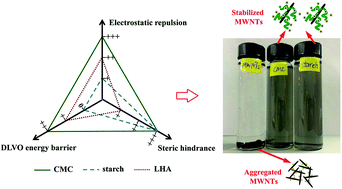
Fig. 8 presents a schematic diagram illustrating the dominant interactions between bare or stabilizer-coated MWNTs. In the absence of the stabilizers, the attractive forces outweigh the weak electrostatic repulsive forces between bare MWNTs, and thus, rapid aggregation was observed (Fig. 8a). CMC was the most effective stabilizer for MWNTs due to the following three synergistic effects: (1) enhanced electrostatic repulsion associated with the strong negative charges; (2) elevated DLVO energy barrier; and (3) a strong steric hindrance force (FOSM) caused by the long-chain macromolecules (Fig. 8b). For starch, however, although the starch coating diminishes the negative surface potential of bare MWNTs and it greatly lowers the DLVO energy barrier, the strong steric hindrance prevents MWNTs from aggregating (Fig. 8a). For LHA, while steric hindrance is the primary stabilization mechanism, the DLVO energy barrier at lower electrolyte concentrations can also be concurrently operative. In addition, it is noteworthy that since stronger steric hindrance is often associated with larger polymers such as polysugar, thermodynamically more favorable stabilization may be achieved using larger macromolecular stabilizers such as CMC and starch.53,55–57
The FTIR spectra (Fig. S5†) reveal the nature of binding of the stabilizers on MWNTs. Only one peak is evident for bare MWNTs at wavenumber 3439 cm−1, which is attributed to the O–H stretching vibration and is from H2O molecules adsorbed on the surface.62 The hydroxyl bands at 3400–3500 cm−1 are strengthened upon coating of the stabilizers, all of which carry large amounts of –OH groups (Fig. S1†). The C–H (CH2 deformation) band at ∼2900 cm−1 is evident for all the three stabilizers.63–65 For MWNTs-CMC and MWNTs-starch, the bands at 450–480 cm−1 and ∼1000 cm−1 belong to the skeletal modes of the pyranose ring and C–O from RCH2OH, respectively.63,64,66 For MWNTs-CMC, the peaks at ∼1604 and ∼1430 are attributed to the vibration of C
O associated with –OH (i.e., the carboxyl group) and –CH2 scissoring vibration, respectively.67,68 The peak at 820 cm−1 is assigned to the –CH2 deformation stretching vibration.63,69 For MWNTs-starch, the peaks at 1384 and 1459 cm−1 are assigned to the C–O–H bending and –CH2 twisting vibration, respectively.64 As for MWNTs-LHA, three new bands are observed at 1212 cm−1 (C–O stretching of esters, ethers, and phenols), 1721 cm−1 (C
O) and 1590 cm−1 (aromatic C
C).65,70
(1) The negatively charged polysugar CMC demonstrated the most effective stabilizing effectiveness for MWNTs, followed by the neutral polysugar starch and the humic acid LHA.
(2) While CMC enhanced the EPM of MWNTs, starch curbed the EPM, while LHA had nearly no effect.
(3) The CMC-coating greatly increased the CCC of MWNTs from ∼25 to 210 mM with NaCl and from ∼0.9 to 2.6 mM with CaCl2.
(4) Higher CMC or starch concentrations reduce the sedimentation rate of MWNTs. The CSC values were determined to be 0.06 wt% for CMC and 0.08 wt% for starch.
(5) The great stabilization power of CMC for MWNTs is attributed to concurrent electrostatic repulsion forces, the energy barrier and steric hindrance. However, for starch and LHA, the steric hindrance effect plays a predominant role in the particle stabilization.
(6) CMC and starch are much more effective stabilizers for MWNTs than LHA, due to their much enhanced electrosteric repulsion (for CMC), the larger molecular size and the associated greater steric hindrance.
The information can facilitate fundamental understanding of DOM–particle interactions, and aid in preparing stabilized or bridged MWNTs or other environmentally important nanoparticles for environmental applications.
Footnote |
| † Electronic supplementary information (ESI) available: Properties of LHA, Debye lengths of MWNTs, molecular structures of CMC and starch, XRD pattern of MWNTs, nitrogen adsorption–desorption isotherms, and pore size distribution of MWNTs. See DOI: 10.1039/c6ra10500a |
| This journal is © The Royal Society of Chemistry 2016 |