A pH responsive micelle combined with Au nanoparticles for multi-stimuli release of both hydrophobic and hydrophilic drug

Qian Lua, Yi-Fan Menga, Peng-Cheng Gaoa, Jing Weia, Si Suna, Jian-Jun Zhoub, Zhi-Fei Wanga and Yong Jiang*a
aSchool of Chemistry and Chemical Engineering, Southeast University, Jiangning, Nanjing, Jiangsu 211189, P. R. China. E-mail: yj@seu.edu.cn
bCollege of Chemistry, Beijing Normal University, Beijing 100875, P. R. China

Received 29th April 2016 , Accepted 10th June 2016

First published on 13th June 2016


Abstract

Spherical micelles or nanofibers self-assembled from PPMA-g-DNA could be selectively achieved by tunning pH value. The spherical micelle could interact with ssDNA modified gold nanoparticles and the resulting hybrids may serve as nanocarriers for releasing both hydrophobic Nile red and hydrophilic doxorubicin hydrochloride (DOX), which could be triggered by many stimuli.

Amphiphilic hybridized copolymers1,2 can self-assemble into various morphologies including micelles,3 micro emulsions,4 fibers5 and other fascinating morphologies6 driven by hydrophobic, electrostatic interactions and so on. Meanwhile, the assembled morphologies, which determine their functions, can be stimulated by properties of hydrophobic and hydrophilic monomers,7 assembling methods,8 polarity of solvent,9 pH value,10 temperature11 and enzyme.12 Therefore, these stimuli could be employed to control the assembled morphologies exactly and effectively.

Recently, many inorganic materials, such as gold nanoparticles (AuNPs), have been combined with DNA to develop drug delivery systems.13 At the same time, small organic moieties like organic dyes and DNA were combined to enhance biomonitoring.14 Lately, DNA based amphiphilic block copolymers (DABCs) have emerged,15 which can not only maintain the properties of the monomers well, but also form more complex multi-dimensional structures on the basis of DNA.16 With such DNA hybrids, new drug delivery system,17 as well as biomaterials purification methods,18 have been established.

So far, much attention has been paid to synthesizing and assembling methods of linear DABCs.19,20 Although linear DABCs play a crucial role in many fields, the low density of DNA has limited their functions in intracellular and therapeutic applications.21,22 Thus, DNA-brush amphiphilic block copolymers23 where many DNA strands are attached as aside chains to a synthetic polymer backbone,19 have emerged as the times require, which has broadened the potential applications of DABCs. However, relatively less effort has been devoted to exploring the assembling mechanism of DNA-brush amphiphilic copolymer and little work was done to explore their potential applications.

Herein, we focused on poly(propargyl methacrylate) (PPMA) grafted DNA hybrids (PPMA-g-DNA), a DNA-brush amphiphilic block copolymer.9 The detailed synthesizing method is reported in Experimental section as well as Fig. S1–S5 in (ESI). PPMA is a polyacrylate containing many three bonds, which can be covalently coupled to azide modified ssDNA by click chemistry.

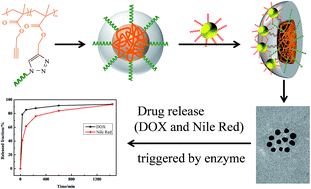
In our previous study, the synthetic PPMA-g-DNA hybrids self-assembled into nanofibers in a H2O/THF mixed solution and the self-assembling behaviours were studied.9 Now, we aim to explore the self-assembling conditions for forming spherical micelles and their potential applications for drug release. The structure of PPMA-g-DNA is shown in Fig. 1. It assembled into spherical micelle in pH = 5 buffer, while assembled into nanofiber when pH = 8. Interestingly, the morphology transformation between spherical micelle and nanofiber could be triggered by adjusting pH value. Moreover, the spherical micelle could interact with ssDNA modified AuNPs and the resulting hybrids may function as nanocarriers for releasing hydrophilic DOX, which can be triggered by nuclease, laser and pH. In addition, releasing hydrophobic Nile red could also be induced by nuclease.


image file: c6ra11159a-f1.tif
Fig. 1 Schematic illustrates the preparation of PPMA-g-DNA micelles under different conditions, as well as morphology conversion between spherical micelles and nanofibers. Moreover, clusters were formed when spherical micelles interacting with ssDNA modified AuNPs, which were used to encapsulate hydrophilic DOX or hydrophobic Nile red and the controlled release can be triggered by many stimuli.

The obtained PPMA-g-DNA was incubated in different conditions and different morphologies were observed by transmission electron microscope (TEM) as shown in Fig. 2, as well as in Fig. S6, S8, S12 and S13 in ESI. When PPMA-g-DNA72 (72-mer DNA) was incubated at pH = 5 buffer for 5 days, spherical micelles were formed with an average diameter of approximately 35 nm (Fig. 2A, as well as Fig. S6A in ESI), which was smaller than the dynamic light scattering (DLS) result of about 75 nm (black line in Fig. 2C). It was possible that the samples were in different states, the dry state during TEM observation while the result of DLS analysis should take hydration and polydispersity into consideration.24 Moreover, it was worth noting that the micelles took on distinct core–shell structures and the core was white with a grey layer around it after being negatively stained by phosphor tungstic acid. Supposing the self-assembled morphology of PPMA-g-DNA72, we assure that, affected by the hydrophobic interaction at pH = 5, the hydrophobic PPMA particularly tended to form the hydrophobic core and surrounded by a corona of the hydrophilic DNA segments. Meanwhile, PPMA-g-DNA36 assemblies were achieved under the same conditions. As we can see in Fig. S6B in ESI, spherical micelles with an average diameter of about 80 nm were formed imaging by TEM and of about 166 nm in DLS experiment (red line in Fig. 2C), which were larger than PPMA-g-DNA72 spherical micelles, but the grey shell could hardly be seen.


image file: c6ra11159a-f2.tif
Fig. 2 (A) TEM image shows the spherical micelles with distinct core–shell structures were assembled from PPMA-g-DNA72 at pH = 5. The scale bar is 100 nm. (B) Nanofibers with several microns in length were formed from PPMA-g-DNA72 at pH = 8. The scale bar is 200 nm. (C) DLS results of different morphologies.

Eisenberg reported25 the diameter of micelle increases as hydrophilic block length decreases when hydrophobic backbone has a fixed length. DNA is a negative charged biomacromolecule, the steric and electrostatic repulsion interactions between corona chains increase as DNA length increases, resulting in the corona chains highly expanded from the core, so the corona in PPMA-g-DNA72 spherical micelles is relatively thicker. However, for PPMA-g-DNA36 spherical micelles, weaker interactions resulted from the shorter DNA strands could not expand the corona chains from the surface of core efficiently, so the hydrophobic core have to be larger to decrease the surface area per corona chain, which plays an important role in controlling the structure of micelles. For spherical micelles, the lower surface area per corona chain represents a more stable state.26

Considering the pH sensitivity of DNA, both PPMA-g-DNA72 and PPMA-g-DNA36 were assembled at pH = 8 in the mixed solution at 15 °C for 5 days. As shown in Fig. 2B, S6C and D in ESI, dendritic nanofibers of about 30 nm in diameter and extended to several microns in length were formed from PPMA-g-DNA72. Moreover, for PPMA-g-DNA36, more smooth nanofibers of about 12 nm in diameter and of several microns in length were achieved. Thus, we speculate that nanofibers were more stable structure at pH = 8 in the selected solvent. We also checked the stability of micelles of PPMA-g-DNA72 by DLS as shown in Fig. S7, the micelles could be stable for at least 8 days.

To understand the possible assembling process better, intermediate state of the sample was captured by TEM during the formation of nanofibers. As shown in Fig. S8 in ESI, spherical micelles and nanofibers co-existed in the sample. One can conjecture that the spherical micelles were formed at the outset and then gradually combined together to form nanofibers through adhesive collisions.

In addition, Nile red, a hydrophobic dye, was encapsulation into the PPMA-g-DNA72 micelles. Look at the insets in Fig. 2A and B, together with Fig. S9 in ESI we could see that at pH = 8, the red dendritic bundles of nanofibers were photographed under green light, indicating the hydrophobic core formed by PPMA. Meanwhile, nothing could be seen at pH = 5 due to the nano size of spherical micelles. The successfully encapsulated of Nile red in spherical micelles was also confirmed by fluorescence spectroscopy as shown in Fig. S10.

Next, we attempted to confirm whether the morphologies conversion could be triggered by pH value. As illustrated in Fig. 3, nanofibers were formed at pH = 8, when pH was adjusted to 5, nanofibers were replaced by spherical micelles. Similarly, adjusting the pH to 8 again, tangled nanofibers were achieved as expected. The whole process was confirmed by DLS as well (Fig. 3E and S11 in ESI). So far, the transformation mechanisms are diverse,27,28 based on our achieved results, we speculate that DNA is pH sensitive and it tends to contract under acid condition. Moreover, many interactions, such as electrostatic interaction, hydrogen bonds and π–π stacking exist among DNA strands. Thus, when pH was changed, the mechanical balance would be destroyed, the formed structure had to reconstruct to achieve a new mechanical balance. Moreover, we also found that the spherical micelles could transform to nanofibers by annealing. As shown in Fig. S12 in ESI, nanofiber was formed by annealing. As control, a sample was rapidly cooled down in an ice bath after heating. Broken nanofibers twisted together and lots of amorphous aggregates were formed. We may draw a limited conclusion that the hybrids reassembled during the annealing process and the nanofibers are thermodynamically stable. In contrast, quenching process destroyed the structure of hybrids.


image file: c6ra11159a-f3.tif
Fig. 3 (A) Schematic represents the controllable morphology transformation of PPMA-g-DNA72 assemblies under different assembling conditions. At pH = 8, the PPMA-g-DNA72 takes on fibrous morphology (B); when the pH was changed from 8 to 5, spherical micelles were achieved (C); similarly, when the pH was changed from 5 to 8, nanofibers can be seen again (D); (E) DLS results confirmed the successful conversion between nanofibers and spherical micelles.

Then, an experiment was designed to demonstrate the biological activities of ssDNA in PPMA-g-DNA72 spherical micelles. Complementary ssDNA strands were modified with 13 nm AuNPs and then the DNA-AuNPs were allowed to hybridize with the spherical micelles. As shown in Fig. 4A and S13A in ESI, several AuNPs gathered together to form many clusters encircled by a grey layer. The average diameter of the clusters was approximately 100 nm, which is reasonable when the amounts and diameter of AuNPs were taken into consideration. Commonly, the AuNPs ought to randomly disperse in solution without modification as shown in Fig. S13 in ESI. Simultaneously, non-complementary DNA strands were used as control. Nanofibers and AuNPs distributed randomly (Fig. 4B). Thus, we infer that the spherical micelles acted as templates which the free AuNPs follow. As control, the AuNPs could move freely in aqueous solution in the absence of base-pairing interaction. Moreover, the spherical micelles replaced by nanofibers were in compliance with the result mentioned above.


image file: c6ra11159a-f4.tif
Fig. 4 TEM images of spherical micelles hybridizing with complementary DNA labelled 13 nm AuNPs. (A) Clusters with an average dimeter of 100 nm were formed templated by spherical micelles after being annealed from 87 °C to 25 °C. The scale bar is 100 nm. (B) Non-complementary DNA labelled AuNPs were used to hybridized with spherical micelles as control. The scale bar is 200 nm.

Furthermore, the UV-vis spectrometer was used to measure the absorption of the clusters, isolated AuNPs and ssDNA labelled AuNPs. As shown in Fig. S14, comparing to the maximum absorption peak at 519 nm and 524 nm of isolated AuNPs and ssDNA labelled AuNPs, red-shifting happened when the complementary ssDNA modified AuNPs interacted with spherical micelles, the maximum absorption peak was at 528 nm. However, when non-complementary ssDNA was used, the absorption peak was at 524 nm, the same as ssDNA labelled AuNPs, implying that the Au nanoparticles uniformly dispersed in the solution, which was in accordance with the TEM images.

The final experiment was to demonstrate the functions of AuNPs-micelles in drug release system. The cluster was chosen as a model carrier, hydrophilic DOX and hydrophobic Nile red were used as model drugs. The DOX can be selectively embedded into consecutive CG base pairs29 and the AuNPs here can not only assist the carriers preferentially accumulate in cancer tissue owing to the enhanced permeability and retention properties of tumours,30 but also can be heated when exposed to 520 nm laser, which would destroy DNA structure and then stimulate the drug release.13 Since DNA played an important role in constructing the micelles, it is definite that the micelles could be biodegraded by enzymatic degradation. Thus, the released behaviour of DOX from clusters was monitored in the presence and absence of T7 exonuclease enzyme. T7 exonuclease enzyme was added into the solution and the release of DOX was detected by ultraviolet spectra. As the black line in Fig. 5A shows, as well as in Fig. S15 in ESI.Remarkable DOX release was observed in the first 60 minutes and more than 90% of the DOX was released from the carriers after 1440 minutes, which indicated the success of releasing drug triggered by nuclease. To understand the properties of the clusters better, we also checked the releasing process triggered by 520 nm laser and pH respectively. The results in Fig. 5A confirmed the success, more than 80% DOX was released after the study time. As a comparison, we repeated the releasing program in a PBS buffer (pH = 7.4, without T7 exonuclease enzyme and laser), only less than 30% of DOX was released (red line in Fig. 5A). Furthermore, a hydrophobic dye, Nile red, was also used as a model drug to determine the ability of the clusters in releasing hydrophobic drug. As shown in Fig. 5B, the Nile red released rapidly at first and more than 90% of drug was released after 24 hours in the presence of T7 exonuclease enzyme. As expected, about 20% of Nile red was detected after 24 hours without enzyme.


image file: c6ra11159a-f5.tif
Fig. 5 (A) UV-vis spectroscopy was used to determine the release of DOX from the chosen carriers triggered by different stimulus. The black line, blue line and light red line respectively represent the releasing curve of adding enzyme, pH = 5.5 and exposing to laser. The red line represents the releasing curve of control experiment, which was conducted in a PBS buffer (pH = 7.4, without enzyme and laser). (B) UV-vis spectroscopy was used to determine the release of Nile red from the clusters triggered by enzyme.

Conclusions

In conclusion, we have confirmed the hybrid, a DNA-brush amphiphilic block copolymer, can self-assemble into spherical micelles or nanofibers at pH = 5 or pH = 8 in the H2O/DMF mixed solution (VH2O/DMF = 3[thin space (1/6-em)]:[thin space (1/6-em)]1). Moreover, the two morphologies can undergo a transformation just by adjusting the pH value, as well as annealing can induce the spherical micelles transform to nanofibers. Then, we combined the spherical micelles with ssDNA modified AuNPs, and the resulting hybrids were chosen as carriers to package DOX, the results confirmed the success of releasing process triggered by enzyme, laser and by changing pH value, as well as Nile red could be released induced by enzyme. On the basis of results above and taking advantage of emerging materials, we envision that the hybrids could have stupendous potential applications in biosensor, supramolecular assemblies and other aspects.

Acknowledgements

This work was supported by the National Natural Science Foundation of China (NSFC) with grant number 21174029, the Industry Academia Cooperation Innovation Fund of Jiangsu Province with grant number BY2014127-07 and the Project Funded by the Priority Academic Program Development of Jiangsu Higher Education Institutions (PAPD).

Notes and references

  1. K. R. Raghupathi, J. Guo, O. Munkhbat, P. Rangadurai and S. Thayumanavan, Acc. Chem. Res., 2014, 47, 2200–2211 CrossRef CAS PubMed.
  2. M. Sasidharan and K. Nakashima, Acc. Chem. Res., 2014, 47, 157–167 CrossRef CAS PubMed.
  3. S.-D. Xiong, L. Li, J. Jiang, L.-P. Tong, S. Wu, Z.-S. Xu and P. K. Chu, Biomaterials, 2010, 31, 2673–2685 CrossRef CAS PubMed.
  4. V. Jallet, G. Guillemot, J. Lai, P. Bauduin, V. Nardello-Rataj and A. Proust, Chem. Commun., 2014, 50, 6610–6612 RSC.
  5. K. M. Carneiro, F. A. Aldaye and H. F. Sleiman, J. Am. Chem. Soc., 2009, 132, 679–685 CrossRef PubMed.
  6. H. Qiu, Z. M. Hudson, M. A. Winnik and I. Manners, Science, 2015, 347, 1329–1332 CrossRef CAS PubMed.
  7. L. Zhang and A. Eisenberg, Science, 1995, 268, 1728–1731 CrossRef CAS PubMed.
  8. L. Wang, Y. Feng, Z. Yang, Y.-M. He, Q.-H. Fan and D. Liu, Chem. Commun., 2012, 48, 3715–3717 RSC.
  9. Y.-F. Meng, J. Wei, P.-C. Gao and Y. Jiang, Soft Matter, 2015, 11, 5610–5613 RSC.
  10. S. Kumar, R. Acharya, U. Chatterji and P. De, Langmuir, 2013, 29, 15375–15385 CrossRef CAS PubMed.
  11. A. O. Moughton and R. K. O'Reilly, Chem. Commun., 2010, 46, 1091–1093 RSC.
  12. Y.-Z. Tian, Y.-L. Li, Z.-F. Wang and Y. Jiang, J. Mater. Chem. B, 2014, 2, 1667–1672 RSC.
  13. Z.-M. Zhang, P.-C. Gao, Z.-F. Wang, B.-W. Sun and Y. Jiang, Chem. Commun., 2015, 51, 12996–12999 RSC.
  14. R. Schreiber, J. Do, E. M. Roller, T. Zhang, V. J. Schuller, P. C. Nickels, J. Feldmann and T. Liedl, Nat. Nanotechnol., 2014, 9, 74–78 CrossRef CAS PubMed.
  15. F. E. Alemdaroglu, J. Wang, M. Borsch, R. Berger and A. Herrmann, Angew. Chem., Int. Ed., 2008, 47, 974–976 CrossRef CAS PubMed.
  16. T. Schnitzler and A. Herrmann, Acc. Chem. Res., 2012, 45, 1419–1430 CrossRef CAS PubMed.
  17. J. W. de Vries, F. Zhang and A. Herrmann, J. Controlled Release, 2013, 172, 467–483 CrossRef CAS PubMed.
  18. M. D. Costioli, I. Fisch, F. Garret-Flaudy, F. Hilbrig and R. Freitag, Biotechnol. Bioeng., 2003, 81, 535–545 CrossRef CAS PubMed.
  19. T. R. Pearce and E. Kokkoli, Soft Matter, 2015, 11, 109–117 RSC.
  20. F. Jia, X. Lu, X. Tan and K. Zhang, Chem. Commun., 2015, 51, 7843–7846 RSC.
  21. C. Mao, Chem. Soc. Rev., 2011, 40, 5690–5697 RSC.
  22. C. Zhang, L. Hao, C. M. Calabrese, Y. Zhou, C. H. J. Choi, H. Xing and C. A. Mirkin, Small, 2015, 11, 5360–5368 CrossRef CAS PubMed.
  23. X. Lu, E. Watts, F. Jia, X. Tan and K. Zhang, J. Am. Chem. Soc., 2014, 136, 10214–10217 CrossRef CAS PubMed.
  24. X. Ji, Y. Li, H. Wang, R. Zhao, G. Tang and F. Huang, Polym. Chem., 2015, 6, 5021–5025 RSC.
  25. L. Zhang and A. Eisenberg, J. Am. Chem. Soc., 1996, 118, 3168–3181 CrossRef CAS.
  26. M. Antonietti, S. Heinz, M. Schmidt and C. Rosenauer, Macromolecules, 1994, 27, 3276–3281 CrossRef CAS.
  27. L. Zhang and A. Eisenberg, Macromolecules, 1999, 32, 2239–2249 CrossRef CAS.
  28. M. P. Chien, A. M. Rush and M. P. Thompson, Angew. Chem., Int. Ed., 2010, 49, 5076–5080 CrossRef CAS PubMed.
  29. Z. Xiao, C. Ji, J. Shi, E. M. Pridgen, J. Frieder, J. Wu and O. C. Farokhzad, Angew. Chem., Int. Ed., 2012, 124, 12023–12027 CrossRef.
  30. L. Vigderman and E. R. Zubarev, Adv. Drug Delivery Rev., 2013, 65, 663–676 CrossRef CAS PubMed.

Footnote

Electronic supplementary information (ESI) available: Experimental section and supplementary Fig. S1 to S13. See DOI: 10.1039/c6ra11159a

This journal is © The Royal Society of Chemistry 2016
Click here to see how this site uses Cookies. View our privacy policy here.