Effects of cholic acid modified glucosamine on chondrogenic differentiation

Jingchen Xueab, Wenjing Song*bc, Hang Yaoab, Sirun Houab, Sa Liuab, Yingjun Wangab, Duanqing Peid, Xiaoxia Zhue, Dajiang Qin*d and Li Ren*ab
aSchool of Materials Science and Engineering, South China University of Technology, Guangzhou, 510041, China. E-mail: psliren@scut.edu.cn
bNational Engineering Research Center for Tissue Restoration and Reconstruction, Guangzhou, 510006, China. E-mail: phsongwj@scut.edu.cn
cSchool of Bioscience and Bioengineering, South China University of Technology, Guangzhou, 510006, China
dKey Laboratory of Regenerative Biology, Guangdong Provincial Key Laboratory of Stem Cell and Regenerative Medicine, Guangzhou Institutes of Biomedicine and Health, Chinese Academy of Sciences, Guangzhou, 510530, China. E-mail: qindj1981@gmail.com
eDépartement de Chimie, Université de Montréal, Montréal, QC H3C 3J7, Canada

Received 13th April 2016 , Accepted 4th July 2016

First published on 6th July 2016


Abstract

Glucosamine hydrochloride is a widely used drug for the treatment of osteoarthritis and can be easily modified by other molecules because of its alterable functional groups. Cholic acid is an amphiphilic molecule which may regulate properties of glucosamine once introduced into it. In this study, a model cell line ATDC5 was used to investigate the effect of cholic acid modified glucosamine on chondrogenic differentiation. The Alcian blue staining indicated that 1.6 mM of cholic acid modified glucosamine enhanced cartilage-relevant extracellular matrix deposition to the greatest extent. Besides, the results of real-time polymerase chain reaction, western blotting and immunofluorescence staining demonstrated that the expression of cartilage-relevant genes and proteins was up-regulated most and the fibrous cartilage- and hypertrophic cartilage-relevant genes and proteins were down-regulated. Overall, these results demonstrated that 1.6 mM cholic acid modified glucosamine exhibited the best effect on promoting chondrogenic differentiation, which not only enhanced chondrogenesis but also inhibited fibrous cartilage and hypertrophic cartilage formation.

Introduction

Osteoarthritis (OA) is a joint disease characterized by cartilage degradation and loss of the articular cartilage matrix.1 Currently effective chondro-protective agents for the treatment of OA and improving joint health are glucosamine hydrochloride (GAH) and chondroitin sulfate (CS).2,3 They have been sold not only as drugs in China and Europe but also as food supplements in America for years. Glucosamine is an ingredient of disaccharide building blocks of CS which may promote cartilage regeneration.2,3 Many in vivo4–7 and in vitro8–10 studies have shown that GAH has positive effects on easing symptoms of OA and promotes chondrogenesis. Furthermore, researchers found that the best concentration for chondrogenic induction of GAH was 2 mM and the treatment with high concentrations (generally accepted as 10 mM or more) of GAH was toxic to cells.11,12 While some clinical researchers have found that there was no evidence of benefits through glucosamine supplementation on individuals with chronic knee,13–15 the studies previously reported were inconsistent, making glucosamine a confused effect on cartilage degeneration. In order to find new effective compounds applied in cartilage tissue engineering, it is of great importance to modify GAH with proper molecule.

One of the efficient and feasible methods to obtain novel bioactive agents is to synthesize new compounds by innovative chemical modifications of crucial compounds.16 Numerous derivatives with special biological activities were prepared by altering functional groups in GAH, which makes a more widely application of GAH.16–18 Recently, Stoppoloni D. et al.19 investigated glucosamine and its peptidyl-derivative on the synthesis of extracellular matrix synthesis in human primary chondrocytes, the results demonstrated that this new derivative was more effective on type II collagen production. Also, Zeng Li et al.16 synthesized a novel class of glucosamine mimetic peptides using 1,3-dioxane and illustrated that all of the compounds revealed a significant anti-inflammatory effect in mice, making them a potential application in the treatment of OA. Therefore, we wondered if it was viable to promote chondrogenesis using novel glucosamine derivatives by modification with other bioactive molecules so as to make it available in the treatment of OA.

Bile acids (BAs) existing in gallbladder have received increasing attention in recent years for their unique biochemical and physiological properties.20 BAs are facial amphiphiles which come from biosynthesis process of cholesterol in the liver and also play a role in the emulsification and absorption process of dietary fats.21 For human, cholic acid (CA) and chenodeoxycholic acid are the two primary kinds of BAs.22 CA plays an important role in the physiologically reducing process of cholesterol content in the body, which avoids the formation of cholesterol gallstones.23 Besides, it has a very special molecular structure, which is composed of a rigid steroidal ring and an aliphatic side chain. This results in a hydrophobic inner concave surface and a hydrophilic outer convex surface in CA which makes it to be amphiphilic. In view of the physiological importance and structural properties of CA and GAH, it is considerably worthwhile to prepare novel compound both containing CA and GAH. The modification process using CA contributes to the regulation of the hydrophilic property of GAH and makes the new derivative to possess more widely application as a biomedical material for cartilage regeneration.

In this study, an amphipathic molecule, cholic acid modified glucosamine (CAGA), was obtained by amidation reaction of GAH and cholic acid. Besides, the cytotoxicity and the best concentration of CAGA for enhancing chondrogenic differentiation were studied. Our results showed that CAGA is no cytotoxicity and can promote chondrogenesis, meanwhile avoid the formation of fibrous cartilage and hypertrophic cartilage, which has potential as a biomedical material for cartilage regeneration.

Results and disscusion

Characterization of CAGA

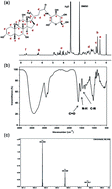
The synthetic route of CAGA was shown in Scheme 1. CAGA was synthesized through amidation reaction using HoSu to increase the reaction efficiency. The chemical structure of CAGA was characterized by 1H nuclear magnetic resonance (1H-NMR), 13C nuclear magnetic resonance (13C-NMR), Fourier transform infrared (FT-IR), liquid chromatography-mass spectrum (LC-MS) and high resolution mass spectrometry (HRMS), respectively. 1H-NMR (Fig. 1a) showed characteristic signals of CAGA with the chemical shift of 1H as follows (deuterated dimethyl sulphoxide (DMSO)-d6 as solvent): 0.57 (s, 3H), 0.80 (s, 3H), 0.92 (d, 3H), 1.20–2.25 (m, 20H), 3.15–4.90 (m, 13H), 6.35 (d, 1H), 7.48 (d, 1H). 13C-NMR (Fig. S1) showed characteristic signals of CAGA with the chemical shift of 13C as follows (DMSO-d6 as solvent): 173.4, 91.0, 72.5, 71.6, 71.5, 71.3, 71.0, 66.7, 61.6, 46.7, 46.2, 42.0, 41.8, 40.2, 40.0, 35.8, 35,7, 35.3, 34.9, 33.3, 32.9, 30.8, 29.0, 27.8, 26.7, 23.3, 23.1, 17.7, 12.8. All the resonances were assigned as illustrated. FT-IR (Fig. 1b and S2) showed characteristic chemical groups of CAGA. 1661 cm−1 represented the stretching vibration of C[double bond, length as m-dash]O in the amido bond, 1550 cm−1 represented the bending vibration of N–H in the amido bond and 1461 cm−1 represented the stretching vibration of C–N in the amido bond. Therefore, it is concluded that BAs successfully reacted with GA through the C–N band appeared, consisted with the NMR analyses. As well as shown in LC-MS (Fig. S3), the result indicated the product was mainly composed of one molecule with only one peak flowing out whose molecular weight (m/z) was 570.4, representing CAGA combined with an H+. HRMS (Fig. 1c) showed the molecular weight of the product was 592.3, representing CAGA combined with a Na+. All the spectra discussed above revealed the expected structure of CAGA was correct and highly pure.
image file: c6ra09547j-s1.tif
Scheme 1 Synthetic route of CAGA.

image file: c6ra09547j-f1.tif
Fig. 1 Characterization of CAGA. (a) 1H-NMR of CAGA, DMSO-d6 as solvent. (b) FT-IR of CAGA (c) HRMS of CAGA.

Effects of CAGA and GAH on cell proliferation

The ATDC5 cell line, derived from mouse embryonic carcinoma, was created in the year 1990 by Atsumi.24 It is more stable and efficient in chondrogenic differentiation compared to other cell lines.24 It has been demonstrated by Shukunami that ATDC5 cells can undergo endochondral ossification in vitro and reproduce the process of in vivo cartilage development by using BMP2.25 Consequently this cell line has been established as an in vitro model to investigate the mechanism exists in chondrogenic differentiation, which can assist in explaining the molecular biology events related in chondrogenesis, hypertrophy and endochondral ossification process.26–28

In consideration of cytotoxicity of GAH and its analogs previously reported,11,12 the water soluble tetrazonium (WST) assay was used to evaluate the cytotoxicity of CAGA, which contribute to the determination process of enhancing chondrogenesis using appropriate concentration of CAGA in subsequent experiments. IC50 is defined as the half maximal inhibitory concentration, which represents the concentration of a drug that is required for 50% inhibition in vitro.29 Having been treated with CAGA for 72 h, a clear dose-dependent manner of viability of ATDC5 cells was shown in Fig. 2a. The IC50 value of CAGA was estimated at approximately 3.2 mM, monitoring concentrations of CAGA used in subsequent experiments. The proliferation of ATDC5 cells treated with CAGA for up to 7 days. The results demonstrated that CAGA-treated ATDC5 cells proliferated normally until 3 days. On 7 days, all CAGA groups exhibited a little drop in cell viability compared to control group. While except 2 mM CAGA group, the lowest cell survival rate was still upon 80%, indicating none of the experimental groups exhibited any obvious cytotoxicity except 2 mM CAGA group and concentrations of CAGA below 2 mM may be appropriate for regular growth of ATDC5 cells. Based on these results, 0.4 mM, 1 mM and 1.6 mM of CAGA were chosen for subsequent experiments.


image file: c6ra09547j-f2.tif
Fig. 2 Cell viability of ATDC5 cells with treatment of CAGA and GAH. (a) IC50 curve of CAGA. Cells were treated with CAGA for 72 h. (b) Proliferation histogram of ATDC5 cells treated with CAGA and GAH on experimental concentrations for 1 d, 3 d, and 7 d.

Assessment on chondrogenic differentiation with CAGA and GAH treatment

After the evaluation of cell proliferation, preliminary concentrations were chosen for extracellular matrix deposition experiments. Cartilage extracellular matrix is mainly composed of type II collagen fibers and proteoglycans, which characterizes cartilage by its unique physiological functions and makes cartilage play an important role in our daily life.30 Therefore, glycosaminoglycan (GAG) deposition, which is an important indicator of cartilage extracellular matrix accumulation, was often investigated during the differentiation. Since previous studies have shown that the most appropriate additive concentration of GAH for chondrogenic differentiation is 2 mM,8,11 2 mM of GAH was chosen as an additive to be a positive control. The distribution of GAG was characterized by Alcian blue staining. The results were shown in Fig. 3a. During the differentiation, the accumulation of GAG increased gradually. Among groups, especially 2 mM GAH group and N group, it is obvious that 1.6 mM CAGA group showed the highest deposition of GAG, indicating the best chondrogenic capacity. Compared to N group, 2 mM GAH group exhibited a greater staining intensity of Alcian blue, demonstrating GAH indeed had the ability to enhance chondrogenesis while it was not as efficient as 1.6 mM of CAGA. The staining intensity of Alcian blue was quantified to measure the tiny difference between the experimental groups. The quantification data of all experimental groups was shown in Fig. 3b. Consistent with the results obtained by visually observation, 1.6 mM CAGA group showed a better effect on GAG production compared to other groups (P < 0.05), indicating 1.6 mM may be the most appropriate concentration for CAGA to enhance chondrogenesis.
image file: c6ra09547j-f3.tif
Fig. 3 Assessment on chondrogenic differentiation with CAGA and GAH treatment. (a) Alcian blue staining of ATDC5 cells on days 3, 7, 14, and 21. (b) Biochemical analysis for GAG production of ATDC5 cells on day 14. (c) ALP activity of ATDC5 cells on days 7, 14, and 21 (n = 3, *P < 0.05 vs. N group, **P < 0.01 vs. N group).

In chondrocytes, the induction of ALP activity is associated with accumulation of matrix vesicles in the extracellular matrix, differentiation and mineralization.31,32 As shown in Fig. 3c, the ALP activity of all experimental groups increased during the differentiation, which indicated the induction to hypertrophic chondrocyte in the late stage of chondrogenic differentiation. It was worth noting that compared to N group, CAGA-treated groups exhibited lower ALP activity, especially 1.6 mM CAGA treated-group (P < 0.05), which indicated the delay in formation of hypertrophic cartilage. Although GAH-treated group had positive effect compared to N group as well (P < 0.05), it was not as effective as 1.6 mM CAGA group.

On the whole, Fig. 3a and b collaborated with each other demonstrating that 1.6 mM CAGA group had the best effect on accumulation of cartilage extracellular matrix and this concentration of CAGA can be chosen for subsequent experiments. In consideration of formation of hypertrophic cartilage, Fig. 3c indicated that 1.6 mM CAGA group may have the best effect on the delay in formation of hypertrophic cartilage, which may promote the application of CAGA on the treatment of cartilage-related diseases in the future.

Altered cartilage-relevant gene expression level of ATDC5 cells with CAGA and GAH treatment

Cartilage-specific genes, such as Sox9, collagen II, aggrecan, collagen I and collagen X were detected during the chondrogenic differentiation period on days 3, 7, 14, and 21. Sox9 is a crucial chondrogenic transcription factor expressed in aggregate cells during the early stage of cartilage development and is essential for the expression of characteristic cartilage markers such as collagen II and aggrecan.30 1.6 mM CAGA group, which is most effective on chondrogenic differentiation was chosen as an experimental group in comparison with a negative control group (N group) and a positive control group (2 mM GAH group). The results exhibited highest expression on day 3 with a decreased trend during the 21 days (Fig. 4a). Consistent with matrix deposition, Sox9 was up-regulated most in 1.6 mM CAGA-treated group on day 3. There was a significant difference not only between the N group and 1.6 mM group, but also between 2 mM GAH group and 1.6 mM CAGA group. The trend continued on day 7 with modest decrease, which indicated that 1.6 mM CAGA added may be most beneficial in cartilage matrix deposition during chondrogenic differentiation. Meanwhile, the expression of collagen II gene was also investigated since cartilage is mostly composed of type II collagen.30 The results showed that the expression of collagen II gene was at considerable amount in all three groups yet it reached its highest value in 1.6 mM CAGA group and moderate value in 2 mM GAH group (Fig. 4b). This result was not only consistent with conclusion drawn by previous studies that 2 mM GAH had the best effect on chondrogenesis8,11 but also indicating the successful modification of GAH for enhancing chondrogenesis. Besides, aggrecan expression was detected since aggrecan was characterized by cartilage-specific proteoglycan core protein.30 In parallel to collagen II expression, aggrecan expression was also up-regulated with treatment of 1.6 mM CAGA and again its highest value was observed on day 14 (Fig. 4c). In addition, collagen I and collagen X were also investigated during the differentiation period in our study. Type I collagen was found in fibrocartilage and was one of the dedifferentiation markers in cartilage development.30 On days 3, 7, 14, and 21, 1.6 mM CAGA-treated group down-regulated collagen I gene expression compared to N group (P < 0.05), indicating CAGA may avoid fibrocartilage formation (Fig. 4d). Type X collagen was found in the late stage of cartilage development and was a maker of hypertrophic cartilage.26 Compared to N group and 2 mM GAH group, a down-regulation of collagen X gene expression with treatment of 1.6 mM CAGA was observed during the differentiation period on days 3, 7, 14, and 21 (Fig. 4e), which illustrated the inhibition effect on the formation of hypertrophic cartilage with treatment of CAGA.
image file: c6ra09547j-f4.tif
Fig. 4 Gene expression analysis of ATDC5 cells with treatment of 1.6 mM CAGA and 2 mM GAH during differentiation period on days 3, 7, 14, and 21. (a) Sox9 expression. (b) Collagen II expression. (c) Aggrecan expression. (d) Collagen I expression. (e) Collagen X expression (n = 3, *P < 0.05 vs. N group, ns for no statistically significant).

A same trend of gene expression was observed in Fig. 4 that the expression profile except Sox9 and collagen X reached a peak on day 14, then decreased on day 21. The highest gene expression of collagen II and aggrecan was observed in 1.6 mM CAGA-treated group, demonstrating 1.6 mM CAGA may be most beneficial in enhancing chondrogenesis. Although collagen I gene expression in 1.6 mM CAGA group was a little higher than 2 mM GAH group, it was still not as high as N group, indicating positive effect of CAGA on inhibiting the information of fibrocartilage. Gene expression of collagen X exhibited a continued increase during the differentiation, which just reproduced the process of cartilage development in vivo as mentioned in previous studies.31,32 It was notable that 1.6 mM CAGA group exhibited the lowest expression of collagen X among all three groups, which indicated the positive effect of CAGA on inhibiting cartilage dedifferentiation.

In vitro assessment of chondrogenic differentiation related proteins with CAGA and GAH treatment

Subsequent protein assessments were performed after the evaluation of gene expression. In parallel to gene expression, the levels of the cartilage-specific proteins, such as Sox9, collagen II, aggrecan, collagen I and collagen X, were detected during the differentiation period by immunofluorescence staining and western blotting. On day 3, Sox9 protein was detected in the selected three groups (Fig. 5a and b). Consistent with gene expression result, the most intensive protein band can be observed and quantified in 1.6 mM CAGA group, indicating the highest expression of collagen II and aggrecan proteins in the following differentiation. 2 mM GAH group exhibited a moderate expression of Sox9 protein, confirming that GAH was indeed beneficial in promoting chondrogenesis but not as efficient as CAGA. Cartilage-related protein expression on day 14 was shown in Fig. 5c–e. The results indicated that the most type II collagen was synthesized in 1.6 mM CAGA group and a reduction in type I collagen was also observed compared to N group, in line with immunofluorescence staining analysis of type I collagen (Fig. 6b). Moreover, 2 mM GAH group exhibited a moderate expression of type II collagen, consistent with the result in Fig. 6a, demonstrating an enhancement on chondrogenesis through the addition of GAH. In according to the results shown by western blotting and quantitative real-time PCR, the highest intensity of positive staining of collagen II and aggrecan were observed in 1.6 mM CAGA group, indicating the best effect on enhancing chondrogenesis with 1.6 mM CAGA treatment (Fig. 6a). The difference in the expression of collagen I between 2 mM GAH group and 1.6 mM CAGA group can be observed by western blotting analysis but can be hardly distinguished by immunofluorescence staining (Fig. 5c and 6b). It was worth noting that with treatment of CAGA, a reduction in the expression of type X collagen was observed, indicating the inhibition effect on hypertrophic cartilage formation in the late stage of cartilage development (Fig. 6c). On the whole, The in vitro assessment of chondrogenic differentiation-related proteins was in accordance with gene expression results demonstrating that CAGA can promote cartilage-related proteins expression compared to untreated group and unmodified GAH-treated group. It is of significance to modify GAH using CA in consideration of enhancing chondrogenesis.
image file: c6ra09547j-f5.tif
Fig. 5 Western blotting analysis of chondrogenic differentiation related proteins with 1.6 mM CAGA and 2 mM GAH treatment. (a) Western blotting analysis for Sox9 protein on day 3. (b) Quantification of the Sox9 protein band intensity normalized to the intensity of GAPDH. (c) Western blotting analysis for collagen II and collagen I proteins on day 14. (d) Quantification of the collagen I protein band intensity normalized to the intensity of GAPDH. (e) Quantification of the collagen II protein band intensity normalized to the intensity of GAPDH, *P < 0.05.

image file: c6ra09547j-f6.tif
Fig. 6 In vitro assessment of chondrogenic differentiation related proteins with 1.6 mM CAGA and 2 mM GAH treatment. (a) Immunofluorescence staining for chondrogenic markers collagen II and aggrecan from undifferentiated ATDC5 cells after 14 days of chondro-induction. Collagen II protein was stained with red, aggrecan protein was stained with green and nuclei was stained with blue. Scale bar = 20 μm. (b) Immunofluorescence staining for fibrous cartilage marker collagen I after 14 days of chondro-induction. Collagen I protein was stained with red and nuclei was stained with blue. (c) Immunofluorescence staining for hypertrophic cartilage marker collagen X after 14 days of chondro-induction. Collagen X was stained with red and nuclei was stained with blue.

Overall, GAG accumulation was considered as an evidence for chondrogenesis. This was verified through Alcian blue staining, demonstrating the best effect on GAG deposition with 1.6 mM CAGA treatment. ALP assay was utilized to measure the possibility in the formation of hypertrophic cartilage, indicating the prolonging in cartilage dedifferentiation. Gene expression analysis further characterized cellular differentiation, which revealed that cartilage-specific genes were significantly up-regulated in cells treated with 1.6 mM CAGA. In addition, western blotting and immunofluorescence staining were performed to assess the levels of protein expression and the results were consistent with gene expression profiles. Cumulatively considering GAG accumulation, gene expression and protein assessment, we conclude that 1.6 mM CAGA promoted chondrogenesis to the most extent.

Experimental section

Synthesis of CAGA

Tetrahydrofuran (THF), N,N-dimethylformamide (DMF), and triethylamine (TEA) are all of analytical reagent grade brought from Guangzhou Chemical Reagent Co. Ltd (Guangzhou, China) in the present work. N,N′-Dicyclimide, N-hydroxysuccinimide (HoSu), CA and GAH were analytical purity purchased from Sigma (St Louis, MO, USA).

Into a 150 mL three-necked flask were added CA (4.086 g), HoSu (1.266 g) and THF (30 mL). After all the solids were completely dissolved, N,N′-dicyclimide (3.095 g) in 10 mL THF was added dropwisely into the flask in ice bath. The mixture was first stirred for 2 h at this temperature and allowed to warm to room temperature. After stirring for 24 h, the mixture was filtrated by a filter pump (Shanghai Yarong Biochemistry Instrument Factory, Shanghai, China) and the solvent was evaporated under reduced pressure. The residue was purified by a silica gel column chromatography using methanol as eluent to get the desired product CAH in 85% yield.

Into a 100 mL single-necked flask in ice bath were added GAH (2.156 g), 20 mL DMF and 10 mL deionized water. Then TEA (1.012 g) was added dropwisely into the mixture. After stirring for 5–10 min, CAH (5.057 g) was added into the flask in one portion. The solution was stirred for another 8 h and then the solvent was evaporated under reduced pressure. The residue was purified by a silica gel column chromatography using methanol as eluent to get the desired product CAGA as a yellow solid in 68% yield.

Chemical analysis of CAGA

FT-IR spectrum of CAGA was recorded on a Bruker Vector 33 FT-IR spectrometer using the potassium bromide (KBr) method. 1H-NMR and 13C-NMR spectra were measured on a Brucker Avance 600 MHz NMR spectrometer using DMSO-d6 as solvent. HRMS measurement was performed on a Bruker maxis impact mass spectrometer. LC-MS of CAGA was recorded on a Bruker maXis impact liquid chromatography-mass spectrometer.

Cell culture and differentiation

ATDC5 cells obtained from Agent (San Diego, CA, USA) were cultured in maintenance medium in a 1[thin space (1/6-em)]:[thin space (1/6-em)]1 mixture (v/v) of Dulbecco's modified Eagle medium (DMEM) and Ham's F12 medium (Gibco™, Thermo Fisher Scientific, Waltham, MA, USA) supplemented with 10% (v/v) fetal bovine serum (Excell Bio, Shanghai, China). To obtain a cell density of 2 × 10⁷ cells per mL, cells were centrifuged and resuspended with maintenance medium. Aliquots of cell suspension (10 μL) were then inoculated into 24-well plates (Corning, NY, USA) at the center of each well and incubated at 37 °C in a humidified atmosphere of 5% CO2. After 2–3 h, the medium was changed to chondrogenic differentiation medium supplemented with 50 μg mL−1 ascorbate-2-phosphate(Sigma), 40 μg mL−1 proline (Sigma), 100 μg mL−1 sodium pyruvate (Gibco), 100 nM dexamethasone (Sigma), 50 mg mL−1 ITS-Premix (BD, Franklin Lakes, NJ, USA), 1% penicillin/streptomycin (Gibco) with or without different concentrations of CAGA (0.4 mM, 1 mM, 1.6 mM) and GAH (2 mM), denoted by N, CAGA 0.4, CAGA 1, CAGA 1.6 and GAH 2, respectively.

Cell proliferation

Cell proliferation was characterized by used cell counting kit-8 (CCK-8; Dojindo Laboratories, Japan). ATDC5 cells were seeded at a density of 1000 cells per well in 96-well plates and cultured in maintenance medium containing different concentrations of CAGA and GAH for up to 7 days. On days 1, 3, and 7, CCK-8 working solution was added to each sample and incubated at 37 °C for 1 h. Subsequently, the supernatant medium was extracted and the absorbance was measured at 450 nm. Besides, to generate the inhibitory concentration 50% (IC50) curve, cells were treated with CAGA for 72 h, and then incubated in maintenance medium with 10% CCK-8 solution for 4 h at 37 °C. The absorbance was measured at 450 nm. All experiments were performed in triplicate.

Alcian blue staining

After cultured for 7, 14, and 21 days, cells were fixed in 4% (v/v) formalin (Beyotime Institute of Biotechnology, Jiangsu, China) for 12 h at 4 °C. Then 1% Alcian blue 8GX (Sigma) was added to each sample and incubated for 30 min at room temperature.16 Subsequently, the stained cells were washed three times with deionized water and scanned using a flatbed scanner (HP, Palo Alto, CA, USA). The staining intensity was quantified by an Image-Pro Plus software (Media Cybernetics Inc., Bethesda, MD).

Alkaline phosphatase (ALP) assay

Cells were harvested during differentiation period on days 7, 14, and 21. The harvested cells were suspended in lysis buffer (50 mM Tris–HCl (pH 8.0), 1% Nonidet-40, 1% sodium deoxycholate, 150 mM NaCl, 0.1% sodium dodecyl sulfate, 0.05 mM phenylmethanesulfonyl fluoride) and disrupted by an ultrasonic cell disruption system (Bioruptor, Liège, Belgium). ALP activity was assessed using ALP assay kit (Nanjing Jiancheng Bioengineering Institute, Nanjing, China) according to the manufacturer's instructions. Protein concentration of cell lysate was determined using a BCA protein assay kit (Gibco).

Gene expression analysis

Cells were harvested during the differentiation period on days 3, 7, 14, and 21. Total RNA was isolated using RaPure total RNA micro kit (Magen, Guangzhou, China) according to the manufacturer's instructions. 1 μg of total RNA was reverse-transcribed using ReverTra Ace qPCR RT Kit PCR (Toyobo Co. Ltd, Osaka, Japan). The obtained cDNA was diluted 20 times and then quantitative real-time polymerase chain reaction (PCR) reactions were carried out using CFX-96 Real-time PCR Detection System (BioRad, Hercules, CA, USA) monitored with SsoAdvanced™ universal SYBR® Green. The gene expression level was defined based on the threshold cycle (Ct) using 2−ΔCt method. Glyceraldehyde 3-phosphate dehydrogenase (GAPDH) was used as a reference gene and samples were run in triplicate. The relative expression level was calculated as 2−ΔCt. The quantitative real-time PCR primers are listed in Table 1.
Table 1 List of primers used in the quantitative real-time PCR analysis of gene expression in ATDC5 cells
Primer ID Primers (5′-3′)
GAPDH-F TGTGTCCGTCGTGGATCTGA
GAPDH-R TTGCTGTTGAAGTCGCAGGAG
Collagen II-F AGGGCAACAGCAGGTTCACATAC
Collagen II-R TGTCCACACCAAATTCCTGTTCA
Aggrecan-F AGTGGATCGGTCTGAATGACAGG
Aggrecan-R AGAAGTTGTCAGGCTGGTTTGGA
Collagen I-F ATGCCGCGACCTCAAGATG
Collagen I-R TGAGGCACAGACGGCTGAGTA
Collagen X-F CTCCTACCACGTGCATGTGAA
Collagen X-R ACTCCCTGAAGCCTGATCCA


Western blotting analysis

Cells were cultured in chondrogenic differentiation medium for 14 days. The harvested cells were suspended in lysis buffer (50 mM Tris–HCl (pH 8.0), 1% Nonidet-40, 1% sodium deoxycholate, 150 mM NaCl, 0.1% sodium dodecyl sulfate, 0.05 mM phenylmethanesulfonyl fluoride) and disrupted by an ultrasonic cell disruption system (Bioruptor). Protein concentration of cell lysates was determined using a BCA protein assay kit (Gibco). The protein was denatured using LDS sample buffer (Gibco). The cell lysates containing 100 μg of total protein were then subjected to SDS-PAGE and transferred to PVDF membranes (Millipore, Billerica, MA, USA). After blocking with 5% milk (Inner Mongolia Yili Industrial Group Co. Ltd, Inner Mongolia, China), the membranes were incubated with primary antibodies for collagen II (Santa Cruze Biotechnology Inc., Dallas, Texas, USA), aggrecan (Abcam, Cambridge, UK), collagen I (Abcam) and collagen X (Abcam) at 4 °C for 20 h. After incubation with Horse Reddish Peroxidase (HRP)-conjugated secondary antibodies against rabbit or mouse (Gibco), the membranes were reacted with chemiluminescent HRP substrate (Millipore) and visualized using films (Fuji Photo Film Co. Ltd, Tokyo, Japan). The protein band intensity was quantified by an Image-Pro Plus software (Media Cybernetics Inc.).

Immunofluorescence staining

After cultured in chondrogenic differentiation medium for 14 days, cells were fixed in 4% (v/v) formalin for 12 h at 4 °C. The cell masses were collected and dehydrated using a series of sucrose concentrations. Then the cell masses were embedded in optimal cutting temperature compound (Leica, Wetzlar, Germany) and cut into frozen sections using a freezing microtome (Leica). Samples were permeabilized with 0.2% triton X-100 (Beyotime Institute of Biotechnology), and then blocked with 10% goat serum (Gibco). Thereafter, samples were incubated with primary antibodies for collagen II (Santa Cruze Biotechnology Inc.), aggrecan (Abcam), collagen I (Abcam) and collagen X (Abcam) at 4 °C for 16 h, and then incubated with goat secondary antibodies against rabbit or mouse (Gibco) for 1 h at room temperature. Images were captured by a laser confocal microscope (Ziess, Oberkochen, Germany).

Statistical analysis

Datas are expressed as mean ± standard deviation for at least three repeated individual experiments for each group. Statistical analysis was determined by single-factor analysis of variance for independent samples. A P-value of less than 0.05 was considered statistically significant.

Conclusions

Cartilage degeneration is a highlighted health problem due to the low self-healing capacity of cartilage tissue. Extensive previous studies have been carried out to seek effective solutions to regenerate cartilage defect. Here, a chondrogenic differentiation model system was developed using ATDC5 cells. In this model, CAGA, a glucosamine derivative modified with cholic acid, was assessed considering chondrogenic differentiation efficiency. Matrix deposition analysis demonstrated the most GAG accumulation with 1.6 mM CAGA treatment. Gene expression and protein assessment results also exhibited the best chondro-inductive effect in 1.6 mM CAGA-treated group. Overall, our results showed that with treatment of 1.6 mM CAGA, not only chondrogenic differentiation efficiency can be promoted, but also the possibility of fibrous cartilage and hypertrophic cartilage formation can be reduced. This new modified compound may replace glucosamine in cartilage repair, which still needs more in vivo experimental studies.

Acknowledgements

This work was financially supported by National Natural Science Foundation of China (51273072, 51232002), GuangZhou Important Scientific and Technological Special Project (201508020123), National Basic Research Program of China (2012CB619100), Guangdong Scientific and Technological Project (2014B090907004).

References

  1. G. R. Dodge and S. A. Jimenez, Osteoarthritis Cartilage, 2003, 11, 424–432 CrossRef CAS PubMed .
  2. C. Roubille, J. Martel-Pelletier, F. Abram, M. Dorais, P. Delorme, J. P. Raynauld and J. P. Pelletier, Semin. Arthritis Rheum., 2015, 45, 257–267 CrossRef PubMed .
  3. C. Zeng, J. Wei, H. Li, Y. L. Wang, D. X. Xie, T. Yang, S. G. Gao, Y. S. Li, W. Luo and G. H. Lei, Sci. Rep., 2015, 5, 16827 CrossRef CAS PubMed .
  4. M. Fransen, M. Agaliotis, L. Nairn, M. Votrubec, L. Bridgett, S. Su, S. Jan, L. March, J. Edmonds, R. Norton, M. Woodward and R. Day, Ann. Rheum. Dis., 2014, 1–8 CAS .
  5. Y. Henrotin, M. Marty and A. Mobasheri, Maturitas, 2014, 78, 184–187 CrossRef CAS PubMed .
  6. M. Fransen, M. Agaliotis, L. Nairn, M. Votrubec, L. Bridgett, S. Su, S. Jan, L. March, J. Edmonds, R. Norton, M. Woodward and R. O. Day, Osteoarthritis Cartilage, 2014, 22, S457 CrossRef .
  7. C. Bascoul-Colombo, I. Garaiova, S. F. Plummer, J. L. Harwood, B. Caterson and C. E. Hughes, Cartilage, 2016, 7, 70–81 CrossRef CAS PubMed .
  8. N. S. Hwang, S. Varghese, P. Theprungsirikul, A. Canver and J. Elisseeff, Biomaterials, 2006, 27, 6015–6023 CrossRef CAS PubMed .
  9. V. Calamia, J. Mateos, P. Fernandez-Puente, L. Lourido, B. Rocha, C. Fernandez-Costa, E. Montell, J. Verges, C. Ruiz-Romero and F. J. Blanco, Sci. Rep., 2014, 4, 5069 CAS .
  10. A. Derfoul, A. D. Miyoshi, D. E. Freeman and R. S. Tuan, Osteoarthritis and cartilage/OARS, Osteoarthritis Research Society, 2007, vol. 15, pp. 646–655 Search PubMed .
  11. S. Varghese, P. Theprungsirikul, S. Sahani, N. Hwang, K. J. Yarema and J. H. Elisseeff, Osteoarthritis and cartilage/OARS, Osteoarthritis Research Society, 2007, vol. 15, pp. 59–68 Search PubMed .
  12. L. B. Jiang, J. Zhang and J. Dong, Arthritis Rheumatol., 2014, 66, 228–230 CrossRef PubMed .
  13. C. K. Kwoh, F. W. Roemer, M. J. Hannon, C. E. Moore, J. M. Jakicic, A. Guermazi, S. M. Green, R. W. Evans and R. Boudreau, Arthritis Rheumatol., 2014, 66, 930–939 CrossRef CAS PubMed .
  14. M. Korkmaz, F. Karasalan, Y. Erdoğan, E. Bolat, S. Karaçavuş, H. Kızılkaya and İ. Günaydın, Pakistan J. Med. Sci., 2013, 29(3), 847–850 Search PubMed .
  15. D. Durmus, G. Alayli, I. K. Bayrak and F. Canturk, J. Back Musculoskelet., 2012, 25, 275–284 Search PubMed .
  16. L. Zeng, G. Xu, P. Gao, M. Zhang, H. Li and J. Zhang, Eur. J. Med. Chem., 2015, 93, 109–120 CrossRef CAS PubMed .
  17. V. Soni, S. Upadhayay, P. Suryadevara, G. Samla, A. Singh, P. Yogeeswari, D. Sriram and V. K. Nandicoori, PLoS Pathog., 2015, 11, e1005235 Search PubMed .
  18. H. Gilzad Kohan, K. Kaur and F. Jamali, PLoS One, 2015, 10, e0126786 Search PubMed .
  19. D. Stoppoloni, L. Politi, M. Leopizzi, S. Gaetani, R. Guazzo, S. Basciani, O. Moreschini, M. De Santi, R. Scandurra and A. Scotto d'Abusco, Osteoarthritis and cartilage/OARS, Osteoarthritis Research Society, 2015, vol. 23, pp. 103–113 Search PubMed .
  20. N. Keren, F. M. Konikoff, Y. Paitan, G. Gabay, L. Reshef, T. Naftali and U. Gophna, Environ. Microbiol. Rep., 2015, 7, 874–880 CrossRef CAS PubMed .
  21. A. Carotti, M. Marinozzi, C. Custodi, B. Cerra, R. Pellicciari, A. Gioiello and A. Macchiarulo, Curr. Trends Med. Chem., 2014, 14, 2129–2142 CrossRef CAS .
  22. S. Bhowmik, H. P. Chiu, D. H. Jones, H. J. Chiu, M. D. Miller, Q. Xu, C. L. Farr, J. M. Ridlon, J. E. Wells, M. A. Elsliger, I. A. Wilson, P. B. Hylemon and S. A. Lesley, Proteins, 2016, 84, 316–331 CrossRef CAS PubMed .
  23. Z. Xu, P. Deng, S. Tang and J. Li, Mater. Sci. Eng., C, 2016, 58, 558–567 CrossRef CAS PubMed .
  24. T. Atsumi, Y. Ikawa, Y. Miwa and K. Kimata, Cell Differ. Dev., 1990, 30, 109–116 CrossRef CAS PubMed .
  25. C. Shukunami, C. Shigeno, T. Atsumi, K. Ishizeki, F. Suzuki and Y. Hiraki, J. Cell Biol., 1996, 13, 457–468 CrossRef .
  26. T. D. Challa, Y. Rais and E. M. Ornan, Mol. Cell. Endocrinol, 2010, 323, 282–291 CrossRef CAS PubMed .
  27. J. Andres-Bergos, L. Tardio, A. Larranaga-Vera, R. Gomez, G. Herrero-Beaumont and R. Largo, J. Biol. Chem., 2012, 287, 33615–33628 CrossRef CAS PubMed .
  28. T. Koshimizu, M. Kawai, H. Kondou, K. Tachikawa, N. Sakai, K. Ozono and T. Michigami, J. Biol. Chem., 2012, 287, 15760–15775 CrossRef CAS PubMed .
  29. S. Imsoonthornruksa, P. Noisa, R. Parnpai and M. Ketudat-Cairns, J. Biotechnol., 2011, 151, 295–302 CrossRef CAS PubMed .
  30. S. Ustun, A. Tombuloglu, M. Kilinc, M. O. Guler and A. B. Tekinay, Biomacromolecules, 2013, 14, 17–26 CrossRef CAS PubMed .
  31. C. Shukunami, Y. Ohta, M. Sakuda and Y. Hiraki, Exp. Cell Res., 1998, 241, 1–11 CrossRef CAS PubMed .
  32. C. Shukunami, K. Ishizeki, T. Atsumi, Y. Ohta, F. Suzuki and Y. Hiraki, J. Bone Miner. Res., 1997, 12, 1174–1188 CrossRef CAS PubMed .

Footnote

Electronic supplementary information (ESI) available. See DOI: 10.1039/c6ra09547j

This journal is © The Royal Society of Chemistry 2016
Click here to see how this site uses Cookies. View our privacy policy here.