Quenching induced fracture behaviors of CVD-grown polycrystalline molybdenum disulfide films

Song Haoab, Bingchu Yang*ab and Yongli Gaoabc
aInstitute of Super Microstructure and Ultrafast Process in Advanced Materials, College of Physics and Electronics, Central South University, 605 South Lushan Road, Changsha 410012, P. R. China. E-mail: bingchuyang@csu.edu.cn
bHunan Key Laboratory for SuperMicrostructure and Ultrafast Process, Central South University, 932 South Lushan Road, Changsha 410012, P. R. China
cDepartment of Physics and Astronomy, University of Rochester, Rochester, NY 14534, USA

Received 3rd April 2016 , Accepted 3rd June 2016

First published on 7th June 2016


Abstract

The fracture behavior of two-dimensional polycrystalline molybdenum disulfide (MoS2) films is essential to device performance and has attracted tremendous attention in recent years. Here, we investigate the mixed intergranular and transgranular fracture behaviors of CVD-grown polycrystalline MoS2 atomic layers using multiple techniques. The underlying mechanism is proposed to be that micro-cracks initially nucleate at grain boundary junctions and propagate along with the grain boundaries, resulting in intergranular fracture behavior. On the other hand, as-existed sulfur vacancies serve as crack nuclei and propagate along energy preference directions through Mo–S bond breaking, resulting in transgranular fracture behavior. Lattice shrinking induced compressive, rather than tensile strain is residual in fractured MoS2 microflakes, which enlarges the corresponding bandgap by ∼200 meV. Our work deepens the understanding of the fracture behaviors of polycrystalline MoS2 atomic layers and demonstrates a promising method to engineer the strain in MoS2-like atomically-thin materials to further tune their physical properties.

1 Introduction

Recently, transition metal dichalcogenides (TMDCs) beyond graphene have emerged as an important class of two-dimensional (2D) semiconductors with potential applications in electronic, optoelectronic and flexible devices in the past few years.1,2 Among them, monolayer MoS2 is the most representative with exceptional chemical stability, and excellent optical and electrical properties.3,4 Combining the atomically-thin structure with the intrinsic semiconducting properties, monolayer MoS2 represents a unique opportunity to create high-performing prototype devices with advanced functionalities.5,6 For example, top-gated MOS-FETs based on mechanical exfoliated monolayer MoS2 show a room-temperature carrier mobility of over 200 cm2 V−1 s−1 and a large current on/off ratio of 1 × 10⁸ along with an ultralow standby power dissipation.5 A monolayer MoS2-based phototransistor exhibits a photoresponsivity of up to 880 A W−1 at a wavelength of 561 nm, which is superior to graphene-based devices with a similar geometry.6 Moreover, combination of MoS2 with other 2D nanomaterials via van der Waals interactions, such as semimetallic graphene or a p-type semiconductor WSe2, may create a new world of 2D materials with enhanced properties.7 Apart from its excellent electronic and optoelectronic performances, monolayer MoS2 also exhibits outstanding mechanical properties. Nanoindentation experiments with an atomic force microscope showed that the Young’s modulus of a freely suspended monolayer MoS2 microflake is ∼270 GPa, which is higher than that of stainless steel of 205 GPa.8

As is well known, fracture behavior is widely present in nature from the macro- to nano-scale.9 The fracture behavior of bulk materials has been widely investigated, however, research focused on 2D materials is relatively scarce. Given the atomically thin structure and excellent mechanical properties, the fracture behavior of 2D materials would be a fascinating topic. For example, the fracture strength of CVD-grown polycrystalline MoS2 (90–99 GPa) is only slightly smaller than the intrinsic one (130 ± 10 GPa), despite the existence of grain boundaries.10,11 It was very recently reported in the literature that monolayer MoS2 suffers from significant aging effects including extensive fracture behavior even under ambient conditions (room temperature and atmospheric pressure).12 However, the range of studies have left a confusing picture regarding the definite fracture behavior and mechanism, and the influence on the physical properties of the fractured crystals.

In this article, the fracture behavior of CVD-grown polycrystalline MoS2 atomic layers is systematically investigated by multiple means, including Optical Microscopy (OM), X-ray Photoemission Spectroscopy (XPS), Scanning Electron Microscopy (SEM), Atomic Force Microscopy (AFM), Raman and Photoluminescence (PL) techniques. Measurements on single crystalline MoS2 were also carried out to provide a baseline case. A quenching-induced mixed intergranular and transgranular fracture behavior was observed through SEM and AFM characterization. The corresponding photoluminescence (PL) characteristic peaks rigidly blue-shift by ∼200 meV, which is ascribed to combined effects of compressive strain and oxidation induced p-type doping. While an E12g mode splitting demonstrates a resulting strain in the fractured MoS2 microflakes, the E12g and A1g modes shift towards opposite directions, implying fracture induced structural changes. Since all the layered TMDCs have extremely similar structures, the conclusions acquired in this work are expected to be adaptable for other TMDCs.

2 Materials and methods

The growth of the MoS2 was carried out in a commercial CVD furnace (KJMTI Corporation, OTF-1200) with a 3 inch-diameter quartz tube and double heating zones of a length of 20 cm separated by a border to border distance of 5 cm. The growth temperature and carrier gas flows were controlled with a proportion integration differentiation (PID) temperature controller and a mass flow controller, respectively. A quartz boat loaded with 30–50 mg of MoO3 powder (4N purity, Aladdin) and another loaded with 600 mg of sulfur powder (5N purity, Aladdin) were initially placed at the center of the 1st heating zone in the furnace and at ∼15 cm away from the upstream side. We speculate that via transport through such a long distance, the concentration of sulfur will be relatively uniform along the length of a growth substrate (∼1 cm), which would be beneficial to the growth of uniform MoS2 on the substrate. A third quartz boat with a clean SiO2 (300 nm thick)/Si substrate, 11 cm2 in size, was placed in the center of the 2nd heating zone at the downstream side. Prior to use, the substrates were initially cleaned in DI water, acetone and isopropanol, followed by 3 h in a bath of H2SO4/H2O2 (volume ratio: 3[thin space (1/6-em)]:[thin space (1/6-em)]1) and by 5 min of air plasma spurting to remove organic matter. A nitrogen (N2, 5N purity) gas flow was introduced to purge the quartz tube at 150 standard cubic centimeters per minute (sccm) for 20 min. Then, the 2nd heating zone was rapidly heated up to 800 °C at a constant heating rate of 20 °C min−1 and maintained at this temperature for 15 min with a decreased N2 gas flow of 100 sccm. The sulfur powders were maintained at a temperature slightly below the melting point of ∼120 °C during the reaction process, so that sulfur vapor could be carried by the N2 gas flow to the reaction zone slowly. Subsequently, for a fractured sample, the furnace was switched off and the sample withdrawn for faster cooling from 800 °C to 500 °C with a N2 gas flow. For a normal sample, a slow cooling process from 800 °C to room temperature was controlled using a PID temperature program and the sample protected with a N2 gas atmosphere.

The as-synthesized samples were systematically characterized using Optical Microscopy (CaiKang DMM-200C), confocal Raman and photoluminescence techniques (WITec alpha 300R), Scanning Electron Microscopy (FEI Helios 600i), X-ray Photoemission Spectroscopy (thermo fisher ESCALAB 250xi) and Atomic Force Microscopy (Agilent 5500). Raman and PL spectra/mapping were obtained under a 532.0 nm laser light at ambient conditions. To ensure reproducibility of the data, we followed a careful alignment and optimization protocol. In addition, the laser power was maintained below 1 mW to avoid local heating and oxidation, and to obtain a satisfactory signal-to-noise ratio while retaining an acceptable data acquisition duration and avoiding drift. The 520.0 cm−1 phonon mode of the Si substrate was used for calibration of the Raman shift. The emitted stoke Raman signal was collected using a Zeiss 100× objective (N.A = 0.9) and dispersed using a 1800 lines per mm grating for Raman measurements and a 600 lines per mm grating for PL measurements. XPS measurements were performed using monochromatic aluminium Kα X-rays with a light spot size of approximately 1 mm2. The binding energy was calibrated by assigning the corresponding C 1s peak to 284.5 eV. The acceleration voltage for SEM was 10 kV to minimize charge effects. AFM measurements were obtained in the contact mode for morphology characterization.

3 Results and discussion

Optical microscopy images of representative normal and fractured samples are presented in Fig. 1a and b, respectively. Sample 1 (Fig. 1a) is covered by continuous films, which are assigned as polycrystalline MoS2 films with multiple adjacent triangle shaped crystals. The identical color in the contrast image suggests a thickness uniformity of the films.13 For sample 2, similar results were observed, Fig. 1b, and the sample exhibits polycrystalline MoS2 atomic layers with a faint blue color and uncovered substrates with a magenta color. Interestingly, the many lines with the same contrast as the substrate across the polycrystalline MoS2 atomic layers indicate fracture.
image file: c6ra08543a-f1.tif
Fig. 1 (a, b) The optical microscopy images of normal and fractured polycrystalline MoS2 atomic layers, respectively, and the corresponding temperature programming process used for their growth (inset). (c, d) The corresponding Mo 3d and S 2p core level spectra of XPS for the normal and fractured samples.

Given that the thermal expansion coefficient of MoS2 (10−5/°C) is roughly 1000 times larger than that of silicon dioxide (5.6 × 10⁻⁸/°C), CVD-grown MoS2 on a SiO2/Si substrate always suffers from a tensile strain induced by interactions between the MoS2 and SiO2.14 Thus, a lower cooling rate is essential to enable the thermal strain to be sufficiently released for MoS2 directly deposited on a SiO2/Si substrate. The cooling rate for the normal sample was linear and was 7.5 °C min−1 in the range from 800 °C to 500 °C, controlled by the furnace temperature programming, as shown in the inserted plot in Fig. 1a. Such a small cooling rate enables the thermal strain in the as-synthesized MoS2 microflakes to be sufficiently released. For the fractured sample, the furnace was powered off following 15 min of growth and the sample was slid far away from the growth zone for quenching. The plot of the temperature measured using an infrared radiation thermometer vs. the cooling duration for the fractured sample was perfectly fitted with the standard non-stationary heat exchange equation of T = 148.5 + 624.0[thin space (1/6-em)]exp(−t/2.2) and is the insert in Fig. 1b. The cooling rate is as high as ∼300 °C min−1 at the beginning of the quenching phase. Very recently, it has been established that the same cooling rate led to fracture of CVD-grown hexagonal boron nitride.15 Therefore, we believe that the drastic cooling-down process prevents the thermal tensile strain from being sufficiently relieved in the as-synthesized polycrystalline MoS2 atomic layers, which is an important cause of fracture behavior.

It is noteworthy that intense oxidation treatment can induce cracks in either CVD-grown or mechanically exfoliated MoS2 crystals.16,17 To check whether oxidation induces fracture in our investigation, ex situ XPS measurements were carried out. Fig. 1c and d display the Mo 3d and S 2p core level spectra of XPS for the normal and fractured samples, respectively. The doublet peaks located at ∼233.3 and 230.2 eV below the Fermi level were assigned to Mo 3d3/2 and 3d5/2 of Mo4+.18 In addition, the doublet peaks of the S 2p1/2 and 2p3/2 core levels are located at ∼164.2 and ∼163.0 eV, respectively, which is in agreement with values for MoS2 systems. The atomic stoichiometric ratio between the sulfur and molybdenum elements was estimated from the respective integrated peak areas of the XPS to be ∼2.0 for the normal sample and ∼1.8 for the fractured sample, manifesting that the fractured sample contains some sulfur vacancies. A weak peak (indicated by a blue frame) centered at ∼236.1 eV for the fractured sample was assigned to Mo6+ 3d3/2. Thus, the XPS results indicate that oxidation induced fracture could not be excluded but was minor, attributed to residual oxygen in the furnace.

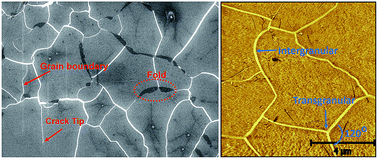
The structural properties of the fractured polycrystalline MoS2 atomic layers were investigated using SEM and AFM measurements, in detail. A representative large-scale SEM image (Fig. 2a) clearly reveals cracks distributed across the polycrystalline films, consistent with the OM image. Given that the grain boundaries in polycrystalline films are usually not perfectly straight, we assign most of curved cracks to grain boundaries. Note that the cracks always stop at a triple junction of three random boundaries, indicating that grain boundary junctions always serve as crack nuclei, which is ascribed to stress concentration. This is similar to what was observed in graphene.19 Considering the fact that the binding energy along grain boundaries is smaller, we believe that crack nuclei formed at three grain boundary junctions propagate along with the grain boundaries upon thermal stress.19,20 Then, intergranular fracture behavior would occur when the cracks connect with each other or reach the edges of the MoS2 atomic layers. It is worth mentioning that the crack tip (Fig. 2b) did not continue to propagate, and further study is needed to understand the interactions between the crack tip and grain boundaries. Given that the grain boundaries have a significant influence on the physical properties of 2D materials, there is an urgent need to realize lateral grain boundary distributions across a large area and a given sized sample. SEM can be a powerful technique for studying the grain boundaries of 2D materials as long as they occur through a fracture process. The darker area marked by an oval in Fig. 2b is due to folded MoS2 induced by sliding, similar to overlapped grain boundaries.21


image file: c6ra08543a-f2.tif
Fig. 2 (a, b) The large scale and corresponding zoomed-in high resolution SEM images, respectively. (c, d) The AFM topography and friction images of fractured polycrystalline MoS2 atomic layers, respectively. (e) The corresponding height profile scan shown as a blue solid line is inserted in the topography image.

The AFM topography image of the fractured polycrystalline MoS2 atomic layers exhibits obvious cracks, as displayed in Fig. 2c. The inserted height profile scan shown as a solid blue line presents the height of the MoS2 microflakes as ∼1 nm, which is compatible with monolayer MoS2. Moreover, the grain boundary width is ∼100 nm, which is larger than the regular ∼1–3 nm and we propose that quenching induced lattice shrinking broadens the grain boundaries. Further investigations are needed to support this postulate. The corresponding AFM friction image clearly exhibits cracks, as shown in Fig. 2d. Interestingly, the included angle of ∼120° between neighboring straight cracks suggests a directional preference of transgranular fracture behavior. The bonding energy along the armchair directions is indeed lower than that of the zigzag directions, which governs that the Mo–S bonds would be preferentially broken along the armchair directions, resulting in the appearance of direction-specific crack propagation.22 Thus, an underlying mechanism is proposed that the above-mentioned sulfur vacancies can serve as crack nuclei and propagate along the highly symmetrical crystallographic directions, resulting in direction-specific transgranular fracture behavior. It is worth mentioning that similar orientation dependent fracture behavior in graphene has also been reported in the previous literature.23–25 We conclude that polycrystalline atomic layers could show mixed intergranular and transgranular fracture behavior, as a high fraction of random boundaries and sulfur vacancies exist.

To investigate the influence of the fracture behavior on the electronic band structure of MoS2 films, we carried out PL spectroscopy/mapping, as depicted in Fig. 3. While the PL spectrum for the normal sample presents two prominent PL peaks centered at ∼637 nm (1.95 eV) and ∼685 nm (1.81 eV), the fractured one presents a much broader PL peak. Two subpeaks located at ∼573 and ∼617 nm are required to fit the broad PL peak, assigned to excitonic peaks A and B, respectively.26,27 Apparently, the excitonic peaks for the fractured sample rigidly blue-shift by 68 nm (∼200 meV) compared to the normal ones. The possibility of charge transfer from the substrate can be firstly ruled out due to the identical underlying substrates (SiO2/Si) for the normal and fractured samples. On the basis of the previous literature, we believe that two reasons are responsible for the blue shift of the PL peaks and this will be discussed in the following paragraph.28,29


image file: c6ra08543a-f3.tif
Fig. 3 (a) PL spectra for the normal and fractured samples. Two characteristic peaks are pointed out, corresponding to the A and B direct excitonic transitions. The characteristic peaks for the fractured sample blue-shift by ∼200 meV compared with the normal ones, ascribed to energy band broadening and oxidation induced p-type doping. (b) The PL intensity mapping of peak A for the fractured sample.

Firstly, we believe that a strain is residual in the fractured MoS2 microflakes and changes the electronic band structure. Given that the optical band gap of the MoS2 microflakes decreases at a rate of ∼45 meV per % tensile strain, whereas it increases at a rate of ∼300 meV per % compressive strain, the enlarged bandgap shows that a compressive strain is residual in the fractured MoS2 microflakes.28,30 This clarifies the apparent inconsistencies of the earlier study and it may stem from quenching induced lattice shrinking.31 The lattice distance within the topmost layer can shrink by ∼5% compared to the bulk value, while the Mo–S bond length at high temperature is larger than that at ambient temperature, demonstrating the excellent elastic properties of Mo–S bonds.31,32 Thus, we tentatively propose that the MoS2 lattices will be shrunk more than in the freestanding state, to some degree, along with the occurrence of a fast quenching process.33 Secondly, oxidation can induce a p-type doping effect, which leads to a blue shift of the PL peak since the PL peak A is a combination of competing results from excitons and trions (negatively charged excitons).34 Given that the trions are located at a lower energy of ∼30 meV, the influence of oxidation on the PL blue-shift cannot be excluded but it is minor compared to the strain effect.34 Fig. 3b shows PL intensity mapping of the A peak throughout the fractured MoS2, indicating that the residual compressive strain modulates the energy band throughout the fractured microflakes rather than at a particular few points.

Fig. 4a presents Raman spectra for the normal and fractured samples. The E12g mode is related to the in-plane vibration of molybdenum and sulfur atoms while the A1g mode is associated with the out-of-plane vibration of sulfur atoms, as displayed in the inset cartoons.35 The E12g and A1g peaks for the fractured (and normal) sample are located at ∼380.5 and ∼407.1 cm−1 (and 383.6 and 403.6 cm−1), respectively, indicating that the samples retain the trigonal prismatic coordination. However, the frequency difference between the E12g and A1g modes is ∼26.6 cm−1, which is much larger than the normal one (∼20.0 cm−1) and even the bulk one (∼25.0 cm−1).36 The A1g mode for the fractured sample surprisingly blue-shifts by 3.5 cm−1 compared to the normal one, as depicted in Fig. 4a. It has been reported that the A1g mode blue-shifts with an increasing p-type doping level.37,38 Given that the XPS results reveal that both the Mo 3d and S 2p core levels are not obviously shifted for the fractured and normal samples, an influence of p-type doping for the blue-shift of the A1g mode cannot be excluded but seems unlikely.39 It is well known that the A1g vibration blue-shifts with an increasing MoS2 thickness, because the interlayer vdW interactions increase the effective restoring forces acting on the atoms.40 We ascribe the blue shift to the shrinking of the Mo–S bond length, in excellent agreement with the PL results. Likewise, the Raman modes for monolayer MoS2 can significantly blue-shift (phonon stiffens) under hydrostatic pressure, which is attributed to Mo–S bond shrinking.41 In consideration of the same underlying substrate, we also exclude any significant effect of interactions between the underlying substrate and MoS2.42


image file: c6ra08543a-f4.tif
Fig. 4 (a) Raman spectra of the normal sample and fractured polycrystalline MoS2, including two modes fitted for the E12g mode of the fractured sample. Two characteristic modes E12g and A1g of MoS2 are labeled and the corresponding cartoons are inserted. (b) The Raman intensity line mapping of the A1g mode for the fractured sample scan using a blue solid line in (d). (c, d) The Raman intensity mapping of the E12g and A1g characteristic modes for the fractured sample, respectively.

Fig. 4a shows that the broad E12g peak was fitted with two subpeaks centered at ∼374.7 and ∼381.2 cm−1, which can explain the strain-induced degeneracy lift of the E12g mode. We note that the subpeaks red-shift with increasing of the tensile strain, whereas they blue-shift with increased compressive strain, which is ascribed to phonon softening or stiffing.43,44 For example, the subpeaks are located at ∼376.5 and ∼382.2 cm−1 for a 2% tensile strain, while are centered at 383.7 and 387.3 cm−1 with a 0.54% compressive strain.43,44 In this regard, a significant blue-shift of the A1g peak signifies compressive strain, while a red-shift of the E12g subpeaks does not. We tentatively propose that the opposite progression for the E12g mode is due to structural gliding. Given that the upper sulfur plane seriously shrinks while the lower plane could weakly shrink upon a tensile strain induced by the SiO2 substrate, a structural gliding between the upper and lower sulfur planes would be induced.45 The aforementioned zoomed-in SEM image exhibits a fold area, reflecting the gliding of the MoS2 films. Fig. 4b presents the intensity line mapping of the A1g peak scan using a blue solid line in Fig. 4d, and exhibits an obvious lower intensity corresponding to a crack. Fig. 4c and d reveal an identical color contrast for the fractured sample, demonstrating that the conclusions made from the Raman spectra can represent all the fractured microflakes rather than specific points.

4 Conclusions

In conclusion, the quenching induced mixed intergranular and transgranular fracture behaviors of CVD-grown polycrystalline MoS2 atomic layers on a SiO2/Si substrate was systematically investigated. An underlying mechanism for the intergranular fracture behavior was proposed, that cracks are nucleated at grain boundary junctions and propagate along with the grain boundaries upon thermal strain. On the other hand, sulfur vacancies in the as-synthesized single crystalline MoS2 initially serve as crack nuclei upon thermal strain, and cracks propagate along energy favored directions through Mo–S bond breaking, resulting in transgranular fracture behavior. For the fractured polycrystalline MoS2 atomic layers, Raman and PL investigations indicated that a compressive strain is induced, which is attributed to the lattice shrinking and elastic deformation following fast quenching. The resulting compressive strain in the MoS2 microflakes significantly broadens the optical bandgap. The fracture behaviors of polycrystalline MoS2 atomic layers can provide a beneficial resource for application of MoS2-based devices and the deformation physics of other 2D materials.

Acknowledgements

We acknowledge financial support from the NSF of China (grant no. 11304398, 11334014, 51173205).

References

  1. D. Lembke, S. Bertolazzi and A. Kis, Single-layer MoS2 electronics, Acc. Chem. Res., 2015, 48(1), 100–110 CrossRef CAS PubMed.
  2. S. Luo, G. Hao, Y. Fan, L. Kou, C. He, X. Qi, C. Tang, J. Li, K. Huang and J. Zhong, Formation of ripples in atomically thin MoS2 and local strain engineering of electrostatic properties, Nanotechnology, 2015, 26(10), 105705 CrossRef PubMed.
  3. M. Chhowalla, H. S. Shin, G. Eda, L. J. Li, K. P. Loh and H. Zhang, The chemistry of two-dimensional layered transition metal dichalcogenide nanosheets, Nat. Chem., 2013, 5(4), 263–275 CrossRef PubMed.
  4. G. Hao, Z. Huang, Y. Liu, X. Qi, L. Ren, X. Peng, L. Yang, X. Wei and J. Zhong, Electrostatic properties of few-layer MoS2 films, AIP Adv., 2013, 3(4), 042125 CrossRef.
  5. B. Radisavljevic, A. Radenovic, J. Brivio, V. Giacometti and A. Kis, Single-layer MoS2 transistors, Nat. Nanotechnol., 2011, 6(3), 147–150 CrossRef CAS PubMed.
  6. O. Lopez-Sanchez, D. Lembke, M. Kayci, A. Radenovic and A. Kis, Ultrasensitive photodetectors based on monolayer MoS2, Nat. Nanotechnol., 2013, 8(7), 497–501 CrossRef CAS PubMed.
  7. A. K. Geim and I. V. Grigorieva, van der Waals heterostructures, Nature, 2013, 499(7459), 419–425 CrossRef CAS PubMed.
  8. S. Bertolazzi, J. Brivio and A. Kis, Stretching and Breaking of Ultrathin MoS2, ACS Nano, 2011, 5(12), 9703–9709 CrossRef CAS PubMed.
  9. M. E. Launey and R. O. Ritchie, On the Fracture Toughness of Advanced Materials, Adv. Mater., 2009, 21(20), 2103–2110 CrossRef CAS.
  10. G. H. Lee, R. C. Cooper, S. J. An, S. Lee, A. van der Zande, N. Petrone, A. G. Hammerherg, C. Lee, B. Crawford, W. Oliver, J. W. Kysar and J. Hone, High-Strength Chemical-Vapor Deposited Graphene and Grain Boundaries, Science, 2013, 340(6136), 1073–1076 CrossRef CAS PubMed.
  11. P. Zhang, L. Ma, F. Fan, Z. Zeng, C. Peng, P. E. Loya, Z. Liu, Y. Gong, J. Zhang, X. Zhang, P. M. Ajayan, T. Zhu and J. Lou, Fracture toughness of graphene, Nat. Commun., 2014, 5, 3782 CAS.
  12. J. Gao, B. Li, J. Tan, P. Chow, T.-M. Lu and N. Koratkar, Aging of Transition Metal Dichalcogenide Monolayers, ACS Nano, 2016, 10(2), 2628–2635 CrossRef CAS PubMed.
  13. Y. H. Lee, X. Q. Zhang, W. Zhang, M. T. Chang, C. T. Lin, K. D. Chang, Y. C. Yu, J. T. Wang, C. S. Chang, L. J. Li and T. W. Lin, Synthesis of large-area MoS2 atomic layers with chemical vapor deposition, Adv. Mater., 2012, 24(17), 2320–2325 CrossRef CAS PubMed.
  14. Z. Liu, M. Amani, S. Najmaei, Q. Xu, X. Zou, W. Zhou, T. Yu, C. Qiu, A. G. Birdwell, F. J. Crowne, R. Vajtai, B. I. Yakobson, Z. Xia, M. Dubey, P. M. Ajayan and J. Lou, Strain and structure heterogeneity in MoS2 atomic layers grown by chemical vapour deposition, Nat. Commun., 2014, 5, 5246 CrossRef PubMed.
  15. S. Caneva, R. S. Weatherup, B. C. Bayer, R. Blume, A. Cabrero-Vilatela, P. Braeuninger-Weirner, M.-B. Martin, R. Wang, C. Baehtz, R. Schloegl, J. C. Meyer and S. Hofmann, Controlling Catalyst Bulk Reservoir Effects for Monolayer Hexagonal Boron Nitride CVD, Nano Lett., 2016, 16(2), 1250–1261 CrossRef CAS PubMed.
  16. H. Nan, Z. Wang, W. Wang, Z. Liang, Y. Lu, Q. Chen, D. He, P. Tan, F. Miao, X. Wang, J. Wang and Z. Ni, Strong Photoluminescence Enhancement of MoS2 through Defect Engineering and Oxygen Bonding, ACS Nano, 2014, 8(6), 5738–5745 CrossRef CAS PubMed.
  17. Y. Rong, K. He, M. Pacios, A. W. Robertson, H. Bhaskaran and J. H. Warner, Controlled Preferential Oxidation of Grain Boundaries in Monolayer Tungsten Disulfide for Direct Optical Imaging, ACS Nano, 2015, 9(4), 3695–3703 CrossRef CAS PubMed.
  18. Y. C. Lin, W. Zhang, J. K. Huang, K. K. Liu, Y. H. Lee, C. T. Liang, C. W. Chu and L. J. Li, Wafer-scale MoS2 thin layers prepared by MoO3 sulfurization, Nanoscale, 2012, 4(20), 6637–6641 RSC.
  19. Z. Song, V. I. Artyukhov, B. I. Yakobson and Z. Xu, Pseudo Hall-Petch strength reduction in polycrystalline graphene, Nano Lett., 2013, 13(4), 1829–1833 CrossRef CAS PubMed.
  20. H. Zhang, Z. Duan, X. Zhang, C. Liu, J. Zhang and J. Zhao, Strength and fracture behavior of graphene grain boundaries: effects of temperature, inflection, and symmetry from molecular dynamics, Phys. Chem. Chem. Phys., 2013, 15(28), 11794 RSC.
  21. A. M. van der Zande, P. Y. Huang, D. A. Chenet, T. C. Berkelbach, Y. You, G.-H. Lee, T. F. Heinz, D. R. Reichman, D. A. Muller and J. C. Hone, Grains and grain boundaries in highly crystalline monolayer molybdenum disulphide, Nat. Mater., 2013, 12(6), 554–561 CrossRef CAS PubMed.
  22. X. Wang, A. Tabarraei and D. E. Spearot, Fracture mechanics of monolayer molybdenum disulfide, Nanotechnology, 2015, 26(17), 175703 CrossRef PubMed.
  23. Y. I. Jhon, Y. M. Jhon, G. Y. Yeom and M. S. Jhon, Orientation dependence of the fracture behavior of graphene, Carbon, 2014, 66, 619–628 CrossRef CAS.
  24. M. C. Wang, C. Yan, L. Ma, N. Hu and M. W. Chen, Effect of defects on fracture strength of graphene sheets, Comput. Mater. Sci., 2012, 54, 236–239 CrossRef CAS.
  25. H. Yin, H. J. Qi, F. Fan, T. Zhu, B. Wang and Y. Wei, Griffith criterion for brittle fracture in graphene, Nano Lett., 2015, 15(3), 1918–1924 CrossRef CAS PubMed.
  26. K. F. Mak, C. Lee, J. Hone, J. Shan and T. F. Heinz, Atomically Thin MoS2: A New Direct-Gap Semiconductor, Phys. Rev. Lett., 2010, 105(13), 136805 CrossRef PubMed.
  27. N. Scheuschner, O. Ochedowski, A.-M. Kaulitz, R. Gillen, M. Schleberger and J. Maultzsch, Photoluminescence of freestanding single- and few-layer MoS2, Phys. Rev. B: Condens. Matter Mater. Phys., 2014, 89(12), 125406 CrossRef.
  28. H. J. Conley, B. Wang, J. I. Ziegler, R. F. Haglund Jr, S. T. Pantelides and K. I. Bolotin, Bandgap engineering of strained monolayer and bilayer MoS2, Nano Lett., 2013, 13(8), 3626–3630 CrossRef CAS PubMed.
  29. S. Mouri, Y. Miyauchi and K. Matsuda, Tunable photoluminescence of monolayer MoS2 via chemical doping, Nano Lett., 2013, 13(12), 5944–5948 CrossRef CAS PubMed.
  30. Y. Y. Hui, X. Liu, W. Jie, N. Y. Chan, J. Hao, Y.-T. Hsu, L.-J. Li, W. Guo and S. P. Lau, Exceptional Tunability of Band Energy in a Compressively Strained Trilayer MoS2 Sheet, ACS Nano, 2013, 7(8), 7126–7131 CrossRef CAS PubMed.
  31. B. J. Mrstik, R. Kaplan, T. L. Reinecke, M. Van Hove and S. Y. Tong, Surface-structure determination of the layered compounds MoS2 and NbSe2 by low-energy electron diffraction, Phys. Rev. B: Condens. Matter Mater. Phys., 1977, 15(2), 897–900 CrossRef CAS.
  32. B. S. H. E. Mahlawy and B. L. Evans, The Thermal Expansion of 2H-MoS2, 2H-MoSe2 and 2H-WSe2 between 20 and 800 °C, J. Appl. Crystallogr., 1976, 9, 403 CrossRef.
  33. Y. Zheng, J. Chen, M. F. Ng, H. Xu, Y. P. Liu, A. Li, S. J. O’Shea, T. Dumitrica and K. P. Loh, Quantum mechanical rippling of a MoS2 monolayer controlled by interlayer bilayer coupling, Phys. Rev. Lett., 2015, 114(6), 065501 CrossRef CAS PubMed.
  34. W. Su, H. Dou, D. Huo, N. Dai and L. Yang, Enhancing photoluminescence of trion in single-layer MoS2 using p-type aromatic molecules, Chem. Phys. Lett., 2015, 635, 40–44 CrossRef CAS.
  35. H. Li, Q. Zhang, C. C. R. Yap, B. K. Tay, T. H. T. Edwin, A. Olivier and D. Baillargeat, From Bulk to Monolayer MoS2: Evolution of Raman Scattering, Adv. Funct. Mater., 2012, 22(7), 1385–1390 CrossRef CAS.
  36. D. Yang, S. J. Sandoval, W. M. R. Divigalpitiya, J. C. Irwin and R. F. Frindt, Structure of single-molecular-layer MoS2, Phys. Rev. B: Condens. Matter Mater. Phys., 1991, 43(14), 12053–12056 CrossRef CAS.
  37. S. Wang, X. Wang and J. H. Warner, All Chemical Vapor Deposition Growth of MoS2:h-BN Vertical van der Waals Heterostructures, ACS Nano, 2015, 9(5), 5246–5254 CrossRef CAS PubMed.
  38. Z. Li, R. Ye, R. Feng, Y. Kang, X. Zhu, J. M. Tour and Z. Fang, Graphene Quantum Dots Doping of MoS2 Monolayers, Adv. Mater., 2015, 27(35), 5235–5240 CrossRef CAS PubMed.
  39. D. M. Sim, M. Kim, S. Yim, M. J. Choi, J. Choi, S. Yoo and Y. S. Jung, Controlled Doping of Vacancy-Containing Few-Layer MoS2 via Highly Stable Thiol-Based Molecular Chemisorption, ACS Nano, 2015, 9(12), 12115–12123 CrossRef CAS PubMed.
  40. C. Lee, H. Yan, L. E. Brus, T. F. Heinz, J. Hone and S. Ryu, Anomalous Lattice Vibrations of Single- and Few-Layer MoS2, ACS Nano, 2010, 4(5), 2695–2700 CrossRef CAS PubMed.
  41. A. P. Nayak, T. Pandey, D. Voiry, J. Liu, S. T. Moran, A. Sharma, C. Tan, C. H. Chen, L. J. Li, M. Chhowalla, J. F. Lin, A. K. Singh and D. Akinwande, Pressure-dependent optical and vibrational properties of monolayer molybdenum disulfide, Nano Lett., 2015, 15(1), 346–353 CrossRef CAS PubMed.
  42. M. Buscema, G. A. Steele, H. S. J. van der Zant and A. Castellanos-Gomez, The effect of the substrate on the Raman and photoluminescence emission of single-layer MoS2, Nano Res., 2015, 7(4), 561–571 CrossRef.
  43. H. J. Conley, B. Wang, J. I. Ziegler, R. F. Haglund Jr, S. T. Pantelides and K. I. Bolotin, Bandgap Engineering of Strained Monolayer and Bilayer MoS2, Nano Lett., 2013, 13(8), 3626–3630 CrossRef CAS PubMed.
  44. K. Zhang, S. Hu, Y. Zhang, T. Zhang, X. Zhou, Y. Sun, T.-X. Li, H. J. Fan, G. Shen, X. Chen and N. Dai, Self-Induced Uniaxial Strain in MoS2 Monolayers with Local van der Waals-Stacked Interlayer Interactions, ACS Nano, 2015, 9(3), 2704–2710 CrossRef CAS PubMed.
  45. Y. Kang, Y. Gong, Z. Hu, Z. Li, Z. Qiu, X. Zhu, P. M. Ajayan and Z. Fang, Plasmonic hot electron enhanced MoS2 photocatalysis in hydrogen evolution, Nanoscale, 2015, 7(10), 4482–4488 RSC.

This journal is © The Royal Society of Chemistry 2016
Click here to see how this site uses Cookies. View our privacy policy here.