
A mechanically improved virus-based hybrid scaffold for bone tissue regeneration

Jae Yoon Leea, Woo-Jae Chung*b and GeunHyung Kim*a
aDepartment of Biomechatronic Engineering, College of Biotechnology and Bioengineering, Sungkyunkwan University, Suwon 440-746, Republic of Korea. E-mail: gkimbme@skku.edu; Tel: +82-31-290-7828
bDepartment of Genetic Engineering, College of Biotechnology and Bioengineering, Sungkyunkwan University, Suwon 440-746, Republic of Korea. E-mail: wjchung@skku.edu; Tel: +82-31-299-4859

Received 17th March 2016 , Accepted 1st June 2016

First published on 2nd June 2016


Abstract

Appropriate mechanical and outstanding biological properties of biomedical scaffolds are prerequisites to successfully regenerate bone tissues. Here, we designed a hybrid scaffold consisting of microsized core–sheath struts based on chemically conjugated M13 bacteriophage (phage)/alginate and poly(ε-caprolactone) (PCL). The filamentous phages were modified with the Arg-Gly-Asp (RGD) sequence and calcium-binding sites. The hybrid scaffold was a mesh-like core (PCL)–sheath (phage/alginate) structure (strut size = 434 ± 51 μm, pore size = 495 ± 23 μm, with completely interconnected pores). To evaluate the mechanical and in vitro biological properties using osteoblast-like (MG63) cells, we used two controls: pure alginate and RGD-modified alginate (R-A). The scaffolds were analyzed for various mechanical properties and biological activities (tensile property, protein absorption ability, biomineralization, in vitro cell responses, and osteogenic gene expression). The biomineralization and protein absorption ability of the hybrid scaffold were significantly higher than those of the R-A. Furthermore, the proliferation of viable cells and the level of osteogenic gene expression (alkaline phosphatase activity) of the hybrid scaffold using the chemically conjugated phage/alginate were significantly enhanced compared with the control scaffolds. Based on these results, we suggest that the M13 phage/PCL-based hybrid scaffold may have potential as a biomedical scaffold for use in bone tissue regeneration.

Introduction

To regenerate bone, three-dimensional (3D) scaffolds are required to successfully enable the complex processes of growth, migration, and differentiation of osteoprogenitor cells, resulting in remodeling of the bone.1 Generally, tissue engineering scaffolds for regenerating bone have been fabricated with porous biodegradable materials, which can provide sufficient mechanical support for repairing and regenerating defective bone.2

Such a 3D scaffold should be designed with an optimum physical pore structure and appropriate biochemical components. In terms of biochemical components, various biomaterials (e.g., collagen, chitosan, silk fibroin, alginate, hyaluronic acid, bone morphogenetic proteins (BMPs), tri-calcium phosphate, hydroxyapatite (HA), bioactive glasses) have been used to mimic the constituents of the extracellular matrix (ECM) of bone, include collagen type-I, non-collagenous matrix proteins, and carbonated apatite minerals.3

Of these components, collagen is the key organic component of bone and demonstrates various positive cellular activities for osteoblasts; therefore, it has been considered the best choice for a scaffolding material and has been modified with the addition of synthetic polymers and biomolecules to increase osteoinductivity.4 However, the use of collagen as a biomedical scaffold for regenerating bone has been limited due to its low mechanical stability, difficulties associated with fabricating precisely controlled micro-internal pore structures, and immunogenicity (there is some potential for transferring diseases).5

To overcome these shortcomings, various alternatives (e.g., polysaccharide-based hydrogels and synthetic biopolymers) have been suggested for fabrication of 3D scaffolds to regenerate bone. The various materials exhibit low immunogenic activities and relatively easy processability, providing reasonable cellular micro-environmental conditions. However, regardless of their potential as a biomedical scaffold for regenerating bone, they have some deficiencies, such as insufficient mechanical properties for hydrogels and low biological activities of hydrogels and synthetic polymers relative to collagen.

Here, we used a virus-based bionanomaterial, the filamentous M13 bacteriophage (M13 phage), for bone tissue regeneration. The M13 phage has been applied not only in biomedical scaffolds,6,7 but also in various energy applications8,9 and soft condensed-matter physics10 due to its unique physical and biomolecular properties: i.e., collagen-like monodisperse structures and an enormous number of binding sites consisting of coat proteins.11

M13 phage is a filamentous virus that infects and replicates in only F-pili-expressing strains of E. coli. M13 phage contains a single-stranded DNA surrounded by major coat proteins (pVIII, ∼2700 copies) and four other minor coat proteins (pIII, pVI, pVII and pIX, ∼5 copies each). It has been used widely in various recombinant DNA processes and has also recently been investigated for use as a bionanomaterial due to its attractive features including a biomimetic nanofilamentous structure (6.6 nm in width), biocompatibility, and self-assembly behavior. In addition, all of the phage-encoded coat proteins have been targets for genetic or chemical functionalization, enabling the phage to be used for various biomedical applications, including tissue engineering,6,12–14 bioimaging,15–17 drug delivery,18 and biosensor development.19,20 Recently, Wang et al. integrated genetically engineered phage/chitosan into the 3D-printed bioceramic (hydroxyapatite/β-tricalcium phosphate) scaffold to induce vascularized osteogenesis in vivo, showing that the phages can be used as functional coating nanomaterials for bone tissue engineering scaffolds.7

Previously, we used M13 phage/alginate, which was coated on electrospun poly(ε-caprolactone) (PCL) fibers, and found that the biocomposite displayed reasonable in vitro bone mineralization compared with Arg-Gly-Asp (RGD)-modified alginate.14 However, the biocomposite was fabricated using electrospun PCL fibers and a simple coating process, so that the fibrous scaffold was not a realistic 3D structure, and the phage/alginate component was coated only on the fibrous PCL surface.

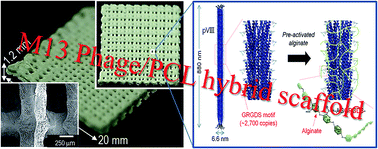
To overcome these deficiencies, here we designed a multi-layered 3D biomedical scaffold using the M13 phage/alginate. However, to improve the mechanical stability of the 3D scaffold, we added a synthetic polymer (PCL). As reported previously, we designed various core–sheath 3D structures consisting of collagen/alginate for skin tissue regeneration21 and core (PCL)/sheath (collagen/alginate) for bone tissue regeneration.22 However, as pointed out by several researchers, collagen as a scaffolding material is not free of immunogenicity.3 For this reason, we designed a new biochemical combination for the hybrid scaffold consisting of core–sheath struts in which PCL in the core region and chemically conjugated M13 phage/alginate in the sheath region to which the RGD sequence was attached on the surface of fibrous phage. In this unique hybrid structure, the PCL in the core region performed as a mechanical support to achieve complex shape-integrity, and the M13 phage/alginate in the sheath region acted as an improver of various biological activities. Through a bioprinting process, supplemented with a low-temperature working stage (−20 °C) and a core–sheath nozzle, we could produce mechanically and biologically improved 3D biomedical scaffolds for bone tissue regeneration.

Experimental

Materials

Poly(ε-caprolactone) (PCL, density = 1.135 g cm−3, Mw = 45[thin space (1/6-em)]000) was purchased from Sigma-Aldrich (St. Louis, MO, USA) and low viscosity, high-G-content LF10/60 alginate (FMC BioPolymer, Drammen, Norway) was used in this work.

As a positive control, to attain RGD-modified alginate, the peptide sequence GRGDSP (Sigma-Aldrich, St. Louis, MO, USA) was coupled to alginate using carbodiimide chemistry. Alginate was dissolved at 2 wt% in deionized water. 1-Ethyl-3-[3-dimethylaminopropyl] carbodiimide hydrochloride (EDC; Sigma-Aldrich, St. Louis, MO, USA) was added to the solution at a molar ratio of 1[thin space (1/6-em)]:[thin space (1/6-em)]20 to the uronic acid monomers of alginate. N-Hydroxysuccinimide (NHS; Sigma-Aldrich, St. Louis, MO, USA) was added at a molar ratio of 1[thin space (1/6-em)]:[thin space (1/6-em)]2 as a co-reactant to stabilize the cross-linking process followed by incubation for 12 h. The peptide at a concentration of 1 mg mL−1 was mixed at a 1[thin space (1/6-em)]:[thin space (1/6-em)]9 ratio with 2% alginate solution. After conjugation, the alginate solution was purified through extensive dialysis (Spectrum/Por, MWCO 35–5000 Da) against three shifts of distilled water and three shifts of 50 mM NaCl for 3 days. The RGD-peptide-modified alginate was freeze-dried and stored in a deep freezer.

Construction and amplification of GRGDS-engineered phage

Phages expressing GRGDS motifs at the N-terminus of every copy of pVIII were constructed as described elsewhere.19 Briefly, an M13KE vector with a mutated PstI site was used as a template for inverse PCR cloning method23 using two primers for insertion and linearization as follows: 5′-ATATATCTGCAGTGGGCCGTGGCGATTCTGATGACTATGATGATCCCGCAAAAGCGGCCTTTAATCCC-3′ (insert in bold), and the linearization primer 5′-CCTCTGCAGCGAAAGACAGCATCGG-3′. KOD-Plus-Neo DNA polymerase (Toyobo, Osaka, Japan) was used for PCR. After purification with agarose gel and spin-column, the PCR product was circularized overnight at 16 °C using T4 DNA ligase (NEB, MA, US). Thereafter, the circularized DNA was transformed into XL10-Gold Ultracompetent Cells (Stratagene, CA, US). From white-blue screening, blue plaques were picked and amplified to confirm the successful phage construction. Phage amplification was performed in ER2738 E. coli (NEB) grown in Luria broth (LB) for 18 h at 37 °C with shaking at 230 rpm. At the end of incubation, the phages were harvested by centrifugation (8000 × g) at 4 °C for 20 min (×2). The phages were isolated by adding one-quarter volume of 20% (w/v) polyethylene glycol (PEG) 8000 solution in 2.5 M NaCl to the supernatant and the centrifugation after 12 h of incubation. Then, the phage pellet was resuspended in phosphate buffer (pH 7.5, 20 mM). The concentration of phage was measured using a UV/VIS spectrometer and calculated as previously reported.24 The same weight fraction of alginate was used to chemically conjugate the phage with alginate using EDC–NHS (Fig. 1a). The conjugation procedure was completely same as the process used to obtain the RGD-modified alginate.
image file: c6ra07054j-f1.tif
Fig. 1 (a) Schematic illustration of grafting alginate to GRGDS-displaying M13 bacteriophage and (b) three dimensional (3D) printing process supplemented with a low-temperature working stage and core–sheath nozzle.

Scaffold fabrication

To fabricate a hybrid scaffold, we used a combination of two processes, a low temperature printing process to obtain conjugated phage/alginate component in the sheath region of the struts, and simultaneously a melt PCL was dispensed in the core region. The core–sheath process was performed using a 3D printer (DTR3-331S-EX; Bucheon, South Korea) (Fig. 1b). To obtain the core (PCL)–sheath (M13-phage/alginate) struts, a core–sheath nozzle (inner diameter of the core nozzle = 250 μm and the diameter of sheath nozzle = 750 μm) was accommodated. The PCL was dispensed using the core nozzle from a heating barrel (Temp. = 150 °C), and the phage/alginate was dispensed simultaneously in the sheath nozzle, and the core–sheath strut was completely frozen on the low temperature working plate (Temp. = −20 °C). The extruding pneumatic pressures applied in the core and sheath nozzle were 160 kPa and 600 kPa, respectively. The printing speed was set as a 15 mm s−1. The dispensed structure was instantaneously put on a freezing dryer (SFDSM06; Samwon, South Korea) at −75 °C for 12 h. After then, to cross-link the outer region, it was immersed in calcium chloride solution (5 wt%) for 30 min and the scaffold was washed four times in 0.1 M Na2HPO4 for 1 h and demineralized water (four times for 30 min). Lastly, the hybrid scaffold was freeze-dried at −75 °C for 12 h.

In addition, to obtain 3D scaffolds without embedding PCL structure, each material (alginate, RGD-modified alginate, the physical mixture of phage/alginate, and chemically conjugated phage/alginate) was printed on the same working stage using a single nozzle (300 μm) with a printing speed of 10 mm s−1 under the pressures (230–275 kPa). The different pressure was due to the different rheological properties of each solution. The other process was completely similar to that used in the fabrication of the hybrid scaffold. The pure melt-dispensed PCL was printed from the heating barrel (110 °C) and fabricated with a single nozzle (300 μm) and a dispensing speed of 10 mm s−1 under a pneumatic pressure (550 kPa). The detail fabrication conditions were shown in Table 1.

Table 1 Processing conditions for the scaffolds
Scaffolds P-A R-A P-PA C-PA   Hybrid PCL
Pressure (kPa) 245 235 230 275 Core 600 550
Shell 160
Nozzle size (μm) 300 300 300 300 Core 250 300
Shell 750
Plotting speed (mm s−1) 10 10 10 10   15 10
Plotting plate (°C) −20 −20 −20 −20   −20 26
Barrel Temp. (°C) 30 30 30 30   150 (core) 110
30 (sheath)


Characterizations of scaffolds

The surface morphology of the 3D printed scaffolds was characterized using an optical microscope (TE2000-S; Nikon, Japan), SEM (SNE-3000M; SEC, Inc., South Korea), and confocal microscopy (Z1; Zeiss, Germany). Pore size, which was defined as the distance between the struts, and strut diameter were measured on SEM images.

To visualize the phage in scaffold, fluorescein isothiocyanate (FITC, Sigma-Aldrich, USA) was dissolved in DMSO (Sigma-Aldrich) concentration of 10 mM and make 10-fold dilution in deionized water. The samples are placed in 24 well plate and add the 1 mM FITC solution. The plate is wrapped by foil and incubates in 37 °C for 90 min. After incubation, to remove the unreacted FITC, samples are washed with PBS for three times. Stained samples were then analyzed with a confocal microscope. The Image-J software (National Institutes of Health, Bethesda, MD, USA) was used to measure the intensity of green color of phages.

The protein absorption was measured using bicinchoninic acid (BCA) protein assay (Pierce Kit; Thermo Scientific, Waltham, MA, USA). The scaffolds were placed in 24 well plates containing minimum essential medium (MEM; Life Science, St. Petersburg, FL, USA), supplemented with 10% fetal bovine serum (Gemini Bio-Products; Sacramento, CA, USA) and 1% antibiotic/antimycotic (Cellgro; Manassas, VA, USA) and incubated at 37 °C for 1, 2, 4, 6, and 12 h. The samples were washed with PBS and lysed with 0.1% Triton X-100. An aliquot of the lysate (25 mL) was added to 200 mL of BCA working reagent, and the mixture was incubated for 30 min at 37 °C. The absorbance at 562 nm was determined using a plate reader. Scaffolds incubated in serum-free medium were used as blanks. The protein adsorption was calculated as the mean ± the standard deviation (n = 5).

To measure mechanical behavior of the scaffolds, five samples of each scaffold were cut into small strips for assessment of tensile properties. A tensile test at dry and wet state (10 min in PBS) was carried out using a universal tensile machine (Top-tech 2000; Chemilab, Seoul, South Korea). The tensile stress–strain curves for the scaffolds were recorded at a stretching speed of 0.5 mm s−1. All values are means ± standard deviation (SD) (n = 5).

In vitro biomineralization

The scaffold were immersed in 2× SBF composed of NaCl (15.99 g), KCl (0.448 g), CaCl2·2H2O (0.736 g), MgCl2·6H2O (0.610 g), K2HPO4 (0.348 g), NaHCO3 (0.698 g), and Na2SO4·10H2O (0.322 g) in 1 L distilled water.25 The pH of the solution was adjusted to 7.4 by addition of Tris/HCl. The scaffolds were dipped in the SBF and incubated at 37 °C for 5 days and they were washed with deionized water to remove adsorbed minerals, lyophilized, and analyzed using SEM.

To observe the microcrystals of the mineralized surface of the scaffold, a wide angle X-ray diffractometer (WAXD; Siemens D 500, Munich, Germany) was used with Cu-Kα radiation, λ = 0.154 nm, under beam conditions of 40 kV and 20 mA with the collection of a spectrum at 2θ = 5–40° and a step size of 0.1°.

To measure the relative mineralized amount of the scaffolds, thermogravimetric analysis (TGA) was performed with nitrogen gas using a TGA-2050 (TA-Instruments, New Castle, DE, USA). A mass of the samples was 10 mg and those were heated from 30 °C to 800 °C at a ramping rate of 20 °C min−1.

In vitro cell culture

Scaffolds (5 mm × 5 mm) were sterilized with 70% ethanol and ultraviolet (UV) light, and then placed in culture medium overnight. MG63 cells (MG63-human source; ATCC number CRL-1427; ATCC, Manassas, VA, USA) were used for evaluation of the behavior of cells cultured on the scaffolds. The cells were cultured in MEM supplemented with 10% fetal bovine serum and 1% antibiotic/antimycotic. The cells were cultured up to passage 9 and collected by treatment with trypsin–EDTA (ethylenediaminetetraacetic acid). The cells were seeded onto the surfaces at a density of 1 × 10⁵ cells per sample followed by incubation in an atmosphere of 5% CO2 at 37 °C. The medium was changed every 2 days.

To observe the proliferation of viable cells, MTT assay (Cell Proliferation Kit I; Boehringer Mannheim, Mannheim, Germany) was conducted after culturing for 1, 3, and 7 days. This assay was based on the cleavage of the yellow tetrazolium salt 3-(4,5-dimethylthiazol-2-yl)-2,5-diphenyltetrazolium bromide (MTT) by mitochondrial dehydrogenases in viable cells to produce purple formazan crystals. Cells on the scaffold were incubated with 0.5 mg mL−1 MTT for 4 h at 37 °C. The absorbance was measured at 570 nm using a microplate reader (EL800; Bio-Tek Instruments, Winooski, VT, USA). Five samples from each incubation period were tested, and each test was performed in triplicate.

Cell-seeding efficiency

To measure cell-seeding efficiency, we used the previous method.26,27 The seeded cells were left in the scaffolds during 12 h to provide enough time for the cells to adhere to the scaffolds. After 12 h, the scaffolds were removed and the cells remaining in the wells were counted. The efficiency for each scaffold was calculated by taking into account the initial number of cells that were seeded and the residual number of cells in the respective well after 12 h. Five specimens of each scaffold were used. The seeding efficiency was calculated as seeding efficiency (%) = (cells added to scaffold − cells in wells)/(cells added to scaffold) × 100.27

Live/dead and DAPI/phalloidin analysis

After 3 days of cell-culture, the scaffolds were exposed to 0.15 mM calcein AM and 2 mM ethidium homodimer-1 for 1 h in an incubator to allow observation of live and dead cells. The stained specimens were visualized under the confocal microscopy. Stained images were captured, in which green and red colors indicated live and dead cells, respectively.

In addition, after day 1 and 7 of cell culture, the cell/scaffolds were analyzed with diamidino-2-phenylindole (DAPI; dilution ratio of 1[thin space (1/6-em)]:[thin space (1/6-em)]100, Invitrogen, Carlsbad, CA, USA) staining to characterize the nuclei of the cells (Invitrogen, Carlsbad, CA, USA). Alexa Fluor 568 phalloidin (dilution ratio of 1[thin space (1/6-em)]:[thin space (1/6-em)]100, Invitrogen) was used to observe the actin cytoskeleton of the cells in the scaffolds.

ALP and osteocalcin activities

ALP was assayed by measuring the release of p-nitrophenol (pNP) from p-nitrophenyl phosphate (pNPP). The scaffold seeded with MG63s were rinsed gently with phosphate-buffered saline (PBS) and incubated for 10 min in Tris buffer (10 mM, pH 7.5) containing a 0.1% Triton X-100 surfactant. Then, 100 μL of the lysate were added to the wells of 96-well tissue culture plates containing 100 mL of pNPP solution, prepared using an ALP kit (procedure no. ALP-10; Sigma-Aldrich). In the presence of ALP, pNPP is converted to pNP and inorganic phosphate. ALP activity was determined from the absorbance at 405 nm using a microplate reader (Spectra III; SLT Lab Instruments, Salzburg, Austria).

Osteocalcin (OCN) was measured using the protocol of Feng et al.28 A MicroVue Osteocalcin EIA Kit (Quidel, San Diego, CA, USA) was used to quantify the OCN quantity in the surrounding media. This assay is a competitive immunoassay using OCN-coated strips, a mouse anti-OCN antibody, an anti-mouse IgG–ALP conjugate, and the pNPP substrate to measure OCN. 25 μL of media was transferred to coated strips, and 125 μL of anti-OCN was added to each well. The solution was left to incubate for 120 min at 25 °C. The wells were washed three times by 1× wash buffer, and 150 μL of reconstituted enzyme conjugate was added before incubating for another 60 min at 25 °C. A 150 μL aliquot of substrate was added, and the wells were incubated for 40 min at 25 °C. A 50 μL aliquot of 0.5 N NaOH was added to stop the reaction, and the wells were read at 405 nm using a microplate reader. The intensity was compared to a calibration curve of known standards to determine the OCN concentration in the samples. The OCN levels were normalized by the total protein content in the media of the respective wells.28 All values were expressed as mean ± SD (n = 5).

Statistical analyses

All data are presented as means ± standard deviation. Statistical analyses were carried out using the SPSS software (SPSS, Inc., Chicago, IL, USA). Single-factor analysis of variance was used. A value of p < 0.05 was considered to indicate statistical significance.

Results and discussion

Fabrication of a hybrid scaffold consisting of core (PCL) and sheath (phage/alginate) struts

In this study, we designed a hybrid scaffold consisting of microsized core–sheath struts. The goal of the hybrid scaffold is to obtain a mechanically stable structure and improved biological properties. To achieve this, the phages, conjugated with an alginate in the sheath region of the hybrid struts, were printed on a low temperature working stage and, simultaneously, melted PCL was plotted in the core of the struts.

Before fabricating the hybrid scaffold, we developed four scaffolds containing (1) pure alginate (PA), (2) RGD-modified alginate (R-A), (3) physically mixed alginate/phage, and (4) chemically conjugated phage/alginate (C-PA) to observe the distribution of phages in the scaffold, the surface morphology, and the physical pore structure of the scaffolds. Fig. 2a–d shows optical, scanning electron microscopy (SEM), and fluorescence images of the fabricated PA (Fig. 2a), R-A (Fig. 2b), physically mixed phage/alginate (P-PA) (Fig. 2c), and chemically C-PA (Fig. 2d). As shown in the images, all scaffolds showed a highly roughened surface on the struts and homogeneous rectangular pores with entirely interconnected pores. In addition, as shown in the surface and cross-sectional fluorescence images of the scaffolds using P-PA and C-PA, the distributed filamentous phage structure (green color) stained with fluorescein isothiocyanate (FITC) was clearly seen, while for the scaffolds (PA and R-A), the phage structure was not seen. For better quantitative observation of the homogeneity of the phage embedded in the scaffolds, we compared the intensity and distribution of the green color (phage) for the scaffolds fabricated with the R-A, P-PA, and C-PA (Fig. 2e). In the surface and cross-sectional regions of struts, the peak distribution of the green color was much more homogeneous in the C-PA versus the P-PA. This indicated that C-PA showed a more homogenous distribution of phage, while P-PA showed aggregated microscale bundles in the fabricated struts. A similar phenomenon with physically mixed protein aggregation was observed in other studies.29,30 Based on this simple analysis, we confirmed that the chemically conjugated phage can be more homogeneously distributed in the alginate region of the 3D scaffold regardless of the surface and cross-section of the struts.


image file: c6ra07054j-f2.tif
Fig. 2 Optical, scanning electron microscopy (SEM), and fluorescence images of 3D printed scaffolds for (a) pure alginate (PA), (b) Arg-Gly-Asp (RGD)-modified alginate (R-A), (c) physically mixed phage/alginate (P-PA), and (d) chemically conjugated phage/alginate (C-PA). In the fluorescence images, the green color indicates filamentous phages stained with fluorescein isothiocyanate (FITC). (e) The intensity and distribution of phages on the surface and cross-section of a strut.

However, as previously pointed out for hydrogel-based scaffolds, the scaffold has poor mechanical properties. To overcome this, we designed the core–sheath struts in which the PCL, mechanically superior to phage/alginate, was used in the core region. Fig. 3a–c shows the surface and cross-sectional SEM images of scaffolds using pure PCL, C-PA, and a hybrid scaffold consisting of C-PA and PCL, respectively. In the cross-sectional SEM image of Fig. 3c, the PCL was well placed in the core region of the microsized struts and the C-PA component covered the PCL surface.


image file: c6ra07054j-f3.tif
Fig. 3 Optical and SEM images of fabricated 3D scaffolds of (a) pure poly(ε-caprolactone) (PCL), (b) chemical C-PA, and (c) hybrid scaffold consisting of struts (core = PCL, sheath = C-PA).

Protein absorption ability of the scaffolds

Generally, when biomedical scaffolds are contacted by physiological fluids, many proteins (e.g., immunoglobulins, fibronectin, vitronectin, fibrinogen) will adsorb on the surface of implanted biomaterials to facilitate biological responses between the materials and cells. In particular, the absorbed proteins on the surface can modulate intricate cell signaling pathways and even inflammatory responses, thus influencing several cell responses (initial cell attachment, growth and differentiation).31–33 Because of this, protein absorption ability has been considered an important parameter to determine the cell activities of implanted biomaterials.

Fig. 4a shows the protein absorption ability of the scaffolds fabricated with PA, R-A, P-PA, and C-PA. The protein absorption ability of the scaffolds obtained using phages was meaningfully higher than that of the PA and RGD-alginate scaffolds, although the pore structure (strut size and pore size; Table 2) of all scaffolds was similar. It is known that protein absorption may be related with the surface morphology, hydrophobicity (or water wetting), and surface chemical composition.32 We believe the higher absorption of proteins in the phage-based scaffolds was because of the nanosized fibrous phages dispersed on the surface of the scaffolds. From this result, we suggest that the phages embedded in the scaffolds play a significant role in achieving the higher level of protein absorption of the scaffolds, and that scaffolds using phages may show higher cell adhesion and proliferation.


image file: c6ra07054j-f4.tif
Fig. 4 (a) Protein absorption ability and stress–strain curves of the 3D scaffolds in the (b) dry and (c) wet state.
Table 2 Pore structure (strut diameter and pore size) of the scaffolds
Scaffolds PA R-A P-PA C-PA Hybrid
Strut diameter (μm) 478.4 ± 11.7 470.9 ± 22.8 459.8 ± 33.7 482.8 ± 32.7 434 ± 51
Pore size (μm) 576.6 ± 19.6 545.5 ± 20.1 562.4 ± 21.1 553.6 ± 18.2 495 ± 23


Mechanical properties of hybrid scaffolds

Biomedical scaffolds for bone tissue regeneration should have reasonable mechanical strength, a modulus appropriate for enduring the regeneration of neo-tissues, and the ability to sustain their physical shape and micro-internal structure. However, pore structure (porosity, pore size, and pore-interconnectivity), which is a prerequisite for scaffold design, can induce significant reductions in mechanical properties, so it is a challenge to fabricate scaffolds with both high porosity and high mechanical properties.

Fig. 4b and c shows the tensile stress–strain curves in the dry and wet states for the three scaffolds: pure C-PA, pure PCL, and the hybrid scaffold. As expected, the pure PCL scaffold in dry and wet states showed significantly high modulus (22.4–23.3 MPa), while the scaffold using pure C-PA showed <1.1 MPa, indicating that the material is not suitable for use in bone-tissue regeneration. However, the hybrid scaffold showed 9.4–12.9 MPa when wet and dry. Although this value is still low compared with the pure PCL scaffold, the mechanical properties of the hybrid scaffold were improved significantly compared with that of the pure C-PA scaffold. In addition, we believe that further mechanical improvements can be obtained using various other biomaterials (e.g., bioceramics and bio-nanocomposites) in the core region of the hybrid scaffold. The detailed mechanical properties of the scaffolds for dry and wet state are described in Table 3.

Table 3 Mechanical properties of the scaffolds for dry and wet state
Scaffolds C-PA PCL Hybrid
Young's modulus (MPa) Max tensile strength (MPa) Young's modulus (MPa) Max tensile strength (MPa) Young's modulus (MPa) Max tensile strength (MPa)
Dry 1.07 ± 0.15 0.05 ± 0.02 23.25 ± 1.23 3.52 ± 0.21 12.86 ± 0.85 0.98 ± 0.05
Wet 0.13 ± 0.03 0.02 ± 0.01 22.37 ± 1.33 3.50 ± 0.37 9.36 ± 0.15 0.85 ± 0.13


In vitro biomineralization ability

In vitro biomineralization ability in simulated body fluid (SBF) has become one of the generally accepted methods to evaluate the suitability of scaffolds for in vivo bone formation.34 To determine the ability of biomineralization of the scaffolds, the multi-layered scaffolds were submerged in 2× SBF for 5 days to observe HA. The SEM images of Fig. 5a–d shows the mineralized structures of the scaffold struts fabricated using PA, R-A, P-PA, and hybrid, respectively. Mineralized particles were observed on the surfaces. Comparison of the surfaces before and after biomineralization showed that mineralized particles developed on the surfaces of all scaffolds. However, biomineralization on the scaffold fabricated using the C-PA was obtained more rapidly and in a larger region than with the other scaffolds. To observe the composition of the mineralized particles, X-ray diffraction (XRD) of the surface of the scaffold fabricated with C-PA was conducted. Fig. 5e shows the XRD result of the biomineralized scaffold using C-PA. In the diffraction peaks, one of the main peaks showed a maximum at 31.9°, which is attributable to the plane (211) of HA, indicating that HA crystals in the scaffold were well developed.35 To quantitatively compare the HA crystals, we performed a thermogravimetric analysis (TGA) of the scaffolds (Fig. 5f). The TGA graphs indicated that the degradation temperature of the scaffolds started at about 200 °C, due to alginate degradation, and at 800 °C we measured the remnants of the scaffolds: at that temperature, the remnants were clearly HA (Fig. 5g). As shown in the remnant amounts of the component (HA), the scaffold with C-PA allows for much more effective and larger development of HA particles than the other scaffolds. We believe that this phenomenon was due to a synergistic effect of the homogeneously distributed phages in the alginates (C-PA) having negative charges, achieved using chemical conjugation, and the nano-filamentous topography of phages. The negative charges of the homogeneously distributed phages on the strut surface can effectively draw calcium ions (Ca2+) from the SBF solution and simultaneously attract the negative phosphate groups, HPO42−.
image file: c6ra07054j-f5.tif
Fig. 5 SEM images and magnified inset images of biomineralized scaffolds ((a) PA, (b) R-A, (c) P-PA, and (d) C-PA) in 2× SBF solution for 5 days, (e) X-ray diffraction (XRD) data for the C-PA scaffold, (f) thermogravimetric analysis (TGA) data for the scaffolds, (g) remnant amounts (%) of the scaffolds at 800 °C.

In vitro cellular activities

It is well known that cell-seeding efficiency is an important factor for successful tissue regeneration because it critically influences final cell growth and homogeneity.26 Fig. 6a shows the cell-seeding efficiency of the scaffolds. As can be seen, the cell-seeding efficiency was statistically non-significantly different between the scaffolds. The values were in the range of 65–74%, which are high values versus various synthetic polymers because of the highly roughened surface and sufficiently hydrophilic properties.
image file: c6ra07054j-f6.tif
Fig. 6 (a) Cell-seeding efficiency, (b) proliferation of viable cells determined with MTT assay, and (c) live (green)/dead (red) cell images for the scaffolds at 3 days.

To observe cell proliferation of viable cells, the MTT assay was conducted on the scaffolds fabricated using PA, R-A, P-PA, and hybrid (Fig. 6b). As shown in the results of optical density over time (days), the scaffolds with phages showed significantly higher cell proliferation than the controls.

Live (green)/dead (red) cells for the scaffolds cultured for 3 days are shown in Fig. 6c. In the images, the cells cultured on the struts were mostly alive, and for the scaffold fabricated using C-PA, the cultured cells were fully stretched on the strut surface. The morphological structure of the stretched cells in the hybrid scaffold may have been because of the homogeneously distributed RGD-phages (Fig. 2d) and micro/nanosized topology induced by the filamentous phages, whereas for the scaffold using P-PA, the cells were not fully stretched due to relatively less homogenously distributed RGD-phages (Fig. 2c). Generally, cell stretching can significantly influence the mechano-transduction pathways that can influence gene and protein expression, affecting cell mineralization.36,37 From these results, we suggest that cells in the hybrid scaffold may differentiate more rapidly than those in the other scaffolds.

Nuclei (blue) and F-actin (red) at days 1 and 7 of cell culture were measured in Fig. 7a–d. At 1 day, the cell activities for all scaffolds were similar, but at 7 days, the cytoskeleton on the scaffolds using R-A, P-PA, and hybrid were more widely distributed than PA. In particular, the hybrid scaffold using C-PA showed a much wider cell distribution and even more active cytoskeleton expansion because the nanoscale filamentous phage can induce the active development of filopodia, compared with the scaffold using P-PA.


image file: c6ra07054j-f7.tif
Fig. 7 (a–d) DAPI (blue)/phalloidin (red) images at 1 and 7 days for various scaffolds. (e) Relative alkaline phosphatase (ALP) activity (7 and 14 days) and (f) relative osteocalcin (OCN) level (7 and 10 days). (g) Optical images describing ALP activity at 7 days for the scaffolds.

To observe osteoblastic differentiation, relative alkaline phosphatase (ALP) activity, an early osteoblastic differentiation marker, and osteocalcin (OCN) were determined for the scaffolds (Fig. 7e and f). The ALP activity was normalized to total protein contents (Table 4). ALP activity for all scaffolds was not much different between 7 and 14 days because the ALP activity is an early stage of differentiation. In comparing the activity of the scaffolds, the hybrid scaffold demonstrated significantly higher ALP activity and OCN level at 10 days than the others at all culture periods. This phenomenon was then evaluated with the optical images of stained ALP activity after culture for 7 days (Fig. 7g). The stained areas were obtained using the optical images. The results indicate that much higher mineralization was obtained in the hybrid scaffold due to the more active focal adhesions between the cells and stable filamentous phages. Another important factor to induce the high mineralization of the hybrid scaffold may be the enhanced mechanical properties of the scaffold versus those consisting of P-A, R-A, and P-PA.

Table 4 Total protein contents (mg) of the scaffolds after 7 and 14 days of culture
Scaffolds PA R-A P-PA Hybrid
7 days 343.6 ± 38.2 404.4 ± 42.6 521.6 ± 39.7 529.9 ± 27.9
14 days 467.4 ± 49.7 546.4 ± 55.3 698.7 ± 51.6 709.5 ± 36.3


Based on these results, we showed that improved cell responses (cell morphology and differentiation) with the hybrid scaffold fabricated with PCL and C-PA can be obtained due to the synergistic effects of the consistently/firmly distributed nanoscale filamentous phages of the scaffold and its relatively improved mechanical properties.

Conclusions

A multi-layered hybrid scaffold consisting of microsized core (PCL)–sheath (phage/alginate) structure was fabricated using a low-temperature 3D printing process. The new hybrid scaffold was analyzed in terms of various physical properties and in vitro cellular activities. Protein and biomineralization ability were improved significantly due to the synergistic effects of the topological properties of the filamentous phages, which were homogeneously dispersed and chemically conjugated with alginate, and improved mechanical properties of the hybrid struts. The proliferation of viable cells and ALP activity levels on hybrid scaffolds were enhanced meaningfully compared with those of the control scaffolds. These results suggest that the mechanically improved phage-based hybrid scaffolds may be useful in various hard tissue regenerations.

Acknowledgements

This study was partially supported by a grant from the National Research Foundation of Korea grant funded by the Ministry of Education, Science, and Technology (MEST) (Grant no. NRF-2015R1A2A1A15055305) and also a grant from the Korea Healthcare Technology R&D Project, Ministry for Health, Welfare and Family Affairs, Republic of Korea (Grant no. HI15C3000).

References

  1. S. Bose, M. Roy and A. Bandyopadhyay, Trends Biotechnol., 2012, 30, 546–554 CrossRef CAS PubMed.
  2. Y. Khan, M. J. Yaszemski, A. G. Mikos and C. T. Laurencin, J. Bone Jt. Surg., 2008, 90, 36–42 CrossRef PubMed.
  3. M. M. Stevens, Mater. Today, 2008, 11, 18–25 CrossRef CAS.
  4. L. Polo-Corrales, M. Latorre-Esteves and J. E. Ramirez-Vick, J. Nanosci. Nanotechnol., 2014, 14, 15 CrossRef CAS PubMed.
  5. A. Lynn, I. Yannas and W. Bonfield, J. Biomed. Mater. Res., Part B, 2004, 71, 343–354 CrossRef CAS PubMed.
  6. D.-Y. Lee, H. Lee, Y. Kim, S. Y. Yoo, W.-J. Chung and G. Kim, Acta Biomater., 2016, 29, 112–124 CrossRef CAS PubMed.
  7. J. Wang, M. Yang, Y. Zhu, L. Wang, A. P. Tomsia and C. Mao, Adv. Mater., 2014, 26, 4961–4966 CrossRef CAS PubMed.
  8. K. T. Nam, D.-W. Kim, P. J. Yoo, C.-Y. Chiang, N. Meethong, P. T. Hammond, Y.-M. Chiang and A. M. Belcher, Science, 2006, 312, 885–888 CrossRef CAS PubMed.
  9. B. Y. Lee, J. Zhang, C. Zueger, W.-J. Chung, S. Y. Yoo, E. Wang, J. Meyer, R. Ramesh and S.-W. Lee, Nat. Nanotechnol., 2012, 7, 351–356 CrossRef CAS PubMed.
  10. M. Adams, Z. Dogic, S. L. Keller and S. Fraden, Nature, 1998, 393, 349–352 CrossRef CAS.
  11. Z. Dogic and S. Fraden, Curr. Opin. Colloid Interface Sci., 2006, 11, 47–55 CrossRef CAS.
  12. A. Merzlyak, S. Indrakanti and S.-W. Lee, Nano Lett., 2009, 9, 846–852 CrossRef CAS PubMed.
  13. J.-W. Oh, W.-J. Chung, K. Heo, H.-E. Jin, B. Y. Lee, E. Wang, C. Zueger, W. Wong, J. Meyer, C. Kim, S. Y. Lee, W. G. Kim, M. Zemla, M. Auer, A. Hexemer and S. W. Lee, Nat. Commun., 2014, 5, 3043 Search PubMed.
  14. J. Y. Lee, J. Chung, W.-J. Chung and G. Kim, J. Mater. Chem. B, 2016, 4, 656–665 RSC.
  15. K. Li, H. G. Nguyen, X. Lu and Q. Wang, Analyst, 2010, 135, 21–27 RSC.
  16. H. Yi, D. Ghosh, M.-H. Ham, J. Qi, P. W. Barone, M. S. Strano and A. M. Belcher, Nano Lett., 2012, 12, 1176–1183 CrossRef CAS PubMed.
  17. H.-E. Jin, R. Farr and S.-W. Lee, Biomaterials, 2014, 35, 9236–9245 CrossRef CAS PubMed.
  18. S. Y. Yoo, H. E. Jin, D. S. Choi, M. Kobayashi, Y. Farouz, S. Wang and S. W. Lee, Adv. Healthcare Mater., 2016, 5, 88–93 CrossRef CAS PubMed.
  19. S. Y. Yoo, J.-W. Oh and S.-W. Lee, Langmuir, 2011, 28, 2166–2172 CrossRef PubMed.
  20. J. HunáLee, Chem. Commun., 2013, 49, 1759–1761 RSC.
  21. G. Kim, S. Ahn, Y. Kim, Y. Cho and W. Chun, J. Mater. Chem., 2011, 21, 6165–6172 RSC.
  22. Y. Kim and G. Kim, J. Mater. Chem. B, 2013, 1, 3185–3194 RSC.
  23. A. Merzlyak and S.-W. Lee, Bioconjugate Chem., 2009, 20, 2300–2310 CrossRef CAS PubMed.
  24. J. Sambrook and D. Russell, Molecular Cloning: A laboratory manual, Cold Spring Harbor Laboratory Press, New York, 2001 Search PubMed.
  25. T. Kokubo and H. Takadama, Biomaterials, 2006, 27, 2907–2915 CrossRef CAS PubMed.
  26. J. M. Sobral, S. G. Caridade, R. A. Sousa, J. F. Mano and R. L. Reis, Acta Biomater., 2011, 7, 1009–1018 CrossRef CAS PubMed.
  27. Y. B. Kim and G. H. Kim, ACS Comb. Sci., 2015, 17, 87–99 CrossRef CAS PubMed.
  28. J. Feng, M. Chong, J. Chan, Z. Zhang, S. H. Teoh and E. San Thian, J. Biomater. Appl., 2013, 1–11 Search PubMed.
  29. D. H. Atha and K. C. Ingham, J. Biol. Chem., 1981, 256, 12108–12117 CAS.
  30. M. Hosek and J. Tang, Phys. Rev. E: Stat., Nonlinear, Soft Matter Phys., 2004, 69, 051907 CrossRef CAS PubMed.
  31. J. M. Goddard and J. Hotchkiss, Prog. Polym. Sci., 2007, 32, 698–725 CrossRef CAS.
  32. L.-C. Xu and C. A. Siedlecki, Biomaterials, 2007, 28, 3273–3283 CrossRef CAS PubMed.
  33. Y. Tamada and Y. Ikada, J. Colloid Interface Sci., 1993, 155, 334–339 CrossRef CAS.
  34. A. A. Zadpoor, Mater. Sci. Eng., C, 2014, 35, 134–143 CrossRef CAS PubMed.
  35. W. Liu, Y.-C. Yeh, J. Lipner, J. Xie, H.-W. Sung, S. Thomopoulos and Y. Xia, Langmuir, 2011, 27, 9088–9093 CrossRef CAS PubMed.
  36. L. E. McNamara, R. Burchmore, M. O. Riehle, P. Herzyk, M. J. Biggs, C. D. Wilkinson, A. S. Curtis and M. J. Dalby, Biomaterials, 2012, 33, 2835–2847 CrossRef CAS PubMed.
  37. D. J. Kyle, A. Oikonomou, E. Hill and A. Bayat, Biomaterials, 2015, 52, 88–102 CrossRef CAS PubMed.

This journal is © The Royal Society of Chemistry 2016
Click here to see how this site uses Cookies. View our privacy policy here.