
DOI:
10.1039/C6RA06047A
(Paper)
RSC Adv., 2016,
6, 40199-40210
Development of ionic liquid mediated novel polymer electrolyte membranes for application in Na-ion batteries
Received
7th March 2016
, Accepted 14th April 2016
First published on 14th April 2016
Abstract
Polymer electrolyte membranes based on polymer PEO, ionic liquid, 1-butyl-3-methylimidazolium methylsulfate, BMIM-MS, and salt, sodium methylsulfate, NaMS, {PEO + x wt% BMIM-MS for x = 0 and 20 and (PEO + 10 wt% of NaMS) + x wt% BMIM-MS for x = 0, 20 and 60} were prepared and characterized by various experimental techniques such as scanning electron microscopy (SEM), X-ray diffraction (XRD), thermogravimetric analysis (TGA)/differential thermogravimetric analysis (DTGA), differential scanning calorimetry (DSC), ac impedance spectroscopy and cyclic voltammetry (CV). The synthesized polymer electrolyte membranes were free-standing and flexible with good mechanical stability. A Fourier transform infrared spectroscopic (FTIR) study showed the complexation of ether oxygen of the PEO backbone with the cations of the Na-salt or IL (BMIM-MS). SEM, XRD and DSC studies show that the crystallinity of the polymer electrolyte membranes decreases on increasing the concentration of IL due to the plasticization effect of the IL. Ionic conductivity of polymer electrolyte membranes was found to increase with the concentration of IL (BMIM-MS) and showed a maximum room temperature (at ∼30 °C) ionic conductivity of ∼1.05 × 10⁻⁴ S cm−1 for 60 wt% IL loading. The plasticization effect of the IL enhanced the amorphicity of the polymeric membranes. This optimized composition of polymer electrolyte shows high electrochemical potential window (∼4–5 V), cationic transference number (i.e. tNa+ ∼ 0.46) and also good cycling between ∼2.7 and ∼1.6 V through charging–discharging.
Introduction
The need for high energy density storage devices for application in electric and hybrid electric vehicles, grids etc. is creating a heavy demand for lithium ion conducting batteries, which is further expected to increase in many fields in the coming years.1,2 However, the availability of lithium is only about 0.005 wt% of the total of the earth's crust while the abundance of sodium is about 2.6 wt% of the earth's crust. Therefore, complementary ion conducting storage devices are being explored. Recently, sodium ion conducting electrolytes have attracted worldwide attention due to their possible application in solid state devices, especially in rechargeable batteries, and are emerging as one of the possible alternatives to lithium ion conducting polymer electrolytes.3,4 Sodium ion conducting polymer electrolytes are non-toxic, abundant in nature and cost effective besides having a wide electrochemical potential window (−2.71 V) (only slightly lower than the lithium redox potential). These properties make sodium ion conducting polymer electrolytes as one of the probable replacements for Li-ion conducting polymer electrolytes. The softness of sodium metal promotes better contact with the component (electrode–electrolyte etc.) in devices.5–7 Polymer electrolyte membranes are used to develop a variety of electrochemical devices like rechargeable batteries, supercapacitors, fuel cells, actuators etc.8–10 These polymeric membranes have advantage over liquid electrolytes and exhibit various favorable properties such as ease of fabrication in thin film form of desired thickness/shape, good mechanical, thermal and electrochemical stability.11,12 Generally, polymer electrolytes are formed by dissolution of complexing salts (like Li+, Na+, Mg2+, Zn2+ etc.) with polar polymers (like poly(ethyleneoxide) (PEO), poly(methylmethacrylate) (PMMA), polyacrylonitrile (PAN), poly(vinylidene fluoride) (PVdF) etc.).13–19 Polymer electrolytes based on polymer PEO are widely studied because of their good film forming property, complexing ability, high solvating property etc. But room temperature ionic conductivity of PEO based polymer electrolytes is very low (∼10−6 to 10−7 S cm−1) because of its high degree of crystallinity.20,21 Therefore, different approaches have been adopted to get high ionic conductivity which includes (i) addition of low molecular weight plasticizers/organic carbonates like ethylene carbonate (EC), propylene carbonate (PC), diethyl carbonate (DEC) etc.22,23 and (ii) use of inorganic fillers like SiO2, Al2O3, CNT, TiO2 etc.23,24 Use of conventional plasticizers can improve the ionic conductivity of the polymer electrolytes by lowering their glass transition temperature (Tg) which further enhances the amorphous phase of the polymer matrix. The use of conventional plasticizers in polymer electrolytes usually causes poor mechanical & thermal stability which consequently influences the stability and safety of the cell and limits their application in devices.25,26 To address the problem associated with conventional plasticizers we have used ionic liquid which is known to act as a plasticizer as well as supplier of free ion charge carriers.12 Ionic liquids meet all the requirements of plasticization, ion-supplier salts and offer the potential for improved thermal and mechanical properties. Ionic liquids have drawn much attention as an excellent substitute to the conventional plasticizers due to their distinct properties such as wide liquidus range, non-volatility, non-flammability, negligible vapour pressure at room temperature, wide electrochemical stability window, high ionic conductivity, excellent thermal and chemical stability.14,27 Ionic liquids offer high conductivity along with improved thermal and mechanical properties for flexible polymer membranes.27–31 Many researchers have reported room temperature ionic liquids (RTILs), 1-butyl-3-methyl-imidazolium hexafluorophosphate, BMIMPF6,32 1-ethyl-3-methyl-imidazolium ethylsulphate, EMIM-EtSO4,33 and 1-butyl-3-methyl-imidazolium tetrafluoroborate, BMIMBF4 (ref. 31) as plasticizers to obtain polymer electrolyte membranes having high flexibility and ionic conductivity, good thermal and electrochemical stability.34,35
In the present study, novel sodium ion conducting polymer electrolyte membranes based on polymer (PEO), sodium methylsulphate salt (NaMS) and ionic liquid, 1-butyl-3-methylimidazolium methylsulphate (BMIM-MS) are prepared by solution cast technique and characterized using various techniques such as X-ray diffraction (XRD), Fourier transform infra-red (FTIR) analysis, scanning electron microscopy (SEM), thermal analysis (by DSC and TGA), impedance spectroscopy, cyclic voltammetry (CV), chrono amperometry and chrono potentiometry (Δt > 1 ms) for possible application in rechargeable batteries. In order to characterize the polymer electrolyte membranes, various physical techniques have been employed. The polymer electrolyte membranes so obtained are found to be highly conducting, free-standing, electrochemically, mechanically and thermally stable.
Materials
The starting materials used for the preparation of polymer electrolyte films are poly (ethylene oxide), PEO of average mol wt 6 × 10⁵ g mol−1, sodium methylsulphate salt (NaMS) of mol wt 134.09 g mol−1 and ionic liquid (IL), 1-butyl-3-methylimidazolium methylsulphate, BMIM-MS of purity ≥99% obtained from Sigma Aldrich. All the materials were vacuum dried ∼10−3 bar for 24 hours before use.
Synthesis of polymer electrolyte membranes. In the present paper, following two series of polymer electrolyte membranes have been prepared by solution cast technique.(1) The polymer electrolyte membranes of PEO + x wt% BMIM-MS for x = 0 and 20.
(2) The polymer electrolyte membranes (PEO + 10 wt% of NaMS) + x wt% BMIM-MS for x = 0, 20 and 60.
For the preparation of polymer electrolyte membranes, the polymer PEO, salt NaMS and IL BMIM-MS were dried at 50 °C under vacuum (∼10−3 bar) overnight. PEO + x wt% BMIM-MS were prepared by taking desired amount of polymer PEO and dissolving in dried methanol and stirring for 3–4 hours at 50 °C. Subsequently, desired amount of ionic liquid, BMIM-MS was added under continuous stirring until a viscous solution was obtained. For the preparation of polymer electrolyte membranes (PEO + 10 wt% NaMS) + x wt% BMIM-MS, PEO was first dissolved in methanol and stirred for 3–4 hours at 50 °C, after that an appropriate amount of salt was added into it and again stirred for 3–4 hours. After complete dissolution of salt with the polymer PEO, desired amount of IL was added and again stirred for 4–5 hours for obtaining a complete homogeneous solution. This viscous slurry so obtained was poured in polypropylene Petri dishes and solvent was allowed to evaporate slowly at room temperature for a week. After complete evaporation of the solvent, thin and semi-transparent polymer electrolyte membranes (PEO + x wt% BMIM-MS for x = 0 and 20) and (PEO + 10 wt% NaMS) + x wt% BMIM-MS for x = 0, 20 and 60 of thickness ∼150–200 μm were obtained. Prepared membranes were finally vacuum dried at ∼10−3 bar for 2–3 days to remove any traces of moisture present in the membranes before measurements.
Characterization techniques
The X-ray diffraction profiles of the polymer electrolyte membranes were recorded by X'Pert PRO X-ray diffractometer (PANalytical's) with CuKα radiation (λ = 1.54 Å) in the range 2θ = 10° to 60°. Surface morphology of the polymeric membranes was examined by scanning electron microscope model Quanta C-200.
The differential scanning calorimetry measurement was carried out using Mettler DSC 1 system in the temperature range −100 to 80 °C at a heating rate of 10 °C min−1 and thermogravimetric analysis (TGA) (Mettler DSC/TGA 1 system) under continuous purging of nitrogen. The samples were tightly sealed in Al pans in a glove box (MBraun). FTIR spectra of the polymer electrolyte membranes were recorded with the help of Perkin-Elmer FTIR spectrometer (Model RX 1) from 4000 to 400 cm−1.
Ionic conductivity of the polymer electrolyte membranes was measured by complex impedance spectroscopy technique using Wayne Kerr Precision Impedance Analyzer, Model 6500 B Series in the frequency range 100 Hz to 5 MHz. The bulk resistance was determined from complex impedance plots. The electrical conductivity (σ) can be calculated by using the following relation:
| |
 | (1) |
where,
l is the thickness,
A is the cross sectional area of the sample and
Rb is the bulk resistance obtained from complex impedance plots. For temperature dependent ionic conductivity studies, disc shaped polymeric electrolyte membranes were placed between two stainless steel electrodes and the whole assembly was kept in a temperature controlled oven and the temperature was measured by using CT-806 temperature controller containing J-type thermo couple. The conductivity of the ionic liquid was measured by a conductivity cell consisting of two stainless steel plates (SS), (area ∼ 1.0 cm
2) separated by 1 cm. Viscosity of the ionic liquid was measured by Brookfield DV-III ultra rheometer in the temperature range 10 to 80 °C. The instrument was calibrated with standard viscosity fluid supplied by the manufacturer before each measurement. The water content in all prepared polymeric membranes determined by using Mettler Toledo C20 coulometric KF titrator was less than 100 ppm. The cyclic voltammetric studies were carried out in the inert atmosphere of a dry glove box (M Braun Lapstar, O
2 and H
2O content < 0.5 ppm) filled with ultra pure Ar using electrochemical analyzer with an AUTOLAB PGSTAT 302N controlled by NOVA 1.10 software version (Metrohm Lab) to estimate the electrochemical stability window. Chrono amperometry (Δ
t > 1 ms) for ionic transference number and chrono potentiometry (Δ
t > 1 ms) method was used for charging–discharging of the polymer electrolyte membrane.
Results and discussion
SEM studies
The surface morphology of pristine PEO and PEO + 10 wt% NaMS + 20 wt% IL polymer electrolyte membranes are shown in Fig. 1A. From Fig. 1A(a) we can see that pristine PEO is having rough surface with several crystalline domains. When IL is incorporated in the polymer–salt complex system, smoother surface morphology with no crystal domain has been observed (see Fig. 1A(b)) due to the reduction in the crystallinity of the polymer matrix which supports high ionic transport.40,42 This reduction in crystallinity with the addition of IL into the polymer–salt containing membranes is due to increased amorphicity. Enhanced amorphicity results increased flexibility of polymeric chain and hence ionic conductivity.
 |
| | Fig. 1 (A) SEM micrograph of (a) pristine PEO and (b) (PEO + 10 wt% NaMS) + 20 wt% BMIM-MS. (B) XRD pattern of (a) pristine PEO (inset of (a) PEO + 10 wt% NaMS) (b) PEO + 20 wt% BMIM-MS (c) (PEO + 10 wt% NaMS) + 20 wt% BMIM-MS and (d) (PEO + 10 wt% NaMS) + 60 wt% BMIM-MS. | |
XRD studies
The X-ray diffraction pattern of pristine PEO, PEO + 10 wt% NaMS, PEO + 20 wt% IL and PEO + 10 wt% NaMS + x wt% of IL for x = 20 and 60 polymer electrolyte membranes are shown in Fig. 1B. We can see that the prominent peaks of PEO appear at 2θ = 19.54°, 23.59°, 26.67°, 27.31°, 28.35°, 36.73°, 40.14° and 43.57° along with a broad halo in the range 15° to 30° (see Fig. 1B for details).32,33 From Fig. 1B(a) it can be observed that the crystalline peaks of PEO are riding over a broad halo which indicates the presence of partial crystalline phase along with the partial amorphous phase and showing the overall semi-crystalline nature of polymer PEO. A minor shift is observed in the diffraction peaks of polymer PEO, with the addition Na-salt (see inset of Fig. 1B), which may be due to the complex formation between the Na-salt and polymer backbone.42 Furthermore, when IL is added in the polymer–salt complex system, the intensity of crystalline phase related peaks of PEO (at 19.54° and 23.59°) starts decreasing and other crystalline peaks related to PEO (at 26.67°, 27.31° and 28.35°) disappeared on higher loading of IL (see Fig. 1B(d)) due to increase in amorphicity of polymeric membranes caused by the plasticization effect of IL.34–36 The crystalline phase related peaks of PEO and PEO–salt complex are found to disappear with the addition of IL and this effect is more visible on higher loading of IL (Fig. 1B(d)). The FWHM of the crystalline peaks of PEO is also found to increase with increasing amount of ionic liquid in the polymer–salt complex due to the increase in the amorphicity of the membranes.
Thermal studies
DSC study. DSC thermograms of pristine PEO, PEO + 20 wt% IL and (PEO + 10 wt% NaMS salt) + x wt% IL (where x = 0, 20 and 60) membranes are shown in Fig. 2. An endothermic peak appears at 70 °C corresponding to the melting temperature (Tm) of PEO while a step change at −61 °C is observed due to the glass transition temperature (Tg) of the polymer PEO. A significant change has been observed upon incorporation of IL in PEO and two endothermic peaks (indicated as T1 and T2) were observed.43 It can be seen from Fig. 2, that both the peaks i.e. T1 (uncomplexed) and T2 (complexed) decrease with increasing concentration of ionic liquid. When polymer is complexed with Na-salt, a small increment has been observed in Tm of the polymer–salt complex (see Fig. 2c) but when IL was incorporated into the polymer and polymer salt complex, both Tg and Tm of the polymeric membranes were found to decrease (see Fig. 2(d and e) and inset of Fig. 2). The degree of crystallinity (Xc) has also been calculated from the ratio of enthalpy of melting (ΔHm) of polymer electrolyte to the enthalpy of melting (ΔHom = 213.7 J g−1)44 of crystalline PEO phase by the following relation.45,46| | |
Xc = (ΔHm/ΔHom) × 100%
| (2) |
 |
| | Fig. 2 DSC thermograms of (a) pristine PEO (b) PEO + 20 wt% BMIM-MS (c) PEO + 10 wt% NaMS (d) (PEO + 10 wt% NaMS) + 20 wt% BMIM-MS and (e) (PEO + 10 wt% NaMS) + 60 wt% BMIM-MS. | |
The melting enthalpy of the polymer electrolyte membrane decreases with increasing concentration of IL which confirms the increase in the amorphous phase. It was found that the degree of crystallinity of the polymer PEO and polymer–salt complex with added IL decreases with increasing amount of ionic liquid (see Table 1) and causes an increase in the amorphous phase and hence the conductivity. The glass transition temperature Tg of a polymer is related with the mobility of polymeric chain (i.e. lower the Tg, faster the ion conduction). In PEO-based polymer electrolyte membranes, ion conduction is supported by the segmental motion present in the amorphous phase of the polymer.37–39 It is found that Tg gets lowered (see inset of Fig. 2) when IL was added in the polymer PEO and polymer–salt complex that increases the segmental mobility of PEO and which in turn is expected to favour ion transport and hence the ionic conductivity. The evidence of enhanced amorphicity with increasing IL content was also confirmed from XRD/SEM results as discussed earlier.
Table 1 Melting temperature (Tm), glass transition temperature (Tg), enthalpy (ΔH), and degree of crystallinity (Xc) of the membranes for different values of (PEO + 10 wt% NaMS) + x wt% of BMIM-MS where x = 0, 20, 40 and 60 obtained by DSCa
| Sample |
Tam (°C) |
ΔH (J g−1) |
Xt (%) |
Tg (°C) |
Tbm (°C) |
| Tam and Tbm are the melting temperatures obtained by DSC thermogram and temperature-dependent ionic conductivity graphs. |
| Pure PEO |
70 |
171 |
80 |
−58 |
— |
| PEO + 20 wt% BMIM MS |
67 |
130 |
61 |
−65 |
63 |
| (PEO + 10 wt% Na-MS salt) + 20 wt% BMIM-MS |
64 |
122 |
57 |
−74 |
60 |
| (PEO + 10 wt% Na-MS salt) + 60 wt% BMIM-MS |
63 |
61 |
29 |
−80 |
58 |
| PEO + 10 wt% salt |
74 |
137 |
64 |
−63 |
65 |
TGA\DTGA study. The thermogravimetric analysis (TGA) and first derivatives of thermogravimetric (DTG) curves of pristine PEO, pristine IL, PEO + 20 wt% IL and (PEO + 10 wt% NaMS salt) + x wt% of IL (where, x = 0, 20, 40 and 60) membranes are shown in Fig. 3A. Pristine PEO and pristine IL show single step decomposition respectively at 400 °C and 380 °C.42 However, the (PEO + 20 wt% IL) electrolyte membrane exhibits two step decomposition mechanism with decomposition peaks (see Fig. 3A(c)) at ∼398 °C (decomposition temperature of PEO) and ∼340 °C (decomposition temperature of PEO–IL complex). When Na-salt was added into the polymer matrix, two decomposition peaks were observed at ∼395 °C (decomposition temperature of PEO) and ∼265 °C (decomposition temperature of polymer–salt complexation, marked as *) (see Fig. 3A(d)). However, when IL was added in the polymer electrolyte (i.e. in PEO + 10 wt% NaMS) (Fig. 3A(e–g)), multi decomposition peaks were observed. From (Fig. 3A(e)), it may be concluded that at lower content of added IL (∼20 wt%) in polymer electrolyte PEO + 10 wt% NaMS, the decomposition of polymer PEO, IL and PEO–IL complex cannot be separated out but a peak corresponding to the decomposition of PEO–salt complex is clearly visible at ∼268 °C. It is also observed that intensity of the peak related to the decomposition of PEO–salt complex starts decreasing on increasing the IL content (see Fig. 3A(f)) and this peak almost disappears on further increasing the amount of IL (see Fig. 3A(g)). In view of the above discussion, we expect that there is a peak related to the PEO–IL complex along with the peaks related to decomposition of PEO and IL in the temperature range 300–450 °C (Fig. 3A(e–g)). Therefore, we have carried out a detailed deconvolution in the temperature range 300–450 °C in order to find out the decomposition peaks related to PEO–IL complex, polymer PEO and IL. With the help of Peakfit software44 using multiple Gaussian peaks to find the exact peak positions with square of regression coefficient r2 ∼ 0.999. The deconvolution was carried out only for the three samples in which there is difficulty to extract the decomposition peaks related to PEO–IL complex, pure PEO and IL in (PEO + 10 wt% NaMS) + x wt% of BMIM-MS (where x = 20, 40 and 60) and resulting deconvoluted thermograms are shown in Fig. 3B. The deconvoluted thermograms of the polymer electrolyte membranes contained three peaks X1, X2 and X3 which are respectively related to the decomposition peak of PEO, IL (i.e. uncomplexed IL) and PEO–IL complexation (i.e. complexed IL) at temperature range 401–403 °C, 374–381 °C and 355–363 °C. From above discussion it can be concluded that the IL could be present in two forms in the polymer electrolyte membrane i.e. in the complexed (X3) and uncomplexed (X2) forms. We also expect that relative intensity of the peak related to the uncomplexed IL will be more if the content of IL is increased. Therefore, we calculated the relative intensity of the peak corresponding to the uncomplexed IL to the complexed IL and the result is shown in (Fig. 3C). It can be seen that the relative intensity of the uncomplexed IL to the complexed IL (i.e. X2/X3) increases with increasing IL content. From the above discussions it can be concluded that when IL was present in small amount in polymer electrolyte, Na-salt has tendency to complex with the polymer backbone but when we increase the amount of IL in polymer electrolyte it reduces the complexing ability of the salt with the polymer. From above discussions, it is also well confirmed that the prepared polymeric gel membranes are having good thermal stability.
 |
| | Fig. 3 (A) TGA/DTGA thermograms of (a) pristine PEO (b) pristine BMIM-MS (c) PEO + 20 wt% BMIM-MS (d) PEO + 10 wt% NaMS (e) (PEO + 10 wt% NaMS) + 20 wt% BMIM-MS (f) (PEO + 10 wt% NaMS) + 40 wt% BMIM-MS and (g) (PEO + 10 wt% NaMS) + 60 wt% BMIM-MS. (B) Deconvoluted thermograms of (a) (PEO + 10 wt% NaMS) + 20 wt% BMIM-MS (b) (PEO + 10 wt% NaMS) + 40 wt% BMIM-MS and (c) (PEO + 10 wt% NaMS) + 60 wt% BMIM-MS. (C) Ratio of the relative intensities of uncomplexed to the complexed IL (X2/X3) vs. concentration of IL in (PEO + 10 wt% NaMS) + x wt% BMIM-MS (where x = 20, 40 and 60). | |
Ion-polymer interaction by FTIR study
FTIR spectroscopy has been used to investigate the possible ion-polymer interaction and identify the conformational changes in the host polymer PEO matrix and polymer electrolyte due to the incorporation of ionic liquid and vibrational band assignments are listed in Table 2.41–46 When ionic liquid is incorporated in polymer PEO/polymer–salt complex, we expect prominent change mainly in the two regions namely (i) 1000–1200 cm−1 (C–O–C stretching vibration mode) and (ii) 3000–3200 cm−1 (C–H stretching vibration of imidazolium cation ring of IL) while the other vibrational bands may not be affected much. FTIR spectra of pure PEO and (PEO + 10 wt% NaMS salt) + x wt% BMIM-MS for different values of ‘x’ in the region 500–4000 cm−1 (ref. 47–50) are shown in Fig. 4A.
Table 2 Possible assignment of some significant peaks in the FTIR spectra of the pristine PEO and pure IL BMIM-MS
| Sample |
IR bands (cm−1) |
Assignments |
| Pristine PEO |
508, 530 |
C–O–C bend |
| 843 |
CH2 (rock) |
| 947 |
CH2 stretching motion |
| 1062, 1109, 1147 |
C–O–C stretching |
| 1235 |
CH2 symmetric twist |
| 1281 |
CH2 twist & wagging |
| 1343 |
CH2 antisymmetric bend |
| 1360 |
CH2 symmetric wag |
| 1414 |
CH2 wag scissoring mode |
| 2946 |
Asymmetric CH stretching |
| BMIM MS |
624 |
C–H for cyclic BMIm+ |
| 1170 |
C–H for cyclic BMIm+ |
| 1385 |
Non-symmetrical str. CH3 |
| 1464 |
Symmetrical str. CH3 |
| 1575 |
Imidazolium ring stru. C–C & C–N bending vibration |
| 2963 |
CH2 stretching |
| 3108, 3150 |
Imidazolium cation |
| Na-MS salt |
777 |
CH2 (rock) |
| 1064 |
C–O–C stretching |
| 1231 |
CH2 symmetric twist |
| 1639 |
C O stretching |
 |
| | Fig. 4 (A) FTIR spectra of (a) pristine BMIM-MS (b) pristine PEO (c) PEO + 10 wt% NaMS (d) PEO + 20 wt% BMIM-MS (e) (PEO + 10 wt% NaMS) + 20 wt% BMIM-MS and (f) (PEO + 10 wt% NaMS) + 60 wt% BMIM-MS. (B) FTIR spectra of (a) pristine PEO (b) PEO + 10 wt% NaMS (c) PEO + 20 wt% BMIM-MS (d) (PEO + 10 wt% NaMS) + 20 wt% BMIM-MS and (e) (PEO + 10 wt% NaMS) + 60 wt% BMIM-MS. (C) FTIR spectra of (a) pristine BMIM-MS (b) PEO + 20 wt% BMIM-MS (c) (PEO + 10 wt% NaMS) + 20 wt% BMIM-MS and (d) (PEO + 10 wt% NaMS) + 60 wt% BMIM-MS. | |
Further, intensity of some IL related peaks at 754 cm−1 (out of plane imidazole C–H bend) and 1568 and 1575 cm−1 (imidazole ring stretching) increase as we increase the amount of IL in the membrane.
In order to see the complexation between PEO and the IL (BMIM-MS) or NaMS salt, two regions, viz., (i) 1000–1200 cm−1 (Fig. 4B) (C–O–C related band of PEO) and (ii) 3000–3200 cm−1 (see Fig. 4C) (related to the C–H stretching vibration of IL) have been chosen. The peak related to the C–O–C band of pure PEO appears as a group of three bands at 1151 cm−1, 1060 cm−1 and 1116 cm−1. On addition of IL in the PEO matrix/polymer–salt system, slight shift in the wave number has been observed (see Fig. 4B) which indicates that there is a complex formation between ether oxygen of polymer PEO and cation of the IL or NaMS salt.31,32 The intensity of the peak at 1060 cm−1 (which is common to both polymer PEO and IL (BMIM-MS)) is increased as we increase the amount of IL in polymer matrix/polymer–salt system and it can be noted that a new peak also appears at ∼1048 cm−1 (marked as *) at higher concentration of IL in polymer–salt complex. The CH2 related bands of PEO at 843 cm−1 and 948 cm−1 are not found to change upon incorporation of IL into the polymer PEO.52 The intensity of the PEO related peak at ∼1281 cm−1 (related to CH2 wagging and twist) starts decreasing and also shifts towards lower wave number side when IL is incorporated into the polymer matrix/polymer–salt system. A shift of the C–O–C stretching mode of PEO and C–H stretching vibration of IL towards the lower frequency side when IL is incorporated into the polymer PEO/polymer–salt system, results in the weakening of the C–O–C and C–H bonds thereby enhancing the flexibility of the polymeric chains. The appearance of new peak and simultaneous decrease of intensity of some PEO related peaks and increasing intensity of some IL related peaks indicates the complex formation between the cation of IL or Na-salt with ether oxygen of PEO.
Ionic transport studies
The ionic conductivity (σ) of pure IL, polymer–salt system, PEO + IL membranes and polymer–salt complex added with IL was evaluated using complex impedance spectroscopy. The ionic conductivity (σ) of pure IL is 2 × 10⁻³ S cm−1 at 30 °C which increases with increasing temperature due to the increased ionic mobility. Also, the ionic conductivity is inversely proportional to the viscosity (as given in Fig. 5A).32
 |
| | Fig. 5 (A) Temperature-dependent conductivity (σ) and viscosity (η) of the pure IL BMIM-MS. (B) Ionic conductivity for polymer electrolyte membranes (PEO + 10 wt% NaMS) + x wt% of BMIM-MS where x = 0, 20, 40 and 60 at 30 °C. (C) Temperature-dependent ionic conductivity of the polymer electrolyte membranes (a) PEO + 10 wt% NaMS (b) PEO + 20 wt% BMIM-MS (c) (PEO + 10 wt% NaMS) + 20 wt% BMIM-MS and (d) (PEO + 10 wt% NaMS) + 60 wt% BMIM-MS. | |
Sodium-ion conducting polymer electrolytes have already been investigated on PEO, polypropylene oxide (PPO) or polybismethoxy ethoxy phosphazene (MEEP) complexed with sodium fluoride (NaF), sodium iodide (NaI), sodium perchlorate (NaClO4) or sodium trifluoromethane sulfonate (NaCF3SO3).51–54 Kumar et al. reported the room temperature (∼30 °C) conductivity ∼ 4.3 × 10⁻⁴ S cm−1 (ref. 56) for PMMA/1.0 M NaClO4/EC–PC.
The composition dependent ionic conductivity of (PEO + 10 wt% NaMS) + x wt% IL for x = 0, 20 and 60 at 30 °C is shown in Fig. 5B. It has been found that with increasing amount of IL into the PEO–NaMS salt complex system, ionic conductivity increases and attains a maximum value ∼1.05 × 10⁻⁴ S cm−1 for 60 wt% of IL loading at room temperature (∼30 °C).
Temperature dependent ionic conductivity of polymer electrolyte membranes (PEO + 10 wt% NaMS), PEO + 20 wt% IL, and (PEO + 10 wt% NaMS) + x wt% IL for x = 0, 20 and 60 at different temperatures from 30–80 °C at 5 °C interval are shown in Fig. 5C. The ionic conductivity of (PEO + 10 wt% NaMS) + x wt% IL polymer electrolyte membranes is found to increase with increasing the temperature and follows an Arrhenius type thermally activated process.56,57 The ionic conductivity at T < Tm obeys Arrhenius type thermally activated process and can be expressed as:
| |
σ = σo exp(−Ea/KT)
| (3) |
where,
σo is pre-exponential factor,
Ea is the activation energy,
K is the Boltzmann constant and
T is temperature in K. The calculated values of activation energy from log
σ vs. 1000/
T plots for PEO + 20 wt% BMIM-MS and (PEO + 10 wt% NaMS) +
x wt% BMIM-MS containing different amounts of BMIM-MS are given in
Fig. 5C. The value of activation energy decreases on increasing IL content in the polymer electrolyte membranes which indicates the easier ionic transport for the samples containing higher amount of ionic liquid due to the plasticization effect of IL as well as increase in the number of mobile charge carriers.
It can also be observed that after a certain temperature range (∼60 to 65 °C), there is a sudden jump in the conductivity value in all prepared samples. The temperatures at which the sudden conductivity jump occur are expected to be somewhat similar as Tm's (temperature at which the polymeric membranes undergo semi-crystalline to amorphous phase transition) of the polymer electrolyte membranes as obtained from DSC thermograms. The value of Tm's as determined by DSC thermograms and the point of inflexion of conductivity jump is given in Table 1.
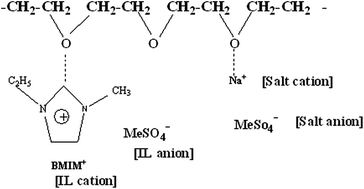
Ionic conductivity decreases at higher loading of IL at higher temperature due to the formation of ion-pair/or higher order ionic aggregates. A phenomenological model (shown schematically in Fig. 6), has been invoked by us to explain such observed conductivity behaviour. From Fig. 6, it can be seen that as IL is added in polymer electrolyte (PEO + 10 wt% NaMS), ion migration promoted by polymer chain segmental motion gets enhanced leading to the increased conductivity in the presence of IL. Although, at higher concentration of IL into the polymer electrolyte, initially, the conductivity increases with increasing temperature but at higher temperatures (i.e. above melting temperature) polymer chain becomes more flexible and ions come closer which promotes the ion pairing due to which decrease in conductivity has been observed at higher content of added IL at higher temperature. Our TGA/DTGA and FTIR results discussed earlier also support the above mentioned observation.
 |
| | Fig. 6 Schematic representation to understand the complexation and conduction behaviour of polymer electrolyte membrane. | |
Fig. 7A(a) shows that the typical current vs. time plot of cell configuration SS |polymer electrolyte| SS (stainless steel). The total ionic (cationic and anionic) transference number (tion) has been determined by using the technique as presented in Fig. 7A(a). The value of ionic fraction of current i.e. chrono amperometry tion is determined by using eqn (4) and is found to be ∼0.99 which signifies that the transport of charge in polymer electrolyte is ionic.57
where,
It and
Ie are the total and steady state currents. Further, to check the performance of polymer electrolytes from their application point of view, the cationic
i.e. tNa+ transference number of polymer electrolyte was measured at room temperature by combined ac impedance and dc polarization measurements.
58 The cell was maintained at ∼45 °C for 12 h to achieve better contact. In this technique the Na–Hg |polymer electrolyte| Na–Hg (sodium amalgam) was polarized by applying a constant voltage Δ
V = 10 mV for 30 min and observed current was monitored as a function of time as shown in
Fig. 7A(b). The initial (
Ro) and final (
Rs) (bulk cell resistances) values were measured using impedance spectroscopy before and after polarization of the cell, Na–Hg |polymer electrolyte| Na–Hg. From
Fig. 7B we obtained the values of cell resistances
Ro (∼150 Ω) and
Rs (∼307 Ω) before and after polarization. The cationic transference number
i.e. tNa+ is determined by using the following equation -
| | |
tNa+ = Is(ΔV − R0I0)/I0(ΔV − RsIs)
| (5) |
where,
I0 and
Is are the initial and steady state currents respectively while;
R0 and
Rs are the cell resistances before and after polarization. From
eqn (5) we have calculated the cationic transference number (
tNa+ ∼ 0.46) for the prepared membrane PEO + 10 wt% NaMS + 60 wt% BMIM-MS which is much higher than the commercial separator.
57,58 The observed higher value of steady state current (
Is) indicates that the nature of NaHg electrodes is reversible for the polymer electrolyte and confirms the conduction of Na
+ ion in polymer electrolyte.
 |
| | Fig. 7 (A) Chrono amperometry curve at an applied voltage of 10 mV of the cell (a) SS |polymer electrolyte| SS and (b) Na–Hg |polymer electrolyte| Na–Hg at room temperature. (B) Impedance plots of the cell Na–Hg |polymer electrolyte| Na–Hg at room temperature before and after polarization. | |
Electrochemical properties
For practical applications, investigation of electrochemical stability window of electrolytes within the operating voltage of the battery system is very important. The electrochemical stability of cell i.e. graphite |PEO + 10 wt% NaMS + 60 wt% BMIM-MS| Na–Hg was examined by linear sweep voltammetry (LSV) at scan rate of 10 mV s−1 as shown in Fig. 8a.55,63 The cathodic and anodic limiting (see Fig. 8a) potentials were about 0.2 V and 4.2 V for prepared cell.55 The overall electrochemical stability voltage range was about ∼4.0 V respectively for the cell graphite |polymer electrolyte| Na–Hg.
 |
| | Fig. 8 (a) Linear sweep voltammetry (LSV) of polymer electrolyte, PEO + 10 wt% NaMS + 60 wt% BMIM-MS using the cell graphite |polymer electrolyte| Na–Hg and (b) cyclic voltammogram of the cell Na–Hg |polymer electrolyte| Na–Hg at scan rate of 10 mV s−1. | |
Also, the range of working voltage or electrochemical stability window of the prepared cell Na–Hg |polymer electrolyte| Na–Hg (sodium amalgam) has been analyzed at room temperature by cyclic voltammetry studies shown in Fig. 8b. Fig. 8b, shows typical current–voltage plots traced on the cells containing polymer electrolyte membrane sandwiched between two symmetrical cells of Na–Hg |polymer electrolyte| Na–Hg (sodium amalgam).60 The electrochemical stability window has been observed between −2.3 and 2.3 V for (PEO + 10 wt% NaMS) + 60 wt% BMIM-MS, that fulfils the necessity of prepared polymer electrolyte membrane for practical application of sodium ion based rechargeable batteries.55–60 The determined value of cathodic and anodic features by CV provides the information about the polymeric system upto which prepared membrane can work securely without any dissociation/polarization. Such improved value of electrochemical stability window is enough for use as Na-ion based rechargeable battery applications.
Fig. 9 shows the chrono potentiometry (Δt > 1 ms) or charge–discharge curves at constant current and cycling performance of the cell graphite |polymer electrolyte| Na–Hg for sodium ion insertion and drawing out.61–63 From Fig. 9 it can be seen that the charge–discharge curve shows single plateau which may be attributed to the formation of solid electrolyte interface layer (SEI). The obtained charging–discharging voltages are ∼2.7 V to 1.6 V respectively and are shown for 5 cycles. We found that all the cycles overlap on one another within the given voltage range (∼2.7 V to 1.6 V).
 |
| | Fig. 9 Chrono potentiometry (Δt > 1 ms) curve (i.e. charge–discharge) of the cell graphite |PEO + 10 wt% NaMS + 60 wt% BMIM-MS| NaHg between ∼2.7 and ∼1.6 V. | |
Conclusions
Polymer electrolyte membranes comprising PEO complexed with NaMS salt added with different amount of ionic liquid BMIM-MS have been prepared and characterized by various techniques such as SEM, XRD, DSC, TGA/DTGA, impedance spectroscopy, cyclic voltammetry and the following conclusions have been drawn:
The synthesized polymer electrolyte membranes are free-standing and flexible with good dimensional stability. From SEM, XRD and DSC studies it has been found that the percentage degree of crystallinity of the polymer electrolyte membranes decreases on increasing the concentration of IL due to the plasticization effect of IL. Good thermal stability of the prepared polymer electrolyte membranes has been observed up to 300 °C upon incorporation of ionic liquid. From FTIR spectroscopic studies, it has been confirmed that the cation of the Na-salt/IL complexes with PEO. The polymer electrolyte membrane containing 60 wt% BMIM-MS shows maximum ionic conductivity ∼1.05 × 10⁻⁴ S cm−1 at room temperature which becomes to 4 × 10⁻⁴ S cm−1 at 75 °C. This is an optimized concentration of the IL in polymer–salt system and above this concentration; polymer electrolyte membranes so obtained loose their free standing property and are not mechanically stable. This composition of polymer electrolyte shows good electrochemical potentials window (4–5 V) and high transference number (ionic ∼0.99 and cationic i.e. tNa+ ∼ 0.46). Charging–discharging study shows good cycling ability in the range ∼2.7–1.6 V. Above results indicate the suitability of this polymer electrolyte for application in sodium ion rechargeable batteries.
Acknowledgements
One of us R.K.S is grateful to BRNS-DAE, Mumbai and DST, New Delhi, India for financial assistance. V.K.S is thankful to the Department of Science and Technology, New Delhi for providing JRF.
References
- P. Novák, K. Müller, K. S. V. Santhanam and O. Haas, Chem. Rev., 1997, 97, 207–281 CrossRef.
- Y. Cao, L. Xiao, M. L. Sushko, W. Wang, B. Schwenzer, J. Xiao, Z. Nie, L. V. Saraf, Z. Yang and J. Liu, Nano Lett., 2012, 12, 3783–3787 CrossRef CAS PubMed.
- D. Kumar and S. A. Hashmi, Solid State Ionics, 2010, 181, 416–423 CrossRef CAS.
- D. A. J. Rand, R. Woods and R. M. Dell, Batteries for Electrical Vehicles, Research Studies Press Ltd., England, 1998 Search PubMed.
- N. Mahmood and Y. Hou, Adv. Sci., 2014, 1, 1400012 Search PubMed.
- R. M. Dell, Solid State Ionics, 2000, 134, 139–158 CrossRef CAS.
- F. Sauvage, L. Laffont, J. M. Tarascon and E. Baudrin, Inorg. Chem., 2007, 46, 3289–3294 CrossRef CAS PubMed.
- M. M. Doeff, M. Y. Peng, Y. P. Ma and L. C. Dejonghe, J. Electrochem. Soc., 1994, 141, L145 CrossRef CAS.
- B. Scrosati, Applications of Electroactive Polymers, chapman & Hall London, 1993 Search PubMed.
- S. Chandra, Proc. Natl. Acad. Sci., India, Sect. A, 2012, 8, 25 Search PubMed.
- J. R. MacCallum and C. A. Vincent, Polymer Electrolyte Reviews, Elsevier Applied Science, London, 1987, vol. 1 & 2 Search PubMed.
- W. H. Meyer, Adv. Mater., 1998, 10, 439–448 CrossRef CAS PubMed.
- Shalu, S. K. Chaurasia and R. K. Singh, RSC Adv., 2014, 4, 50914–50924 CAS.
- H. Ohno, Electrochemical Aspects of Ionic Liquids, Wiley, Hoboken, NJ, 2005 Search PubMed.
- S. Seki, M. A. B. H. Susan, Kaneko, T. H. Tokuda, A. Noda and M. Watanabe, J. Phys. Chem. B, 2005, 109, 3886–3892 CrossRef CAS PubMed.
- A. Karmakar and A. Ghosh, J. Appl. Phys., 2010, 107, 104113 CrossRef.
- E. Quartarone and P. Mustarelli, Chem. Soc. Rev., 2011, 40, 2525–2540 RSC.
- S. Seki, K. Takei, H. Miyashiro and M. Watanabe, J. Electrochem. Soc., 2011, 158, A769–A774 CrossRef CAS.
- J. J. Xu, H. Ye and J. Huang, Electrochem. Commun., 2005, 7, 1309–1317 CrossRef CAS.
- M. D. Slater, D. Kim, E. Lee and C. S. Johnson, Adv. Funct. Mater., 2013, 23, 947–958 CrossRef CAS.
- C. Berthier, W. Gorecki, M. Minier, M. B. Armand, J. M. Chabgno and P. Rraiagud, Solid State Ionics, 1983, 11, 91–95 CrossRef CAS.
- F. Croce, R. Curini, A. Martinelli, L. Persi, F. Ronci, B. Scrosati and R. Caminiti, J. Phys. Chem. B, 1999, 103, 10632–10638 CrossRef CAS.
- S. Rajendran, M. Sivakumar and R. Subadevi, Mater. Lett., 2004, 58, 641–649 CrossRef CAS.
- G. B. Appetecchi, F. Crore and B. Scrosati, Electrochim. Acta, 1995, 40, 991–997 CrossRef CAS.
- F. Croce, G. B. Appetecchi, L. Persi and B. Scrosati, Nature, 1998, 394, 456 CrossRef CAS.
- R. Haggenmueller, J. E. Fischer and K. I. Winey, Macromolecules, 2006, 39, 2964–2971 CrossRef CAS.
- D. K. Pradhan, R. N. P. Choudhary, B. K. Samantaray, N. K. Karan and R. S. Katiyar, Int. J. Electrochem. Sci., 2007, 2, 861–870 CAS.
- M. Armand, F. Endres, D. R. MacFarlane, H. Ohno and B. Scrosati, Nat. Mater., 2009, 621–629 CrossRef CAS PubMed.
- Y. S. Ye, J. Rick and B. J. Hwang, J. Mater. Chem. A, 2013, 1, 2719–2743 CAS.
- J. Lu, F. Yana and J. Texter, Prog. Polym. Sci., 2009, 34, 431–448 CrossRef CAS.
- Shalu, S. K. Chaurasia, R. K. Singh and S. Chandra, J. Appl. Polym. Sci., 2015, 132(1–13), 41456 Search PubMed.
- Shalu, S. K. Chaurasia, R. K. Singh and S. Chandra, J. Phys. Chem. B, 2013, 117, 897–906 CrossRef CAS PubMed.
- J. N. de Freitas, A. F. Nogueira and M. A. De Paoli, J. Mater. Chem., 2009, 19, 5279–5294 RSC.
- S. K. Chaurasia, R. K. Singh and S. Chandra, Solid State Ionics, 2011, 183, 32–39 CrossRef CAS.
- Y. Kumar, S. A. Hashmi and G. P. Pandey, Solid State Ionics, 2011, 201, 73–80 CrossRef CAS.
- G. Colomines, A. V. Lee, J. J. Robin and B. Boutevin, Eur. Polym. J., 2008, 44, 2874–2885 CrossRef CAS.
- V. P. R. Silva, G. G. Silva, V. Caliman, J. Rieumont, C. O. B. De Miranda-Pinto, B. S. Archanjo and B. R. A. Neves, Eur. Polym. J., 2007, 43, 3283–3291 CrossRef CAS.
- T. L. Costa, R. L. Lavall, R. S. Borges, J. Rieumont, G. G. Silva and C. C. M. Ribeiro, Electrochim. Acta, 2007, 53, 1568–1574 CrossRef.
- J. H. Shin, K. W. Kim, H. J. Ahn and J. H. Ahn, J. Mater. Sci. Eng. B, 2002, 95, 148–156 CrossRef.
- Z. Stoeva, I. Martin-Litas, E. Staunton, Y. G. Andreev and P. G. Bruce, J. Am. Chem. Soc., 2003, 125, 4619–4626 CrossRef CAS PubMed.
- H. Cheng, C. Zhu, B. Huang, M. Lu and Y. Yang, Electrochim. Acta, 2007, 52, 5789–5794 CrossRef CAS.
- N. Mahmood, M. Islam, A. Hameed, S. Saeed and A. N. Khan, J. Compos. Mater., 2013, 1–11 Search PubMed.
- X. Tian, X. Jiang, B. Zhu and Y. Xu, J. Membr. Sci., 2006, 279, 479–486 CrossRef CAS.
- Peakfit is a commercially available product from Seasolve Software Inc.
- S. S. Rao, M. J. Reddy, E. L. Narsaiah and S. Rao, J. Mater. Sci. Eng. B, 1995, 33, 173–177 CrossRef.
- T. Rajkumar and R. Rao, Mater. Chem. Phys., 2008, 112, 853–857 CrossRef CAS.
- R. A. MacPhail, H. L. Strauss and R. G. Snyder, J. Phys. Chem., 1984, 88, 334–341 CrossRef CAS.
- S. Rivera-Rubero and S. Baldelli, J. Phys. Chem. B, 2006, 110, 4756–4765 CrossRef CAS PubMed.
- R. Lu, W. Gan, B. Wu, Z. Zhang, Y. Guo and H.-F. Wang, J. Phys. Chem. B, 2005, 109, 14118–14129 CrossRef CAS PubMed.
- G. Ma and H. C. Allen, J. Phys. Chem. B, 2003, 107, 6343–6349 CrossRef CAS.
- E. Sloutskin, B. M. Ocko, I. Tamam, I. Kuzmenko, T. Gog and M. Deutsch, J. Am. Chem. Soc., 2005, 127, 7796–7804 CrossRef PubMed.
- C. M. Burba, ECS Trans., 2008, 13, 3 CAS.
- N. S. Mohamed, M. Z. Zakaria, A. M. M. Ali and A. K. Arof, J. Power Sources, 1997, 66, 169–172 CrossRef CAS.
- U. Sasikala, P. N. Kumar, V. V. R. N. Rao and A. K. Sharma, Int. J. Eng. Sci. Res. Technol., 2012, 2, 722 Search PubMed.
- S. Fang, Y. Tang, X. Tai, L. Yang, K. Tachibana and K. Kamijima, J. Power Sources, 2011, 196, 1433–1441 CrossRef CAS.
- J. P. Manning, C. B. Frech, B. M. Fun and R. E. Frech, Polymer, 1991, 32, 2939–2946 CrossRef CAS.
- D. Kumar and S. A. Hashmi, J. Power Sources, 2010, 195, 5101–5108 CrossRef CAS.
- F. M. Grey, Solid Polymer Electrolytes: Fundamental and Technological Applications, VCH Publishers, New York, 1991 Search PubMed.
- N. Mahmood, J. Zhu, S. Rehman, Q. Li and Y. Hou, Nano Energy, 2015, 15, 755–765 CrossRef CAS.
- Y. Q. Yang, Z. Chang, M. X. Li, X. W. Wang and Y. P. Wu, Solid State Ionics, 2015, 269, 1–7 CrossRef CAS.
- J. Serra Moreno, M. Armand, M. B. Berman, G. S. Greenbaum, B. Scrosati and S. Panero, J. Power Sources, 2014, 248, 695–702 CrossRef CAS.
- I. Hasa, S. Passerini and J. Hassoun, J. Power Sources, 2016, 303, 203–207 CrossRef CAS.
- R. Naumaan Nasim Khan, N. Mahmood, C. Lv, G. Sima, J. Zhang, J. Hao, Y. Hou and Y. Wei, RSC Adv., 2014, 4, 7374 RSC.
|
| This journal is © The Royal Society of Chemistry 2016 |
Click here to see how this site uses Cookies. View our privacy policy here.