DOI:
10.1039/C6RA05978C
(Paper)
RSC Adv., 2016,
6, 46317-46324
A novel upconversion luminescence turn-on nanosensor for ratiometric detection of organophosphorus pesticides†
Received
7th March 2016
, Accepted 21st April 2016
First published on 25th April 2016
Abstract
In this paper, an upconversion luminescence (UCL) “turn-on” nanosensor based on Tween-20 modified blue-emissive upconversion nanoparticles (UCNPs) has been fabricated for the ratiometric detection of organophosphorus (OP) pesticides. Due to the existence of a luminescence resonance energy transfer (LRET) effect between UCNPs and the pesticide probe (abbreviated as HODN), blue emission at 475 nm of UCNPs was quenched. Interestingly, upon the addition of the pesticide mimic diethyl chlorophosphate (DCP) or the OP pesticide dimethoate, UV absorption of HODN at 475 nm gradually vanished, and the LRET effect was suspended. Consequently, the blue UCL of UCNPs can be recovered well within a very short interval. Since the UCL emission at 803 nm was impervious to the interaction between HODN and pesticides, it can act as an internal standard for the accurate detection of pesticides. Additionally, it was demonstrated that HODN could quantitatively detect dimethoate in the range of 0–80 μM. Importantly, this nanosensor is qualified for the detection of pesticides in pure aqueous solution. Compared with enzymatic and electrochemical based detection methods for OP pesticides, this strategy was much more convenient and economical.
1 Introduction
In recent years, pesticides have been extensively used in gardening and agriculture to obtain higher yields due to their high effectiveness for the controlling of chewing and sucking insects.1 However, the excessive usage of pesticides often causes both environmental and public health problems. It is shown that the weight of annually released organophosphorus (OPs) pesticides all over the world is almost a billion pounds, which can be traced in the soil, food and water supplies and in the atmosphere.2 Such kinds of pesticides, especially the OP compounds combined with the notorious and inhuman OP nerve agents (such as tabun, sarin and soman), as shown in Fig. 1, have been demonstrated to exhibit acute toxicity in humans, which comes from their irreversible inhibitory capacity of the pivotal acetylcholinesterase (AChE) in the central and peripheral nervous system.3,4 The inhibition of AChE often causes excessive accumulation of the neurotransmitter acetylcholine, which finally leads to organ failure and even death.5,6 On account of the high toxicity, some kinds (for instance, parathion, methamidophos and parathion-methyl) have been completed banned for agriculture use as well as for gardening in China. Thus, for the sake of environmental protection and public health, it is highly significant to develop a convenient and rapid method for detection of OP pesticides.
 |
| | Fig. 1 Representative OP pesticides (both active and banned classes), OP nerve agents and its mimic DCP. | |
Up to now, a few analytical techniques as well as detection methods have been successfully developed for OP pesticides, including HPLC,7 gas chromatography,8 the colorimetric method,9 surface-enhanced Raman scattering (SERS),10 electrochemistry or enzyme based strategies,11,12 and also several fluorescent probes have been fabricated.13 However, these above mentioned methods usually suffer from several intrinsic shortcomings. For instance, instrumental detection methods are typically time consuming and require specialized personnel, the electrochemistry and enzyme-based strategies even need expensive AChE or butyrylcholinesterase (BuChE), which might aggravate the financial burden.14,15 Alternatively, fluorescent probes were found to be cheaper and easier to manipulate. However, traditional fluorophores also suffered from low stability, photobleaching and poor solubility in water, thus were insufficient for the detection of pesticides in aqueous samples. To sum up, a more stable and convenient fluorescent detection strategy will be highly valuable.
The past decade has witnessed the booming of nanotechnology and nanomaterials. Nanomaterials can be now fabricated with high quality and consistent morphology.16,17 In particular, rare-earth doped upconversion luminescent nanomaterials have been brought to the forefront as new fashioned luminescent materials.18,19 Compared with traditional chromophores or fluorophores (i.e. fluorescent dyes or proteins, quantum dots or fluorescent beads) applied in optical sensors, UCNPs possess many intrinsic merits, such as sharp emission bands, full-spectrum emission, large anti-Stokes shifts, high photostability and resistance to photobleaching.20,21 Up to now, UCNPs have been extensively applied in multi-modality bioimaging and biomedicine, chemical analysis as well as biosensing realms.22,23 For instance, Zhao et al. developed a novel UCNP as a contrast agent for photoacoustic imaging in live mice,24 and Liu et al. used protein modified UCNPs for imaging-guided combined photothermal and photodynamic therapy.25 Furthermore, optical probes based on UCNPs for multiple analytes have been fabricated, such as HOCl,26 GSH,27 H2S,28 MeHg+,29 Fe3+,30 CN−,31 nitrate,32 pH,33 explosives and disease biomarkers.34,35 Additionally, UCNP-based enzymatic assays have been established for the detection of OP pesticides,36 but relatively high costs may restrict further applications.
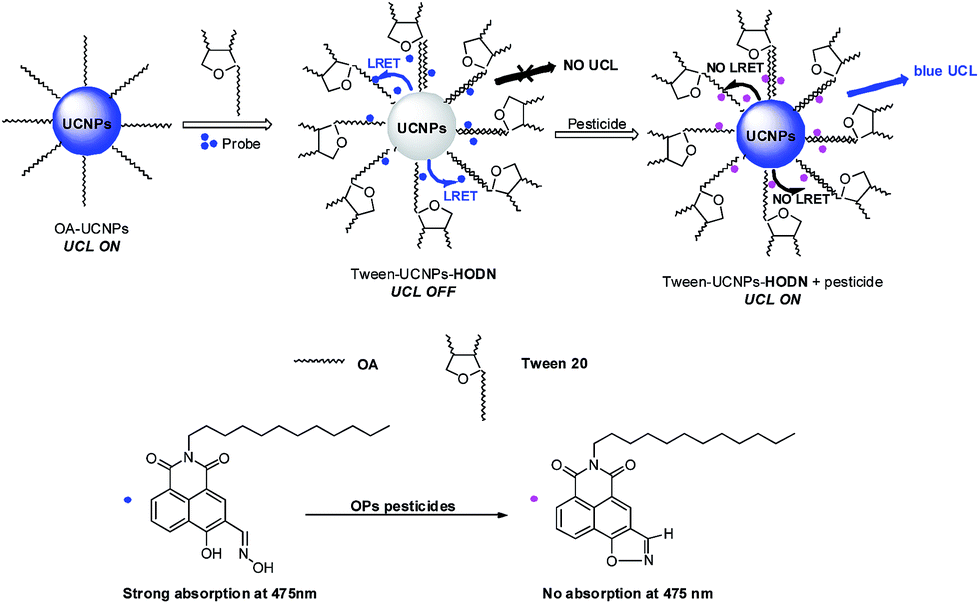
In this paper, for the first time, Tween-20 modified NaYF4:Yb3+,Tm3+@NaYF4 core–shell UCNPs and an oxime-based pesticide probe HODN were blended together to construct a nanoplatform for the sensitive detection of OP pesticides in aqueous solution. As shown in Scheme 1, due to the LRET between UCNPs and HODN, the fluorescence of UCNPs at 475 nm can almost be totally quenched, while the addition of a pesticide mimic DCP can induce fluorescence recovery. Meanwhile, upconversion fluorescence at 803 nm can act as an internal standard to achieve ratiometric detection of DCP. Furthermore, several kinds of OP and carbamate pesticides have been selected to evaluate the sensing ability of our nanoprobe for these actual widely applicable pesticides. Due to high photostability and low background noise, the employment of UCNPs in our nanoprobe could resolve well the shortage of traditional fluorescent probes and open a new avenue on OP pesticide sensing with high sensitivity. Furthermore, compared with those instrumentation and enzymatic methods, our fabrication was much more convenient and economical, thus having a high potential for future application in the pesticide detection domain.
 |
| | Scheme 1 Illustration of detection of pesticides through the LRET between Tween-20 modified UCNPs and the pesticide probe HODN. | |
2 Experimental section
2.1 Reagents and instruments
Ultrapure water was used throughout all experiments. Yttrium oxide (Y2O3, 99.99%), ytterbium oxide (Yb2O3, 99.99%), and thulium oxide (Tm2O3, 99.99%) were purchased from Xiya Reagent. Oleic acid (OA) and 1-octadecene were purchased from Aladdin Industrial Inc. Ammonium fluoride (NH4F), sodium hydroxide (NaOH), Tween-20, dodecylamine, anhydrous potassium carbonate (K2CO3), 4-bromo-1,8-naphthalic anhydride, hexamethylenetetramine (HMT), trifluoroacetic acid (CF3COOH), hydroxylamine hydrochloride (NH2OH·HCl), triethylamine (Et3N), N,N-diisopropylethylamine (DIEA), cyclohexane, N,N-dimethylformamide (DMF), ethanol, methanol, ethyl acetate (EA), dichloromethane (DCM), petroleum ether (PE) and other solvents were purchased from Sinopharm Chemical Reagent Co., Ltd. Hydroiodic acid (HI, 57%) was purchased from J&K Scientific Ltd. All reagents and solvents were at least analytical grade and used directly without further purification.
The ultra-violet spectra were obtained from with a Shimadzu UV-2450 UV-visible spectrophotometer. The fluorescence spectra of UCNPs and the pesticide detection nanoplatform were obtained by using a RF-5301 PC spectrofluorophotometer (Shimadzu, Japan) equipped with an external 980 nm laser. Transmission electron microscopy was used to observe the morphology of the prepared upconversion nanoparticles. The phase of nanocrystals was carried out using a D8 Discover 2500 X-ray diffractometer (Bruker) with Cu–K radiation (λ = 1.5406 Å). A scanning rate of 0.02 deg s−1 was applied to record the patterns in the 2θ range of 5–80°. The morphology and size of OA-UCNPs were characterized using a JEM-2010 transmission electron microscope (JEOL) with an accelerating voltage of 200 kV. X-ray photoelectron spectroscopy (XPS) was used to analyze the elementary composition of UCNPs. 1H NMR spectra recorded by a Bruker AV-400 spectrometer (Rheinstetten, Germany) was used to characterize the compounds synthesized, and the chemical shifts were expressed in parts per million (δ scale) using tetramethylsilane as an internal standard. Mass spectra were obtained using an advantage HPLC-MS (ThermoFinnigan, San Jose, USA) equipped with electrospray ionization (ESI) in negative mode.
2.2 Synthesis of core–shell UCNPs and Tween-20 modification
Synthesis of NaYF4:20% Yb,0.1% Tm UCNPs. Core–shell UCNPs were synthesized in high boiling solvents through the well established solvothermal procedure.36 Briefly, YCl3 (0.8 mmol), YbCl3 (0.2 mmol) and TmCl3 (0.001 mmol) were added together to a 100 mL three-necked bottle containing oleic acid (6 mL) and 1-octadecene (15 mL), the system was degassed under room temperature for 10 min and then heated to 160 °C for 1 h under argon flow and vigorous stirring. After the mixture was cooled down to room temperature naturally, 10 mL of methanol containing NH4F (4.0 mmol, 0.148 g) and NaOH (2.5 mmol, 0.1 g) were added into the solution and stirred for 40 min in a 50 °C water bath. Thereafter, the system was heated to 70 °C under reduced pressure for 20 min. Then the solution was heated to 300 °C under argon for 1 h and cooled down to room temperature. The resulting core nanoparticles were precipitated with ethanol and separated by configuration, and washed with ethanol and cyclohexane 3 times, and were finally dispersed in 10 mL of cyclohexane.
Synthesis of NaYF4:20% Yb,0.1% Tm@NaYF4 core–shell UCNPs. Briefly, YCl3 (1 mmol) was added together to a 100 mL three-necked bottle containing oleic acid (6 mL) and 1-octadecene (15 mL), the system was degassed under room temperature for 10 min and then heated to 160 °C for 1 h under argon flow and vigorous stirring. After the mixture was cooled down to room temperature naturally, 10 mL of cyclohexane containing core UCNPs was added to the mixture and stirred for 30 min. Next, the system was heated to 70 °C in a water bath to evaporate the cyclohexane. After that, 10 mL of methanol containing NH4F (4.0 mmol, 0.148 g) and NaOH (2.5 mmol, 0.1 g) were added into the solution and stirred for 40 min in a 50 °C water bath. Thereafter, the system was heated to 70 °C under reduced pressure for 20 min. Then the solution was heated to 300 °C under argon for 1 h and cooled down to room temperature. The resulting core–shell nanoparticles were precipitated with ethanol and separated by centrifugation, and washed with ethanol and cyclohexane 3 times, and dried under a vacuum for 3 h.
Tween 20 modification of NaYF4:20% Yb,0.1% Tm@NaYF4 core–shell UCNPs. The OA capped core–shell UCNPs were modified to enhance their water-solubility with Tween 20.37 Briefly, 20 mg of core–shell UCNPs was dispersed in 10 mL cyclohexane by ultrasonication. Then, 10 mg of Tween 20 was dissolved in 2 mL of cyclohexane and added to the solution of UCNPs. After 30 min of sonication and 1 h of stirring at room temperature, the mixture was added slowly to 30 mL of ultrapure water in a 70 °C water bath and was kept stirring for 3 h. After evaporation of cyclohexane, Tween 20 modified UCNPs were gradually transferred into water and collected by centrifugation, washed with water 3 times and dried under a vacuum.
2.3 Synthesis of pesticide probe HODN
The synthesis route of HODN was established in Scheme 2.
 |
| | Scheme 2 Synthetic route of the OP pesticide probe HODN. | |
Compounds 1–3 were synthesized according to the literature.38,39
Synthesis of 4-bromo-N-dedocyl-1,8-naphthalimide 1. In a 100 mL round bottle, 4-bromo-1,8-naphthalic anhydride (2 g, 7.2 mmol) and dodecylamine (1.6 g, 8.6 mmol) was added, 40 mL ethanol was added as the solvent, the mixture was heated to reflux for 8 h under stirring. After the solution was cooled to room temperature, ethanol was removed by rotavapor. The product was further purified by column chromatography (EA![[thin space (1/6-em)]](https://www.rsc.org/images/entities/char_2009.gif) :PE = 1:10), and obtained as a yellow powder (3 g, yield: 94%).
:PE = 1:10), and obtained as a yellow powder (3 g, yield: 94%).
Synthesis of 4-methoxyl-N-dedocyl-1,8-naphthalimide 2. In a 100 mL round bottle, 1 (2 g, 4.5 mmol) was dissolved in 40 mL of methanol, next, K2CO3 (3.1 g, 22.5 mmol) was added and the system was heated to reflux for 12 h under stirring. After the solution was cooled to room temperature, methanol was removed by rotavapor. The residue was dissolved with CH2Cl2, washed with water 3 times and dried over MgSO4. The system was concentrated and further purified by column chromatography (EA:PE = 1:5), and the pure product was obtained as a yellow solid (1.5 g, yield: 84.3%).
Synthesis of 4-hydroxyl-N-dedocyl-1,8-naphthalimide 3. To a 100 mL round bottle, 2 (1.4 g, 3.5 mmol) was added with 25 mL hydroiodic acid (HI, 57%) as the solvent. The mixture was heated at 140 °C under stirring for 6 h. After the system was cooled down to room temperature, 50 mL of water was added and the system was extracted with CH2Cl2 (40 mL × 3), then concentrated and further purified by column chromatography (EA:PE = 1:3), and the product was obtained as a yellow solid (820 mg, yield: 61.4%). 1H-NMR (400 MHz, d6-DMSO, TMS): δ = 0.81 (t, 3H), 1.22 (d, 18H), 1.55 (m, 2H), 3.98 (m, 2H), 7.13 (d, 1H), 7.72 (dd, 1H), 8.32 (d, 1H), 8.44 (d, 1H), 8.50 (d, 1H), 11.83 (s, 1H).
Synthesis of 4-hydroxyl-3-aldehyde-N-dedocyl-1,8-naphthalimide 4. To a 100 mL round bottle, 3 (750 mg, 1.96 mmol) and HMT (2.75 g, 19.6 mmol) was added with 30 mL of trifluoroacetic acid as the solvent, and the mixture was heated to reflux at 90 °C under stirring for 3 h. After cooling down to room temperature, 40 mL of H2O was added, and pH was adjusted to 7 by 1 M NaOH. Then the product was extracted with CH2Cl2 (40 mL × 3), and dried over MgSO4. CH2Cl2 was removed by rotavapor, and the crude product was further purified by column chromatography (DCM:PE = 3:1), and the product was obtained as a yellowish solid (500 mg, yield: 62.3%). It was characterized by 1H NMR and mass spectrometry. 1H NMR (400 MHz, CDCl3, TMS): δ = 0.89 (t, 3H), 1.31 (d, 18H), 1.73 (m, 2H), 4.17 (m, 2H), 7.82 (m, 1H), 8.73 (d, 3H), 10.13 (s, 1H), 13.19 (s, 1H). HR-MS (ESI, negative), m/z: 408.21817 [M − H].
Synthesis of 4-hydroxyl-3-oxime-N-dedocyl-1,8-naphthalimide HODN. In a 100 mL round bottle, 4 (400 mg, 0.98 mmol) and NH2OH·HCl (204 mg, 2.94 mmol) was added combined with 40 mL ethanol and Et3N (300 mg, 2.96 mmol), and the mixture was stirred under 60 °C in a water bath for 4 h. After that, ethanol was evaporated and the residue was dissolved with CH2Cl2, and the crude product was further purified by column chromatography (DCM:MeOH = 50:1). The product was obtained as a yellow powder (300 mg, yield: 72.1%). It was characterized by 1H NMR and mass spectrometry. 1H NMR (400 MHz, d6-DMSO, TMS): δ = 0.82 (t, 3H), 1.23 (d, 18H), 1.58 (d, 2H), 3.98 (m, 2H), 7.79 (m, 1H), 8.44 (dd, 1H), 8.53 (s, 1H), 8.56 (dd, 1H), 8.70 (s, 1H), 11.90 (s, 1H). HR-MS (ESI, negative), m/z: 423.22852 [M − H].
2.4 Construction of the Tween 20-UCNPs-HODN nanoplatform for DCP and pesticide detection
The Tween 20-UCNPs-HODN nanoplatform was constructed through hydrophobic interactions between Tween-20 on the surface of UCNPs and the long alkyl chain of HODN. Briefly, 30 mg of Tween 20-UCNPs were dispersed in 5 mL of DMF by ultrasonication. Next, 50 mg of HODN was dissolved in 5 mL of DMF and added to the UCNPs. The mixture was further disposed by ultrasonication for 1 hour and stirred overnight at room temperature. After that, Tween 20-UCNPs-HODN was gathered by centrifugation, washed with DMF and water 3 times, and finally dried under a vacuum. The Tween 20-UCNPs-HODN was obtained as a yellowish powder and can be dispersed well in water and DMF.
2.5 Ratiometric detection of the pesticide mimic DCP in aqueous solution
The ratiometric detection of the pesticide mimic DCP was performed with a RF-5301 PC spectrofluorophotometer (Shimadzu, Japan) equipped with an external 980 nm NIR laser. The Tween 20-UCNPs-HODN was dispersed in PBS buffer (0.3 mg mL−1, pH 7.4, containing 20% DMF), meanwhile, a small amount of DIEA was added to the system. After addition of different concentrations of DCP (0–200 μM), fluorescence changes of UCNPs were monitored in the 300–900 nm range upon excitation at 980 nm within 30 s. Slit widths (5 nm), quartz cell (1 cm path length) and the excitation power (1.3 W) were kept constant throughout each sample.
2.6 Detection of OP and carbamate pesticides
In our experiment, the OP pesticides dimethoate, chlorpyrifos and carbamate pesticide isoprocarb were selected as detection objects. Briefly, dimethoate, chlorpyrifos and isoprocarb were dissolved in DMF to prepare the stock solution, respectively. The Tween 20-UCNPs-HODN was dispersed in a PBS buffer (0.3 mg mL−1, pH 7.4, containing 20% DMF), meanwhile, a small amount of DIEA was added to the system. After addition of different concentrations of pesticides (0–200 μM) and through 5 min of reaction in a 40 °C water bath, the fluorescence intensities of UCNPs at 475 nm were monitored (excitation light: 980 nm, 1.3 W). Furthermore, the UV-vis absorption changes of Tween 20-UCNPs-HODN upon addition of pesticides have also been surveyed.
3 Results and discussion
3.1 Characterization of UCNPs
The core–shell structured UCNPs were prepared through the well established solvothermal method.36 OA was used as a high boiling solvent as well as a surfactant to control the growth of UCNPs. NaYF4 was one of the most efficient host materials for UCNPs sensitized by Yb3+ and was selected as the host material in this experiment. Meanwhile, a shell layer of NaYF4 served to improve the brightness by protecting the core UCNPs from the solvent and minimizing the effect of quenching from the solvent as well as surface defects on core UCNPs. TEM images (see Fig. 2a) indicated that prepared core–shell UCNPs were well-dispersed with uniform spherical morphology (average diameter ∼ 30 nm). Tween 20 modified UCNPs were also characterized by TEM (see Fig. 2b). And the TEM images show no apparent changes in morphology and diameter after surface modification. Since the fabrication of UCNPs could be affected by multiple factors, including temperature, solvents, and even any dust and impurities existing in the system which could induce irregular growth of UCNPs, the anomaly of several nanoparticles with exceptional morphology was reasonable and such a phenomenon was also noticeable in several reported works.40,41 The XRD technique was applied to confirm the crystalline phases of as prepared core–shell UCNPs. The XRD pattern of core–shell UCNPs was shown in Fig. 2c, both the positions and intensities of all the diffraction peaks were in good consistency with the standard data for β-NaYF4 (JCPDS no. 16-0334, Fig. 2c, bottom), which has been demonstrated to be more than one grade efficient in luminous efficiency than α-phase UCNPs.22,23 Diffraction peaks of different lattice planes can be found in the XRD pattern from a range of 10 to 80°, which were indexed to be the (100), (101), (110) planes and so on. No impurity diffraction lines from α-NaYF4 can be found, the strong diffraction intensity of (100) planes demonstrated the preferential growth along the [001] crystalline direction, indicating that our core–shell nanoparticles were well crystallized with a uniform hexagonal crystal lattice as the reported method.42 It has been demonstrated that spherical and rod-shaped UCNPs usually have enhanced (100) and (300) planes, combined with diminished (002) reflections,43 as can be seen in Fig. 1c, thus the XRD pattern also confirmed the morphology characterization of UCNPs by TEM. Meanwhile, since different elements have characteristic binding energy (BE) in a specified chemical environment,21 herein, the chemistry and composition of core–shell UCNPs were characterized using XPS. According to the peaks at different binding energies, the presence of all the elements doped in core–shell UCNPs can be demonstrated (Fig. 2d). Meanwhile, based on the analysis of different peaks, as shown in Table 1, the atom percentages of Y, Na and F can be calculated to be 14.73%, 15.27% and 52.83%, respectively. The atom percent (at%) ratio of these three elements was 1:1.03:3.59. However, due to the weak escape capability of ejected electrons, XPS was only capable of characterizing the surface (less than 10 nm) composition of UCNPs, thus the atom percent ratio was not in strict coincident with the NaYF4 crystal lattice (Na:Y:F = 1:1:4).21 Meanwhile, since Yb and Tm were doped in a relatively minor amount in the core layer and were protected by the NaYF4 shell, the atom percentages of Yb and Tm were not as convictive and peaks of Yb and Tm were only noticeable on the XPS pattern with weak intensities, as shown in Fig. S1,† but the narrow range XPS spectra demonstrated the existence of Yb and Tm elements.
 |
| | Fig. 2 TEM images of OA-UCNPs dispersed in cyclohexane (a) and Tween 20 modified UCNPs dispersed in ethanol (b), XRD patterns of the as-synthesized OA-UCNPs (c) and the XPS of OA-UCNPs (d). | |
Table 1 Analysis of the XPS spectra of core–shell NaYF4:Yb 20%,Tm 0.1%@NaYF4 UCNPsa
| Name |
Start BE |
Peak BE |
End BE |
Height CPS |
FWHM (eV) |
Area (P) CPS (eV) |
at% (total 100%) |
| BE: binding energy; CPS: counts per second; FWHM: full width at half maximum; at%: atom percent. |
| O 1s |
542.28 |
531.55 |
522.48 |
3733.69 |
2.55 |
22810.44 |
16.82 |
| Y 3d |
165.85 |
158.81 |
152.55 |
14649.59 |
2.44 |
52449.17 |
14.73 |
| Yb 4d |
189.76 |
185.53 |
182.98 |
896.01 |
2.53 |
2802.06 |
0.35 |
| F 1s |
691.48 |
686.01 |
678.6 |
34341.1 |
2.31 |
94921.08 |
52.83 |
| Na 1s |
1081.92 |
1074.12 |
1064.13 |
12555.38 |
2.06 |
32876.72 |
15.27 |
3.2 Optical properties of UCNPs and pesticide probe
UCNPs are well known to have the capacity to transform NIR excitation into visible or UV emission light. As shown in Fig. 3, under the excitation of 980 nm, the blue emitting UCNPs were able to emit UV (350 nm), visible (450 nm, 475 nm) as well as NIR (803 nm) emission bands, which come from the 1D2 → 3H6, 1D2 → 3F4, 1G4 → 3H6, 3H4 → 3H6 transition of Tm3+, respectively.44 It should be noticed that the luminescent intensity of core–shell UCNPs was much higher than that of core UCNPs, for the reason that the NaYF4 shell could protect the luminescence centre from the solvent and eliminate the non-luminescence relaxation of the defects on the surface of the core UCNPs.20,23 Tween 20-UCNPs have no spectrum change compared with core–shell UCNPs while the luminescent intensity was a little bit weaker due to the quenching of water which possessed stronger absorption at 980 nm than that of cyclohexane.
 |
| | Fig. 3 The UV-Vis spectra (left coordinate) of HODN in the absence (red line) and presence of DCP (black line), and the UCL spectrum (right coordinate) of Tween 20 modified core–shell UCNPs (blue line) under the excitation of a 980 nm laser. | |
The UV-vis absorption spectra of HODN and Tween 20-UCNPs-HODN were both determined using a Shimadzu UV-2450 UV-visible spectrophotometer. As shown in Fig. 3, HODN shows strong absorption at 475 nm which comes from the intramolecular charge transfer (ICT) from the hydroxyl combined with the deprotonated oximate moiety to the naphthalimide moiety. Meanwhile, Tween 20-UCNPs-HODN also exhibits strong absorption at 475 nm which matches well with the UCL at 475 nm of Tween 20-UCNPs. By comparing the UV-vis absorption intensities of Tween 20-UCNPs-HODN and different concentrations of the HODN standard solution, the loading capacity of HODN on the surface of Tween 20 modified UCNPs was calculated to be ∼14.1 wt%.
3.3 Mechanism studies
According to the spectrum properties of Tween 20-UCNPs and HODN, we speculate that efficient FRET can be generated within the Tween 20-UCNPs-HODN nanoplatform. The UCL spectrum of Tween 20-UCNPs-HODN also proved our assumption. As shown in Fig. S2,† the UCL intensity at 475 nm of Tween 20-UCNPs was almost fully quenched after the conjugation of HODN while the luminescence at 803 nm remained unchanged. Herein, 2 μL of DIEA was added to generate the deprotonated oximate functional group of HODN.13 Interestingly, after the addition of the OP pesticide mimic DCP, the fluorescence at 475 nm of Tween 20-UCNPs experience an obvious recovery, which can be attributed to the reaction between DCP and the oximate moiety of HODN,45 and consequently undergoes an intramolecular nucleophilic reaction between the hydroxyl and the oxime ester section, which was demonstrated by the MS spectrum determination results (as shown in Fig. S3†). The formation of the isoxazole structure has a great influence on the UV absorption spectrum of HODN,45 as can be seen in Fig. 3. The absorption peak of HODN at 475 nm almost totally vanished after the reaction with DCP, which will lead to the suspension of FRET between Tween 20-UCNPs and HODN. Finally, the UCL fluorescence at 475 nm of Tween 20-UCNPs will be strengthened. Furthermore, the UCL fluorescence of Tween 20-UCNPs at 803 nm remained unchanged, and thus can act as an internal standard to fulfill the ratiometric detection procedure.
3.4 Ratiometric detection of DCP in aqueous solution
The ratiometric detection experiments were conducted in aqueous solution. Tween 20-UCNPs-HODN was dispersed in PBS buffer (pH 7.4, containing 20% DMF, 0.3 mg mL−1). After addition of different concentrations of DCP (0–200 μM), the UCL fluorescence spectra were determined. As shown in Fig. 4, due to the disappearance of the LRET effect between Tween 20-UCNPs and HODN, the UCL fluorescence at 475 nm undergoes an obvious recovery with increasing DCP concentration, meanwhile, the fluorescence at 803 nm remained almost unchanged and the ratios between them were measured (Fig. 4, inset). A liner relationship can be observed within the 0–100 μM range of the DCP concentration (Fig. S4†), and the fluorescence ratio I475 nm/I803 nm reached a plateau at 120 μM of DCP. The detection limit of DCP can be as low as 0.19 μM.
 |
| | Fig. 4 UCL spectra of 0.3 mg mL−1 Tween 20-UCNPs-HODN in PBS buffer (pH 7.4, containing 20% DMF) upon gradual addition of DCP (0–200 μM). Inset: the UCL emission ratio intensity at 475 and 803 nm (I475 nm/I803 nm) as a function of DCP concentration. Reaction time: 1 min, room temperature. | |
3.5 Influence of pH values and the anti-interference ability
In our experiment, the influence of pH and the anti-interference ability of Tween 20-UCNPs-HODN have been studied as well. As shown in Fig. S5,† within acidic conditions, Tween 20-UCNPs-HODN were not able to be used for the detection of any OP and carbamate pesticides, since the acidic condition could destroy the oxime moiety of HODN. However, such experiments were feasible at pH 7.0, and in this paper, all of the detection experiments were implemented in PBS buffer (pH 7.4). Furthermore, to evaluate the anti-interference ability of this nanoplatform, we have investigated the sensing ability of Tween 20-UCNPs-HODN under the presence of several commonly existing substances in environmental and agricultural samples, including glutamate, lysine, glucose, urease, histidine and tryptophan. As shown in Fig. 5, after the addition of 1 mg of the above mentioned substances, the fluorescence ratio I475 nm/I803 nm remained almost unchanged, while the addition of DCP could consequently induce fluorescence recovery, thus the appearance of these common interferences had no obvious disturbance upon the sensing ability of Tween 20-UCNPs-HODN.
 |
| | Fig. 5 Ratiometric UCL responses of 0.3 mg mL−1 Tween 20-UCNPs-HODN in the presence of several kinds of interferences. | |
3.6 Detection ability for OP and carbamate pesticide
Three kinds of frequently used pesticides, dimethoate, chlorpyrifos and isoprocarb, were selected as testing samples in this experiment. After handling according to the methods described in Section 2.6, the fluorescence of UCNPs at 475 nm was detected. We noticed that among these three pesticide samples, only dimethoate could induce a significant fluorescence recovery of UCNPs. As for chlorpyrifos and isoprocarb, only if high concentrations of the sample (up to 5 mM) were added, an obvious blue emission enhancement and color variation could be observed. It is speculated that such a phenomenon can be attributed to the relatively smaller steric hindrance of dimethoate compared with that of chlorpyrifos and isoprocarb, and the reaction activities of these pesticides existed discrepancy, which could significantly affect the reaction speed. As shown in Fig. 6a, upon the addition of 0–200 μM dimethoate, the blue emission of UCNPs at 475 nm was gradually enhanced. As shown in Fig. S6,† a liner relationship can be observed within the 0–80 μM range of the dimethoate concentration, and the fluorescence ratio I475 nm/I803 nm came to plateau at 150 μM of dimethoate. The detection limit of dimethoate can be as low as 0.14 μM.
 |
| | Fig. 6 (a) UCL spectra of 0.3 mg mL−1 Tween 20-UCNPs-HODN in PBS buffer (pH 7.4, containing 20% DMF) upon gradual addition of dimethoate (0–200 μM). Inset: the UCL emission ratio intensity at 475 and 803 nm (I475 nm/I803 nm) as a function of the dimethoate concentration, reaction time 1 min. (b) The UV-Vis absorption spectra of 0.3 mg mL−1 Tween 20-UCNPs-HODN in PBS buffer (pH 7.4, containing 20% DMF) upon gradual addition of dimethoate (0–200 μM). Inset: the absorbance intensity at 475 nm as a function of the dimethoate concentration. Reaction time: 5 min, 40 °C water bath. | |
Furthermore, the UV absorption spectrum variations of Tween 20-UCNPs-HODN were monitored, as shown in Fig. 6b. The absorption peak at 475 nm decreased apparently after reaction with Tween 20-UCNPs-HODN, and almost totally vanished at 150 μM of dimethoate, which can be attributed to the formation of the isoxazole structure, and altered the UV absorption spectrum of HODN. Compared with an earlier reported fluorescent probe based on dipyrrinone oxime (LOD: 4 μM),13 our nanoplatform provided a much lower LOD for the detection of the OP pesticide dimethoate. Although the sensitivity of our nanoprobe was not as comparative with those detection methods based on an apparatus and AChE inhibition or electrochemistry,8,12 it turned out to be much more convenient and economical. Therefore, our nanoprobe is promising for fabrication as an intriguing indicator for the existence of any risks from OP pesticides or OP nerve agents, thus ensuring us of our public healthy and security.
4 Conclusions
In conclusion, we have successfully constructed an upconversion luminescence “turn-on” nanoplatform for the ratiometric detection of the OP pesticide dimethoate in aqueous solution. Tween 20-UCNPs-HODN was prepared through the hydrophobic interaction between Tween 20 modified UCNPs and HODN possessing a long alkyl chain. Since the OP pesticides can affect the UV-Vis absorption significantly, it can thus eliminate the LRET between UCNPs and HODN and lead to intense fluorescent recovery of UCNPs. Compared with enzyme-based and electrochemical methods, this nanosensor could thus provide us with a more convenient, economical and reliable strategy for the detection of OP pesticides.
Acknowledgements
The authors gratefully appreciate the support from the National Natural Science Foundation of China (81271634), Doctoral Fund of Ministry of Education of China (No. 20120162110070).
References
- P. C. Abhilash and N. Singh, J. Hazard. Mater., 2009, 165, 1–12 CrossRef CAS PubMed.
- R. Ramachandran, V. Mani, S. M. Chen, G. Gnana kumar and M. Govindasamy, Int. J. Electrochem. Sci., 2015, 10, 859–869 Search PubMed.
- X. Wang, S. Dong, T. Hou, L. Liu, X. Liu and F. Li, Analyst, 2016, 141, 1830–1836 RSC.
- M. A. Habila, Z. A. ALOthman, S. A. Al-Tamrah, A. A. Ghafar and M. Soylak, J. Ind. Eng. Chem., 2015, 32, 336–344 CrossRef CAS.
- Y. Zheng, Z. Liu, H. Zhan, J. Li and C. Zhang, Anal. Methods, 2015, 7, 9977–9983 RSC.
- D. N. Kumar, A. Rajeshwari, S. A. Alex, M. Sahu, A. M. Raichur, N. Chandrasekarana and A. Mukherjee, RSC Adv., 2015, 5, 61998–62006 RSC.
- L. Li, S. Zhou, L. Jin, C. Zhang and W. Liu, J. Chromatogr. B: Anal. Technol. Biomed. Life Sci., 2010, 878, 1264–1276 CrossRef CAS PubMed.
- T. Prapamontol, K. Sutan, S. Laoyang, S. Hongsibsong, G. Lee, Y. Yano, R. E. Hunter, P. B. Ryan, D. B. Barr and P. Panuwet, Int. J. Hyg. Environ. Health, 2014, 217, 554–566 CrossRef CAS PubMed.
- R. Bala, R. K. Sharma and N. Wangoo, Anal. Bioanal. Chem., 2016, 408, 333–338 CrossRef CAS PubMed.
- J. Chen, Y. Huang, P. Kannan, L. Zhang, Z. Lin, J. Zhang, T. Chen and L. Guo, Anal. Chem., 2016, 88, 2149–2155 CrossRef CAS PubMed.
- S. Viswanathan and P. Manisankar, J. Nanosci. Nanotechnol., 2015, 15, 6914–6923 CrossRef CAS PubMed.
- X. Gao, Y. Zhao, B. Zhang, Y. Tang, X. Liu and J. Li, Analyst, 2016, 141, 1105–1111 RSC.
- I. Walton, M. Davis, L. Munro, V. J. Catalano, P. J. Cragg, M. T. Huggins and K. J. Wallace, Org. Lett., 2012, 14, 2686–2689 CrossRef CAS PubMed.
- G. Aragay, F. Pino and A. Merkoçi, Chem. Rev., 2012, 112, 5317–5338 CrossRef CAS PubMed.
- N. Verma and A. Bhardwaj, Appl. Biochem. Biotechnol., 2015, 175, 3093–3119 CrossRef CAS PubMed.
- Y. Xia, Angew. Chem., Int. Ed. Engl., 2014, 53, 12268–12271 CAS.
- C. Bai and M. Liu, Angew. Chem., Int. Ed. Engl., 2013, 52, 2678–2683 CrossRef CAS PubMed.
- D. Yang, P. Ma, Z. Hou, Z. Cheng, C. Li and J. Lin, Chem. Soc. Rev., 2015, 44, 1416–1448 RSC.
- X. Chen, D. Peng, Q. Jua and F. Wang, Chem. Soc. Rev., 2015, 44, 1318–1330 Search PubMed.
- G. Chen, H. Ågren, T. Y. Ohulchanskyy and P. N. Prasad, Chem. Soc. Rev., 2015, 44, 1680–1713 RSC.
- X. Liu, R. Deng, Y. Zhang, Y. Wang, H. Chang, L. Huang and X. Liu, Chem. Soc. Rev., 2015, 44, 1479–1508 RSC.
- X. Li, F. Zhang and D. Zhao, Chem. Soc. Rev., 2015, 44, 1346–1378 RSC.
- W. Zeng, X. Wang, P. Xu, G. Liu, H. S. Eden and X. Chen, Theranostics, 2015, 5, 559–582 CrossRef CAS PubMed.
- S. K. Maji, S. Sreejith, J. Joseph, M. Lin, T. He, Y. Tong, H. Sun, S. W. Yu and Y. Zhao, Adv. Mater., 2014, 26, 5633–5638 CrossRef CAS PubMed.
- Q. Chen, C. Wang, L. Cheng, W. He, Z. Cheng and Z. Liu, Biomaterials, 2014, 35, 2915–2923 CrossRef CAS PubMed.
- Y. Zhou, W. Pei, C. Wang, J. Zhu, J. Wu, Q. Yan, L. Huang, W. Huang, C. Yao, J. S. C. Loo and Q. Zhang, Small, 2014, 10, 3560–3567 CrossRef CAS PubMed.
- R. Deng, X. Xie, M. Vendrell, Y. T. Chang and X. Liu, J. Am. Chem. Soc., 2011, 133, 20168–20171 CrossRef CAS PubMed.
- Y. Zhou, W. Chen, J. Zhu, W. Pei, C. Wang, L. Huang, C. Yao, Q. Yan, W. Huang, J. S. C. Loo and Q. Zhang, Small, 2014, 10, 4874–4885 CrossRef CAS PubMed.
- Y. Liu, M. Chen, T. Cao, Y. Sun, C. Li, Q. Liu, T. Yang, L. Yao, W. Feng and F. Li, J. Am. Chem. Soc., 2013, 135, 9869–9876 CrossRef CAS PubMed.
- Y. Ding, H. Zhu, X. Zhang, J. J. Zhu and C. Burda, Chem. Commun., 2013, 49, 7797–7799 RSC.
- L. Yao, J. Zhou, J. Liu, W. Feng and F. Li, Adv. Funct. Mater., 2012, 22, 2667–2672 CrossRef CAS.
- J. Han, C. Zhang, F. Liu, B. Liu, M. Han, W. Zou, L. Yang and Z. Zhang, Analyst, 2014, 139, 3032–3038 RSC.
- R. Arppe, T. Nareoja, S. Nylund, L. Mattsson, S. Koho, J. M. Rosenholm, T. Soukkaa and M. Schaferling, Nanoscale, 2014, 6, 6837–6843 RSC.
- Y. Ma, S. Huang, M. Deng and L. Wang, ACS Appl. Mater. Interfaces, 2014, 6, 7790–7796 CAS.
- P. Huang, W. Zheng, S. Zhou, D. Tu, Z. Chen, H. Zhu, R. Li, E. Ma, M. Huang and X. Chen, Angew. Chem., Int. Ed., 2014, 53, 1252–1257 CrossRef CAS PubMed.
- F. Wang, R. Deng and X. Liu, Nat. Protoc., 2014, 9, 1634–1644 CrossRef CAS PubMed.
- S. Jin, L. Zhou, Z. Gu, G. Tian, L. Yan, W. Ren, W. Yin, X. Liu, X. Zhang, Z. Hu and Y. Zhao, Nanoscale, 2013, 5, 11910–11918 RSC.
- J. Ren, Z. Wu, Y. Zhou, Y. Li and Z. Xu, Dyes Pigm., 2011, 91, 442–445 CrossRef CAS.
- T. Liu, X. Zhang, Q. Qiao, C. Zou, L. Feng, J. Cui and Z. Xu, Dyes Pigm., 2013, 99, 537–542 CrossRef CAS.
- Y. Wu, Y. Cen, L. Huang, R. Yu and X. Chu, Chem. Commun., 2014, 50, 4759–4762 RSC.
- X. Wang, T. Xu, Y. Bu and X. Yan, RSC Adv., 2016, 6, 22845–22851 RSC.
- X. Zhang, P. Yang, C. Li, D. Wang, J. Xu, S. Gai and J. Lin, Chem. Commun., 2011, 47, 12143–12145 RSC.
- X. Ye, J. E. Collins, Y. Kang, J. Chen, D. T. Chen, A. G. Yodh and C. B. Murray, Proc. Natl. Acad. Sci. U. S. A., 2010, 107, 22430–22435 CrossRef CAS PubMed.
- G. Chen, H. Qiu, P. N. Prasad and X. Chen, Chem. Rev., 2014, 114, 5161–5214 CrossRef CAS PubMed.
- K. Kim, O. G. Tsay, D. A. Atwood and D. G. Churchill, Chem. Rev., 2011, 111, 5345–5403 CrossRef CAS PubMed.
Footnote |
| † Electronic supplementary information (ESI) available: 1H-NRM and HRMS characterization spectra of compounds synthesized in our work are presented. HRMS spectrum for the determination of the reaction mechanism, the liner plot of Tween 20-UCNP-HODN (I475 nm/I803 nm) as a function of DCP and dimethoate are also presented. See DOI: 10.1039/c6ra05978c |
|
| This journal is © The Royal Society of Chemistry 2016 |
Click here to see how this site uses Cookies. View our privacy policy here.