DOI:
10.1039/C6RA04834J
(Paper)
RSC Adv., 2016,
6, 68663-68674
Effect of the thickness of the ZnO buffer layer on the properties of electrodeposited p-Cu2O/n-ZnO/n-AZO heterojunctions
Received
24th February 2016
, Accepted 5th July 2016
First published on 6th July 2016
Abstract
Transparent conducting Cu2O/non-doped ZnO/Al-doped ZnO/FTO heterojunction solar cells were fabricated by a three-step electrodeposition by inserting a thin non-doped ZnO film as a buffer layer between a n-AZO thin film and a p-Cu2O nanostructure. The effect of the thickness of the buffer layer on the properties of the heterojunction was investigated by means of a number of techniques. Mott–Schottky electrochemical impedance analysis showed a p-type conductivity for the Cu2O layers and an n-type conductivity for the doped and undoped ZnO films. Analysis also showed that the flat band and carrier concentration of the ZnO thin films varied with the thickness of the layer of ZnO. From field emission scanning electron microscopy (FE-SEM) observation, when the thickness of ZnO was increased, the grains size and the morphology of Cu2O was affected; in addition, the cubic structure of Cu2O was damaged. This was confirmed by the atomic force microscopy (AFM) images, which showed that the surface morphology transformed from a pyramid shape to a granular form when the thickness of ZnO increased. The X-ray diffraction (XRD) analysis indicated that with Cu2O, the undoped and the doped ZnO nanostructures have a polycrystalline nature and a cubic and hexagonal wurtzite structure with (111) and (101) preferential orientations, respectively. We also noted a high transmittance of 65% from the UV-Vis spectra and a band gap energy as large as 2.4 eV was found. The current–voltage (I–V) characteristics of p-Cu2O/n-ZnO/n-AZO heterojunctions with different ZnO buffer layer thicknesses were investigated. The results showed that p-Cu2O/n-ZnO/n-AZO heterojunctions have a well-defined rectifying behavior.
I. Introduction
Recently, there has been an increasing interest in a solar cell devices composed of low-cost, non-toxic, earth-abundant, and solar absorber materials as an alternative clean energy. During the past few decades, due to their excellent photovoltaic properties, TiO2 and ZnO have been widely used in solar cells and photocatalysis. However, the high recombination probabilities of their photoinduced charge carriers and poor solar efficiency have hindered their practical application.1 Several methods have been utilized to remedy these problems, such as dye sensitization,2 doping,3 and the engineering of a heterostructure.4 Among these methods, the engineering and creation of novel heterostructures is one of the methods with the most potential to enhance the overall conversion efficiency of photovoltaic devices.5–7
Cuprous oxides (Cu2O) thin films have attracted much interest because of their potential applications in optical and electronic devices. Cu2O is known to be a p-type semiconductor oxide and is an appropriate candidate for a p-type light absorbing semiconductor with a band gap energy of 1.9 to 2.2 eV (ref. 8) suitable for applications in solar cells. Also, Cu2O is a suitable material for high efficiency solar cells because of its large absorption coefficient (105 cm−1)9 in the visible region,10 and could be expected to reach a theoretical conversion efficiency of 20%.11 As-synthesized ZnO is almost always an n-type semiconductor with a wide band gap energy of 3.37 eV (ref. 12) and high charge carrier mobility;13 it also shows superior optical transparency in the visible region and is widely used in solar cells as a window layer and in transparent thin film transistors.14
The development of metallic oxide semiconductor nanostructures is one of the key technologies for p–n-junctions-based devices, such as diodes, transistors, light emitting diodes, etc. p–n junctions are the key technology in many electronic and optoelectronic devices. Al-doped ZnO (AZO) materials have also been reported for solar cell materials.15–19 Recently, a photovoltaic device based on the heterojunction between the p-type semiconducting Cu2O and n-type ZnO has attracted increasing attention as a future thin film solar cell, due to a theoretical conversion efficiency of around 18% (ref. 20) and an absorption coefficient higher than that of a Si single crystal.21
To date, a conversion efficiency of 1.2% has been obtained by pulsed laser deposition (PLD)19 and 1.3% by electrochemical deposition (ECD).21 However, the efficiency of these devices is far below the theoretical limit efficiency, probably due to the presence of defect states in the polycrystalline Cu2O thin films,22 the poor interface quality,23 and the poor minority carrier transport.24
To further improve the energy conversion efficiency, instead of using a non-doped ZnO thin film, doping the ZnO film with group III elements, such as gallium (Ga) or aluminum (Al), to obtain a high n-carrier concentration would add flexibility in device fabrication.25 Minami et al.26 reported that a high efficiency of 1.5% was obtained in an Al-doped ZnO (AZO)/Cu2O structure fabricated by depositing a polycrystalline n-type AZO thin film using a pulsed laser deposition (PLD) on thermally oxidized polycrystalline p-type Cu2O sheets. The band alignment between the absorber and transparent conducting oxide (TCO) is of critical importance. Therefore, introducing a buffer layer between the absorber and the TCO will be necessary to improve cell performance. A thin layer of non-doped ZnO with a band gap and lattice constant between the Cu2O and AZO layer would be a good choice as a buffer layer in a Cu2O/AZO structure. Nishi et al.27 reported that a conversion efficiency of 4.08% was obtained in a Cu2O/non-doped ZnO/AZO heterojunction solar cell with an n-type ZnO buffer layer deposited by pulsed laser deposition (PLD).
The methods most commonly used in depositing Cu2O/ZnO heterojunctions are not only complicated and involve expensive processing but also use high temperature because of the metallic copper or copper-rich regions at the Cu2O/ZnO interface;28 in contrast, electrodeposition has a number of attractive features, such as a low-cost, low-temperature fabrication procedure, direct control of the film thickness, simplicity of the process, and the potential for large-scale production. Despite this large advantage spectrum, there are few reports on the deposition of ZnO/Cu2O thin film heterojunctions using entirely an ECD approach. Indeed, to the best of to our knowledge, the fabrication of Cu2O/ZnO/AZO into FTO by electrochemical deposition has not yet been reported.
Very recently, Sujuan et al.29 reported that the crystal orientation and morphologies of the Cu2O play key roles in the photovoltaic conversion efficiency of the p-Cu2O/n-ZnO heterojunction solar cell. Moreover, the characteristics of a Cu2O film grown by electrodeposition are strongly dependent on the substrate.30 It is well known that the most important deposition parameters in electrodeposition is the electrical conductivity of the substrate, which significantly influences the structural, electrical, and optical properties of the electrodeposited Cu2O.31 Hence, the n-ZnO buffer layer properties control Cu2O quality and consequently determine the p-Cu2O/n-ZnO heterojunction efficiency.
In our group, high quality AZO, ZnO, and Cu2O nanostructures and thin layers were prepared under the optimal condition.32–34 Consequently, in this paper, the fabrication of Cu2O/ZnO/AZO heterojunction on a fluorine-doped tin oxide (FTO) substrate using a simple low-cost electrodeposition is investigated. In particular, the effect of the n-ZnO buffer layer thickness on the morphological, structural, optical and electrical properties of the p-Cu2O layers will be demonstrated.
II. Experimental procedures
2.1. General procedure and electrochemical measurements
The electrochemical deposition and the Mott–Schottky measurement were carried out using a computer-controlled potentiostat/galvanostat (Voltalab 40) as a potential source. Three-electrode cells equipped with a saturated calomel electrode (SCE, +0.241 V vs. SHE) as the reference electrode, a platinum wire as the counter electrode, and transparent electrode substrates, consisting of glass plates with a conductive thin film of fluorine-doped tin oxide (FTO, 10–20 Ω cm−2 sheet resistance) as working electrode were used for the electrodeposition of the structural engineering of the Cu2O/ZnO/AZO/FTO heterostructures. Prior to the electrodeposition, the substrates were ultrasonically cleaned with acetone, ethanol, and distilled water for 10 min, respectively, and then dried at room temperature. After the electrochemical deposition of the AZO or ZnO layers, the samples were rinsed with distilled water and methanol 50% to remove the unreacted products from the surface, and then dried with air, while the Cu2O deposited layer was rinsed with distilled water and also dried in air.
The conduction type of the nanostructures was identified from Mott–Schottky measurements in 1 M KNO3 solution and employed a frequency of 0.2 kHz for AZO and ZnO layers, and 20 kHz in 0.5 M Na2SO4 solution for Cu2O layer. These measurements were realized for the separate layers of the Cu2O/ZnO/AZO/FTO heterostructure, i.e., the AZO, ZnO, and Cu2O layers, respectively. Electrochemical impedance spectroscopy (EIS) measurements of ZnO layers with different thicknesses (50, 100, 150, and 200 nm) were performed using an alternative current voltage of 10 mV, at an applied potential of 1 V, in a frequency range of 105 to 5 × 10⁻² Hz.
2.2. Fabrication of Cu2O/ZnO/AZO/FTO heterojunctions
AZO layers were deposited at −1.7 V on the FTO substrate at 70 °C using an aqueous solution containing 0.1 M Zn(NO3)2, 1 M KNO3, and 5 × 10⁻³ M Al(NO3)3 as described in ref. 31. Then, the ZnO layer was deposited on the AZO film at an applied potential of −1.3 V in an electrodeposition bath of 0.08 M Zn(NO3)2 and 1 M KNO3. Also, the deposition temperature was 70 °C. Then, the electrodeposition of Cu2O onto the ZnO/AZO/FTO nanostructures was performed in the potentiostatic mode at −0.5 V and at a temperature of 65 °C. The deposition solution contained 0.05 M of CuSO4 stabilized with 0.05 M citric acid as a chelating agent. The pH value was adjusted to 11 using NaOH solution. These conditions are the optimal ones for the formation of the Cu2O layer and were chosen on the basis of previous works on this subject.34 The Cu2O electrodeposition was driven immediately after the immersion of the sample in the CuSO4 bath to prevent ZnO corrosion.35 The semiconductor thickness was controlled during the electrodeposition using the chronocoulometry method, which involves the variation of charge quantity (Q) vs. time. Since the electrodeposition is a faradaic charge transfer reaction, the semiconductor thickness (d) can be estimated from the charge quantity (Q) following Faraday's law:36| |
 | (1) |
where M is the molecular weight of the deposited semiconductor, n is the number of electrons transferred per atom discharged, A is the working electrode area, ρ is the specific density, and F is the Faraday constant. In our study, the thicknesses of both the AZO and Cu2O layers were kept constant at 200 and 300 nm, respectively, but the ZnO buffer layer thickness was varied between 50 and 200 nm.
2.3. Material and device characterization
Morphological characterization was performed by field emission scanning electron microscopy (FE-SEM, Quanta 200) and atomic force microscopy (AFM, MFP-3D Asylum Research). The roughness (root-mean-square height deviation) of the samples was obtained directly from the AFM software (PicoScan 5.3 from molecular imaging). Phase identification and crystallographic structure determination were carried out using X-ray diffraction (XRD) on a Rigaku Smartlab® X-ray diffractometer with CuKα1 radiation (45 kV, 200 mA, λ = 0.154056 nm) in the 2θ range of 25–80°. The optical properties of the heterostructures were measured with a UV-Vis-NIR spectrophotometer (Shimadzu UV-2401PC) in the UV-visible region. The spectra were corrected for glass substrates. Photoluminescence (PL) spectra were performed at room temperature from the 355 nm line employing a Nd-YAG laser from Kimmon® (Electric model IK3101 R-D). The laser pulse frequency and power were 20 kHz and 100 mW (15.6 W cm−2), respectively. The PL signal was collected by an optical fiber and analyzed by a multichannel CCD and integrated for the same duration time of 1 s.
The current and voltage of the I–V measurement were recorded by a picoammeter (Keithley 617) at room temperature in the dark. The ohmic behavior of the electrodes was verified by I–V measurement between two gold pads on the surface of the Cu2O films.
III. Results and discussion
3.1. Mott–Schottky analysis
To obtain information about the flat-band potentials and the acceptor/donor concentration of the n-AZO, n-ZnO, and p-Cu2O, electrochemical impedance measurements were performed to determine their capacitance. At the interface of a semiconductor layer and electrolyte, the potential dependence of the space charge layer capacitance is described by the Mott–Schottky equation:37,38| |
 | (2) |
| |
 | (3) |
where C is the space charge capacitance in the semiconductor, e is the electron charge, (NA, ND) are the acceptor and donor concentration of p-type and n-type semiconductors, respectively, ε0 is the vacuum permittivity, ε is the dielectric constant of 8.5 for AZO and ZnO39 and 7.6 for Cu2O,40 k is the Boltzmann constant, T is the absolute temperature, E is the applied potential, and Efb is the flatband potential.
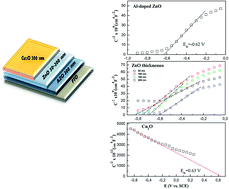
Fig. 1a–c display the Mott–Schottky (M–S) curves obtained for the Al-doped ZnO (AZO), pure ZnO with different thickness, and Cu2O layer, respectively. As shown in Fig. 1a and b, the Mott–Schottky equation is valid within a wide potential range of about 0.6 V, which indicates a well-defined electronic surface state of the AZO and ZnO thin films. A wider linear potential range, which surpasses 1 V, can be attained only from highly organized solids (single crystals). Also, the presence of multiple linear regions in the M–S plots of the AZO and ZnO layers indicates the existence of multiple donor levels.41 Also, the positive slope of the M–S plot confirms the n-type semiconductor characteristic of these films. However, the negative slope of the M–S plot obtained from the Cu2O layer (Fig. 1c) confirms the p-type semiconductor characteristic.
 |
| | Fig. 1 (a) Mott–Schottky plots for the 200 nm AZO/FTO structure, (b) Mott–Schottky plots for the ZnO/FTO structure with different ZnO layer thicknesses and (c) Mott–Schottky plots of Cu2O/FTO. The corresponding flat-band potential values are indicated. The lines were simply drawn through the data points. | |
According to the later Mott–Schottky equation, a plot of 1/C2 vs. E should present a straight line. The slope of this plot
allows calculation of the donor and acceptor concentration. Moreover, the flat band potential can be extrapolated from 1/C2 = 0. The density of the donor/acceptor and flat-band potential (Efb) obtained from the M–S plots are summarized in Table 1. As can be seen from these data, the donor concentration of n-AZO was 1.04 × 1020 cm−3; this value is comparable to the typical values reported in the literature.42 However, the undoped ZnO layer shows a lower carrier concentration in the order of 1019 cm−3. We also noted that the ZnO donor concentration increases significantly from 3.41 up to 9.5 × 1019 cm−3 with increasing ZnO thickness. The most likely cause of this is the rise in crystal defects with increasing ZnO thickness. Accordingly, the flat-band potential of ZnO layers increases from −0.85 up to −0.6 V with increasing the ZnO thickness from 50 to 200 nm. These shifts could be attributed to the increase in donor concentration in n-type ZnO films.43 Turning to the Cu2O layers, the acceptor concentration was 4.6 × 1015 cm−3, which is within the typical range of 1015 to 1018 cm−3 reported for Cu2O in the literature.44,45
Table 1 The flat-band potential, the carrier density and the depletion layer width of all the layers in the Cu2O/ZnO/AZO/FTO heterojunctions and the charge transfer resistance (Rct) of the ZnO layer with different thicknesses
| Layers |
Efb (V vs. SCE) |
ND,A (cm−3) |
W (nm) |
Rct (×103 Ω cm2) |
| AZO (200 nm) |
−0.62 |
1.04 × 10²⁰ |
2.303 |
— |
| ZnO (50 nm) |
−0.85 |
3.41 × 10¹⁹ |
4.768 |
1.036 |
| ZnO (100 nm) |
−0.75 |
7.84 × 10¹⁹ |
2.767 |
0.764 |
| ZnO (150 nm) |
−0.70 |
8.85 × 10¹⁹ |
2.677 |
0.493 |
| ZnO (200 nm) |
−0.60 |
9.50 × 10¹⁹ |
2.335 |
0.323 |
| Cu2O (300 nm) |
+0.63 |
5.85 × 10¹⁵ |
32.4 |
— |
Since the acceptor/donor concentrations of the deposited AZO, ZnO, and Cu2O layers are known, the depletion layer width can be calculated from the following equation:46
| |
 | (4) |
As can be seen from Table 1, the carrier concentrations greatly affect the depletion layer width. For ZnO layer with different thicknesses, the thinnest depletion region was found for 200 nm layer of ZnO, resulting in a higher mobility of the charge carriers.47
Electrochemical impedance spectroscopy (EIS) is useful for qualitative study of the ZnO thin films conductivity. Nyquist diagrams of the impedance spectra for the ZnO layers with different thicknesses obtained in 1 M KNO3 solution at a frequency ranging from 105 to 5 × 10⁻² Hz are shown in Fig. 2. As can be seen, the EIS spectra of all the samples show a single semi-circle at high frequencies. It is well known that in a Nyquist's plot, a semi-circle at high frequencies is a characteristic of the charge transfer process. The charge transfer resistance (Rct) is equal to the diameter of the semi-circle. The smaller the diameter is, the lower the charge transfer resistance is.48 By fitting the Nyquist plots we obtained the charge transfer resistance (Rct) values for the ZnO layers with different thicknesses (Table 1). As can be seen from Fig. 2, the arch decreases with increasing ZnO thickness. Accordingly, the charge transfer resistance Rct decreases gradually from 1.036 down to 0.323 kΩ with increasing the ZnO thickness from 50 to 200 nm, indicating the increase in ZnO conductivity with increasing film thickness. Thus, the ZnO layer of 200 nm shows the highest conductivity. This can be explained by the high donor concentration calculated from the Mott–Schottky plots and the high charge mobility obtained for the 200 nm ZnO layer compared to the other samples. The electrochemical characterizations suggest that the Cu2O/ZnO/AZO heterojunction with a 200 nm ZnO layer will have a good electrical property compared to the other samples with thinner layer of ZnO.
 |
| | Fig. 2 Nyquist diagrams of ZnO films with different thicknesses: (a) 50, (b) 100, (c) 150, and (d) 200 nm, carried out in 1 M KNO3 at a frequency range of 105 to 5 × 10⁻² Hz and a disturbance of 10 mV. | |
3.2. Morphological analysis
Surface morphology was determined through field emission scanning electron microscopy (FE-SEM) and atomic force microscopy (AFM) techniques. Fig. 3a–c presents the top view FE-SEM images of Cu2O grown on ZnO/AZO/FTO substrates with different ZnO buffer layer thicknesses. The FE-SEM images show that a continuous film of Cu2O is obtained for all the samples. From these images, it can be seen that the increase of ZnO layers thickness greatly affects the size and morphology of Cu2O; also the cubic structures are damaged. For example, the Cu2O layers deposited onto 50 nm ZnO show a mixture of cubic structure and four-sided pyramid shape grains in the size of about 300 nm (Fig. 3a), the edges and the corners can be clearly observed at higher magnification (Fig. 3a′). While for deposition onto 100 nm ZnO, large cubic crystals of Cu2O are formed, with a grain size of about 400 nm and granular particles appear (Fig. 3b). On a higher thickness ZnO layer the sharpness of the Cu2O grains decrease and the cubic structure almost completely disappear; also many poorly defined needles and aggregates cover its surface (Fig. 3c).
 |
| | Fig. 3 FE-SEM images of Cu2O films deposited on ZnO/AZO/FTO with different ZnO thicknesses: (a) 50, (b) 100, (c) 150 nm. Figures (a′)–(c′) represent the higher magnification of the respective heterojunctions. | |
Fig. 4 displays the 3D and 2D AFM images resulting from the deposition of the Cu2O layer onto the ZnO/AZO/FTO structures with different ZnO buffer layer thicknesses. It can be seen from the images that the Cu2O morphology is changed. As the ZnO thickness increases, the surface morphology transforms from a pyramid shape to a granular form. The root mean square (RMS) roughness obtained from the AFM data indicates that the surface roughness is strongly dependent on the substrate. The average surface roughness of the Cu2O layer deposited on the ZnO/AZO/FTO substrate with 50 or 100 nm of ZnO are 92 and 72 nm respectively, which is significantly higher than the roughness of Cu2O deposited on a layer of 150 or 200 nm ZnO (40 and 17 nm, respectively). It is possible that this is due to sterical hindrance, where crystals with the fastest growth rate gradually develop in all dimensions at the expense of the slower growing ones.49 Consequently, this broadening is expected to result in a marked increase in both the grain size and the surface roughness.
 |
| | Fig. 4 Tapping mode 3D and 2D AFM images (10 × 10 μm2) of Cu2O/ZnO/AZO/FTO heterojunction samples with different ZnO buffer layer thicknesses: (a) 50, (b) 100, (c) 150 and (d) 200 nm. | |
3.3. Structural characterization
The phases of the obtained Cu2O/ZnO/AZO/FTO heterojunctions were confirmed with XRD measurements, as shown in Fig. 5. Besides the diffraction peak with asterisks from the FTO conductive thin layer on glass, all the other diffraction peaks can be ascribed to cubic Cu2O (JCPDS card no. 00-034-1354) and ZnO wurtzite (JCPDS card no. 00-036-1451) and prove their pure phases. The sharp and narrow peaks show that the heterostructures are highly crystallized, in particular for samples with a 200 or 50 nm ZnO buffer layer. This indicates that the electrodeposition method could also be useful for the preparation of crystalline Cu2O/ZnO nanostructures. Also, from Fig. 5, the (111) direction of Cu2O and (101) of ZnO are very intense, indicating that the obtained heterostructures are preferentially oriented along the (111) and (101) directions, respectively.
 |
| | Fig. 5 XRD patterns of 300 nm-thick Cu2O film grown on the FTO substrates with oxide buffer layers – ZnO/AZO/FTO samples with different ZnO buffer layer thicknesses: (a) 50, (b) 100, (c) 150 and (d) 200 nm. Inset of the figure schematically illustrates the Cu2O/ZnO/AZO/FTO heterostructure architecture. The reference profile for the Cu2O cubic (JCPDS card no. 00-034-1354) and ZnO wurtzite (JCPDS card no. 00-036-1451) are given as a bar graph. | |
It is important to note that the presence of different diffraction peaks from the basic planes of the Cu2O layers indicates that the dense films were composed of Cu2O crystallites with a random orientation; accordingly this is enhanced for the formation of Cu2O/ZnO/AZO/FTO heterostructures.50
The average coherence lengths D of the crystals were estimated from the main (111) Bragg peak of cubic Cu2O, using the Scherrer formula:51
| |
 | (5) |
where
D is the average coherence length (nm),
λ = 1.54056 Å is the wavelength of the incident radiation,
β is the full width at half maximum [FWHM] (rad), and
θ is the Bragg angle (rad).
The FWHMs were determined by fitting Gaussian profile peaks to the experimental data. As the crystals are not exactly of a spherical symmetry, the values have to be considered as approximations. The values of the average coherence length (crystallites size) of the Cu2O layers are 32, 23, 24, and 32 nm, corresponding to 50, 100, 150, and 200 nm ZnO buffer layer thicknesses, respectively. These values are smaller than the average grain sizes observed by FE-SEM, showing that the Cu2O crystallites are subject to crystal defects. According to Zhang et al.,52 the different crystallite sizes contain different dislocation defects, which have a great effect on the electronic property of the heterojunction.
3.4. Optical characterization
An analysis of the photoluminescence (PL) of a semiconductor material is a powerful tool for obtaining information about the structure of the energy bands and the crystalline quality. The room temperature PL spectra of the samples were studied by using the 355 nm line excitation of a Nd-YAG laser. This retain a bit of laser light from the doublet, which is responsible for the peak at 532 nm in the PL spectra. Before performing PL analysis of Cu2O/ZnO/AZO/FTO, it is necessary to present the PL analysis of the ZnO/AZO/FTO substrate. As can be seen from the PL spectrum of the ZnO/AZO/FTO substrate (insert of Fig. 6), a sharp peak was noted in the UV range (402 nm), indicating the near band emission (NBE) of ZnO,53 and a green emission peak (520 nm) was also noted, originating from the deep level emission (DLE) of ZnO, highlighting various types of defects, such as interstitials, vacancies, and impurities, as well as surface defects.54 It is clear that the UV peak intensity was stronger relative to the green emission peak intensity, which is attributed to the improvement in ZnO crystalline quality. On the other hand, Fig. 6 presents the PL spectrum of the Cu2O layer deposited on ZnO/AZO/FTO substrates at different thicknesses of ZnO buffer layers of 50, 100, 150 and 200 nm, respectively. The PL spectrum exhibits strong and sharp ultraviolet (UV) emission centered at 387 nm (3.2 eV), which is attributed to the near-band-gap (NBG) emissions of ZnO. As the theoretical calculations on the energy levels of intrinsic point defects demonstrate that zinc interstitials produce a shallow donor level at 0.5 eV below the bottom of the conduction band,55 the emission peak noted at 460 nm (2.7 eV) originates from the zinc interstitials. The intensity ratio of the ultraviolet emission at 387 nm to the visible emission at 460 nm significantly depends on the quality of the ZnO semiconductor.56 The photoluminescence spectra revealed that the samples with 50 and 200 nm ZnO layers present a sharp ultraviolet emission peak with high intensities as compared to the visible emission peak. These results are in close agreement with the results of the XRD analysis.
 |
| | Fig. 6 Room temperature photoluminescence (PL) spectra of Cu2O/ZnO/AZO/FTO heterojunction samples with different ZnO buffer layer thicknesses. Inset: the PL spectra of the ZnO/AZO/FTO structure. | |
Since the direct band gap of Cu2O extends from 1.96 to 2.38 eV, the visible light peaks emitted at 635 nm (1.95 eV), 611 nm (2.02 eV), and 590 nm (2.1 eV) are attributed to the recombination of the phonon-assisted excitons in the Cu2O layer.56,57 Moreover, the emission peak at 660 nm (1.87 eV) suggests the existence of unknown defects in the Cu2O semiconductor. It is important to mark the disappearance of the green emission peak, which means a reduction in the ZnO film defects. This may be a result of the passivation of the surface defect states after capping the ZnO buffer layer with Cu2O.58
The transmittance spectra with wavelengths from 200 to 800 nm of ZnO/AZO/FTO and Cu2O/ZnO/AZO/FTO heterojunctions thin films at different thicknesses of ZnO buffer layers are shown in Fig. 7. From the inset of Fig. 7, we can see that the substrate containing only AZO and ZnO layers show a high transmittance of 80% and strong absorption in the ultraviolet range. It is clear from Fig. 7 that the deposition of Cu2O on the ZnO/AZO/FTO layers caused a red shift, and the absorption extends to the visible region (500 nm). This could be attributed to the combinational effect of the narrow band gap of Cu2O (approximately 2.17 eV) and the wide band gap of ZnO (approximately 3.37 eV).59 This property ensures the photovoltaic device will have full use of sunlight. Also, the highest transmittance was 65% from Cu2O deposited on the 50 nm ZnO buffer layer, and we also noted that plenty of visible light is transmitted. It is well established that the optical transmission in the visible range is important for transparent conductive oxide applications such as solar cell windows.
 |
| | Fig. 7 UV-Vis transmittance spectra of Cu2O/ZnO/AZO/FTO heterojunction samples with different ZnO buffer layer thicknesses: (a) 50, (b) 100, (c) 150 and (d) 200 nm. Inset: the UV-Vis transmittance spectra of ZnO/AZO/FTO structure. | |
In order to find the effect of ZnO thickness on the absorption edge, the optical band gap energies of the Cu2O and ZnO films were determined through the plot of the Tauc relation:60
where
α is the absorption coefficient,
hν is the photon energy,
A is a constant,
Eg is the band gap of the material, and
n is a number that depends on the nature of the transition. It was found that
n = 1/2 was the best fit for our results and is a characteristic of the direct band gap absorption without phonon mediation. Accordingly, the optical band gap can be obtained by extrapolating the corresponding straight lines downwards to the photon energy axis in the Tauc plot.
61
Fig. 8a shows the plot of (αhν)2 versus the photon energy (hν) from which the optical band gap was determined for ZnO/AZO/FTO. The estimated energy band gap was 3.48 eV, which is slightly higher than that of the ZnO; this is assumed to be the Moss–Burstein shift and caused by the doping with Al. Fig. 8b is the Tauc plot, which shows (αhν)2 versus the photon energy (hν) for the Cu2O deposited onto the ZnO buffer layer with different thicknesses. The estimated band gap of the Cu2O layer was between 2.0 eV and 2.45 eV. These values are intermediate, i.e., lower than that of ZnO and larger than that of Cu2O. The insert of Fig. 8b provides the variation of the Eg values of Cu2O layers with the thickness of the ZnO buffer layer. It is clear that the energy band gap decreases from 2.4 down to 2.0 eV then increases to 2.45 eV with increasing the ZnO thickness from 50 to 150 nm, and then to 200 nm respectively. This variation may be explained by the crystallinity deterioration with increasing ZnO thickness.
 |
| | Fig. 8 Tauc's plot of: (a) ZnO/AZO/FTO structure and (b) Cu2O/ZnO/AZO/FTO heterojunctions with different ZnO buffer layers thicknesses. | |
Band offsets between semiconductors are one of the most important properties of heterostructure. More specifically, the band offsets are critical to many properties, such as quantum confinement, doping ability, and chemical activity.62 To construct the band diagram, the model proposed by Anderson63 was used here, whereby the conduction band offset (ΔEc) and the valence band offset (ΔEv) of the heterojunction are represented by the following equations:
| | |
ΔEv = Eg2 − Eg1 + ΔEc
| (8) |
In our calculation, the electron affinities (X) were assumed to be 4.6, 4.2, and 3.2 eV for the AZO, ZnO, and Cu2O semiconductors, respectively.64,65 Also, the measured band gaps (Eg) were 3.47, 3.25, and 2.36 eV for the AZO, ZnO, and Cu2O materials, respectively. The energy band diagram of the p-Cu2O/n-ZnO/n-AZO heterojunction is shown in Fig. 9. As can be seen from the energy band diagram, as the three semiconductors p-type Cu2O, n-type ZnO, and n-AZO are in contact, a p–n junction at their interface will be formed and the electrons in the n-AZO layer will be transferred to the p-Cu2O layer through the n-ZnO buffer layer. At the same time, the holes of the Cu2O layer will be transferred in the opposite direction until a constant Fermi-level is formed at equilibrium. The ZnO buffer layer makes the energy band between n-AZO and p-Cu2O smoother. The calculated conduction band offset (ΔEc) of the heterojunction Cu2O/ZnO was 1.05 eV, and the valence band offset (ΔEv) was 1.94 eV. The large valence band offset should result in a thin tunneling barrier across the p–n junction.66
 |
| | Fig. 9 Band energy diagram of the isolated states of the n-AZO, n-ZnO, p-Cu2O and p-Cu2O/n-ZnO/n-AZO heterojunctions under equilibrium condition. | |
3.5. Current–voltage characteristics of p-Cu2O/n-ZnO/n-AZO heterojunctions
The charge transport mechanism and the performance of the obtained heterojunctions were investigated using the current–voltage electrical characterization. This method is based on the quantification of the currents crossing a junction under the effect of an external electric field. Fig. 10 shows the current density–voltage characteristics of p-Cu2O/n-ZnO/n-AZO heterojunctions in the dark at room temperature with different ZnO buffer layer thicknesses. It is well established that all heterostructures provide nonlinear behavior, confirming the successful fabrication of the p–n heterojunction. When the n-ZnO buffer layer thickness is 200 nm, electrical rectification is clearly observed. This is due to the high crystallinity of this sample, as also confirmed by the XRD and PL measurements. As can be seen from the curve, a high forward current of 53 μA is observed when 0.6 V was applied, while at −0.6 V applied bias, a small reverse leakage current of −2.8 μA was noted. However, the p-Cu2O/n-ZnO (50 nm)/n-AZO presents a wide reverse current. Whereas the I–V curves of the heterojunctions with an n-ZnO buffer layer thickness of 100 nm and 150 nm do not show properly rectifying behavior.
 |
| | Fig. 10 Current density–voltage characteristics of p-Cu2O/n-ZnO/n-AZO heterojunctions in the dark with different ZnO buffer layer thicknesses: (a) 50, (b) 100, (c) 150, and (d) 200 nm. Inset of the figure schematically illustrates the Cu2O/ZnO/AZO/FTO heterostructure with top contact. | |
IV. Conclusions
In this work, Cu2O/ZnO/AZO/FTO thin layer heterojunctions were synthesized using simple low-cost potentiostatic ECD under optimal conditions. In this structure, we inserted a ZnO thin film with different thicknesses as a buffer layer between n-AZO and p-Cu2O films. It was found that the Cu2O properties were mainly affected by the ZnO thickness. Thus, high crystallinity and large cubic grains were confirmed for the Cu2O/ZnO/AZO/FTO heterojunction with a 50 nm ZnO buffer layer by the FE-SEM images and XRD analysis. Also, p-type conduction was confirmed for the Cu2O layer using Mott–Schottky plots, and strong absorption in the visible region with a large band gap energy of 2.4 eV was noted from the UV-Vis spectra, which ensures a full consumption of sunlight for the photovoltaic devices. Generally, achieving a higher quality of Cu2O layer crystallinity and morphology requires improving the ZnO/AZO conductivity. The current–voltage (I–V) characteristics of the p-Cu2O/n-ZnO/n-AZO heterojunctions showed well-defined rectifying behavior. A future study investigating the impact of ZnO thickness on the electrodeposited Cu2O/non-doped ZnO/AZO heterojunctions solar cell efficiency would be very interesting.
References
- T. Jiang, T. Xie, Y. Zhang, L. Chen, L. Peng, H. Li and D. Wang, Phys. Chem. Chem. Phys., 2010, 12, 15476 RSC.
- B. O'Regan and M. Grätzel, Nature, 1991, 353, 737 CrossRef.
- S. Sakthivel, M. Janczarek and H. Kisch, J. Phys. Chem. B, 2004, 108, 19384 CrossRef CAS.
- R. Abe, H. Takami, N. Murakami and B. Ohtani, J. Am. Chem. Soc., 2008, 130, 7780 CrossRef CAS PubMed.
- N. Serpone, E. Borgarello and M. Grätzel, J. Chem. Soc., Chem. Commun., 1984, 342 RSC.
- M. Long, W. M. Cai, J. Cai, B. X. Zhou, X. Y. Chai and Y. H. Wu, J. Phys. Chem. B, 2006, 110, 20211 CrossRef CAS PubMed.
- T. Arai, M. Yanagida, Y. Konishi, Y. Iwasaki, H. Sugihara and K. Sayama, J. Phys. Chem. C, 2007, 111, 7574 CAS.
- K. Akimoto, Sol. Energy, 2006, 80, 715 CrossRef CAS.
- T. Gershon, K. P. Musselman, A. Marin, R. H. Friend and J. L. MacManus-Driscoll, Sol. Energy Mater. Sol. Cells, 2012, 96, 148 CrossRef CAS.
- M. A. Green and M. J. Keevers, Prog. Photovoltaics, 1995, 3, 189 CAS.
- A. Mittiga, E. Salza, F. Sarto, M. Tucci and R. Vasanthi, Appl. Phys. Lett., 2006, 88, 88 CrossRef.
- C. D. Gu, C. Cheng, H. Y. Huang, T. L. Wong, N. Wang and T. Y Zhang, Cryst. Growth Des., 2009, 9, 3278 CAS.
- S. H. Ko, D. Lee, H. W. Kang, K. H. Nam, J. Y. Yeo, S. J. Hong, C. P. Grigoropoulos and H. J. Sung, Nano Lett., 2011, 11, 666 CrossRef CAS PubMed.
- R. L. Hoffman, B. J. Norris and J. F. Wager, Appl. Phys. Lett., 2003, 82, 733 CrossRef CAS.
- T. Minami, H. Tanaka, T. Shimakawa, T. Miyata and H. Sato, Jpn. J. Appl. Phys., 2004, 43, L917 CrossRef CAS.
- X. Fan, G. Fang, S. Guo, N. Liu, H. Gao, P. Qin, S. Li, H. Long, Q. Zheng and X. Zhao, Nanoscale Res. Lett., 2011, 6, 546 CrossRef PubMed.
- W. Septina, S. Ikeda, M. A. Khan, T. Hirai, T. Harada, M. Matsumura and L. M. Peter, Electrochim. Acta, 2011, 56, 4882 CrossRef CAS.
- D. W. Kang, S. H. Kuk, K. S. Ji, H. M. Lee and M. K. Han, Sol. Energy Mater. Sol. Cells, 2011, 95, 138 CrossRef CAS.
- T. Minami, Y. Nishi, T. Miyata and S. Abe, ECS Trans., 2013, 50, 59 CrossRef.
- J. J. Lofeski, J. Appl. Phys., 1956, 27, 777 CrossRef.
- M. Izaki, T. Shinagawa, K.-T. Mizuno, Y. Ida, M. Inaba and A. Tasaka, J. Phys. D: Appl. Phys., 2007, 40, 3326 CrossRef CAS.
- G. K. Paul, R. Ghosh, S. K. Bera, S. Bandyopadhyay, T. Sakurai and K. Akimoto, Chem. Phys. Lett., 2008, 463, 117 CrossRef CAS.
- S. H. Jeong and E. S. Aydil, J. Cryst. Growth, 2009, 311, 4188 CrossRef CAS.
- K. P. Musselman, A. Wisnet, D. C. Iza, H. C. Hesse, C. Scheu, J. L. MacManus-Driscoll and S. Mende, Adv. Mater., 2010, 22, E254 CrossRef CAS PubMed.
- Q.-B. Ma, Z.-Z. Ye, H.-P. He, S.-H. Hu, J.-R. Wang, L.-P. Zhu, Y.-Z. Zhang and B.-H. Zhao, J. Cryst. Growth, 2007, 64, 304 Search PubMed.
- T. Minami, T. Miyata, K. Ihara, Y. Minamino and S. Tsukada, Thin Solid Films, 2006, 47, 494 Search PubMed.
- Y. Nishi, T. Miyata and T. Minami, J. Vac. Sci. Technol., A, 2012, 30, 04D103 Search PubMed.
- B. P. Rai, Sol. Cells, 1988, 25, 256 CrossRef.
- S. Chen, L. Lin, J. Liu, P. Lv, X. Wu, W. Zheng, F. Lai and Y. Qu, J. Alloys Compd., 2015, 644, 378 CrossRef CAS.
- D. Lincot, Thin Solid Films, 2005, 487, 40 CrossRef CAS.
- S. Ki Baek, J. Hui Shin, S. Woon Cho and H. K. Cho, J. Vac. Sci. Technol., B: Nanotechnol. Microelectron.: Mater., Process., Meas., Phenom., 2015, 33, 02B104 Search PubMed.
- O. Baka, A. Azizi, S. Velumani, G. Schmerber and A. Dinia, J. Mater. Sci.: Mater. Electron., 2014, 25, 1761 CrossRef CAS.
- L. Mentar, O. Baka, M. R. Khelladi, A. Azizi, S. Velumani, G. Schmerber and A. Dinia, J. Mater. Sci.: Mater. Electron., 2015, 26, 1217 CrossRef CAS.
- S. Laidoudi, A. Y. Bioud, A. Azizi, G. Schmerber, J. Bartringer, S. Barre and A. Dinia, Semicond. Sci. Technol., 2013, 28, 115005 CrossRef.
- S. S. Jeong, A. Mittiga, E. Salza, A. Masci and S. Passerini, Electrochim. Acta, 2008, 53, 2226 CrossRef CAS.
- M. Kraljić, Z. Mandić and L. Duić, Corros. Sci., 2003, 45, 181 CrossRef.
- A. Paracchino, N. Mathews, T. Hisatomi, M. Stefik, S. D. Tilley and M. Grätzel, Energy Environ. Sci., 2012, 5, 8673 CAS.
- A. W. Bott, Electrochemistry of Semiconductors. Curr. Sep., 1998, vol. 17, p. 87 Search PubMed.
- H. Noh, M. Scharrer, M. A. Anderson, R. P. H. Chang and H. Cao, Phys. Rev. B: Condens. Matter Mater. Phys., 2008, 77, 115136 CrossRef.
- Z. Zhang and P. Wang, J. Mater. Chem., 2012, 22, 2456 RSC.
- C. M. McShane and K.-S. Choi, Phys. Chem. Chem. Phys., 2012, 14, 6112 RSC.
- A. C. Aragonès, A. Palacios-Padrós, F. Caballero-Briones and F. Sanz, Electrochim. Acta, 2013, 109, 117 CrossRef.
- Y. Yang, J. Han, X. Ning, W. Cao, W. Xu and L. Guo, ACS Appl. Mater. Interfaces, 2014, 6, 22534 CAS.
- F. Caballero-Briones, J. M. Artes, I. Diez-Perez, P. Gorostiza and F. Sanz, J. Phys. Chem. C, 2009, 113, 1028 CAS.
- N. Tabuchi and H. Matsumura, Jpn. J. Appl. Phys., 2002, 41, 5060 CrossRef CAS.
- R. Beranek, Adv. Phys. Chem., 2011, 1 CrossRef.
- S. Khan, M. J. M. Zapata, M. B. Pereira, R. V. Gonçalves, L. Strizik, J. Dupont, M. J. L. Santos and S. R. Teixeira, Phys. Chem. Chem. Phys., 2015, 17, 23952 RSC.
- N. Sobti, A. Bensouici, F. Coloma, C. Untiedt and S. Achour, J. Nanopart. Res., 2014, 16, 2577 CrossRef.
- T. Dimopoulos, A. Peić, P. Mullner, M. Neuschitzer, R. Resel, S. Abermann, M. Postl, E. J. W. List, S. Yakunin and W. Heiss, J. Renewable Sustainable Energy, 2013, 5, 011205 CrossRef.
- H. Wei, H. Gong, Y. Wang, X. Hu, L. Chen, H. Xu, P. Liub and B. Cao, CrystEngComm, 2011, 13, 6065 RSC.
- B. D. Cullity, Elements of X-ray Diffraction, Addison Wesley, Reading, MA, 2nd edn, 1978 Search PubMed.
- D. Zhang, Y. Liu, Y. Liu and H. Yang, Phys. B, 2004, 351, 178 CrossRef CAS.
- F. K. Shan, G. X. Liu, W. J. Lee, G. H. Lee, I. S. Kim, B. C. Shin and Y. C. Kim, J. Cryst. Growth, 2005, 277, 284 CrossRef CAS.
- K. P. Musselman, T. Gershon, L. Schmidt-Mende and J. L. MacManus-Driscoll, Electrochim. Acta, 2011, 56, 3758 CrossRef CAS.
- P. S. Xu, Y. M. Sun, C. S. Shi, F. Q. Xu and H. B. Pan, Nucl. Instrum. Methods Phys. Res., Sect. B, 2003, 199, 286 CrossRef CAS.
- B. M. Fariza, J. Sasano, T. Shinagawa, S. Watase and M. Izaki, Thin Solid Films, 2012, 520, 2261 CrossRef CAS.
- B. M. Fariza, J. Sasano, T. Shinagawa, H. Nakano, S. Watase and M. Izakic, J. Electrochem. Soc., 2011, 158, D621 CrossRef.
- Y. Cui, C. Wang, G. Liu, H. Yang, S. Wu and T. Wang, Mater. Lett., 2011, 65, 2284 CrossRef CAS.
- X. Jiang, Q. Lin, M. Zhang, G. He and Z. Sun, Nanoscale Res. Lett., 2015, 10, 30 CrossRef PubMed.
- S. Hussain, C. Cao, G. Nabi, W. S. Khan, Z. Usman and T. Mahmood, Electrochim. Acta, 2011, 56, 8342 CrossRef CAS.
- J. Tauc, in Optical properties of solids 22, ed. F. Abeles, North Holland Pub, Amsterdam, 1970 Search PubMed.
- M. Zemzemi and S. Alaya, Superlattices Microstruct., 2013, 64, 311 CrossRef CAS.
- A. G. Milnes and D. L. Feucht, Heterojunctions and Metal–Semiconductor Junctions, Academic, New York, 1972 Search PubMed.
- W. Siripala, A. Ivanovskaya, T. F. Jaramillo, S. H. Baeck and E. W. McFarland, Sol. Energy Mater. Sol. Cells, 2003, 77, 229 CrossRef CAS.
- H. Kobayashi, H. Mori, T. Ishida and Y. Nakato, J. Appl. Phys., 1995, 77, 1301 CrossRef CAS; A. G. Milnes and D. L. Feucht, Heterojunctions and Metal–Semiconductor Junctions, Academic, New York, 1972 Search PubMed.
- T. J. Hsueh, C.-L. Hsu, S.-J. Chang, P.-W. Guo, J.-H. Hsieh and I. Cherng Chen, Scr. Mater., 2007, 57, 53 CrossRef CAS.
|
| This journal is © The Royal Society of Chemistry 2016 |
Click here to see how this site uses Cookies. View our privacy policy here.