Aggregation and surface behavior of aqueous solutions of cis-bis(1,3-diaminopropane)bis(dodecylamine)cobalt(III) nitrate. A double-chained metallosurfactant

T. A. Wagaya, J. Deya, S. Kumarb, V. K. Aswalb and K. Ismail*a
aDepartment of Chemistry, North-Eastern Hill University, NEHU Campus, Shillong-793022, India. E-mail: kismail@nehu.ac.in; kinehu@hotmail.com; Fax: +91-364-2550486; Tel: +91-364-2722610
bSolid State Physics Division, Bhabha Atomic Research Centre, Trombay, Mumbai-400085, India

Received 16th February 2016 , Accepted 8th July 2016

First published on 8th July 2016


Abstract

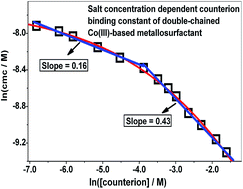
Metallosurfactants or amphiphilic metal complexes are emerging as a new class of material with a range of properties inherent to both metal complexes and surfactants. Looking at the potential applications of these materials in diverse fields, studying the fundamental aspects of their adsorption and aggregation is necessary. cis-Bis(1,3-diaminopropane)bis(dodecylamine)cobalt(III) nitrate (DDCN), a double-chained cationic metallosurfactant, was synthesized and its critical micelle concentration values were determined in aqueous medium as a function of sodium nitrate concentration by using surface tension, conductivity and spectrophotometric methods. Thermal gravimetric analysis showed stability of DDCN up to about 183 °C. DDCN has a salt dependent counterion binding constant, a low value equal to 0.16 becomes more than double (0.43) above 0.025 mol kg−1 NaNO3. The counterion binding constant value of DDCN is however surprisingly low compared to other ionic surfactants. Dynamic light scattering measurements revealed large size aggregates (hydrodynamic diameter = 116 nm with polydispersity index = 0.23) of DDCN which grow even larger on adding NaNO3. Small angle neutron scattering measurements also showed the presence of large size DDCN aggregates existing probably as micellar clusters. Adsorption behavior of DDCN was assessed by calculating surface excess and area per molecule at the air/water interface.

Introduction

Metal complexes having amphiphilicity are classified as metallosurfactants and they are emerging as a new class of material with a range of properties inherent to both metal complexes and surfactants. The presence of a metal ion centre imparts magnetic, redox and catalytic properties to metallosurfactants and therefore these surfactants, compared to conventional surfactants, find applications in more areas such as magnetic resonance imaging,1–3 catalysis4–9 and analyte sensing.6 Many metallosurfactants are also reported to be biologically active.10–19 Metallosurfactants synthesized till now are grouped into three types: (i) in type 1 metallosurfactants, the central metal ion along with its primary coordination sphere acts as the hydrophilic head group and the ligand with long hydrocarbon chain coordinated to the metal ion acts as the hydrophobic tail;4–6,10,20–32 (ii) in type 2 metallosurfactants, a metal complex is coordinated to a conventional ionic surfactant from the tail end such that the metal forms a part of the hydrocarbon tail.33–36 Metallosurfactants of this type are similar to bolaforms; (iii) in type 3 metallosurfactants, the metal complex forms the counterion.37–49 The magnetic surfactants, viz. DTAX and C10mimY (DTA = dodecyltrimethylammonium cation, C10mim = 1-decyl-3-methyl imidazolium cation, X = [GdCl3Br] or [HoCl3Br] or [CeCl3Br] or [FeCl3Br]and Y = [GdCl4] or [HoCl4] or [CeCl4] or [FeCl4]), synthesized by Eastoe and co-workers48,49 fall under this category. In the case of conventional surfactants, double-chained ionic surfactants are known to have interesting aggregation and phase behavior with a tendency to form structures of different morphology,50–54 which motivated us to choose a double-chained type 1 metallosurfactant for our present investigation. The chosen metallosurfactant is cis-bis(1,3-diaminopropane)bis(dodecylamine)cobalt(III) nitrate whose formula is written as cis-[Co(tmd)2(C12H25NH2)2](NO3)3 where tmd represents 1,3-diaminopropane. We will denote this metallosurfactant as DDCN. Although Sasikala and Arunachalam26 first synthesized DDCN and determined its cmc by conductance method, the aggregation and adsorption characteristics of DDCN have not been explored fully. Therefore, in this paper the aggregation and adsorption (at the air/solution interface) behavior of DDCN has been investigated in aqueous medium under the influence of added counterion.

Experimental section

Materials

Cobaltous chloride hexahydrate (Himedia, A.R. grade, 99.0%), 1,3-diamino propane (Aldrich, ≥99%), dodecylamine (Aldrich, ≥99%), sodium nitrate (Sigma-Aldrich, ACS reagent, ≥99%), hydrogen peroxide (Merck, ACS reagent, 30%), hydrochloric acid (Rankem, A.R. grade, 35.4%), perchloric acid (Rankem, A.R. grade, 72%), 2-propanol (Rankem, A.R. grade, 99.7%), ethanol (Merck, ≥ 99.9%), diethyl ether (Rankem, A.R. grade, ≥99.5%), acetone (Rankem, HPLC grade, ≥99.8%) and chloroform-d1 (Merck, min. 99.8% for NMR spectroscopy) were used as received.

Synthesis

First we synthesized trans-dichlorobis(1,3-diaminopropane)cobalt(III) perchlorate (trans-[Co(tmd)2Cl2]ClO4) using a reported55 method. 50 g of CoCl2·6H2O was dissolved in 100 mL of water in a beaker and a solution of 1,3-diaminopropane (31 g) in water (100 mL) was quickly added (over 1–2 min) to it. Then 30 mL of 30% hydrogen peroxide was added slowly under constant stirring. A green precipitate formed which slowly dissolved as the reaction proceeded and a dark brown solution was obtained after complete addition of hydrogen peroxide. 75 mL of 12 M hydrochloric acid and 25 mL of 72% perchloric acid were separately added, and the solution was warmed on a steam bath for 10 min. The solution was cooled to room temperature in the ice bath. The green crystals of trans-[Co(tmd)2Cl2]ClO4 were filtered, washed several times with 2-propanol followed by ether and then air-dried.

DDCN (Fig. 1) was then synthesized according to a known method.26 A slightly more than the calculated amount of an ethanolic solution of dodecylamine (4.3 g) was added to an aqueous solution of trans-[Co(tmd)2Cl2]ClO4 (3 g in 20 mL of water) drop by drop over a period of 30 min. During this addition, the green solution gradually became red and the resulting mixture was kept at 40 °C for 48 h. A pasty solid mass separated out upon the addition of a saturated solution of sodium nitrate. The crude product thus obtained was dissolved in water and re-precipitated by the addition of the saturated sodium nitrate solution. This process was repeated twice until the complex was free from ionic chloride. It was filtered off, washed several times with small amounts of ethanol followed by acetone, and dried over fused calcium chloride and stored in a vacuum desiccator. The purity of DDCN was checked by NMR. The 1H and 13C NMR spectra were recorded in CDCl3 solution using FT-NMR BRUKAR AVANCE II, 400 MHz spectrometer and the chemical shift (δ) values are as follows: 1H NMR (400 MHz, D2O): δ = 0.86 (t, 6H), 1.25–1.35 (m, 36H), 1.75 (m, 4H), 2.11 (m, 4H), 2.87 (m, 4H), 3.30–3.45 (m, 16H) 3.89 (m, 4H). 13C NMR (400 MHz, CDCl3): δ = 14.11, 22.70, 26.35, 27.38, 29.16, 29.42, 29.58, 29.68, 29.72, 29.76, 31.95, 41.20.


image file: c6ra04199j-f1.tif
Fig. 1 Molecular structure of DDCN.

Measurements

All the solutions were prepared in Millipore grade water. Surface tension measurements were made by the Wilhelmy plate method using Krüss K11 tensiometer with an accuracy of ±0.1 mN m−1. The details of cleaning the plate are described elsewhere.56 Conductance measurements were made at 1 kHz using a Wayne Kerr 6440B automatic precision bridge. A dip-type conductivity cell with platinized platinum electrodes was used and its cell constant was determined by using standard KCl solution. Absorption spectra of samples were taken in the wavelength region from 300 to 700 nm using Perkin Elmer Lambda 25 spectrophotometer. A Haake DC10 circulation bath was used for maintaining the temperature of solutions at 25 °C during surface tension, conductance and spectrophotometric measurements. Density of the metallosurfactant solutions was measured using Anton Paar DMA 5000 density meter.

Dynamic light scattering (DLS) measurements of the metallosurfactant solutions were performed using a Malvern Zetasizer Nano ZS instrument operating at 633 nm (4 mW HeNe laser is used) and 90° scattering angle. All samples were filtered through a 0.2 μm cellulose acetate membrane filter prior to measurements to avoid interference from dust particles. For each sample the number of runs was chosen automatically (auto mode) by the instrument and it was found to vary in the range of 6 to 8 runs. The intensity correlation function of each sample was then processed using the method of cumulants to get the value of the average decay rate (τ). The apparent diffusion coefficients (D) of the aggregates were estimated from the expression D = τ/q2, q being the scattering vector and is equal to 4πω[thin space (1/6-em)]sin(θ/2)/λi, where ω is the refractive index of the solvent, θ is the scattering angle and λi is the wavelength of the laser light used. From D the corresponding hydrodynamic diameters (dH) were calculated using the Stokes–Einstein equation. Thus the scattering intensity data processed using the instrumental software provides intensity mean value for the size and the polydispersity index (PDI) value for the size distribution. The temperature was maintained at 25 °C by the built-in temperature control unit (Peltier) of the instrument during all the DLS measurements.

The thermal gravimetric analysis (TGA) was done in Perkin Elmer STA 6000 Simultaneous Thermal Analyzer. The sample measurements were carried out in alumina crucibles under nitrogen atmosphere (maintained with a continuous flow rate of 100.0 mL min−1) at a heating rate of 10 °C min−1. Recording of the thermogram was started at 40 °C.

The small-angle neutron scattering (SANS) experiments were performed in the SANS diffractometer at SANS-I facility, Swiss Spallation Neutron Source SINQ, Paul Scherrer Institut, Switzerland using 0.5 mM (M = mol kg−1) solution of DDCN in D2O. The wavelength of neutron beam used was 6 Å. The experiments were performed at sample-to-detector distances of 2 and 8 m to cover Q range of 0.005 to 0.24 Å−1. The sample solutions were kept in a 2 mm thick quartz cell with Teflon stoppers. The scattered neutrons were detected using two-dimensional 96 cm × 96 cm detector. In all the measurements the temperature was kept fixed at 25 °C. All the measured data were corrected and normalized to absolute scale using BerSANS-PC data processing software.

Results and discussion

TGA of DDCN

The observed values of weight% of DDCN along with the corresponding decomposition temperatures are shown in the thermogram (Fig. 2). DDCN shows thermal stability up to 183 °C and the decomposition of DDCN starts as the temperature exceeds this value. It is observed that in the first step between 40 and 303 °C 41.40% weight of the complex was lost and at 379 °C the weight loss was equal to 48.27%. Since the calculated weight loss due to elimination of two dodecyl chains is equal to 48.52%, it is expected that at 379 °C the metal complex loses its dodecyl chains. The metal complex continues to decompose on further heating and at 810 °C only about 11.54% weight was left in the sample. In Table 1 the observed and calculated weight losses with corresponding eliminated species are listed. A probable decomposition mechanism of DDCN based on the TGA data is shown in Scheme 1. According to this scheme, the complex loses its 2 moles of dodecylamine chains on heating up to 379 °C. On further heating to 810 °C the 2 moles of diaminopropane are also lost and the nitrate ions decompose to give 3 moles of nitrogen dioxide and 0.75 moles of oxygen leaving behind eventually a residue containing cobalt(III) oxide.
image file: c6ra04199j-f2.tif
Fig. 2 Thermogram of DDCN. The observed values of weight% of the sample at different temperatures are shown in the inset.
Table 1 TGA results for DDCN
Molecular weight T (°C) Weight loss (%) Eliminated species Decomposition product (%)
Obs.a Cal.a
a Obs. = observed, Cal. = calculated.
763.93 379 48.27 48.52 2C12H25NH2  
  810 88.46 89.16 2NH2(CH2)3NH2, 3NO2, (¾)O2 Co2O3 (Cal. = 10.84, Obs. = 11.54)


image file: c6ra04199j-s1.tif
Scheme 1 Probable thermal decomposition mechanism for DDCN.

Surface tension, conductivity, UV-visible spectra and critical micelle concentration

The plots of surface tension (γ) of aqueous solutions of DDCN versus log[thin space (1/6-em)]c (c is the concentration of the surfactant) in the presence of different concentrations of NaNO3 are shown in Fig. 3. The cmc values of DDCN determined from these plots as a function of NaNO3 concentration are given in Table S1 (ESI material).
image file: c6ra04199j-f3.tif
Fig. 3 Surface tension of aqueous DDCN + NaNO3 solutions as a function of DDCN concentration. The concentrations of NaNO3 in M are indicated in the inset.

The plots of specific conductivity (κ) versus concentration of DDCN in aqueous NaNO3 solutions are shown in Fig. 4. These plots undergo change in the slope near the cmc. The cmc values determined from these plots are also listed in Table S1.


image file: c6ra04199j-f4.tif
Fig. 4 Specific conductivity (κ) of aqueous DDCN + NaNO3 solutions as a function of DDCN concentration. The concentrations of NaNO3 in M are indicated in the inset.

The UV-vis spectra of DDCN in water are shown in Fig. 5. Similar spectra of DDCN were obtained in aqueous NaNO3 solutions also. The electronic absorption spectra of DDCN in 300–700 nm wavelength range show two bands, one at λmax = 510 nm and another at λmax = 360 nm (λ denotes wavelength) assignable to 1A1g1T1g and 1A1g1T2g transitions, respectively, which are in agreement with the reported11 values. The plots of absorbance versus concentration of DDCN in the presence of different amounts of NaNO3 are shown in Fig. 6. The cmc was determined from the break points in the plots of the absorbance at a fixed wavelength versus the DDCN concentration. The cmc values of DDCN in water and aqueous NaNO3 solution determined from the absorbance data at the two wavelengths are in good agreement (±0.002 mM) and are given in Table S1.


image file: c6ra04199j-f5.tif
Fig. 5 Absorption spectra of DDCN in water. The concentrations of the DDCN in 10−4 M are indicated in the inset.

image file: c6ra04199j-f6.tif
Fig. 6 Variation of absorbance of aqueous DDCN + NaNO3 solutions at (a) λ = 360 nm and (b) λ = 510 nm with DDCN concentration. The concentrations of NaNO3 in M are indicated in the inset.

It is clear from Table S1 that the cmc values determined from the three methods (surface tension, conductance and UV-vis spectra) are in very good agreement. The final cmc values of DDCN in water in the absence and presence of NaNO3 are chosen as the average of the cmc values determined from the three methods which are shown in Table 2. The cmc value of DDCN in water obtained in the present study is equal to 0.365 mM and this is in agreement with the cmc value equal to 0.35 mM reported in water by Sasikala and Arunachalam26 on the basis of conductance data only. The cmc of DDCN decreases by the addition of NaNO3. The added electrolyte furnishes more counterions which on binding to the micellar surface reduce the repulsive interaction energy between the surfactant polar head groups thereby favoring micellization and hence cmc decreases. A comparison of the cmc value of DDCN has been made with the cmc values of other surfactants (Table 2). Compared to the cmc of cetyltrimethylammonium bromide (CTAB)57 and cetylpyridinium chloride (CPC),58 which are single chain surfactants with hexadecyl chain, the cmc of DDCN is much lower, which is attributable to higher hydrophobicity of DDCN due to two dodecyl chains. DDCN has lower cmc value than that of ethanediyl-1,2-bis(dodecyldimethylammonium bromide) (12-2-12)59 also. 12-2-12 is a gemini surfactant and has two dodecyl carbon chains like DDCN. The carbon chains present in the two diaminopropane ligands of the head group enhance the hydrophobicity of DDCN and this is perhaps responsible for its lower cmc than 12-2-12. On the other hand, DDCN has higher cmc than the double chain surfactant didodecyldimethylammonium bromide (DDMB),53 which may be due to stronger repulsive interaction between the DDCN head groups owing to +3 charge.

Table 2 Average cmc values of DDCN in aqueous NaNO3 solutions and reported cmc values of a few surfactants in water (all at 25 °C)
Surfactant [NaNO3]/M Average cmca (±3%)/mM Reported cmc/mM
a Present work.b Ref. 26.c Ref. 57.d Ref. 58.e Ref. 53.f Ref. 59.
DDCN 0 0.365 0.35b
CTAB 0 0.88c
CPC 0 0.91d
DDMB 0 0.05e
12-2-12 0 0.95f
DDCN 0.001 0.343  
0.002 0.325
0.005 0.289
0.010 0.257
0.020 0.230
0.030 0.203
0.040 0.184
0.050 0.169
0.070 0.140
0.100 0.123
0.150 0.105
0.200 0.091


Counterion binding constant

The dependence of cmc on the electrolyte concentration near the cmc is explained in terms of the Corrin–Harkins (CH) equation,60 which for the present system takes the form
 
ln(cmc) = Aβ[thin space (1/6-em)]ln(3cmc + ce) (1)

In eqn (1), β represents the counterion binding constant equal to the ratio of the number of counterions bound per micelle to the number of monomers per micelle (aggregation number) and A = ΔG0m/RT, where ΔG0m is the standard free energy of micellization per mole of surfactant, R is the gas constant and T is the absolute temperature. The term 3cmc + ce is actually equal to the total concentration of the free counterion in the solution. The electrolyte concentration ce accounts for the moles of free counterion contributed by the added electrolyte and the amount of free counterion contributed by the metallosurfactant is equal to 3cmc. From the CH plot shown in Fig. 7, it is obvious that the plot is non-linear and hence the value of β, which is given by the slope ∂ln(cmc)/∂ln(3cmc + ce), is a function of NaNO3 concentration. To find the slope, the experimental data of the CH plot are fitted to a polynomial and from the coefficients of the polynomial (shown in Fig. 7) the values of β are calculated at different NaNO3 concentrations. However, from Fig. 7 it can also be seen that the experimental data of the CH plot lying below and above 0.025 M NaNO3 concentration (c*) fall nicely on two different straight lines, thereby indicating that the electrolyte concentration dependent values of β can be more conveniently averaged into two values, a lower value equal to 0.16 below c* (slope of the linear plot below c*) and a higher value equal to 0.43 above c* (slope of the linear plot above c*). A similar counterion binding behavior was reported in the case of the double-chained conventional anionic surfactant sodium dioctylsulfosuccinate (AOT),50,51 and also in the case of a few single-chained conventional cationic surfactants, viz. DDMB,53 dodecyldimethylammonium bromide,61 cetyltrimethylammonium acetate (CTA)62 and dodecylpyridinium bromide/iodide.63


image file: c6ra04199j-f7.tif
Fig. 7 The CH plot for DDCN in aqueous NaNO3 solution.

Generally, by adding a salt to ionic surfactant solution (the salt contains the same counterion as that of the surfactant), the number of bound counterions per micelle (m) increases thereby decreasing the repulsion between the head groups which in turn causes the aggregation number nag to increase. The value of the counterion binding constant β = m/nag remains constant only if m and nag increase proportionately in such a manner that the value of the ratio m/nag does not change much, which coincidentally happens in most of the ionic micellar solutions as evidenced by the linearity of the CH plot. On the other hand, if the increase in m is disproportionate to the increase in nag, then the slope of the CH equation would change on adding salt. In support of this explanation, a non-linear CH plot with β increasing from 0.3 to 0.7 was reported for CTA in the presence of added sodium acetate.62 Furthermore, increase in nag due to increase in m causes the size of the micelle also to increase. However, as the size of the micelle increases, at some point its shape must also change due to geometric factors (this is controlled by the packing parameter) so as to accommodate the increased number of hydrocarbon tails in the aggregate. When such a shape change of the ionic micelle takes place due to geometric constraints, the surface area of micelle per head group changes causing change in surface charge density and this affects the counterion binding and hence the value of β. Change of β due to micellar shape change has also been reported in the literature.51,53,63

The corresponding ΔG0m values calculated from the intercepts of CH plot are equal to 22.3 kJ mol−1 and 24.7 kJ mol−1 below and above c*, respectively. From the Mass-Action Model the expression for ΔG0m in the present case is of the form

 
ΔG0m = RT(1 + β)ln(cmc) + RT[thin space (1/6-em)]β[thin space (1/6-em)]ln[thin space (1/6-em)]3 (2)

The values of ΔG0m calculated from eqn (2) are found to be equal to −22.2 kJ mol−1 and −24.7 kJ mol−1 below and above c*, respectively, which are in excellent agreement with the values that we obtained from the CH plot. The dependence of ΔG0m on electrolyte concentration is shown in Fig. 8. A sudden change in β is also reflected in a sudden change in ΔG0m (Fig. 8).


image file: c6ra04199j-f8.tif
Fig. 8 Standard free energy change of micellization and adsorption of DDCN as a function of NaNO3 concentration.

DLS measurements

The values of the hydrodynamic diameter (dH) of DDCN micelles along with the corresponding PDI values as a function of NaNO3 concentration in water are given in Table S2. Representative correlation and size distribution curves are shown in Fig. 9. For DLS experiment, unlike in the case of conventional surfactants, low concentration of DDCN was enough to get good scattering data and hence 0.50 mM DDCN solution was used. The measured dH value of the DDCN micelles in water was found to be 116.3 nm. Values of dH in this range were also reported by Veeralakshmi et al.17 for different Co(III) metallosurfactants and by Mauro et al.36 for iridium(III) metallosurfactant (Table 3). From Fig. 10, it is clear that upon addition of the NaNO3 electrolyte, the dH of the DDCN aggregates increases first steeply up to about 0.03 M NaNO3 (near c*) and above this concentration the increase is gradual. Upon addition of NaNO3 to the micellar solution of DDCN, more counterions (NO3) bind to the micelle which reduces the repulsion between the head groups at the micellar surface thereby increasing the aggregation number and also the micellar size. It is a general feature of ionic surfactants that on increasing electrolyte or counterion concentration the aggregate size increases leading to shape change also. Shape change is explained on the basis of packing parameter, P = v/(la), where v and l are the volume and length of the hydrocarbon tail, respectively, and a is the area of the head group. As aggregation number increases a decreases causing P to increase. P has different range of values for different shapes.64 The values of v (in Å3) and l (in Å) are calculated using the Tanford relations65
 
v = 27.4 + 26.9nc (3)
 
l = 1.5 + 1.265nc (4)

image file: c6ra04199j-f9.tif
Fig. 9 Representative correlation (A) and size distribution (B) curves for DDCN in aqueous NaNO3 solution. The concentrations of NaNO3 in M are shown in the insets.
Table 3 Hydrodynamic diameter of DDCN and a few other metallosurfactants
Metallosurfactant dH/nm Ref.
a dien = diethylenetriamine, DA = dodecylamine.b HA = hexadecylamine.
DDCN 116.3 Present work
[Co(dien)(DA)Cl2]ClO4a 117.9 17
[Co(dien)(HA)Cl2]ClO4b 136.3 17
[Co(dien)(DA)2Cl](ClO4)2 151.0 17
[Co(dien)(HA)2Cl](ClO4)2 188.5 17
[(2-Carboxy-3-OC12H24OSO3-pyridyl)bis((2-pyridyl)phenyl)iridium]Na 202 36


image file: c6ra04199j-f10.tif
Fig. 10 Variation of hydrodynamic diameter of DDCN (0.5 mM) with [NaNO3] in aqueous medium.

The term nc denotes number of carbons in the hydrocarbon chain of a surfactant. For DDCN the value of v calculated from eqn (3) gets doubled due to double chain and is equal to 700.4 Å3 and l is equal to 16.7 Å. Using the reported bond length (2.1 Å) value in cis-dinitrobis(1,3-diaminopropane)cobalt(III) chloride66 or cis-chlorobis(ethylenediamine)hexylamine-cobalt(III) chloride,67 the spherical surface area of the bare head group of DDCN is estimated to be equal to about 55.4 Å2. This value of surface area if substituted for a, the value of P is found to be about 0.76 which indicates vesicle structure for DDCN aggregate. It may however be noted that the value of a is actually expected to be higher than 55.4 Å2 due to hydration of the head group. Nevertheless this illustrative calculation of P indicates that the DDCN aggregate tends to have large size with non-spherical shape, which indirectly supports large value of dH obtained from the DLS data. The large value of dH is further discussed with the help of SANS data in the next section.

SANS analysis

The values of the differential scattering cross section per unit volume (dΣ/dΩ) as a function of scattering vector Q for 0.5 mM DDCN in D2O obtained from the SANS experiments at 25 °C are shown in Fig. 11. A characteristic feature of the SANS profile of DDCN is that it does not exhibit a maximum unlike the SANS profiles of conventional ionic surfactants. The SANS measurements of magnetic surfactants reported by Eastoe and co-workers49 also revealed that the maximum in the SANS profile of dodecyltrimethylammonium bromide disappeared when the bromide counterion was replaced by lanthanide metal ion containing counterion. Similar SANS data was reported by Griffiths et al.24,68,69 for various type 1 metallosurfactants with different metal ions and ligands. Presence of metal ion centre in the ionic surfactant enhances the scattering intensity at low Q values and the disappearance of intensity maximum indicates that metallomicelles are not spherical and rather large size aggregates exist in metallosurfactant solutions. The scattering data for DDCN were analyzed by fitting the data to different shape models (Appendix S1, ESI material). The SANS data did not fit well to models of rod-like, disc-like, worm-like and unilamellar vesicle shapes. However, the micellar cluster model provided a good fit and the results of this fitting are shown in Fig. 11 and Table 4. The equation used in the micellar cluster model for dΣ/dΩ is of the form
 
image file: c6ra04199j-t1.tif(5)
where C is a constant proportional to the specific surface area of surface fractals. The first term accounts for scattering from large aggregates having power law and the second term is for scattering from the particles within the aggregates. The scattering intensity was low when the NaNO3 concentration is below c* (Fig. 11). Above c*, the micellar radius appears to increase slowly with increase in NaNO3 concentration (Table 4). From SANS, the overall size of the micellar cluster could not be determined due to the limited Q range of the data. The large hydrodynamic sizes obtained above from the DLS data may however be attributed to the sizes of the large micellar clusters instead of the size of the individual micelle.

image file: c6ra04199j-f11.tif
Fig. 11 SANS data for DDCN (0.50 mM). Solid lines represent the data from model (micellar cluster model) fitting.
Table 4 Results of the SANS data fitting to micellar clusters model
Salt conc. (mM) Micellar radius (nm) Volume fractiona α
a It is the volume fraction of the micelles within the clusters.
0 2.0 0.02 4.0
0.10 2.7 0.05 3.0
0.15 2.8 0.06 3.1


Adsorption

The surface excess of DDCN at the air/water interface (Γ) in the presence of NaNO3 is determined by using the relation
 
image file: c6ra04199j-t2.tif(6)

The value of n for 1[thin space (1/6-em)]:[thin space (1/6-em)]3 ionic surfactants like DDCN in the presence of electrolyte is not readily available. The derivation of the expression for n is given in Appendix S2 (ESI material) and n is given by the equation

 
image file: c6ra04199j-t3.tif(7)

The meanings of the different terms are defined in Appendix S2. For DDCN + NaNO3 system, n+ = 1, n = 3, z+ = 3, z = 1 and m = 1. Considering the double layer to be electrically neutral (βa = 3), we get in the case of DDCN the expression for n as

 
image file: c6ra04199j-t4.tif(8)

If we neglect the effect of activity coefficient, eqn (8) becomes

 
n = 1 + 9c/(3c + ce) (9)

For calculating Γ at the cmc (Γcmc), the surface tension versus ln[thin space (1/6-em)]c data were fitted to a polynomial and the fitted values of the coefficients of the polynomial were used to determine the values of ∂γ/∂ln[thin space (1/6-em)]c corresponding to c = cmc. Then by substituting these values of ∂γ/∂ln[thin space (1/6-em)]c in eqn (6) and using eqn (8) and (9) for determining the values of n, the values of Γcmc were calculated as a function of NaNO3 concentration. The surface excess values of DDCN thus calculated are presented in Fig. 12. The surface area, Aa, covered per molecule of DDCN at the air/water interface was calculated using the relation, Aa = 1/(NAΓcmc), where NA is the Avogadro number. The values of Aa are also presented in Fig. 12. The value of Γcmc that we obtained for DDCN in water is 1.6 × 10⁻⁶ mol m−2 (1.8 × 10⁻⁶ mol m−2 when activity is considered) and the corresponding value of Aa is 1.04 nm2 (0.92 nm2 when activity is considered). Interestingly, Γcmc and Aa values of DDCN are almost equal to the corresponding values for AOT.50 The cross-sectional surface area (flat area) of the bare head group of DDCN is estimated to be nearly equal to 0.14 nm2 on the basis of the reported bond length values in cis-dinitrobis(1,3-diaminopropane)cobalt(III) chloride66 or cis-chlorobis(ethylenediamine)hexylamine-cobalt(III) chloride.67 The higher value of Aa obtained from Γcmc thus indicate that the head group of DDCN is hydrogen bonded to water and is also experiencing the electrostatic repulsion from the neighbouring head groups. For instance, if we increase the head group radius by about 2.5 Å to account for the hydrogen bond between head group and water and the O–H bond in water, then the cross sectional area of the head group increase to the value 0.66 nm2. Metal complex head groups are known to have high hydrogen bonding potential.68 With increasing electrolyte concentration, Γcmc of DDCN increases initially, reaches a maximum value, and thereafter shows a slight decreasing trend before becoming almost constant. The maximum value of Γcmc of DDCN in NaNO3 solution is found to be 3.5 × 10⁻⁶ mol m−2 (3.9 × 10⁻⁶ mol m−2 when activity is considered). DDCN attains this maximum value of Γcmc at 0.01 M NaNO3. The added NaNO3 thus enhances the adsorption of DDCN at the air/water interface and decreases the surface area coverage per molecule of the metallosurfactant by better screening of electrostatic repulsion between the ionic heads as a result of increase in the number of counterions in the Stern and diffuse layers. The value of Γ or Γcmc with electrolyte concentration is controlled by the terms 1/n and ∂γ/∂ln[thin space (1/6-em)]c. On increasing electrolyte concentration, there is an overall decrease in the value of the slope ∂γ/∂ln[thin space (1/6-em)]c. On the other hand, the variation of 1/n term with increase in NaNO3 concentration is found to be similar to that of Γcmc. Therefore, the dependence of Γcmc on electrolyte concentration is controlled by the n term or, in other words, electrostatic interactions control the dependence of Γcmc on NaNO3.


image file: c6ra04199j-f12.tif
Fig. 12 (a) Surface excess of DDCN and (b) surface area covered per DDCN molecule at the air/water interface in aqueous NaNO3 solution.

The standard free energy of adsorption (ΔG0ad) of DDCN was determined by using the expression,

 
ΔG0ad = ΔG0mπcmc/Γcmc (10)
where πcmc is the surface pressure near the cmc. The variation of ΔG0ad with NaNO3 concentration is shown in Fig. 8. Normally, one would expect that when ΔG0ad becomes less negative adsorption is less favoured and less surfactant monomers would go to the air/solution interface thereby causing decrease in Γcmc, which imply that the trends in the variation of ΔG0ad and Γcmc with electrolyte concentration must be opposite to each other. However, the observed trends in the variation of ΔG0ad and surface excess with NaNO3 concentration are similar. Therefore, although spontaneity of adsorption is controlled by the value of ΔG0ad, the amount of surfactant monomers adsorbed per unit area at the air/water interface is not controlled simply by ΔG0ad.

Conclusions

DDCN is thermally stable up to 183 °C. The surface tension, conductance and UV-visible spectral methods provide cmc values of DDCN which are in mutual agreement. In the presence of NaNO3, DDCN has two values of counterion binding constant; the transition from the lower value (0.16) to the higher value (0.43) takes place around 0.025 M NaNO3 concentration (c*). Both the counterion binding constants of DDCN are surprisingly low compared to that of a conventional double-chained ionic surfactant, AOT. On the other hand, the surface excess and area per molecule values of DDCN are almost equal to the corresponding values of AOT. Added NaNO3 improves significantly the aggregation and adsorption behavior of DDCN. Both DLS and SANS confirm that DDCN forms large size aggregates and the size increased further in the presence of NaNO3. The SANS data indicate that the aggregates of DDCN exist as micellar clusters.

Acknowledgements

T. A. W. acknowledges the research fellowship received from the UGC, New Delhi, India.

References

  1. P. Gong, Z. Chen, Y. Chen, W. Wang, X. Wang and A. Hu, Chem. Commun., 2011, 47, 4240–4242 RSC.
  2. J. Tang, Y. Sheng, H. Hu and Y. Shen, Prog. Polym. Sci., 2013, 38, 462–502 CrossRef CAS.
  3. Y. Chen, Q. Zhu, Y. Tian, W. Tang, F. Pan, R. Xiong, Y. Yuan and A. Hu, Polym. Chem., 2015, 6, 1521–1526 RSC.
  4. S. Bhattacharya and N. Kumari, Coord. Chem. Rev., 2009, 253, 2133–2149 CrossRef CAS.
  5. J. Zhang, X.-G. Meng, X.-C. Zeng and X.-Q. Yu, Coord. Chem. Rev., 2009, 253, 2166–2177 CrossRef CAS.
  6. F. Mancin, P. Scrimin, P. Tecilla and U. Tonellato, Coord. Chem. Rev., 2009, 253, 2150–2165 CrossRef CAS.
  7. E. Kimura, H. Hashimoto and T. Koike, J. Am. Chem. Soc., 1996, 118, 10963–10970 CrossRef CAS.
  8. M. S. Goedheijt, B. E. Hanson, J. N. H. Reek, P. C. J. Kamer and P. W. N. M. van Leeuwen, J. Am. Chem. Soc., 2000, 122, 1650–1657 CrossRef CAS.
  9. A. A. Hafiz, J. Surfactants Deterg., 2005, 8, 359–363 CrossRef CAS.
  10. S. Veeralakshmi, S. Nehru, G. Sabapathi, S. Arunachalam, P. Venuvanalingam, P. Kumar, C. Anushad and V. Ravikumar, RSC Adv., 2015, 5, 31746–31758 RSC.
  11. R. S. Kumar and S. Arunachalam, Biophys. Chem., 2008, 136, 136–144 CrossRef CAS PubMed.
  12. N. Kumaraguru and K. Santhakumar, J. Coord. Chem., 2009, 62, 3500–3511 CrossRef CAS.
  13. S. C. N. Chandar, K. Santhakumar and M. N. Arumugham, Transition Met. Chem., 2009, 34, 841–848 CrossRef CAS.
  14. R. S. Kumar, S. Arunachalam, V. S. Periasamy, C. P. Preethy, A. Riyasdeen and M. A. Akbarsha, J. Inorg. Biochem., 2009, 103, 117–127 CrossRef CAS PubMed.
  15. S. C. N. Chandar, D. Sangeetha and M. N. Arumugham, Transition Met. Chem., 2011, 36, 211–216 CrossRef CAS.
  16. R. S. Kumar, H. van den Bergh and G. Wagnières, J. Solution Chem., 2012, 41, 294–306 CrossRef.
  17. S. Veeralakshmi, S. Nehru, S. Arunachalam, P. Kumar and M. Govindaraju, Inorg. Chem. Front., 2014, 1, 393–404 RSC.
  18. A. Riyasdeen, R. Senthilkumar, V. S. Periasamy, P. Preethy, S. Srinag, M. Zeeshan, H. Krishnamurthy, S. Arunachalam and M. A. Akbarsha, RSC Adv., 2014, 4, 49953–49959 RSC.
  19. S. C. N. Chandar, D. Sangeetha and M. N. Arumugham, Transition Met. Chem., 2014, 39, 159–165 CrossRef.
  20. B. Donnio, Curr. Opin. Colloid Interface Sci., 2002, 7, 371–394 CrossRef CAS.
  21. J. Bowers, K. E. Amos, D. W. Bruce and R. K. Heenan, Langmuir, 2005, 21, 5696–5706 CrossRef CAS PubMed.
  22. H. Er, S. Ohkawa and M. Iida, Colloids Surf., A, 2007, 301, 189–198 CrossRef CAS.
  23. G. A. Koutsantonis, G. L. Nealon, C. E. Buckley, M. Paskevicius, L. Douce, J. M. Harrowfield and A. W. McDowall, Langmuir, 2007, 23, 11986–11990 CrossRef CAS PubMed.
  24. P. C. Griffiths, I. A. Fallis, T. Tatchell, L. Bushby and A. Beeby, Adv. Colloid Interface Sci., 2008, 144, 13–23 CrossRef CAS PubMed.
  25. P. C. Griffiths, I. A. Fallis, C. James, I. R. Morgan, G. Brett, R. K. Heenan, R. Schweins, I. Grillo and A. Paul, Soft Matter, 2010, 6, 1981–1989 RSC.
  26. K. Sasikala and S. Arunachalam, Monatsh. Chem., 2010, 141, 309–316 CrossRef CAS.
  27. T. Owen and A. Butler, Coord. Chem. Rev., 2011, 255, 678–687 CrossRef CAS PubMed.
  28. P. Mahato, S. Saha, S. Choudhury and A. Das, Chem. Commun., 2011, 47, 11074–11076 RSC.
  29. A. N. Verani, J. Driscoll, P. H. Keyes and M. J. Heeg, Inorg. Chem., 2014, 53, 5647–5655 CrossRef PubMed.
  30. G. E. Jaggernauth and R. A. Fairman, Inorg. Chem. Commun., 2014, 43, 15–18 CrossRef CAS.
  31. N. Iza, A. Guerrero-Martínez, G. Tardajos, M. J. Ortiz, E. Palao, T. Montoro, A. Radulescu, C. A. Dreiss and G. Gonzalez-Gaitano, Langmuir, 2015, 31, 2677–2688 CrossRef CAS PubMed.
  32. J. Pazinato, D. M. Hoffmeister, K. P. Naidek, E. Westphal, H. Gallardo and H. Winnischofer, Electrochim. Acta, 2015, 153, 574–582 CrossRef CAS.
  33. E. Valls, A. Solsona, J. Suades, R. Mathieu, F. Comelles and C. López-Iglesias, Organometallics, 2002, 21, 2473–2480 CrossRef CAS.
  34. E. Parera, F. Comelles, R. Barnadas and J. Suades, Langmuir, 2010, 26, 743–751 CrossRef CAS PubMed.
  35. E. Parera, F. Comelles, R. Barnadas and J. Suades, Chem. Commun., 2011, 47, 4460–4462 RSC.
  36. M. Mauro, G. D. Paoli, M. Otter, D. Donghi, G. D'Alfonso and L. D. Cola, Dalton Trans., 2011, 40, 12106–12116 RSC.
  37. A. M. Badawi, M. A. Mekawi, A. S. Mohamed, M. Z. Mohamed and M. M. Khowdairy, J. Surfactants Deterg., 2007, 10, 243–255 CrossRef CAS.
  38. A. M. Badawi, M. A. Mekawi, M. Z. Mohamed, A. S. Mohamed and M. M. Khowdairy, J. Surfactants Deterg., 2007, 10, 257–267 CrossRef CAS.
  39. I. A. Aiad, A. M. Badawi, M. M. El-Sukkary, A. A. El-Sawy and A. I. Adawy, J. Surfactants Deterg., 2007, 15, 223–234 CrossRef PubMed.
  40. I. A. Aiad, M. H. M. Ahmed, A. Hessein and M. Ali, J. Dispersion Sci. Technol., 2012, 33, 1144–1153 CrossRef CAS.
  41. S. K. Mehta, R. Kaur and G. R. Chaudhary, Colloids Surf., A, 2012, 403, 103–109 CrossRef CAS.
  42. S. K. Mehta and R. Kaur, J. Colloid Interface Sci., 2013, 393, 219–227 CrossRef CAS PubMed.
  43. G. Kaur, G. Karir and S. K. Mehta, Colloids Surf., A, 2013, 434, 25–34 CrossRef CAS.
  44. R. Kaur, S. Gupta, S. K. Mehta, Y. Imai, T. Takiue, H. Matsubara and M. Aratono, New J. Chem., 2014, 38, 3925–3932 RSC.
  45. S. K. Mehta and R. Kaur, J. Therm. Anal. Calorim., 2014, 115, 925–932 CrossRef CAS.
  46. A. I. Adawy and M. M. Khowdiary, J. Surfactants Deterg., 2013, 16, 709–715 CrossRef CAS.
  47. I. Svanedal, S. Boija, A. Almesåker, G. Persson, F. Andersson, E. Hedenström, D. Bylund, M. Norgren and H. Edlund, Langmuir, 2014, 30, 4605–4612 CrossRef CAS PubMed.
  48. P. Brown, T. A. Hatton and J. Eastoe, Curr. Opin. Colloid Interface Sci., 2015, 20, 140–150 CrossRef CAS.
  49. P. Brown, A. Bushmelev, C. P. Butts, J.-C. Eloi, I. Grillo, P. J. Beker, A. M. Schmidt and J. Eastoe, Langmuir, 2013, 29, 3246–3251 CrossRef CAS PubMed.
  50. I. M. Umlong and K. Ismail, J. Colloid Interface Sci., 2005, 291, 529–536 CrossRef CAS PubMed.
  51. J. Dey, J. Bhattacharjee, P. A. Hassan, V. K. Aswal, S. Das and K. Ismail, Langmuir, 2010, 26, 15802–15806 CrossRef CAS PubMed.
  52. H. N. Patrick and G. G. Warr, Self-assembly patterns in double- and triple-chained ionic surfactants, in Specialist surfactants, ed. I. D. Robb, Blackie Academic & Professional, London, 1997 Search PubMed.
  53. Y. Ono, H. Kawasaki, M. Annaka and H. Maeda, J. Colloid Interface Sci., 2005, 287, 685–693 CrossRef CAS PubMed.
  54. B. W. Ninham, D. F. Evans and G. J. Wei, J. Phys. Chem., 1983, 87, 5020–5025 CrossRef CAS.
  55. B. M. Oulaghan and D. A. House, Inorg. Chem., 1978, 17, 2197–2202 CrossRef CAS.
  56. U. Thapa, J. Dey, S. Kumar, P. A. Hassan, V. K. Aswal and K. Ismail, Soft Matter, 2013, 9, 11225–11232 RSC.
  57. G. Para, E. Jarek and P. Warszynski, Adv. Colloid Interface Sci., 2006, 122, 39–55 CrossRef CAS PubMed.
  58. T. Mukhim, J. Dey, S. Das and K. Ismail, J. Colloid Interface Sci., 2010, 350, 511–515 CrossRef CAS PubMed.
  59. V. I. Martin, A. Rodriguez, M. d. M. Graciani, I. Robina and M. L. Moya, J. Phys. Chem. B, 2010, 114, 7817–7829 CrossRef CAS PubMed.
  60. M. L. Corrin and W. D. Harkins, J. Am. Chem. Soc., 1947, 69, 684–688 Search PubMed.
  61. H. Okuda, S. Ozeki and S. Ikeda, Bull. Chem. Soc. Jpn., 1984, 57, 1321–1327 CrossRef CAS.
  62. J. Toullec and S. Couderc, Langmuir, 1997, 13, 1918–1924 CrossRef CAS.
  63. K. Fujio, Y. Maruyama and Y. Uzu, J. Oleo Sci., 2005, 54, 375–382 CrossRef CAS.
  64. J. N. Israelachvili, D. J. Mitchell and B. W. Ninham, J. Chem. Soc., Faraday Trans. 1, 1976, 72, 1525–1568 Search PubMed.
  65. C. Tanford, The Hydrophobic Effect: Formation of Micelles and Biological Membranes, Wiley-Interscience, New York, 1973 Search PubMed.
  66. G. Srdanov, R. Herak and B. Prelesnik, Inorg. Chim. Acta, 1979, 33, 23–27 CrossRef CAS.
  67. K. Anbalagan, C. M. Mahalakshmi and A. S. Ganeshraja, J. Mol. Struct., 2011, 1005, 45–52 CrossRef CAS.
  68. P. C. Griffiths, I. A. Fallis, D. J. Willock, A. Paul, C. L. Barrie, P. M. Griffiths, G. M. Williams, S. M. King, R. K. Heenan and R. Görgl, Chem.–Eur. J., 2004, 10, 2022–2028 CrossRef CAS PubMed.
  69. P. C. Griffiths, I. A. Fallis, T. Chuenpratoom and R. Watanesk, Adv. Colloid Interface Sci., 2006, 122, 107–117 CrossRef CAS PubMed.

Footnote

Electronic supplementary information (ESI) available: Critical micelle concentration values (Table S1), hydrodynamic diameter and polydispersity index values (Table S2), different equations used for the SANS data fitting (Appendix S1) and expressions for calculating surface excess of metallosurfactants (Appendix S2). See DOI: 10.1039/c6ra04199j

This journal is © The Royal Society of Chemistry 2016
Click here to see how this site uses Cookies. View our privacy policy here.