

Propane dehydrogenation over Ce-containing ZSM-5 supported platinum–tin catalysts: Ce concentration effect and reaction performance analysis†
Yiwei Zhanga,
Mengwei Xueb,
Yuming Zhou*a,
Hongxing Zhanga,
Wen Wanga,
Qianli Wanga and
Xiaoli Shenga
aSchool of Chemistry and Chemical Engineering, Southeast University, Nanjing 211189, P.R.China. E-mail: ymzhou@seu.edu.cn; Fax: +86-25-52090617; Tel: +86-25-52090617
bBiochemical and Environmental Engineering College, Nanjing Xiaozhuang University, Nanjing 211171, P.R.China
First published on 16th March 2016
Abstract
Ce-containing ZSM-5 zeolites were hydrothermally synthesized and then used as supports for platinum–tin catalysts in propane dehydrogenation. To study the location of the Ce species and the effects of Ce concentration on the catalyst structure, the as-prepared catalysts were characterized by several techniques, including XRD, nitrogen adsorption, SEM, TEM, UV-vis, FT-IR, NH3-TPD, XPS, H2-TPD, TPR and TPO analyses. It is found that parts of the cerium species can be incorporated into the framework of ZSM-5 zeolites, thus influencing the morphologies and textural properties of the supports. The use of the Ce-modified material promotes the dispersion of metallic particles, improves the catalytic ability to adsorb hydrogen at low temperature and enhances the interaction of Sn species and the support. As a result, the active sites can be stabilized and higher amounts of Sn species exist in oxidative states. Moreover, the substitution of Ce decreases the strength of the weak acidity and facilitates the migration of coke from metal active sites to the support. During the process of reaction, the variation of Ce content mainly affects the occurrence of hydrogenolysis and hydrogenation side reactions. In the present work, the optimal content of Ce in the support is 0.76 wt%, which results in the highest reaction activity and the stability in the reaction of propane dehydrogenation.
1. Introduction
Recently, catalytic propane dehydrogenation has received more and more attention because of the growing demand for propene.1–3 Since the reaction of propane dehydrogenation is an endothermic, equilibrium-controlled process, which requires a relatively high reaction temperature and low pressure to obtain a high yield of desired product. Meanwhile, it is known that the equilibrium conversion limited by thermodynamics can increase with the temperature.4 However, such severe conditions result in major challenges of hydrocarbon cracking and coke formation, which decrease the catalyst stability and reaction selectivity. Therefore, much effort has been done to develop catalysts with improved reaction performance.5–7Among the several reported catalysts, bimetallic PtSn ones exhibit relatively high reaction activities,2,8,9 which have been commercialized by UOP. Compared with the mono-metallic Pt catalyst, the presence of Sn can not only decrease the size of platinum ensembles (geometric effect),10 but also modify the electronic density of Pt (electronic effect).11 Accordingly, the interfacial characteristics between the active metal and the support can be changed, which facilitates the desorption of carbon deposits from metal clusters to the support. Besides, over the PtSn catalyst, the addition of a third metal has been reported to be effective to improve the catalytic properties, and examples of enhanced trimetallic catalysts for dehydrogenation can be easily found (Pt–Sn–M based catalyst, M = Na, K, Ca and La).12–15 Nevertheless, during the reaction process, some problems, such as relatively fast catalyst deactivation caused by coke formation and low propene selectivity resulted from the generation of lighter hydrocarbons via C–C bond cleavage at high reaction temperature still exist,16 which limits the catalytic efficiency to some extent.
To further create more active centers and enhance the tolerance against catalyst deactivation, the incorporation of metal species into the material matrix has been confirmed as effective way.17 As reported,18 ZSM-5 zeolite has some unique physical properties, which makes the ZSM-5 as an interesting material for applications as a catalyst carrier in the reaction of propane dehydrogenation. However, the pure ZSM-5 material does not exhibit the desired interactions with the active sites and the promoters. An approach to overcome this inconvenience is the isomorphous substitution of Al or Si in the zeolite framework by other atoms to prepare modified zeolites having new physicochemical properties.19 The selected metal atoms and the type of active sites are crucial to determine the catalytic performances. Meng and his-coworkers20 systematically investigated the synthesis method of manganese-containing MFI-type Mn-ZSM-5 zeolite and its reaction performance for the catalytic oxidation of hydrocarbons. Based on their results, the Mn-ZSM-5 zeolite exhibited the remarkable activity in catalyzing both benzyl alcohol oxidation and toluene oxidation. Another research work can be found from the reports by Vitale et al.21 In this reported work, a convenient method for the incorporation of nickel into an aluminosilicate MFI type zeolite was presented and the nickel species could be well dispersed or anchored in the prepared material. Furthermore, over the Ni-containing ZSM-5 sample, it was found that part of the nickel incorporated was hindered from sulfur poisoning but was active for the dissociation of hydrogen during hydrogenation in the presence of sulfur. Our previous work17,22 studied the synthesis methods, characterization and reaction properties of the tin and zinc modified ZSM-5 supported platinum catalysts. Although the presence of Sn or Zn could modify the metallic character and the catalyst acidity, the dehydrogenation performance is still not very satisfactory, especially regarding the activity of the catalysts.
Rare earth elements, such as lanthanum and cerium, have unique properties which are related to the thermal stability of support and to the corresponding metal–rare earth oxide interaction.23 It has been reported that the addition of Ce into aluminum oxide support my produce a certain amount of Ce–Al–O compound, which significantly improves the thermal and structural stability of the support under reducing and redox conditions.24 Similarly, Zhang et al.25 found that the introduction of cerium into Cu-ZSM-5 catalyst could suppress CuO particle formation and dealumination, thus providing the high stability for the zeolite structure and high copper dispersion. Furthermore, over the Pt based catalyst system, it has been proposed that the presence of cerium results in the intimate interaction of Pt and CeO2,26 as well as the increased catalytic capacity to resist coke,27 leading to the enhanced catalytic activity and a decrease of deep dehydrogenation. However, conventional preparation method (ion-exchange or impregnation) may lead to the possible loss in the degree of crystallinity of Ce-containing zeolite.19 Hence, it is necessary to incorporate Ce into the framework of ZSM-5 as a result of the isomorphous substitution and then to study the promotion effects of cerium in the ZSM-5 zeolite.
In the present work, series of Ce-containing ZSM-5 zeolites were hydrothermally synthesized and then used as supports for platinum–tin catalysts in propane dehydrogenation. The influence of Ce content in Ce-ZSM-5 zeolite on the catalyst structure, character of active sites, interaction of metal and support, as well as the reaction properties were investigated. The as-prepared catalysts were characterized by various techniques to understand the location and role of incorporated cerium species on the reaction properties of supported noble metal catalyst. Particular emphasis was focused on the changes of catalyst acidity and dispersion of Pt nanoparticles with the variation of cerium concentration. Based on the obtained results, the superior catalytic performance of the Ce-ZSM-5 supported catalyst was theoretically explained. This can provide us with important information to understand the special role of substituted Ce in the support.
2. Experimental
2.1 Synthesis of the zeolite
The ZSM-5 zeolite was synthesized by hydrothermal method, described in detail elsewhere.17 The proton form of ZSM-5 (H-ZSM-5) was obtained by calcining the ammonium form of ZSM-5 at 550 °C for 8 h.Ce-ZSM-5 was synthesized by adding Ce(NO3)3·6H2O solid into the silicasol, sodium meta-aluminate, NaOH, hexanediamine and distilled water, followed by stirring. After 1 h of settlement, the mixture was transferred into the autoclave and heated at 170 °C for 24 h for the crystallization to complete. After crystallization, the product was filtered, washed with distilled water, dried at 80 °C and calcined at 550 °C. The samples in acid form were obtained through treatment similar to that mentioned for the preparation of H-ZSM-5. In the present study, the obtained zeolite was abbreviated as Ce(X)-ZSM-5, where X represents the actual content of Ce in the support measured by XRF analysis (wt%).
2.2 Preparation of the PtSnNa/Ce-ZSM-5 catalysts
PtSnNa/Ce(X)-ZSM-5 catalysts were prepared by sequential impregnation method. First, the powder Ce(X)-ZSM-5 was impregnated in an aqueous solution of 0.427 M NaCl. Subsequently, this sample was co-impregnated in a mixed solution of 0.033 M H2PtCl6 and 0.153 M SnCl4 at 80 °C for 4 h, followed by drying. The nominal compositions of the catalyst samples were 0.5 wt% for Pt, 1.0 wt% for Sn and 1.0 wt% for Na.PtSnNaCe/H-ZSM-5 catalyst was prepared by successive steps of: (i) impregnation of H-ZSM-5 with an aqueous solution of 0.125 M Ce(NO3)3; (ii) impregnation with aqueous solution of the Na precursor; (iii) impregnation with aqueous solutions of the Pt and Sn precursors. The loading of Ce was 1.0 wt%, and the metal contents of Pt, Sn and Na were the same as those of the PtSnNa/Ce(X)-ZSM-5 ones.
To obtain larger and more resistant particles, all the prepared samples were fully agglomerated with 5.0 wt% alumina binder during the process of pelletization.28 After totally dried, the catalysts were calcined at 500 °C for 4 h and dechlorinated at 500 °C for 4 h in air containing steam.
2.3 Catalyst characterization
The actual metallic contents of Ce in the supports were obtained by X-ray fluorescence (XRF) measurements on a SWITZERLAND ARL9800 XRF. N2-adsorption studies were used to examine the porous properties of each sample. The measurements were carried out on Micromeritics ASAP 2000 adsorptive and desorptive apparatus, and all the samples were pretreated in vacuum at 350 °C for 15 h before the measurement. The specific surface area was obtained using the BET method. The microporous volume was calculated from the t-plot method. X-ray diffraction (XRD) patterns of the different samples were obtained on a XD-3A X-ray powder diffractometer coupled to a copper anode tube. The Kα radiation was selected with a diffracted beam monochromator. An angular range 2θ from 5 to 50° was recorded using step scanning and long counting times to determine the positions of the ZSM-5 peaks. The crystal morphological of the different support was investigated by SEM using S3400 and UV-vis absorption spectra analysis was performed on a Shimadzu UV 3600 spectrometer. TEM studies were analyzed using a JEM-2010 microscope operated at 200 kV. Reduced catalyst samples were prepared by grinding and suspending the catalysts in ethanol, followed by dropping then a small amount of this solution onto a carbon coated copper grid and drying before loading the sample in the TEM. The particle size distribution was obtained by measuring 200 individual metallic particles. FT-IR spectra were recorded on a Nicolet Magna-IR 750 (USA) spectrometer. The samples were dried, and then mulled with KBr pellets. Surface acidity of the different sample was measured by NH3-TPD in TP-5000 apparatus at ambient pressure. About 0.15 g of sample was placed in a quartz reactor and saturated with ammonia at room temperature. TPD was carried out from 100 °C to 550 °C with a heating rate of 10 °C min−1 and with helium (30 mL min−1) as the carrier gas. Fourier transform infrared (FTIR) spectra of adsorbed pyridine were recorded using a Nicolet-510P apparatus. The samples were pressed into thin wafers and placed in a Pyrex glass cell equipped with CaF2 windows. The samples were pretreated in situ at 300 °C for 1 h under vacuum (10−6 Torr) and then cooled to room temperature. Afterward, the pyridine was passed over the sample for 30 min and the pyridine adsorption spectra were recorded after desorption at 150 °C for 1 h. The platinum dispersion was determined from chemisorption measurements. This experiment was carried out using the dynamic-pulse technique with an argon (99.99%) flow of 50 mL min−1 and pulses of hydrogen. The experiment process was the same as reported by Dorado et al.29 except that the sample reduction temperature was 500 °C and the temperature of the argon gas for removing the hydrogen was 40 °C higher than the reduction temperature. Temperature-programmed reduction (TPR) was measured with the same apparatus as that of NH3-TPD. Prior to the TPR experiments, the catalysts were dried in flowing N2 at 400 °C for 1 h. A 5% (v/v) H2 in N2 mixture was used as the reducing gas at a flow rate of 40 mL min−1. Subsequently, the reactor was heated in a temperature-programmed furnace from room temperature to 700 °C (10 °C min−1). X-ray photoelectron spectra (XPS) measurements were carried out in a Thermo ESCALAB 250 instruments (USA) using non-monochromatic Al Kα 1486.6 radiation. All samples were reduced in situ under hydrogen at 500 °C for 1 h. Then the spectra were recorded at room temperature in a vacuum better than 5 × 10⁻⁹ mbar. Binding energies were referred to the C1s peak at 284.8 eV. The peak areas were estimated by fitting the experimental results with Lorentzian–Gaussian curves. Hydrogen TPD of the different samples was performed on the apparatus that described for TPR for 0.15 g of the sample placed in a quartz reactor. The catalyst was pre-reduced in flowing H2 at 500 °C for 1 h. When cooled to room temperature, desorption was programmed at 10 °C min−1 to 700 °C in flowing N2. Coke was analyzed by thermogravimetric (TG) test. This analysis was measured in air flow (30 mL min−1) with a LCT thermogravimetric analyzer (Beijing optical instrument factory, PRChina) from room temperature to 700 °C at the rate of 20 °C min−1. 0.02 g of the catalyst was set in the analyzer. Temperature-programmed oxidation (TPO) was measured with the same apparatus as used for H2-TPD. About 0.05 g of sample was placed in a quartz reactor and then heated up to 700 °C at the rate of 10 °C min−1 in a 5% O2/He mixture (30 mL min−1).2.4 Catalytic reaction
Propane dehydrogenation was carried out in a conventional quartz tubular micro-reactor. Prior to testing, the catalyst was reduced in H2 at 500 °C for 8 h to fully reduce it. The catalyst (mass 2.0 g) was placed into the center of the reactor and the temperature was measured by a thermocouple inside a titanium thermo well, at the center of the catalyst bed. Reaction conditions were as follows: 590 °C for reaction temperature, 0.1 MPa pressure, n(H2)/n(C3H8) = 0.25 and the propane weight hourly space velocity (WHSV) was 3.0 h−1. The reaction products were analyzed with an online GC-14C gas chromatography equipped with an activated alumina packed column and a flame ionization detector (FID).3. Results
3.1 Characterization of the series Ce-ZSM-5 zeolites
Table 1 lists the basic characterization data of the different samples. Concerning the Ce-containing zeolite, it is clear that the actual content of Ce increases significantly with the increasing weight ratio of Ce/SiO2 during the process of zeolite synthesis. Meantime, the BET surface area and total pore volume of the Ce-modified samples are slightly lower than those of the pristine Ce(0%)-ZSM-5 one. From Table 1, when the content of Ce increases to 1.58 wt%, the decreasing range increases a little. Clearly, the variation of the surface area can be attributed to the influence of Ce addition on the thermal stability of the support, which stabilizes the zeolite against the loss of surface area. As for the changes of total pore volume, it should be noted that a series of Ce-ZSM-5 samples are prepared by incorporation with different amounts of cerium into the zeolite synthesis gels. Thus, the substitution of Ce and the pore blockages of the zeolite by the cerium precursor are inevitable, which influence the physical structure and properties of the obtained products to some extent. Besides, similarly with the XRD patterns of the original Ce(0%)-ZSM-5 zeolite (Fig. S1†), the representative peaks at 7–9° and 23–24° can be observed for the series Ce-ZSM-5 samples, indicating that the synthesized products stay crystalline after the substitution and can be identified as ZSM-5 type materials. In addition, as revealed in Fig. S1,† XRD patterns do not confirm the presence of CeO2 species in Ce-containing zeolites at 2θ = 25.9, 39.5 and 42.4,19 which is related to the low level of substitution or the high dispersion of Ce on the support. On the other hand, the substitution of cerium with high content always leads to the changes in crystallinity of the zeolite sample. Salama et al.19 reported that in Ce-ZSM-5 zeolites (the content of Ce in the support was 7.5 wt%), the diffraction peaks characteristic for cerium silicate [Ce2(Si2O7)] could be detected, which associated with deformation of aluminosilicate lattice. According to their findings, this observation demonstrated that CeIV ions were presented in ZSM-5 as exterior cerium silicate and nano-crystallized CeO2 phases. Comparatively, in the present study, the concentration of cerium in the support is much lower (0–1.58 wt%), which makes the cerium species are relatively well suited in the Ce-ZSM-5 zeolites.To investigate the possible changes in the morphologies of the different zeolites, the scanning electron micrographs of the Ce-ZSM-5 samples have been made (Fig. 1). As can be seen, the Ce(0%)-ZSM-5 zeolite exhibits a typical MFI structure. The crystal is hexagonal-shaped crystal rods, quite uniform with crystal size of 6–8 μm in length and about 2.0 μm in width (Fig. 1(1)). In a contrast, after the substitution of cerium (0.76 wt%), the sample displays the evidence of increasing aspect ratios, evidence of twinned crystals, and the appearance of raised faces. Over this sample, the multidirectional growth of crystal has occurred and crystal surface become relatively rough, which are the features for the isomorphous heteroatom substitution.30 Moreover, with the increasing concentration of cerium, the agglomeration of many small hexagonal-shaped crystal rods can be observed. With respect to the Ce(1.58%)-ZSM-5 sample, the morphology appears as polycrystalline and the agglomerated crystal rods. Combined these findings with the above characterization data, it is suggested that parts of cerium species have incorporated into the framework of ZSM-5 zeolite. As reported,19 in Ce-modified ZSM-5 zeolite, Cen+ (n = 3–4) ions can expose to framework zeolite as octahedral Ce-oxidic moieties when the content of Ce is high (7.5 wt%), function in forming stable nitrosyl complexes. Evidently, in our experiments, the low concentration of Ce makes it difficult to correctly analyze the incorporated content of cerium in the zeolites. However, the above SEM results reflect the incorporation of cerium in the framework of the zeolite. Meanwhile, the relatively little decrease in BET surface area and total pore volume (Table 1) signify the presence of cerium species inside the ZSM-5 channels.
 | ||
| Fig. 1 SEM micrographs of the different samples: (1) Ce(0%)-ZSM-5; (2) Ce(0.76%)-ZSM-5; (3) Ce(1.15%)-ZSM-5; (4) Ce(1.58%)-ZSM-5. | ||
Fig. 2 displays the results of FT-IR spectra of the different zeolites. By comparing with the Ce(0%)-ZSM-5 sample, the Ce-modified systems show broadening of the spectral bands, which is similar to those reported for nickel and cobalt series.30,31 Additionally, the presence of cerium results in a distortion of the spectra between 1230 and 800 ν cm−1; this is the region of the spectrum assigned to asymmetrical T–O–T stretching and is indicative of heteroatom substitution.32 From this point of view, it is reasonable that some parts of Ce species has been incorporated into the framework of ZSM-5 zeolite. With the increasing content of cerium, the absorption peaks at 1100 cm−1 move towards the lower wave numbers. Apparently, the results of FT-IR spectra support the hypothesis of heteroatom substitution.
 | ||
| Fig. 2 FT-IR profiles of the different samples: (1) Ce(0%)-ZSM-5; (2) Ce(0.76%)-ZSM-5; (3) Ce(1.15%)-ZSM-5; (4) Ce(1.58%)-ZSM-5. | ||
From the results of UV-vis spectra (Fig. 3), the absorption peaks at 250, 290 and 350 nm can be observed over the CeO2 sample. Generally, the characteristic peak at 250 nm can be ascribed to the charge transfer between the oxygen ligand and Ce3+,33 while the ones at 290 and 350 nm can be attributed to the charge transfer caused by the lone pair electrons on the oxygen to Ce4+ and the aggregation state or the nano-sized CeO2,34,35 respectively. In the case of the Ce(0%)-ZSM-5 zeolite, an absorption band at 230 nm arises. Comparing with this, an obvious red shift (around 250 nm) occurs when the content of Ce is 0.76 wt%. What's more, this absorption intensity becomes strong with the increase of cerium concentration. It is well known that the emerging absorption peaks below 250 nm in the UV-vis spectra mainly caused by the incorporation of metal atom into the framework of ZSM-5 zeolite.36 Consequently, the analysis of the UV-vis spectra is completely identical with the results of FT-IR. Both of these characterizations provide the evidence for the incorporation of cerium species into the framework of ZSM-5 zeolites.
 | ||
| Fig. 3 UV-vis spectra of the different samples: (1) Ce(0%)-ZSM-5; (2) Ce(0.76%)-ZSM-5; (3) Ce(1.15%)-ZSM-5; (4) Ce(1.58%)-ZSM-5; (5) CeO2. | ||
3.2 Characterization of the PtSnNa/Ce-ZSM-5 catalysts
As mentioned before, in our experiments, the synthesized Ce-ZSM-5 zeolites were used as the supports, then the supported platinum–tin catalysts could be prepared by using the impregnation methods. Table 2 summaries the textural properties of the different samples. Similarly, the PtSnNa/Ce(0%)-ZSM-5 catalyst possesses the largest value of BET surface area and total pore volume. When the content of Ce in the support increases from 0.35 to 1.58 wt%, slight decreases in the BET surface area of the different catalysts can be observed, which implies again that the thermal stability of the support can be promoted by the existence of cerium. On the other hand, different supports affect the values of platinum dispersion significantly. As revealed in Table 2, when the content of Ce in the support is in the range of 0.35–0.76 wt%, this material is favorable for the dispersion of metallic particles. It shows that the highest platinum dispersion can be obtained when the concentration of Ce in the support is 0.76 wt%. However, the opposite effect can be found with the continuous increase of Ce content.| Catalysts | SBET (m2 g−1) | Vp (cm3 g−1) | Pt metal dispersiona (%) | Coke amountb (%) |
|---|---|---|---|---|
| a Calculated from hydrogen chemisorption (HC) experiment.b Experimental value calculated from thermogravimetric (TG) analysis after the reaction for 7 h. | ||||
| PtSnNa/Ce(0%)-ZSM-5 | 292 | 0.190 | 23.5 | 3.15 |
| PtSnNa/Ce(0.35%)-ZSM-5 | 284 | 0.188 | 28.5 | 1.09 |
| PtSnNa/Ce(0.76%)-ZSM-5 | 280 | 0.184 | 36.4 | 0.97 |
| PtSnNa/Ce(1.15%)-ZSM-5 | 276 | 0.181 | 32.7 | 0.86 |
| PtSnNa/Ce(1.58%)-ZSM-5 | 269 | 0.176 | 28.9 | 0.67 |
Fig. 4 shows the TEM images and corresponding particle size distribution of the different samples. It can be noted that the various supports have obvious influence on the dispersion of metallic particles. As regards the PtSnNa/Ce(0%)-ZSM-5 catalyst, the metallic particles are not well distributed and the average particle diameter is 12.1 nm. Comparing with this, as for the cerium-containing systems, relatively smaller particles which are homogeneous distributed on the catalyst surface can be observed. With respect to the PtSnNa/Ce(0.35%)ZSM-5 and PtSnNa/Ce(0.76%)ZSM-5 samples, the average particle diameter decreases to 9.7 and 3.8 nm, respectively. Apparently, the dispersive status of metallic particles over the PtSnNa/Ce(0.76%)ZSM-5 catalyst should be high-lighted. In this situation, the well dispersed metal nanoparticles and least average particle diameter demonstrate that the suitable content of Ce in the support promotes the distribution of metallic particles. Obviously, this may be the main reason for the increased metal dispersion (Table 2). In addition, over this sample, selected area electron diffraction analysis is also measured (Fig. 4(4)). By measuring three different groups of ring radius, the diffraction rings can be indexed as (111), (200) and (220) crystal faces of Pt. Therefore, the particles on the catalyst surface can be identified as Pt phase by such diffraction analysis.
 | ||
| Fig. 4 TEM images of the different catalysts: (1) PtSnNa/Ce(0%)ZSM-5; (2) PtSnNa/Ce(0.35%)ZSM-5; (3) PtSnNa/Ce(0.76%)ZSM-5; (4) SAED of PtSnNa/Ce(0.76%)ZSM-5; (5) PtSnNa/Ce(1.15%)ZSM-5; (6) PtSnNa/Ce(1.58%)ZSM-5. | ||
Contrary to this, with the increasing concentration of Ce, the agglomerations of metallic particles on the catalyst surface can be found clearly. In the case of the PtSnNa/Ce(1.15%)-ZSM-5 and PtSnNa/Ce(1.58%)-ZSM-5 samples, the average particle diameter increases to 6.2 and 13.0 nm, respectively. It is more likely that the excessive content of Ce weakens the interaction between Pt nanoparticles and the support, thus facilitating the migration of Pt species. As known,37 single Pt atom is the active sites of the catalyst for propane dehydrogenation. The agglomerated particles may cause the occurrence of the side reactions since the unwanted reactions require relatively large platinum ensembles.9 Thus, it can be speculated herein that the changes in the metallic distribution with the variation of Ce content may affects the reaction performance significantly, which will be discussed in the following section.
To investigate the effect of Ce concentration on the acidity of PtSnNa/Ce-ZSM-5 catalysts, NH3-TPD analyses were done. As displayed in Fig. 5, Ce(0%)-ZSM-5 zeolite exhibits two ammonia desorption peaks: one desorption peak centered at about 230 °C, which can be assigned to the weak acid sites; while the second one at high temperature (about 440 °C) corresponds to strong acid sites.2,6,15 Comparatively, sharply decreased desorption peak at low temperature and relatively no ammonia desorption at high temperature are observed after the loading of Pt, Sn and Na components. Based on the previous findings,12 the addition of sodium promoter changes the acidic properties and neutralizes the strong acid sites preferentially. The decreased catalyst acidity, especially the strong acid centers, can inhibit the occurrence of side reactions,38 which is beneficial to improve the reaction performances. Additionally, from Fig. 5((3)–(6)), it is interesting to note that the low temperature desorption peak of NH3 moves towards the lower range, even though the total ammonia desorption peak changes a little. These results indicate that the use of series Ce-ZSM-5 supports can reduce the intensity of weak acidity sites, while have no obvious influence on the substantial changes in the total acidity of the catalyst. Pyridine adsorption IR spectroscopy is another powerful technique for measuring and distinguishing the acidic sites on zeolite surface. As shown in Fig. S2,† Ce(0%)-ZSM-5 zeolite presents three pyridine absorption bands at about 1450 cm−1 (Lewis acid sites), 1488 cm−1 (total acid sites) and 1540 cm−1 (Brönsted acid sites).15 Compared with this, relatively no band at about 1540 cm−1 and sharply decreased intensity of Lewis acid sites can be found over the PtSnNa/Ce(0%)-ZSM-5 sample, implying again that the promoter of sodium plays the role in neutralizing the Brönsted acidity of the zeolite. For the Ce-modified systems, no other obvious changes can be found, except for the little decreased intensities of Lewis acid sites with the increasing concentration of Ce. This behavior makes us believe that the incorporation of cerium species into the support does not affect the total acidity of the system obviously. Hence, the results of pyridine adsorption are in good agreement with the findings of NH3-TPD.
 | ||
| Fig. 5 NH3-TPD profiles of the different catalysts: (1) Ce(0%)-ZSM-5; (2) PtSnNa/Ce(0%)ZSM-5; (3) PtSnNa/Ce(0.35%)ZSM-5; (4) PtSnNa/Ce(0.76%)ZSM-5; (5) PtSnNa/Ce(1.15%)ZSM-5; (6) PtSnNa/Ce(1.58%)ZSM-5. | ||
The TPR profiles of the different samples are depicted in Fig. 6. The PtSnNa/Ce(0%)-ZSM-5 catalyst presents a peak, whose maximum is placed at 270 °C, and also two other peaks at about 400 °C and 560 °C. As reported previously,17,22,39 the signal at 270 °C is ascribed to reduction of Pt species, whereas the high-temperature peaks represent reduction of Sn4+ to Sn2+ and Sn2+ to Sn0, respectively. In comparison, the intensity of the reduction peak for Pt species increases and the reduction temperature shifts towards the lower range when the Ce(0.35%)ZSM-5 material is chosen as the support. Moreover, this change tendency becomes more apparent with the increase of cerium content, meaning that the existence of Ce in the support promotes the reduction of Pt oxide species. Presumably, the electronic environment of surface Pt atoms can be affected by the presence of promoter (e.g. Ce).40 In this way, the Pt atoms can be in a more unsaturated coordination state (Ptδ+), which causes the easier reduction of Pt species. Meanwhile, in contrast to the PtSnNa/Ce(0%)-ZSM-5 sample, the reduction temperature of tin species, especially the one at high temperature moves towards the higher range over the PtSnNa/Ce(0.35%)ZSM-5 and PtSnNa/Ce(0.76%)ZSM-5 samples. These phenomena illustrate that the incorporation of cerium species into the ZSM-5 zeolite enhances the interaction between tin species and the support, thus inhibiting the reduction of tin species. Yu et al.23 studied the influence of Ce addition on the catalytic properties of PtSn/γ-Al2O3 catalyst and obtained the similar results. It is widely accepted that the state of Sn in bimetallic Pt–Sn catalyst has obvious influence on the catalytic properties.17,22,41 When Sn exists in a metallic state (Sn0), it may be a poison; when it exists in a nonmetallic state (Sn4+ or Sn2+), it acts as a promoter. Therefore, the reduction hindrance of tin species with the presence of Ce is supposed to contribute to the improved catalytic performance. Furthermore, from Fig. 6((4) and (5)), the profiles of the PtSnNa/Ce(1.15%)ZSM-5 and PtSnNa/Ce(1.58%)ZSM-5 are different from that of the PtSnNa/Ce(0.76%)ZSM-5 sample. Over these samples, one broad reduction peak, from 190 to 460 °C, appears. At this moment, it is difficult to ascribe this peak correctly, because this major peak cannot be ascribed to the reduction of certain species. Hereby, it is reasonable to assign this peak to the conjunct reaction of Pt and Sn species.
 | ||
| Fig. 6 H2-TPR profiles of the different samples: (1) PtSnNa/Ce(0%)ZSM-5; (2) PtSnNa/Ce(0.35%)ZSM-5; (3) PtSnNa/Ce(0.76%)ZSM-5; (4) PtSnNa/Ce(1.15%)ZSM-5; (5) PtSnNa/Ce(1.58%)ZSM-5. | ||
To further confirm the changes of valence state of tin species, Sn3d XPS region for some catalysts and the measured binding energies of the Si2p, Al2p, Pt4f5/2, Pt4f7/2 and Sn3d5/2 levels have been shown. From Fig. 7, it can be noted that in both spectra, the component at binding energies of 485.3 eV can be found, which is associated with a reduced tin phase, either in the metallic (Sn0) or in the alloyed (SnPtx) state.42 Besides, two other signals can be observed at 485.9 and 487 binding energies for PtSnNa/Ce(0%)ZSM-5 catalyst, corresponding to SnO and/or SnO2.43 It is well established that the discrimination between SnO and SnO2 is not possible since their binding energies are very similar.44 Accordingly, the main conclusion from this experiment is that most amount of tin exists in oxidized form on PtSnNa/Ce(0%)ZSM-5 catalyst. With regard to the cerium-substituted sample (PtSnNa/Ce(0.76%)-ZSM-5), these two peaks are found at 486 and 487.2 eV binding energies respectively, corresponding to the oxidized tin (SnO and/or SnO2). From the data compiled in Table 3, in this case, the percentages of Sn0 (16%) is much less than that of the PtSnNa/Ce(0%)ZSM-5 catalyst (26%), indicating that more amounts of tin exist in a nonmetallic state (Sn4+ or Sn2+). Obviously, the substitution of Ce species with suitable content is beneficial to maintain the oxidative state of tin species, which is consistent with the results of TPR experiments.
 | ||
| Fig. 7 Sn3d XPS spectra of the different catalysts: (1) PtSnNa/Ce(0%)ZSM-5; (2) PtSnNa/Ce(0.76%)-ZSM-5. | ||
| Catalysts | Al2p | Si2p | Pt4f5/2 | Pt4f7/2 | Sn3d5/2 | |
|---|---|---|---|---|---|---|
| PtSnNa/Ce(0%)ZSM-5 | 74.6 | 103.2 | 75.1 | 71.7 | 483.3 | (26%) |
| 485.9 | (28%) | |||||
| 487.0 | (46%) | |||||
| PtSnNa/Ce(0.76%)ZSM-5 | 74.6 | 103.2 | 75.1 | 71.7 | 483.3 | (16%) |
| 486.0 | (46%) | |||||
| 487.2 | (38%) | |||||
Fig. 8 displays the H2-TPD profiles of the different samples. As can be noted, over the PtSnNa/Ce(0%)ZSM-5 catalyst, there are a hydrogen desorption peak at low temperature and high temperature hydrogen desorption peaks. Following the previous work,10,23 the desorption peak at low temperature can be assigned to the hydrogen on metallic Pt, whereas the high temperature desorption peaks can be attributed to spillover hydrogen, strongly chemisorbed hydrogen and hydrogen in subsurface layers of the platinum. Nevertheless, it is worth noting that the large amount of desorption hydrogen cannot be assigned as the strong chemisorbed hydrogen and hydrogen in subsurface layers of the platinum since the amounts of them are reported to be small.13 Therefore, these large desorption peaks can only be interpreted by the spillover hydrogen.8 Comparing with the PtSnNa/Ce(0%)ZSM-5 sample, the amounts of hydrogen on metallic Pt increases significantly over the PtSnNa/Ce(0.76%)ZSM-5 catalyst, which means that the Pt nanoparticles can be stabilized effectively when the Ce(0.76%)-ZSM-5 zeolite is selected as the support. Over this sample, the improved distribution of metallic particles (Fig. 4) and increased platinum dispersion (Table 2) result in the high accessible metal surface area, thus promoting the catalytic ability to adsorb the hydrogen at low temperature. However, the opposite phenomenon is found with the continuous increase of Ce content, implying that the character of metallic Pt has been changed. As discussed before, when the concentration of Ce increases to 1.58 wt%, the agglomeration or the sintering of metallic particles should be responsible for this behavior.
 | ||
| Fig. 8 H2-TPD profiles of the different catalysts: (1) PtSnNa/Ce(0%)ZSM-5; (2) PtSnNa/Ce(0.76%)ZSM-5; (3) PtSnNa/Ce(1.58%)ZSM-5. | ||
On the other hand, with regard to the desorption peaks at high temperature, it should be mentioned that the degree of spillover hydrogen is concerned with many factors and the M/A (M: the metallic active sites; A: the accepter of spillover hydrogen) interface is the most important one to influence this.10 From Fig. 8, the largest desorption peak areas at high temperatures are found over the PtSnNa/Ce(0.76%)ZSM-5 catalyst, indicating that the suitable content of Ce in the support promotes the occurrence of spillover hydrogen. At this moment, hydrogen can be dissociated to H atoms at the surface of Pt active sites and they may overflow to the surface of adjacent Pt oxides or the other Pt oxides that interact strongly with the support, which is advantageous to stabilize the active sites of the catalyst.15 Nevertheless, the amounts of hydrogen decrease drastically when the content of Ce in the support increases to 1.58%, demonstrating that the excessive concentration of Ce changes the interfacial character between the platinum and the support significantly.
3.3 Reaction performances
Fig. 9 exhibits the catalytic activity of the different catalysts for propane dehydrogenation. It is clear that the PtSnNa/Ce(0%)ZSM-5 sample displays relatively poor reaction activity and stability. After reaction for 7 h, the conversion decreases from 39.5% to 32.2%. Possibly, the catalyst deactivates quickly due to the coke deposition over the catalyst surface.45 In this circumstance, the active sites of the catalyst can be gradually covered by the coke with the reaction time prolonged. As a result, the decreasing catalytic activity is not surprising. In a comparison, the incorporation of cerium into the zeolite enhances the reaction activity and stability effectively. As presented in Fig. 9, the initial conversions of propane catalyzed by PtSnNa/Ce(0.35%)ZSM-5 and PtSnNa/Ce(0.76%)ZSM-5 catalysts increase to 40.4 and 43.5%, respectively. Moreover, the deactivation parameter D (defined as D = [X0 − Xf] × 100%/X0, where X0 is the initial propane conversion and Xf is the final propane conversion) for these catalysts are 9.8 and 8.7%, respectively. These findings clearly suggest that the higher catalytic stability can be obtained when the amount of Ce in the support is appropriate. However, with the increasing content of Ce, the opposite phenomenon is found. As for the PtSnNa/Ce(1.58%)ZSM-5 sample, the catalytic activity decreases to 37.24% after the reaction for 7 h. In the present work, the deactivation parameters (D) of the PtSnNa/Ce(1.15%)ZSM-5 and PtSnNa/Ce(1.58%)ZSM-5 catalysts increase to 9.5 and 11.3%, respectively.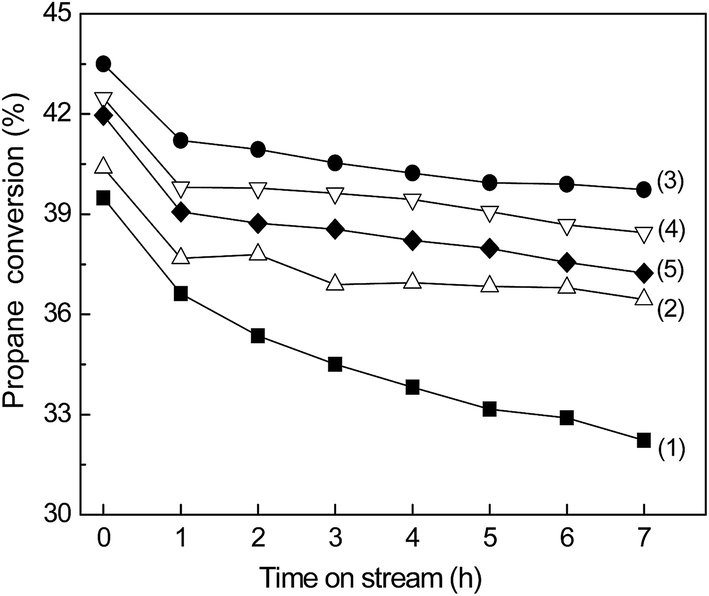 | ||
| Fig. 9 Propane conversion vs. time on stream of the different catalysts: (1) PtSnNa/Ce(0%)ZSM-5; (2) PtSnNa/Ce(0.35%)ZSM-5; (3) PtSnNa/Ce(0.76%)ZSM-5; (4) PtSnNa/Ce(1.15%)ZSM-5; (5) PtSnNa/Ce(1.58%)ZSM-5. | ||
The corresponding propene selectivity of the different samples with various cerium concentration are shown in Fig. 10. As regards the PtSnNa/Ce(0%)ZSM-5 catalyst, the selectivity to propene increases progressively, from 82.51 to 95.16%. When the cerium content in the support is in the range of 0.35–0.76 wt%, the selectivity towards propene increases, meaning that the substitution of cerium species inhibits the undesired reactions to be carried out. From Fig. 10, the highest selectivity can be found over the PtSnNa/Ce(0.76%)ZSM-5 sample. In this circumstance, the initial and final selectivities of propene are 84.51 and 96.87%, respectively. Nevertheless, the decrease of reaction selectivity can also be observed with the increase of Ce loading, especially for the PtSnNa/Ce(1.58%)ZSM-5 sample. This result reveals that the side reactions can easily take place over the catalyst with high Ce content. To further investigate the possible distribution of side reaction products, the selectivities to alkenes (alkanes) of the different catalysts after reaction for 7 h are also presented (Fig. S3†). By comparing with the PtSnNa/Ce(0%)ZSM-5 catalyst, suitable content of Ce in the support decreases the selectivities to side reaction products effectively, especially for the reactions of hydrogenolysis of propane and by hydrogenation of ethene (ethane). However, with the continuous increase of Ce loading, although the changes in the selectivities to one cracking product (ethene) are negligible, the selectivities to hydrogenolysis and hydrogenation reaction products (methane and ethane) increase significantly. It can be seen that the variation of Ce content in the support mainly affects the occurrence of hydrogenolysis and hydrogenation side reactions.
 | ||
| Fig. 10 Propene selectivity vs. time on stream of the different catalysts: (1) PtSnNa/Ce(0%)ZSM-5; (2) PtSnNa/Ce(0.35%)ZSM-5; (3) PtSnNa/Ce(0.76%)ZSM-5; (4) PtSnNa/Ce(1.15%)ZSM-5; (5) PtSnNa/Ce(1.58%)ZSM-5. | ||
Since the PtSnNa/Ce(0.76%)ZSM-5 catalyst shows the highest reaction activity and stability, this catalyst is chosen for the subsequent tests. As shown in Fig. S4,† a comparison among the different catalysts by using a recycle reaction is made. Interestingly, the initial propane conversions increase after catalyst regeneration and the lowest deactivation rate can be found over the PtSnNa/Ce(0.76%)ZSM-5 catalyst. From Fig. S4,† in the third cycle reaction, the propane conversion decreases only about 4.3% in PtSnNa/Ce(0.76%)ZSM-5 catalyst in contrast to that of the fresh one after reaction for 7 h. Comparatively, the corresponding propane conversion decreases about 10.7, 8.6, 7.1 and 12.2% in the other PtSnNa/Ce-ZSM-5 catalysts with the variation of Ce contents. Obviously, these findings indicate that the remarkable stability of dehydrogenation in recycle reaction can be obtained over the catalyst when the content of Ce in the support is 0.76 wt%. Moreover, to study the role of incorporated cerium species in the support, the performance comparison of the PtSnNa/Ce(0.76%)ZSM-5 and PtSnNaCe/H-ZSM-5 catalysts by increasing the reaction temperature (600 °C) has also been carried out (Fig. 11). As for PtSnNaCe/H-ZSM-5 sample, the Ce promoter has been loaded by impregnation methods. Meantime, the BET surface area and the actual content of Ce (measured by XRF analysis) over the PtSnNaCe/H-ZSM-5 catalyst are 289 m2 g−1 and 0.69 wt%, respectively. By comparing with the PtSnNaCe/H-ZSM-5 catalyst, higher propane conversion and similar propene selectivity can be observed over the PtSnNa/Ce(0.76%)ZSM-5 sample, demonstrating that the introducing method of Ce has an obvious influence on the reaction performance. Better catalytic performance can be displayed when the used support is Ce-containing ZSM-5 zeolite.
 | ||
| Fig. 11 Propene selectivity as a function of propane conversion for the different catalysts: (1) PtSnNa/Ce(0.76%)ZSM-5, (2) PtSnNaCe/H-ZSM-5 (reaction conditions: 600 °C, n(H2)/n(C3H8) = 0.25, 0.1 Mpa, WHSV = 3.0 h−1, m (cat) = 2.0 g). | ||
4. Discussion
4.1 The influence of Ce-containing support on the catalyst structure
In our experiments, Ce-ZSM-5 zeolites have been synthesized by hydrothermal methods. As evidenced in Fig. 2 and 3, parts of cerium species have been incorporated into the ZSM-5 zeolites, thus affecting the textual structure and properties of the catalysts. For series of PtSnNa/Ce-ZSM-5 catalysts, the TEM results (Fig. 4) indicate that the uniform distribution of Pt nanoparticles on the catalyst surface can be obtained when the content of Ce in the support is suitable. The existence of cerium increases the platinum dispersion and prevents the agglomeration of dispersed Pt into discrete particles, resulting in high accessible metal surface area. In this situation, the sodium promoter neutralizes the Brönsted acidity of the zeolite, while the substituted Ce species slightly decrease the intensities of Lewis acid sites (Fig. S2†), thus modifying the acid character of the catalyst. Moreover, based on the XPS spectra, Sn can be enriched on the surface of the catalyst. The use of Ce-modified support strengthens the interaction between tin species and the support, thus inhibiting the reduction of tin species. The reduction hindrance of tin species may help to maintain the oxidized state of Sn species.In addition, the presence of cerium in the support promotes the catalytic ability to adsorb hydrogen on metallic Pt and in the high temperature range. This was verified by the results of H2-TPD (Fig. 8), which reveals that the Pt active sites can be stabilized. Apparently, this behavior may be attributed to the interaction between Pt and cerium, which helps to maintain Pt in an oxidized state leading to more difficult to sinter than metallic Pt.46 The increased thermal stability of Pt particles makes it become more easy to anchor on the tin oxide surface. In this way, the surface architecture consisting of Pt nanoparticles decorated by SnOx species form, which is the main active sites for the dehydrogenation reaction.47 Based on the above analysis, the model for the influence of Ce-containing ZSM-5 support on the catalyst structure has been proposed (Fig. 12). It can be inferred that the Ce-substituted ZSM-5 zeolite strengthens the interactions of Pt active sites, promoters and the support, stabilizes the Pt particles and increases the dispersion of noble metal on the support.
 | ||
| Fig. 12 Proposed model for the influence of Ce-modified support on the catalyst structure. | ||
4.2 The influence of Ce-containing support on the catalytic performance
On ZSM-5 supported platinum catalyst, it is suggested that there exists two active centers (the metal particle and the acid site) and these active centers may work collaboratively,48 which plays an important role in directing the catalytic performances. In comprising with the PtSnNa/Ce(0%)ZSM-5 catalyst, the use of Ce-substituted zeolites (Ce content: 0.35 and 0.76%) improves the distribution of metallic particles and increase the ability of Pt particles to resist agglomeration significantly. Based on our experiments, the most homogeneous distribution and least average particle diameter can be obtained over the PtSnNa/Ce(0.76%)ZSM-5 sample. Meantime, the presence of Ce changes the acid character and reduces the intensity of weak acidity sites (Fig. 5). In this way, the synergistic effect of metal and acid sites improves the matching between these two active centers, which is beneficial to increase the reaction activity. Besides, the strong interaction of Pt with SnOx species should also considered as another reason for the high reaction activity. As shown in Fig. 6 and 7, the increased interaction of tin species and the support make more amounts of tin species exist in their oxidized state. Over these samples, the Pt particles can be stabilized because of the increased surface interaction, which is favorable for the anchoring of Pt active sites on the tin oxide surface. Additionally, the substitution of Ce promotes the thermal stability of the zeolite against surface area loss. Therefore, the reaction activity can be maintained even at elevated temperature and after the regeneration treatment. However, with the continuous increase of Ce content, although the substantial changes in the total acidity is little, the agglomeration of metallic particles and decreased platinum dispersion are inevitable. As a result, the number of contiguous accessible platinum sites can be expected to decrease. Consequently, the initial balance between the metallic and acidic sites can be destroyed, which leads to the decreased reaction stability and activity.As for the changes of reaction selectivity, it should be noted that on bimetallic Pt–Sn systems platinum is the only active metal and propene is only formed on the metal by dehydrogenation, the main cracking product (ethene) is mainly formed from cracking on the carrier and the ethane is formed by hydrogenolysis of propane and by hydrogenation of ethene, with both reactions taking place on the metal.49 Furthermore, it is well-known that the dehydrogenation and cracking of propane are assumed to proceed through carbonium-ion intermediates.50 The higher acid sites generally promote the subsequent cracking reaction of the initially formed C3+ carbenium ions. Therefore, the changes in catalytic acidity and active metal character should be account for the selectivity to propene. Concerning the PtSnNa/Ce(0%)-ZSM-5 sample, the relatively low selectivity can be related to the wide distribution of metallic particles and catalyst acidity. In contrast to this, with respect to the series PtSnNa/Ce-ZSM-5 samples with suitable Ce content, the decreased size of platinum particles may inhibit the side reactions to be carried out. Meantime, the results of NH3-TPD confirm that the presence of cerium can reduce the intensity of weak acidity. Thus, the occurrence of cracking and hydrogenolysis reactions can be suppressed, which is favorable for the improvement of selectivity (Fig. S3†). Nevertheless, as regards the samples with high Ce content, although the acid content changes little, the agglomerated Pt particles induce more side reactions. That is to say, the relatively large platinum ensembles over the catalyst surface may cause the occurrence of hydrogenolysis reaction, which results in the decreased selectivity to propene.
4.3 Coke analysis
As far as the catalysts for propane dehydrogenation are concerned, coke is the main reason for the catalyst deactivation. After the reaction for 7 h, the temperature programmed oxidation (TPO) profiles of the corresponding catalysts are illustrated in Fig. 13. It is obvious that two successive peaks representing two different carbon deposits are displayed in TPO profile over the PtSnNa/Ce(0%)ZSM-5 sample. In general, the first peak at low temperature (480 °C) assigns to the carbon deposits that cover the active metal, while the second peak at high temperature (610 °C) represents the ones that located on the external surface of the support.51 From Fig. 13(1), it is clear that the most coke covers the surface of active metal over the PtSnNa/Ce(0%)ZSM-5 catalyst. | ||
| Fig. 13 TPO profiles of the different samples: (1) PtSnNa/Ce(0%)ZSM-5; (2) PtSnNa/Ce(0.35%)ZSM-5; (3) PtSnNa/Ce(0.76%)ZSM-5; (4) PtSnNa/Ce(1.15%)ZSM-5; (5) PtSnNa/Ce(1.58%)ZSM-5. | ||
Comparing with this, the use of Ce-containing materials causes an obvious change in the TPO profile. As for the PtSnNa/Ce(0.35%)ZSM-5 sample, the sharply decreased combustion peak at low temperature can be found, indicating the reduced coke amount. Moreover, an interesting phenomenon takes place in the TPO result of PtSnNa/Ce(0.35%)ZSM-5, where the increased proportion of coke at high temperature occurs. This demonstrates that the presence of Ce in the support promotes the migration of the coke from the metal sites to the support. Obviously, this tendency becomes more apparently with the increase of Ce content. Meantime, it is worthy mention that the combustion temperatures for the coke shift towards the lower range, which suggests that the deposited carbon on the surface of metal and support becomes more active. It is apparent that the lowest intensity peaks at low and high temperatures appear over the PtSnNa/Ce(1.58%)ZSM-5 sample. Coke quantitative analysis (Table 1) indicates that the PtSnNa/Ce(0%)ZSM-5 catalyst possesses the largest amount of coke (%) and significant differences are also found among the catalysts as a function of Ce content in the support. As summarized in Table 1, the coke amount decreases in the following order: PtSnNa/ZSM-5 > PtSnNa/Ce(0.35%)ZSM-5 > PtSnNa/Ce(0.76%)ZSM-5 > PtSnNa/Ce(1.15%)ZSM-5 > PtSnNa/Ce(1.58%)ZSM-5. Obviously, this effect must be related with the adsorbed behavior of the dehydrogenated species on the active sites of the catalyst.
To explain these, it should be noted that the coke formation on the catalyst usually involves several processes:52 (1) successive dehydrogenation/cyclization of alkyl chains; (2) n-alkane oligomerization; (3) Diels–Alder type reactions. Olefins are primary precursors of the mechanism of coke formation and the intrinsic acidity of the support can promote the undesirable reactions such as cracking/isomerization, thus increasing the carbon deposits. According to this mechanism, it is suggested that the change of Pt active sites and catalyst acidity may influence the coke formation obviously. Compared with the PtSnNa/Ce(0%)ZSM-5 sample, the substituted Ce-ZSM-5 support with suitable content of Ce results in the reduced acidity intensity, uniform distribution of metallic particles and more effective reduction hindrance of tin species. The decreased diameter of metallic particle and relatively weak acid intensity suppress the amounts of the produced carbon precursors during the reaction, while the oxidative states of tin makes the role of tin to migrate the coke can be developed more effectively. Furthermore, in these circumstances, the Pt active sites can be stabilized due to the existence of spillover hydrogen, which is also helpful for the migration of the coke from the metal sites to the supports.53 Because of these factors, the improved catalyst capacity to resist coke is inevitable. Besides, as for the PtSnNa/Ce-ZSM-5 catalysts with high Ce content, although the migration of the metallic particles may cause the occurrence of side reactions, the decreased acid intensity may inhibit the subsequently undesired reactions (cracking/isomerization) of the corresponding carbon precursors. That is to say, in this circumstance, the decreased acid intensity shows a positive effect to keep the Pt sites clean by suppressing the isomerization and coking reactions on the surface of active sites.
5. Conclusions
In summary, Ce-modified ZSM-5 zeolite were synthesized and then the influence of Ce concentration on the catalyst structure and the reaction performances were investigated. From the results of SEM, FT-IR and UV-vis spectra, parts of cerium species have been incorporated into the framework of ZSM-5 zeolite, which affects the morphologies and physical structure of the zeolites. The substitution of Ce reduces the intensity of weak acid sites of the catalyst and increases the catalytic capacity to resist coke. In addition, appropriate content of Ce in the support can not only stabilize the Pt nanoparticles, but also strengthen the interaction between tin species and the support. In this way, homogeneous dispersion of metallic particles and the reduction hindrance of tin species can be observed, which is beneficial to promote the migration of the coke from active sites to the support. Compared with the traditional impregnation method, the incorporation of Ce into the support makes the modification effect of the promoter to the metal phase and support acidity is reflected more effectively. In the current study, the optimal content of Ce in the support is 0.76 wt%, which results in a high propene selectivity of 96.87% and the highest reaction activity and stability.Acknowledgements
The authors are grateful to the financial supports of National Natural Science Foundation of China (Grant No. 21376051, 21106017 and 21306023), Natural Science Foundation of Jiangsu Province (Grant No. BK20131288), Fund Project for Transformation of Scientific and Technological Achievements of Jiangsu Province of China (Grant No. BA2014100), The Fundamental Research Funds for the Central Universities (3207045421) and the Priority Academic Program Development of Jiangsu Higher Education Institutions.References
- K. Xia, W. Z. Lang, P. P. Li, X. Yan and Y. J. Guo, RSC Adv., 2015, 5, 64689–64695 RSC.
- Y. W. Zhang, Y. M. Zhou, M. H. Tang, X. Liu and Y. Z. Duan, Chem. Eng. J., 2012, 181–182, 530–537 CrossRef CAS.
- L. N. Li, W. L. Zhu, Y. Liu, L. Shi, H. C. Liu, Y. M. Ni, S. P. Liu, H. Zhou and Z. M. Liu, RSC Adv., 2015, 5, 56304–56310 RSC.
- D. Sanfilippo and I. Miracca, Catal. Today, 2006, 111, 133–139 CrossRef CAS.
- H. B. Zhu, D. H. Anjum, Q. X. Wang, E. Abou-Hamad, L. Emsley, H. L. Dong, P. Laveille, L. D. Li, A. K. Samal and J. M. Basset, J. Catal., 2014, 320, 52–62 CrossRef CAS.
- Y. W. Zhang, Y. M. Zhou, K. Z. Yang, Y. A. Li, Y. Wang, Y. Xu and P. C. Wu, Microporous Mesoporous Mater., 2006, 96, 245–254 CrossRef CAS.
- X. Q. Fan, J. M. Li, Z. Zhao, Y. C. Wei, J. Liu, a. j. Duaan and G. Y. Jiang, RSC Adv., 2015, 5, 28305–28315 RSC.
- Y. W. Zhang, Y. M. Zhou, J. J. Shi, S. J. Zhou, X. L. Sheng, Z. W. Zhang and S. M. Xiang, J. Mol. Catal. A: Chem., 2014, 381, 138–147 CrossRef CAS.
- C. L. Yu, H. Y. Xu, Q. J. Ge and W. Z. Li, J. Mol. Catal. A: Chem., 2007, 266, 80–87 CrossRef CAS.
- Y. W. Zhang, Y. M. Zhou, A. D. Qiu, Y. Wang, Y. Xu and P. C. Wu, Catal. Commun., 2006, 7, 860–866 CrossRef CAS.
- J. M. Hill, R. D. Cortright and J. A. Dumesic, Appl. Catal., A, 1998, 168, 9–21 CrossRef CAS.
- Y. W. Zhang, Y. M. Zhou, A. D. Qiu, Y. Wang, Y. Xu and P. C. Wu, Acta Phys.-Chim. Sin., 2006, 22, 672–678 CrossRef CAS.
- S. B. He, C. L. Sun, Z. W. Bai, X. H. Dai and B. Wang, Chem. Eng. J., 2009, 356, 88–98 CAS.
- L. Y. Bai, Y. M. Zhou, Y. W. Zhang, H. Liu and M. H. Tang, Catal. Lett., 2009, 129, 449–456 CrossRef CAS.
- Y. W. Zhang, Y. M. Zhou, H. Liu, Y. Wang, Y. Xu and P. C. Wu, Appl. Catal., A, 2007, 333, 202–210 CrossRef CAS.
- B. K. Vu, M. B. Song, I. Y. Ahn, Y. W. Suh, D. J. Suh, W. I. Kim, H. L. Koh, Y. G. Choi and E. W. Shin, Appl. Catal., A, 2011, 400, 25–33 CrossRef CAS.
- Y. W. Zhang, Y. M. Zhou, L. Huang, M. W. Xue and S. B. Zhang, Ind. Eng. Chem. Res., 2011, 50, 7896–7902 CrossRef CAS.
- M. S. Kumar, A. Holmen and D. Chen, Microporous Mesoporous Mater., 2009, 126, 152–158 CrossRef.
- T. M. Salama, M. M. Mohamed, A. I. Othman and G. A. Ei-Shobaky, Appl. Catal., A, 2005, 286, 85–95 CrossRef CAS.
- Y. T. Meng, H. C. Genuino, C. H. Kuo, H. Huang, S. Y. Chen, L. C. Zhang, A. Rossi and S. L. Suib, J. Am. Chem. Soc., 2013, 135, 8594–8605 CrossRef CAS PubMed.
- G. Vitale, H. Molero, E. Hernandez, S. Aquino, V. Birss and P. Pereira-Almao, Appl. Catal., A, 2013, 452, 75–87 CrossRef CAS.
- Y. W. Zhang, Y. M. Zhou, L. Huang, S. J. Zhou, X. L. Sheng, Q. L. Wang and C. Zhang, Chem. Eng. J., 2015, 270, 352–361 CrossRef CAS.
- C. L. Yu, Q. J. Ge, H. Y. Xu and W. Z. Li, Appl. Catal., A, 2006, 315, 58–67 CrossRef CAS.
- A. Piras, A. Trovarelli and G. Dolcetti, Appl. Catal., B, 2000, 28, 77–81 CrossRef.
- Y. P. Zhang and M. Flytzani-Stephanopoulos, J. Catal., 1996, 164, 131–145 CrossRef CAS.
- Z. H. Ma, J. Wang, J. Li, N. N. Wang, C. H. An and L. Y. Sun, Fuel Process. Technol., 2014, 128, 283–288 CrossRef CAS.
- B. K. Vu, M. B. Song, I. Y. Ahn, Y. W. Suh, D. J. Suh, W. I. Kim, H. L. Koh, Y. G. Choi and E. W. Shin, Catal. Today, 2011, 164, 214–220 CrossRef CAS.
- Y. W. Zhang, Y. M. Zhou, A. D. Qiu, Y. Wang, Y. Xu and P. C. Wu, Ind. Eng. Chem. Res., 2006, 45, 2213–2219 CrossRef CAS.
- F. Dorado, R. Romero and P. Canizares, Ind. Eng. Chem. Res., 2001, 40, 3428–3434 CrossRef CAS.
- C. I. Round, C. D. Williams, K. Latham and C. V. A. duke, Chem. Mater., 2001, 13, 468–472 CrossRef CAS.
- T. I. Koranyi, A. Jentys and H. Vinek, Stud. Surf. Sci. Catal., 1995, 94, 582–589 CrossRef CAS.
- N. K. Mal, V. Ramaswamy, S. Ganapathy and A. V. Ramaswamy, Appl. Catal., A, 1995, 125, 233–245 CrossRef CAS.
- C. Pesquera, F. Gonzalez, C. Blanco and L. Sanchez, Appl. Surf. Sci., 2004, 238, 320–323 CrossRef CAS.
- A. Bensalem, J. C. Muller and F. Bozon-Verduraz, J. Chem. Soc., Faraday Trans., 1992, 88, 153–154 RSC.
- M. N. Timofeeva, S. H. Jhung, Y. K. Hwang, D. K. Kim, V. N. Panchenko, M. S. Melgunov, Y. A. Chesalov and J. S. Chang, Appl. Catal., A, 2007, 317, 1–10 CrossRef CAS.
- Y. L. Ren, G. Z. Liu and Z. T. Mi, Chem. Bull., 2004, 6, 433–438 Search PubMed.
- S. B. Kogan, H. Schramm and M. Herskowitz, Appl. Catal., A, 2001, 208, 185–191 CrossRef CAS.
- M. S. Kumar, D. Chen, J. C. Walmsley and A. Holmen, Catal. Commun., 2008, 9, 747–750 CrossRef CAS.
- R. Burch and L. C. Garla, J. Catal., 1981, 71, 360–372 CrossRef CAS.
- S. Damyanova and J. M. C. Bueno, Appl. Catal., A, 2003, 253, 135–150 CrossRef CAS.
- X. Q. Fan, J. M. Li, Z. Zhao, Y. C. Wei, J. Liu, A. J. Duan and G. Y. Jiang, Catal. Sci. Technol., 2015, 5, 339–350 CAS.
- S. A. Bocanegra, S. R. de Miguel, A. A. Castro and O. A. Scelza, Catal. Lett., 2004, 96, 129–140 CrossRef CAS.
- A. D. Ballarini, C. G. Ricci, S. R. de Miguel and O. A. Scelza, Catal. Today, 2008, 133, 28–34 CrossRef.
- R. Morales, L. Melo, A. Llanos and F. Zaera, J. Mol. Catal. A: Chem., 2005, 228, 227–232 CrossRef CAS.
- Y. W. Zhang, Y. M. Zhou, J. J. Shi, X. L. Sheng, Y. Z. Duan, S. J. Zhou and Z. W. Zhang, Fuel Process. Technol., 2012, 96, 220–227 CrossRef CAS.
- J. Z. Shyu and K. Otto, J. Catal., 1989, 115, 16–23 CrossRef CAS.
- L. W. Lin, W. S. Yang, J. F. Jia, Z. S. Xu, T. Zhang, Y. N. Fan, Y. Kou and J. Y. Shen, Sci. China, Ser. B: Chem., 1999, 42, 571–580 CrossRef CAS.
- P. Treesukol, K. Srisuk, J. Limtrakul and T. H. Truong, J. Phys. Chem. B, 2005, 109, 11940–11945 CrossRef CAS PubMed.
- M. Larsson, M. Hultén, E. A. Blekkan and B. Andersson, J. Catal., 1996, 164, 44–53 CrossRef CAS.
- M. Guisnet and N. S. Gnep, Catal. Today, 1996, 31, 275–292 CrossRef CAS.
- Y. W. Zhang, Y. M. Zhou, S. B. Zhang, S. J. Zhou, X. L. Sheng, Q. L. Wang and C. Zhang, J. Mater. Sci., 2015, 50, 6457–6468 CrossRef CAS.
- J. C. Afonso, M. Schmal and R. Frety, Fuel Process. Technol., 1994, 41, 13–25 CrossRef CAS.
- L. W. Lin, T. Zhang, J. L. Zang and Z. S. Xu, Appl. Catal., 1990, 67, 11–23 CrossRef CAS.
Footnote |
| † Electronic supplementary information (ESI) available. See DOI: 10.1039/c6ra04173f |
| This journal is © The Royal Society of Chemistry 2016 |